
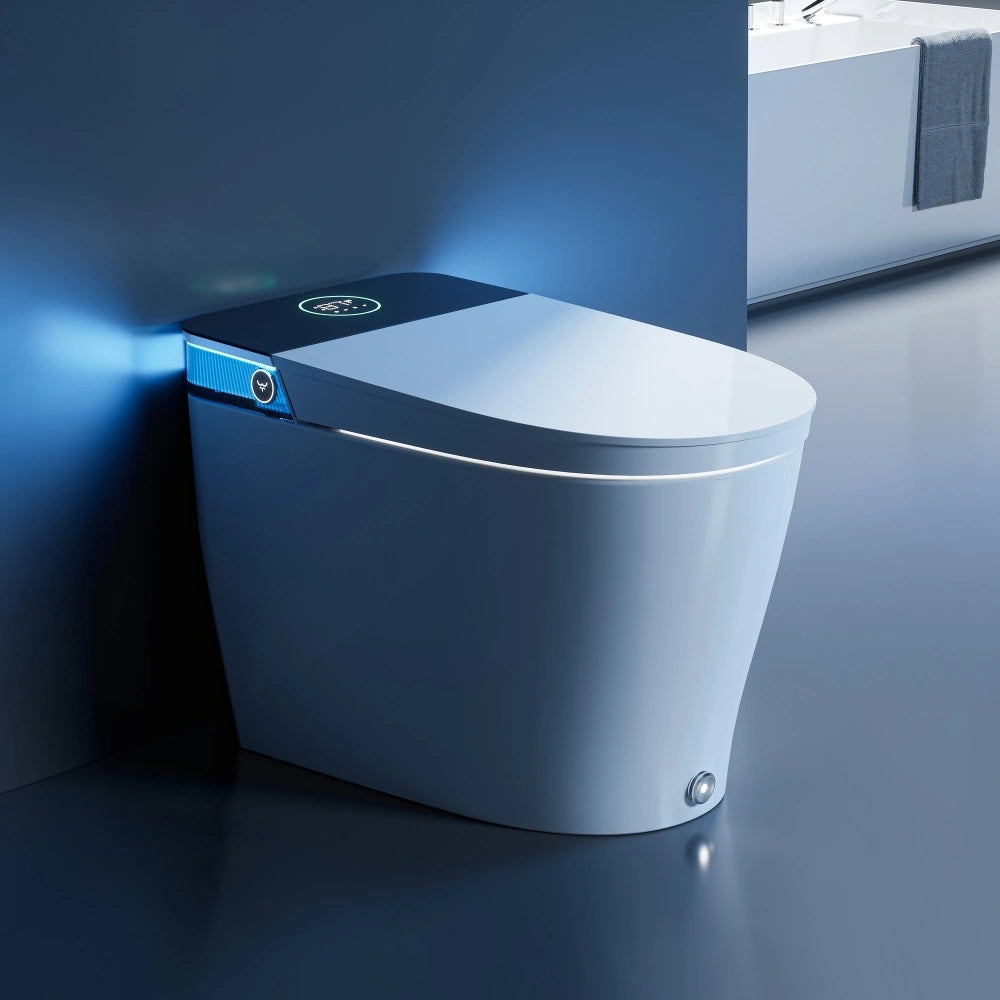
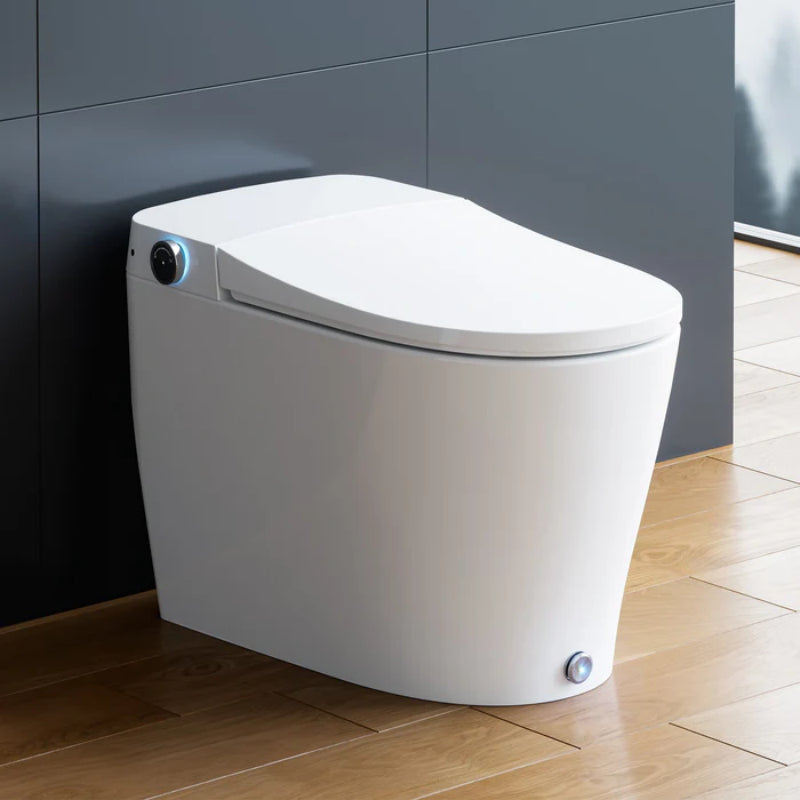

WaterSense certification is a program developed by the Environmental Protection Agency (EPA) that identifies water-saving plumbing products designed to use less water without compromising flush performance. Essentially, it guarantees that a toilet meets strict efficiency and performance standards, supporting water conservation while helping homeowners save water—and money—without sacrificing cleaning power. Modern WaterSense-labeled toilets use no more than 1.28 gallons per flush, compared with up to 1.6 gallons in older standard models, using less water than standard models while helping busy households reduce water waste and lower utility bills.
Whether you’re replacing an old, inefficient toilet or choosing WaterSense for a bathroom upgrade, understanding what the WaterSense label really means can help you make a smarter, more cost-effective choice.
It’s especially relevant for homes with high water use, older fixtures, or where local utilities offer rebates, combining environmental benefits with meaningful cost savings over time.
Decision Snapshot: what is watersense certification for toilets
A WaterSense certified toilet is usually a good fit if your home has older toilets, a lot of daily use, or high water and sewer rates. It also makes sense if your local utility offers rebates, because that can shorten the payback.
You should probably skip it for now if your main problem is bad plumbing, frequent drain-line issues, or a bathroom that gets very little use. In those cases, the label may not solve the thing that is actually bothering you.
Here’s the simple rule of thumb: WaterSense is about verified water efficiency with minimum flush performance standards. It is not a promise that every toilet will feel identical in every house.
What the label actually means
WaterSense is a widely recognized label created by the Environmental Protection Agency for water-efficient products that meet strict environmental and performance standards. It is an EPA-backed certification that requires both low water use and verified performance testing, meaning the label represents more than just a marketing claim. This ensures that certified toilets conserve water while still performing effectively for most household needs.

What qualifies for the label
If you are asking what is WaterSense certification for toilets, the short answer is this: it is an EPA program for toilets that use less water than standard models while working effectively within typical household water supply systems and also pass performance testing.
For a toilet to earn the label, it has to meet WaterSense toilet requirements for gallons per flush and pass independent testing for waste removal and other performance checks. So the label is not just about low water use. It is also about proving the toilet can still do the job.
That matters because many homeowners still remember early low-flow toilets from the 1990s. Those older models gave low-water toilets a bad name. Modern WaterSense standards were created partly to avoid that same mistake.
To earn the WaterSense label, a toilet must undergo rigorous testing that evaluates key performance areas. These include flush performance, the ability to remove waste efficiently, and overall cleanability. By meeting these criteria, a toilet ensures that water efficiency does not come at the expense of basic functionality.
How much water can it use
The basic number to know is 1.28 gallons per flush or less.
That is how WaterSense certified toilets differ from standard toilets in the most common comparison. A standard toilet under older federal rules may use up to 1.6 gallons per flush. A WaterSense model must use no more than 1.28.
So in a 1.28 gpf toilet vs 1.6 gpf toilet comparison, the water savings per flush may not sound huge. But in a busy home, that difference adds up over time, especially when sewer charges are tied to water use.
Does lower water mean weaker flushing
Not by definition. WaterSense toilets have to meet performance criteria, so lower water does not automatically mean a weak flush.
But this is where expectations need to stay realistic. Certification sets a floor, not a guarantee of identical real-world behavior in every home. Some models clear the bowl better than others. Some handle bulky waste better. Some are more forgiving with old plumbing. The label helps filter out poor performers, but it does not erase design differences.
So can WaterSense toilets save water without losing flush performance? Often yes. In some homes, no one notices a downside at all. In other homes, the difference shows up in how often you need a second flush, a quick brush, or extra toilet paper discipline.
Some homeowners worry that using less water will reduce flushing power. WaterSense certification sets a baseline for acceptable flushing performance, but real-world results can vary depending on toilet design, installation, and plumbing conditions. The label ensures a minimum standard, without promising identical performance in every scenario.
How WaterSense Saves on Water Bills
WaterSense saves on water bills by reducing how much water your home uses in everyday activities, without requiring changes in behavior or sacrificing performance.
First, WaterSense-labeled fixtures use less water per use. For example, WaterSense toilets use 1.28 gallons per flush or less, compared to older traditional toilets that may use 3.5 gallons or more. This reduction adds up quickly in daily use, cutting total household water consumption significantly.
Second, lower water use also reduces wastewater or sewer charges. In many areas, sewer fees are calculated based on how much water enters your home. Using less water means you not only pay less for supply, but also less for treatment and disposal.
Third, WaterSense improves efficiency across multiple plumbing fixtures, including toilets, faucets, and showerheads. Since these are used frequently throughout the day, even small reductions in flow rates lead to consistent, long-term savings.
Fourth, certified products must meet performance standards, so they are designed to work effectively with less water. This helps avoid issues like double flushing or longer run times, which would otherwise cancel out potential savings.
Finally, some regions offer rebates or incentives for installing WaterSense fixtures. While this does not directly lower monthly bills, it reduces upfront costs and improves overall financial savings.
Overall, WaterSense lowers water bills by combining reduced consumption, maintained performance, and system-wide efficiency.
Where it works well
Understanding where WaterSense toilets shine helps you decide if the upgrade makes sense for your home. It’s not just about water efficiency on paper—it’s about real-world savings and performance in homes that actually use the bathroom frequently or face high water costs.
Best for older high-use homes
This is where WaterSense usually makes the most sense.
If you are upgrading from an older toilet that uses much more water per flush, the savings can be meaningful. In a home with several people, kids, guests, or one bathroom that gets constant use, the reduction adds up faster.
This is also one of the best reasons to upgrade from an old toilet to a WaterSense model: the older the fixture, the more wasteful it tends to be, and the more likely the water savings feel real instead of theoretical.
Useful where water costs are high
Do WaterSense toilets save money on water bills? Yes, but the amount depends on your local rates and how much the toilet is used.
If you live where water is expensive, or where sewer charges rise with water use, the savings are easier to notice. If rates are low, the monthly savings may be modest.
That is why some homeowners feel pleased and others shrug. The toilet may be doing exactly what it promised, but the bill impact depends on your area.
Are WaterSense toilets worth it
They are worth it when at least two of these are true:
-
your current toilet is old and water-hungry
-
your household uses that bathroom a lot
-
local water or sewer costs are high
-
a rebate lowers the upfront cost
They are less compelling if the bathroom is rarely used, your existing toilet is already fairly efficient, or the main issue is not water use at all.
In short, are WaterSense toilets worth it for homeowners? Often yes, but mostly for the right kind of household. The label matters more in high-use homes than in low-use guest baths.
Trade-offs buyers miss
Even with a WaterSense label, real-world performance isn’t guaranteed. Understanding the trade-offs—how often the toilet is used, the plumbing it connects to, and design differences—can help set realistic expectations and avoid surprises after installation.

Savings depend on real usage
This is one of the biggest expectation gaps.
People hear that WaterSense toilets can save thousands of gallons a year. That can be true, but only if the toilet actually gets used enough to reach those numbers. In a guest bath that sees light use, the savings may be too small to feel exciting.
So if your goal is lower bills, ask a simple question first: “How many flushes does this toilet really get in a week?” That answer matters more than the label by itself.
Performance still varies by design
The label does not mean every certified toilet will behave the same.
This is where homeowners sometimes feel confused. They assume certification removes all risk of weak performance. It lowers that risk, yes. It does not erase it.
What I’ve seen in practice is that regret usually comes from one of three things:
-
expecting every flush to feel as forceful as an older high-water toilet
-
assuming bowl cleaning will be identical with less water
-
thinking the label will solve clogging caused by drain or vent problems
That last point is important. A toilet can meet WaterSense certification vs high-efficiency toilet requirements and still not fix plumbing issues downstream. If the line has poor slope, partial blockage, or venting trouble, a more efficient toilet will not cure that.
What happens with old drain lines
This is the issue many articles skip.
In some older homes, especially where drain lines are long, flat, rough inside, or already prone to buildup, lower flush volume can be less forgiving. That does not mean a WaterSense toilet is wrong. It means the rest of the system matters.
If your current toilet already struggles to move waste through the line, changing to a lower-water model without looking at the plumbing can create frustration. You may not see constant clogs, but you could see more “almost clogs,” more plunging, or more concern about what gets flushed.
So what to consider before buying a WaterSense toilet? Look beyond the toilet itself. Think about the age and condition of the home’s drain lines, especially if you have a history of slow drains or recurring backups.
Older plumbing systems can sometimes limit the effectiveness of any toilet, including WaterSense models. If drain lines are narrow, worn, or partially obstructed, reduced water flow may exacerbate existing issues. In such cases, performance depends more on the plumbing condition than the toilet itself, and homeowners may need to consider system updates or occasional adjustments.
Daily-use and long-term realities
Knowing how to spot a WaterSense certified toilet and understanding its daily-use realities helps homeowners make smarter choices. Certification signals efficiency, but long-term satisfaction depends on household habits, load size, and whether rebates make the investment worthwhile.

How to identify certified models
How to identify a WaterSense certified toilet is simple: look for the WaterSense label in product details, packaging, or specification sheets.
Do not assume that every low-flow or high-efficiency toilet is automatically WaterSense certified. Some may meet low gallon-per-flush numbers without carrying the label. If the label matters to you for confidence or rebates, verify it before buying.
This also matters because do WaterSense toilets qualify for rebates in the USA often depends on the actual certification, not just the seller’s description of “efficient.”
Will this still work with large loads
This is a fair homeowner question, and the honest answer is: usually yes, but not always the same way as older toilets.
Modern WaterSense models have to pass waste-removal tests, so they are not supposed to be weak by default. But large loads, heavy toilet paper use, and habits like flushing wipes or thick paper products can still expose the limits of any toilet.
If your household regularly puts a lot into the bowl, expect that performance can still vary. In daily life, the annoyance is often not total failure. It is the occasional second flush or more frequent bowl marks.
That may be a small trade-off for water savings. Or it may irritate you every day. Your tolerance matters.
Can rebates change the payoff
Yes, sometimes a lot.
If your local utility or municipality offers a rebate, the financial case becomes easier. In some areas, that can cover a meaningful share of the purchase cost. So can rebates change the payoff? Absolutely.
This is one reason WaterSense can be worth it even when monthly savings are not dramatic. The rebate may do more for the economics than the water bill alone, at least in the first few years.
Still, do not let a rebate talk you into ignoring a bad fit. A discounted toilet that does not work well with your plumbing is still a regret.
When it is unnecessary
Not every bathroom needs a WaterSense toilet. Understanding when the certification is overkill—like in low-use spaces or homes with recent efficient upgrades—can help you prioritize upgrades where they actually make a difference.

Overkill in low-use bathrooms
If the toilet is in a guest room, basement bath, or another space that sees little use, WaterSense may be fine but not especially meaningful.
The water savings are real per flush. There just may not be enough flushes to care. In that case, homeowners sometimes expect a noticeable bill drop and then feel underwhelmed.
Not a fix for clogging problems
This is worth repeating because it causes a lot of bad decisions.
If you have frequent clogging, slow drains, sewer smell, or venting problems, deal with those first. WaterSense is not a plumbing repair. It is a water-efficiency and performance standard.
So if plumbing issues come first, skip the upgrade until you know the system is healthy.
Less urgent after recent upgrades
If your existing toilet is already a fairly recent efficient model and your water bills are not high, the urgency drops. You may still want WaterSense certification for rebate access or peace of mind, but the practical benefit may be small.
That is why this label is often more valuable as part of an old-to-new replacement than as a minor efficiency tweak.
Before You Choose
-
Check how old and water-hungry your current toilet really is.
-
Be honest about bathroom usage. High-use spaces benefit most.
-
If you have a history of drain or clog problems, inspect plumbing first.
-
Verify the actual WaterSense label if you want rebates.
-
Expect water savings, but not identical feel to every older toilet.
-
In a low-use bathroom, keep your payback expectations modest.
FAQs
1. What does it mean if a toilet is WaterSense certified?
If a toilet is WaterSense certified, it means it meets the EPA’s strict standards for water efficiency while still providing strong flushing performance. According to the EPA, WaterSense toilets use no more than 1.28 gallons per flush, which is significantly less than standard toilets. The benefits of EPA WaterSense fixtures include lower water bills, reduced environmental impact, and compliance with high efficiency toilet (HET) requirements in many areas. In short, a WaterSense toilet saves water without sacrificing cleaning power.
2. How much water does a WaterSense toilet save?
WaterSense toilets can save a lot of water compared to older, traditional models. The EPA estimates that a household can save around 13,000 gallons per year by switching from a standard toilet to a WaterSense-certified model. This makes it a smart choice not only for your wallet but also for environmental conservation. When you compare WaterSense vs standard toilets, the difference in water usage is significant, which makes these toilets an easy way to meet high efficiency toilet (HET) requirements.
3. Can I get a rebate for a WaterSense toilet?
Yes! Many utilities across the USA offer low-flow toilet rebates in the USA for installing WaterSense-certified toilets. The rebate amount varies, but some programs can give you $50–$150 per toilet. According to the EPA, these rebates encourage homeowners to upgrade to more water-efficient fixtures, which is especially helpful if you’re renovating your bathroom or replacing older toilets. Checking your local water utility’s website is the easiest way to find available rebates.
4. Is the flush power weaker on low-flow toilets?
Not anymore. While older low-flow toilets sometimes had weaker flushes, modern WaterSense models are designed to deliver a powerful flush while using less water. Improved bowl designs, pressure-assisted systems, and rim jets ensure the bowl clears efficiently. So in most cases, the flush power on a high efficiency toilet (HET) is just as strong as older standard models, but you get the added bonus of water savings.
5. Do all smart toilets meet WaterSense standards?
Not all smart toilets are WaterSense-certified. Many come with features like bidet functions, heated seats, and multiple flush options, but these features don’t automatically make them water-efficient. Some models do meet WaterSense standards, combining convenience with EPA-approved water savings, but you should always check the specifications. Choosing a certified model ensures you enjoy both modern comfort and compliance with HET requirements.
6. Is WaterSense certification required in California?
California has strict water efficiency rules for toilets under Title 20 and Title 24, which are generally in line with WaterSense standards. While the label itself isn’t legally required, most new toilets sold in the state meet the high efficiency toilet (het) requirements, and selecting a WaterSense-certified model guarantees compliance. Plus, you may qualify for low-flow toilet rebates in USA, which adds another incentive to go with certified fixtures.
Reference


Leave a comment
This site is protected by hCaptcha and the hCaptcha Privacy Policy and Terms of Service apply.