
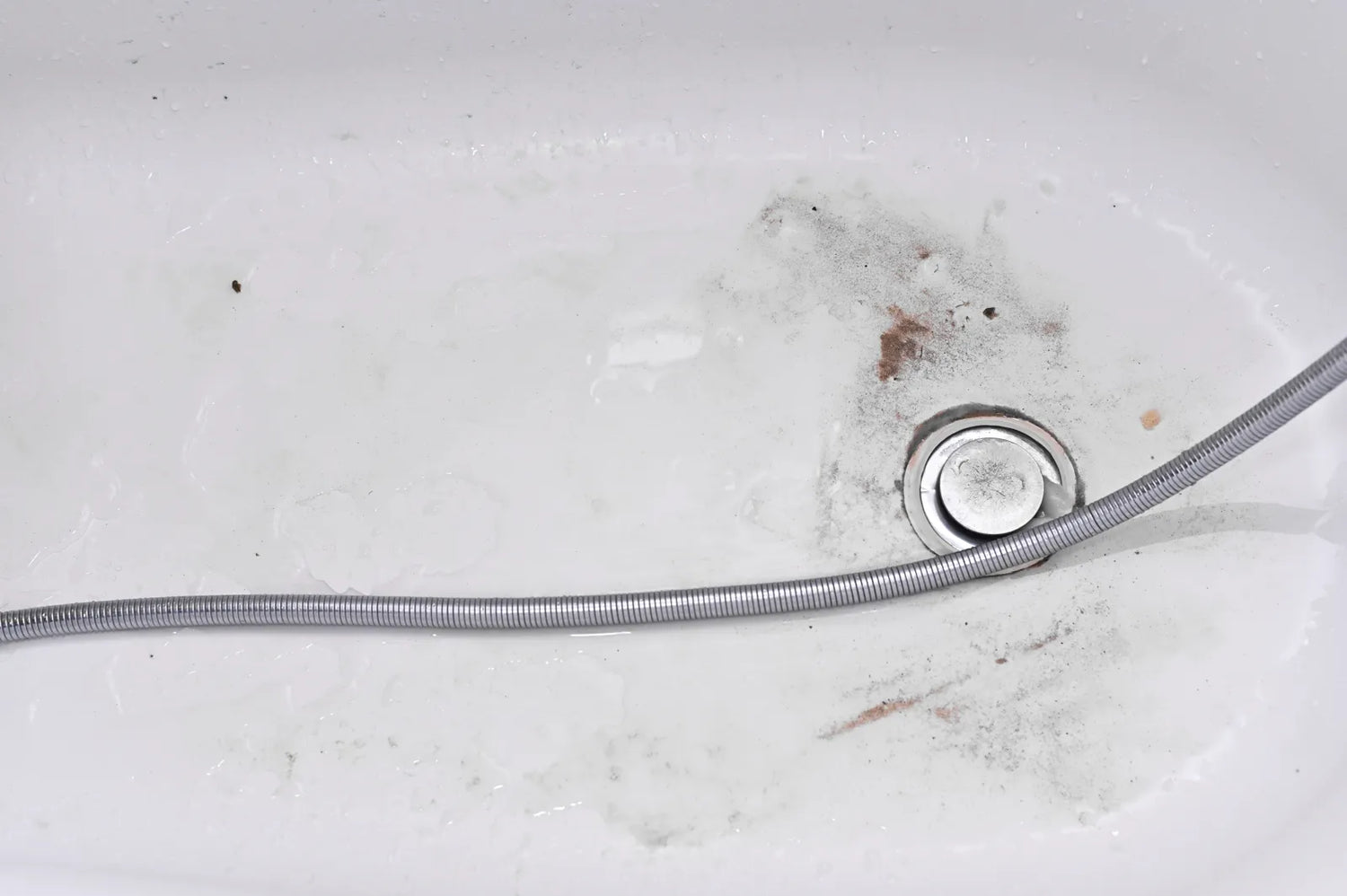
Many homeowners struggle with unsightly black spots on bathtub and wonder what causes black stains in bathtub, unsure whether to use regular bathtub cleaning solutions or seek professional help. Below we break down all core reasons and practical ways how to remove black stains from tub for clear reference.
Quick Answer
Black spots on bathtub are worth simple bathtub cleaning only if they are ordinary surface marks including mold, mildew, soap scum and common hard water stains. If the specks show up mostly with hot water, smear like grease, or keep returning after cleaning, DIY cleaning alone is usually not worth the hassle.
Decision Snapshot
After sorting out this clear decision guide, you can easily judge the nature of the marks. Next, let’s distinguish different visible conditions and accurately figure out what you are actually seeing on your bathtub.
Good fit for surface stains
This makes sense if the black spots are clearly sitting on the tub surface, especially around grout lines, caulk edges, corners or long damp areas inside the tub. In that case, a basic cleaning approach can be worth using before you do anything bigger.
This usually becomes useful when the problem is tied to bathroom habits: weak ventilation, long hot showers, poor wiping, or soap scum buildup.
Skip DIY for hot-water specks
You should probably skip a cleaning-only approach if the black specks appear while filling the tub, especially from hot water. That often points to sediment, rubber breakdown, or water heater parts rather than dirt on the tub itself.
In many homes, this ends up being ignored too long because people assume it is mold. Then they keep scrubbing, but the tub looks dirty again after the next bath.
Repeating spots mean source issues
If black spots keep coming back within a day or two, the main problem is often not the cleaner. It is the source.
This can be annoying when you spend time trying vinegar, peroxide, or baking soda paste, only to find the same specks reappear at the waterline after every bath.
Many homeowners also try mild dish soap for daily light stain removal before using stronger solutions.
What Kind of Black Spots & Black Marks Appear in Your Bathtub
The first decision is simple: are these stains on the tub, or are they coming from the water or plumbing? Complete this quick first-pass troubleshooting first to avoid unnecessary deep cleaning later. Wipe any fresh black mark with a paper towel right away—if the substance smears smoothly like grease or soft rubber texture, this is a clear diagnostic clue proving it is not ordinary surface grime, and you can instantly separate common surface staining from internal plumbing-related debris before trying any cleaning methods.
That one distinction saves a lot of wasted effort.

Mold, sediment, or rubber debris?
Black spots in bathtub areas can come from a few very different causes:
mold or mildew on damp surfaces
hard water black stains in bathtub areas mixed with soap scum
black bathtub stains from soap scum buildup that has darkened over time
unwanted marks coming from worn black rubber plumbing accessories inside water lines
black specks in bathtub from water heater issues
If the spots look flat and stuck firmly to the tub surface, ordinary surface staining is far more likely. If they appear as tiny floating flakes, fine grains or leftover greasy particles after draining bath water, you are definitely encountering plumbing-derived debris instead of surface dirt.
A common regret is assuming every dark mark is mold. It often is not.
How Hot Bathtub Water Triggers Black Specks & Hidden Stain Issues
This is one of the most useful checks you can do.
If the black specks show up mainly with hot water, that changes the answer fast. It often points away from mildew and toward the plumbing side of the system. In real homes, this can stem from heat-damaged flexible water hoses, sealing gaskets, bathtub stopper fittings and other hot-water-side matching accessories that gradually degrade under continuous high-temperature water impact.
If both hot and cold water leave the same kind of residue, then broader water quality or tub-surface issues become more likely.
If the spots only emerge inside the bathtub but never show up on regular bathroom sinks, this phenomenon directly links to water usage volume differences: bathtubs draw a far larger volume of hot water in a single use compared to small sink water flow, so tiny shed particles from hot-water side components fully accumulate and become visible in bathtub water, while the limited water flow of sinks fails to carry enough debris to form noticeable black specks, even though the underlying faulty parts already exist. The issue is usually localized to this bathtub’s dedicated faucet, built-in stopper, overflow assembly or adjacent hot water supply accessories.
Overflow area points elsewhere
Black spots around bathtub overflow drain areas can confuse people because they look like simple mildew. Sometimes they are. But overflow openings also collect slime, hair residue, and hidden buildup that standard wiping misses.
If the darkest spotting is concentrated around the overflow plate or drain hardware, the source may be trapped organic buildup rather than a whole-room ventilation problem.
That matters because better airflow will not fully solve buildup hidden inside the overflow channel.
Why cleaning often disappoints
A lot of homeowners search how to remove black stains from tub and seek practical bathtub cleaning tips, then get frustrated when the answer seems too simple. The real issue is that cleaning only works well when the stain is truly on the surface.

Surface cleaners fix symptoms only
If your tub has black spots from mold or mildew, or if black bathtub stains from soap scum buildup are the issue, common cleaners can help. White vinegar may loosen mineral and soap residue. Hydrogen peroxide can help with organic staining. A baking soda paste for black spots in bathtub areas can add gentle scrubbing power.
But surface cleaners do not fix:
-
failing rubber parts
-
water heater sediment
-
recurring overflow gunk
-
damaged tub finishes that trap residue
That is why people often feel like they are doing the “right” thing but not getting lasting results.
Greasy smears suggest plumbing parts
Here is a useful clue people wish they knew sooner: if the black stuff smears like grease, mascara, or soft rubber when wiped, it is often not mold at all.
That texture can point to black residue in bathtub from deteriorating rubber parts, such as hoses, gaskets, seals, or stopper pieces. These particles can stick to the tub sides at the waterline and feel harder to rinse away than normal dirt.
This can be especially frustrating because the tub may look clean right after scrubbing, then show the same black ring after the next use.
Will vinegar or peroxide be enough?
Sometimes yes, but only for the right problem.
Does white vinegar remove black spots in bathtub surfaces? It can help if the spots are tied to hard water, soap scum, or light mildew.
Can hydrogen peroxide remove black bathtub stains? It can help with mold-like staining and some organic residue.
But neither one is a real fix for hot-water-only specks or shedding plumbing parts.
So if you are asking for the best cleaner for black spots in bathtub surfaces, the more honest answer is this: the “best” cleaner depends on whether you are cleaning a stain or chasing a source problem.
When it becomes a plumbing problem
This is the point where a homeowner should stop thinking like a cleaner and start thinking like a problem finder.
It is important to note that many of these core source fault positions are structurally awkward to reach, hidden inside wall pipelines or embedded under fixed bathroom fixtures, making them inaccessible and completely impractical for ordinary household DIY repair operations. Once you confirm it is such upstream pipeline failure, stop repeated manual cleaning attempts immediately.
Water heater parts can shed specks
Black specks in bathtub from water heater problems are common enough to deserve early attention. If you only see them when drawing a hot bath, the water heater system becomes a strong suspect.
Possible causes can include aging hot water pipeline accessories, abnormal working status of water heater anode rods, long-settled sediment being stirred up, and damaged peripheral hot water connection fittings inside the heating system. This is one reason new water heater installations sometimes seem to “create” a bathtub problem that was not obvious before.
This usually becomes useful to know when the bathtub is the only place where the issue is visible, because bathtubs use much more hot water at one time than sinks do.
Sediment buildup and aging components are common in standard storage water heaters, as noted by the U.S. Department of Energy’s water heating efficiency guidelines.
Rubber hoses fail under heat
Another overlooked cause is rubber breakdown in supply lines or other nearby parts. Some hoses and washers hold up fine for a while, then begin shedding dark particles under repeated heat exposure.
That creates a very specific homeowner regret: spending weeks cleaning a tub that is actually catching tiny pieces of a failing part upstream.
If you have black spots that appear after running hot water for a while, and the material feels greasy or soft, a plumbing inspection is often more worth your time than another round of scrubbing.

When should you call a plumber?
When to call a plumber for black specks in bathtub water usually comes down to a few practical signs:
| Sign | What it often means |
| Spots appear mostly with hot water | Heater or hot-side plumbing issue |
| Specks float in water, then stick after draining | Sediment or rubber debris |
| Wiping makes them smear | Rubber or greasy residue, not normal mildew |
| Cleaning works for a day, then spots return | Source problem still active |
| Problem appears at multiple fixtures | Larger system issue |
Keep in mind that most root fixes targeting these hidden water supply faults belong to non-DIY work due to inaccessible installation positions and complex disassembly requirements; do not keep wasting time on repeated surface cleaning when the fault source is confirmed to be in upstream water supply lines.
Call sooner rather than later if the problem is hot-water-only, spreading to other fixtures, or paired with strange water odor, discoloration, or heater age concerns.
Long-term annoyance and prevention
Most frustration with black spots comes from the repeat cycle: clean, refill, notice more spots, repeat.
Why do spots keep returning?
Why black spots keep coming back in bathtub use usually depends on one of three things:
-
The bathroom stays damp and supports mildew
-
the water keeps delivering debris
-
The tub surface is worn and traps residue
If your bathroom has poor airflow, prevention may be simple: run the fan longer, wipe standing water, and clean problem areas before buildup gets thick.
But if black spots are coming from the hot water supply, better ventilation will not solve it. That is an important expectation gap.
Damaged tub surfaces trap residue
Older tubs often have worn, etched, or cracked finishes. In that case, even normal residue can settle into tiny pits and look like stains that never fully leave.
This is where homeowners regret assuming the cleaner failed. Sometimes the surface itself is an issue.
How to tell if black bathtub spots are mold or water sediment can be harder when the finish is damaged, because both can cling more than expected. If the tub still looks spotted right after a full cleaning and drying, worn surface texture may be part of the reason.
Ventilation helps only some causes
How to prevent black spots in bathtub with better ventilation is a fair question, but it only helps in moisture-driven cases.
Ventilation helps when the cause is:
-
mildew
-
mold
-
damp soap scum
-
lingering moisture around caulk and corners
Ventilation does not help much when the cause is:
-
black specks in bathtub from water heater issues
-
deteriorating rubber parts
-
sediment from the plumbing system
-
trapped residue in a damaged finish
That is why some homeowners do everything “right” with fans and cleaning, yet still see black spotting after each bath.
Before You Choose
Before you spend more time cleaning or calling for repairs, check these first:
-
Run hot water and cold water separately to see if the spots happen only with hot water.
-
Wipe a fresh speck with a white paper towel. If it smears greasy, think rubber or plumbing parts, not mildew.
-
Look closely at the overflow drain, stopper, and nearby hardware for hidden buildup or deteriorating pieces.
-
Check whether the tub surface is worn, cracked, or rough, since damaged finishes hold stains and debris.
-
If the spots return right after cleaning, stop trying new cleaners and look for the source instead.
-
If more than one fixture shows black particles, treat it as a house plumbing or water heater issue, not a tub-cleaning problem.

FAQs
What Causes Black Stains in Bathtub & Black Spots on Bathtub?
Common causes include mold, mildew, soap scum, hard water residue, deteriorating rubber plumbing parts, and hot-water sediment from the water heater.Bathrooms stay humid easily, which lets mold and mildew grow fast on damp tub surfaces.Daily bathing leaves thick soap scum that darkens gradually and forms obvious dark marks.Long-term use will make internal rubber fittings wear down and shed tiny black particles.Old water heaters also stir up accumulated sediment and flow out with hot running water.All these common factors will slowly form visible black spots inside your bathtub.
How do I know if black bathtub spots are mold or water sediment?
If the spots are flat on damp surfaces, mold is more likely. If they appear while filling the tub, especially with hot water, sediment or rubber debris is more likely.Mold spots firmly stick to wet corners and caulking lines around the bathtub edge.They will not float in water and can only be wiped off through repeated scrubbing.Water sediment and rubber fragments will float out right when you turn on hot water.These tiny particles will settle on the tub bottom as the water sits still.You can easily tell them apart by observing when and where the dark marks appear.
Does white vinegar remove black spots in a bathtub?
It can help with soap scum, mineral buildup, and some mildew staining. It usually will not fix black specks caused by plumbing parts or water heater issues.White vinegar works well to dissolve daily soap dirt and hard water mineral stains.It can also weaken surface mold stains and make cleaning work much easier.It is only suitable for simple surface dirt problems in daily home cleaning.It cannot solve debris flowing out from damaged pipes and water heaters.No matter how many times you use vinegar, these source issues will still come back.
When should I call a plumber for black specks?
Call if the specks show up mostly with hot water, smear like grease, return quickly after cleaning, or appear at more than one fixture.Once dark particles only come out along with hot water, you need professional inspection in time.If the black substance smears like grease when touched, it proves internal parts are aging.If you clean thoroughly but spots come back soon, simple cleaning is totally useless.When other home water outlets also have the same black specks, the problem is quite serious.Stop wasting time on cleaning and ask a plumber to check the whole water supply system.
References



Leave a comment
This site is protected by hCaptcha and the hCaptcha Privacy Policy and Terms of Service apply.