
Classic luxury wall mounted bathroom sinks have become a top pick for modern bathroom remodels, valued for their sleek floating design, space-saving layout, and flexible installation height. While they elevate visual appeal and work perfectly for compact bathrooms, powder rooms, and accessibility-friendly spaces, they also come with clear trade-offs around storage, wall requirements, and installation complexity. In this complete guide, we break down key styles, pros and cons, ideal use cases, installation tips, and expert buying advice to help you decide if a wall mount bathroom sink is right for your home.
Short Answer
Small bathroom sink options like a wall mount bathroom sink are a good choice if you want to save floor space, create a more open look, or need better accessibility. It works especially well in small powder rooms, guest baths, and some ADA-focused layouts. Its two biggest constraints are no under-sink storage, unlike drop in bathroom sink alternatives requirement and the need for reinforced wall support that may bring extra retrofit cost. The main limitation is that it gives up under-sink storage and usually needs strong wall support, which can make installation harder and more expensive.
When It Works Well
Plenty of bathrooms benefit greatly from a wall-mount sink, depending on room size, design goals, and household needs.
In small bathrooms, wall-mount sinks really do save more space than vanities
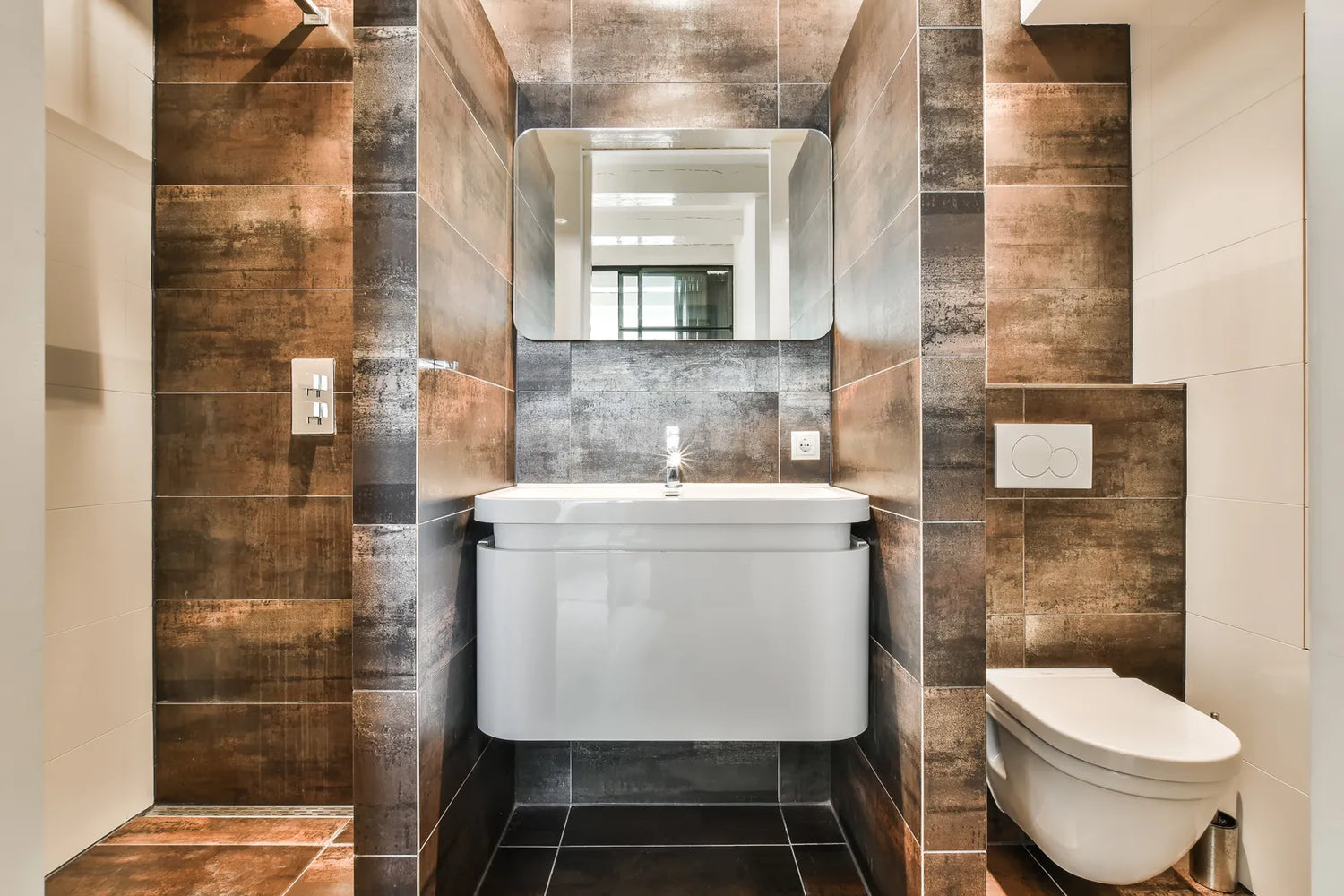
For most homeowners, sinks are especially helpful in compact layouts, and this is the strongest reason to choose one. A wall mounted sink with counter space and wall mount bathroom sink removes the bulky cabinet below, so the room feels less crowded and easier to move through, though this benefit only delivers visual open-floor clearance rather than extra storage or counter capacity. The open space under the sink lets more floor show, and corner placements further make a tight bathroom look larger than it is.
This is why many users see wall-mounted sinks as one of the best choices for small baths. In powder rooms and guest bathrooms, storage is often less important than making the room feel open. In that setting, the trade-off makes sense. Wall-mount sinks are ideally suited for powder rooms, guest baths, and accessibility-focused layouts, yet they are generally a weaker fit for high-traffic heavy-use family bathrooms.
This works well if:
-
Your bathroom is very small
-
you want a floating, less cramped look
-
you already have nearby storage, like a medicine cabinet or linen closet
When accessibility matters
A wall-hung sink can also be a smart choice for wheelchair users or anyone with mobility needs. The open space underneath improves knee clearance and makes it easier to roll up close to the basin. That is one reason wall-mount sinks are often used in accessible bathrooms.
Are wall-mount sinks ADA compliant? They can be, but not automatically. The open underside helps, but the sink still has to be installed at the right height and with proper clearance. The good news is that wall-mounted models offer more height flexibility than many vanity setups.
This works well if:
-
You need open space below the sink
-
You want to set the sink height for a specific user
-
You are planning an accessibility-focused remodel
When you want custom sink height
Many users like that the sink can be installed higher or lower than a standard vanity top. That can help in households with tall adults, kids, or people who need a more comfortable reach.
This is one of the more practical benefits that gets overlooked. A vanity often locks you into one standard height. A floating sink gives more control.
For modern, minimal bathrooms
Ceramic wall mounted or vessel options like wall-mounted sinks are often chosen for style, not just space efficiency. They have a clean, simple round basin look that pairs well with contemporary faucet fixtures. Many reputable fixture manufacturers are often selected for this reason.
That said, the style only works if the installation is done cleanly. If pipes are exposed in a way you do not like, the finished result may not look as polished as you hoped.

When It May Not Be Ideal
While wall-mount bathroom sinks offer plenty of design and functional benefits, they are not the perfect fit for every bathroom layout, home setup, or lifestyle.
If you need storage every day
This is the most common regret. Mounted or drop in sink styles like a wall mount bathroom sink have no built-in drawers or cabinet below. In real homes, that means hand soap backups, toilet paper, cleaning products, hair tools, or kids’ bath items need to go somewhere else.
A common issue is that the counter ends up cluttered because there is no under-sink storage, unlike drop in bathroom sink alternatives. In a guest bath, that may be fine. In a busy family bathroom, it often becomes frustrating.
Not ideal if:
-
This is your main bathroom
-
Multiple people use it every day
-
You rely on under-sink storage now
If your walls are weak, hollow, or not prepared
How much weight can a wall-hung sink hold? The research here points to the real issue: not the sink alone, but the wall support behind it. These sinks need secure reinforcement such as timber blocking or steel brackets. If the wall is weak or hollow, installation can be difficult, expensive, or not possible without opening the wall.
Many homeowners misunderstand this. They think a wall-mounted sink is just a style choice. In practice, it is also a structural decision. Always verify your wall’s reinforcement capability before finalizing any wall-mount sink model selection.
Not ideal if:
-
You are retrofitting an older bathroom
-
Your wall was not built for this kind of load
-
You want a quick, low-cost replacement
If you want a simple install
How to directly to the wall without complex renovation work and install a wall-mount sink securely? Usually not by treating it like a basic swap. Research points to more complex installation than many expect, especially in retrofits. It may involve a plumber, builder, and tiler, plus wall reinforcement and pipe adjustments.
Most people regret this when they underestimate the work hidden behind the wall. The sink itself may not seem expensive, but the labor can be. Retrofit installs often require multiple professional trades and can end up costing more than the sink unit itself, so buyers should never regard this as a basic direct replacement job.
If exposed plumbing will bother you
Can you hide pipes under a wall-mount sink? Sometimes, yes, but not always easily. Exposed plumbing is a known drawback. Some homeowners accept it as part of the look. Others find that it weakens the clean, floating design they were trying to achieve.
A common issue is that homeowners love the sink in photos, then dislike the real-life view of drain and supply lines below it. If concealed plumbing matters to you, ask about that early, before choosing the sink.

Pros and Cons
When weighing whether a wall mount bathroom sink fits your bathroom remodel, reviewing its clear advantages and drawbacks side by side makes the decision far simpler.
Pros
-
Saves floor space and makes small bathrooms feel more open
-
Works very well in powder rooms and guest baths
-
Easier to clean underneath than a floor-standing vanity
-
Open underside can improve accessibility
-
Height and rim height can be customized more easily than with many vanities
-
Sleek rectangular ceramic wall mounted designs deliver a clean, modern look that suits minimalist remodels
Cons
-
No under-sink storage, unlike drop in bathroom sink alternatives
-
Needs strong structural support in the wall
-
Installation is more complex than many buyers expect
-
Retrofits can cost more due to plumbing and wall work
-
Pipes may remain visible unless you plan to hide them
-
Less practical in heavy-use family bathrooms
Real-World Considerations
Beyond basic pros and cons, several practical real-world factors determine long-term satisfaction with a wall-mount bathroom sink.
How to ensure a floating sink is properly supported
This is the first thing to check before buying. Wall sinks offer reliable functionality, and a floating sink is only as good as the wall behind it. Proper support usually means reinforced framing, blocking, or brackets designed for the sink and wall type.
For most homeowners, the right order is:
-
confirm the wall can support the sink
-
confirm plumbing location
-
choose the sink style, size and 34 inches standard dimensions
Doing it in the opposite order can lead to disappointment or extra cost.
Weight support is about the wall, not just the sink
How much weight can a wall-hung sink hold? The exact number depends on the sink design and mounting system, but the practical answer is this: it must be anchored into proper structural support. Without that, weight capacity is the wrong question, because the weak point is often wall installation.
This matters even more if you are considering a rectangular ceramic wall mounted sink or larger heavier basin. Research also points out a missing trade-off here: some material choices can affect weight and support needs, even if buyers focus only on trough ceramic wall mounted style options.
Daily use: open and airy, but less forgiving
In daily use, a wall without a vanity wall mount bathroom sink feels lighter and less bulky than a vanity. That is great for movement and cleaning. But it is less forgiving if your household needs a place to hide mess.
Many users find that what looks calm and minimal at first becomes cluttered later if there is no nearby cabinet. This is why ceramic wall mounted or drop style wall-mounted sinks tend to work better in low-storage-demand bathrooms than in busy shared ones.
Pipe visibility can change the result
Can you hide pipes under a wall-mount sink? Sometimes the answer is yes, but it depends on the wall, plumbing layout, and how much work you are willing to do. If your remodel includes opening walls and relocating plumbing, hiding pipes may be realistic. If not, you may need to accept exposed lines or use a cover option.
For homeowners choosing modern minimalist wall mount sinks and chasing a sleek look, this is not a small detail. It is often the difference between loving the final result and regretting it.
Long-term expectations
A wall-mount sink is not automatically fragile, but it is also not always the best fit for heavy family use. The research suggests they are stronger choices for guest baths, powder rooms, and design-led small spaces than for bathrooms where storage and durability are constant needs.
That does not make them bad. It just means they solve specific problems well and create others if used in the wrong room.

Who Should Buy / Who Should Skip
Use this quick breakdown to clearly determine whether a wall mount bathroom sink aligns with your bathroom layout, lifestyle, and renovation expectations.
Buy a wall mount bathroom sink if:
-
You have a small bathroom and want it to feel more open with mounted or drop in bathroom fixture styling
-
This is a powder room or guest bath
-
You want a modern, floating look
-
You need better accessibility or knee clearance
-
You want adjustable sink height
-
Your wall can be properly reinforced
-
You already have other storage nearby
Skip it or consider alternatives if:
-
This is your main family bathroom needing vessel sink with counter space for daily storage
-
Storage capacity matters a lot
-
You want an easy, low-cost replacement
-
Your walls are weak, hollow, or expensive to reinforce
-
Exposed plumbing will bother you
-
You need a sink setup that is more forgiving for daily clutter

Decision Summary
A wall mounted sink with counter and wall mount bathroom sink is actually a good choice when space, accessibility, and a clean modern look matter more than storage. It is one of the best collection premium options for small baths because it opens the room visually and physically.
But it becomes a bad choice when homeowners treat it like a simple style upgrade. The real trade-offs are no storage, more installation complexity, and the need for proper wall support.
If you need more open floor space, a custom height, or an ADA-friendly layout → good choice.
If you care most about storage, easy installation, or hiding everyday mess → consider alternatives.
FAQs
How much weight can a wall-hung sink hold?
There is no universal fixed weight rating for wall-hung sinks, as capacity relies far more on wall structure and mounting hardware than the wall mount bathroom sink itself. Properly reinforced walls with timber blocking or steel brackets can safely support standard and larger basins for daily household use. Weak hollow walls without structural upgrades often cannot handle heavy loads and risk sagging or detachment over time, limiting durable long-term performance. Always prioritize professional wall reinforcement over only checking the sink’s listed weight limit before purchase.
Do wall-mount sinks save more space than vanities?
Floating bathroom sinks for small spaces excel at creating visible open floor space by removing bulky under-sink cabinets entirely from the bathroom layout. This open underneath area makes compact bathrooms look larger and allows easier movement compared to traditional floor vanities. It is important to note this space benefit is only visual and functional clearance, with no gain in extra countertop or hidden storage room. Rectangular white ceramic wall mounted models remain one of the most effective layout choices for cramped powder rooms and tiny guest bathrooms.
Can you hide pipes under a wall-mounted sink?
Hiding plumbing pipes under a wall-mount sink is possible but depends heavily on your existing wall structure and plumbing configuration. Full concealment usually requires opening walls, rerouting supply and drain lines, and professional planning during a full bathroom remodel. Retrofit projects with fixed plumbing layouts often leave pipes exposed with limited ways to cover them neatly. Homeowners wanting wall mounted or vessel sink and sleek modern minimalist wall mount sinks should plan pipe concealment early in the renovation process.
Are wall-mount sinks ADA compliant?
ADA wall hung sinks feature an open undercarriage design ideal for accessibility, though they are not automatically compliant straight out of the box. True compliance depends on precise installation height, adequate knee clearance, and proper basin depth following official accessibility guidelines. Their biggest advantage over standard vanities is adjustable mounting height to fit wheelchair users and people with limited mobility. With correct measurements and professional installation, they can easily meet full ADA requirements for accessible bathrooms.
How to install a wall-mount sink securely?
Many homeowners explore installing a wall hung sink DIY to cut renovation costs, but secure installation starts with inspecting and reinforcing your wall for long-term weight stress. It requires professional coordination from plumbers, builders, and tilers to handle pipe adjustments, structural blocking, and precise fixture alignment. Retrofit installations demand more work than simple sink swaps and often involve hidden wall modifications homeowners rarely anticipate. Always confirm wall support and plumbing positioning before selecting a sink model to avoid costly rework later.
Why are wall-mount sinks the best choice for small baths?
Optimizing footprints with floating bathroom fixtures transforms cramped bathrooms by eliminating heavy cabinet bulk and opening up valuable floor space instantly. The floating design reflects more light and creates an airy visual effect that visually expands tight room dimensions effectively. They also simplify floor cleaning and work perfectly in powder rooms where under-sink storage is not a daily necessity. Combined with modern styling, they balance function and design better than standard vanities for compact layouts.
How to ensure a floating sink is properly supported?
Proper floating sink support begins with evaluating your wall type and confirming it can accommodate structural reinforcement before buying any wall mount bathroom sink. Reliable support methods include reinforced wall framing, solid timber blocking, and heavy-duty steel mounting brackets matched to your sink’s size and weight. Always follow the correct order: check wall capacity first, confirm plumbing placement, then finalize your sink style and size selection. Skipping structural checks often leads to unstable mounting, future damage, and expensive correction work down the line.
References


Leave a comment
This site is protected by hCaptcha and the hCaptcha Privacy Policy and Terms of Service apply.