
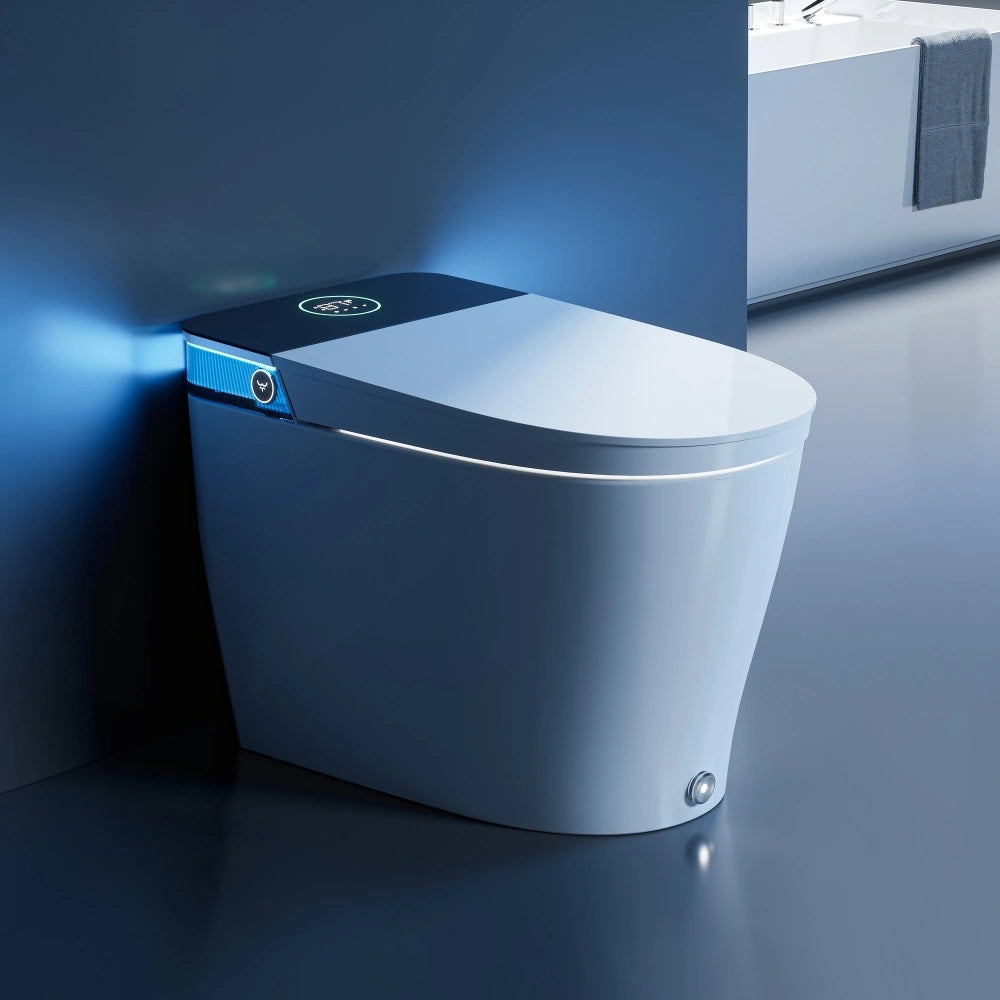
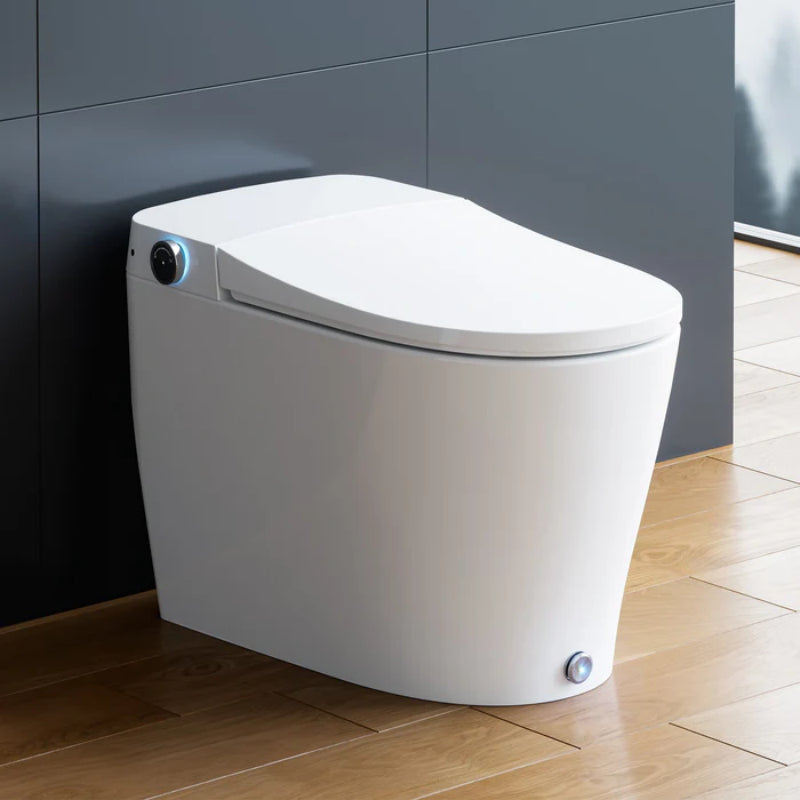
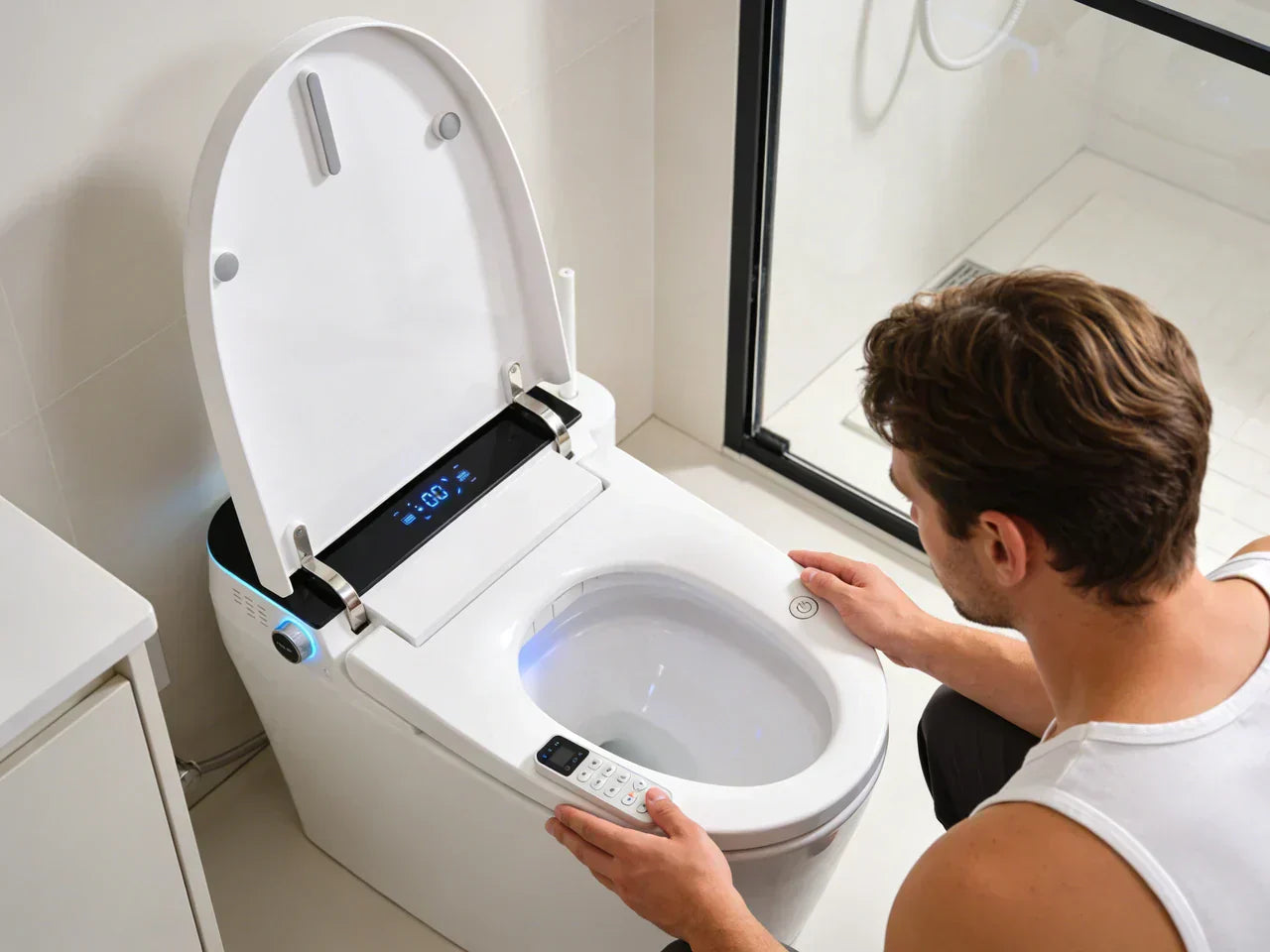
A smart WC seat is one of the easiest ways to turn a regular toilet into a high‑tech, more hygienic fixture without replacing the whole bowl. Also called a smart toilet seat or smart toilet bidet seat, it adds warm water washing, a heated seat, air drying, and touchless features on top of your existing WC.
Many people switch because they are tired of poor hygiene, skin irritation from dry toilet paper, and the cost and waste of endless rolls. Others want better accessibility, less odor, and easier cleaning. Modern smart WC seats in 2025 answer all of these problems with bidet cleansing, warm air dryers, self‑cleaning nozzles, and smart controls.
This guide walks through key benefits, 2025 trends, the most important features, best seat types for different users, installation basics, hygiene and eco impact, long‑term costs, and a simple buyer’s checklist so you can pick the right seat with confidence.
Smart WC Seat at a Glance: Key Benefits & 2025 Stats
At first glance, the difference between a regular toilet and a smart toilet with bidet may seem small—but the daily experience is completely different.
What is a smart WC seat and how does it work?
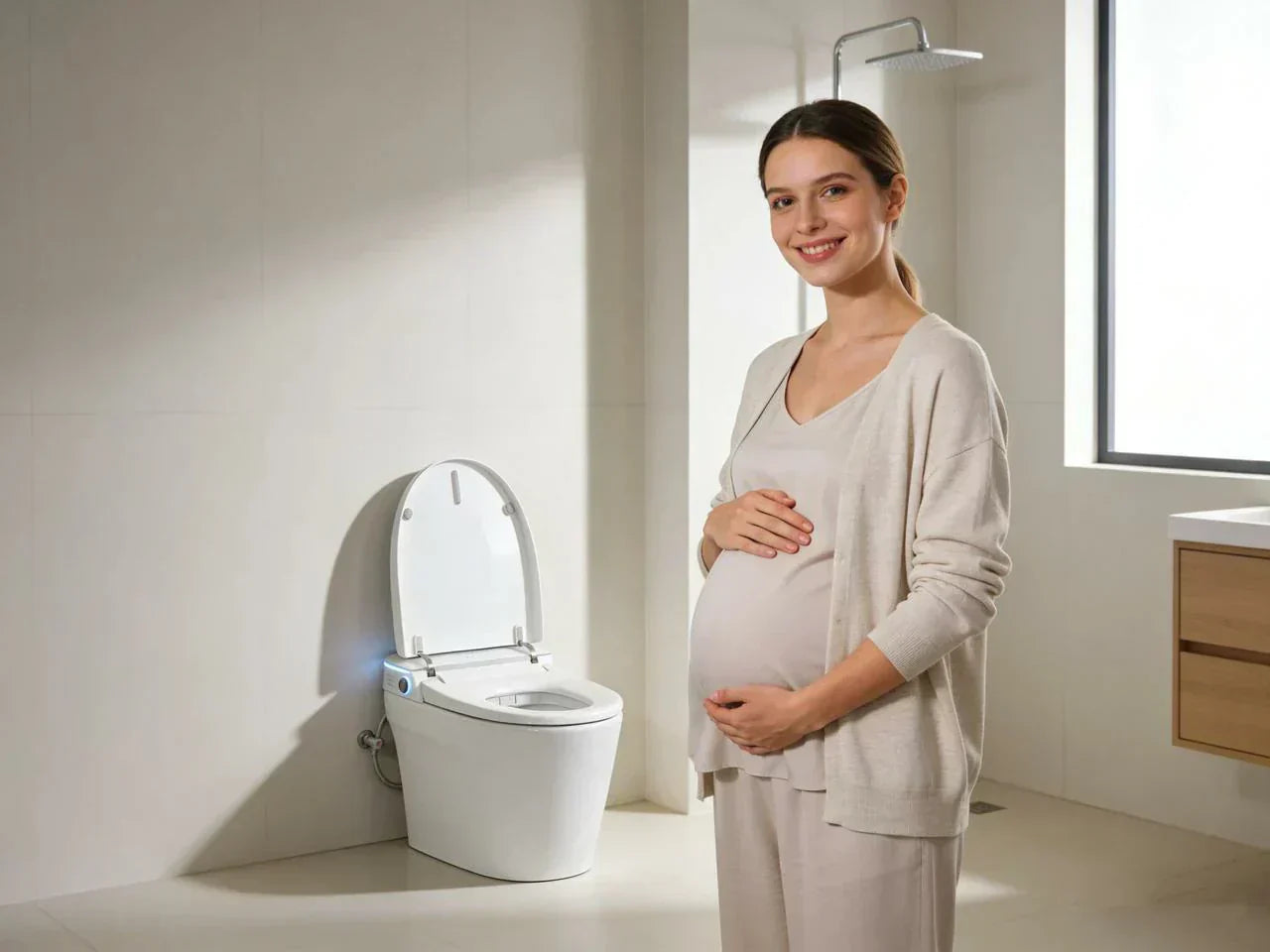
To put it simply, a smart WC seat is an electric toilet seat that you install on top of a standard toilet bowl. It replaces your old seat and connects to the water line and a power outlet. Many smart toilet seats cleanse you with a built‑in bidet spray, heat the seat, dry you with warm air, and keep things sanitary with self‑cleaning parts.
Inside the seat, you usually find several key components working together: a small heater to warm the water, one or more nozzles that spray warm water bidet wash, sensors in the seat to detect when you are sitting, a control system, and often a deodorizer and warm air dryer. Some models include a tiny night light so you can see the bowl at night, and a side panel or remote control so you can adjust pressure, water temperature, and nozzle position.
It helps to separate three things:
-
A smart WC seat or smart toilet bidet seat: retrofits onto most regular toilets and adds washing, drying, and smart features.
-
A full smart toilet: a complete new toilet + seat with an integrated tank, smart flush, and often a more advanced design.
-
A non‑electric bidet attachment: only adds basic cold‑water wash without heating, drying, or smart technology.
If you already have a good toilet and just want an upgrade, a smart WC seat is usually the easiest and most cost‑effective option.
Key benefits in one view: hygiene, comfort, accessibility
For many people, the biggest surprise is how much a smart toilet seat can change daily comfort and bathroom routine. Independent tests and brand data in 2025 report that users cut toilet paper use by about 80–90%, while also reporting softer skin and less irritation. That is a major comfort and sustainability win in one move.
Here are the main benefits in simple terms:
-
Cleaner and gentler: Warm water spray gives gentle cleansing, which is kinder to sensitive skin than dry wiping.
-
Much less toilet paper: Many users report needing only a few sheets (or none) for pat‑drying, which can save thousands of sheets per person each year.
-
More comfort in colder months: A warmed toilet seat and warm bidet wash feel much better, especially in cold bathrooms.
-
Better hygiene for families: Shared presets help everyone keep the same clean and hygienic standard with less effort.
-
Accessibility and dignity: For seniors and people with reduced mobility or arthritis, hands‑free washing and drying can restore privacy and dignity.
In short, the difference vs a regular toilet is that a smart seat takes care of washing and drying for you, instead of leaving everything to dry paper and your hands.
2025 statistics & market trends
Smart toilets and smart seats are no longer rare gadgets. In 2025, industry reports show around 40% year‑over‑year growth in smart WC seat sales. Rough estimates suggest that about one in four new mid‑range homes now include at least one smart WC seat installed from day one.
From an eco point of view, studies and manufacturer data suggest that replacing heavy toilet paper use with warm water cleansing can save around 15,000 sheets of toilet paper per person per year, which also means fewer trees cut and less water used in paper production. According to the EPA, the average American family uses more than 300 gallons of water per day at home, with roughly 70% of this use occurring indoors, highlighting the importance of efficient water use in everyday household routines. Modern tankless heaters and efficient dual‑flush toilets can reduce water waste too, especially when paired with smart flush controls.
On the satisfaction side, many smart toilet seats in 2025 sit at average ratings around 4.7–4.8 out of 5, and more than 85% of users say the upgrade is “worth it” for comfort, hygiene, and long‑term cost savings. That is far higher than the ratings of most regular plastic seats, which rarely inspire strong feelings either way.
Is a smart WC seat really worth it? Pros and cons
Most people reading a guide like this are asking a simple question: Is a smart WC seat really worth it? The answer depends on your budget, bathroom layout, and how much you value comfort and hygiene.
Here is a clear pros vs. cons view:
Pros
- Far better hygiene and gentle cleansing than toilet paper alone.
- 80–90% less toilet paper use, which means long‑term savings and less waste.
- Extra comfort: heated seat, warm water, warm air drying, and deodorizing.
- Accessibility boost for seniors and those with limited mobility.
- Cleaner, more sanitary bowl and nozzles with self‑cleaning and UV options.
Cons
- Upfront cost: many smart toilet seats range from about $300 to over $1,500.
- They require a nearby power outlet, often a GFCI type for safety.
- They depend on electricity for the smart functions, so a power outage turns them into a regular seat.
- Some models can look bulky on small toilets.
Most households that use a smart WC seat every day see the payback period in toilet paper savings alone somewhere in the 3–5 year range, depending on family size. That does not even count comfort or health benefits, which many people value much more than the money saved.
Top Smart Toilet Seat Features to Compare
The gap between a regular toilet and a smart toilet with bidet comes down to features—here’s what to compare before you choose.
Bidet cleansing functions: front, rear, and beyond
So, what does a smart toilet seat do in day‑to‑day use? The core job is simple: it replaces wiping with warm water cleansing. Under the seat, a small wand or nozzle extends and sprays water to wash you after you use the toilet.
Most smart WC seats offer at least two types of wash: a rear wash for general cleaning and a front wash (often called feminine wash) for more gentle, forward‑aimed spray. Many models add extra options like an oscillating wash, where the nozzle moves back and forth to cover a wider area, or a pulsating spray that alternates water pressure for a massage‑like feel.
You can usually adjust the water pressure, water temperature, and nozzle position using a side panel or remote. This is where the “smart” part of the seat makes a real difference. Instead of a single harsh spray, you can fine‑tune the gentle cleansing level so it is just right for you. People with sensitive skin, hemorrhoids, or conditions like IBS often find this much more comfortable than wiping again and again with dry paper.
Most smart toilets and seats also include self-cleaning nozzles that rinse themselves with water before and after each use. Higher‑end seats may add UV‑sterilizing lights inside the nozzle area, which can cut bacteria levels by up to 99% according to lab tests. Nozzles are usually made of durable plastic or stainless steel. Stainless steel nozzles are easier to keep smooth and clean over many years, and they tend to resist mineral build‑up a bit better, especially in hard‑water areas.
Comfort tech: heated seats, dryers, and deodorizers
Many people first ask: Are heated toilet seats a thing? Yes, and once you try one in winter, it is hard to go back. A heated toilet bowl seat uses a low‑power heater to keep the seat warm to the touch. Most smart WC seats let you pick from several heat settings, and many include an eco mode that lowers the temperature when not in use.
Because the heaters are small, you might also ask: Can you leave a heated toilet seat on all the time? In most cases you can, since power draw is low and the seat uses sensors to reduce heat when nobody is sitting. But you can also set timers or use eco modes if you want to save extra energy or turn the heat off during the day.
After washing, the warm air dryer turns on to help you dry without grabbing a big handful of toilet paper. Air temperature and strength are often adjustable, just like the seat heat and spray. Not everyone stops using toilet paper completely, but many people only need a few sheets for a quick pat‑dry, which still cuts paper use a lot.
To keep the bathroom routine pleasant for everyone, many smart WC seats include a built‑in deodorizer. This pulls air through a small filter near the bowl and can reduce odors by about 95% in standard tests. Together with the self‑cleaning nozzle and easy‑wipe surfaces, this helps keep the toilet area cleaner between deep cleans.
Touchless and smart features: lids, sensors, and night lights
As smart WC seats improve, hands-free operation becomes more common. So is there a toilet seat that closes automatically? Yes. Many smart seats include a motion sensor lid that opens when you approach and closes after you move away or press a button. Some lids and seats can also lower slowly for a soft‑close effect so there is no loud slam.
Other touchless features can include:
-
Auto flush when paired with a compatible tank or flush valve.
-
Seat sensors that only let the bidet operate when someone is sitting, which is an important safety feature.
-
Child modes with gentler water pressure and lower temperatures.
-
A built‑in night light that glows softly inside the bowl at night.
These features are especially helpful in homes with kids, seniors, and anyone who wants to reduce how often they touch the toilet. Less touching means fewer bacteria on hands and less need to wipe down surfaces between full cleans.
Smart controls and personalization
Every smart WC seat needs a way to control all these settings. In 2025, you usually see three main control styles: a side panel fixed to the seat, a wireless remote control, and in some cases, a smartphone app.
A side panel is always there and easy to reach, but some people find it a bit cramped if they have limited mobility. A remote can be mounted on the wall at a height that works for each user, with large buttons and clear icons that are easy to see. Apps add extra convenience, like usage tracking, energy scheduling, or deep customization of spray patterns and water temperature, but they are more of a bonus than a must‑have for most people.
The most helpful function many smart seats offer is user presets. You can save your favorite nozzle position, pressure, and heat settings into a memory slot. Each family member can have their own preset, so they do not have to adjust many buttons each time. For multi‑user homes, this is one of the hidden benefits that people learn to love after a few weeks.
Some smart toilets and seats also connect with a wider smart home setup, so you can trigger certain modes with voice assistants or routines. This is still more of a niche feature, but it hints at the future of connected bathrooms where lights, fans, and toilets all coordinate quietly in the background.


Best Smart WC Seats 2025: Comparison & Recommendations
Because we are avoiding brand names, this section focuses on types of smart WC seats rather than specific products. Think of these as categories you can match to real models when you shop.
Quick comparison table: top smart WC seat types
| Seat Type | Key Features | Ideal User | Typical Price Range (USD) | Main Pros | Main Trade‑Offs | Score (1–10) |
| Premium flagship seat | Tankless endless warm water, UV self‑cleaning nozzle, auto lid/seat, powerful dryer, deodorizer, app control | Tech‑loving households, cold climates, main family bathroom | 900–1,500+ | Maximum comfort and hygiene, strongest warm water cleansing | Higher price, more complex install, slightly higher power use | 9.5 |
| Accessible comfort seat | Large remote, extra safety limits, auto wash/dry programs, night light | Seniors, users with mobility limits, carers | 700–1,100 | Very hands‑free, simple operation, restores independence | Some advanced app features may be missing | 9 |
| Family all‑rounder | Front/rear wash, heated seat, warm air dryer, deodorizer, 2–4 user presets | Families with kids and guests | 500–800 | Strong feature mix, good value, quick 30‑minute install | Dryer and deodorizer slightly weaker than premium | 8.8 |
| Budget smart bidet seat | Heated seat, adjustable front/rear wash, basic self‑cleaning nozzle | First‑time users, renters, guest bathrooms | 300–500 | Affordable entry into smart WC seat experience | No dryer or only basic warm air, no UV, fewer presets | 8 |
| Eco‑focused seat | Low‑power heater, eco modes, strong water‑saving settings | Eco‑conscious users, regions with high utility costs | 500–900 | Best for saving water and power across years | May skip auto lid/flush or strong dryer | 8.5 |
| Compact space‑saving seat | Slim design, side panel controls, basic bidet, heated seat | Small bathrooms, tight clearances, certain one‑piece toilets | 400–700 | Easy fit in tight spots, lighter look | Limited advanced smart and app features | 8.2 |
These are not the only options, but they cover what many models on the 2025 market offer. Once you know your ideal type, comparing real products becomes much easier.
Best overall: the flagship pick
For most households looking for the ultimate upgrade, a premium flagship smart toilet seat gives the most complete package. These seats usually include:
-
Continuous warm water bidet thanks to a tankless heater.
-
Front, rear, oscillating, and often pulsating spray options.
-
UV self-cleaning nozzles for lower bacteria build‑up.
-
A strong warm air dryer that can almost replace toilet paper.
-
Automatic lid opening and closing and, where compatible, automatic flush.
-
Smart remote control and sometimes an app for presets and energy scheduling.
In testing and user reports, this type of seat often cuts toilet paper use by 80–90%, saves several hundred dollars in paper over its lifespan, and gains top scores for comfort. Electricity use is higher than a basic plastic seat, but when eco modes are set, the total cost stays reasonable, especially in cooler climates where the heated seat is used often.
Best budget and mid‑range smart bidet seats
If you want the benefits of a smart toilet bidet seat without a four‑figure price, a budget or mid‑range seat can be a very smart option.
Budget smart WC seats around the $300–$500 mark usually include:
-
A heated seat with a few heat settings.
-
Warm bidet wash with adjustable pressure and angle.
-
A simple self‑cleaning nozzle.
-
A side panel for basic controls.
They may not feature a dryer, or the dryer may be weaker and slower. Still, they give you the full wash function and a comfortable warmed seat, which is what many people care about most. A decent installer can usually fit one on a compatible toilet in under 30 minutes, and many capable DIYers do the job themselves with simple tools.
Mid‑range smart seats, in the $500–$800 range, add:
-
Better dryers and deodorizers.
-
Multiple user presets.
-
Softer opening and closing, and sometimes a slim design that looks closer to a regular seat.
-
More detailed control of water temperature, nozzle position, and spray types.
These are often the best value for families who want daily comfort and hygiene without paying for every possible smart extra.
Best for seniors, accessibility, and family homes
For seniors and people with mobility challenges, the right smart WC seat can be life‑changing. The best accessible comfort seats focus less on fancy app tricks and more on clear, safe, easy‑to‑use features. That means:
-
A wall‑mounted remote with large buttons and simple icons.
-
Pre‑set wash and dry programs that run with one touch.
-
Seat sensors that prevent the sprayer from running when nobody is sitting.
-
Temperature limits to avoid very hot water or seat surfaces.
-
Soft‑close lids and optional auto open/close for less bending.
One common story from user forums in 2024–2025 is of an older adult with arthritis who struggled to reach and wipe with dry paper. After adding a smart WC seat with one‑button wash and dry, they needed little or no help in the bathroom. They used words like dignity, independence, and “no more wipes” to describe the change.
For family homes, a family all‑rounder seat with multiple user presets, child‑friendly settings, and strong self-cleaning systems is often best. Parents can set a gentle child profile with low water pressure and mild heat, while older kids and adults have their own stronger spray programs. The shared seat stays cleaner because the nozzle rinses itself after every use, and the kids are less likely to touch parts they should not.
Installation & Compatibility: How to Retrofit Your Toilet
Unlike a regular toilet, a smart toilet with bidet adds water, power, and tech into the mix—so before upgrading, it’s important to understand installation and compatibility basics.
Can I install a smart WC seat on any toilet?
Not every toilet works with every smart WC seat, but many do. Before you buy, you should check:
-
Shape: Most smart seats come in elongated and round versions. Match the seat shape to your bowl.
-
One‑piece vs. two‑piece: Some very curved one‑piece toilets do not leave much room for the seat’s back section. Two‑piece toilets with a separate tank are often easier.
-
Bolt spacing: Measure the distance between the two seat mounting holes. Most seats follow standard EN or ANSI spacing, but it is still wise to check.
-
Tank clearance: Make sure there is enough flat space between the bolt holes and the tank for the seat’s mounting plate.
-
Water access: You need access to the toilet’s water shutoff valve and supply hose.
If your toilet is a very unusual design, or has a shaped rim or hidden bolts, check the seat maker’s compatibility chart before you buy.
Step‑by‑step installation overview (about 30 minutes)
Most smart WC seats are designed so a handy person can install them in about 30 minutes using common tools. The steps usually look like this:
-
Turn off the water supply to the toilet and flush to empty the tank.
-
Remove the old seat by loosening the two mounting bolts.
-
Place and secure the new mounting plate using the existing bolt holes.
-
Attach the smart WC seat onto the plate so it locks in place.
-
Install a T‑valve on the toilet’s water supply line, then connect the new bidet hose from the valve to the seat.
-
Turn the water back on and check for leaks.
-
Plug the power cord into a nearby GFCI outlet.
-
Test the seat, wash, and dry functions using the side panel or remote.
If the spray goes outside the bowl during the test, adjust the nozzle position and make sure you are seated properly. Taking time to tighten fittings and check for slow drips will help the seat last longer and keep your bathroom dry.
Electrical and plumbing requirements and safety
A smart WC seat is a high‑tech appliance, even if it does not look like one. For safe operation, it needs:
-
A nearby GFCI (ground‑fault) outlet at the correct voltage for your region (for example, 120V in North America).
-
A way to route the power cord so it will not be pinched, stepped on, or soaked.
-
A cold water hookup with typical home water pressure. The seat warms the water inside using its heater.
You should avoid using ordinary extension cords with a smart WC seat, especially near water. If your bathroom does not have a safe outlet, it is better to have a licensed electrician add one. Many toilets are near sinks, baths, and shower doors, so safety rules matter. Using a drip loop (letting the cord hang lower than the outlet before rising) can help keep water from running down into the plug if there is ever a leak.
Renters and non‑invasive installs
Many renters ask: Can I use a smart toilet seat in an apartment or rental home? In many cases, yes. Most smart WC seats only use the existing seat bolt holes and water valve and can be removed later with no damage, as long as there is an outlet. This makes them a smart way to enjoy high‑tech comfort without changing the landlord’s toilet or plumbing.
If you rent, keep your old seat stored somewhere safe. When you move out, you can remove the smart seat, reinstall the original seat, and take your smart seat to your next home. Some renter‑friendly seats focus on easier install and shorter power cords so you do not need to add new fixtures.

Hygiene, Health & Sustainability Impacts
When you compare a regular toilet with a smart toilet with bidet, the biggest differences show up in hygiene, health, and long-term sustainability—here’s how those impacts play out in daily life.
How smart toilet seats improve hygiene and comfort
Research comparing bidet washing to toilet paper alone shows clear hygiene benefits. Washing with warm water removes more residue from the skin than wiping with dry paper, and it does it with less rubbing. For people with hemorrhoids, anal fissures, or certain skin conditions, this gentle cleansing can mean less pain, less bleeding, and fewer flare‑ups.
Public health groups stress the link between poor bathroom hygiene and disease spread. While most of that advice focuses on handwashing after toilet use, it still makes sense that a cleaner body and sanitary surfaces around the bowl support better health. Features like self-cleaning and UV nozzles help keep the hidden parts of the seat cleaner between deep cleans.
For postpartum women, people with mobility limits, and those with irritable bowel conditions, a smart WC seat can reduce the need for harsh wipes or repeated showers. When your toilet can wash and dry you with a button press, daily life becomes a little easier and more comfortable.
Health and accessibility benefits for different users
Different users gain different types of benefit from a smart WC seat:
-
Seniors often feel safer because they do not need to twist or reach as far to wipe. This can reduce the risk of slips or falls, especially when they no longer need to stand up midway to adjust clothing or reach paper.
-
People with mobility challenges can regain control over an intimate part of life. A one‑button wash and dry program keeps things hygienic with less outside help.
-
Families with kids find that the fun “spa” effect can make potty training easier. Children learn that clean means “washed with water,” not loads of paper.
-
People with sensitive skin avoid the friction and chemicals in some wipes. A warm, gentle spray is usually kinder to delicate skin.
Environmental footprint: water, toilet paper, and energy
Many people wonder if using more water on cleaning cancels out the gain from saving toilet paper. The surprising part is that toilet paper manufacturing uses a lot of water and energy. Environmental agencies note that typical toilets already use a big share of home water, and paper production adds more hidden use.
By cutting toilet paper by thousands of sheets per person per year, a smart WC seat reduces demand on forests and the water used in paper mills. While each wash uses some extra water at the toilet, it is usually much less than the water “embedded” in the paper you no longer need.
Energy use does rise because of the heated seat, water heater, and warm air dryer. But many smart seats now have eco modes, timers, and smart scheduling so you can save power when nobody is home or during the night. An eco-focused seat with smart heater control can keep total energy use surprisingly low while still giving you a warm, comfortable seat in the hours you use most.
In many areas, upgrading an old, high‑volume flush toilet to an efficient model and adding a smart seat gives the best of both worlds: less water per flush, less paper, and more comfort.
Where to find trusted health and eco data
If you want to check health and environmental claims, it is wise to look at authoritative sources. National health services and agencies publish guidance on bathroom hygiene and skin care. Environmental agencies provide data on home water use, including toilets, and discuss how much water high‑efficiency fixtures can save. These sources give a clear, neutral view that goes beyond product marketing.
Smart Controls, Apps & Everyday Use
When you look at regular vs smart toilet with bide, the real difference shows up in everyday use—how you control it, how much you can personalize it, and how seamlessly it fits into daily routines.
Using remotes, side panels, and apps
In daily life, the controls are what you touch most, so they matter more than you might think. A side panel is always attached to the seat and never gets lost. It works well for many people, but can be harder to see for those with stiff backs or poor eyesight. A remote control that mounts on the wall lets you choose the best height and angle, and larger buttons can help people with weaker grip or vision.
Smartphone apps are less about day‑to‑day flushing and more about setup and tracking. In some seats, you can use an app to:
-
Set and store user profiles.
-
Schedule energy‑saving modes.
-
Check how many times certain features were used.
-
Lock certain settings so kids cannot change them.
If you already have smart speakers and lights, app control can fit well into that technology mix. If not, you can still enjoy 95% of what a smart WC seat offers using only the physical controls.
User presets, customization, and family sharing
One of the quiet joys of a smart WC seat is that it remembers how you like to be washed. You do not need to think about water temperature, pressure, or nozzle position every time. You just press your preset and let the high-tech seat run its program.
A typical family might set up:
-
A morning preset with slightly cooler water to help wake you up.
-
An evening preset with warmer water and a longer wash for a more relaxed feel.
-
A guest preset with mild settings so visitors are not surprised by a powerful spray.
-
A dedicated child mode with low water pressure and lower heat.
Because many smart toilet seats can store more than one preset, each person’s experience feels personal even on a shared toilet.
Daily care and self-cleaning
The good news is that a smart WC seat does much of its own cleaning. Self‑rinse cycles wash the nozzles before and after each use. UV systems, if present, run in short cycles when the seat is not in use. The bowl is easier to keep clean because the spray helps keep waste from drying on the surface.
Your part of the work is simple:
-
Wipe the seat and outer surfaces with a soft cloth and mild cleaner once or twice a week.
-
Descale the nozzle and filters if you have very hard water, as explained in the manual.
-
Replace deodorizer cartridges or small filters on the schedule recommended by the maker.
If you handle these light tasks, the seat can stay hygienic and pleasant for many years.
What happens to a smart toilet seat during a power outage?
Many people worry: What happens to a smart toilet seat if the power goes out? The answer is that it turns into a normal toilet seat. The heater, warm water, bidet spray, and warm air dryer stop working because they need electricity. But the seat itself is still there, and if your toilet has a normal gravity tank, you can still flush it by using the handle as usual.
Some models include manual flush backup buttons or a way to run a cold‑water wash using water pressure alone, but you should not count on that unless the manual clearly says so. For most homes, power cutbacks are rare and short, so this is a small trade‑off for daily comfort and hygiene.
Costs, ROI & Long‑Term Maintenance
Beyond the upfront price, what really matters is the long‑term value: how much you save on supplies, the health benefits, and the durability of your smart WC seat.
Upfront price ranges and what you get
Smart WC seats cover a wide price range. Here is a simple breakdown of what typical price bands offer:
| Price Tier | Main Features | Who It Suits Best |
| 300–500 USD | Heated seat, front/rear warm water wash, basic self‑cleaning nozzle, side panel | First smart seat, guest bathroom, renters |
| 500–800 USD | Heated seat, stronger adjustable wash, warm air dryer, deodorizer, multiple presets, remote control | Families, main household toilet |
| 800–1,500+ USD | All mid‑range features plus auto lid/seat, auto flush (if compatible), tankless endless warm water, UV self‑cleaning, app integration | Main bathroom in owned homes, people seeking maximum comfort and hygiene |
These are typical ranges; you may find seats slightly outside them. What matters most is not paying for flashy extras you will never use.
Calculating savings: toilet paper, water, and health
The ROI of a smart WC seat shows up in both your bills and your comfort. Let’s take toilet paper first. If you cut toilet paper by even 70–80%, and your household used, say, $200 of paper per year before, you might save $140–$160 annually. Over five to eight years, that adds up.
Water savings are harder to see because each wash uses extra water, but modern toilets can cut flush volume a lot, and you no longer need wet wipes or separate cleaning steps as often. In many homes with high-efficiency toilets, adding a smart seat changes water bills very little but adds comfort.
There can also be indirect savings. If a smart WC seat reduces chronic irritation, rashes, or infections, you may spend less on creams, special wipes, or medical visits. While this is hard to measure in advance, many real users report fewer flare‑ups once they switch to gentle cleansing with warm water.
Maintenance, durability, and warranties
Most smart WC seats are built to last years, not months. Typical warranty periods are between 1 and 3 years, with some premium models offering longer coverage on major components. With normal care and no major power or water issues, many seats keep working for 7–10 years or more.
Parts that might need replacement over time include:
-
Small water filters or strainers.
-
Deodorizer cartridges.
-
Nozzles in high‑mineral water areas if they become clogged.
“How long do smart toilet seats last?” depends on water quality, how well they were installed, how often they are used, and how carefully they are cleaned. Seats that run in a busy family bathroom with four users will age faster than ones in a guest room, but good models are made for daily use.
When a smart WC seat is not the right choice
There are a few cases where a smart WC seat may not fit:
-
No safe power outlet near the toilet and no way to add one soon.
-
Very tight bathroom spaces where the added seat length causes the lid to hit a wall or cabinet.
-
Special toilets with unusual shapes or hidden tanks that are not compatible with retrofit seats.
In these cases, a non‑electric bidet attachment or a simple high‑efficiency standard toilet may make more sense for now. You can still enjoy some water‑saving benefits and plan a full smart upgrade later.
How to Choose the Right Smart WC Seat for You
Before you buy, it helps to take a step back and think about what really matters to you in daily use—comfort, hygiene, and ease of use—so you can pick the smart WC seat that fits best.
Quick buyer’s checklist
To keep things simple, follow this step‑by‑step checklist before you order a seat:
-
Measure your toilet: Confirm bowl shape (round or elongated), bolt spacing, and distance to nearby walls or cabinets.
-
List must‑have features: Is your top priority heated seat, strong bidet wash, warm air dryer, touchless lid, or app control?
-
Set your budget tier: Decide if you are aiming for entry (300–500), mid (500–800), or premium (800+).
-
Check power and water: Make sure you have, or can add, a safe GFCI outlet and a reachable water shutoff valve.
-
Match to user needs: Think about who will use it most — solo adult, couple, kids, seniors, guests — and pick features that match their comfort and mobility.
If you walk through these five steps, your shortlist of seats becomes much clearer and easier to compare.
Matching features to user profiles
Different homes should focus on different features:
-
Seniors and users with limited mobility: Look for hands-free options like auto lid, simple one‑button wash/dry, safety temp limits, and large remotes. These help protect dignity and safety.
-
Families with kids: Choose sturdy seats with soft‑close lids, easy‑to‑understand icons, and multiple presets. A night light can help kids feel safe during night visits.
-
Eco‑focused users: Pick models with strong eco modes, clear energy ratings, and efficient water use. Some seats let you schedule lower heat during work hours or at night.
Smart toilet seat vs. full smart toilet
People often ask: What is a smart WC? and What is the difference between a smart toilet and a traditional toilet? A smart WC usually means a smart toilet, either as a full unit or as a smart WC seat added to a regular bowl.
Here is the basic comparison:
-
A traditional toilet is mostly a ceramic bowl and tank with a manual flush. The seat is usually a simple plastic piece with no power, no heating, and no washing.
-
A smart toilet seat adds bidet washing, heated seat, dryer, deodorizer, and smart controls to that same bowl.
-
A full smart toilet is an integrated unit where the bowl, tank (or tankless system), and smart seat are built together. It may add advanced flush systems, very sleek design, automatic flush, and sometimes foot sensors and more.
Smart seats are easier to install, cost less, and can be taken with you when you move. Full smart toilets cost more and usually require a plumber and maybe new power wiring, but they offer a more seamless look and deeper technology integration. For most people, starting with a smart WC seat is the more flexible path. You can always upgrade to a full smart toilet during a future bathroom remodel.
Final takeaways and next steps
A smart WC seat is one of the simplest ways to bring smart comfort and higher hygiene into your home. It takes a standard toilet and adds warm water cleansing, a warmed toilet seat, warm air dryer, and usually better odor control and self-cleaning parts.
Data from 2025 shows strong growth in smart seat adoption, high satisfaction scores, and clear benefits for comfort, skin health, and toilet paper savings. The key point is to match the right seat type to your home: budget vs. premium, family vs. accessible, eco vs. feature‑rich.
If you are ready to move forward, use the checklist above, compare a few real models within your price band, and read the manuals to confirm compatibility and installation steps. When in doubt about wiring or plumbing, talk with local professionals and check your area’s codes.
Once installed, many people say a smart WC seat feels like a small revolution in daily comfort — one you notice every single day.

FAQs
1. What does a smart toilet seat do?
A smart toilet seat upgrades your regular toilet with features that boost comfort and hygiene. Most have a bidet that washes with warm water, often with adjustable pressure and nozzle position, plus a warm air dryer to replace toilet paper. Many also keep themselves clean with self-rinse or UV systems, heat the seat, and sometimes deodorize the bowl. The idea is to make your bathroom experience cleaner, cozier, and more convenient—something you’ll notice immediately in daily use.
2. What is a smart WC?
A smart WC is a toilet setup with technology built in, either as a full smart toilet or a regular toilet fitted with a smart seat. Common features include heated seats, bidet washing, warm air drying, self-cleaning nozzles, deodorizing, and sometimes automatic lids and flush. Some even let you set personal profiles via an app. Essentially, a smart WC transforms an ordinary toilet into a more comfortable, hygienic, and customizable bathroom experience.
3. Is there a toilet seat that closes automatically?
Yes. Many smart seats have automatic lids and soft-close features that open when you approach and close quietly afterward. This reduces noise, contact with surfaces, and germs. Some use motion sensors, others a button or remote. It’s particularly handy for kids, seniors, or anyone who values hygiene and convenience—making daily bathroom use smoother and quieter.
4. Are heated toilet seats a thing?
Definitely. Heated seats are common on smart toilets, using low-power heaters to keep the seat warm. Many allow temperature adjustment or include sensors that maintain warmth only when occupied. Eco modes save energy when the seat isn’t in use. Beyond comfort, especially in cold climates, heated seats make your bathroom routine noticeably nicer, especially combined with bidet washing and drying.
5. Can you leave a heated toilet seat on all the time?
Yes, most heated seats are safe to leave on continuously. They use low-power heating and sensors to prevent overheating, and many include eco or timed modes to save energy. You can turn it off manually, but leaving it on is convenient, especially for families or nighttime use. It blends comfort with practicality, ensuring the seat is always ready.
6. What is the difference between a smart toilet and a traditional toilet?
A traditional toilet just flushes and has a simple seat. A smart toilet—or a smart seat on a regular toilet—adds bidet washing, heated seats, air drying, self-cleaning nozzles, deodorizing, automatic lids, and sensors. Full smart toilets integrate all features seamlessly, sometimes with sleek design and advanced flush systems. In short, a smart toilet does much more than flush—it makes bathroom use cleaner, comfier, and more convenient.
References



Leave a comment
This site is protected by hCaptcha and the hCaptcha Privacy Policy and Terms of Service apply.