
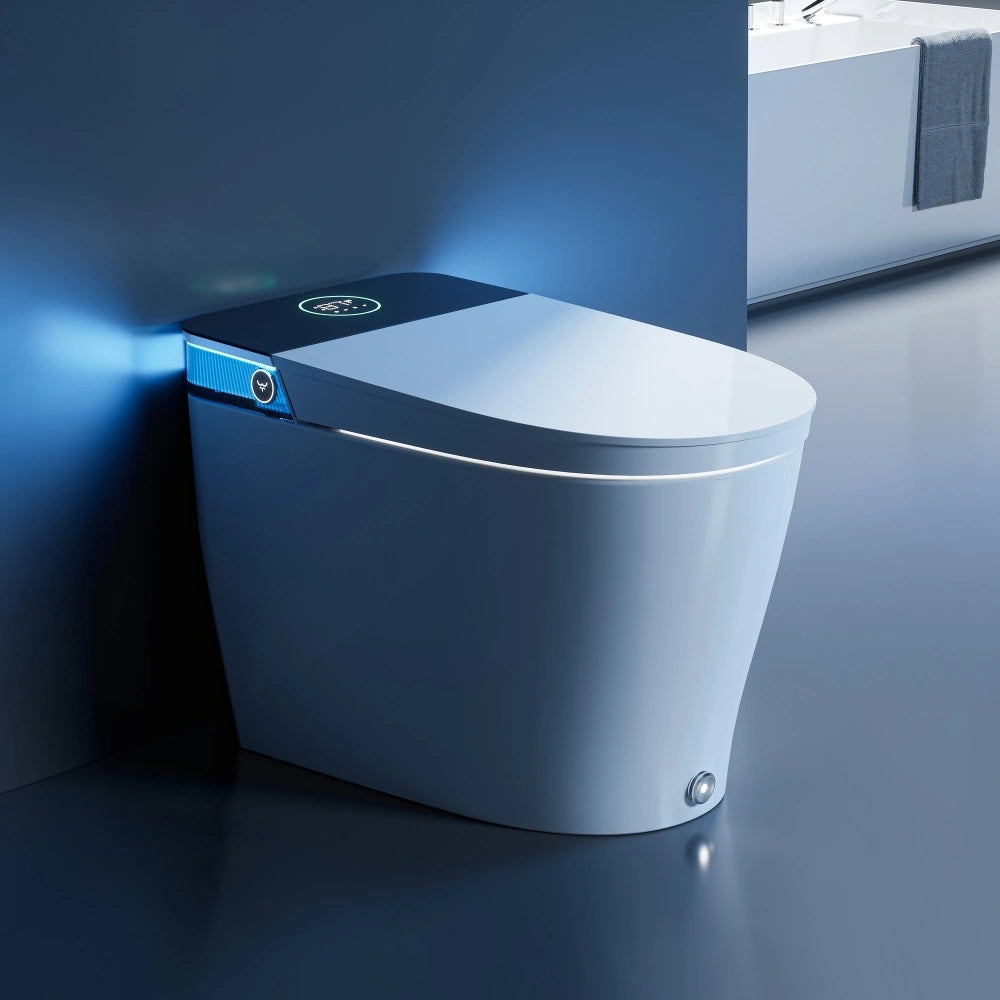
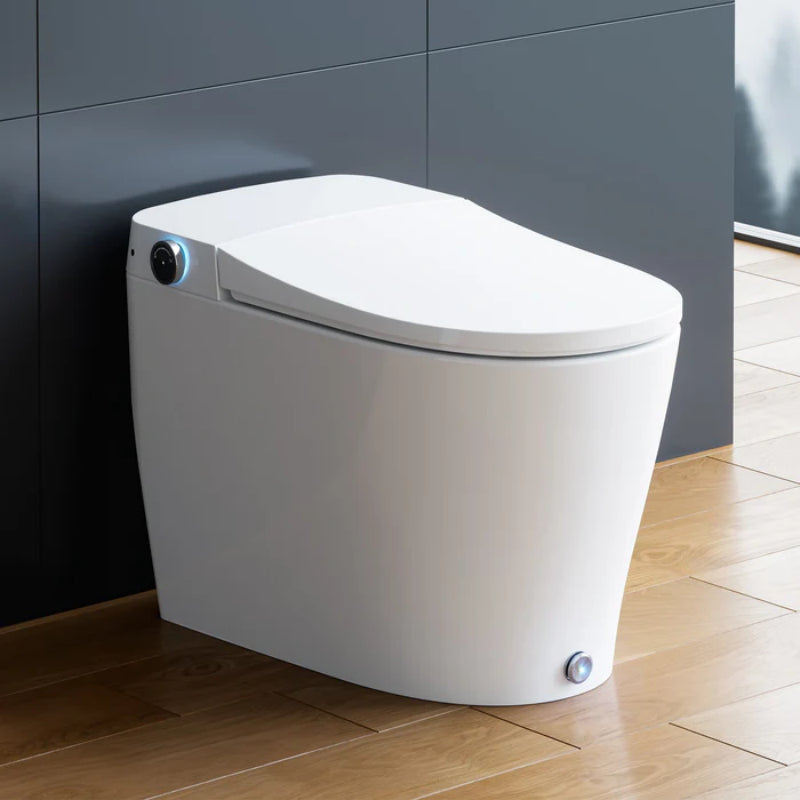
A smart toilet with heated seat and dryer sounds simple: warmer seat, warm water wash, then warm air drying. In real life, the question is not whether those features work. It is whether you will like using them enough to justify the cost, setup needs, and small daily annoyances.
This guide covers both fully integrated smart toilets and bidet toilet seat style smart toilet attachments, including differences in installation, comfort features, pricing, and how each option fits into a modern luxury bathroom setup, so readers can compare installation needs, comfort features, and real home compatibility across different product types.
Here’s where this works well in real homes — and where it often doesn’t.
Smart Toilet with Heated Seat And Dryer: Is It Worth It?
Whether a smart toilet with a heated seat and dryer is worth it really comes down to how you use your bathroom day to day and what level of convenience you actually value. Some people see it as a meaningful upgrade to daily comfort, especially for those who value a completely hands-free routine that reduces physical contact with bathroom surfaces, while others experience it as added complexity they don’t need. The snapshot below breaks down the key trade-offs to help you decide quickly.
Decision Snapshot
A smart toilet with heated seat and dryer is usually worth it if you use that bathroom every day, want more comfort in cold weather, and are happy to trade some simplicity for convenience.
You should probably skip it if you want a low-fuss bathroom, have no nearby outlet, dislike electronics in basic fixtures, or expect the dryer to replace toilet paper completely.
The key point is this: people who love these toilets tend to care about comfort every single day. People who regret them usually expected something faster, simpler, or more automatic than it really is.
Best for Daily Comfort
These toilets make the most sense when comfort matters enough to notice often.
For example, a heated seat is not a minor feature in a cold bathroom. If your bathroom runs chilly in winter, the warm seat with adjustable heat and temperature settings can quickly become the feature you appreciate most. The same goes for warm water wash. Many people find that once they get used to it, dry wiping feels rough by comparison.
This is also where the warm air dryer benefits make sense, especially when you consider the overall functionality of a smart toilet system compared to traditional setups. It can reduce toilet paper use and leave you feeling cleaner after washing. If you already know you value a more comfortable bathroom routine, a smart toilet with warm water wash heated seat and dryer can feel worth the extra complexity.
It also tends to work well for people who use one main bathroom rather than a busy guest bath. In a primary bathroom, the same one or two people learn the controls, adjust the seat temperature, and settle into a routine, creating a more consistent sense of personalized comfort over time. That lowers the daily friction.
Skip for Low-Fuss Bathrooms
If your main goal is “flush and forget,” this may not be your kind of fixture.
A smart toilet with adjustable seat temperature and dryer adds comfort, but it also adds setup questions, power needs, controls, cleaning points, and repair risk. None of that is a disaster. But it is more to live with.
This is where people misread the value. They think, “I’ll just get a more advanced toilet.” In practice, it behaves more like a small bathroom appliance built into the toilet. If that idea already sounds annoying, it probably will be.
It is also a weak fit for guest bathrooms, rental settings, or homes where many users want things to stay obvious and simple.

Trade-Offs People Miss
Even though a smart toilet with heated seat and dryer feels like a simple comfort upgrade, the real experience includes a few trade-offs that are often overlooked during purchase. These small gaps between expectation and daily use can change how satisfied you feel over time. The sections below break down the most common ones people only notice after installation.
Dryer Is Slower Than Expected
This is one of the biggest expectation gaps.
Many buyers picture the dryer as quick and complete. It usually is not. If you are asking how effective is a bidet air dryer on a smart toilet, the honest answer is: somewhat effective, but often slower than people expect.
Warm air drying works, but it can take a minute or more, and for some users it feels too slow to wait out every time. In real use, many people still use a small amount of toilet paper at the end. So yes, the dryer can reduce paper use. No, full paperless use is not always realistic.
If your goal is less paper and a cleaner finish, the dryer can help. If your goal is to stop using toilet paper entirely, that is where regret starts.
Warm Seat Can Feel Too Warm
A heated seat sounds harmless, but comfort is personal.
Some people love it, especially in winter. Others find that after the novelty wears off, a warm seat feels strange or overly warm in summer. Even with a smart toilet with customizable water temperature and heated seat, the setting that feels perfect to one person may feel unpleasant to another.
This becomes more noticeable in shared bathrooms. One person wants the seat warmer. Another wants it off. If the toilet stores user preferences or uses a remote, that can help a bit, but it does not remove the mismatch.
So the question is not just “Do I want a heated seat?” It is also “Will everyone using this bathroom want the same thing?”
Is Paperless Use Realistic?
Usually, not fully.
A smart toilet with bidet toilet seat features, heated seat, and warm air dryer benefits people most when they treat the dryer as a finishing step rather than a full replacement. Most households still keep toilet paper nearby and still use some of it.
That is not failure. It is just normal use.
People who are happiest with these toilets tend to say, “I use far less paper now.” People who are unhappy tend to say, “I thought I would not need paper anymore.”
Setup Reality at Home
Even before you focus on comfort features, a smart toilet with heated seat and dryer has a very real “installation reality” that affects whether it works smoothly in your home. Power, space, and basic plumbing conditions often matter just as much as the product itself. The sections below highlight the practical setup factors people tend to overlook until installation day.
Outlet Placement Matters
Before installation, homeowners should double-check whether the nearest power outlet can realistically reach the toilet location without unsafe extensions. It is also important to confirm that the outlet is properly grounded and protected by GFCI for bathroom safety standards. In many cases, upgrading to a compliant outlet or adjusting wiring may be required, which makes installation less “plug-and-play” than replacing a standard toilet.
The installation requirements for a smart toilet with heated seat and dryer are where many surprises happen.
These toilets need power. In many bathrooms, the nearest outlet is not close enough, not placed conveniently, or is already serving something else. Bathrooms also have safety rules around outlet placement and protection. You cannot assume the cord will reach cleanly, and using an extension cord in a bathroom is usually a bad idea.
So before buying, check the actual outlet location from the toilet, not just whether the bathroom has electricity. That simple step prevents a lot of frustration.
This matters even more if you want features like a smart toilet with heated seat dryer and auto flush, deodorizer, or night light, because every added function depends on power.

Bathroom Space Can Be Tight
Space issues are easy to miss until installation day.
A smart toilet or wall-hung installation can take up more room than expected around the back, sides, or control area, especially in compact bathrooms. The lid may need more opening clearance. If there is a side control panel or remote wall mount, that also needs a logical spot. In small bathrooms, a few inches can change whether the room feels usable.
This also affects comfort for different body sizes and mobility needs. A toilet that technically fits may still feel cramped if the room is already tight.
When asking what to consider before buying a smart toilet with heated seat and dryer, bathroom space is one of the first checks, not an afterthought.
Will It Work During Outages?
During power outages, smart toilets should be assumed to lose most of their advanced functions unless the manufacturer explicitly states backup capability. This includes heated seats, warm water washing, air drying, deodorization, and automatic flushing or sensing features. In most residential models, these systems rely entirely on electricity, meaning the toilet will function only as a basic manual-flush unit during an outage. Homeowners should plan accordingly, especially in areas where outages may occur, and avoid assuming that any comfort or automation features will remain available without power. Based on Ready.gov guidance on power outages, households should prepare for temporary loss of essential home utilities, including electricity-dependent systems, which directly applies to smart bathroom fixtures during grid interruptions.
Water Supply & Pressure Consistency
Smart toilet performance is closely tied to household water pressure and supply stability. Even if the unit itself is high-end, inconsistent pressure can lead to weaker wash strength, uneven spray patterns, or slower response during use. Homes with low or fluctuating pressure may notice that the cleaning experience feels less satisfying compared to expectations. Before installation, it is recommended to check both static and running water pressure to ensure the system can maintain consistent performance under real usage conditions.
Daily Use Friction
A smart toilet with heated seat and dryer can feel effortless when you’re the main user, but in real life it often introduces small friction points that only show up during daily routines. Shared use, nighttime conditions, and unfamiliar controls can all change how “convenient” it really feels. The sections below highlight where these everyday annoyances tend to appear.
Shared Bathrooms Add Confusion
These toilets work better when the regular users know the controls.
In shared family bathrooms, that is not always the case. Kids may press random buttons. Guests may not know what they are looking at. A smart toilet with remote control heated seat and dryer can be convenient for one person and confusing for everyone else.
There is also the small but real issue of remotes being misplaced, settings being changed, or people feeling awkward about using unfamiliar wash and dryer controls.
None of this makes the toilet bad. It just means the more users you have, the more likely small annoyances show up.
Noise Matters at Night
This is easy to underestimate until the bathroom is near a bedroom.
Fans, drying cycles, deodorizer functions, and auto flush sounds are not usually loud in daytime. At night or during a middle of the night bathroom visit, they can feel much louder than expected, especially in quiet homes. If your bathroom shares a wall with a sleeping area, a smart toilet with heated seat dryer and deodorizer or auto flush may create more nighttime noise than you expected.
For some homes, that does not matter at all. For others, it becomes one of those “I wish I had thought of that” details.
Are Controls Easy for Guests?
Usually, not at first.
Even if the buttons are clearly marked, guests may hesitate to use a toilet that looks more technical than normal. Some will avoid the features. Some will press the wrong thing. Some will ask for help.
That matters more if this is your main hall bathroom or a bathroom used by older relatives who prefer simple fixtures.
If your home often has visitors, ask whether you want this much learning curve in a bathroom fixture.

Long-Term Hassles
Even after installation, a smart toilet with heated seat and dryer continues to require attention in ways people often don’t expect. While it reduces some everyday effort, it still comes with maintenance needs, repair considerations, and long-term risks that are different from a traditional toilet. The sections below look at the less obvious hassles that appear over time.
Cleaning Still Is not Automatic
A smart toilet with self-cleaning nozzle, heated seat, and dryer improves hygiene, but the overall functionality still requires regular manual cleaning.
This is one of the more common misunderstandings. Self-rinsing nozzles help with nozzle hygiene. Deodorizer features help with odor. Special bowl coatings may reduce buildup. But the toilet still needs regular cleaning like any other toilet, and there are more surfaces and seams around the seat, controls, and body.
In fact, cleaning can feel a little fussier because you are wiping around electronics and avoiding harsh methods that might damage parts.
So if you are buying one because you hope to clean less, lower that expectation.
Repairs Can Be Expensive
When a basic toilet has a simple problem, the fix is often simple too. With a smart toilet, a failure can involve electronics, sensors, heating elements, fans, or control systems.
That does not mean failure is likely right away. It means the downside is larger if something does go wrong.
This is where a full smart toilet can be harder to live with than a simpler setup. If a key function fails, repair costs may be high, parts may take time, and service may not be as straightforward as standard toilet repairs.
So if you want an energy efficient smart toilet with heated seat and dryer, that is fine. Just remember that energy use is only one part of long-term cost. Repair risk matters too.

What Happens If It Fails?
The worst-case frustration is not just repair cost. It is disruption.
If the toilet stops working properly, you may lose not only the heated seat and dryer, but also wash features, auto functions, or part of the flush system depending on the design. In some cases, the solution is not a quick part swap. It can mean major service or replacement.
This matters most in homes with one main bathroom. If you only have one toilet that everyone depends on, any complex fixture carries more risk because downtime affects the whole house.
Clogging Sensitivity as a Real Ownership Risk
Some smart toilets, especially models with more complex internal flushing pathways or rear discharge designs, can be more sensitive to clogging compared to traditional gravity toilets. This does not mean they are unreliable, but it does mean users should be more careful about what is flushed and how frequently the system is maintained. In real-world usage, thicker waste, excessive toilet paper, or foreign objects may cause slower drainage or partial blockages more easily than in standard toilet systems. This makes clog prevention an important part of long-term ownership rather than an occasional concern.
Before You Choose
-
Check for a nearby bathroom outlet that safely reaches the toilet without an extension cord.
-
Be honest about the dryer: will you wait for it, or will you still want toilet paper?
-
Think about who uses this bathroom daily and whether they will understand or enjoy the controls.
-
Consider outage risk if your area loses power often.
-
Make sure you are comfortable with more cleaning detail and higher repair stakes.
-
If this is for comfort, ask whether you care about that comfort enough to notice it every day.
FAQs
1. Are heated toilet seats worth it?
Yes, for many households they really are. A smart toilet with heated seat and dryer feels like a small upgrade, but it changes daily comfort more than expected. Especially in colder mornings or shared family bathrooms, the warmth makes the whole experience feel much more pleasant and consistent.
2. How much power does heated seat use?
Most modern models are designed to be quite efficient, and an energy efficient heated toilet seat usually consumes less electricity than people assume. It typically runs on low power and maintains temperature rather than constantly heating from scratch, so the impact on your monthly bill is generally small.
3. Can you adjust bidet water temp?
Yes, almost all modern systems allow it. The feature known as adjusting bidet seat temperature lets users switch between different warmth levels for both water and seat settings, which is especially useful when different people in the same home have different comfort preferences.
4. How long does the dryer take?
The drying time depends on airflow strength and model design, but newer systems focus on improving bidet air dryer effectiveness so the process feels quicker and more comfortable. In most cases, it takes just a few minutes, and higher-end units dry more efficiently with warmer and stronger airflow.
5. Are heated seats safe?
Yes, they are generally safe when properly installed and certified. Modern systems also focus heavily on comfort features of smart toilets, including temperature limits, auto shut-off, and skin-safe controls, which help prevent overheating and make daily use worry-free.
6. Do all smart toilets have dryers?
Not all models include them, especially entry-level ones. However, premium systems often highlight essential bidet comfort features like washing, drying, and temperature control together, offering a more complete hands-free bathroom experience.
7. How to turn off heated seat in summer?
Most units let you switch settings easily via remote or control panel. Some people prefer switching to a warm water bidet toilet mode only while turning off seat heating completely during hot months to keep things more comfortable and energy-conscious.
8. Why is a heated seat essential for modern baths?
In colder environments or air-conditioned homes, comfort becomes a big part of bathroom design. A best toilet for cold climates often includes seat heating because it eliminates sudden temperature shock and makes everyday use more pleasant, especially in winter mornings.
9. How does the air dryer work on a smart toilet?
The system uses controlled warm airflow to remove moisture after washing, and efficiency depends on heated bidet seat energy consumption settings that balance power use with drying speed. Higher airflow reduces drying time, while lower settings focus on comfort and quieter operation.
Reference


Leave a comment
This site is protected by hCaptcha and the hCaptcha Privacy Policy and Terms of Service apply.