
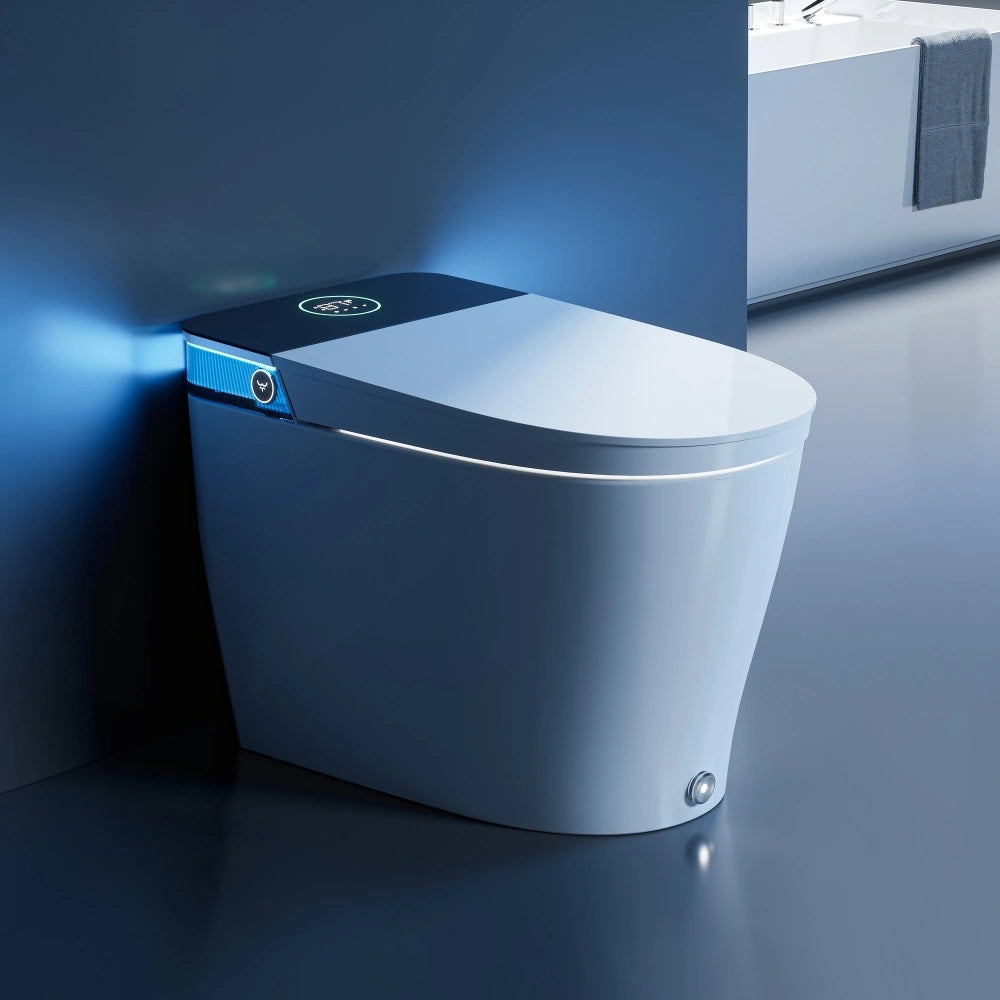
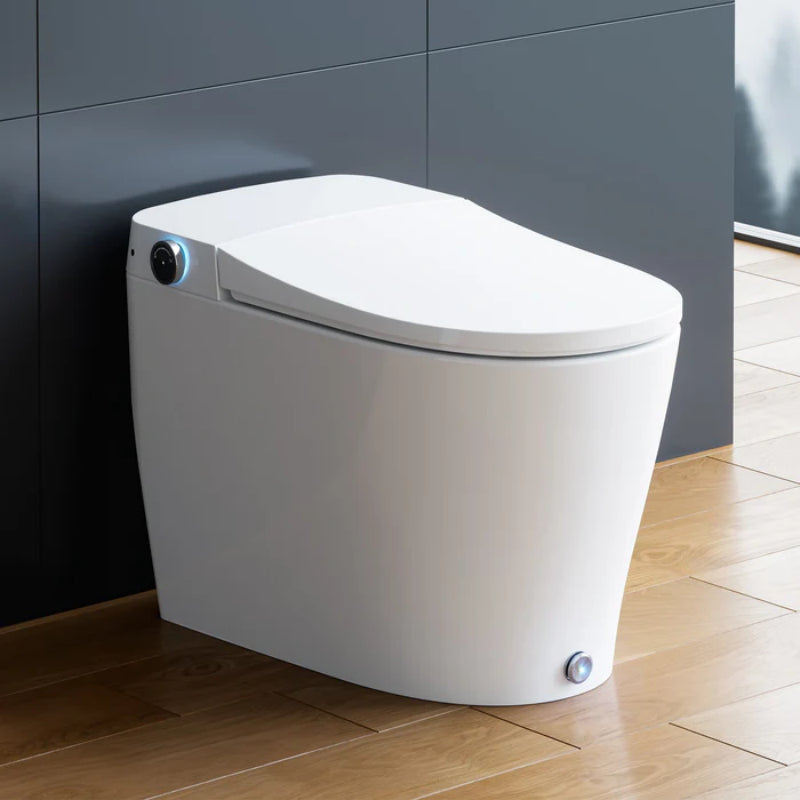
Smart toilets—and the smart bidet functions, they include—fail for boring reasons more often than dramatic ones. Not because features like sensor lids are “too advanced,” but because the home gives the unit the wrong kind of water supply. The flush is weak, the bidet spray feels soft, the fill cycle drags, or the installer cannot even connect the supply line cleanly behind the bowl.
If you are trying to figure out the smart toilet water pressure requirements for installing one in your home, the key point is this: the number on a pressure gauge by itself is not enough. What matters most is the water available while the toilet is actually running. That is where many homes look fine on paper but deliver a disappointing bathroom experience in real use.
A lot of homeowners ask about the minimum water pressure for a smart toilet when upgrading to a smart toilet, or what water pressure is needed for a tankless smart toilet. Those are valid questions, but they need one more layer: can your bathroom hold that pressure and flow under load, not just when everything is off?
This guide is built around that real-world question: will it work in your bathroom, and what breaks, costs more, or gets annoying if it does not? Consider this your step-by-step guide to evaluating whether your home is ready for a smart toilet before you buy.
Decision Snapshot: Will It Work Here?
If you only read one section, read this.
Works best above dynamic minimums
A smart toilet from brands like Horow is usually a safe buy when the bathroom can deliver stable water pressure within the unit’s required dynamic range, and the line can also provide enough flow during use. In practice, many units want something around 0.09 to 0.2 MPa minimum, and some direct-supply tankless models expect around 4 gallons per minute flow available at the supply during testing.
If your bathroom can hold that while the toilet is running, you are usually in decent shape.
Avoid low-flow or shared-line bathrooms
This becomes a problem when the toilet is on a weak branch line, shares supply with a shower that gets used at the same time, or is in an older house where pressure drops hard when another fixture opens.
That is where people ask, “Can a smart toilet work with low water pressure?” Sometimes yes, but not reliably, and usually not without compromises. If your current shower already weakens when the washer runs, a tankless smart toilet is not the place to gamble.
Reconsider old plumbing and no GFCI
A lot of failed retrofits are not just water issues. They are older bathrooms with:
-
no nearby GFCI outlet
-
cramped stop-valve space behind the bowl
-
odd supply angles
-
rough-in dimensions that leave no room for adapters or hoses
-
old shutoff valves that barely open or reduce flow
This works only if the water and electrical setup are both ready.
High pressure also needs control
Low pressure gets most of the attention when discussing water supply and pressure, but high static pressure can also damage a smart toilet. If the home runs above about 80 PSI static, internal valves, seals, and hoses can wear out faster or start leaking. That means a pressure reducing valve may be just as important as a booster pump in a different house.
In short:
-
Good fit: newer plumbing, stable pressure, proper outlet, enough clearance
-
Risky fit: low-pressure home, shared bathroom line, tight valve space, old piping
-
Bad fit: pressure swings, no outlet, rough-in mismatch, or need for a tankless unit in a weak-supply bathroom
Is Your Water Supply Actually Enough?
This is where most buying mistakes happen. People look at a general house pressure reading and assume the toilet will be fine. Then the installed unit acts weak because the usable flow in that bathroom was never tested.
Dynamic flow matters more than static PSI
Static PSI is the pressure in the line when no water is moving. It tells you something, but not enough. Smart toilet performance depends more on dynamic pressure and flow while the unit is drawing water. Understanding water efficiency is also valuable—the EPA’s WaterSense program provides guidelines on fixture performance standards that complement pressure considerations.
That matters because a bathroom can show decent static pressure and still perform badly when the valve opens. Common reasons:
-
long pipe runs to the bathroom
-
undersized branch lines
-
mineral buildup in old piping
-
half-closed stop valves
-
supply hose restrictions
-
pressure drop when another fixture runs
Multi-story homes introduce an additional risk factor: floor-level pressure drop. Upstairs bathrooms are inherently at higher risk because elevation reduces available pressure at the fixture. The same supply line that performs adequately on the first floor may deliver insufficient dynamic pressure to a second or third floor bathroom. When testing upstairs locations, the drop in pressure under flow is often more severe than ground floor tests suggest, making accurate branch-level testing even more critical before purchasing.
This is why homeowners get confused. The house may test “fine,” but the toilet still gives weak wash or weak flush behavior.
For smart toilet water pressure requirements for bidet wash functions, dynamic flow matters even more. The bidet spray is often the first thing to feel weak because users notice it right away, and inadequate pressure directly compromises personal hygiene.

Minimum pressure varies by flush design
Not all smart toilets behave the same. Flush design changes what the unit can tolerate.
Standard toilets with a gravity-fed tank store water and can still flush acceptably in homes with weaker incoming pressure, because the tank fills over time. A direct water supply smart toilet does not get that cushion. It needs enough water pressure and flow at the moment it operates.
That is why smart toilet vs traditional toilet water pressure requirements are not equal. Traditional toilets are usually more forgiving. Smart toilets with integrated tankless flushing—where integrated smart design removes the storage tank—are less forgiving.
If you are asking what psi is required for a smart toilet installation, the honest answer is: the unit’s minimum PSI range matters, but so does whether the flush is tank-assisted, tanked, or direct-supply tankless. Understanding these variables early in the installation process prevents surprises. The more immediate the demand, the less tolerance you have for weak supply, making it essential to choose models that match your home’s actual flow capability.
Tankless models fail sooner at low flow
What water pressure is needed for a tankless smart toilet? Usually more than homeowners expect, not always in raw PSI, but in stable, available flow.
Tankless models fail sooner at low flow because they do not store water for the flush event. They rely on the supply line delivering enough water right now. When the bathroom line cannot keep up, here is what tends to happen in practice:
-
incomplete bowl rinse
-
waste left behind
-
double flushing
-
inconsistent flush power
-
weak or pulsing bidet spray when another fixture opens
This is why direct water supply smart toilet pressure requirements need to be taken seriously. These models are often the least tolerant of “almost enough” plumbing.
What happens with low water pressure?
If your supply falls below the working minimum dynamic threshold, the toilet may still turn on and seem functional during a quick demo. The trouble shows up in day-to-day use.
Here’s what low pressure usually causes:
-
weak flush that does not fully clear the bowl
-
longer refills or ready cycles
-
bidet spray that feels soft or uneven
-
unstable warm water temperature in wash functions on some designs
-
noisy operation as valves strain or cycle
-
more frequent complaints from different users in the home
Why is my smart toilet flush weak with low water pressure? Because the unit is trying to perform a timed water event with less water than it was designed to have. It cannot make up the difference by “trying harder.” You just get less force and less volume where it counts.
How Should You Test Before Buying?
If you skip testing, you are guessing. And a guess is expensive when the toilet is already unboxed. Proper testing before installation and ensure the branch line meets requirements prevents costly mistakes.
Bucket test at the toilet shutoff
The simplest field test is a flow test right at the toilet supply. This is often more useful than whole-house reading.
A common pre-install check is to disconnect at the toilet shutoff and measure how much water flows into a bucket over 10 seconds. Many installation references use a threshold around 0.66 to 1 gallon in 10 seconds as a practical pass/fail indicator for certain smart toilet setups.
That test does two useful things:
-
It shows what the bathroom branch can actually deliver.
-
It reveals restrictions on the stop valve or supply connection.
How to test bathroom water pressure before installing a smart toilet in plain terms:
-
shut off water at the angle stop
-
disconnect the toilet supply line carefully
-
aim the valve output into a marked bucket
-
open the valve fully for 10 seconds
-
measure the water volume collected
If you are well below the required amount, do not assume the toilet will “probably still work.”

Gauge test under single-fixture use
A pressure gauge on the bathroom line helps, especially if you can test near the same branch serving the toilet. You want to know the pressure with one fixture operating, not just static pressure with all valves closed.
That gives you a more honest read on what the unit sees in normal use.
If you are trying to answer what PSI is enough for installation, a reasonable approach is:
-
confirm your static pressure is within the product’s allowed range
-
confirm your dynamic pressure does not collapse when water is flowing
-
confirm the toilet branch has enough real flow, not just acceptable gauge numbers
Retest while shower or washer runs
This is the part homeowners skip, and it is often the most revealing.
Retest while another fixture runs, especially:
-
the shower in the same bathroom
-
a nearby sink
-
the washing machine
-
a dishwasher if it shares the branch or pressure drop is common in the home
Why? Because many smart toilet installation problems caused by low water pressure do not show up when the bathroom is otherwise idle. They show up at 7 a.m. when someone showers and someone else tries to use the bidet.
If the flow or pressure drops hard during shared use, you have learned something important before spending money.
What PSI is enough for installation?
There is no single universal answer because each model has its own operating range. A critical step before trusting any spec is to reconcile specification conflicts across product listings versus the official installation manual. Online listings often summarize requirements in simplified terms, while the installation manual contains the actual controlling specifications. Readers must treat the installation manual’s minimum and maximum operating range as the authoritative source, and pay careful attention to unit reconciliation—whether the manual states requirements in PSI, MPa, or flow rate units—before making a decision.
Still, in practical terms:
-
if your home is below the unit’s minimum dynamic requirement, do not proceed without a fix
-
if your static pressure is over about 80 PSI, plan to check for pressure reduction
-
if your flow test is weak at the toilet shutoff, tankless models are a poor bet
A smart toilet can look compatible on a spec sheet and still perform badly in your house. The test at the branch line is what keeps you honest when evaluating smart toilet products for your specific home.
Water-Pressure and System-Type Matrix
Compare the measured supply condition, model range, and system type before deciding whether the installation will work.
| Check | What to verify | Evidence required |
|---|---|---|
| Home supply | Measured static and operating conditions | Qualified field measurement |
| Exact model range | Required inlet pressure and connection | Current PDP/manual |
| System type | Direct-feed, tank-assisted, pump-assisted, or other documented design | Exact model manual |
| Low-pressure symptom | Model-specific behavior and approved remedy | Troubleshooting documentation |
If a required detail is missing, contradictory, or tied to another model, use the current documentation for the exact product before ordering or installation.
What Fails When Pressure Is Wrong?
Wrong pressure does not always mean a dramatic breakdown. Often it means a toilet that technically works but feels disappointing every day.
Weak flush leaves waste behind
This is the complaint that causes the most regret. The bowl does not clear fully, skid marks become more common, and users start flushing twice. In a low-pressure setup, that is common with direct water supply toilet tech.
People often ask why my smart toilet flushes weak with low water pressure. Here’s why: the flush event depends on a certain water volume arriving fast enough to create bowl wash and siphon action. If the line cannot deliver it, you lose cleaning power first.
You can live with a slightly slower heated seat, but if you are planning a full bathroom upgrade, you cannot ignore a toilet that leaves waste behind.
Bidet spray loses force first
Why is my smart toilet bidet pressure weak? In many homes, the bidet wash is the first function to feel wrong because users notice spray force immediately.
Common causes include:
-
supply pressure too low under use
-
clogged inlet filter
-
partly closed shutoff valve
-
kinked supply hose
-
pressure drop when another fixture runs
-
sediment in old angle stops
The annoying part is that homeowners often blame the toilet itself when the real issue is the branch line or a basic setup restriction. A new unit can underperform from day one if the valve is only half open or the hose is bent too tightly behind the bowl.

High pressure wears valves and seals
Low pressure causes weak performance. High pressure causes wear.
If the home has very high municipal pressure and no regulation, the smart toilet may develop issues such as leaks or shortened component life. Internal valves, flexible hoses, seals, and connection points do not like constant overpressure.
This becomes a problem when people focus only on the minimum pressure for a smart toilet and forget the upper limit. The toilet may perform strongly at first, then start dripping, cycling oddly, or wearing out parts faster than expected.
Why is bidet pressure weak?
In practice, weak bidet pressure usually comes from one of four places:
-
The house never met the dynamic requirement
-
The stop valve is not fully open
-
The inlet filter is clogged
-
The hose routing restricts flow
Hard water makes this worse over time. A house with decent pressure on installation day can show reduced bidet performance months later because the screen filter starts collecting debris and scale. That is one of the most common “it used to work better” complaints.
What Installation Limits Stop Retrofit?
Even if the water supply is good, physical installation can still stop the project.
Tight stop-valve clearance blocks adapters
Many smart toilets need a tee, adapter, or specific supply connection at the shutoff. On paper that sounds simple. Behind the toilet, it often is not. A dedicated compatibility check must be performed for water inlet and supply connection sizing, distinguishing between what exists at the wall stop valve outlet versus what the toilet inlet requires.
Here’s where people usually run into trouble:
-
The angle stop sits too close to the wall
-
The valve outlet points in an awkward direction
-
The bowl base leaves no hand room
-
The adapter makes the hose bend too sharply
-
The connection stack hits the back of the toilet
When adapters are stacked to bridge incompatible connection types, the stack length increases and creates two specific risks: restriction of flow from multiple narrow points, and increased potential for leakage at each added connection joint. A clean, direct connection with minimal adapters is the goal.
Some units need a standard 3/8-inch compression style connection, but the real issue is not the thread type. It is whether there is enough room to fit it cleanly without stressing the hose. Before purchase, verify both the wall stop valve outlet fitting type and the toilet inlet fitting type, and confirm that a single adapter or hose will bridge them without requiring multiple stacked adapters that consume clearance space.

Rough-in errors cause drain mismatch
Water pressure is not the only install constraint. A dedicated pre-buy compatibility check for drain and sewer outlet size compatibility is essential. This means confirming that the existing waste pipe diameter matches what the toilet’s outlet interface expects, and that the rough-in measurement aligns with the toilet’s designed drain positioning. If the rough-in is wrong, the toilet may not sit properly over the drain, or the body may sit too far from the wall for the supplied connections to work as intended.
A common rough-in target is 12 inches to the drain center, though some older bathrooms may have a 10-inch rough-in or other non-standard measurements. Even a small mismatch can create a chain of issues:
-
poor bowl alignment
-
strained supply routing
-
unstable base contact
-
bad drain seal
-
awkward gap behind the toilet
When the floor is uneven, this can get worse. The unit may rock slightly, and the installer—often a plumber—starts making compromise adjustments behind the toilet where space is already limited, sometimes affecting the wax ring, toilet flange, or overall seal integrity. This is why professional installation is recommended for complex retrofit conditions, especially with floor-standing units that rely on a stable base for proper sealing. Verifying the drain pipe size and rough-in measurement before purchase prevents discovering a fundamental incompatibility after the old toilet is already removed.
Side inlets complicate hose routing
Some bathrooms have side-entry valve arrangements or odd supply paths that make hose routing difficult. This does not always stop installing, but it often creates long-term nuisance issues.
If the hose has to twist, cross, or bend sharply to reach the inlet, you can end up with restricted flow that looks exactly like a pressure problem. This is one reason homeowners say the bidet feels weak even though the home “has enough PSI.”
Will this fit an older bathroom?
In older bathrooms, the answer depends on more than bowl size. You need to confirm:
-
rough-in dimension
-
shutoff valve location
-
wall clearance
-
outlet access
-
branch line condition
-
stop valve function
A simpler toilet is often the safer choice in an old bathroom with marginal plumbing. Not because smart toilets are bad, but because retrofit conditions can stack up fast and compromise long-term use if the underlying supply was never adequate.
What Extra Work or Cost May Appear?
The base price of the toilet is only part of the decision. Pressure-related fixes and electrical prep are where the real surprise costs show up.
Booster pumps add cost and noise
How to increase water pressure for a smart toilet depends on why the pressure is low. If the whole home is weak, some homeowners look at a booster pump. That can work, but it adds complexity.
Typical tradeoffs include:
-
pump cost
-
install labor
-
electrical work
-
noise and vibration
-
maintenance
-
pressure tuning to avoid overcorrection
Do you need a booster pump for a smart toilet? Only if testing shows the home or branch line cannot meet the unit’s minimum dynamic requirement and simpler fixes will not solve it.
If the problem is a clogged stop valve, undersized flex line, or half-blocked branch, a pump is the wrong first move.
Pressure regulators may be required
Some homes have the opposite problem: pressure is too high. In those cases, a pressure reducing valve may be needed to protect the toilet and other fixtures.
This adds cost, but ignoring it can cost more later through leaks or shortened component life. If static pressure is consistently high, regulation is usually the better fix than trying to throttle a local shutoff valve and hoping for the best.
New GFCI circuits raise install cost
Smart toilets require electricity to power their features, and older bathrooms often are not ready for it. If there is no nearby GFCI-protected outlet on a proper circuit, the install cost can rise quickly, and the absence of proper grounding creates electrical hazards that no homeowner should accept.
A typical requirement is a 110–120V supply on a 15A circuit with GFCI protection. Problems show up when:
-
the nearest outlet is too far away
-
existing bathroom circuits are overloaded
-
extension cords are used as a bad workaround
-
outlet placement ends up blocked by the toilet body
Water and power issues often arrive together in older homes. It is common for a homeowner to focus on pressure and forget that the toilet also needs safe electrical access.
When is a booster pump necessary?
A booster pump is worth discussing only after you confirm all of these first:
-
stop valve is fully open and not restricted
-
branch piping is not badly clogged
-
hose routing is not kinked
-
inlet filter is clean
-
pressure is low under dynamic use, not just “feels low”
-
no easier plumbing correction will restore flow
Best low water pressure solutions for smart toilets usually start with fixing restrictions and testing the branch. Pumps come later, and only when the underlying supply is truly inadequate.
Do Wall-Hung or Tankless Models Need More?
This is where people tend to overestimate flexibility. Some smart toilet types are simply less forgiving than others.
Direct-supply models need steadier flow
Direct-supply and tankless units usually need steadier flow than traditional toilets. That is not a marketing point. It is just how the flush event works.
If you are asking can a smart toilet work with low water pressure, the answer is more likely “not well” when the model is direct-supply. These units are less able to hide weak plumbing.
Wall-hung frames complicate pressure fixes
Do wall mounted smart toilets need higher water pressure? Not always as a simple rule, but wall-hung systems often complicate correction work because the carrier frame and in-wall plumbing reduce easy access later.
If the pressure or flow is marginal, fixing it after installation can be more invasive. That is the bigger concern.
Wall-hung models also leave less room for casual supply modifications. So if your branch line is questionable now, this is not the format to “try and see.”
Traditional toilets tolerate weak supply better
A traditional toilet with a separate tank is often the more forgiving option in a low-pressure home. It may take longer to refill, but it can still deliver a dependable flush because it stores water ahead of time.
That is the real difference in smart toilet vs traditional toilet water pressure requirements. A tank buys you tolerance. A tankless direct-supply design expects the house to perform on demand.
When “Traditional toilets tolerate weak supply better” points toward a product change, HOROW smart toilets shows the current range without replacing this page's informational role.
After the “Traditional toilets tolerate weak supply better” check, browse HOROW toilets to compare current options using verified product details.
Is a simpler toilet the safer choice?
Sometimes yes.
What to consider before buying a smart toilet for a low pressure home is not just whether a unit might operate. It is whether daily use will feel normal and reliable without extra plumbing work.
If your testing shows weak dynamic flow, shared-line drops, or old branch piping, a simpler toilet or a separate bidet seat on a more forgiving setup may be the safer call. Less elegant on paper, maybe. Less likely to become a callback issue, yes.
What Causes Regret After Installation?
The worst outcomes are not always full failures. Often the regret comes from small issues that keep showing up.
Filters clog in hard water homes
Many smart toilets have inlet screens or filters that catch debris. In hard water or older plumbing homes, those filters can clog faster than people expect.
What happens then:
-
bidet spray weakens
-
fill performance drops
-
users think the unit is failing
-
service calls happen for what is really maintenance
If your area has hard water, expect filter cleaning to be part of ownership.
Kinked hoses mimic pressure problems
A kinked or sharply bent hose can cut performance enough to mimic a low-pressure home. This is common in tight retrofits where the body of the toilet leaves little room behind the bowl.
If performance is poor right after installation, hose routing should be checked before anyone starts talking about pumps.
Partly closed valves reduce performance
This is basic, but it happens all the time. Installers or homeowners leave the shutoff slightly closed after leak checking. The toilet works, but not well.
Then weeks later someone asks why my smart toilet bidet pressure is weak, and the answer is a valve that was never fully reopened.
What fails first over time?
In real use, these are the things that tend to show up first:
-
weak wash pressure from clogged filters
-
weak flush in marginal-supply homes
-
slow or inconsistent operation from restricted valves
-
leaks or wear in overpressure homes
-
user frustration from needing repeat flushes
The pattern matters. If the home only barely meets the pressure requirement, time usually makes the problem more obvious, not less.
Before You Buy
Use this checklist before ordering anything:
-
Confirm the toilet branch meets the unit’s minimum dynamic pressure and flow, not just static PSI.
-
Run a bucket test at the shutoff and retest while a shower or washer is running.
-
Check static pressure for the whole home. If it is over about 80 PSI, plan for pressure control.
-
Verify there is enough space at the stop valve for adapters, hose bends, and hand access.
-
Measure the rough-in and confirm the floor is level enough for a stable base.
-
Make sure a proper GFCI-protected outlet is nearby on a suitable circuit.
-
Inspect the shutoff valve and supply path for age, corrosion, partial blockage, or awkward routing.
FAQs
1. Will a bidet work with 20 PSI water pressure?
When evaluating smart toilet water pressure requirements, 20 PSI static usually falls below the dynamic threshold most units need during operation. Many smart toilets require stable dynamic pressure within a manufacturer-specified range, and 20 PSI typically results in weak bidet spray and poor flush performance. The dynamic pressure under flow often drops even lower than the static reading. Testing dynamic flow at the branch line with a bucket test gives a more reliable answer than relying on a static gauge alone.
2. Why is my tankless smart toilet flush weak?
A weak flush in a tankless smart toilet almost always traces back to inadequate dynamic flow, a core factor in smart toilet water pressure requirements for direct-supply designs. Tankless models lack a storage tank, so they depend entirely on real-time branch line delivery. Common causes include clogged inlet filters, kinked supply hoses, and pressure drops when another fixture runs simultaneously. Start by verifying the stop valve is fully open, inspecting the hose for sharp bends, and cleaning the inlet filter before assuming a larger plumbing issue.
3. What water pressure is needed for a tankless toilet?
Understanding tankless toilet psi needs starts with recognizing that manufacturers specify both minimum dynamic pressure and adequate flow, typically around 4 gallons per minute during active use. The installation manual is the controlling source for smart toilet water pressure requirements, not simplified online listings. Static pressure alone is misleading because tankless toilets fail when flow drops under load. A bucket test at the toilet shutoff, performed while another fixture runs, reveals whether the branch line can actually deliver the required flow.
4. Can I use a smart toilet with low water pressure?
Using a smart toilet with low water pressure is possible only if the unit has a gravity-fed tank design, which stores water and is more forgiving than tankless alternatives. For homeowners exploring low water pressure bidet solutions, a tank-style smart toilet or a separate bidet seat on a traditional toilet typically delivers more reliable daily performance. Tankless direct-supply models require the branch line to perform on demand, and when flow is marginal, the bidet spray weakens first. If testing shows dynamic flow below the manufacturer’s minimum, a tankless unit usually results in ongoing frustration.
5. How do I test my bathroom's water pressure?
To accurately assess smart toilet water pressure requirements, perform a bucket flow test at the toilet shutoff valve rather than relying only on a static gauge reading. Shut off the angle stop, disconnect the supply line, open the valve fully for ten seconds, and measure the collected water volume. A practical benchmark is 0.66 to 1 gallon in ten seconds, though confirm against your unit’s manual. Repeat the test while a shower or washing machine runs elsewhere to see how shared usage affects available flow.
6. Does a smart toilet need a booster pump?
Deciding whether a booster pump for smart toilet installation is necessary requires confirming that the branch line cannot meet the unit’s minimum dynamic flow after all simpler fixes are exhausted. Before considering a pump, verify the stop valve is fully open, inspect the supply hose for kinks, and clean the inlet filter. Many homeowners mistakenly assume low pressure requires a pump when the actual problem is a partially closed valve or clogged filter. A booster pump adds cost and complexity, so it should be a last resort, not a first response.
7. Why is my bidet flush weak?
When homeowners ask why is my bidet flush weak, the answer usually lies in one of four areas: insufficient dynamic pressure, a partly closed shutoff valve, a clogged inlet filter, or a kinked supply hose. In direct water supply toilet tech, tankless units are especially vulnerable because they have no storage tank to buffer restrictions. Hard water homes often see gradual decline as mineral buildup accumulates in the inlet screen. A simple troubleshooting sequence—checking valve position, inspecting hose routing, and cleaning the filter—resolves most weak bidet complaints.


Leave a comment
This site is protected by hCaptcha and the hCaptcha Privacy Policy and Terms of Service apply.