
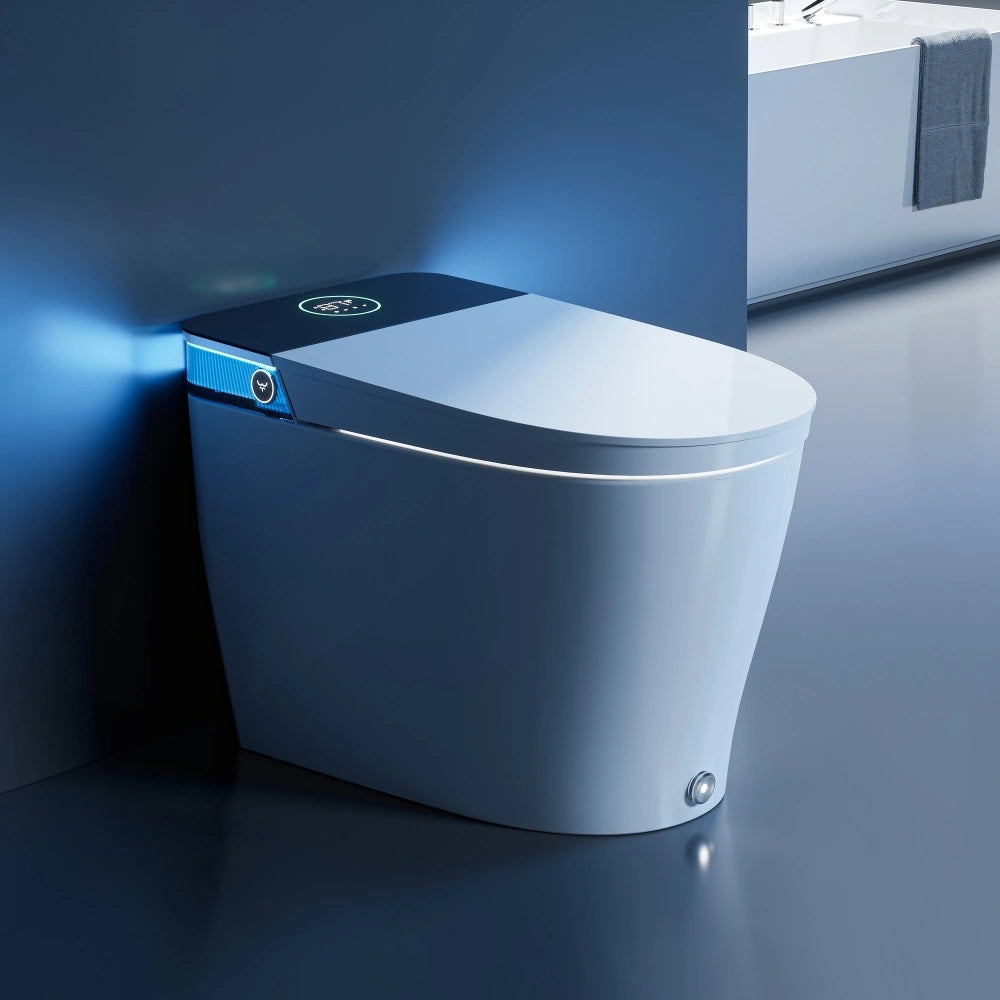
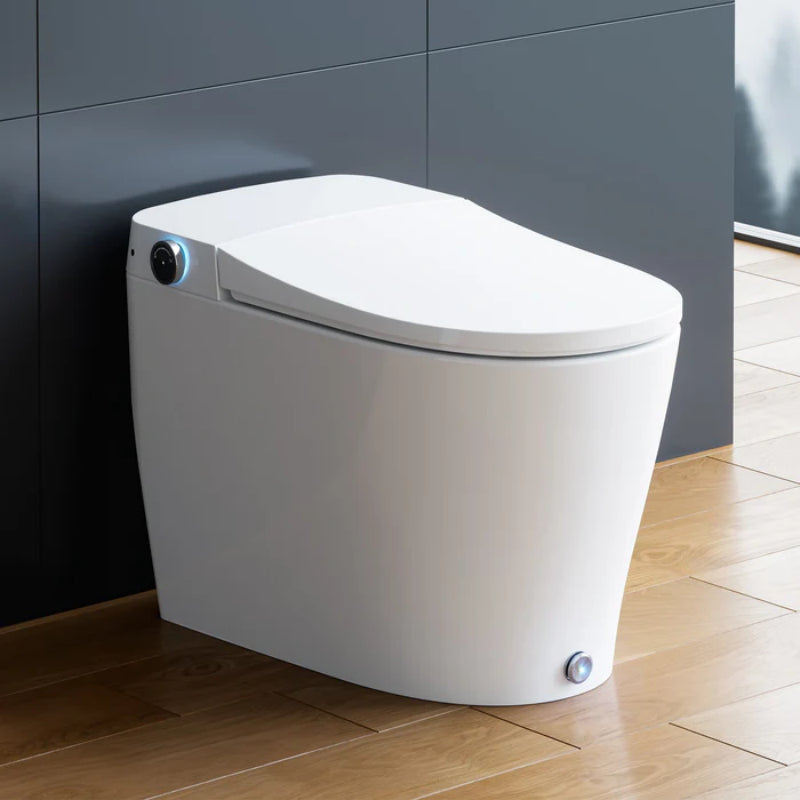
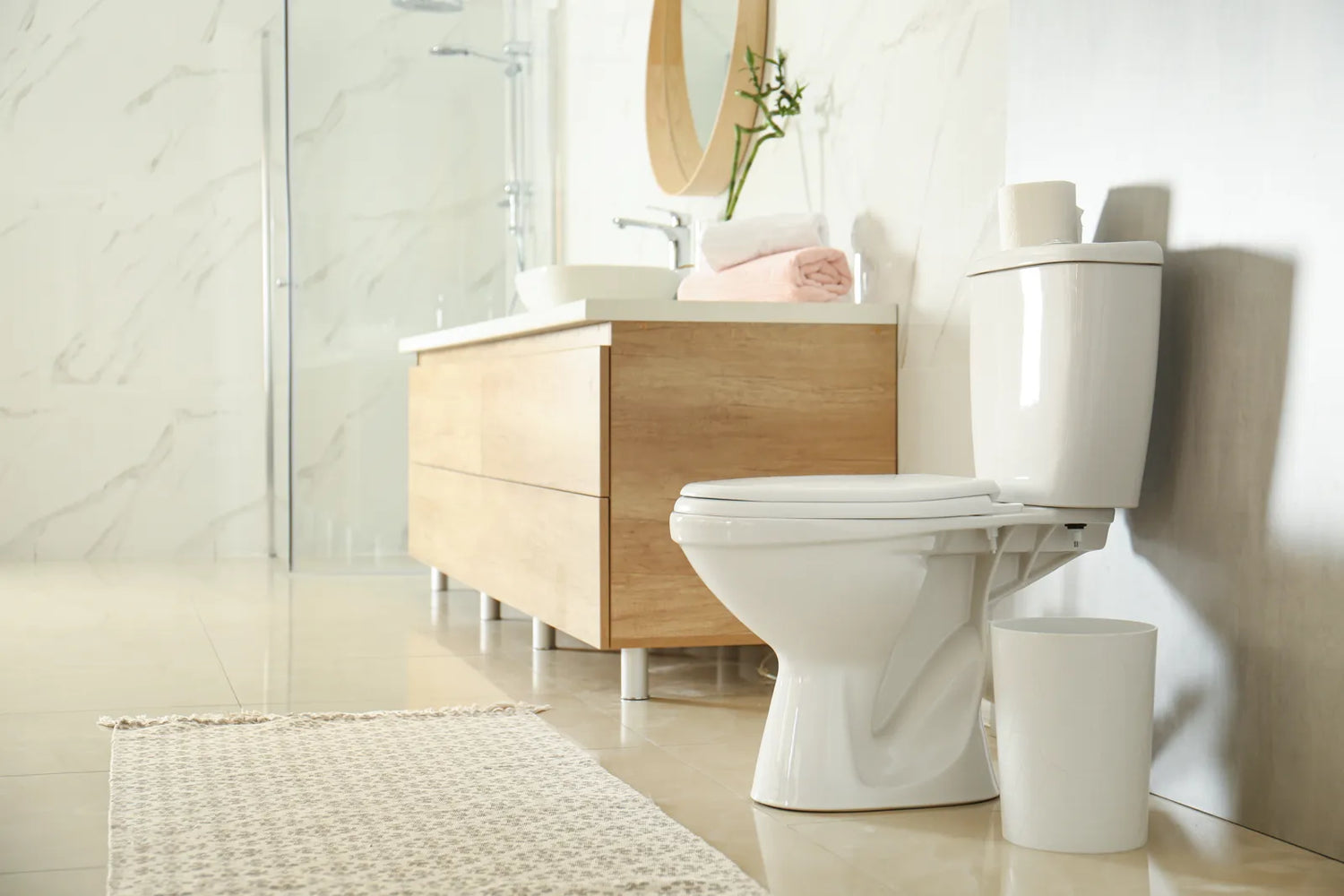
Choosing between a smart toilet and a traditional one involves balancing comfort, hygiene, cost, installation constraints, and long-term maintenance. This guide breaks down the key differences, practical trade-offs, and ideal use cases to assist you in choosing the right toilet for your bathroom and household needs.
Quick Answer
If you want better hygiene, more comfort, and easier use for aging or mobility needs, choose a smart toilet. If you want the lowest cost, simple repairs, and no need for power, choose a traditional toilet. If you want a cleaner experience without the price and installation demands of a fully smart toilet, choose a bidet seat on a regular toilet.
A smart toilet is worth it for households that will use its features every day. A traditional toilet is the better buy for budget-focused homes, rentals, and anyone who wants fewer things that can fail.
Smart toilet vs traditional toilet is not really about which one is “better” in general. It is about which one fits your home, budget, and tolerance for complexity.
Avoid smart toilets if…
-
There is no nearby electrical outlet and you do not want to complete electrical work
-
You are a renter, living in a short-term residence, or likely to move soon
-
You have a tiny bathroom with tight space and clearance constraints
-
You live in a high-traffic household with mixed user preferences
-
You have a low tolerance for service delays and troubleshooting
Decision Snapshot
Here’s the short version most homeowners need.
Best for aging or mobility needs
Choose smart if someone in the home has trouble bending, twisting, wiping, or standing up. Heated seats, warm-water washing, auto flush, and easier access can make daily use much easier.
Avoid smart only if your bathroom cannot support a nearby outlet or you need the lowest possible repair risk.
Best for renters and tight budgets
Traditional toilets offer lower upfront cost, easy replacement, and simple maintenance, making them ideal for renters and budget-focused buyers. It is the safest option when you may move soon or do not want to invest much in a bathroom fixture.
If you still want better hygiene, a bidet seat is often the better middle-ground choice.
Best for shared family bathrooms
The clear default recommendation for shared family bathrooms is a traditional or regular toilet paired with a bidet seat. This setup balances hygiene and simplicity while avoiding the frictions that come with a full smart toilet in a shared space.
Shared-household friction examples include guest confusion over complex smart controls, kids accidentally changing settings and disrupting normal use, inconsistent feature use across family members, and widely different user preferences for functions like water temperature or spray intensity.
If hygiene is the goal but simplicity still matters, a regular toilet with a bidet seat often wins.
Best luxury primary suites
Choose a smart toilet to create a modern bathroom experience in your main bathroom, where daily use and consistent comfort are top priorities. The extra cost is easier to justify when the same two people use it every day and value features like seat heat, night lights, dryer functions, and touch-free flushing.

Smart Toilet vs Traditional Toilet Comparison
Before getting into details, here is the side-by-side view that answers most buying questions fast.
Cost, water, and upkeep table
| Factor | Smart Toilet | Traditional Toilet |
| Upfront purchase cost | High | Low |
| Typical installation cost | Higher, often due to outlet needs and more setup | Lower, straightforward swap in many homes |
| Power needed | Usually yes | No |
| Water use | Often efficient, sometimes similar or lower than standard models | Varies widely; efficient models can also be very low |
| Toilet paper use | Lower if wash functions are used often | Normal or higher |
| Comfort features | High: heated seat, warm wash, dryer, auto flush, night light | Basic |
| Hygiene benefits | Better washing and less hand contact | Depends on cleaning habits and flushing design |
| DIY repair ease | Lower | Higher |
| Parts availability | Can be slower or specialized | Easy and common |
| Lifespan | Good, but electronics may age before the fixture body | Long, with simpler parts |
| Best for | Daily comfort, hygiene, mobility support | Budget, simplicity, easy service |
The key differences between smart toilets and traditional toilets come down to five things: price, power, maintenance, hygiene, and comfort.
Installation and outlet realities
This is where many buyers make their first mistake. They compare fixture price only, then get surprised by setup cost.
A traditional toilet can often replace another toilet with little drama. If the rough-in size matches and the floor flange is sound, installation is usually routine.
For compact or small bathrooms, integrated smart toilet units often feel bulky and awkward due to their larger footprint and additional components, making them a poor fit for tight layouts.
A smart toilet is different. Many models need:
-
a nearby electrical outlet
-
GFCI protection in some cases
-
enough clearance for a larger base or integrated unit
-
water line access that fits the product design
So when people search smart toilet installation cost vs regular toilet installation, the answer is simple: smart costs more to install in many homes because it may require electrical work and a more careful fit check. If your bathroom already has a suitable outlet near the toilet, the gap gets much smaller. If not, the installation cost can jump fast.
Before buying a smart toilet, complete this essential pre-buy checklist:
-
Measure the toilet rough-in dimension to ensure proper fit
-
Verify sufficient side clearance for the unit and its controls
-
Confirm the location and reach of the nearby electrical outlet
Hygiene and comfort trade-offs
This is the strongest case for smart toilets.
Comfort isn’t universal when choosing between smart and traditional toilets, as body fit and personal preference play a major role. Key decision factors include whether an elongated or round bowl shape better suits users, individual seat height preferences, and the fact that some users may simply dislike the sensation or adjustable settings of bidet spray functions.
Smart toilets include self-cleaning mechanisms, and they can wash with water, reduce hand contact, lower toilet paper use, and often feature touch-free flushing. That does not mean it cleans itself perfectly or removes the need for bathroom cleaning. It means the daily user experience is usually cleaner and more comfortable.
Traditional toilets are familiar, reliable, and easy to use. But from a hygiene point of view, they depend more on wiping, touching handles, and routine cleaning by the user.
So are smart toilets more sanitary than traditional toilets? In daily use, usually yes, because washing with water is generally more effective than wiping alone and because touch-free features reduce contact points. But that advantage depends on cleaning the unit properly and using the wash features consistently.
Repairs, parts, and lifespan
This is where traditional toilets quietly win.
A regular toilet has a small set of simple parts. Fill valves, flappers, handles, seals, and seats are easy to find. Many homeowners can fix common issues in one trip to a hardware store.
A smart toilet may last many years, but its weak point is not the ceramic body. It is the electronics, sensors, heating elements, control panel, or specialized wash components. If one of those fails outside warranty, repair can be slower and more expensive.
What downtime feels like
-
You may face extended waiting periods for specialized parts or certified service technicians
-
In most cases, the basic flushing function of the toilet remains usable even if premium electronic features fail
-
Homeowners who need uninterrupted, zero-hassle bathroom function should treat this downtime risk as a deal-breaker
How long do smart toilets last? In many homes, the ceramic structure can last a long time, but the practical service life is often tied to the electronic components. That means the unit may still “exist” after many years, but some features may no longer work well. A traditional toilet usually has fewer failure points and a simpler long life.

Key Differences That Matter
Beyond basic features, the real distinctions lie in daily cost, resource use, maintenance ease, and personal comfort.
Upfront cost vs daily experience
The biggest smart toilet vs traditional toilet cost comparison is not subtle. Smart toilets cost much more upfront. In some cases, far more.
That higher price buys a better daily experience, not a better flush in every case. This matters. A lot of homeowners assume a smart toilet is mainly about performance. In real homes, it is more about comfort and convenience.
If you just want a toilet that flushes waste well and does not create headaches, a traditional toilet is usually enough. If you value warm washing, heated seating, and automatic functions every single day, then smart starts to make sense.
Here’s the practical way to think about upfront cost vs long-term savings of smart toilets:
-
You are not usually saving enough on water alone to justify the purchase.
-
You may reduce toilet paper use in a noticeable way.
-
You may get meaningful quality-of-life value if mobility, hygiene, or comfort matter a lot.
-
You will likely pay more for purchases, installation, and some repairs.
So is a smart toilet worth it compared to a traditional toilet? Only if you will use the features often enough to care about them. If the wash, dryer, auto flush, and heated seat sound nice but not necessary, the math usually favors traditional.
Water savings vs power use
Do smart toilets save water compared to traditional toilets? Sometimes, yes. But this point gets overstated.
A modern efficient traditional toilet can already use very little water. A smart toilet may also be efficient, but being “smart” does not automatically mean major water savings. The better question is whether the specific model is water-efficient compared to your current toilet.
If you are replacing an old high-water toilet, both a modern traditional toilet and a smart toilet can reduce water use. If you are comparing two new efficient models, the difference may be small.
Smart toilet vs traditional toilet water usage is best understood like this:
-
Old toilet vs new toilet: often big water savings either way
-
New smart vs new efficient traditional: often a smaller difference
-
Bidet washing vs toilet paper alone: possible reduction in paper use, but some added water use for washing
Do smart toilets use more electricity? Yes, most do. Heated seats, warm water, air dryers, night lights, and sensors all use power. The exact amount depends on how often features run and whether energy-saving modes are active. In most homes, the electricity cost is not huge, but it is still a real operating cost that a traditional toilet does not have.
Are smart toilets sustainable for US homes? They can be, especially in homes where reducing toilet paper use and improving water efficiency matter. But they are not automatically the greener option in every case. Electronics, standby power use, and replacement parts complicate the picture. A very efficient regular toilet with a long service life can also be a strong sustainability choice.
Easy fixes vs specialized repairs
Smart toilet vs traditional toilet maintenance requirements differ more than most buyers expect.
Traditional toilets need:
-
occasional flapper or valve replacement
-
wax ring replacement if removed
-
normal bowl and tank cleaning
-
basic clog management
Smart toilets need:
-
regular nozzle and seat cleaning
-
descaling in hard-water areas
-
filter checks on some models
-
careful handling of electronics
-
possible service for sensors, heaters, dryers, or remotes
The key point is not that smart toilets are always hard to maintain. It is that maintenance becomes more specialized. If you are comfortable calling for service and possibly waiting on parts, fine. If you want simple DIY ownership, traditional is easier.
Better hygiene vs familiar routine
The hygiene features of smart toilets set them apart from traditional models, and these benefits are real but matter more to some households than others.
A person with sensitive skin, limited mobility, or hygiene needs may find a smart toilet dramatically better, supporting CDC recommendations for personal hygiene. The same is true for anyone trying to reduce toilet paper use.
On the other hand, some family members may not want to learn settings or may not use the wash function at all. In that case, you are paying for benefits they will ignore.
That is why the best choice often depends less on the technology itself and more on the people in the house.
When Smart Toilet Is Better
Smart toilets offer clear advantages for specific lifestyles and needs.
You want less toilet paper to use
If your goal is smart toilet vs traditional toilet toilet paper savings, smart has the advantage. Water washing can reduce paper use a lot, especially for households that fully switch to wash-and-dry or wash-then-pat-dry habits.
Will that savings repay the entire toilet? Usually not quickly. But it can still matter over time, and some buyers care as much about comfort and cleanliness as they do about cost.
You need easier toileting access
This is one of the clearest “yes” cases for smart.
For older adults or anyone with arthritis, balance issues, back pain, or limited reach, the difference can be meaningful. Warm washing can replace difficult wiping. Auto open, auto flush, and easier seated comfort can reduce strain. In some homes, this is less a luxury than a daily living aid.
When a smart toilet is better than a traditional toilet, this is often the reason.
You will use premium features daily
A smart toilet is easiest to justify in a primary bathroom, not a guest bath.
If this is the bathroom you use every morning and every night, and you know you will use heated seating, washing, drying, and night-time lighting, the extra cost may feel reasonable. If it is mostly for guests or occasional use, the value drops fast.
A simple rule helps here: the more often the same people use it, the more sense a smart toilet makes.
Are smart toilets worth the extra cost?
Yes, for the right buyer.
They are worth it when:
-
Comfort is a daily priority
-
Hygiene matters enough to change habits
-
Someone in the home benefits from easier washing
-
Your bathroom can support installation without major work
-
You accept higher repair complexity
They are not worth it when:
-
You mainly want a toilet that just works
-
The budget is tight
-
You may move soon
-
You dislike electronic fixtures
-
No one will really use the extra features
The pros and cons of smart toilets vs traditional toilets become much clearer when you stop asking, “Is smart better?” and start asking, “Will my household use what I’m paying for?”

When Traditional Toilet Is Better
Traditional toilets remain the preferred choice for many practical and financial reasons.
You want the lowest total cost
Traditional is the low-risk financial choice in most homes.
You pay less to buy it, less to install it, and usually less to repair it. There is no standby electricity use, no control module to fail, and no surprise electrical upgrade.
If your priority is value in the plainest sense, a traditional toilet usually wins.
You cannot add a power outlet
This is one of the most common deal-breakers.
Many homeowners like the idea of a smart toilet until they realize the bathroom has no nearby outlet and adding one means wall work, electrician labor, patching, and added cost. In that case, the “upgrade” may no longer feel reasonable.
When a traditional toilet is better than a smart toilet, this is often why. The room itself does not support the smart option easily.
You need easy DIY maintenance
If you like being able to fix your own plumbing basics, stick with traditional.
A running toilet, weak fill, or worn flush valve is usually simple on a regular toilet. Smart toilets are less DIY-friendly, especially when a problem involves sensors or internal electronics.
This does not make smart toilets bad. It just means ownership feels different.
Will electronics become a hassle?
Sometimes, yes.
Not because smart toilets are unreliable by definition, but because any product with electronics has more ways to become annoying. Power interruptions, control issues, sensor quirks, and specialized parts are not constant problems, but they are possible problems.
A traditional toilet asks less of you. It has fewer features, but it also gives you fewer things to manage.
When a Bidet Seat Beats Both
There is a reason many practical homeowners land here.
You want hygiene without full replacement
If your main reason for considering smart is washing and better hygiene, a bidet seat can give you a large part of that benefit at a much lower cost.
You keep the familiar toilet base and add the feature most people care about most: water cleaning.
You own a good existing toilet
If your current toilet flushes well, fits the bathroom, and is not old or leaking, replacing the whole unit may be unnecessary. A bidet seat lets you upgrade the experience without throwing out a perfectly good toilet.
You want lower installation risk
A bidet seat usually creates fewer headaches than a full smart toilet. You still may need power for heated and advanced functions, but the project is often less invasive and easier to reverse.
For many households, this is the sweet spot:
-
better hygiene
-
lower cost
-
less installation complexity
-
easier replacement later
If you are torn between smart toilet vs traditional toilet, the bidet seat option often resolves the tension. It gives you a middle path between comfort and practicality.
Mistakes Buyers Make
A lot of regret comes from the same few mistakes.
First, buyers focus on features before checking the bathroom. Measure the rough-in, confirm space around the bowl, and check for a nearby outlet before shopping seriously.
Second, they overestimate water savings. Smart toilets can be efficient, but they do not always save enough water to justify the price on that basis alone.
Third, they underestimate maintenance. A smart toilet is still a toilet, so it still needs cleaning. In fact, the added nozzles, controls, and surfaces can mean more careful maintenance, not less.
Fourth, they buy for occasional use. Premium features are easiest to justify in a primary bath. In a guest bath, the return is usually poor.
Fifth, they ignore the people who actually use the bathroom. A homeowner may love the idea of smart features, while a spouse, child, or older parent may want something simpler. Daily habits matter more than brochure features.

What to consider before choosing
If you are still deciding what to consider before choosing a smart toilet over a traditional toilet, narrow it down to these real-world questions:
Can your bathroom support it easily?
If not, the smart option gets expensive fast.
Will someone benefit from washing features every day?
If yes, smart becomes easier to justify.
Do you care more about comfort or low ownership risk?
Comfort points to smart. Low risk points to traditional.
Do you expect to stay at home for years?
Longer stays make upgrades easier to justify.
Are you fine with specialized repairs?
If not, the traditional toilet is the safer path.
Would a bidet seat solve the real problem?
For many households, yes.
Final Verdict
Choose a smart toilet if this is your long-term home, your bathroom can support the installation, and your household will use the hygiene and comfort features every day. It makes the most sense for primary suites, aging-in-place plans, and buyers who value washing, heated seating, and hands-free convenience enough to pay more for them.
Choose a traditional toilet if you want the lowest total cost, the easiest repairs, and the fewest complications. It is the better fit for rentals, guest bathrooms, budget remodels, and homeowners who want proven simplicity.
If your main goal is better hygiene without the price and complexity of a full replacement, a bidet seat is often the smartest buy of all.
Before You Buy
-
Check if there is a safe nearby electrical outlet.
-
Measure the toilet rough-in and side clearance.
-
Decide if this is for a primary bath or occasional-use bath.
-
Be honest about whether your household will use wash features.
-
Compare full installed cost, not fixture price alone.
-
Consider future repairs and parts availability.
-
Think about mobility needs now and a few years from now.
-
If your current toilet is good, compare a bidet seat first.
FAQs
1. Is it worth upgrading to a smart toilet?
When comparing smart toilet vs traditional toilet, upgrading makes sense if you value daily comfort and hygiene. For anyone asking is a smart toilet worth it, the answer depends on consistent use of premium features. It offers better accessibility and sanitary benefits of bidets for long-term households. It delivers stronger long-term toilet roi in primary bathrooms than guest spaces. Renters or low-budget buyers often prefer the simplicity of traditional models. This choice also reflects the practical side of modern toilet tech trends.
2. How much more does a smart toilet cost to run?
Smart toilets have modest higher operating costs due to electricity for heating and sensors. Expenses are small next to cost of smart toilet installation and upfront pricing. Smart toilet water savings can help offset some of these minor ongoing costs. Bidet toilet pros and cons show running costs are rarely a major financial burden. They remain higher than traditional toilets but still reasonable for daily users. Long-term value relies more on usage than small monthly utility changes.
3. Are smart toilets hard to install?
Installation is more complex than traditional toilets, especially without a nearby electrical outlet. Cost of smart toilet installation often includes electrical work and precise space fitting. It requires measuring rough-in, clearance, and power access before purchase. This extra effort is a key point in bidet toilet pros and cons. Professional help is often needed, unlike simple traditional toilet swaps. Bathroom layout and existing power heavily influence overall installation difficulty.
4. Are smart toilets more hygienic?
Smart toilets provide clearer sanitary benefits of bidets through water washing and less hand contact. They outperform traditional options in daily cleanliness when properly maintained. Regular maintenance of bidet toilets preserves hygiene and prevents nozzle buildup. They support better care for sensitive skin and reduced toilet paper use. Hygiene gains align with health-focused shifts in modern toilet tech trends. Results still depend on consistent cleaning and real-world usage habits.
5. Main disadvantages of smart toilets?
Higher upfront cost and specialized repairs are the main drawbacks in smart toilet vs traditional toilet comparisons. They need electrical access, increasing cost of smart toilet installation in many homes. Maintenance of bidet toilets is more involved than basic traditional upkeep. Electronic parts can fail, affecting long-term toilet roi for casual users. These downsides appear strongly when reviewing bidet toilet pros and cons. They are less ideal for those wanting simple, low-fuss bathroom fixtures.
6. Do smart toilets use more electricity?
Most smart toilets do use more electricity for heated seats, sensors, and warm water. Energy-saving modes help lower usage without losing key comfort features. This small extra cost is a notable point in bidet toilet pros and cons. It is a fair trade for many users seeking better hygiene and convenience. Traditional toilets use no power, making them more passive by design. The increase is mild and rarely a major factor in long-term toilet roi.
7. How long do smart toilets last?
The ceramic base lasts years, but electronic components age faster than traditional toilet parts. Proper maintenance of bidet toilets extends functional life and reduces breakdowns. Repairs tend to be slower and costlier due to specialized components. Long-term toilet roi is affected by potential service delays and part availability. Durability is good but not as trouble-free as simple traditional models. Even with modern toilet tech trends, complexity shortens reliable feature life.
8. Are smart toilets sustainable for US homes?
They can be sustainable thanks to smart toilet water savings and reduced toilet paper use. Sanitary benefits of bidets also support eco-friendlier daily routines. They are not automatically green due to power use and electronic components. A high-efficiency traditional toilet remains a strong low-impact choice. Sustainability depends on usage, upkeep, and local efficiency standards. Long-term value ties into both environmental impact and long-term toilet roi.
References


Leave a comment
This site is protected by hCaptcha and the hCaptcha Privacy Policy and Terms of Service apply.