
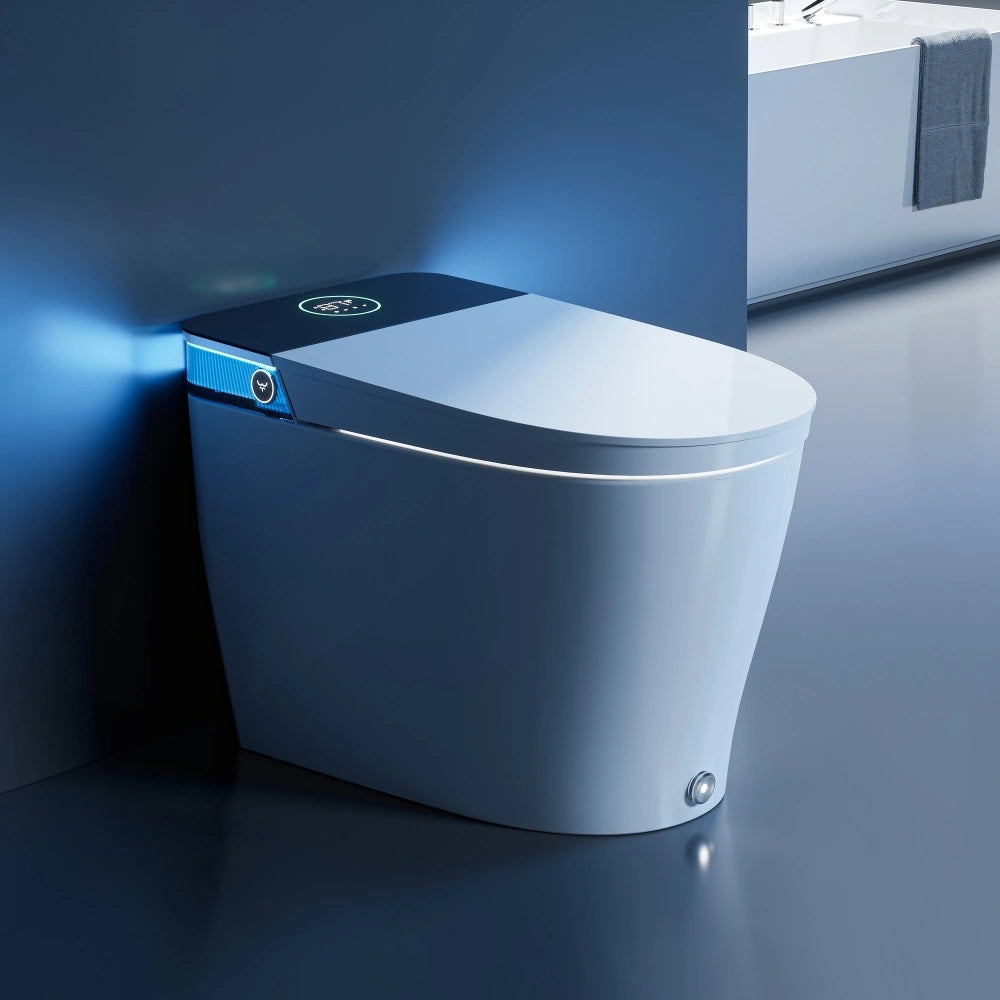
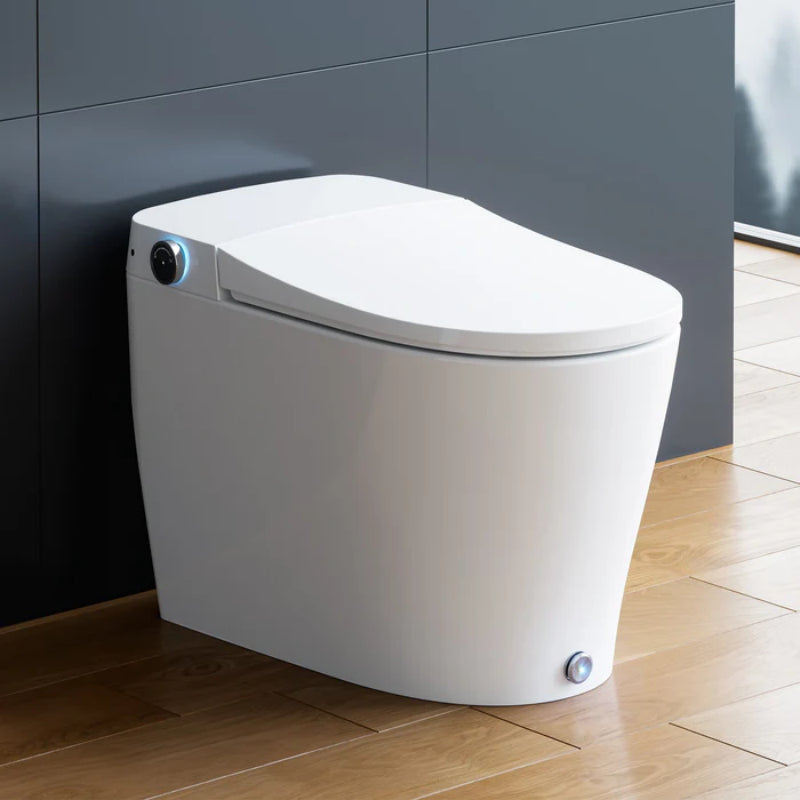
A one-piece smart toilet can feel like a big jump from a basic toilet. It costs more, needs power, and asks you to think about fit, plumbing, and features before you buy. But for the right home, it solves real daily problems: better cleaning, less toilet paper, easier bowl wipe-downs, and more comfort for people who use the bathroom often.
If you are trying to decide between a one-piece smart toilet, a two-piece smart toilet, or just adding a bidet seat, the key is not which one sounds more advanced. The key is which one fits your bathroom, budget, and tolerance for maintenance.
Here’s what usually matters in real homes: people who love these toilets tend to use the bidet and heated seat every day, care about hygiene, and want a cleaner-looking bathroom. People who regret the purchase usually underestimated the install work, overpaid for features they do not use, or bought one without checking outlet location and bathroom space first.
Decision Snapshot: Is It the Right Upgrade?
If you only read one section, read this one.
Best for hygiene-first daily comfort
A one-piece smart toilet makes the most sense for homeowners who want built-in bidet cleaning, a heated seat, easier surface cleaning, and a more seamless look than a standard toilet or seat add-on.
It is often a good fit if:
-
You plan to stay in the home for a while
-
You want warm water cleansing every day
-
Someone in the home has sensitive skin, mobility limits, hemorrhoids, or post-surgery needs
-
You care about reducing toilet paper use
-
You are remodeling and can plan the outlet and clearances now
This is where the benefits of a one-piece smart toilet really show up. It is not just about “smart” features. It is about daily comfort and cleaner use.
Skip it if budget or rental limits
You should probably skip it if you are renting, doing a very low-cost refresh, or trying to solve one simple problem on the cheap.
In those cases, a bidet seat or bidet attachment often makes more sense. A full one-piece unit has a higher upfront cost, usually needs a nearby GFCI outlet, and is harder to take with you later.
If your total budget is tight, ask yourself this first: do you want a better cleaning experience, or do you want a whole new toilet? Those are not always the same purchase.
Better choice than a bidet seat when?
A one-piece smart toilet is the better choice than a bidet seat when you want an integrated fixture from the start.
That usually means:
-
you dislike the look of add-on seats and exposed hoses
-
you want a seamless skirted base that is easier to wipe down
-
your current toilet is old, stained, uncomfortable, or flushes poorly
-
you want built-in sensors, auto flush, deodorizer, and a cleaner overall design
If your existing toilet is already fine and you mainly want wash-and-dry features, a seat add-on may get you 70 to 80 percent of the practical benefit for less money.
When two-piece or seat add-ons make sense
A two-piece smart toilet or smart seat makes more sense when repair access, lower cost, or flexibility matters more than appearance.
Choose those if:
-
you want simpler replacement parts
-
you have an older home with awkward plumbing
-
you want easier DIY installation
-
you are not sure you will keep the home long-term
The key point is simple: buy a one-piece smart toilet when you want an integrated comfort-and-hygiene upgrade, not when you just want to experiment with bidet features.
To summarize which option fits best based on budget, installation complexity, home tenure, and integrated design preference: a one-piece smart toilet is ideal for homeowners with a moderate to higher budget, planning long-term residence, willing to manage professional installation, and seeking a seamless, built-in bathroom fixture; a two-piece smart toilet works well for those prioritizing simpler repairs, moderate budget, and flexible installation in older homes; a bidet seat is the best choice for renters, budget-focused shoppers, those seeking easy DIY installation, and short-term home occupants who want bidet function without a full toilet replacement.
What Trade-Offs Matter Most?
Every one-piece smart toilet comes with a set of key trade-offs that balance style, functionality, convenience, and long-term practicality.
Cleaner design vs higher upfront cost
Yes, a one-piece smart toilet usually looks cleaner and feels more premium. The base is often skirted, the bowl and tank are molded together, and there are fewer exterior seams where grime collects.
That cleaner design is one reason people ask, is a one-piece smart toilet easier to clean? In most homes, yes. You have fewer joints, fewer tight corners, and less dust-catching shape around the trapway. If you already hate cleaning around the outside bends of a standard toilet, this is a real quality-of-life upgrade.
But that cleaner design costs more. A regular toilet can be inexpensive. A one-piece smart toilet is rarely a budget purchase. Even before installation, you are often in the mid-to-premium range.

Built-in features vs easier repairs
The integrated design is part of the appeal, but it also means more is packed into one unit: bidet system, seat heater, sensors, remote control, dryer, and sometimes deodorizer or auto lid.
That can be excellent in daily use. It can also make repairs more specialized than on a simple toilet with a separate tank and seat. If something electronic fails outside warranty, repair may be less straightforward than replacing a standard fill valve or swapping a bidet seat.
This is one reason some buyers prefer a two-piece toilet with a smart seat. If the seat stops working, they replace the seat and keep the toilet.
Luxury convenience vs outage dependence
A one-piece smart toilet with automatic opening and automatically flushes feels very convenient once you get used to it. Touchless use can also help with hygiene. Heated seats are hard to give up after winter. Presets for different users are useful in busy homes.
But there is a catch: power matters. During an outage, many smart functions stop. Some models still allow manual flushing, especially if they are connected to household water pressure in a way that supports basic use. Others lose most convenience features until power returns.
So when people ask, how reliable is a one-piece smart toilet during power failure, the honest answer is this: the toilet itself may still be usable in a reduced way, but the “smart” part is not something you should count on during outages.
Is a one-piece smart toilet easier to clean?
In day-to-day cleaning, yes, usually.
A seamless one-piece smart toilet design cuts down on grime-trapping gaps. Many have skirted sides instead of an exposed trapway, which means less awkward scrubbing. Many also include self-rinsing nozzles, pre-mist bowl features, UV or electrolyzed cleaning on higher-end units, and deodorizer systems.
Still, “easier to clean” does not mean “never clean.” You still need to:
-
wipe the seat and lid
-
clean the bowl
-
check the nozzle area now and then
-
remove mineral buildup if you have hard water
The advantage is lower effort, not zero effort.
One-Piece Smart Toilet vs Two-Piece Smart Toilet
Each style brings distinct advantages for daily use, space, upkeep, and overall value.
Which fits your bathroom better?
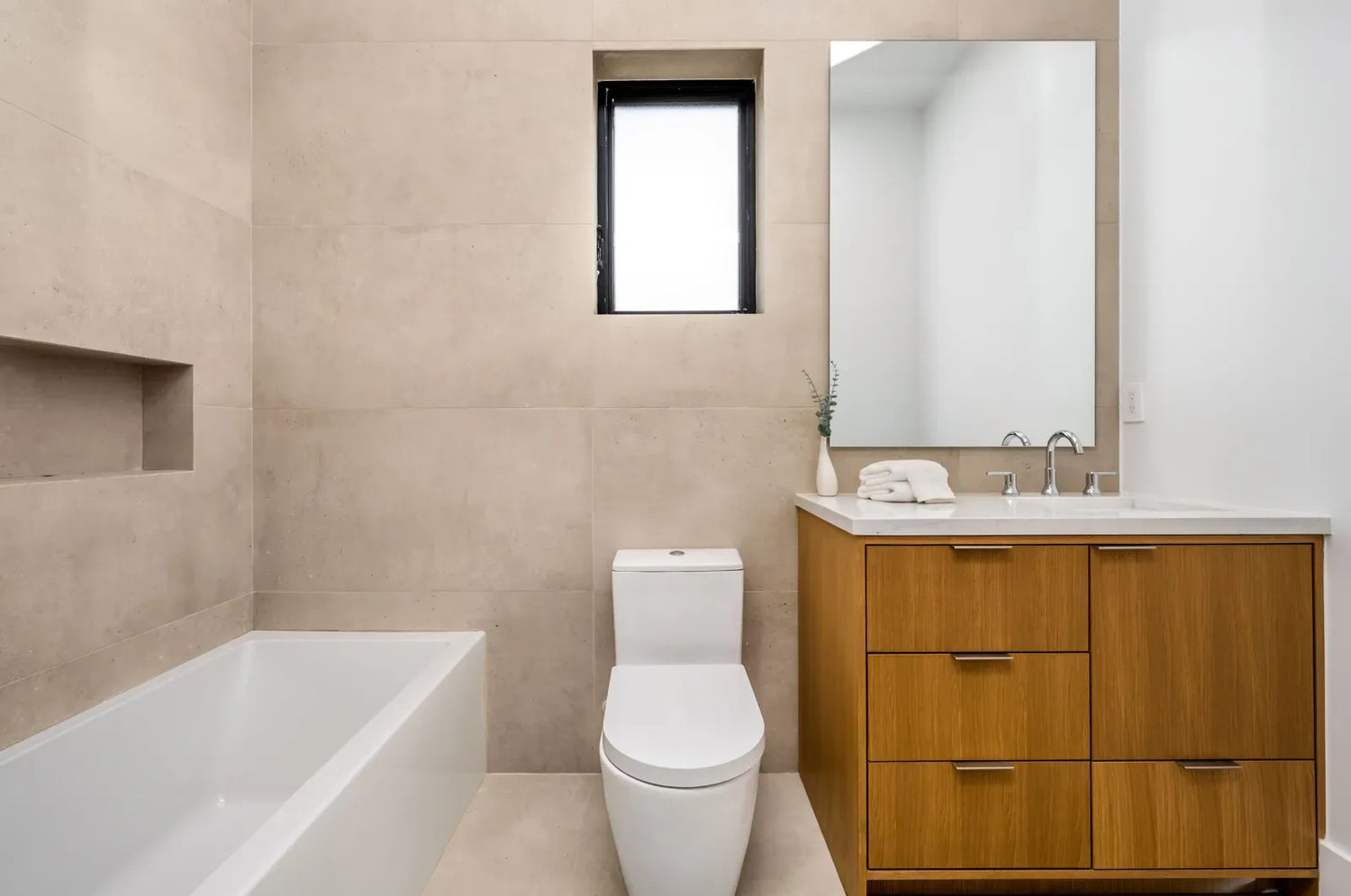
A one-piece smart toilet often looks more compact because the shape is smoother and more integrated. In some small bathrooms, that visual simplicity helps the room feel less crowded. There are also compact one-piece smart toilets for small bathrooms that can work well in tighter spaces.
But do not guess based on looks. Measure the actual projection from wall to front edge, the width at the widest point, and the side clearances. Some one-piece units are compact. Others are larger than expected because the integrated seat housing extends farther forward.
So if you are asking, do one-piece toilets fit in small baths? the answer is: many do, but only after careful measuring.
Which is easier to maintain long-term?
For surface cleaning, one-piece often wins.
For parts access and repair flexibility, two-piece often wins.
A two-piece toilet has a separate tank and simpler body. That can make some repairs easier over time. A one-piece smart toilet may have more integrated components and less modular simplicity.
In real life, this comes down to your priorities. If you care most about avoiding outer grime and making weekly cleaning easier, one-piece is attractive. If you care most about future service access and lower replacement risk, two-piece can feel safer.

Which gives better value over time?
A lot depends on how much you will use the smart features.
If you use the bidet daily, reduce toilet paper heavily, and value comfort, a one-piece smart toilet can feel worth it over time. Some owners report using up to 75% less toilet paper once they fully switch to warm water cleansing and occasional air drying. Water use can also be low on efficient dual-flush units, often around 1.0 to 1.28 gallons per flush, meeting EPA WaterSense water efficiency standards.
That matters when comparing one-piece smart toilet water efficiency and gpf comparison. A modern efficient unit can use less water than many older toilets, so you are not always trading comfort for higher utility bills.
But if you mostly want the heated seat a few months a year and never use the wash functions, the long-term value drops fast.
Which looks and feels more premium?
This is where one-piece usually has the advantage.
The integrated body, hidden trapway, and less cluttered shape give it a cleaner, more finished appearance. It tends to feel more like a planned bathroom upgrade rather than an add-on.
If aesthetics matter to you, or if you are remodeling a modern bathroom, the premium feel of a one-piece unit is one of the strongest reasons people choose it.
What Will It Really Cost?
Understanding the full financial picture of a one-piece smart toilet means looking beyond the initial purchase price. From upfront price ranges to hidden installation fees and long-term running costs, every expense plays a part in determining true value.
Typical price tiers and feature jumps
A realistic buying view looks something like this:
-
Entry smart toilet range: around $800 to $1,200 Usually core bidet functions, heated seat, basic remote, maybe dryer
-
Mid-range: around $1,200 to $2,000 Better wash customization, stronger design, auto flush, deodorizer, presets
-
Higher range: $2,000 and up More advanced sensors, better materials, stronger self-cleaning systems, more convenience features
This is why people ask, are one-piece toilets more expensive? Yes, clearly. They cost more than standard toilets, and often more than buying a regular toilet plus a mid-priced bidet seat.
The important thing is not the sticker price alone. It is what feature jump actually matters to you. Many buyers are happiest in the middle tier, where the comfort and hygiene features are strong without paying heavily for extras they may ignore.
Installation costs buyers overlook
The purchase price is not the full price.
Common extra costs include:
-
adding or relocating a GFCI outlet
-
replacing an old shutoff valve or supply line
-
minor floor or flange work
-
labor for heavier fixture handling
-
haul-away of the old toilet
This is one of the biggest surprises for buyers looking into how to install one-piece bidet toilet setups. The plumbing itself may be familiar, but the power requirement changes the job.
In many homes, professional installation is not because the toilet is impossible to connect. It is because people want a clean, leak-free setup and do not want to risk damaging an expensive unit.
Water and paper savings over time
A one-piece smart toilet can help on ongoing use, but do not oversell the math.
The real savings usually come from:
-
lower toilet paper use and more environmental water usage
-
efficient flush volumes
-
fewer clogs from excess paper
-
less need for separate cleaning products in some homes
Ongoing ownership costs to plan for include modest electricity use for heating and electronic functions, potential expenses for model-specific replacement parts or filters, and regular maintenance to address mineral buildup from hard water.
If your household quickly adapts to bidet use, toilet paper use can drop a lot. If people still use plenty of paper to dry off, the savings will be more modest.
The air dryer is useful, but one common complaint is that it takes longer than people expect. Many owners still pat dry with a small amount of paper.
Is it worth it under $2,000?
For many households, yes.
If you want the strongest value point, a one-piece smart toilet under $2,000 is often where things make sense. You can usually get the key daily-use features:
-
warm water wash
-
heated seat
-
adjustable pressure and temperature
-
warm air dryer
-
self-cleaning nozzle
-
soft-close lid
-
often auto flush, foot control flushing, or deodorizer
This is enough for most families. Beyond that, the gains are often more about polish and convenience than major function.
Will It Fit and Install Easily?
Before you dive into the details of installation and space compatibility, it’s important to understand the key physical and practical checks that will determine whether a one-piece smart toilet works in your bathroom.
Rough-in, outlet, and clearance checks
Before comparing features, complete this critical pre-check list:
-
Measure the rough-in distance from the finished wall to the center of the floor bolts to ensure compatibility.
-
Confirm a nearby GFCI power outlet is available or can be installed, as extension cords are not a safe or suitable solution.
-
Verify front projection, side clearance, lid swing, and door path to ensure the toilet fits your bathroom space.
-
For tankless flush models, check that your home’s water pressure meets the model’s specific setup requirements.
This is the first step in what to consider before buying a one-piece smart toilet. It does not matter how good the feature list looks if the toilet does not physically fit.

Will this work in a small bathroom?
Sometimes yes, sometimes no.
A compact one-piece smart toilet for small bathrooms can work very well, especially if your current toilet has a bulky tank or awkward profile. The smoother body can visually clean up a cramped powder room or small primary bath.
But integrated smart units can also have a longer seat housing than expected. I have seen buyers assume “one-piece” means “smaller,” then realize the front edge comes out farther than their old toilet.
So bring out the tape measure and map it on the floor if needed.
Is a one-piece smart toilet easy to install?
For a confident DIYer with plumbing experience, maybe. For most homeowners, not really.
A standard toilet swap is one thing. A one-piece smart toilet adds weight, electronics, careful alignment, power planning, and sometimes model-specific steps that are less forgiving.
You can also reference installation videos for guidance, but the practical answer remains: easier during a remodel, harder as a casual weekend project.
A bidet seat is much easier. That is one reason many people test the bidet lifestyle with a seat first.
When professional installation is safer
Professional installation is the safer move when:
-
there is no nearby GFCI outlet
-
the old toilet flange is questionable
-
your flooring is uneven
-
the unit is heavy or awkward to position
-
you want warranty-safe installation
-
you are not comfortable with leaks or electrical planning
This is especially true for a one-piece smart toilet with tankless flush system, because those designs can have specific water pressure or setup expectations depending on the model.
Which Features Matter in Daily Use?
Not all smart technology features add equal value to your daily routine or bring meaningful improvement. Some become essential comforts you’ll quickly rely on, while others are little more than convenient extras.
Bidet, heat, and drying essentials
If you focus on daily use, three features matter most:
-
adjustable warm water wash and gentle massage function from the water sprayer
-
heated seat
-
warm air dryer
A one-piece smart toilet with bidet and heated seat covers the two features most owners praise after a few months. The adjustable wash is the real value driver. The heated seat is the comfort feature people get attached to quickly.
Also look for a one-piece smart toilet with adjustable water temperature and pressure. This matters more than many flashy extras because households differ. What feels good to one person can feel too strong or too cool to another.
Dryers are useful, but this is where expectations should stay realistic. They work. They are just slower than hand-drying.
Auto lid and flush: useful or gimmick?
This depends on the home.
A one-piece smart toilet with auto open and auto flush is genuinely useful for some households, especially when hands-free use matters. It can help with hygiene, mobility, and convenience. In homes with kids or guests who forget to flush, it can be more than a gimmick.
On the other hand, if you dislike sensors, want fewer electronics, or prefer to manually close lid, you may prefer a simpler model.
The best way to think about auto features is this: nice to have if they solve a real behavior problem, skippable if they do not.
Night light, deodorizer, and presets
These are secondary features, but some become favorites over time.
A one-piece smart toilet with LED display, night light and air dryer can be very practical in homes where people wake at night and do not want to turn on bright overhead lighting. It is not essential, but it is useful.
A deodorizer can help in daily shared use, especially in tighter bathrooms without excellent ventilation. Presets are helpful when several people use the same toilet and want different water pressure, temperature, and seat settings.
A one-piece smart toilet soft-close lid and deodorizer features package often lands in the “worth having if priced reasonably” category.
What features matter for family use?
For households with multiple users, prioritize:
-
easy remote or side controls
-
user presets
-
adjustable wash settings
-
reliable auto flush if wanted
-
child-friendly controls or simple manual override
-
self-cleaning nozzle
These matter more than app functions in most homes.
When buyers ask about one-piece smart toilet hygiene features for daily use, this is where the answer lives: nozzle rinse, warm water cleansing, touchless operation, deodorizer, and easy-to-clean exterior surfaces.

What Happens After You Buy?
Once your one-piece smart toilet is installed, understanding daily care, reliability, and long-term ownership will help you avoid frustration and keep it performing well for years.
Cleaning and maintenance reality
A one-piece smart toilet is easier to keep tidy than many standard toilets, but it still needs care.
Weekly, most people wipe the seat, lid, and outer surfaces. Periodically, you check the nozzle area and clean the bowl like any other toilet. If you have hard water, mineral scale can build up on internal paths or nozzles over time, so maintenance matters more.
The good news is that many smart features reduce mess: pre-rinse functions, self-cleaning nozzles, and smoother surfaces all help. So yes, in practice, a one-piece smart toilet is often easier to live with.
How reliable is it during outages?
A fair answer is: reliable for limited basic use, not for full smart use.
If power goes out, heated water, seat heat, dryer, sensor lid, and electronic controls may stop. You should expect complete loss of heated seat, warm water wash, dryer, sensor activation, and all auto functions during power outages, while basic manual flushing capability varies by individual model. Some units still allow manual flushing. Some tankless styles may be more dependent on power-assisted operation than simple gravity toilets.
So if your area gets frequent outages, think carefully before choosing a very feature-heavy model. This is one of the few cases where a simpler system may be the more comfortable long-term choice.
Hard water, parts, and warranty concerns
Hard water is one of the least discussed issues before purchase.
Mineral buildup can affect spray nozzles, valves, and internal water paths over time. If you know your home has hard water, look for easy nozzle maintenance and follow cleaning guidance carefully. In some homes, adding water treatment helps protect fixtures and appliances across the house, not just the toilet.
Parts are another issue. A standard toilet uses common parts. A one-piece smart toilet may use model-specific electronics, remotes, or internal assemblies. That does not mean it is unreliable. It means you should pay more attention to warranty length, parts availability, and service support before buying.
If you are comparing best one-piece toilet brands 2026, do not focus only on design or feature count. Pay attention to service reputation, replacement part access, and how clear the manual is.
What owners wish they knew earlier
Most regrets are predictable.
People wish they had:
-
checked outlet location before shopping
-
measured the projection more carefully
-
accepted that air drying takes time
-
chosen fewer “showpiece” features and more daily-use ones
-
thought harder about power-outage habits
-
compared a smart seat first if budget was tight
In homes where the purchase works well, it is usually because the buyer chose based on real routine, not on a long feature list.
Before You Buy
Use this checklist before placing an order:
-
Measure the rough-in from wall to bolt center.
-
Confirm you have a nearby GFCI outlet or budget to add one.
-
Check front projection and side clearance for your bathroom.
-
Decide if you want full replacement or a bidet seat instead.
-
Prioritize daily-use features: wash, heat, pressure, temperature.
-
Think about power outages in your area.
-
Review warranty length and replacement part availability.
-
Be honest about whether you will really use auto lid, dryer, and presets.
FAQs
1. Why choose a one-piece smart toilet?
A one-piece smart toilet offers superior hygiene and comfort through a modern one-piece bidet system, with seamless toilet design that creates an easy to clean smart toilet for daily use. In the one-piece vs two-piece toilet comparison, it delivers a sleeker look and better integration, highlighting the benefits of seamless toilet construction. It also supports higher one-piece vs two-piece efficiency with water-saving dual-flush performance. Horow one-piece toilet quality further enhances reliability, making it ideal for long-term home upgrades.
2. How to install a one-piece bidet toilet?
Installing a one-piece smart toilet requires checking rough-in size, GFCI power access, and bathroom clearances before fitting. For an integrated tankless toilet, you must also confirm household water pressure matches the unit’s requirements. Professional installation is safer to protect the seamless toilet design and maintain warranty validity. This process is more involved than a standard toilet but ensures stable performance for your modern one-piece bidet.
3. Are one-piece toilets more expensive?
A one-piece smart toilet typically costs more than standard or two-piece models due to its integrated build and advanced features. The higher price reflects seamless toilet construction, durable electronics, and improved one-piece vs two-piece efficiency. Mid-range options still provide strong value without overspending on unused functions. Horow one-piece toilet quality offers a reliable balance of cost and performance for most households.
4. Best one-piece toilet brands 2026?
Top one-piece smart toilet brands in 2026 emphasize durability, easy parts access, and strong customer support. Horow one-piece toilet quality stands out with reliable flushing, easy-to-clean surfaces, and consistent performance. Leading brands also excel in seamless toilet design and efficient integrated tankless toilet systems. They outperform competitors in the one-piece vs two-piece toilet comparison by prioritizing real daily functionality.
5. Do one-piece toilets fit in small baths?
Many compact one-piece smart toilet models work well in small bathrooms thanks to their slim seamless toilet design. They visually open up tight spaces better than bulky two-piece units in the one-piece vs two-piece toilet comparison. Always measure projection and clearance to avoid fit issues, even with space-saving modern one-piece bidet designs. Horow offers compact options that maintain quality while fitting smaller bathrooms comfortably.
6. Why is a one-piece smart toilet better for cleaning?
A one-piece smart toilet features seamless toilet design that eliminates grime-collecting gaps, making it an easy to clean smart toilet. It avoids the exposed trapway and joints common in two-piece models, a key benefit in the one-piece vs two-piece toilet comparison. Self-cleaning nozzles and smooth surfaces further reduce scrubbing effort. The benefits of seamless toilet construction make daily upkeep faster and simpler for busy households.
7. Do one-piece smart toilets have better flushing?
Most one-piece smart toilet models use efficient dual-flush systems that boost one-piece vs two-piece efficiency. Integrated tankless toilet designs deliver strong, quiet flushes with consistent waste removal. While flushing performance is excellent, its greatest strengths remain hygiene and easy cleaning. Horow one-piece toilet quality ensures reliable, powerful flushing that matches or exceeds traditional two-piece units.
8. How to choose a one-piece bidet for my home?
Choose a one-piece smart toilet by verifying rough-in, GFCI power, and space clearances for your bathroom. Prioritize a modern one-piece bidet with adjustable wash, heated seat, and seamless toilet design for easy cleaning. Compare one-piece vs two-piece efficiency to select a water-saving model that fits your budget. Review Horow one-piece toilet quality for dependable performance, warranty support, and long-term durability.
References


Leave a comment
This site is protected by hCaptcha and the hCaptcha Privacy Policy and Terms of Service apply.