



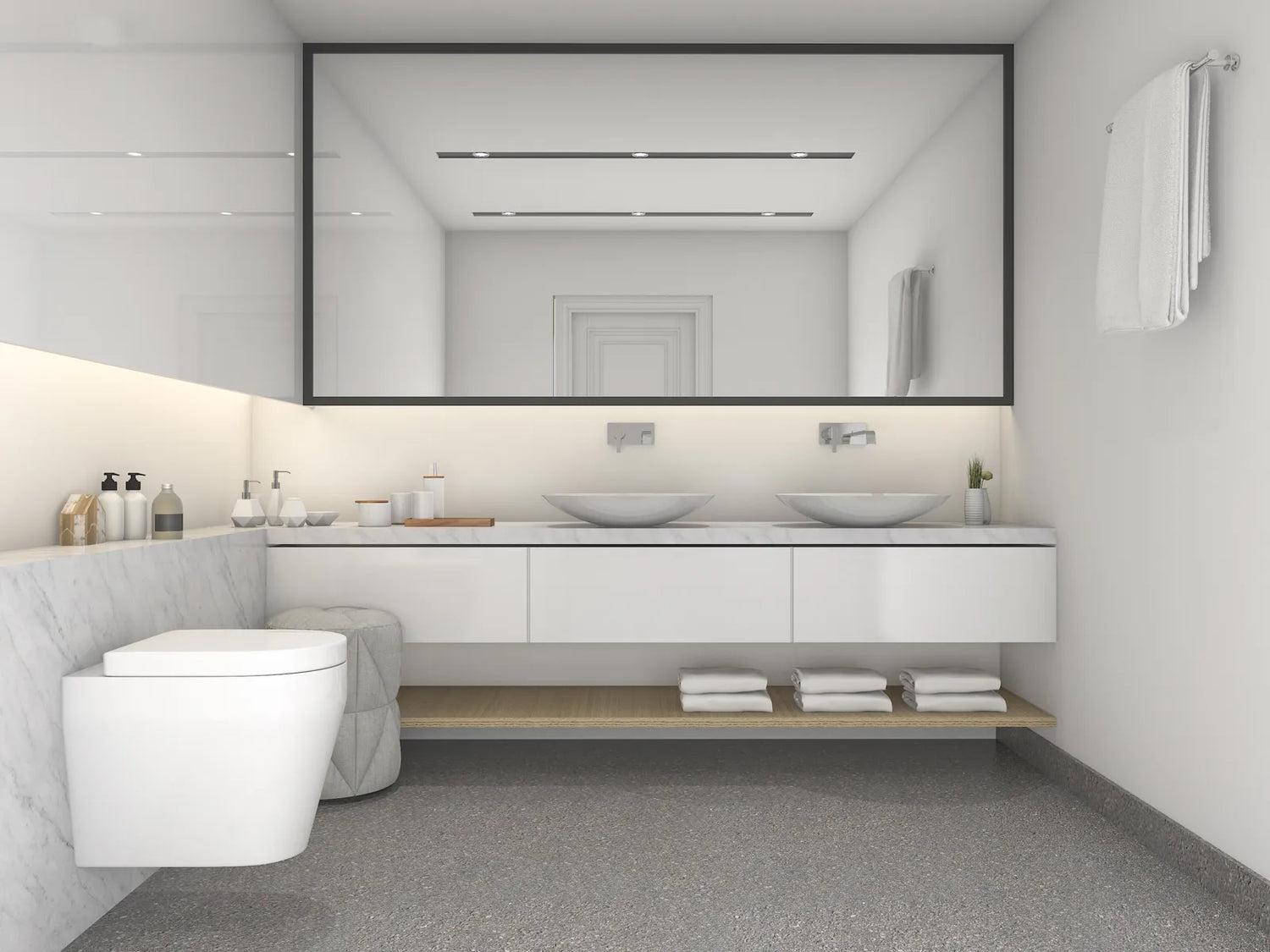
A smart toilet can make daily bathroom care easier, gentler, and cleaner for many women. But it is not the right upgrade for every home.
If you are looking at a smart toilet for women’s wellness, the real question is not “What has the most features?” It is: Will this help with your routine, your body, and your bathroom setup enough to justify the cost and installation?
For some women, the answer is yes right away. That is especially true if you deal with sensitive skin, frequent irritation from toilet paper, pregnancy discomfort, postpartum care, recovery after surgery, or limited mobility. Warm water cleansing, adjustable spray pressure, air drying, and hands-free use can make a real difference.
For others, a full smart toilet is more than they need. In many homes, a bidet seat add-on gives most of the same hygiene benefits for much less money and with less installation work.
Here’s what usually matters in real homes: comfort, ease of cleaning, gentle wash control, and whether your bathroom can actually support the unit. Fancy extras matter far less than most buyers think.
Decision Snapshot: Right fit or skip?
If you only read one section, read this one.
Best for sensitive, high-use routines
A smart toilet for women's wellness makes the most sense if you want gentle washing as part of your everyday routine, not just once in a while.
It is usually a strong fit if you:
-
deal with skin irritation from wiping
-
want a smart toilet with feminine wash mode for women’s wellness
-
have heavy menstrual cycles and want better daily cleanliness
-
prefer a smart toilet with warm water wash and air drying for women’s wellness
-
want more hands-free hygiene in a shared bathroom
In these cases, the comfort gain is often noticeable from day one.
Best for postpartum or recovery care
This is one of the clearest use cases.
After childbirth, pelvic procedures, abdominal surgery, or hemorrhoid flare-ups, wiping can feel harsh or even painful. A smart toilet with adjustable water pressure for feminine hygiene can help you clean gently without as much friction. Warm water and drying are often more comfortable than repeated wiping.
The key point is simple: if your body needs less pressure, less twisting, and less contact, a smart toilet can help.
Skip if rentals limit installation
If you rent, move often, or cannot change plumbing or add an outlet near the toilet, a full integrated smart toilet is often the wrong choice.
A removable bidet seat may be a better fit. It gives many of the same wellness benefits with less commitment.
Skip if power and space are tight
Many people focus on features and forget the room itself.
A smart toilet may not be worth it if:
-
there is no nearby electrical outlet
-
your bathroom is very small
-
your rough-in or plumbing setup is unusual
-
your home has older shutoff valves or weak water pressure
-
the toilet area is too tight for an auto lid or larger footprint
If installation will be awkward or expensive, that changes the value fast.
Who benefits most from one?
The women who get the most value are usually not buying it for novelty. They are solving a real daily problem.
Daily comfort vs occasional use
If you just like the idea of a heated seat and a few automatic features, you may not need a full smart toilet. A standard toilet with a bidet seat add-on may be enough.
But if you expect to use warm washing every day, often more than once a day, comfort starts to matter much more. That is where a smart toilet often feels more polished. Water temperature tends to be more consistent, wash settings may be easier to save, and the design is usually cleaner and more integrated.
So if your goal is daily hygiene support, not just a nicer bathroom, a smart toilet is easier to justify.
When sensitive skin changes the value
Women with eczema, irritation, hemorrhoids, postpartum soreness, or skin sensitivity often ask whether a smart toilet for women's wellness is the more hygienic choice. In practice, the answer is often yes, because it can reduce the need for repeated wiping.
That matters because friction is often the problem. Dry toilet paper, even soft paper, can still irritate already sensitive skin. Gentle cleaning for sensitive skin is exactly what a smart bidet toilet delivers — water does most of the work first, reducing paper contact significantly. Air drying can reduce contact even more, though many women still prefer a light pat dry.
This is also why doctors and clinicians often suggest bidet-style cleansing or peri bottles after childbirth or surgery. The point is gentle hygiene with less rubbing.
Can it help reduce UTI risk?
This is one area where buyers should be careful and realistic.
If you are asking about reducing UTI risk with bidet use, the safest answer is this: it may support better hygiene habits for some women, but it is not a medical guarantee. According to the CDC, urinary tract infections are influenced by multiple factors including bacteria entering the urinary tract, hygiene habits, and individual health conditions, not a single hygiene product alone. No part of this should be understood as preventing, treating, or diagnosing any medical condition.
A smart toilet can help if:
-
it lets you clean more gently after bowel movements
-
it reduces wiping irritation
-
it supports better hygiene during menstruation or postpartum recovery
-
it has a well-designed feminine wash with front-area positioning and clean nozzles
But technique matters. Very strong pressure, poor nozzle hygiene, or using the wrong wash position can be unhelpful. Front-to-back hygiene still matters. So does keeping the unit clean.
In short, a smart toilet may support a cleaner routine, but it is not a substitute for medical care or healthy hygiene habits.
Is it worth it during pregnancy?
For many women, yes, but mainly for comfort.
Pregnancy can bring swelling, hemorrhoids, pelvic pressure, and more frequent bathroom use. According to ACOG, the postpartum period and late pregnancy involve significant physical changes that often require gentler daily care and hygiene routines. That is why pregnancy-friendly bathroom fixtures — and smart toilet features specifically — come up so often in prenatal planning conversations. The most useful ones are not flashy. They are:
-
easy seat height or comfortable sitting posture
-
gentle pressure control
-
warm water wash
-
a heated seat
-
hands-free lid and flush
-
a remote or side controls that do not require twisting
How does a bidet help during pregnancy? Mostly by making cleanup gentler and easier when bending, reaching, or wiping feels harder than usual. It can also help if frequent urination makes you want a cleaner, more comfortable routine.
Smart toilet vs bidet seat
Before comparing features, decide first: do you need a bidet seat add-on or a fully integrated smart toilet? This choice will narrow your options much faster than comparing specs.

When a seat add-on is enough
A bidet seat add-on is often the better decision if your main goal is feminine hygiene and wellness at a lower cost.
Choose a seat add-on if:
-
your current toilet is in good shape
-
you want warm wash and maybe air dry, but do not need a whole new fixture
-
you are testing whether bidet-style hygiene works for you
-
you rent or want easier removal later
-
you want lower upfront and installation cost
For many women, the answer to smart toilet vs bidet seat for feminine hygiene and wellness is simple: a bidet seat does enough.
When an integrated toilet is worth it
An integrated smart toilet is worth the extra money when you want the smoothest daily experience and are already ready to replace the toilet.
It usually makes sense when:
-
you are remodeling anyway
-
you want a one-piece design that is easier to clean
-
you want stronger hands-free features
-
you care about a cleaner look with fewer exposed attachments
-
multiple people in the house will use it often
Integrated units also tend to feel more stable and refined in use. Controls are often better placed, wash functions may be more precise, and the whole setup usually looks less bulky.
Is a high-end model really worth it?
Sometimes yes, often no.
If you are wondering, is a high-end smart toilet worth it for feminine hygiene and wellness, focus on the few things that truly affect comfort:
-
precise pressure control
-
stable warm water
-
good nozzle positioning
-
easy user settings
-
dependable drying
-
quiet, reliable flushing
What usually does not change the experience much:
-
extra mood lighting
-
many decorative presets
-
voice features
-
app-heavy controls
-
unusual lid animations or novelty functions
Pay more for comfort and reliability. Not for features you will stop noticing after a week.
Features that matter most
When buyers get overwhelmed, this is the section that helps the most.
Feminine wash settings that matter
What is “Feminine Wash” mode on a bidet? It is usually a gentler front wash setting designed for the female anatomy. The nozzle angle, spray position, and pressure range are adjusted to clean the front area more comfortably than a standard rear wash.
This is one of the most important smart toilet features for sensitive skin and gentle cleansing. Horow feminine wash mode features, for instance, are designed with adjustable nozzle positioning and soft pressure ranges to address this directly. But not all feminine wash modes feel the same.
Look for:
-
front wash positioning that is easy to adjust
-
a soft pressure range, not just strong spray options
-
pulse or oscillating wash only if you can lower intensity
-
user memory settings if more than one woman in the home will use it
A feminine wash mode should feel controlled and predictable. If pressure jumps too quickly, the feature loses much of its value.
Adjustable pressure for gentle cleansing
This matters more than almost any other spec.
A smart toilet with adjustable water pressure for feminine hygiene is often the safest choice for women with sensitivity, postpartum soreness, pelvic pain, or recovery needs. You want a model that starts truly gentle and increases in small steps.
Too many buyers assume “adjustable” means precise. Sometimes it does not. In real use, a unit with only a few pressure levels can still feel too strong on the lowest setting.
If possible, prioritize:
-
a low starting pressure
-
several small pressure increments
-
separate settings for front wash and rear wash
-
easy access to pressure controls while seated
Warm wash and air dry comfort
Warm water sounds like a luxury until you use it in winter, during your period, or after childbirth.
A smart toilet with warm water wash and air drying for women’s wellness often feels more comfortable because it replaces cold, abrupt cleanup with a gentler routine. The drying feature can also reduce how much toilet paper you use.
That said, air drying is often slower than buyers expect. It helps most when paired with water cleansing, not as a perfect replacement for all drying. Many women still use a small amount of toilet paper for a final pat dry.
So yes, warm water usually matters. Air dry is helpful, but do not buy the toilet for that one feature alone.
Hands-free features that improve hygiene
Hands-free smart toilet features that improve bathroom hygiene for women can be useful, especially in shared bathrooms.
The practical ones are:
-
automatic lid open and close
-
automatic flush
-
touch-free flush backup
-
self-cleaning nozzle rinse
-
night light for low-light trips
These features reduce touching surfaces when your hands may be occupied, sore, or not fully clean yet. This is especially useful during menstruation, postpartum recovery, or when caring for a baby.
Still, auto features are only helpful if they are reliable. If sensors are too sensitive or too slow, they become annoying fast.
Cost before you commit
Price changes the decision more than feature lists do.
Upfront price by tier
In broad terms, here is what buyers usually see:
-
Bidet seat add-on: low to mid hundreds
-
Basic smart toilet: low thousands
-
Mid-range integrated smart toilet: mid thousands
-
Premium smart toilet: several thousands and up
This is why many households start with a seat add-on. It captures a lot of the hygiene benefit without the large jump in cost.
Installation costs people overlook
This is where budgets often slip.
People remember the toilet price. They forget:
-
adding an electrical outlet near the toilet
-
replacing shutoff valves or supply lines
-
adjusting flooring or flange height
-
removing and disposing of the old toilet
-
plumber and electrician labor
-
delivery access for heavier one-piece units
If you need both plumbing and electrical work, the total cost can rise quickly. In older homes, that is common.
Long-term power and filter costs
Smart toilets use electricity for heated seats, warm water systems, sensors, and drying. The cost is usually not huge, but it is not zero.
Some units also use filters, deodorizer cartridges, or replacement parts over time. Hard water can shorten nozzle or valve life if maintenance is poor.
So when asking what to consider before buying a smart toilet for women’s hygiene needs, add ownership cost to the list. Not just purchase price.
Will toilet paper savings offset costs?
Usually only a little.
A smart bidet toilet reduces toilet paper use for sensitive skin and can cut paper consumption quite a bit in some homes. But most buyers will not “earn back” the full cost through toilet paper savings alone, especially with a full integrated toilet.
The better reason to buy one is comfort, hygiene preference, and easier care during sensitive life stages.
5–10 year ownership cost snapshot
Over time, the real cost of a smart toilet is not just the purchase price.
-
Electricity: ongoing use for heated seats, warm water, and drying adds a small but continuous cost
-
Water use: typically minimal increase compared to standard toilets
-
Filters and deodorizer cartridges: periodic replacement depending on model
-
Maintenance: cleaning, descaling, and possible part replacement, especially in hard water areas
-
Toilet paper savings: noticeable reduction, but usually not enough to offset total cost
In most homes, long-term costs stay moderate, but they do add up. The decision is usually justified by comfort and usability, not financial payback alone.
Fit and installation realities
This is the section many people should read before they fall in love with a model.
Will this work in small bathrooms?
Maybe, but measure first.
Some smart toilets have a larger body, deeper seat, or wider profile than standard toilets. Auto lids also need clearance to open. In small bathrooms, this can affect knee room, door swing, or access to nearby cabinets.
In tight powder rooms or older bathrooms, a smart toilet can feel oversized even if the measurements looked fine on paper.

Outlet and plumbing needs first
Before comparing features, check two things:
-
Is there a nearby grounded outlet?
-
Does your plumbing setup match the unit’s requirements?
Without power, many key functions do not work. And without the right water connection and rough-in, installation can turn into a project.
This is especially important in bathrooms that were built before powered bidet products were common.

Older homes can add surprises
Older homes may have:
-
outdated shutoff valves
-
weak or inconsistent water pressure
-
uneven floors
-
rough-in measurements that limit fit
-
older wiring that makes outlet work harder
None of these issues makes a smart toilet impossible. They just affect cost and effort. In older homes, even a strong product choice can become a poor value if installation becomes too complex.
Rentals and shared homes need caution
In rentals, a full smart toilet can be hard to justify unless the landlord approves changes and you plan to stay for years.
In shared homes, think about user comfort. Some family members may love the wash features. Others may avoid them. If privacy, controls, and user settings are confusing, the product may not get used enough to justify the expense.
Daily use after the purchase
This is what ownership feels like once the novelty wears off.
Menstrual hygiene and everyday comfort
One of the clearest bidet benefits for menstrual hygiene is how it supports a smart toilet's role in daily comfort and cleanliness.
During your period, warm water cleansing can help you feel fresher between showers, especially on heavier days. It can also reduce the need for repeated wiping when the skin already feels tender.
For everyday use, the benefit is less dramatic but still real for many women. The bathroom routine feels gentler, cleaner, and less messy. In practice, that is why some women keep using these features long after the “new appliance” excitement fades.
Post-natal and surgery recovery support
This is where a smart toilet for women's wellness truly stands out, especially for post-natal bathroom care.
Post-natal bathroom care tips most often point to exactly this: gentle, low-contact cleaning. Based on guidance from MedlinePlus, gentle rinsing with warm water is often recommended after childbirth or certain procedures to reduce irritation and support healing. A gentle front wash and low-pressure cleanse can feel much easier than wiping. Air drying and a heated seat can add comfort too.
The best smart toilet features for women recovering from surgery or childbirth are usually:
-
low and precise pressure control
-
warm water
-
easy controls
-
hands-free flush
-
comfortable seating
-
reliable front wash
This is one use case where premium comfort features can actually matter.
Heated seats and auto lids daily
A smart toilet for women's wellness — one with a heated seat and automatic lid — can feel helpful for daily comfort even if you do not use the bidet functions every time.
Heated seats matter most in colder homes and for women who use the bathroom frequently at night, during pregnancy, or while recovering. Auto lids and flushes are less about luxury and more about reducing touches and small movements.
These are quality-of-life features. They do not make the decision on their own, but they can improve day-to-day use.
Usability for arthritis or limited mobility
A smart toilet can be especially helpful for women who have hand pain, joint stiffness, back pain, or limited reach.
Smart toilet usability features for women with arthritis or limited mobility include:
-
remote controls with large buttons
-
side panels that are easy to feel without twisting
-
automatic flush
-
automatic lid
-
less wiping and reaching
-
stable seat height and easy sitting position
If mobility is part of the reason for buying, avoid units with confusing controls or tiny remotes. Ease of use matters more than feature count.
Maintenance, hygiene, and ownership risks
No toilet is maintenance-free, even if the box implies it.
Nozzle cleaning and hard water issues
A self-rinsing nozzle helps, but it does not remove all maintenance. You still need to clean surfaces, check spray areas, and deal with mineral buildup over time.
Hard water is a common issue. It can affect nozzles, internal water paths, and valves. In homes with hard water, maintenance needs may be higher and lifespan may be shorter without regular care.
If you know you dislike maintenance, keep this in mind. Convenience only lasts if the unit stays clean and works well.

Shared bathroom privacy concerns
Some women love personalized wash settings. Others feel awkward using them in a shared bathroom.
This may sound minor, but in real homes it affects usage. If the controls are too visible, too complicated, or too easy for children to trigger, the product may feel less private than expected.
Choose a setup that feels simple and discreet if multiple people share the space.
What happens if sensors fail?
Sensors can misread movement, fail to trigger, or trigger when they should not. Auto lids may open late. Auto flush may miss. Seat sensors can be frustrating if they are overly sensitive to posture.
This is not a reason to avoid smart toilets altogether. It is a reason to make sure manual controls are easy to use and that the basic toilet functions still work well even when a sensor feature acts up.
When maintenance cancels the convenience
If the unit is hard to clean, the remote is annoying, the wash settings feel off, or the dryer takes too long, some owners stop using the advanced features and fall back to basic flushing.
That is the real ownership risk. Not dramatic failure, but slow disappointment.
A smart toilet is worth it when the comfort is easy and repeatable. If upkeep feels like a chore, the value drops quickly.
What type should most women choose?
When choosing a smart toilet for women's wellness, most homeowners find the decision comes down to this:
If your main goal is gentle feminine hygiene, less wiping, and lower cost, start with a quality bidet seat.
If your goal is daily high-comfort use, hands-free convenience, easier cleaning, and a more finished long-term upgrade, an integrated smart toilet can be worth it.
The women who tend to be happiest with a smart toilet for women's wellness are those who:
-
use the wash features every day
-
need gentler care because of sensitivity, pregnancy, postpartum recovery, or surgery
-
want less touching and wiping
-
already plan to upgrade or remodel the bathroom
-
have the space, outlet, and budget to support it
The women who are often happier with a bidet seat are those who:
-
want to test the experience first
-
need better hygiene without a major remodel
-
rent or may move soon
-
want strong value without the full price jump
In short, buy the full smart toilet when you want the integrated experience and know you will use it often. Buy the seat when you want the core hygiene benefit with less cost and less commitment.
Before you buy
Use this checklist before ordering a smart toilet for women's wellness:
-
Measure the toilet space, door clearance, and rough-in
-
Confirm there is a nearby grounded electrical outlet
-
Check whether your water pressure and shutoff valve are in good shape
-
Decide if you need a full smart toilet or just a bidet seat
-
Prioritize gentle pressure control and feminine wash over novelty features
-
Think about who will use it and whether controls are easy for everyone
-
Factor in installation, maintenance, and possible hard water issues
-
If you are pregnant, postpartum, or recovering, choose comfort and ease first
FAQs
1. How does a bidet help during pregnancy?
A bidet helps by making daily hygiene gentler and easier when bending, wiping, or reaching feels uncomfortable. Warm water cleansing can reduce irritation, support better comfort with frequent bathroom trips, and ease pressure on sensitive areas. It is especially useful for managing swelling, hemorrhoids, and general discomfort during later stages of pregnancy.
2. Is a smart toilet more hygienic for women?
A smart toilet for women's wellness can be more hygienic, because water cleansing often reduces the need for repeated wiping, which is a common source of irritation. Features like feminine wash, adjustable pressure, and air drying can support a cleaner and gentler routine. However, hygiene still depends on correct use, proper positioning, and keeping the nozzle and unit clean.
3. Can a bidet reduce the risk of UTIs?
A bidet may support better hygiene habits, but it does not prevent UTIs on its own. Gentle front-to-back cleaning, proper nozzle hygiene, and moderate pressure are important. It should be seen as a supportive hygiene tool rather than a medical solution or replacement for proper care.
4. What is “Feminine Wash” mode on a bidet?
“Feminine Wash” mode is a front cleansing setting designed for the female anatomy. It typically uses a softer spray, adjusted angle, and more precise positioning to clean the front area comfortably. This makes it more suitable for sensitive skin, menstruation, and postpartum care compared to a standard rear wash.
5. Why do doctors recommend bidets for hygiene?
Doctors often recommend bidet-style cleansing because it reduces friction from wiping and supports gentler hygiene, especially after childbirth, surgery, or irritation. Warm water cleaning can be more comfortable for sensitive skin and may help maintain better daily hygiene when wiping alone feels too harsh.
References


Leave a comment
This site is protected by hCaptcha and the hCaptcha Privacy Policy and Terms of Service apply.