
Shower time touches far more than your daily hygiene. The length of your shower affects your skin health, water bill, energy use, and even your mood and sleep. Yet in the United States, average shower time often runs much longer than experts recommend. National surveys show the average shower lasts about 13–16.1 minutes, while dermatologists usually suggest staying under 10–15 minutes.
If you’ve ever wondered “How long should a shower take?”, “Is my 20-minute shower too long?”, or “How much water does a 5 minute shower use?”, this guide is for you. You’ll see how your habits compare with others, what board-certified dermatologists say about healthy shower length and water temperature, what different generations and countries do, and how to fine-tune your shower routine so it fits your skin, lifestyle, and budget.
Average Shower Time: Key Statistics at a Glance
Before talking about what you should do, it helps to know what people actually do.
What is the average shower time in the U.S.?
Across several large national surveys, typical U.S. shower time falls in a band between 13 and 16.1 minutes. One widely shared dataset puts the overall average at 16.1 minutes, while other research lands closer to 13 minutes. These studies use slightly different methods—some ask people to estimate their time, and others use more detailed tracking—so it is normal to see a range.
In short, if your shower time is around 15 minutes, you are very close to what is “normal” in the U.S. right now. The key question is not just what is normal, though, but what is healthy and sustainable for your skin and your water use.
How often do people shower each week?
Most Americans report that they shower at least once a day. About two-thirds of adults say they shower daily, and some groups—such as teens and young adults—often shower more than once a day, especially on heavy workout days or after sports.
Many people also mix full showers with quick rinses. A “quick rinse” might be a 5–7 minute shower focusing mainly on groin, underarms, and feet, without washing your hair. A “full shower” usually includes shampoo, conditioner, and sometimes shaving or a more detailed skincare routine. When people talk about average shower time, they often blend both types in their answers, which is part of why the numbers vary.
How Long Should You Shower? Dermatologist‑Backed Guidelines
Now to the big question: What is a normal shower time—and what is a healthy one?
What is the healthiest shower length?
Most dermatology groups, including the American Academy of Dermatology, recommend keeping showers short and gentle. They tend to agree on a rough target:
-
A healthy shower length is usually about 5–10 minutes.
-
Many experts say staying under 10–15 minutes is best for skin health, especially if you like warm or hot showers.
So while a 15‑minute shower is common, the sweet spot for both your skin and water use is closer to 8–10 minutes. That gives enough time to clean your body, shampoo if needed, and even shave, as long as you stay focused.
To put it simply:
-
Normal in real life: About 13–16 minutes in the U.S.
-
Healthiest for your skin and water: About 5–10 minutes, with warm, not hot, water.
Recommended water temperature and skin health
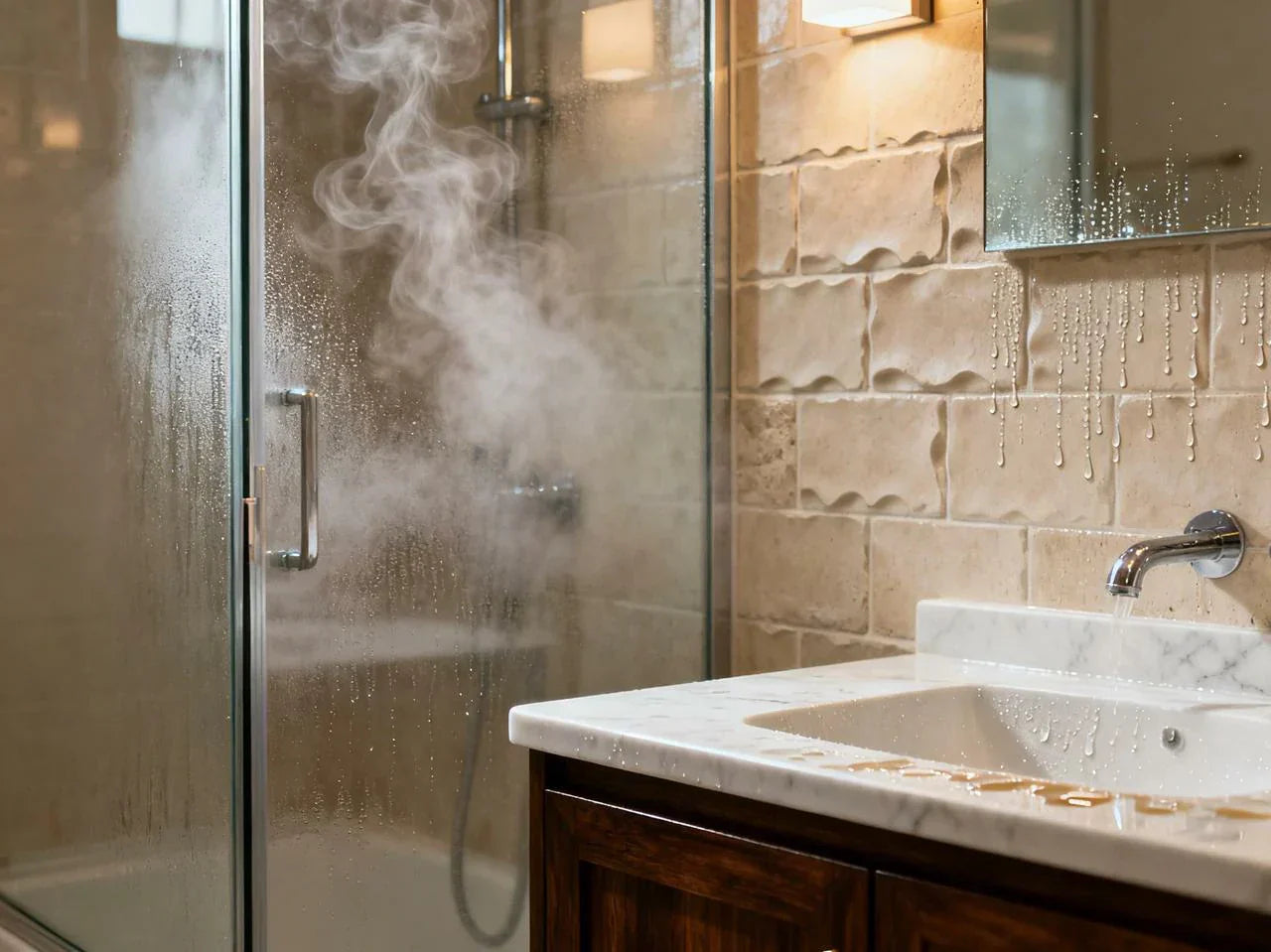
Water temperature matters almost as much as shower time. Hot water feels great on sore muscles, but it is tough on your skin and scalp.
Dermatologists usually suggest:
-
Aim for lukewarm to warm water. Think “comfortable” rather than “steaming.” For many people, this is roughly 90–100°F (32–38°C).
-
Avoid very hot water, where your skin turns red, or steam fills the room quickly. This level of warm or hot water speeds up the loss of natural oils and lets more moisture escape from your skin.
-
If you have dry skin, eczema, or psoriasis, shorter, lukewarm showers are especially important. Hot water can worsen these skin conditions, making itching and flaking worse.
-
People with acne also need to be careful. Very hot showers and harsh body washes can strip your skin of its natural oils. This may seem good at first, but it can trigger more oil production later and possibly clog your pores.

A useful rule is to apply a body moisturizer or lotion within a few minutes after you shower. This helps cleanse and hydrate the skin and seal in water before it evaporates.
Short vs. long showers: pros and cons
Many people assume a long shower must be better. In reality, showers longer than 15 minutes rarely make you any cleaner. Technique and focus matter much more than how many minutes you spend in the shower.
Shorter showers, around 5–10 minutes, tend to:
-
Protect your skin barrier, especially when you use lukewarm water and gentle cleansers.
-
Save water and energy, which lowers your utility bill and reduces strain on water heaters.
-
Free up time on busy mornings.
Long showers, around 20 minutes or more, may:
-
Feel relaxing and help ease muscle tension or cold symptoms when you use warm steam.
-
Offer a sense of mental break or quiet time, which is why many people like to linger in the shower.
But these longer sessions can also:
-
Leave your skin dry, tight, or itchy once you step out.
-
Strip good and bad bacteria from the surface of your skin, which may increase the risk of irritation and infection in some people.
-
Use far more water and energy than needed to clean your body.
So yes, you can enjoy a long shower once in a while as a treat. Just recognize that, from a dermatologist and water conservation point of view, it should be the exception, not the daily norm.
Putting expert recommendations in context
Real life does not always match the textbook answer. You might have thick hair that takes more time, a job that leaves you very dirty, or a sport that makes you sweat heavily. You may also see social posts showing 25‑minute “aesthetic” routines and wonder how to compare.
One helpful way to think about it is this: how long a shower should be depends on your goals.
-
If your goal is basic hygiene and skin health, aim for a 5–10‑minute lukewarm shower.
-
If you are recovering from a tough workout, you may need a bit more time for washing your hair and stretching under the water, but try to stay under 15 minutes.
-
If your shower is part of your mental health routine, you can keep the water running only for the active washing steps, then step out and do the rest of your care at the sink to save water and energy.
Shower Time by Age, Lifestyle, and Daily Routine
Not everyone needs the same shower routine. Your age, schedule, and activity level all shape how often you need to shower and how long each session should last.
Why Gen Z showers are getting longer
Younger people often have the longest shower times, and not just by a small amount. As mentioned earlier, Gen Z showers average around 21.2 minutes, and many go even longer.
Several trends help explain this:
Social media has made shower time part of a visual story. Step‑by‑step body-care and skincare routines are filmed and shared, often lasting 15–30 minutes. Each extra step—exfoliating scrubs, scalp serums, multi‑step hair masks—adds minutes.
There is also a strong self-care narrative: long, steamy showers are framed as a way to handle stress, anxiety, and burnout. When your shower feels like your only private time in the day, it is easy to let the minutes pass.
None of this is “bad” on its own, but when these routines involve very hot water and frequent long showers, they can unintentionally leave your skin and scalp dry or irritated. The trick is keeping the water running time shorter and moving some extra steps—like hair masks or body oils—outside the shower, where you are not under constant hot water.
Busy professionals, parents, and athletes: tailoring shower length
Think about a few different lives:
A nurse working 12‑hour shifts might come home covered in sweat and germs. They may need to shower daily, but can still keep each session to about 8–10 minutes, focusing on underarms, groin, feet, and scalp.
A parent of young kids might have only a few minutes before someone calls from another room. Here, a 5–7 minute “functional shower” can be enough on most days, with a longer session once or twice a week for hair and shaving.
An athlete or gym‑goer may need to shower after each workout to manage body odor and sweat. On heavy training days, they might shower twice. To protect their skin health, it helps if at least one of those showers is short, lukewarm, and gentle, and they limit strong scrubbing so they do not over‑remove dead skin cells and oils.

The key point is that shower length depends on your goals and lifestyle, but you can almost always cut a few minutes without losing cleanliness.
Morning vs night showers: which is better?
People often ask which is better: a morning shower or a nighttime shower. The honest answer is that both can help, in different ways.
A morning shower can:
-
Help you feel more awake and alert.
-
Make it easier to style your hair for the day.
-
Rinse off light night sweat.
A nighttime shower can:
-
Help wash away pollution, sunscreen, and sweat from the day, which is helpful for acne‑prone skin.
-
Support sleep when timed well. Warm baths or showers 1–2 hours before bed can help some people fall asleep faster, because the warm water slightly raises body temperature, then the cooling afterward sends a sleep signal.
-
Relax tight muscles and ease muscle tension before bed.
If you have a very sweaty job, work with chemicals or dust, or exercise hard, you may sometimes shower both morning and night. In that case, try to make at least one shower very short, keep the water lukewarm, and use a gentle, fragrance‑free cleanser.
Case studies: real‑world shower routines
It can help to see what a healthy shower routine looks like in real life.
-
A Millennial office worker might take a 9‑minute morning shower on workdays: two minutes to wet hair and body, three minutes to shampoo and condition, two minutes to wash key areas (underarms, groin, feet), and two minutes to rinse and step out to moisturize.
-
A high‑school athlete may rely on a 7‑minute post‑practice rinse: quick wash of scalp, underarms, groin, and feet, plus a short rinse of arms and legs to remove sweat and turf or dirt.
-
A Gen X parent might enjoy a 12‑minute evening wind‑down: a warm (not hot) shower, careful but gentle cleanse, and a minute or two of mindful breathing under the spray.
-
A boomer retiree trying an “eco challenge” might stick to a 5‑minute shower: water on to wet down, water off while lathering, then water on only to rinse—a style sometimes called a “navy shower.”
All of these routines support good hygiene without staying under hot water longer than needed.
Water Usage, Costs, and Sustainability of Shower Time
When you stand under the spray, it is easy to forget how much water is pouring down the drain. Once you know the numbers, it can be easier to shorten your shower time.
How much water does a typical shower use?
The U.S. Environmental Protection Agency (EPA) estimates that a standard shower uses about 2.1 gallons of water per minute with a modern, efficient showerhead. Older or high‑flow fixtures may use 2.5 gallons per minute or more.
So, how much water does a 5 minute shower use?
-
At 2.1 gallons per minute, a 5‑minute shower uses about 10.5 gallons.
-
At 2.5 gallons per minute, a 5‑minute shower uses about 12.5 gallons.
The EPA often uses an 8‑minute shower as an example, which comes out to about 17 gallons of water with an efficient showerhead. If your average shower time is 16 minutes instead of 8, you are likely using roughly twice as much water and energy each time.
Calculating your shower water and energy costs
Your exact cost depends on:
-
Flow rate of your showerhead.
-
Duration of each shower.
-
Number of showers per week in your household.
-
The price of water and energy where you live.
-
Whether your water is heated by electricity, gas, or other fuels.
Even without exact bills, it is clear that long showers add up quickly. If one person cuts just 5 minutes off a daily shower, they might save thousands of gallons of water a year, plus the energy needed to heat it. Multiply that by a family of four, and the impact is large.
Eco‑friendly strategies to shorten shower time
You do not have to slash your shower time in half overnight. Small changes can help you save water and energy while still enjoying your daily routine.
Some helpful habits include:
-
Use a timer or a short playlist to aim for a set time, like 7–10 minutes.
-
Switch to a low‑flow showerhead that uses less water per minute.
-
Try a “navy shower”: water on to wet, water off while lathering, water on only to rinse.
-
Shampoo and condition efficiently: avoid just standing under the water while you wait for hair products to work.
-
Turn off the water while shaving if you can.

When you shorten your shower by even 2–5 minutes, you protect both your skin and your local water supply.
Optimizing Your Shower Routine for Wellness and Productivity
Knowing how long to shower is one part of the equation. The other part is what you do while you spend time in the shower.
Designing a 10–15 minute shower for maximum benefits
If you like a slightly longer shower and still want to protect your skin, plan a structured 10–15 minute routine. Here is a simple outline you can adapt:
-
Minute 1–2: Turn on lukewarm water. Step in and wet your hair and body.
-
Minute 3–4: Shampoo your hair (if it is a hair‑wash day). Gently massage your scalp, then rinse.
-
Minute 5–6: Apply conditioner if needed. While it sits, gently wash underarms, groin, feet, and any sweaty or dirty spots with a mild cleanser.
-
Minute 7–8: Rinse out conditioner and body cleanser thoroughly.
-
Minute 9–10: Shave or quickly exfoliate if needed, keeping water temperature steady and contact time short.
-
Minute 11–12: Final rinse, turn off water, and step out.
-
Minute 13–15: Within a few minutes, apply body moisturizer to damp skin to help keep your skin hydrated.
You can compress this into 7–8 minutes on busy days by skipping shaving or conditioner, or stretch to 12–13 minutes on deeper‑clean days. The idea is not to waste minutes just standing under very hot water.
Skin and hair care steps that fit shorter showers
If you want to protect skin health and still care for your hair:
-
Rotate hair‑wash days. Many people do not need to shampoo daily. Washing every other day—or even 2–3 times a week for some hair types—can cut shower time and reduce dryness of the scalp.
-
Use leave‑in conditioners or treatments that you apply after stepping out. This keeps heavy conditioning steps outside the window where hot water can strip your skin.
-
On light‑activity days, especially if you stayed indoors, you may not need to shower head‑to‑toe. Sometimes spot cleansing—face, underarms, groin, and feet—plus a quick rinse is enough to manage body odor and remove sweat.
Using shower time for mental health, focus, and relaxation
Your shower can support your overall health, not just your skin.
During a short shower, you might:
-
Take a few slow, deep breaths, feeling the water on your shoulders.
-
Spend 30 seconds thinking about what you are grateful for or what you want to focus on today.
-
In the evening, imagine the warm shower helping you release the day’s tension so you can fall asleep more easily.
Some people also like cold showers or ending with a cool rinse. Brief cold showers or a 30‑second cool burst at the end may feel refreshing and wakeful. If you want to take a cold shower for health reasons, keep it short, and talk to a doctor if you have heart or blood pressure problems, since sudden cold can be stressful on the body.

FAQs
1. What is a normal shower time?
A normal shower time varies by culture, but in the U.S. it’s typically around 10–15 minutes. Many people shower every day, though how often should you shower depends on activity level, climate, and skin type. Dermatology guidance generally suggests keeping water warm—not too hot—because very hot water strips away the skin’s natural oils and allows moisture to escape. A short routine is usually enough to bathe effectively without irritating dry skin or eczema. A five-minute shower can still get you perfectly clean if you focus on key areas instead of under-wash or over-scrub. If you want to avoid dryness and keep your water and energy use lower, staying closer to 5–10 minutes works well. Showers may be longer on hair-wash days, but consistency matters more than extra minutes.
2. Is a 20 minute shower too long?
A 20-minute shower is usually longer than necessary, especially if the water is hot. Long, hot showers may feel good and sometimes help relieve tension, but frequent showers of that length often strip away the skin’s protective barrier. When moisture begins to escape, your skin becomes more prone to irritation, redness, or flare-ups if you have dry skin or eczema. Dermatologists generally recommend keeping daily showers warm—not steaming—and limiting the time you spend in the shower unless there’s a specific need. Taking a warm shower occasionally for 20 minutes is fine, but it shouldn’t be your daily routine. If you want to avoid dryness while still relaxing, you can finish most washing steps quickly, then step out and continue skin-care at the sink. This keeps your water use lower and protects your skin’s natural oils.
3. What are signs of over-showering?
Over-showering happens when showers are too long, too hot, or too frequent. Signs include tightness, stinging, flaking, or patches of redness after you bathe. When frequent showers strip away the skin’s oils, the barrier weakens and moisture can escape more easily. This makes the skin’s surface dry and sensitive, sometimes worsening conditions like eczema. You may also notice that lotion burns when applied, or that your scalp becomes itchy. People who shower every day with very hot water are at higher risk of these problems. To avoid irritation, shorten your routine, try taking a warm shower instead of a hot one, and moisturize while your skin is still damp. If you’re unsure whether you shower too much, think about your lifestyle—whether you shower after workouts, your climate, and how often should you shower for comfort versus habit.
4. Do longer showers clean you better?
Longer showers don’t necessarily clean you better. Cleanliness depends more on technique than on minutes under running water. Showers may feel more thorough when they’re longer, but staying under hot water too long can damage the skin’s barrier and strip away oils. A five-minute shower focusing on underarms, groin, feet, and visibly dirty areas is usually enough for good hygiene. Once sweat and debris are rinsed off, extra time doesn’t improve cleanliness and may increase dryness, especially if you already have dry skin or eczema. If you want to avoid irritation, keep the water warm rather than hot and finish washing steps efficiently. Whether you shower quickly or slowly, the key is gentle cleansing rather than harsh scrubbing. You don’t need long sessions daily—sometimes spot-washing is enough depending on your goals.
5. How long does the average female shower?
The average female shower in the U.S. lasts around 15–17 minutes. Women often take slightly longer showers due to hair washing, shaving, or bath-adjacent routines that involve multiple steps. However, dermatology recommendations still suggest that most people aim for about 5–10 minutes, since long, hot sessions can strip away natural oils and cause moisture to escape. Many women follow a pattern of taking a warm shower in the evening to relax or to help relieve stress 1–2 hours before bed. If you want to avoid dryness or irritation, especially if you have dry skin or eczema, you can wash efficiently in the shower and apply moisturizer immediately after. You don’t need to shower every day unless activity or sweat makes it necessary; whether you shower daily depends on comfort, climate, and hair-care needs.
6. What is a good shower routine?
A good shower routine balances cleanliness, skin health, and time efficiency. Most people do well with a 5–10-minute warm—not hot—shower. Start by wetting the body, gently cleansing key areas, and washing hair only as often as needed. Taking a warm shower helps relieve tension without stripping away too many oils. If you want to avoid dryness, use mild cleansers and moisturize right after; this keeps the skin’s barrier intact and slows moisture escape. You don’t have to shower every day—how often should you shower depends on lifestyle, workouts, and skin sensitivity. Whether you shower morning or night also depends on your goals; evening showers may help you sleep better if done 1–2 hours before bed. Keep your water use moderate, skip harsh scrubbing, and don’t under-wash essential areas.
7. How many gallons of water do you use for a 5-minute shower?
A five-minute shower typically uses 10–12.5 gallons of water, depending on the showerhead flow rate. Efficient showerheads use roughly 2.0–2.1 gallons per minute, while older ones may use 2.5 gallons or more. Keeping your water use low helps save energy and reduces utility costs, especially if you bathe daily. If you want to avoid waste, shorten your shower slightly or turn the water off while applying soap or shampoo. Showers may not need to be long to feel refreshing—taking a warm shower for five minutes can still clean effectively without stripping away oils or causing moisture to escape. Whether you shower quickly or linger, being mindful of flow rate and time helps keep your water use in check while protecting skin health.
References


Leave a comment
This site is protected by hCaptcha and the hCaptcha Privacy Policy and Terms of Service apply.