



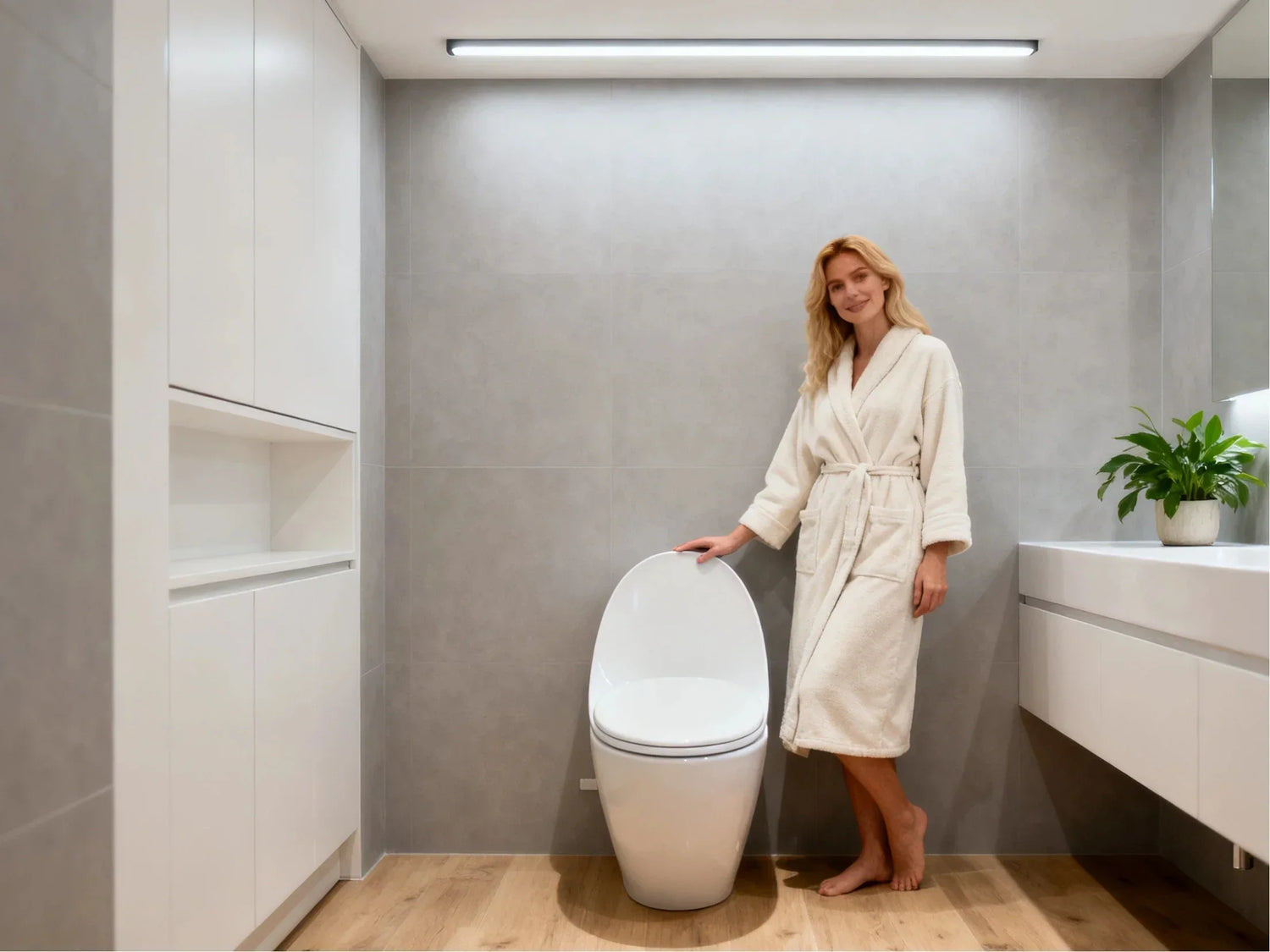
An oval toilet seat—often called an elongated toilet seat—is the most common seat shape in newer North American bathrooms. It’s chosen for comfort, easy cleaning, and a modern look. But there’s one problem many people hit: they buy the wrong size. That leads to wobbly seats, poor comfort, returns, and even bidet misalignment. This guide solves that fast. You’ll learn how to measure correctly, confirm your bowl shape, install a new seat in under 20 minutes, and choose features like soft-close and quick-release. You’ll also see the difference between elongated and round seats, how to check bidet seat compatibility, and what to consider for sustainability and accessibility.
Want quick answers first? Start with the key specs below. Then follow the steps to measure, install, compare features, and avoid the #1 mistake: mismatched shapes.
Oval Toilet Seat: Quick Answers and Key Specs
Choosing between a toilet seat round vs elongated design starts with knowing the numbers. Most North American toilets follow similar measurements, so a quick check with a tape measure is all you need.
At-a-glance dimensions and standards
Table: Typical bowl and seat dimensions (North America)
| Item | Elongated (Oval) | Round |
|---|---|---|
| Typical bowl/seat length | About 18.5 in (47 cm) | About 16.5 in (42 cm) |
| Standard bolt spread | About 5.5 in (14 cm) | About 5.5 in (14 cm) |
| Common bowl width (widest point) | 14–14.5 in (36–37 cm) | 14–14.5 in (36–37 cm) |
A few helpful notes:
-
Elongated seats are now common in new homes. Many older homes still have round bowls.
-
Comfort: Elongated seats offer a longer sitting area and are often preferred by larger adults.
-
Many seats follow these dimensions, but small variations exist by model, so always measure your bowl first.
Think of this as your “Spec Card” snapshot: length (18.5 vs ~16.5), bolt spread (5.5), width (~14), and shape ID (elongated = oval front, round = shorter circle-like front).
Fit and compatibility essentials
The key rule is simple: match the seat shape to the bowl shape.
-
Elongated seat on round bowl = overhang, wobble, and poor comfort.
-
Round seat on elongated bowl = exposed rim and misaligned fit.
-
Bidet users: a mismatched seat can push the nozzle out of position, so the spray won’t land where it should.
If you remember just one thing, make it this: shape must match shape.
Time, tools, and difficulty
Most people can replace a seat in under 20 minutes. You’ll often need:
-
Flathead screwdriver
-
Adjustable wrench
-
Pliers (optional for stubborn nuts)
-
Many modern seats include “breakaway” torque nuts that snap at the right tightness (no over-tightening).
Think of installation as a mini three-step flow: remove old hardware, align and attach new seat, then tighten and test.
Measure Correctly: Round vs Elongated Sizing
You may be asking: what’s the real difference between elongated and round toilet seats, and how do I tell which I need? The fastest way is to measure the bowl, not the old seat.
Step-by-step measuring guide (with diagram)
Grab a tape measure. Measure your toilet bowl using three checks:
-
Length
-
Place the zero point at the center between the two mounting holes at the back of the bowl. Make sure the tape measure is straight and not tilted, so your measurement is accurate.
-
Measure straight to the front edge of the bowl. This tells you whether your bowl is elongated or round—don’t measure along the curve, measure in a straight line.
-
About 18–18.5 inches usually means elongated. About 16–16.5 inches usually means round. If your measurement falls in between, double-check by comparing the shape visually to a reference oval or round outline.
-
-
Width
-
Measure at the widest point across the bowl (left to right). This is usually the middle of the bowl, and ensures the seat will sit evenly without overhang.
-
Most bowls will be about 14–14.5 inches wide. Some models vary slightly, so knowing the exact width helps you pick a seat that fully covers the rim for comfort and hygiene.
-
-
Bolt spread
-
Measure from the center of one mounting hole to the center of the other. This is the standard distance for most US toilets, and ensures your seat bolts line up perfectly.
-
Most US toilets use about 5.5 inches. If your bolt spread is different, look for a seat with adjustable hinges to avoid wobbling or misalignment.
-
Tip: If you like paper templates, print a simple measuring guide and tape it to the bowl for reference. A labeled diagram with arrows for length, width, and bolt spread makes mistakes less likely.

Common pitfalls and how to avoid them
Many sizing errors come from small mix-ups:
-
Measuring the old seat instead of the bowl. Always measure the bowl.
-
Measuring from the bolt-hole edge. Measure from the bolt-hole center.
-
Ignoring tank shape and space. Some lids need clearance near the tank.
-
Forgetting the door swing. A longer seat in a tiny bathroom can interfere with the door.
-
Using a flexible tape loosely. Keep the tape straight and firm for accuracy.
A quick checklist before you buy:
-
Did I measure length from bolt-hole center to front rim?
-
Did I confirm bolt spread is about 5.5 inches?
-
Did I check lid clearance at the tank and door?
-
Did I verify shape visually (oval vs shorter round front)?
How do I know if my toilet is elongated?
Here’s a quick rule: if the bowl length is about 18–18.5 inches, it’s elongated. If it’s around 16–16.5 inches, it’s round. You can also look at the front profile. An elongated bowl stretches forward with an oval shape; a round bowl looks more circular and ends sooner.
Want another easy check? Search your toilet model number (often stamped inside the tank) on the manufacturer’s site to confirm “available in round” or elongated options. If you can’t find the model, use a simple “shape quiz”: take a photo straight down from above, and compare the outline to two reference shapes (oval vs round) with measurement overlays.
Reference sizing resources to link
-
Your toilet manufacturer’s dimension chart or printable template
-
Home improvement guides that show measuring steps and diagrams
-
Accessibility standards if you’re considering raised or comfort-height setups
Installation Made Simple
Replacing a seat is a quick DIY task. If you can turn a wrench, you can install a new one. The steps for an oval toilet seat and a round seat are the same once you’ve matched the shape.
Prep and hardware overview
Before you unbox the new seat:
-
Confirm the shape and model on the package.
-
Gather your tools: screwdriver, wrench, optional pliers.
-
Clean the mounting area on the bowl so the hinges sit flat.
Typical hardware includes bolts, nuts, caps, hinge plates, and sometimes adjustable mounting brackets. Many modern seats also include breakaway nuts so you can tighten to the right torque without cracking the bowl.
Step-by-step replacement workflow
-
Remove the old seat:
-
Pop open hinge caps (if present). These caps usually hide the bolts; gently pry them up with a flathead screwdriver if needed.
-
Hold the nut underneath while turning the bolt from above. Keeping a firm grip prevents the nut from spinning and makes removal easier.
-
Lift the old seat and hardware off. If hardware is corroded, use penetrating oil and allow a few minutes. Corroded bolts may be stubborn; letting the oil soak in helps avoid damaging the porcelain.
-
-
Install the new seat:
-
Position the new hinge plate(s) and insert bolts through the bowl holes. Make sure the hinge plates sit flat against the toilet surface for a stable fit.
-
Hand-tighten the nuts so the seat can still move a bit for alignment. This lets you adjust side-to-side and front-to-back before final tightening.
-
Close the seat and center it on the bowl. Check even overhang on both sides. Visually ensure it lines up with the bowl edges for a balanced look and comfort.
-
Tighten the nuts to snug. If using breakaway nuts, tighten until they snap. Avoid over-tightening, which can crack the bowl or damage the seat.
-
Snap on caps, test for wobble, and adjust if needed. Give the seat a few gentle shakes to confirm stability; minor adjustments are easier before the nuts fully lock.
-
Most installs take 10–20 minutes. Add a few extra minutes if old hardware fights you.
Troubleshooting wobble, misalignment, and noise
Wobble usually means either under-tightened hardware or misaligned hinges. Open the caps, re-center the seat, and tighten again. If your toilet’s mounting holes are worn or slightly oversized, you can use expansion bolts or wing nuts for a firmer grip.
If a soft-close seat slams or moves unevenly, check for debris in the hinge area and make sure the hinge orientation matches the instructions. Avoid over-tightening, which can stress porcelain and cause hairline cracks.
How long does it take to replace a toilet seat?
Most people swap seats in under 20 minutes. If old hardware is rusty, allow another 10 minutes for removal.
Bidet Seat Compatibility and Fit
If you use or plan to add a bidet seat, shape matching is non-negotiable. Bidet performance depends on nozzle alignment and stable seating.
Why shape matching is non-negotiable for bidets
An elongated toilet seat on round toilet bowls leads to overhang at the front. That overhang pushes the bidet’s body out of position. The nozzle may aim too far forward or off-center. The result is poor cleaning and user discomfort. It also looks wrong.
If you have a round bidet seat, it must go on a round bowl. If you have an elongated bowl, use an elongated bidet seat. The footprint, nozzle position, and cover are all built around that shape.

Return and satisfaction data points
Support teams often report that the top cause of bidet seat returns is buying the wrong shape. Many estimate the figure is very high because buyers assume “one size fits all.” It doesn’t. A quick 30-second measurement would prevent most returns.
Can an elongated bidet seat fit a round toilet?
Functionally, you can “put” it on, but it’s a bad idea. It will overhang the front and rarely line up correctly. If you care about cleaning performance, comfort, and looks, do not mix shapes. Match elongated-to-elongated and round-to-round.
Bidet mounting nuances and checklists
To get a great fit, confirm:
-
Bolt-hole spacing (usually about 5.5 inches).
-
Distance from the tank to the bolt holes (some bidets need room for the main body).
-
Outlet clearance and access to a safe power source if your bidet uses electricity.
-
Footprint space for the bidet body and lid opening.
-
Shutoff valve location and hose path so nothing pinches.
If power is needed, a bathroom GFCI-protected outlet is recommended for safety. Plan cable routing so it reaches without strain.
Features, Materials, and Comfort
Seat features affect comfort, cleaning, and daily use. Here are the most common choices and how they help.
Soft-close, quick-release, and hinge types
Soft-close prevents slamming lids. It cuts noise and lowers stress on hinges and the bowl. That helps your seat last longer. Quick-release is a small button or latch that lets you pop the seat off for deep cleaning. This feature makes cleaning the hinge area much easier.
Adjustable hinges let you fine-tune side-to-side and front-to-back alignment so the seat sits centered and square on the bowl.
Material comparison: thermoplastic vs UF vs molded wood
Table: Common toilet seat materials
| Material | Key traits | Pros | Considerations |
| Thermoplastic | Lightweight plastic | Affordable, colorfast, easy to clean | Can feel less solid on cheaper models |
| Urea-formaldehyde | Rigid, dense, ceramic-like feel | Hard, scratch-resistant, premium look | Slightly heavier, usually costs more |
| Molded wood | Composite wood with coating | Sturdy, warm feel, classic appearance | Coating may chip; heavier to handle |
If you prefer a warmer feel, molded wood and some rigid plastics can feel nicer on cold mornings. If you want a glossy, high-end look with high scratch resistance, UF is a strong pick. For a tight budget in a busy household, thermoplastic is light, durable, and easy to replace.
Comfort and hygiene considerations
Elongated seats offer a longer sitting surface and more front clearance. Many adults find them more comfortable. Some seats add ergonomic contours to support the thighs and hips, which can help during longer sits. For hygiene, look for:
-
Antimicrobial surfaces or smooth, sealed finishes
-
Shields or splash guards that reduce mess
-
Quick-release hinges for deep cleaning
Choose cleaners that are non-abrasive. Bleach-heavy or gritty powders can dull finishes and weaken hardware over time.
Sustainability and eco-friendly details
Small choices add up. You can look for:
-
Recyclable plastics and minimal packaging
-
Low-VOC finishes
-
Durable metal hinges and replaceable bumpers or hinge kits, so you repair instead of replacing the whole seat
A seat that lasts longer and uses less packaging is better for your budget and the planet.
Design, Customization, and Accessibility
Style matters too. You see your seat every day, so match color, finish, and form to your bathroom.
Color and style matching
Toilets often vary in shade from bright white to off-white. If you’re sensitive to color, hold the seat up to the bowl before installing to confirm. Many brands offer multiple whites, plus bone, biscuit, and matte or gloss finishes. A simple, low-profile lid can make a small bathroom feel cleaner and calmer.
Accessibility and risers
If you need extra height, look at raised seats or risers that pair with your existing bowl. They come in both round and elongated shapes. According to the ADA 2010 Standards for Accessible Design, raised toilet seats and proper mounting ensure compliance with accessibility requirements. Check:
-
Weight rating
-
Secure mounting method (not just friction)
-
Whether you want an open front (for ease of cleaning) or closed front
If you also need grab bars or extra room at the sides, confirm clearances before you buy.

Smart and luxury upgrades
Smart seats add heat, nightlights, deodorizers, and even UV sanitization features. Hybrid “smart bidet seats” combine washing, drying, and heating. If you choose a powered seat, plan for a nearby GFCI outlet and a cable route that stays clear of water.
Visual/interactive buyer aides
A simple decision tree can help:
-
Standard seat if you want a basic replacement
-
Soft-close + quick-release if you want quiet and easy cleaning
-
Bidet seats if you want wash functions
-
Smart Toilets seat if you want heating, lights, deodorizer, and more
Side-by-side renderings are helpful for comparing lid profiles and how far each seat extends over the bowl.
Market Trends and Buying Considerations
Elongated models now make up a strong share of new toilet sales in North America. Many new homes and renovations pick elongated for comfort and a modern look, while older homes still show more round bowls.
Adoption and prevalence data
Industry surveys suggest that elongated models account for a majority of new installations. New builds favor elongated. Rentals and older homes more often keep round bowls due to space or legacy fixtures.
Price tiers, warranties, and value
You can find quality at any price point if you match features to your needs. Soft-close and quick-release are now common in mid-range seats and up. Premium seats may add stronger materials, metal hinges, and refined finishes. Typical warranties range from 1 to 3 years, depending on brand and material.
Cost of sizing mistakes and return policies
Buying the wrong shape drives many returns. That means time lost, restocking fees, and extra trips. A 60-second measurement avoids it all. If you’re buying online, read the return policy before checkout. Measure, match shape, then order.
Where to buy and what to verify pre-checkout
Before you hit “buy,” double-check:
-
Shape (round vs elongated)
-
Length (16.5 vs 18.5 in range)
-
Bolt spread (about 5.5 in)
-
Lid clearance near the tank
-
Color match (white vs off-white)
-
Bidet or riser compatibility, if needed
-
Warranty and return policy
Real-World Lessons: Case Studies
Nothing beats real examples. Here are two quick stories that mirror common issues.
Case 1: The shape mismatch
A homeowner ordered an elongated seat because “oval looks nicer,” but their bowl was round. The seat overhung by about 2 inches, wobbled, and looked odd. They swapped it for a round seat and immediately noticed better comfort and no wobble. Lesson: measure the bowl, not the old seat. Confirm the 16.5 vs 18.5 in length.
Case 2: The bidet misalignment
A family added a bidet seat to a round toilet but bought the elongated version by mistake. The nozzle sat too far forward and sprayed off target. They returned it and installed a round bidet seat. The wash coverage improved, and the seat sat flush with the rim. Lesson: with bidets, shape matching is non-negotiable.
What size is an oval toilet seat?
Most oval toilet seats measure about 18–18.5 inches from the center of the mounting holes to the front of the bowl. However, not all oval seats are identical. Some can vary by about 0.25 inch or more, so always measure and check the product spec sheet.
Are elongated seats more comfortable?
Many adults find elongated seats more comfortable because they offer more surface area and better front clearance. That said, small bathrooms may still choose round bowls to save space, and families with young kids sometimes prefer the round shape.
Maintenance and longevity tips
Caring for your seat takes only a few minutes each month:
-
Wipe hinges and bumpers with a non-abrasive cleaner.
-
Use quick-release to deep clean hard-to-reach spots.
-
Check bolts every few months and snug them if needed.
-
Replace worn bumpers to prevent rocking and scratches.
A simple maintenance calendar:
-
Monthly: clean hinges and under-seat areas.
-
Quarterly: check bolt tightness and hinge alignment.
-
Yearly: inspect bumpers and hardware; replace if worn.
Key takeaways and closing
-
Measure first. A minute with a tape measure avoids the most common mistake.
-
Match shape exactly: toilet oval vs round is not just about style—it’s about fit.
-
Choose features that help daily life: soft-close stops slamming; quick-release makes cleaning easy.
-
If you use a bidet, shape matching is essential for spray alignment and comfort.
-
Elongated seats lead in comfort and are widely adopted in new homes, but round bowls still make sense in tight spaces.
In short: pick the right shape, confirm specs, install carefully, and enjoy a seat that fits right, cleans easily, and lasts.

FAQs
1. Are all oval toilet seats the same size?
Not all oval toilet seats are exactly alike. Most of them fall in the range of 18 to 18.5 inches from the mounting bolt center to the front of the bowl, but small variations exist depending on the brand or model. That’s why it’s always a smart move to measure your toilet bowl first before buying a new seat. You’ll want to ensure the oval toilet seat fits snugly and doesn’t overhang or wobble. Checking the product spec sheet helps avoid surprises. Remember, even an oval toilet seat labeled “standard” might differ slightly from another, so a quick measurement can save you from returns or adjustments later. By taking these few minutes upfront, you’ll know exactly which oval toilet seat works for your bathroom setup, and installation will go smoothly.
2. Which is better, a round or oval toilet seat?
Choosing between a round and oval toilet seat usually comes down to comfort versus space. Many adults find an elongated, or oval toilet seat, more comfortable because it gives you extra surface area and front clearance. This is especially helpful in households with taller users or those who spend longer sitting. On the other hand, round toilet seats work well in smaller bathrooms where every inch counts—they’re easier to fit without crowding walls or doors. If you’re adding a bidet, an oval toilet seat can make nozzle placement more precise. Ultimately, the “better” seat depends on your priorities, but an oval toilet seat is often the go-to choice for comfort while still being widely available.
3. Can you replace a round toilet with an oval toilet?
Yes, but only if you’re replacing the entire toilet and have enough space to accommodate the longer bowl. Simply swapping the seat won’t turn a round bowl into an oval one, and trying to put an oval toilet seat on a round toilet will result in overhang and an uncomfortable fit. Measure the front clearance to walls or doors, and make sure there’s room for proper movement. If space allows, installing a full oval toilet seat bowl can improve comfort and give a more modern look. Remember, an oval toilet seat offers a longer seating area, which many users prefer, but it must match the bowl shape to function correctly. Planning ahead ensures your new seat fits perfectly and avoids awkward gaps.
4. Which is better, an elongated or round toilet?
Elongated toilets generally win for comfort. The extra length means more sitting space and better front clearance, which can be especially helpful for adults or taller users. Round toilets save space, making them a solid choice for smaller bathrooms or powder rooms. Many people wonder, “can you put elongated toilet seat on round toilet?”—technically it’s possible, but it almost always leads to wobbling, overhang, and misaligned bidet spray, so it’s not recommended. If you want the best of both worlds, match the toilet shape with an oval toilet seat designed specifically for it. Installing the right seat ensures comfort, hygiene, and stability. Overall, elongated toilets with a matching oval toilet seat are preferred in modern bathrooms, while round options still serve compact spaces well.
5. How do you tell if you need a round or oval toilet seat?
The easiest way to figure out what you need is to measure your toilet bowl carefully. Place the zero of your tape measure at the center of the mounting holes and stretch it to the front rim. If it’s around 16–16.5 inches, you’re dealing with a round bowl. If it’s closer to 18–18.5 inches, that’s an oval toilet seat bowl. Also, check the width at the widest point and confirm the bolt spread—most US toilets are about 5.5 inches. Taking photos from above and comparing to reference shapes can help. Once you know the measurements, pick an oval toilet seat that fits your bowl precisely. This avoids common mistakes like buying a seat that overhangs, wobbles, or causes bidet misalignment, giving you a secure and comfortable fit every time.


Leave a comment
This site is protected by hCaptcha and the hCaptcha Privacy Policy and Terms of Service apply.