



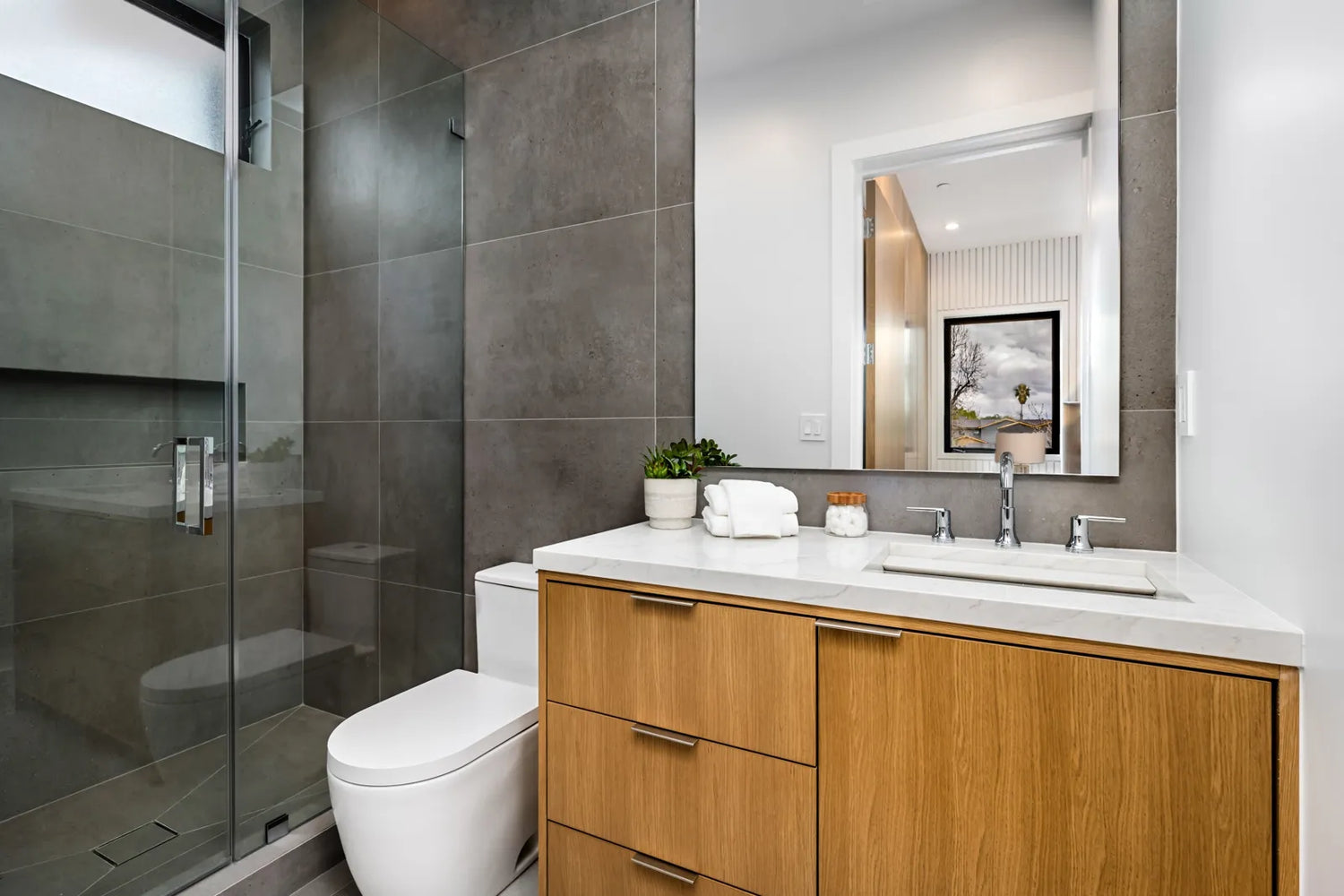
Choose a round toilet if your bathroom is tight—this option is often better for smaller bathrooms where every inch counts, especially in smaller bathrooms or powder rooms, where the door swing is close and every inch of front clearance matters. Choose an elongated toilet if adults will use it every day and comfort is the top priority, as its elongated toilet features provide better support and seating comfort. If your bathroom is small but you still want better comfort, choose a compact elongated model.
A simple rule works well when choosing a toilet—this is a core principle in any toilet buying guide: fit-first buyers should choose round; comfort-first buyers should choose elongated; mixed-priority buyers should choose compact elongated.
A toilet bowl shape sounds like a small detail until you try to live with the wrong one for the next 10 years.
For most homeowners, the real question is not “Which shape is best in theory?” It’s this: which toilet shape is better for your layout when comparing round vs elongated toilets in real homes, your daily users, and the amount of space you actually have?
Here’s what usually matters in real homes:
-
In a tight powder room, two extra inches can feel like a lot
-
In a primary bath, those same two inches often buy noticeably better comfort
-
larger layouts usually benefit more from elongated bowls
-
extra legroom can improve long-term daily comfort
-
-
If adults use the toilet every day, bowl shape matters more than many people expect
-
If the room is cramped, comfort means very little if knees, doors, or walking paths are squeezed
This guide will help you make the first decision with confidence. Not every technical detail matters. The key point in selecting the right toilet is choosing the shape that fits both the room and the people using it.
Decision Snapshot: Compare Round vs Elongated Toilet Options
This section turns general advice into quick, real-world decisions.
Use it to match your space with what different toilets offer, your layout, and daily habits—so you can find out which one is right without overthinking.
Best for small baths and powder rooms
Choose round if the bathroom is short on front clearance, the vanity or door is close, or it’s a small powder room. A circular bowl usually saves about 2 inches of projection from the wall, helping balance space and style in tighter layouts.
Round toilets are also a smart pick for:
-
guest baths
-
kids’ bathrooms
-
basic budget replacements
-
older homes with compact layouts
Avoid round if the toilet will be used heavily by tall adults who already find small bowls cramped.
Best for primary baths and adults
Choose elongated if this is the main bathroom, adults use it daily, or comfort matters more than shaving off every inch. In the round vs elongated toilet comfort differences debate, elongated usually wins because it gives more front support and a less cramped seating position, helping it offer better overall comfort for daily use.
Elongated is often best for larger bathrooms and spaces where comfort matters most:
-
primary bathrooms
-
taller users
-
older adults
-
homes planning for aging in place
-
buyers thinking about resale appeal
Avoid elongated if the room is so tight that movement, cleaning, or code clearance becomes a problem.
Choose another option if accessibility leads
If accessibility is the main goal, shape alone should not drive the choice. You also need the right seat height, grab bar planning, transfer space, and approach clearance. In many cases, comfort-height elongated toilets are often the better fit for mobility needs, especially when planning an ADA-compliant bathroom layout., but room size still matters.
Choose compact elongated if space is close
If you want elongated comfort but your room is almost too small, choose compact elongated. This style is the compromise many homeowners wish they had considered first. It can give much of the comfort of an elongated bowl without taking up the full extra length of a standard elongated model.
Best for shared/mixed households
-
Adults + kids using the same bathroom: Kids often feel more stable on a shorter, more compact seat, while adults want comfort. A compact elongated is usually the safest middle ground.
-
Tall + short users sharing one toilet: Taller users benefit from extra leg support, while shorter users may struggle with reach and footing. If space allows, go elongated, otherwise default to compact elongated.
-
Guest bath that doubles as daily-use: You want something universally acceptable without feeling cramped. In tighter layouts, choose round; in slightly larger rooms, go compact elongated.
-
Multi-generational households: Stability and ease of sitting/standing matter more than shape alone. When in doubt, combine accessibility with practicality and choose elongated.
Round vs elongated toilet comparison
Before getting into the details, here is the side-by-side view most buyers need when choosing a new toilet.
| Factor | Round toilet | Elongated toilet |
| Bowl length | Shorter | Longer |
| Typical bowl size | About 16.5 inches | About 18.5 inches |
| Space use | Better for tight rooms | Needs more front space |
| Comfort | Fine for short visits | Better for daily adult use |
| Leg support | Less support | More support |
| Seat size | Smaller seat | Larger seat |
| Cost | Usually lower | Usually higher |
| Installation difficulty | Similar in most cases | Similar, but fit can be harder in small rooms |
| Cleaning | Smaller footprint, easy to wipe around | Often easier bowl access for brush use |
| Best use case | Powder rooms, small baths, kids’ baths | Primary baths, adult daily use |
| Availability | Very common | Very common |
| Accessibility pairing | Less common for mobility-focused choices | More common with comfort-height and ADA-minded plans |
depends more on the toilet’s internal design, trapway, and flushing system. When choosing between round and elongated, treat flushing power as a separate evaluation rather than assuming one shape performs better. According to the U.S. Environmental Protection Agency (EPA), WaterSense-labeled toilets must meet strict performance criteria while using no more than 1.28 gallons per flush, showing that efficiency depends more on engineering than bowl shape.
The installation process is usually not harder just because the bowl is round or elongated. The real issue is fit. If the toilet projects too far into the room, that affects comfort, door swing, and movement far more than the install itself.

Dimensions and clearance differences
This is the biggest practical difference in the round vs elongated toilet dimensions discussion.
A standard round bowl is usually about 16.5 inches from the seat bolt holes to the front rim. A standard elongated bowl is usually about 18.5 inches. So yes, an elongated toilet does take up more room, and the usual difference is about 2 inches.
That may sound minor on paper. In larger bathrooms, it often is. In a small bathroom, it can matter a lot depending on the size of your bathroom and layout constraints.
Those 2 inches can affect:
-
whether the bathroom door clears comfortably
-
how much knee room you feel standing in front of the toilet
-
how tight the passage is between toilet and vanity
-
whether a powder room feels cramped
-
whether cleaning around the base feels annoying
If you are asking, “Is a round toilet better for tight spaces?” the answer is usually yes.

Comfort and leg support trade-offs
If you are asking, “Is an elongated toilet more comfortable than round?” the answer for most adults is also yes.
The elongated vs round toilet bowl shape comparison is mostly about how the front of the bowl provides better support for the body. The longer shape gives a little more room and better leg support. For adult users, especially taller users, that often feels more natural.
The difference is not dramatic for everyone. Some people barely care. But in homes where the toilet is used many times a day, year after year, elongated tends to be preferred.
Round bowls can feel fine for:
-
children
-
occasional guest use
-
short adults in compact bathrooms
-
secondary bathrooms where space matters more than luxury
Elongated bowls tend to feel better for:
-
average to tall adults
-
larger users
-
people who dislike feeling cramped
-
households where one toilet gets most of the daily use
Seat size and fit differences
Round vs elongated toilet seat size differences are simple but important: the seats are not interchangeable.
A round toilet needs a round seat. An elongated toilet needs an elongated seat. The shape must match the bowl.
That matters because some homeowners buy a replacement toilet and assume the old seat or bidet seat will transfer over. Sometimes it won’t. So if you are switching shapes, check:
-
seat compatibility
-
bidet seat compatibility
-
child seat accessories
-
cover length and fit
This is a small detail, but it affects total cost and convenience.

Cost, cleaning, and availability
Round toilets usually cost less and often feature simpler designs in contractor-grade models. In many stores and contractor-grade lines, they are the budget pick. If you are replacing a toilet with the least expensive workable option, round often wins.
Elongated toilets usually cost a little more, and the seat may also cost more. The price gap is not always huge, but it exists.
As for cleaning, the answer is less clear-cut than many articles make it sound, especially when considering the ease of cleaning in different bathroom layouts.
Are elongated toilets easier to clean than round? Sometimes, but not always.
Here’s why:
-
elongated bowls can offer a bit more access inside the bowl, which provides better reach during cleaning.
-
the larger opening may feel easier to brush
-
on the other hand, the toilet takes up more floor area
-
in tight bathrooms, the bigger footprint can make outside-floor cleaning harder
So the cleaning winner depends on where the hassle is:
-
if bowl access bothers you, elongated may feel easier
-
if the room around the toilet is cramped, round may feel easier
Choose elongated when…
-
You struggle more with inside-bowl cleaning and want a shape that reduces tight curves and splash zones
-
You prefer a bowl that’s easier to reach and wipe evenly
-
You want fewer awkward angles where residue tends to build up
Choose round when…
-
Your main issue is cleaning around the base or tight floor space
-
The toilet sits close to walls, cabinets, or in a narrow layout
-
You need better maneuverability for mopping and wiping around the toilet footprint
What actually changes the decision?
A lot of toilet articles repeat the same specs. That doesn’t help much unless you know what truly changes the buying decision.
Is two inches a big deal?
Sometimes no. Sometimes absolutely yes.
If your bathroom is average or large, the extra 2 inches from an elongated bowl may not affect anything. You may never notice it once installed.
But if the bathroom is small, those 2 inches can decide:
-
whether your knees feel pinched
-
whether the door nearly hits someone standing up
-
whether there is enough walking room past the vanity
-
whether the room feels awkward every single day
So when people ask, “Can I put an elongated toilet in a small bath?” the honest answer is: only if you measure the whole layout, not just the rough-in.
Do not assume “small bathroom” means elongated won’t work. Many do. But many only work well with a compact elongated model, not a full-size one.
Is elongated really more comfortable?
For most adults, yes. That is the main reason elongated toilets have become so common in primary baths.
Here’s why the comfort difference is real:
-
the bowl gives more support at the front
-
the seating position feels less compressed
-
there is usually less sense of “perching” for adult users
-
taller people often notice the improvement right away
In the round vs elongated toilet for leg support question, elongated has the edge.
That said, comfort is personal. A shorter adult in a small home may happily choose round because the room works better that way. The best toilet is not the one with the best spec sheet. It’s the one that fits your body and your layout.
Are elongated bowls easier to clean?
They can be. But this point gets overstated.
The bowl opening on an elongated toilet can feel easier to access with a brush. Some homeowners also feel elongated shapes reduce mess and improve positioning.
But there are trade-offs:
-
a larger toilet can mean more exterior surface
-
in small baths, reaching around the toilet may be harder
-
if the extra bowl length crowds the wall or vanity, cleaning the floor can become more annoying
So if someone tells you elongated is always easier to clean, that is too simple. In a roomy bathroom, maybe. In a tiny powder room, not always.
Does comfort height change the choice?
Yes, it can.
Round vs elongated toilet for comfort height models is a real decision because bowl shape and seat height affect comfort in different ways.
A comfort-height toilet sits taller, which can help:
-
older adults
-
people with knee pain
-
users with mobility limits
-
taller adults who dislike very low toilets
But height changes the experience. A taller round toilet can still feel short front-to-back. A lower elongated toilet can still feel roomier at the seat.
If accessibility or aging in place is part of the plan, many buyers prefer elongated comfort-height models because they combine easier sitting/standing with better support. That is one reason ADA compliant round vs elongated choices often lean elongated, though not every elongated model is ADA compliant.
On the other hand, shorter adults and young kids may find some comfort-height toilets less comfortable, especially if feet do not rest well.
Height and shape work together, not separately. Treat them as one combined decision instead of picking them in isolation.
-
Round + standard height: Best for kids and shorter adults; easy foot contact with the floor, but less leg support overall
-
Round + comfort height: Can feel unstable for shorter users since feet may not rest flat; not ideal for kids
-
Elongated + standard height: Balanced option; good comfort without making it harder for shorter users
-
Elongated + comfort height: Ideal for taller adults or older users; easier to sit and stand, but may feel too high for children
Key caution: Shorter adults and kids often struggle when their feet don’t rest firmly on the floor, which can reduce stability and comfort. Taller or older users, on the other hand, usually benefit from added height and the support of an elongated bowl for easier transitions.
Avoidable regret scenarios
-
Installing a standard elongated in a borderline small powder room → feels cramped immediately → choose round or compact elongated
-
Choosing a round toilet in a primary bathroom → daily comfort feels lacking over time → choose elongated
-
Picking based only on a toddler’s current needs → quickly outgrown and replaced → choose compact elongated
-
Ignoring user height differences in shared bathrooms → ongoing discomfort → choose elongated or compact elongated depending on space
-
Over-prioritizing space in a bathroom that actually has room → missed comfort upgrade → choose elongated
When round is the better choice
Round toilets are often treated like the “cheap” option. That misses the point. In many homes, round is not the compromise. It is the correct answer.
Tight bathrooms with door conflicts
If the bathroom door swings near the toilet, or the room is short from wall to doorway, round is often the safest choice.
This is the classic round vs elongated toilet for small bathroom situation. If your layout is already tight, adding 2 more inches can create a daily irritation that no comfort upgrade will cancel out.
Choose round if:
-
the door swing is close
-
the vanity and toilet face each other with little room
-
you have a narrow walkway
-
code clearance is already close
-
the toilet sits in a shallow alcove
For these spaces, a round bowl keeps the room usable.
Powder rooms and guest baths
Round vs elongated toilet for powder room use is one of the easiest calls: round usually makes more sense.
Powder rooms are often the smallest bathrooms or powder rooms in the house. They also tend to be used for shorter visits, not long daily routines. That means space usually matters more than seat support.
Round is also a strong fit for a guest bathroom when:
-
guests use it only occasionally
-
the room is compact
-
you want the bathroom to feel more open
-
the bath is not your main daily toilet
Kids' bathrooms and potty training
Round toilet pros and cons for kids are pretty straightforward.
Why round can help:
-
the circular bowl opening feels less oversized to young children
-
the proportions can feel less intimidating during potty training
-
shorter projection leaves more room in small kids’ bathrooms
-
replacement seats and child add-ons are easy to find
The downside is long-term use. Kids grow. If you are remodeling for the next 15 years, not just the next 3, elongated may age better for the household.
So if this is a dedicated young-child bath right now, round is sensible. If it is a shared family bath used by adults too, think harder before choosing round just for the toddler stage.
Lower-budget replacements
If your old toilet failed, you need a replacement now, and the bathroom is not where you want to spend extra money, round is often the budget-smart choice.
Round toilets tend to offer:
-
lower upfront price
-
lower seat cost
-
broad availability
-
easy replacement in compact older homes
That does not mean they are low quality. It just means they are often the simpler, cheaper fit.
When elongated wins instead
If the room can handle it, elongated is usually the better everyday toilet for adults.
Primary bathrooms with adult daily use
This is the clearest case for elongated.
In a primary bath, the toilet is not just something that needs to fit. It is something you use every day. The small comfort gain adds up over time.
Choose elongated if:
-
this is your main bathroom
-
adults use it most
-
you have enough clearance already
-
you plan to stay in the home for years
In these spaces, comfort-first usually beats fit-first.
Taller users needing leg support
If one or more household members are tall, round bowls often feel cramped. That is where the round vs elongated toilet for leg support issue becomes easy: elongated is better.
The added front length gives a more natural seated position for many adults, especially:
-
tall users
-
broad-shouldered or larger adults
-
anyone who dislikes compact toilets
-
anyone replacing a round bowl they already find annoying
Sometimes homeowners do not realize how much they dislike their old round toilet until they use an elongated one elsewhere.
Aging-in-place and ADA plans
If you are planning for long-term mobility needs, elongated often makes more sense than round.
ADA compliant round vs elongated toilet decisions usually involve more than shape, but elongated commonly pairs better with accessibility goals because it is often available in chair-height or comfort-height designs favored for easier use.
That does not mean every mobility-focused bathroom must use elongated. If the room is too small, layout problems can cancel out the benefit. But if space allows, elongated is often the stronger long-term choice.
Homes where resale matters
Buyers often expect comfort-focused features in primary bathrooms, and elongated toilets are commonly seen as the more modern standard in those spaces.
This should not be the only reason to choose a toilet. But if your bathroom has enough room and you are updating with future sale in mind, elongated may align better with buyer expectations.
When compact elongated beats both
A lot of homeowners think the choice is only round or full elongated. That misses the middle option.
Small baths used by adults daily
This is where compact elongated really shines.
If your bathroom is small but adults use it every day, compact elongated can solve the main tension in round vs elongated toilet for small bathrooms:
-
you want comfort
-
you do not have room for a full elongated projection
This option often makes the most sense in:
-
small older-home bathrooms
-
condo bathrooms
-
hall baths used daily
-
guest baths that also serve as a regular-use bathroom
Remodels with almost enough clearance
Some bathrooms are just barely too tight for a standard elongated bowl. In those remodels, homeowners often feel stuck. They don’t want the cramped feel of round, but they also don’t want the room to become awkward.
Compact elongated exists for exactly this kind of project.
If your measurements say:
-
round fits easily
-
standard elongated is questionable
-
you want adult comfort
then compact elongated deserves serious attention.
Comfort height in limited space
Round vs elongated toilet for comfort height models gets more complicated in small bathrooms because a taller toilet already feels more prominent in the room.
A compact elongated comfort-height model can be a smart compromise if:
-
you want easier standing and sitting
-
the bathroom is not spacious
-
adult comfort still matters
-
you cannot give up as much room as a standard elongated demands
Final Verdict
Choose a round toilet if your bathroom is tight, the toilet is for a powder room or guest bath, or every inch of clearance matters more than seat comfort. Choose an elongated toilet if adults use it every day, you have enough room, and comfort is the priority—this is where many homeowners choose to buy an elongated model because it can offer better long-term comfort. Choose a compact elongated if your space is borderline but you do not want to live with the tighter feel of a round bowl.
For most small bathrooms, round is the safer fit. For most primary bathrooms, elongated is the better daily-use choice. If your bathroom sits in the middle, compact elongated is often the smartest answer.
Before You Buy
Use this quick checklist before you make the final call:
-
Measure from the finished wall to the nearest obstruction in front of the toilet before you check out your toilet options.
-
Check door swing, vanity clearance, and walking space, not just rough-in size
-
Decide who uses this toilet most: adults, guests, kids, or mixed household users
-
Confirm whether you need a new seat, bidet seat, or child seat accessory
-
Think about height and mobility needs, not just bowl shape
-
If the bathroom is small, compare round with compact elongated before buying
-
Do not assume 2 inches is minor until you test the room layout on paper
-
If this is your primary bath, give comfort more weight than in a guest bath

FAQs
1. Which is better: round or elongated toilet?
When comparing a round vs elongated toilet, the right choice depends on your space and daily habits. Elongated designs tend to feel more natural for adults, while round options are practical for tighter layouts. If comfort matters most, go with elongated; if space is limited or it’s a secondary bathroom, a round model usually makes more sense.
2. Does an elongated toilet take up more room?
Yes, slightly. The dimensions of round vs elongated typically differ by about 2 inches (around 5 cm) in length. That small difference can affect how much clearance you have in front of the fixture, especially in compact bathrooms, even though it’s barely noticeable in larger spaces.
3. Why are elongated toilets more comfortable?
The main elongated toilet bowl benefits come from the oval shape, which supports more of your body and reduces pressure when sitting. It simply feels less cramped and more stable, which is why many modern homes and hotels prefer this style for everyday use.
4. Can I put an elongated toilet in a small bath?
Yes, but careful measuring is essential when choosing the right toilet shape for your layout. You’ll want to ensure enough clearance in front and around the unit so the space doesn’t feel cramped. Compact elongated models can work well, but not every design will fit comfortably in a small bathroom.
5. Round toilet pros and cons for kids?
Space-saving round toilets are often a better fit for kids because the smaller seat feels more secure and easier to use. They’re great for family bathrooms with younger children, though adults may find them less comfortable over time as needs change.
6. What is the standard length of each?
In terms of toilet bowl shape and comfort, size plays a role. A round bowl is usually about 16.5 inches (42 cm) long, while an elongated one is closer to 18.5 inches (47 cm). That extra length is what contributes to the more spacious seating feel.
7. Does Horow have small elongated designs?
Yes, Horow offers compact elongated options that balance comfort with a smaller footprint. These designs are useful if you want the feel of an elongated bowl without taking up too much space, making them a practical choice for tighter layouts.
References


Leave a comment
This site is protected by hCaptcha and the hCaptcha Privacy Policy and Terms of Service apply.