
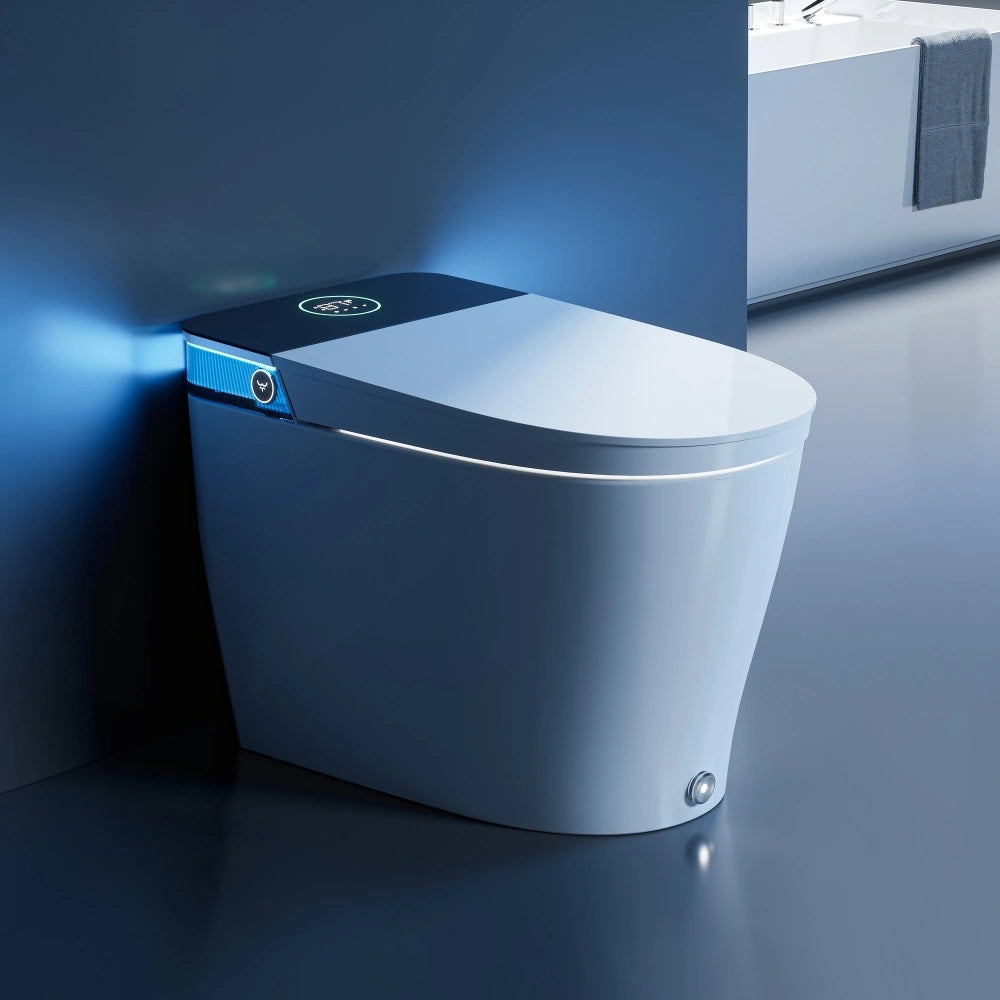
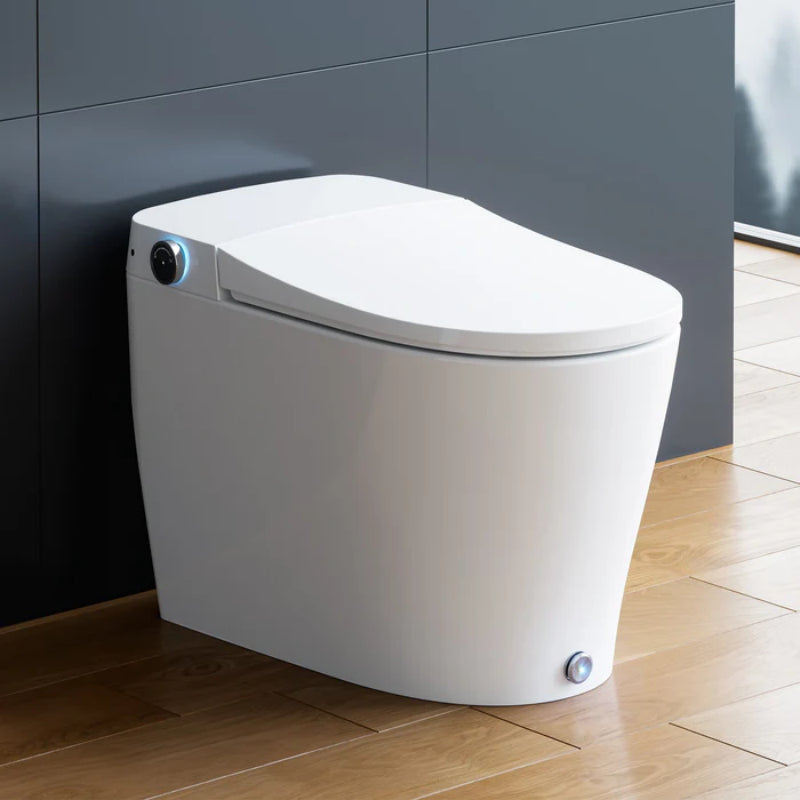

A Quiet Close Smart Toilet Lid sounds simple: the lid won’t slam, and you may also get smart extras like a bidet wash, heated seat, warm air dry, and a night light. In real homes, though, the “quiet close” part is often the least complicated part. The smart parts change fit, cleaning, and what can break.
Should you use a Quiet Close Smart Toilet Lid in your bathroom?
A quiet close smart toilet lid combines the practicality of an automatic slow close toilet, durable slow-drop toilet seat, and no-slam smart bidet seat with the convenience of a night-friendly toilet seat lid and soft close bidet toilet lid. Designed to elevate your daily bathroom experience, this modern smart toilet seat / smart toilet seat cover brings together soft-close stability, heated seat comfort, warm water and air cleansing, LED night light, self-cleaning nozzle hygiene, and adjustable settings for temperature, pressure, and spray position. Whether you prioritize comfort and hygiene, want a gentle no-slam close for shared bathrooms, or need a fit for round or elongate toilet bowls, this feature-packed smart bidet upgrade promises to enhance convenience, cleanliness, and personalized comfort. Below is a quick decision snapshot to help you see if it’s right for your space and habits.
Decision Snapshot (Rule of Thumb): who it fits—and who should skip
Good fit if you:
-
Share a bathroom and the lid slams at night or wakes people up
-
Want bidet features and will use them daily (so the extra upkeep feels worth it)
-
Have a nearby GFCI outlet and enough space behind the seat
-
Are fine doing light maintenance (wipe-downs, nozzle checks, occasional re-tightening)
Probably skip it if you:
-
Mostly just want a soft-close toilet seat and nothing more
-
Hate “fussy” products (controls, settings, extra cleaning zones)
-
Clean by removing the seat often (quick-release parts can be fragile)
-
Have a tight toilet layout (little rear clearance, round bowl surprises, or a cramped tank gap)
When quiet close + night-friendly features solve real household problems
This setup shines in a few very specific situations:
-
Kids (or adults) who drop the lid. Quiet close stops the bang and reduces chipped paint on nearby trim or toilet tank lids getting bumped.
-
Light sleepers and night bathroom trips. A night-friendly toilet seat lid with a small light can reduce the “full overhead light” habit at 2 a.m. That matters more than people expect in shared homes.
-
Germs and routine. If the “smart” part includes bidet washing, many households find there’s less toilet paper mess and fewer urgent “I need a shower” moments after stomach issues. But you’re trading that for new cleaning tasks (more on that below).
In short, this is most useful when it changes daily friction: noise, night use, or hygiene routines.
Is Quiet Close Smart Toilet Lid worth it if you mainly want a soft-close toilet seat?
Often, no.
If your only goal is “stop slamming,” a smart lid can feel like paying for problems you didn’t have: bulkier seat shape, more parts to wipe, and more things that can fail. Many regrets start here—people expected a durable slow-drop toilet seat and got a device that needed power, settings, and careful handling.
If you do want a no-slam smart bidet seat, then the quiet close is a nice quality-of-life bonus, not the main reason to buy it.
What trade-offs do people underestimate with “smart” + slow-close comfort?
A quiet close smart toilet lid brings together the convenience of a no-slam soft close bidet toilet lid, durable slow-drop action, heated seat, warm water, warm air dry, and a modern smart toilet seat design meant to elevate your bathroom experience and daily hygiene. Yet many buyers fail to account for key hidden trade-offs—from bulkier build and seating changes to frictions with temperature settings, side panel controls, noise, and fit on round or elongate toilet bowls. These often-overlooked details can greatly affect comfort, usability, and long-term satisfaction with your smart bidet upgrade. Below we walk through the most important compromises you should consider.
Bulkier smart toilet seat design: how added tanks/parts change sitting comfort
A smart toilet seat often has added structure at the back (for water connections, electronics, or a small reservoir). That can change how you sit:
-
You may sit slightly farther forward than you’re used to.
-
The seat can feel thicker and higher, which some people love and others dislike.
-
Smaller bathrooms can feel tighter because the seat footprint looks larger, even if the bowl size didn’t change.
This isn’t a dealbreaker, but it can be a surprise—especially for taller users, people with back pain, or anyone who already feels cramped on that toilet.
Heated seat, warm water, and warm air dry: comfort gains vs daily-use friction
These features can feel great, but they also create “daily-use friction” people don’t think about:
-
Controls and timing. Guests may not know what to press, or they may press the wrong thing. Some seats have side panels that bump knees in tight spaces.
-
Temperature comfort is personal. A heated seat sounds universally nice, but some people find it uncomfortable in summer or for quick daytime use.
-
Warm air dry takes patience. Air drying can be helpful, but it is often slower than people expect. If you’re rushed, you may end up using toilet paper anyway, which makes the feature feel less valuable.
-
Noise trade-off. Quiet close reduces slamming, but warm air dry and some cleaning cycles can add a soft fan sound. If you’re noise-sensitive at night, that matters.
A good mindset is: you’re not just buying comfort—you’re buying a new routine.
Will this still feel “right” on round vs elongate toilet bowls?
Bowl shape is a common regret point.
-
Round bowls can feel more cramped with a bulkier smart toilet seat cover. If you already feel tight on a round bowl, the smart seat may push you into an awkward posture.
-
Elongated bowls usually feel more natural with the added seat length and rear housing, but only if the seat is truly sized for that bowl.
The key point is that “round vs elongate” is not cosmetic. It changes comfort, clearance, and whether the lid sits correctly.

Will it fit your toilet—and will installation be truly straightforward?
Before you invest in a quiet close smart toilet lid, soft close bidet toilet lid, or no-slam smart bidet seat, you need to be sure that the smart toilet seat or smart toilet seat cover will fit your toilet and install without frustration. Even the most feature-packed model with self-cleaning nozzles, heated seats, and LED night lights can become a hassle if it doesn’t match your round or elongate toilet bowl, has insufficient rear clearance, or doesn’t line up with standard mounting bolts. Proper fit checks for bolt spacing, lid overhang, and water connection space are critical to avoid wobble, leaks, or a poorly seated lid. Below we cover exactly what to measure and what to expect during installation.
Fit checks that prevent regret: bolt spacing, bowl shape, lid overhang, and rear clearance
Most toilets use standard bolt spacing, but “standard” still has exceptions. Before you buy, check:
-
Bolt spacing: Most are about 5.5 inches center-to-center, but measure yours.
-
Bowl shape: Round vs elongate is the big one.
-
Rear clearance: Measure from the seat bolt holes to the tank (or wall). Smart seats often need extra space for the water hose connection and the seat body.
-
Lid overhang: Some lids don’t fully cover the bowl on certain toilets, or they bump the tank when closing.
If any of these are off, you may get a lid that sits crooked, won’t fully close, or feels unstable.
Setup realities: tightening, re-seating, and troubleshooting to prevent wobble or leaks
Many installs really do take under an hour. The problem is what happens after:
-
Wobble is common at first. You may need to re-tighten mounting hardware after a few days of use. Some toilets flex slightly, and a heavier smart seat can amplify that.
-
Small leaks can show up later. A slow drip at a connection may not appear right away. If your unit uses a T-connector at the water supply, you’ll want to check it again after the first week.
-
Power cord routing matters. If the cord gets pinched or pulled tight, it can stress the connection. You want slack and a clean path to the outlet.
If you’re the type who never wants to think about your toilet seat again, this can feel annoying.
Visual: toilet measurement + clearance checklist (top view + side view)
Top view (measure bowl + bolts)
-
Measure A: bowl length (front rim to bolt holes)
-
Measure B: bowl width (widest point)
-
Measure C: bolt spacing (center-to-center)
Side view (measure rear clearance)
-
Measure D: bolt holes to tank (or wall) distance
-
Check: space for water hose bend and seat body
-
Check: lid can close without hitting the tank
If you can’t get these measurements easily, that’s a sign you may be guessing on fit.
Does it actually stay cleaner—or create new cleaning chores?
A quiet close smart toilet lid and soft close bidet toilet lid are often promoted for better clean results and improved hygiene, combining no-slam convenience, self-cleaning nozzle technology, bidet spray functions, and modern smart toilet seat design to streamline your bathroom care. But many homeowners fail to realize how real-world use—from spray drift and water pressure differences to complex seat seams, regular nozzle cleaning, and frequent quick-release seat removal—can change how much cleaning you actually do. Below we separate expectation from reality when it comes to upkeep for your smart bidet seat.
“Clean” expectations vs reality: underside splash zones, spray drift, and wipe-down frequency
Many people expect a smart seat to be cleaner because it can rinse and sometimes pre-wet the bowl. That helps, but it doesn’t eliminate mess.
Real-world issues:
-
Underside splash zones still happen, especially with certain flush styles or if people flush with the lid open.
-
Spray drift can leave fine droplets under the seat or near the hinge area, depending on water pressure and user position.
-
The seat body can have more seams and contours than a basic seat, so wipe-downs take longer.
So yes, it can support hygiene routines, but it can add wipe-down frequency, not reduce it.
Nozzle hygiene in real life: self-cleaning nozzle, front/rear positions, and manual nozzle cleaning
Self-cleaning nozzles are helpful, but they’re not magic.
-
Self-cleaning usually rinses the nozzle with water. It may not remove all buildup if you have hard water or if the bathroom stays humid.
-
Front/rear nozzle positions are great for comfort and hygiene, but they also mean you should occasionally check the nozzle area for residue.
-
Many owners end up doing manual nozzle cleaning now and then. If the design makes the nozzle hard to reach, that becomes a stress point.
If you want “set it and forget it,” nozzle hygiene can feel like a chore you didn’t sign up for.
What happens if you remove the quick-release seat often for cleaning?
Quick-release is convenient, but it’s also where complaints often show up:
-
Some quick-release mechanisms use thin plastic parts that don’t love repeated removal and re-installation.
-
If you pull at an angle or re-seat it slightly misaligned, tabs can wear or crack.
-
Once those parts get loose, you can get shifting, rattling, or a seat that never feels solid again.
If you’re the kind of cleaner who removes the seat every week, be extra cautious. Gentle handling matters more than people expect.

What breaks first—and what long-term annoyances show up after the honeymoon phase?
A quiet close smart toilet lid delivers the practicality of a no-slam soft close bidet toilet lid, durable slow-drop function, night light features, and premium smart bidet conveniences that enhance your daily bathroom experience. Yet once the initial excitement fades, many owners face unexpected durability issues and long-term frustrations with their smart toilet seat—from fragile quick-release parts and weak plastic hinges to unreliable battery compartments and intermittent smart functions. These common failure points and small annoyances can quickly turn a luxury upgrade into a source of ongoing frustration. Below we break down what tends to break first and which long-term issues you’re most likely to face.
Thin plastic quick-release mechanisms: how routine cleaning/removal can cause early failure
The quiet close hinges may last fine, but the “smart seat” extras often rely on small plastic housings and latch points. The most common early failure stories involve:
-
a clip that snaps during re-installation
-
mounting hardware that strips if over-tightened
-
a seat that develops play and never feels tight again
This is why it’s smart to treat the quick-release as “occasional,” not “daily.”
Battery compartment durability: chipping, loose batteries, and intermittent smart features
Some quiet close smart toilet lid designs use batteries for certain features (often lights or memory). In real use, battery housings can be a weak spot:
-
doors that chip
-
springs that lose tension
-
batteries that sit loose and cause intermittent behavior (night light cutting out, settings resetting)
If you hate troubleshooting small failures, this can be a source of regret.
When a quiet close smart toilet lid becomes overkill
It can be overkill when:
-
The bathroom is rarely used (guest bath that sits unused for weeks)
-
You already have a cleaning routine that works and you don’t want more parts
-
The people using it won’t learn the controls (short-term rentals, frequent guests)
-
You have low tolerance for “device behavior” in a bathroom (lights, fan noise, warm-up timing)
In those homes, the seat may feel like an extra thing to manage rather than a comfort upgrade.
Before You Choose
-
Measure bolt spacing, bowl shape, and rear clearance before ordering.
-
Confirm you have a GFCI outlet close enough without stretching a cord.
-
Be honest: will you use bidet/heat/dry weekly, or will it become ignored?
-
Plan for extra wipe-down time under the seat and around the hinge area.
-
If you remove seats often to clean, assume quick-release parts may wear faster.

FAQs
1. Does the smart lid close by itself?
Yes, the quiet close smart toilet lid is equipped with an automatic slow close function, a core no-slam feature that allows this smart toilet seat cover to lower gently and automatically without manual pressing. This convenient design enhances your bathroom experience by preventing loud slams, making it ideal for shared spaces with light sleepers.
2. Is the "soft close" speed adjustable?
Some premium soft close bidet toilet lid models come with adjustable slow-close settings, allowing you to personalize the dropping speed of the durable slow-drop toilet seat to match your preference and bathroom habits. This adjustability adds an extra layer of comfort, ensuring the slow-close action feels intuitive for every user in your home.
3. Can the quiet-close hinge be repaired?
The quiet-close hinge of a smart toilet seat is typically a sealed component designed for long-term durability, so minor adjustments may help resolve small issues temporarily. However, hinge replacement is the most reliable fix for lasting function of your no-slam smart bidet seat, as sealed hinges are not easily disassembled for full repairs.
4. Does it make noise if I push it down?
A quality quiet close smart toilet lid remains nearly silent when used gently, as its slow-close hinge is engineered to dampen sound for ano-slam experience. However, forcing the lid down quickly or roughly may create mild noise and raise the risk of damaging the hinge over time, which could compromise both its quiet function and overall bathroom hygiene.
5. How long does the auto-close take?
The automatic slow close feature of a smart toilet seat usually takes 2–4 seconds to fully lower, providing a smooth, quiet drop that complements the no-slam design and works seamlessly with both round and elongate toilet bowls. This timing is intentional—fast enough to be convenient, slow enough to maintain the gentle, noise-free comfort that makes these smart bidet upgrades popular.
References



Leave a comment
This site is protected by hCaptcha and the hCaptcha Privacy Policy and Terms of Service apply.