




A plexiglass shower door—also called an acrylic shower door—mimics glass clarity while weighing about half as much, resisting shatter, and allowing easy on-site trimming and installation. For many homeowners and designers, that solves repeat bathroom remodel headaches: safety for kids and older adults, tight budgets, and tricky layouts where heavy glass is hard to maneuver. If you’re comparing acrylic vs tempered glass, this guide gives you quick, reliable answers first, then goes deeper into performance, costs, customization, installation, maintenance, and safety codes. You’ll find simple comparison tables, quick calculators, and checklists so you can choose the right thickness, hardware, and cleaning routine—and avoid scratching, yellowing, or leaks.
Along the way, you’ll see real-world outcomes, user feedback from DIY communities, and expert-backed tips on what to buy, how to install, and how to care for plexiglass shower panels. By the end, you’ll have a clear action plan for your space—whether it’s a compact hall bath, a curbless walk-in, or a premium custom shower with modern lines.
Quick Answer: Is a plexiglass shower door right for you?
Before diving into technical details, here’s a quick snapshot to help you determine if a plexiglass shower door matches your needs, lifestyle, and bathroom layout.
Top benefits at a glance
A plexiglass or acrylic shower door can be a smart pick if you want:
-
High safety: up to 10x more impact resistant than standard glass and less likely to break into sharp shards.
-
Lower weight: about 50% lighter than the same size tempered glass panel, so easier to install with fewer helpers.
-
Custom-friendly: cuts and shapes well to fit non-standard openings and modern layouts.
-
Good clarity: optical quality close to glass, with options for anti-yellowing coatings and scratch-resistant hardcoats.
Trade-offs to consider
Acrylic is tough but softer than glass. Here’s what to watch:
-
Surface is more scratch-prone than tempered glass; choose a hardcoat and follow a gentle cleaning routine.
-
Uncoated acrylic can yellow from UV exposure over time; look for UV-stabilized panels or protective films.
-
Some cleaners (ammonia, harsh solvents, abrasives) can cloud or craze the surface; stick to pH‑neutral products.
Best-fit scenarios
-
Homes with children or older adults looking for safer panels that don’t shatter into shards.
-
Rental units and high-turnover properties that benefit from simple handling and quick replacement.
-
Curbless and walk-in showers where large glass panels are hard to handle or where trimming is needed.
-
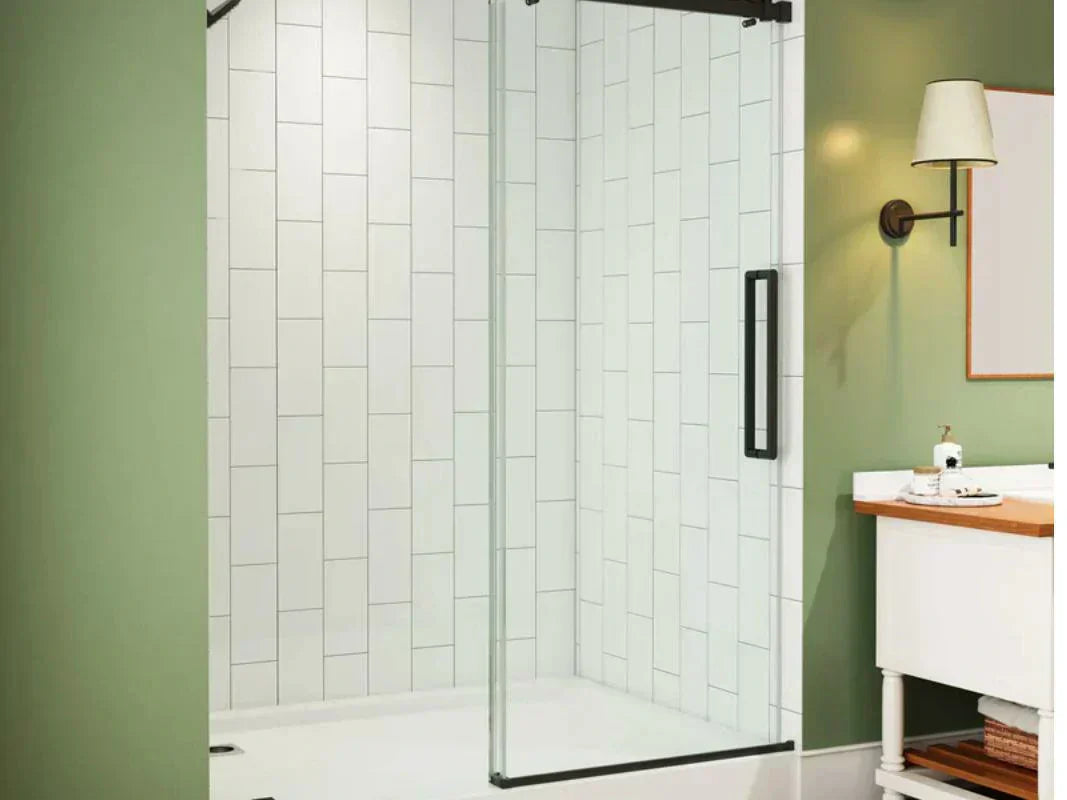
Modern, minimal designs aiming for a sleek, frameless look without heavy structural support.
Visuals & tools: 1-minute comparison table (acrylic vs tempered glass)
| Aspect | Plexiglass (Acrylic) | Tempered Glass |
| Weight | ~50% of glass | Heavy |
| Impact/Breakage | High impact resistance; does not shatter into sharp shards | Strong but can shatter into many small pieces |
| Clarity | Clear; can need UV-stable hardcoat to avoid yellowing | Clear and stable color |
| Scratch Resistance | Moderate; needs care or hardcoat | Higher; more scratch-resistant |
| Customization | Easy to cut/shape; on-site tweaks possible | Must be factory cut; no on-site cutting |
| Cost (typical) | Moderate; often lower than custom glass | Moderate to high, especially custom |
| DIY Handling | Easier to carry, drill, and install | Usually needs more helpers and tools |
In short: choose acrylic when you want lighter weight, safer handling, and flexible sizing; choose tempered glass when scratch resistance and long-term surface hardness matter most.

Material Performance: Acrylic vs Tempered Glass
Now that you understand the basic benefits, let’s explore how plexiglass stacks up against tempered glass in terms of strength, clarity, weight, and safety—so you can make an informed choice.
Strength, safety, and weight metrics
A plexiglass shower door shines in impact resistance, which is why many families choose it for safety and durability. If a panel is hit, acrylic is less likely to crack into shards. This reduces injury risk, lowers cleanup time, and keeps water inside the shower instead of spilling out due to a broken door.
Tempered glass is very strong in compression, and it’s stiffer than acrylic. Glass feels firmer when you push on the panel, and it keeps its flatness well across a wide span. Acrylic is lighter and flexible and durable, but its lower rigidity means you’ll plan for proper framing, thickness, and hardware to reduce flex and vibration—especially for larger doors or side panels.
Because acrylic is lighter, you can often carry a full-size panel with one helper rather than two or three. That matters in tight bathrooms, up staircases, or when the existing bathroom has limited staging space.
Optical clarity, haze, and UV stability
Quality acrylic has high light transmission, which gives you a clear, bright shower enclosure similar to a glass shower. Modern anti-yellowing formulas and UV-stable hardcoats help the panel keep its color and clarity. Without these protections, prolonged sunlight exposure can cause yellowing. In interior baths with limited natural light, this risk is lower. If your shower gets direct sunlight, pick UV-stabilized acrylic or a protective film.
Haze or clouding usually comes from surface wear, using the wrong cleaner, or hard water buildup. Good cleaning habits and a simple squeegee routine can keep the surface smooth and transparent.
Scratch resistance and surface protection
Acrylic’s biggest trade-off is scratch resistance. A ring, tool, or abrasive sponge can leave visible marks. Two ways to protect the surface:
-
Choose panels with a scratch-resistant hardcoat. This adds a thin protective layer. It won’t make acrylic as hard as glass, but it reduces micro-scratches.
-
Build a simple maintenance routine: soft microfiber cloths, pH‑neutral cleaners, and a squeegee after each shower. Avoid scouring pads, ammonia, acetone, or gritty powders.
Protective films are another option in high-traffic baths. They add a sacrificial layer you can replace later.
Visuals & tools: Material properties chart; spec glossary
| Property | Plexiglass (Acrylic) | Tempered Glass | What it means for you |
| Impact Resistance | High (about 10x standard glass) | High, but can shatter | Acrylic is safer if a door gets hit |
| Weight | ~50% of glass | 100% baseline | Easier to carry and install |
| Rigidity (Stiffness) | Lower | Higher | Glass spans wider without flex; acrylic may need more thickness or framing |
| Scratch Resistance | Moderate (improved with hardcoat) | Higher | Acrylic needs gentle cleaning and care |
| Light Transmission | High (clear) | High (clear) | Both look bright and open |
| UV Stability | Needs UV-stable grade/hardcoat | Stable | Choose UV-stable acrylic to avoid yellowing |
Spec glossary (plain English):
-
Hardcoat: A thin protective layer that helps acrylic resist scratches and chemicals.
-
UV-stable: Formulation that resists color change from sunlight.
-
Span: The unsupported width/height a panel can cover without bending too much.
-
Safety glazing: Materials tested and labeled to safety standards for use in showers.

Costs and Total Cost of Ownership
With performance in mind, it’s time to look at the numbers. Understanding both upfront costs and long-term maintenance will help you plan your budget wisely.
Price ranges and customization drivers (frameless vs framed, thickness, hardware)
Costs vary by thickness, size, style, and hardware. Acrylic panels are often more affordable than custom tempered glass because they’re easier to cut and adjust. Frameless setups need stronger clamps and hinges, which raise hardware costs but give a sleek look.
Common cost drivers:
-
Panel thickness and size (larger and thicker cost more)
-
Frameless vs framed vs semi-frameless hardware
-
Edge finishing and cutouts (for handles, hinges, notches)
-
Specialty finishes (frosted, tinted, textured)
-
Coatings (scratch-resistant, hydrophobic)
Typical budget ranges (for planning only; your market may differ):
-
Acrylic door panel: $200–$800+
-
Side panels/returns: $150–$600 each
-
Hardware (hinges, clamps, track, handle): $150–$600+
-
Sealants, gaskets, misc.: $30–$100
Labor savings and install complexity (fewer helpers, on-site trimming vs glass)
A big part of the savings is in labor. Acrylic is lighter and easier to install. Many DIYers complete the job with one helper. If a wall is out of square, you can make careful on-site adjustments that you cannot do with tempered glass. Some kits let you install straight to studs using screws when walls are open; in finished spaces, you secure to tile, stone, or other suitable substrates using appropriate anchors and sealants.
Longevity, warranty, and replacement cycles (TCO for high-traffic vs guest baths)
In a busy family bathroom, acrylic may get micro-scratches or water spots faster than glass, especially without a hardcoat. In a guest bath, acrylic can look like new for many years. Many homeowners plan for periodic polishing to renew clarity or eventual panel replacement. The key point is that replacement is simpler and often cheaper than custom glass.
Visuals & tools: TCO calculator; budget worksheet; pro vs DIY cost sliders
Simple TCO calculator (example inputs you can adjust):
-
Panels + hardware = upfront cost
-
Installation (DIY = $0 labor, Pro = local rate)
-
Maintenance (cleaners, sealants, optional polishing kit each 1–3 years)
-
Replacement allowance (probability you’ll replace 1 panel in 7–10 years × panel cost)
Sample math:
-
Panels + hardware: $900
-
Install: DIY $0 (Pro $600)
-
Maintenance: $20/year × 5 years = $100
-
Replacement allowance: 30% × $300 (one panel) = $90
-
5‑year TCO (DIY): $900 + $0 + $100 + $90 = $1,090
-
5‑year TCO (Pro): $900 + $600 + $100 + $90 = $1,690
Use this to compare with a similar setup in tempered glass.
Design and Customization Options
Beyond cost and performance, your shower door can also be a design statement. Here’s how to choose styles, finishes, and thicknesses that fit your space perfectly.
Frameless, semi-frameless, and framed enclosure styles (tracks, side jambs)
-
Frameless: Clean lines with clamps, hinges, and minimal metal. Acrylic’s light weight helps doors open smoothly. Use precise alignment to keep gaps tight and water inside.
-
Semi-frameless: A popular balance—thin metal edges for stiffness plus clear, modern sightlines.
-
Framed: Best for thinner panels or tight budgets. Tracks and side jambs increase rigidity, help control panel flex, and improve water management.
Deciding factor: aesthetics vs rigidity. Frameless looks sleek; framed adds support if you’re using thinner acrylic.

Thickness and size guidelines (e.g., 1/4", 3/8"), span limits, door swing
Your thickness choice depends on door width, height, and whether the panel is framed. Common guidelines many installers use:
-
Framed acrylic doors: 1/4 in (6 mm) works for typical widths.
-
Semi-frameless: 1/4–5/16 in (6–8 mm) depending on span.
-
Frameless acrylic doors: 3/8 in (10 mm) is common for swing doors; larger side panels may need 3/8–1/2 in.
Always follow your hardware maker’s limits for door weight and width, and check the substrate behind the hinges. If a frameless acrylic door feels too flexible at your planned size, consider a semi-frameless layout or a thicker panel.
Door swing and clearance:
-
Leave enough room so the door swings freely without hitting fixtures.
-
Use sweep seals and magnets to improve closure and reduce leaks.
Privacy and style: frosted, textured, tinted, patterned acrylic, edge finishes
Acrylic gives you more than just “clear.” You can choose frosted, tinted, or textured for privacy, or patterned panels for a design statement. Edges can be flat-polished for a glass-like look or slightly rounded for a soft, smooth feel. If you want a dark tile to pop, a clear panel frames it like artwork. If you need privacy in a busy family bath, choose frosted or a vertical texture.
Installation and Retrofit Guide
Once you’ve decided on a style, the next step is installation. This section breaks down the tools, techniques, and tips for both new builds and retrofits.
Tools, materials, and prep checklist (bottom track, side channels, clamps, silicone)
-
Measuring tape, level, square, pencil
-
Drill/driver, drill bits for tile/stone or wood
-
Fine-tooth blade (for acrylic) if trimming
-
Clamps and shims
-
Bottom track and side channels/jambs or clamps/hinges (depending on style)
-
Screws/anchors suited to your wall material
-
Clear 100% silicone rated for bath/wet areas
-
Seal gaskets, sweep seals, magnetic latch (as needed)
-
Soft cloths, painter’s tape, safety glasses, gloves
Check walls and base:
-
Ensure walls are plumb and the base is level.
-
Confirm that tile, stone, or solid surface is secure. If walls are open, you can install straight to studs using screws and then finish the surround. Cement board, tile over backer, and solid blocking are appropriate substrates.
Step-by-step overview
-
Measure the opening at top, middle, bottom. Note any out-of-square conditions.
-
Dry-fit the bottom track. Mark and cut to length. Level it carefully.
-
Install side channels or hinges/jambs. Pre-drill holes as needed. Use anchors for hollow or brittle surfaces.
-
Place shims on the base and set the fixed panel. Use clamps temporarily.
-
Set the door panel. Adjust hinges or clamps so gaps are even and the door swings freely.
-
Install handle, sweep, and seals. Check alignment with the magnetic latch if present.
-
Seal the inside seams with silicone. Avoid over-applying; use tape lines for clean edges.
-
Let silicone cure per label (often 24 hours) before using the shower.
Tip: Keep the protective film on acrylic edges until final alignment to reduce scuffs during install.
New builds vs retrofits
-
New builds: Add wood blocking behind hinges/clamps, plan for flat, plumb walls, and pre-select drain and slope to keep spray away from the door gap. If desired, install straight to studs using screws before finishing surfaces.
-
Retrofits: Older walls are often out of square. Acrylic lets you fine-tune channels or trim a tiny amount as needed. For curbless bases, use a longer bottom sweep, inward slope, and careful seal placement to reduce leaks.

Cleaning, Care, and Maintenance
Even the best materials require proper care. Learn the simple routines and precautions to keep your plexiglass shower door looking clear and scratch-free over time.
Approved vs avoid cleaners (non-abrasive, pH-neutral; solvents and ammonia cautions)
Use the right products. A gentle plan keeps the surface clear and bright.
| Cleaner Type | Use on Acrylic? | Notes |
| Warm water + pH‑neutral dish soap | Yes | Daily/weekly cleaning |
| Acrylic‑safe plastic cleaner | Yes | Follow label; soft cloth only |
| Isopropyl alcohol (small spots) | With care | Use sparingly; do not soak |
| Vinegar, ammonia, bleach, acetone | No | Can cloud or craze acrylic |
| Abrasive pads/powders | No | Cause scratches and haze |
Always rinse with clean water and dry with a soft microfiber cloth.
Preventing scratches, water spots, and clouding (squeegee routine, coatings, soft cloths)
The simplest protection is a daily squeegee after your shower. It stops minerals from drying on the panel. Weekly, wipe with soapy water and dry. Choose microfiber cloths, and store them clean so grit doesn’t scratch the panel. If you have very hard water, consider a softening system or wipe panels dry more often.
A hydrophobic coating helps water bead and run off. Some coatings come pre-applied; others can be applied in the field. If your panel has a factory hardcoat, follow the maker’s cleaning rules so you don’t remove the protection.
Scratch repair, polishing kits, and when to replace a panel
Small scratches can often be polished out using a plastic polishing system with progressive steps. Work slowly and test in a corner first. Deep gouges near edges or hinge cutouts are harder to fix. If a panel flexes too much, is heavily marred, or shows cracks, replace it. One upside with acrylic: replacement is usually faster and kinder on your budget than custom glass.
Safety, Codes, and Accessibility
Safety and compliance are critical. Here’s what standards and accessibility features you should know before installing your door.
Standards to know: ANSI Z97.1, CPSC 16 CFR 1201, ASTM D4802, CE marking basics
Safety is about more than strength—it’s also about certification. Bathroom doors and panels are “hazardous locations” in building codes, which means they need approved safety glazing.
-
CPSC 16 CFR 1201 is the U.S. federal safety standard for architectural glazing. Acrylic shower doors should be tested and labeled to this standard.
-
ANSI Z97.1 is a widely recognized safety glazing standard used with building codes.
-
ASTM D4802 covers acrylic sheet specifications, including types and tolerances relevant to shower applications.
-
CE marking (for European markets) indicates the product meets EU safety and performance rules.
When you buy, look for etched or applied labels that identify compliance. Keep the label or documentation for inspections.
Family-safe benefits, ADA/aging-in-place features
Acrylic’s high impact resistance and no-shard behavior make it a safer material if a panel is struck. For aging-in-place or mobility needs, plan:
-
Clear door openings and turning space for walkers or chairs.
-
Sturdy backing for grab bars and seats.
-
Low or no threshold with proper floor slope to control splash.
-
Lever handles and easy-to-grip pulls.
Even if your local code does not require ADA features in a home, these adjustments can help everyone in the family.

Real-World Results: Case Studies and User Feedback
Finally, let’s see how plexiglass shower doors perform in real homes. Insights from users and professionals reveal practical tips and lessons learned.
Curbless walk-in with acrylic panels: seamless look, lighter labor, safer install
A popular upgrade is the curbless walk-in with one large fixed panel and a swing door. Using acrylic, an installer set the bottom track with a slight inward slope, then placed a 3/8 in door panel with clamps. The lighter panels made it easier to carry up stairs and slip into place without chipping tile. The finished look was seamless and contemporary. The owners liked that the panel would not shatter into sharp pieces if bumped.
Community feedback: coatings to prevent scratches, high-traffic bathroom trade-offs
Homeowners in high-use baths say a scratch-resistant hardcoat is worth it, especially with kids or pets. In heavy daily use, tempered glass can edge out acrylic for long-term scratch resistance. But for design flexibility, quick installation, and a safer impact profile, acrylic gets high marks. Many report that a consistent cleaning routine matters more than the material itself for keeping a door looking new.
FAQs
1. Can you use plexiglass for a shower door?
Yes, you can use a plexiglass shower door, and many homeowners treat it as a practical alternative to plastic shower doors or heavier shower glass panels. A key advantage is that acrylic is lightweight, making handling and installation easier, especially when studs using screws are appropriate substrates for mounting. A plexiglass shower door is extremely strong for its weight and can be trimmed on-site, which helps when walls are out of square. When properly sealed, it performs well in both sliding shower doors and swinging layouts. Customers appreciate the ease of customization and the overall affordability, especially if they want to upgrade your bathroom without the cost of a frameless glass shower. While materials impact shower door options, a plexiglass shower door blends clarity with flexibility, making it a good choice depending on use and personal preference.
2. Is there an alternative to glass shower doors?
Yes—plexiglass shower door systems are the most common alternative to traditional glass doors and full glass shower enclosure designs. These acrylic or plastic shower doors provide many of the same visual qualities as shower glass panels while offering greater lightweight handling and lower cost. Homeowners who learn the difference between acrylic and glass often select acrylic because it allows on-site trimming and easier fitting around tight corners. It also pairs well with sliding shower doors or semi-frameless configurations. Another reason they’re gaining popularity is the combination of affordability and safety; acrylic is less likely to shatter and is extremely strong for daily use. Whether you want to upgrade your bathroom or simply prefer a custom layout, acrylic offers valuable insight into design flexibility and broader shower door options that still blend with modern décor.
3. Is acrylic good for shower doors?
Acrylic is a solid choice for shower doors, especially if you're considering a plexiglass shower door as an alternative to heavier glass doors or a standard glass shower enclosure. Because acrylic is lightweight, installers find it easier to position, particularly when studs using screws are appropriate for anchoring the frame. An acrylic or plexiglass shower door also delivers the visual clarity customers expect from shower glass panels while adding the advantage of safer impact resistance. Acrylic shower doors offer customization benefits, letting you select shapes and sizes that blend with unique layouts, sliding shower doors, or even partial screens. Many prefer acrylic for its affordability and the ease of maintaining it when properly cleaned. It’s a good option depending on use, design preference, and whether you want to upgrade your bathroom without the cost of a frameless glass shower.
4. What are the disadvantages of acrylic showers?
Although a plexiglass shower door has many strengths, acrylic does have disadvantages. Compared with a full glass shower enclosure, acrylic is more prone to surface wear and may stain over time if not properly maintained. It is extremely strong in impact but still softer than glass, meaning scratches can occur more easily. Acrylic also responds to cleaners differently; harsh chemicals may haze the surface, so customers must learn the difference in care routines. Some plastic shower doors may yellow slightly depending on use and UV exposure. While acrylic shower doors offer good affordability and ease of installation, they may not match the long-term clarity of shower glass panels. Still, many users select them because materials impact shower door options, and acrylic continues gaining popularity, especially when you want to upgrade your bathroom on a budget.
5. What is the life expectancy of an acrylic shower?
The lifespan of an acrylic or plexiglass shower door typically ranges from several years to well over a decade, depending on use, cleaning habits, and environmental factors. Although not as scratch-resistant as glass doors, it is extremely strong in impact and works well in both swinging and sliding shower doors. When properly cleaned with non-abrasive products, acrylic keeps its clarity and resists the kind of stain over time that occurs with neglect. Many customers choose acrylic because shower doors offer customizable sizing and affordability, allowing them to upgrade your bathroom without the cost of a frameless glass shower. Installation is simpler—studs using screws are appropriate substrates, giving DIYers more confidence. As acrylic continues gaining popularity, homeowners appreciate how well it can blend into a modern glass shower enclosure look while enabling easier replacement if needed.
References



Leave a comment
This site is protected by hCaptcha and the hCaptcha Privacy Policy and Terms of Service apply.