

A modern farmhouse kitchen sink can be one of those choices that looks simple from a photo and gets complicated the minute you try to buy one. It has style, yes. But the real question is whether it fits how you cook, how your kitchen is built, and how much hassle you want during installation.
In real homes, this sink works best when people choose it for the right reasons: they want a deep, roomy basin, they wash large cookware often, and they are willing to plan around cabinet size, sink weight, and countertop support. It works less well when people choose it only for the look and assume it installs like a standard sink.
If you are trying to decide between a 33 inch modern farmhouse kitchen sink, a standard undermount, or a simpler drop-in sink, this guide will help you make that first decision with less guesswork.
Modern farmhouse kitchen sink: decision snapshot
Here’s the short version.
Avoid a modern farmhouse sink if any apply:
-
You cannot or will not modify cabinetry or add structural support
-
You have a small kitchen and cannot afford to lose valuable prep space
-
You want to avoid retrofit plumbing shifts or rework
-
You experience discomfort with deep sink basins for regular washing
Choose it for capacity and style
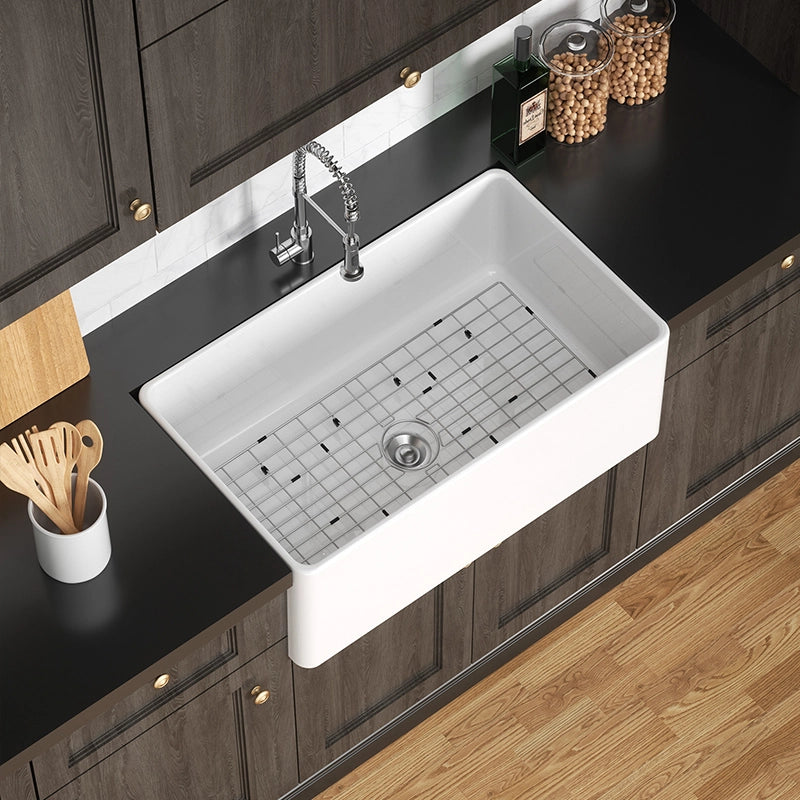
A modern farmhouse apron front kitchen sink makes sense if you want two things at once: strong visual impact and a large washing area. It is especially good for:
-
people who use stock pots, sheet pans, Dutch ovens, and big cutting boards
-
households that cook often and pile up dishes fast
-
kitchens with enough cabinet width and strong support
-
remodels where the sink is meant to be a design feature, not just a utility item
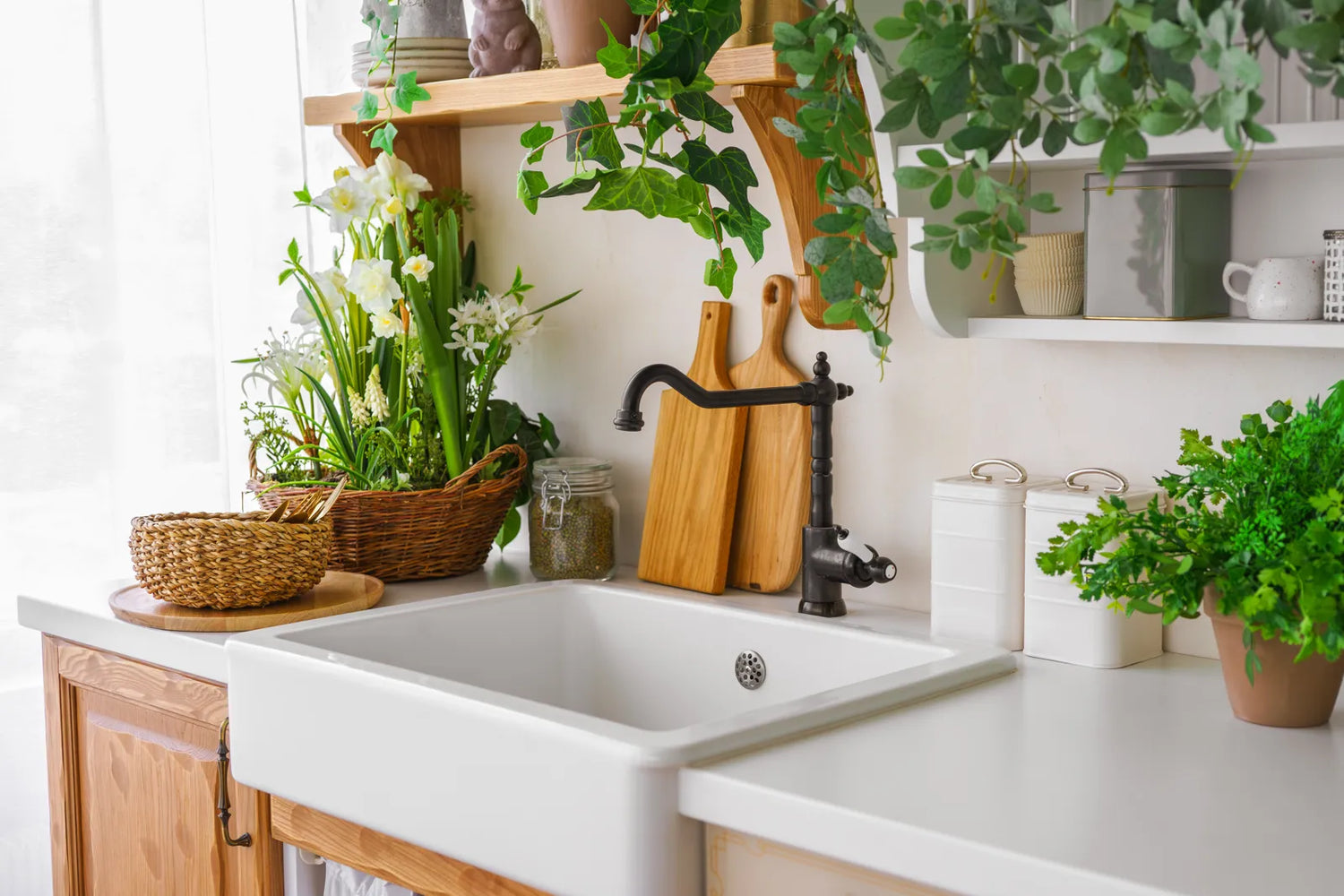
The exposed front gives it the farmhouse look. The deep basin gives it the practical side.
Choose alternatives for simpler retrofits
If your goal is an easy replacement in an existing kitchen, a farmhouse sink is often not the easiest path. A standard undermount or top-mount sink is usually the safer choice if:
-
Your cabinets are already in place and you do not want to cut or rebuild them
-
You have a tight budget
-
Your kitchen is small
-
You want the lightest, easiest-care setup
-
You do not want to deal with special cabinet support
This is where many regrets start. People fall in love with the apron-front look, then find out that installing a farmhouse sink in an existing kitchen cabinet can mean cabinet changes, countertop changes, and more labor than expected.
Single bowl or divided sink habits?
This matters more than most buyers think.
For multi-user & multitask households:
Choose a single bowl if:
-
You regularly wash large cookware that requires full, unobstructed basin space
-
You primarily use a dishwasher and only hand-wash occasionally
-
You prefer one continuous washing zone over separated zones
Choose a divided bowl if:
-
Multiple people use the sink simultaneously for washing, rinsing, or food prep
-
You need to separate clean rinsing from dirty dishes or soak items while using the other side
-
You multitask heavily between food prep and cleanup
Choose a standard double-bowl sink instead if:
-
You want consistent separation without sacrificing farmhouse style
-
You need balanced, equal-sized zones for daily shared use
-
A divided farmhouse bowl still feels too cramped for simultaneous tasks
A lot of buyers focus on material and forget workflow. In practice, bowl layout affects daily satisfaction just as much as appearance.
Farmhouse sink or standard sink?
This is the first real fork in the road. Before you compare materials, sizes, or colors, ask whether a farmhouse sink is even the right category for your kitchen.
Best for frequent big-pot cooks
If your normal week includes boiling pasta in large pots, roasting on full sheet pans, hand-washing oversized cookware, or entertaining often, a farmhouse sink earns its keep. That wide front opening and deep basin make heavy cleanup easier. You can get large items lower and farther into the sink with less splashing onto the counter.
That part is not just about looks. It’s a real use benefit.
People who cook a lot tend to appreciate a farmhouse sink more over time than people who mostly use the dishwasher and wash only a few cups and plates by hand.
Better to skip in tight kitchens
In smaller kitchens, a farmhouse sink can create more friction than charm.
Because the basin is large, it can take up a lot of the base cabinet and reduce room for nearby storage. In a compact layout, that loss matters. You may also end up with less landing space on both sides, which makes prep messier.
If your base cabinet is narrow or your counters are short, a standard sink often fits the kitchen better. This is one of the most common cases where buyers should pause before ordering.

Better for statement kitchens or minimal kitchens?
Yes, farmhouse sinks are still popular in 2026, but the style has shifted a bit. The older, very rustic look is not the only option now. Many homeowners want modern farmhouse sink styles for contemporary kitchens—cleaner lines, less decorative shaping, and materials that lean crisp rather than vintage.
That means a farmhouse sink can work in:
-
modern farmhouse kitchens
-
transitional kitchens
-
some minimal kitchens with warm finishes
-
contemporary spaces that want one softer focal point
If your kitchen is very sleek and flat-fronted, a simple stainless apron front may work better than a thick white fireclay sink. If your kitchen already has a lot of strong features, a farmhouse sink can either anchor the room nicely or feel one statement too many. It depends on balance.
Is a farmhouse sink practical daily?
Usually yes, but only for the right household.
People often ask, is a farmhouse sink practical for everyday kitchen use? It can be. In fact, many families find the depth and width more useful than a standard sink. But practicality depends on what annoys you.
It’s practical if you value:
-
one large basin
-
easier handling of bulky cookware
-
a sink that hides less and shows more
It may feel less practical if you dislike:
-
water spots on the apron
-
bending into a deep basin
-
losing the divided work zones of a double bowl
-
paying more to install and support
So the honest answer is: practical for many homes, but not automatically practical for all.
Fireclay, stainless, or another material?
Material shapes the whole experience. This is where looks, upkeep, noise, weight, and long-term regret all meet.
Fireclay for looks, stainless for ease
When buyers compare a white fireclay vs stainless steel farmhouse kitchen sink, the choice usually comes down to this:
Fireclay wins on classic farmhouse appearance. Stainless steel wins on ease and flexibility.
Fireclay:
-
gives the iconic white farmhouse look
-
feels solid and substantial
-
resists stains well in daily use
-
can chip if something heavy hits the edge hard
-
is very heavy
Stainless steel:
-
is lighter
-
is easier to install in more kitchens
-
works well in modern farmhouse kitchens that lean cleaner and less rustic
-
shows scratches and water spots
-
usually costs less than heavy ceramic-style options
If you are after the visual centerpiece, fireclay is often the first choice. If you want fewer installation problems and a more forgiving retrofit, stainless steel usually makes more sense.

Are fireclay sinks better than stainless?
Not across the board. They are better at some things and worse at others.
People ask, are fireclay farmhouse sinks better than stainless steel? The better question is: better for what?
Fireclay is better for:
-
a traditional farmhouse look
-
stain resistance
-
a solid, furniture-like feel
Stainless is better for:
-
lower weight
-
easier installation
-
less worry about edge chipping
-
modern, cleaner styling
-
tighter budgets
In practice, the buyers happiest with fireclay are the ones who cared deeply about the look and planned their cabinet and counter support from the start. The buyers happiest with stainless are often the ones who wanted farmhouse style without making the sink the most delicate or expensive part of the remodel.
Composite or cast iron worth it?
These are worth a look, but they are usually more niche choices.
Composite options can offer good durability and softer color choices, but they may not deliver the crisp farmhouse look many buyers expect. Cast iron has a classic feel and durable enamel, but it is very heavy and can chip if struck hard.
For most buyers asking about the best farmhouse sink material for a modern farmhouse kitchen, the real shortlist is fireclay or stainless. The others can be fine, but they solve fewer common homeowner problems.
Which material ages with less regret?
If your top concern is low regret over time, stainless steel is usually the safer answer. It scratches, yes, but many people accept that as normal wear. A scratched stainless sink still works fine and often looks better as it settles in.
Fireclay tends to age well too if treated with basic care, but chips are what people fear most. They do not happen constantly, but if they happen on a visible front edge, they are harder to ignore than scratches inside stainless steel.
So if your question is emotional as much as practical — what material will I fuss over less?—stainless usually wins.
Apron-front style or easier installation?
This is where dream photos collide with cabinet reality.
Apron-front or undermount simplicity?
A true apron-front sink is not just a standard sink with a different edge. The cabinet front has to accommodate the exposed apron. That often means cutting the cabinet face or using a cabinet designed for apron-front sinks.
A standard undermount sink is far simpler. It hides under the counter, works with many cabinet setups, and usually avoids major face-frame changes.
If your remodel is full and your cabinets are new, apron-front is easier to plan for. If you are doing a lighter update, undermount simplicity often wins.
Drop-in or farmhouse retrofit?
When comparing drop-in vs undermount farmhouse kitchen sink options, many homeowners are really asking: which one gives me the look with the least construction?
A drop-in farmhouse-style sink can be easier in some cases because the rim helps cover cut edges and gives installers more tolerance. But it still does not make every retrofit easy. A true farmhouse shape still needs apron clearance and support underneath.
For old kitchens where you want less disruption, a standard drop-in sink is still the easiest path. It may not give you the exposed-front look, but it avoids many surprise costs.
Installing existing cabinets?
This is one of the most important buying checks.
Installing a farmhouse sink in an existing kitchen cabinet is possible, but you need to know what you are changing. In many cases, you will need:
-
cabinet front modification for the apron
-
internal support rails or a support frame
-
careful measurement of sink height, apron height, and bowl depth
-
countertop recutting or replacement
-
plumbing adjustment because the basin depth can shift drain placement
Retrofit compatibility checklist:
-
If your current faucet has short reach or low height, expect limited clearance over the deep apron; consider a high-arc, extended-reach faucet instead
-
If you switch to a deeper farmhouse basin, expect drain alignment changes; plan for new tailpieces and trap positioning
-
If you use a garbage disposal, expect reduced under-sink clearance; verify vertical space or consider a compact disposal
-
If your existing plumbing lines sit high or tight, expect necessary repositioning; prepare to reroute supply and drain lines
Some retrofit sinks are made for easier installation, often with shorter apron heights. That can help, but it is still not the same as swapping one standard sink for another.
If you are hoping to install it yourself, plan carefully. People can do it, but the hard part is not just setting the sink. The hard part is making the cabinet support the weight and aligning the sink correctly with the counter opening.

Cabinet changes worth the visual payoff?
Sometimes yes, sometimes no.
If the sink is central to the whole kitchen design, the cabinet work can be worth it. A farmhouse sink is one of the few fixtures people notice right away. In a kitchen with simple cabinetry, it can provide a lot of character without needing extra ornament.
But if the remodel budget is tight, cabinet changes for the sink can pull money away from more useful upgrades like better lighting, storage, or stronger countertops. That is where I’ve seen people second-guess the decision later.
The key point is this: do not treat a farmhouse sink like a cosmetic swap. It is often a small construction choice, not just a style choice.
Size and layout: fit or friction?
A sink can look perfect online and still work badly in your current kitchen.
Ergonomics & accessibility decision filter:
Avoid extra-deep farmhouse basins or the entire farmhouse category if:
-
You experience back strain or discomfort from bending over a deep basin
-
You have limited reach or mobility that makes leaning into a deep sink difficult
-
You perform frequent, prolonged hand-washing that leads to fatigue
A very deep sink sounds great, but it can feel tiring if you wash by hand often.
Is 33 inches the safe middle?
For many homes, yes. A 33 inch modern farmhouse kitchen sink is often the safest middle size because it offers strong capacity without pushing into oversized territory. It fits many common kitchen layouts better than 36-inch models and still feels generous.
That is why so many buyers land here. It is large enough to feel like a farmhouse sink should feel, but not so large that it dominates every kitchen.
What 33-inch buyers overlook
If you are asking what to consider before buying a 33 inch farmhouse sink, check these four things first:
-
Actual cabinet width The sink size listed is not the same as the cabinet requirement. Many farmhouse sinks need a base cabinet wider than the sink itself, or at least a cabinet specifically built to support that sink shape.
-
Interior bowl size Two 33-inch sinks can feel very different inside. Thick walls reduce usable bowl width.
-
Apron height This affects cabinet cuts and drawer fronts.
-
Depth A very deep sink sounds great, but it can feel tiring if you wash by hand often.
This is why a 33-inch sink is not automatically the right answer just because it is popular.
Deep single bowl or workflow bottleneck?
Single-bowl farmhouse sinks are often the default, and for good reason. They are roomy and simple. But they can also become a workflow bottleneck in busy kitchens.
If one person is rinsing produce and another needs to wash a pan, a single bowl can feel cramped in a different way, even though it is physically big. You have space, but only one wet zone.
Double-bowl farmhouse sinks solve that, but each side gets smaller. Large pans may no longer fit flat.
Decision Takeaway for Busy Kitchens:
A large single bowl still causes workflow conflict in busy, multi-user households—even with ample capacity—if simultaneous prep and cleanup are daily needs. The trade-off of smaller individual basins in a divided layout is worth it for households that prioritize shared sink use and multitasking over fitting every oversized item fully flat. Only stick with a deep single bowl if large-cookware washing is your dominant daily need and shared sink use is rare.
Better choices for small kitchens?
Yes. In small kitchens, a slightly smaller farmhouse sink or a standard undermount often works better than forcing in a large apron-front model.
This is where how to choose the best farmhouse sink for your kitchen layout becomes a space-planning question, not a style question. You want enough room left for prep on at least one side. If the sink takes over the whole run of cabinets, daily use gets awkward fast.
Sometimes the right answer is not “small farmhouse sink.” It is “don’t use farmhouse here.”

Countertops, cabinets, and support limits
A modern farmhouse kitchen sink puts more demand on the surrounding structure than many standard sinks do.
Which cabinets can actually hold one?
This is where farmhouse sink cabinet requirements for apron front sinks matter most.
A farmhouse sink needs support from below. You cannot assume the countertop alone should carry the sink, especially with heavy materials like fireclay or cast iron. Many setups use internal framing, support rails, or a built platform inside the base cabinet.
A cabinet may need:
-
enough width for the sink body
-
a modified front opening for the apron
-
reinforced side walls or framing
-
clearance for plumbing after the deeper basin is installed
Do farmhouse sinks require special cabinets? Often, yes—or at least special modifications. Some new cabinets are made specifically for apron-front sinks. Existing standard sink bases often need cutting and reinforcement.
Best countertops for heavy sinks
The best countertop materials for a farmhouse kitchen sink are usually the ones that can be precisely cut and properly supported around the sink opening.
Stone surfaces like granite and quartz are common choices because they pair well visually and structurally when installed correctly. Solid surface counters can also work. The more important issue is not just the material itself, but whether the sink is supported by the cabinet and not hanging in a way that stresses the counter cutout.
Heavy sinks plus poor support create the real risk.
Granite pairing or stainless contrast?
Many buyers ask how to match a modern farmhouse sink with granite countertops. The safe answer depends on the look you want.
White fireclay with granite:
-
works well when you want contrast against darker or busier stone
-
gives the classic modern farmhouse feel
-
can brighten kitchens with warm wooden cabinets
Stainless with granite:
-
feels cleaner and more contemporary
-
works better in kitchens trying to avoid a too-rustic look
-
often blends better with stainless appliances
If your granite already has strong movement and pattern, a simple sink shape usually works better than an ornate one. Let one element lead.
What fails first: cabinet or counter?
In bad installs, the cabinet support is usually the weak point, not the sink itself.
A heavy sink without proper bracing can sag, shift, or stress the surrounding counter opening. Plumbing connections can also become strained if the sink settles. This is why planning support first matters more than debating tiny style details.
Daily upkeep: charm or chore?
This section is where daydream meets Tuesday night cleanup.
Fireclay chips, stainless scratches
Every sink material has a visible downside.
Fireclay is smooth and fairly easy to clean, and it resists stains well. But if a heavy pot hits the edge just right, it can chip. The exposed apron is the area buyers worry about most because it is visible.
Stainless steel does not chip in the same way, but it scratches. In many homes, that starts early. The good news is that scratches inside a stainless sink are expected and tend to blend over time. Water spots are often more annoying than scratches.
So if you are comparing farmhouse sink maintenance for fireclay vs stainless steel, the trade-off is usually chips versus scratches, plus the visual fussiness of water marks.
Which is easier to maintain?
For low-stress maintenance, stainless steel usually wins. It may not look perfect every minute, but it is forgiving. You clean it, use it, and move on.
Fireclay is also not hard to maintain, but it asks for a bit more care with heavy cookware and hard impacts. For many households, that is fine. For some, especially those with lots of fast, rough cleanup, it becomes one more thing to worry about.
Apron-front cleaning annoyances
There is one small issue buyers do not always think about: the exposed front gets touched more. Drips, splashes, and smudges are visible on the apron, especially on white surfaces.
It is not a major problem, but it is real. A farmhouse sink gives you a more visible surface to wipe.
Best for low-maintenance households?
If you want farmhouse style with the least worry, a stainless apron-front sink is often the best compromise, supporting water-efficient use aligned with EPA WaterSense standards. You still get the front-facing design, but with less weight and less fear of edge damage.
If your household values a crisp white centerpiece and is comfortable treating it with basic care, fireclay can still be a very good choice.
Long-term value: worth the premium?
Farmhouse sinks are rarely the cheapest option once material, cabinet work, and installation are counted together.
Higher upfront cost, better resale?
A well-chosen farmhouse sink can catch buyer attention and support kitchen appeal, but resale value is not a reliable justification when extensive retrofit cabinet or countertop work is required—especially in modest or budget-focused kitchens. The added installation costs often outweigh any minor perceived resale gain.
Simple rule:
The premium is mainly aesthetic if you are choosing it solely for visual appeal without frequent use of its deep, large basin. The premium is practically justified if you regularly use the sink’s capacity for large cookware, have a new-build or full remodel with no extra cabinet retrofits, and value daily functional benefits.
When cheaper sinks deliver more value
Sometimes a standard undermount stainless sink gives better value simply because the money saved can go elsewhere. Better faucet quality, under-cabinet lighting, stronger drawer storage, or improved ventilation often improve daily life more than a sink style does.
This is especially true in:
-
smaller kitchens
-
quick updates
-
budget-conscious remodels
-
homes where the existing cabinet setup would need major changes
Repair costs or replacement risks?
Replacement can be more involved than with standard sinks because fit matters more. Apron dimensions, cabinet cuts, and countertop openings all need to align. If the sink chips badly or if you want to switch types later, you may not have a simple drop-in replacement path.
That does not mean you should avoid one. It means you should buy it with a longer view.
Choose this if, choose that if
Choose a modern farmhouse kitchen sink if:
-
You want the sink to be a design feature
-
You cook often with large cookware
-
Your kitchen has room for it
-
Your cabinet and countertop plan can support it
-
You accept a more involved install
Choose a standard sink if:
-
You want the easiest replacement
-
Your kitchen is tight
-
You do not want cabinet modifications
-
You prefer lower cost and lower risk
-
Your daily routine benefits more from divided bowls or simpler cleanup
Before You Buy
Use this quick checklist before you order:
-
Measure your base cabinet width, not just the old sink.
-
Confirm whether your cabinet can be cut and reinforced for an apron front.
-
Decide single bowl or divided bowl based on how you actually wash dishes.
-
Check sink weight and ask how it will be supported from below.
-
Make sure your countertop material and cutout plan match the sink style.
-
Think about depth, not just width; extra-deep sinks are not comfortable for everyone.
-
Pick material based on upkeep habits: fireclay for look, stainless for less fuss.
FAQs
1. Do farmhouse sinks require special cabinets?
Most modern farmhouse kitchen sink designs need dedicated apron-front cabinets or modified standard bases with cutting and reinforcement to support weight and fit the exposed front. Proper cabinet preparation is critical for any apron front kitchen sink, as it prevents sagging, counter stress, and alignment issues during daily use. Even lightweight models demand structural support, making cabinet readiness a key step for safe and long-lasting installation. This requirement applies whether you’re planning a full remodel or installing farmhouse sink in existing cabinet spaces.
2. Is stainless steel okay for farmhouse style?
Stainless steel is an excellent choice for a modern farmhouse kitchen sink, blending durability with a sleek profile that works beautifully in contemporary and transitional spaces. It’s a top pick for contemporary apron sinks, offering easier maintenance and lighter weight compared to heavy fireclay while keeping the iconic apron-front look. Stainless pairs seamlessly with modern appliances and minimalist cabinetry, avoiding overly rustic vibes in updated kitchen designs. When weighing white fireclay vs stainless farmhouse options, stainless delivers practicality without sacrificing farmhouse aesthetic appeal.
3. Are farmhouse sinks prone to chipping?
Fireclay and enameled apron front kitchen sink models can chip on exposed edges when struck by heavy cookware, a common concern with traditional white farmhouse designs. Stainless steel versions of the modern farmhouse kitchen sink resist chipping entirely, though they may develop minor surface scratches that blend naturally over time. The risk of visible damage is higher with fireclay, especially on the prominent apron front that defines farmhouse style. This durability difference is a key factor when comparing white fireclay vs stainless farmhouse materials for long-term use.
4. What is the best size for a farmhouse kitchen sink?
A 33 inch farmhouse sink is the most practical choice for most homes, balancing generous basin capacity with compatibility in standard kitchen layouts. This size works perfectly for a modern farmhouse kitchen sink, providing room for large cookware without overwhelming cabinet or counter space. Always verify base cabinet dimensions and support before purchasing, as sink size doesn’t always match direct cabinet fit. The 33-inch model is ideal for optimizing farmhouse sink kitchen layout while maintaining functional prep space on either side.
5. Are farmhouse sinks still popular in 2026?
Modern farmhouse kitchen sink designs remain highly popular in 2026, evolving to include streamlined contemporary apron sinks that fit modern, minimalist, and transitional kitchens. Homeowners favor the apron front kitchen sink for its bold focal-point style and deep, functional basin that enhances daily kitchen workflow. Updated finishes and cleaner silhouettes keep farmhouse sinks relevant, moving beyond traditional rustic looks to suit current design trends. They continue to anchor stylish farmhouse sink kitchen layout plans in both new builds and renovations.
6. Pros and cons of apron front sinks?
The apron front kitchen sink (core of the modern farmhouse kitchen sink) offers standout style, deep capacity for large cookware, and reduced counter splashing for better ergonomics. Drawbacks include required cabinet modifications, higher installation costs, and space demands that can disrupt compact farmhouse sink kitchen layout designs. Deep basins may cause discomfort with frequent hand-washing, and materials like fireclay need extra care to avoid chipping. These factors are especially important when installing farmhouse sink in existing cabinet setups with limited flexibility.
7. How to install a farmhouse sink yourself?
DIY installation of a modern farmhouse kitchen sink starts with precise measuring of cabinet width, apron height, and counter opening to ensure proper fit for your apron front kitchen sink. Reinforce the base cabinet with support framing to handle weight, critical for fireclay models and essential when installing farmhouse sink in existing cabinet structures. Adjust plumbing lines, drain placement, and faucet height to accommodate the deep basin and avoid clearance conflicts. Taking these steps ensures a secure installation that supports your ideal farmhouse sink kitchen layout without leaks or structural stress.
References


Leave a comment
This site is protected by hCaptcha and the hCaptcha Privacy Policy and Terms of Service apply.