
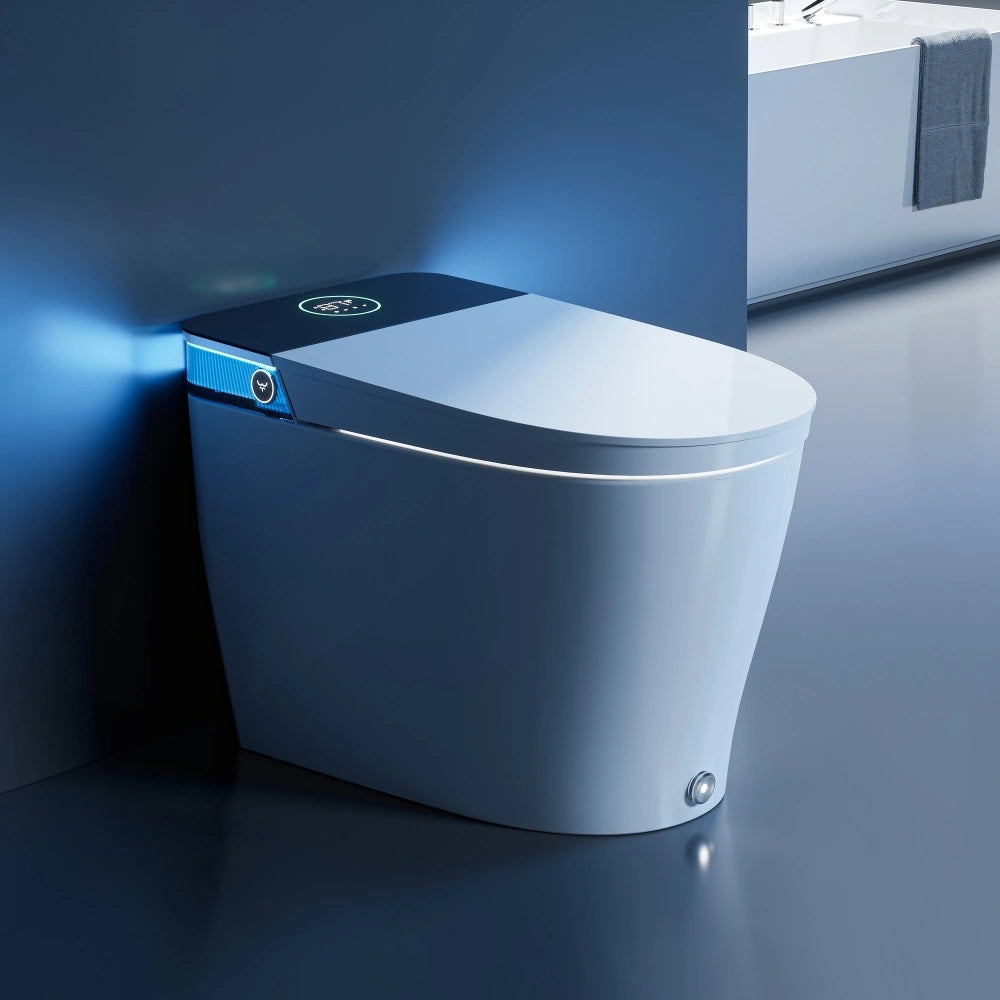
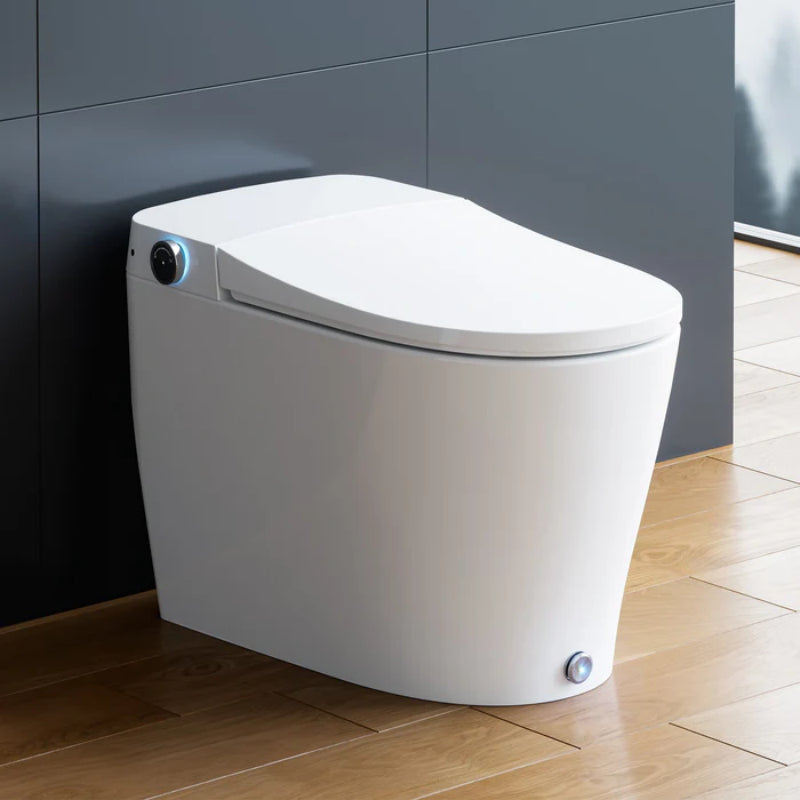

A matte black one piece toilet can look perfect in photos of a modern black bathroom design: clean lines, skirted sides, and matching black hardware. In real homes, though, the decision usually comes down to one question:
Are you buying a look you’ll enjoy maintaining, or a fixture you’ll never think about?
Matte black toilets aren’t “bad.” They just have clearer trade-offs than white porcelain. If you choose with those trade-offs in mind (water spots, cleaning habits, lighting, and who uses the bathroom), you can end up very happy with a unique black commode. If you ignore them, this is one of the most common “love it on day one, regret it by month three” upgrades.
Below is a decision-first guide to help you choose the right type, avoid the usual mistakes, and get a toilet that fits your bathroom and your life.
Decision Snapshot: matte black one piece toilet vs practical alternatives
Choosing a toilet often boils down to one core question: are you prioritizing a striking modern black bathroom design, or do you value absolute, low-maintenance practicality above all? This quick decision guide cuts through the noise to help you make a clear choice between a matte black one piece toilet and its more conventional alternatives, based on your real-life bathroom habits.
Choose a matte black one-piece if “modern black bathroom design” is the priority and the bath is low-traffic (guest/powder/adult-only)
A matte black one-piece toilet makes the most sense when:
-
The bathroom is used lightly (powder room, guest bath, adult-only primary).
-
You want a seamless modern design (no tank seam, often a skirted toilet base).
-
You’re okay wiping it down more often to keep the matte black finish looking crisp.
Choose glossy white or light-colored one-piece if daily cleanup speed matters in a busy family/guest bathroom
Pick white (or another light porcelain) if:
-
Kids, guests, or messy daily use are normal.
-
You don’t want to see every dried drip, dust line, or splash mark.
-
You have hard water that leaves mineral spots.
This is the “least attention required” option.
Choose a two-piece toilet if install/service access and lowest replacement cost matter more than seamless looks
A two-piece toilet is still the practical workhorse when:
-
You want easier handling (lighter pieces) during installation.
-
You want cheaper repairs and simpler part swaps later.
-
You expect to keep it 10–20 years and want the most standard parts.
Choose a smart toilet with bidet if comfort features beat the value of a unique black commode look
Choose a smart toilet with bidet (or a bidet seat) if:
-
You care more about wash, warm water, heated seat, night light, auto flush, or dryer features.
-
You’re trying to solve comfort, hygiene, or accessibility needs—not just style.
Rule of thumb: If you’re already budgeting for a bidet seat, prioritize bowl shape, rough-in, and seat compatibility first. Color comes after.
What trade-offs actually separate these choices in real homes
Selecting a black toilet is about more than just picking a color—it's about accepting a different maintenance routine. We'll dive into the real-world compromises that truly matter: the visibility trade-offs of a matte black finish, the cleaning versus servicing debate between one-piece and two-piece designs, and the pros and cons of choosing a sleek black skirted toilet.
Matte black finish vs glossy/white: the style upgrade that can turn into a visible-spot lifestyle
Matte black looks “quiet” and modern because it absorbs light instead of reflecting it. That’s the appeal. The downside is that matte finishes also make certain things stand out:
-
Hard-water spots show up white on black. Even tiny dried droplets can look like chalk dots.
-
Soap residue, dust, and lint can be more visible, especially near the base.
-
In some bathrooms, urine splash or drip marks are easier to notice on the exterior because the contrast is higher than white.
So, do black toilets show urine stains? They can show residue more clearly (especially around the base and seat hinges), but it’s not that black “stains more.” It’s that pale residue is more visible against black. If the bathroom is used by kids or lots of guests, you’ll likely notice this more often.
A glossy black toilet can hide some dust better (because it reflects light), but glossy also shows fingerprints and smears. White porcelain hides water spots better than both.
Real-home tip: Lighting changes everything. Matte black in a dim bathroom can look amazing and hide minor marks. Matte black under bright vanity lights can look “always dusty” unless you wipe it frequently.
One-piece vs two-piece: easier wipe-down and fewer seams vs heavier installs and pricier replacements
A one-piece toilet has the tank and bowl formed together. That usually means:
-
Fewer crevices to clean around the tank-to-bowl seam
-
A more modern look
-
A heavier, bulkier installation (often a two-person job)
-
Higher replacement cost if something cracks (you replace the whole unit)
A two-piece toilet:
-
Is easier to move and set (tank off, bowl on)
-
Can be cheaper to repair and replace
-
Has an extra seam that can collect grime
If your top priority is a clean, seamless look in a modern bathroom, one-piece tends to win. If you’re thinking like a long-term homeowner who wants easy servicing, two-piece stays competitive.
Black skirted toilet vs exposed trapway: easiest exterior cleaning vs harder access if something ever needs service
Many modern black toilets are skirted, meaning the trapway area is covered with smooth sides.
Pros:
-
Much easier to wipe down
-
Cleaner look (especially in a modern one piece toilet style)
Cons:
-
Some skirted designs make it harder to reach the bolts or certain connections during install and service.
-
If your bathroom has an odd flange position or you need to adjust fit, a skirt can reduce access.
This doesn’t mean “don’t buy skirted.” It means: expect a little more planning (and sometimes more install labor) compared with an exposed trapway bowl.
“All black dual flush toilet” look vs mixed-finish bathrooms: when matching matte black hardware helps—or overwhelms
An all black dual flush toilet (black bowl, black tank, black push buttons) looks best when the rest of the bathroom supports it:
-
matte black faucet/trim
-
black shower frame
-
black hardware
-
a calm palette (white tile, warm wood, stone)
If you already have chrome, brushed nickel, or oil-rubbed bronze everywhere, a black one piece toilet can still work—but it can look “dropped in” unless you tie it together with at least a few matching elements.
Design reality: Black is strong. One black item can be a focal point. Too many black fixtures can make a small bathroom feel tighter unless the room has enough light and contrast.
Cost & value differences that change the decision (not just the price tag)
When you buy a matte black one-piece toilet, you're often paying a premium for the design and finish, not just the fixture itself. Understanding the value behind the price tag—from the water-saving potential of a dual flush system to whether an included soft-close seat is a true value—helps you decide if you're investing in a look you'll love or overpaying for features you won't see.

Paying for the finish: matte black one-piece pricing vs standard white equivalents
You’re usually paying extra for:
-
the matte black finish and matching components
-
modern styling (skirted base, concealed trapway)
-
one-piece manufacturing and shipping costs (heavier, more protective packaging)
Even if two toilets share the same flush rating and bowl size, a matte black one-piece almost always costs more than a basic white model.
Value question to ask yourself: Would you still pay the premium if the toilet were hidden behind a closed door 95% of the time? If yes, great—this is a design choice you’ll enjoy. If not, keep it simple.
Dual flush savings vs simplicity: when 1.28 GPF / 1.1–1.6 GPF is worth it (and when it isn’t)
Many modern toilets are dual flush, often something like:
-
a reduced flush around 1.0–1.1 gpf (liquid waste)
-
a full flush around 1.6 gpf (solid waste)
You’ll also see 1.28 gpf single-flush models, which are common and efficient.
When dual flush is worth it:
-
You’re water-conscious or in a region with higher water costs.
-
Your household will actually use the light flush correctly.
-
You like the push-button top and it matches your modern bathroom design.
When dual flush might annoy you:
-
Guests or kids use the wrong button and you re-flush.
-
You prefer a simple lever that works the same every time.
-
You’re sensitive to “fiddly” mechanisms (more parts, more adjustments).
A practical take: If your household already flushes “just in case,” dual flush savings may be smaller than you expect. A good 1.28 gpf flush toilet can be the sweet spot: efficient, simple, and consistent. The U.S. Environmental Protection Agency’s (EPA) WaterSense program certifies toilets that meet strict efficiency and performance criteria, including many 1.28 gpf and dual-flush models, ensuring they save water without sacrificing flush power.
Seat included vs upgrade path: soft close seat value vs budgeting for a bidet seat later
A lot of matte black one-piece toilets ship with a seat included—often a soft close seat and sometimes quick release for cleaning.
That can be a real value if you want a basic seat and you’re done.
But if you plan to add a bidet seat later, check these first:
-
Is the bowl shape standard enough for common bidet seats?
-
Is it an elongated toilet (most bidet seats fit elongated better than round)?
-
Are the mounting points accessible on a skirted base?
-
Does the toilet’s lid/seat style interfere with a bidet seat’s hinge area?
Common mistake: People pay extra for a premium soft-close toilet seat, then replace it with a bidet seat within a year. If you’re leaning bidet, don’t overpay for the included seat—treat it as a temporary bonus.
Remodel resale reality: premium look for you vs the next owner preferring safe white porcelain
Black toilets are a tasty choice. Some buyers will love them. Many prefer “safe” white.
If resale is your primary driver, white is lower risk. If this is your long-term home and you’re building a modern bathroom you’ll enjoy daily, the design payoff can be worth it.
A balanced approach I’ve seen work: Put the standout black toilet in a powder room (easy wow factor, low traffic) and keep the high-use bathrooms more practical.
Fit, space, and usage realities that push buyers one way or the other
Even the most stunning black one-piece toilet can become a daily nuisance if it doesn't fit your space. In a small bathroom, the comfort of an elongated bowl can clash with door swing. Precise rough-in measurement and understanding the difference between comfort height and standard height are crucial to ensuring your toilet is not only beautiful but also perfectly functional.
Is a matte black one piece toilet worth it if I have a small bathroom and need compact clearance?
Small bathrooms punish bad measures.
Before you choose a black one-piece elongated toilet because it looks sleek, check:
-
Bowl projection (how far it sticks out from the wall)
-
Door swing clearance
-
Knee space in front of the toilet
-
The location of the supply valve (some skirted bases need more room)
Many people assume “one-piece = smaller.” Not always. Some one-piece tanks are thicker front-to-back.
If your space is tight, you may want:
-
a compact elongated bowl (more comfort than round, less projection than full elongated), or
-
a true round bowl (most space-saving, least adult comfort)
Elongated toilet vs round/compact elongated: comfort for adults vs knee-to-door spacing in tight rooms
-
Elongated bowl: more comfortable for most adults, easier to use, common in modern toilet design.
-
Round bowl: better for small bathrooms and kids, but can feel cramped for adults.
-
Compact elongated: a nice compromise if your bathroom is tight but you still want elongated comfort.
If this is a guest bath that adults will use, an elongated one piece toilet is usually the better experience—if if it fits.
Rough-in constraints (10/12/14") and skirted bases: when “standard 12-inch” assumptions cause install headaches

Most homes are 12-inch rough-in (distance from the finished wall to the center of the drain bolts), but plenty of older homes aren’t.
What goes wrong in real installs:
-
Homeowner measures from baseboard, not finished wall.
-
Skirted toilet base hides the bolt area, making it harder to “cheat” fit.
-
Tight clearance behind the tank makes the toilet stick out farther than expected.
Do this before buying: Measure rough-in correctly and confirm the toilet’s rough-in requirement. If your bathroom is 10-inch rough-in, don’t assume “it’ll work anyway.” Sometimes it does. Often it doesn’t.
Comfort height (chair height) vs standard height: adult comfort and accessibility vs kids’ daily usability
You’ll see:
-
Standard height toilet: often around 15–16" to the top of the bowl (without seat)
-
Comfort height / chair height: often around 16.5–17"+ to the top of the bowl (without seat)
Comfort height is great for:
-
taller adults
-
knee/hip issues
-
easier sitting/standing
Standard height is often better for:
-
younger kids
-
shorter adults who feel like comfort height is “too tall”
If this is a family bathroom used by small kids daily, a chair height toilet can be frustrating. In that case, keep the toilet practical and consider style upgrades elsewhere.
Flush performance & water-use forks (where regrets usually start)
The look makes the first impression, but flush performance determines long-term satisfaction. Choosing between 1.28 GPF and 1.6 GPF, or between a dual-flush and a single flush system, isn't just about water savings. It's about your household's habits, clog risk, and the peace of mind that comes from a quiet, powerful flush system in a night-use bathroom.
Should I pick dual flush 1.28 gpf or 1.6 gpf for my household’s habits and clog risk?
A few practical points:
-
A well-designed 1.28 gpf toilet can flush very well.
-
1.6 gpf full flush on a dual-flush toilet can feel more forgiving, especially for guests and heavier loads.
-
Clog risk is influenced by bowl design, trapway design, and installation—not just gpf.
If your household is prone to “too much toilet paper,” or you host a lot, a dual flush toilet with a strong full flush option can reduce frustration.
If you want “everyone flushes the same way every time,” a single flush toilet at 1.28 gpf is often the simplest win.

Powerful flush system vs quiet siphonic flush: what matters more in night-use bathrooms
Some toilets focus on a louder, forceful flush. Others use a quieter siphonic action.
What matters depends on location:
-
For a bathroom near bedrooms, quiet matters more.
-
For a busy hall bath with frequent use, “clears the bowl every time” may matter more.
Also consider refill noise. A toilet can flush quietly but refill loudly if the fill valve is noisy.
Fully glazed trapway and larger trapway paths vs “looks-first” bowls: when performance beats aesthetics
If you want fewer clogs and easier clearing, look for:
-
a fully glazed trapway (smoother interior path)
-
a reasonably sized trapway (not overly narrow)
-
a bowl rinse design that cleans the sides well (some use a swirling or “tornado-style” rinse pattern)
A sleek black skirted toilet can be gorgeous, but if the internal pathway is cramped, you’ll notice. The best-looking toilet is the one you don’t have to plunge.
Push-button dual-flush vs lever single flush: the convenience trade-off guests and kids actually notice
Push-button tops look modern and match the “one-piece” vibe. The downside is real-life user behavior:
-
Guests may not know which button is which.
-
Kids may press both, or press the small flush repeatedly.
-
Some people just prefer a lever because it’s obvious.
If this is a powder room mainly for adults who will appreciate the modern design, push-button is fine. If it’s the main family bathroom, a lever is often less annoying.
Maintenance, annoyance risks, and long-term ownership differences
Owning a unique black commode means making peace with more visible daily "evidence." Hard water spots, dust, and even improper cleaning can affect the matte finish. Understanding the long-term care reality of a black toilet—from correct cleaning methods to scratch visibility—is key to avoiding the "love it day one, regret it month three" syndrome.
Will a black one-piece toilet look dirty all the time in hard water, low light, or with frequent use?
Hard water is the biggest deciding factor for matte black.
Does hard water leave white spots on it? Yes, often. Mineral droplets dry into pale spots that stand out on a matte black toilet. You’ll see it on the lid, tank top, and around the base—anywhere water lands and dries. If you’re unsure about your water’s mineral content, resources from the U.S. Geological Survey (USGS) explain water hardness and its prevalence, which can help you anticipate this maintenance factor before you buy.
In low light, you might not notice it. In bright light, you will.
If you know you already fight water spotting on black faucets or shower glass, expect the same story here.
Matte black vs glossy black vs white: fingerprints, limescale, water spots, and the cleaning frequency you’re signing up for
Here’s the practical comparison:
-
Matte black: hides minor smears better than glossy, but shows mineral spots and dust clearly. Requires gentle cleaning to avoid uneven sheen.
-
Glossy black: shows fingerprints and streaks easily, but can sometimes wipe clean faster because it’s slick. Still shows mineral spots.
-
White: hides water spots and dust better, easiest to keep looking “clean enough” with quick wipe-downs.
How do you clean a black toilet bowl without making it look worse?
-
Use a non-scratch cleaner and a soft cloth on the exterior.
-
Avoid abrasive powders and rough pads (they can burnish matte areas into shiny spots).
-
For mineral buildup, use a descaling product that’s safe for porcelain finishes, and test in a small area first.
-
Keep a microfiber cloth nearby and do quick dry wipes after heavy use if spotting bothers you. For general hygiene guidance on cleaning bathroom surfaces to prevent germ spread, the Centers for Disease Control and Prevention (CDC) offers evidence-based recommendations that align with gentle, effective cleaning practices.
Important: Matte finishes can look patchy if you scrub aggressively in one area. Gentle, consistent cleaning is the goal.
Scratch/chip visibility and touch-up reality: matte finish durability vs “every mark shows” risk
Most black toilets are still ceramic/porcelain with a colored finish. They can be durable, but chips and scratches are more obvious than on white.
Does the black finish peel over time? On quality ceramic, “peeling” is less common than chipping from impact or wear from harsh abrasives. The bigger risk is:
-
cleaners that dull or discolor the finish
-
abrasives that change the matte texture
-
accidental impacts during installation (one-piece toilets are heavy)
Touch-ups rarely look perfect on a high-contrast matte surface. So the best protection is careful install and gentle cleaning.
Soft-close quick release toilet seat vs standard hinges: faster deep cleaning vs more parts to replace
A soft-close toilet seat is worth it for most homes. It reduces noise and prevents seat slams that can damage hinges over time.
A quick release seat is a real benefit on black toilets because:
-
it makes deep cleaning easier (especially around hinges where residue collects)
-
it helps keep the finish looking even and clean
Downside: quick-release hinges can be more proprietary. If you need replacement parts years later, availability matters. If you want maximum standardization, a simple seat and hinge system is easier.
Also ask: what color seat comes with a black toilet?
Many come with a matching black seat. Some ship with a dark seat that’s close but not identical in tone. If a perfect match matters, confirm “matte black seat included” in specs, not just “seat included.”
Shortlists by buyer type (including when to skip black entirely)
A matte black toilet isn't for everyone. This guide provides clear direction based on user profiles: when a modern one-piece elongated, dual-flush toilet makes sense, when to opt for a more universal, service-friendly modern toilet, and when you should skip black entirely for the low-maintenance practicality of white.
When a modern one-piece elongated, dual-flush matte black toilet makes sense (if you accept finish upkeep)
You’re a good candidate if:
-
The bathroom is mostly used by adults.
-
You want an elongated one-piece for comfort.
-
You like a dual flush system and don’t mind push buttons.
-
You’re okay doing quick wipe-downs to keep the matte finish sharp.
-
You want a skirted look because you hate cleaning around exposed trapways.
This is the homeowner who values design and is realistic about maintenance. In practice, these installs tend to make people happiest in a powder room or a primary bath used by two adults.
When a safer “easy parts, easy support” modern toilet is the better move
Choose a more standard, widely serviceable toilet style if:
-
You want parts you can grab locally in a pinch (fill valve, flush valve, buttons/lever).
-
You’re not sure you’ll love black long-term.
-
You want a modern shape but don’t want to gamble on harder-to-match replacements later.
You can still get a modern one piece toilet look in a safer color, or choose a two-piece with a sleek tank profile.
When to abandon matte black and choose white: kid/guest-heavy bathrooms, hard-water homes, and “no time to wipe” households
Skip black toilets if any of these describe your house:
-
Hard water leaves spots on everything.
-
This is the main bathroom for kids or frequent guests.
-
You want “clean enough” with a fast weekly clean, not frequent touch-ups.
-
The bathroom has strong overhead lighting that highlights every spot.
White is not boring when it means you don’t resent your fixtures.
Do you need a smart toilet with bidet instead of a matte black toilet—if comfort features matter more than design?
If you’re deciding between “matte black look” and “daily comfort,” it helps to be honest:
Pick comfort features first if:
-
You want a bidet wash to reduce toilet paper use
-
heated seat matters (cold bathrooms, comfort needs)
-
you want auto flush or hands-free features
-
accessibility and ease of use matter more than styling
You can still build a modern bathroom around comfort. A toilet is one of the few fixtures you use every day, so comfort choices usually age well.
The key mistakes people make with matte black one-piece toilets (and how to avoid them)
Mistake 1: Choosing black before checking water and lighting. If your water leaves mineral residue, matte black will show it. If your lighting is bright and direct, you’ll see more dust and spots. Fixes: water softening/filtration, better ventilation, and being realistic about wipe-downs.
Mistake 2: Assuming “skirted” automatically means “easy install.” Skirted toilets are easy to clean, but can be trickier to install because bolts and access points are hidden. Fix: confirm access requirements and expect a bit more labor.
Mistake 3: Not confirming rough-in and clearances. A one-piece elongated toilet can stick out farther than you expect. Fix: measure rough-in correctly and check bowl projection.
Mistake 4: Paying for an included seat you’ll replace with a bidet seat. Fix: if a bidet is likely, prioritize compatibility and bowl shape over the included soft-close seat.
Mistake 5: Using abrasive cleaners that change the matte texture. Fix: gentle cleaners, soft cloths, and avoid scratch pads. Matte finishes can “polish” in spots if scrubbed hard.
Before You Buy checklist (5–8 items)
-
Measure your rough-in (10/12/14") from the finished wall to the bolt center—don’t guess.
-
Confirm bowl shape: elongated, compact elongated, or round, based on door/knee clearance.
-
Decide on height: standard vs comfort (chair) height based on who uses the bathroom daily.
-
If you have hard water, assume you’ll see white spotting on matte black and plan cleaning accordingly.
-
Check if the toilet is skirted and whether installation access works for your supply valve and flange area.
-
Choose flush type intentionally: dual flush (buttons) vs single flush (lever) based on household habits.
-
Verify seat details: seat included, soft close, quick release, and whether it’s truly color-matched.
-
If a bidet seat is likely, confirm compatibility before you commit to the toilet.
FAQs
1. Do black toilets show urine stains?
Matte black toilets don’t stain more—they show mineral deposits and water spots more visibly due to high contrast. What might blend in on white porcelain stands out clearly on a black one-piece toilet, especially around the base and hinges. If you have hard water or frequent use, expect to wipe down the black finish more often to keep it looking sharp.
2. How do you clean a black toilet without streaks?
To care for a matte finish, avoid abrasive pads and harsh chemicals. Use a soft microfiber cloth and spray cleaner onto the cloth first, not directly on the surface, to prevent streaking. Gently wipe and dry immediately. For the bowl, choose a non-abrasive, porcelain-safe cleaner. This routine keeps your black skirted toilet looking new without damaging its texture.
3. Does the black finish peel over time?
Quality ceramic one-piece toilets have the color fired into the glaze, so peeling is uncommon. The main risks are chipping from impacts or surface wear from rough cleaning tools. With proper care—gentle cleaning and careful installation—the finish on a modern black bathroom fixture should remain intact for years.
4. Is 1.28 gpf enough, or should I choose 1.6 gpf?
A well-engineered 1.28 gpf toilet can be very effective. For extra assurance, consider a dual flush toilet that offers a light flush (~1.1 gpf) for liquids and a full 1.6 gpf flush for solids. This balances water savings with performance. Look for features like a fully glazed trapway to ensure consistent flush power.
5. What’s the biggest downside of a skirted toilet?
The sleek skirted toilet design is easy to clean but can complicate installation. The skirt covers the mounting bolts, requiring precise alignment and sometimes making access tighter. Before purchasing a one-piece elongated skirted model, verify your rough-in measurement and be prepared for a more detailed install process.
References


Leave a comment
This site is protected by hCaptcha and the hCaptcha Privacy Policy and Terms of Service apply.