
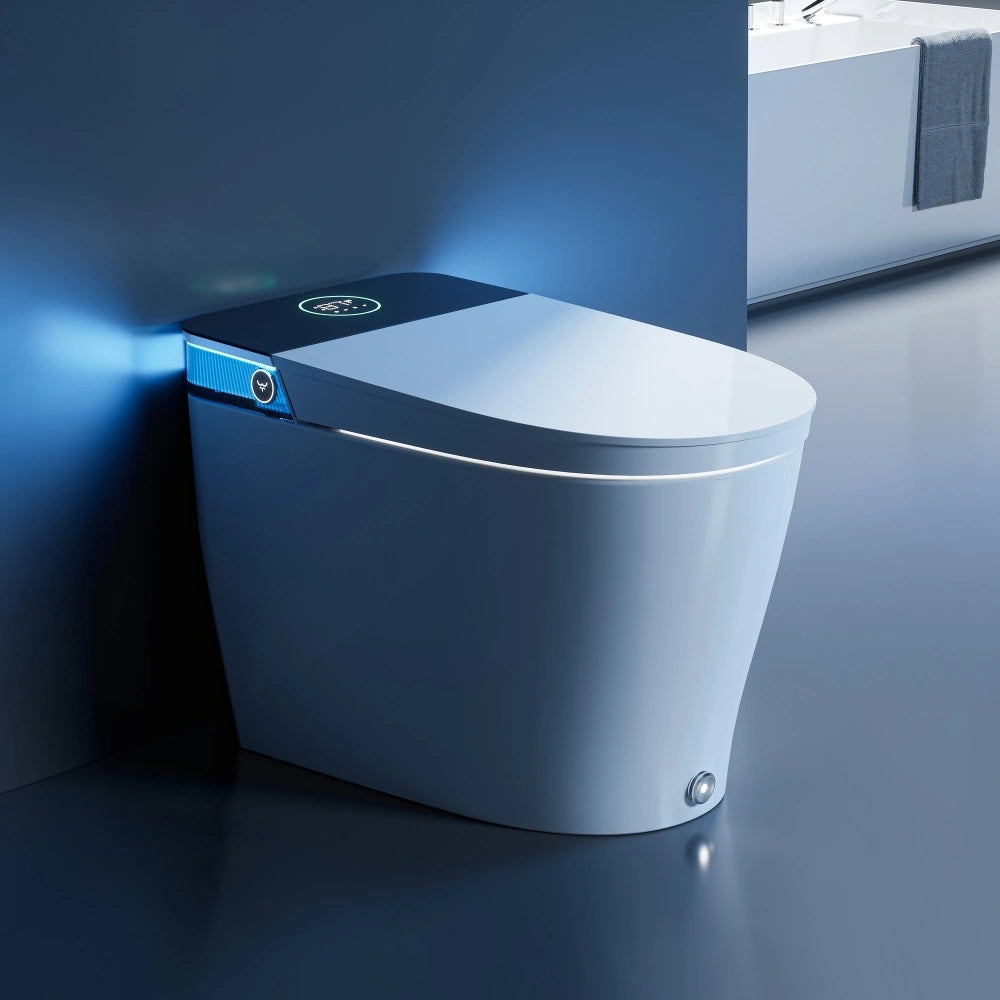
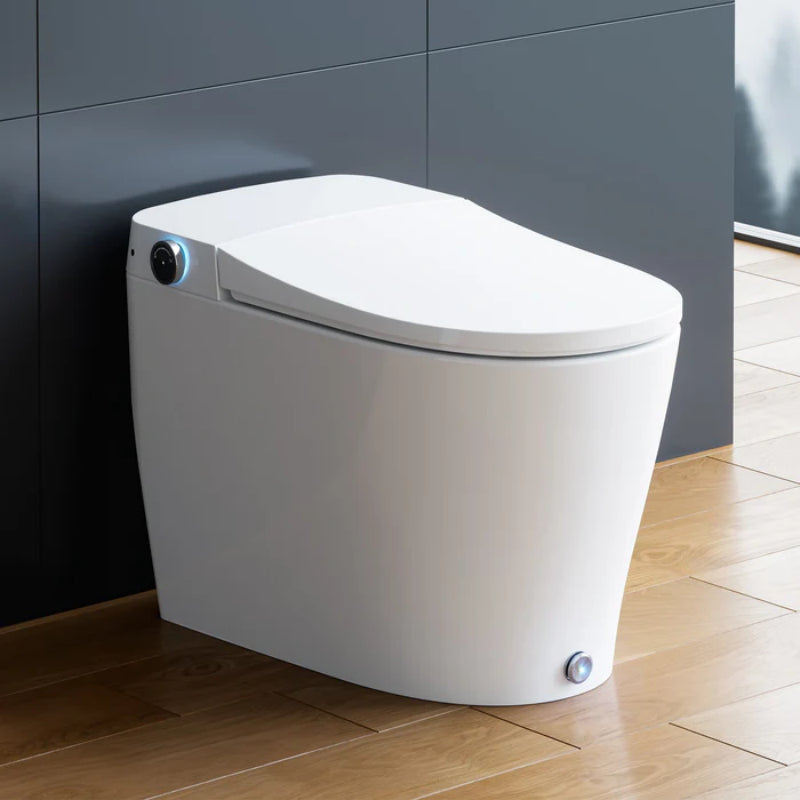
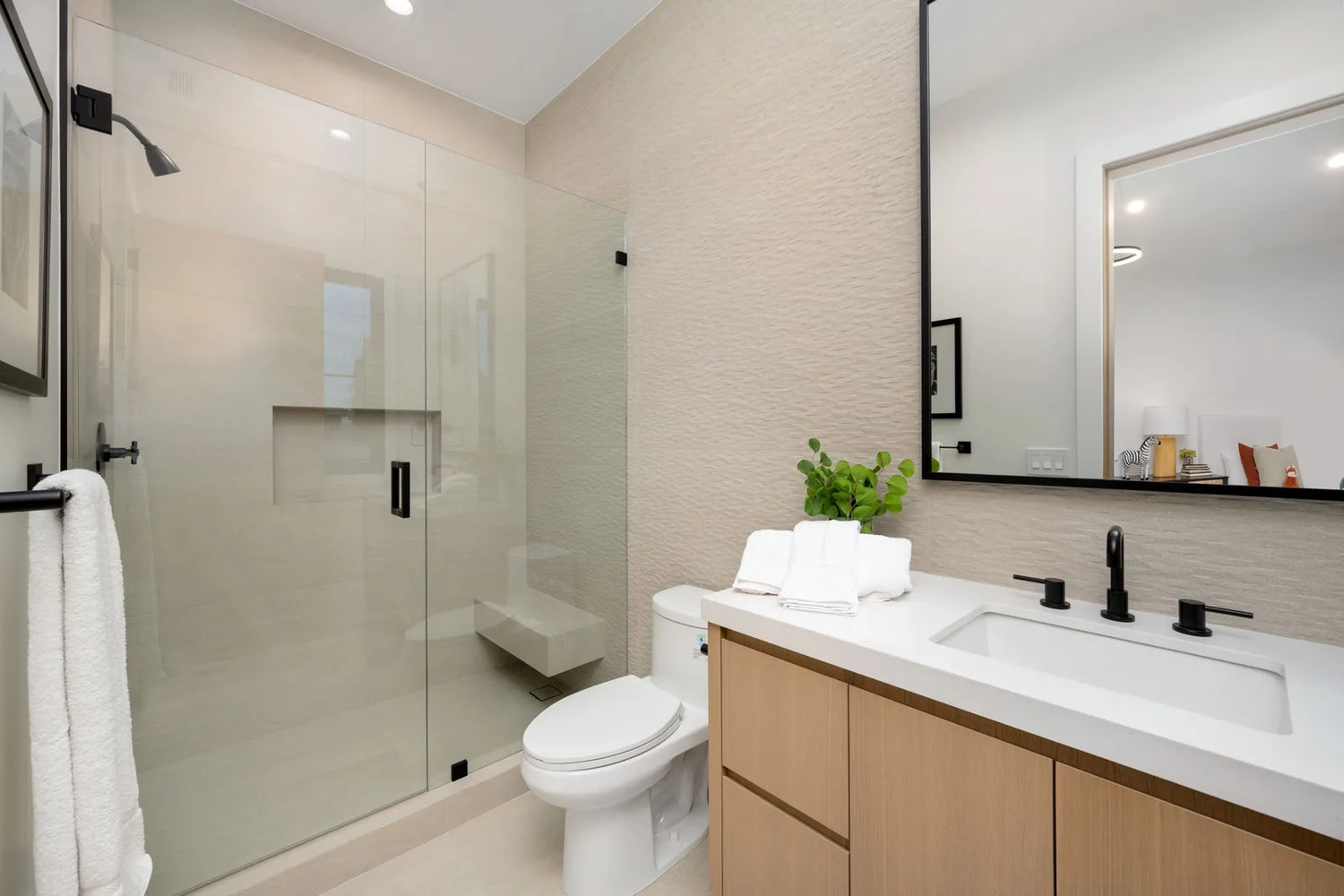
Yes—a pressure assisted toilet is good if your main problem is frequent clogs, weak low-flow flushing, or a bathroom with heavy daily use. It is often a practical choice for big families, rentals, basement bathrooms, or households tired of repeated plunging.
For quieter homes with fewer clog issues, a high-performance gravity toilet is often enough and may feel more comfortable in daily use.
Before buying, it’s important to confirm your home has sufficient water pressure, since low-pressure or some well systems may not support consistent performance.
The main trade-off is noise, along with higher upfront cost and more model-specific repair parts compared with a standard gravity toilet.
When It Works Well
First, what does pressure-assisted toilet mean? It means the toilet uses compressed air inside a sealed tank to create a stronger flush than a normal gravity toilet. In real use, that usually means waste moves faster, the bowl clears more completely, and there are fewer “half flush” problems.

This works well if your current toilet is a constant annoyance.
Many users switch because they are tired of clogging standard 1.28 or 1.6 GPF gravity toilets, which align with modern water-efficiency standards such as the EPA WaterSense program in the United States. That is where pressure-assist tends to get the strongest praise. If your household has kids, lots of toilet paper use, or what owners bluntly call “big poopers,” this type of toilet is often the one change that noticeably reduces plunging.
It also works well in high-traffic bathrooms. Think of a shared hall bath, kids’ bathroom, basement bathroom, Airbnb, rental, or office. In those settings, the value is not just flushing performance. It is also fewer embarrassing clogs, lower overflow risk, and less downtime.
A pressure-assisted toilet can also make sense if you live in an area with strict low-flow rules. Some homeowners feel stuck with 1.28 GPF toilets that technically save water but do not clear the bowl well in their house. Pressure-assist is often the compromise: you stay within the code but get a flush that feels closer to an older 3.5-gallon toilet.
Do pressure assist toilets clog? Yes, they still can. No toilet is clog-proof. But many users find they clog far less often than standard gravity models, especially under demanding use. That is the main reason people are happy with them.
When It May Not Be Ideal
Pressure-assist is not automatically better. A lot depends on where you install it and what bothers you most.
One of the most common regrets with pressure-assisted toilets is noise. The flush can be noticeably loud, and in smaller homes or bathrooms close to bedrooms or nurseries, it may disturb light sleepers more than expected.

This is where many bad reviews come from. The toilet works exactly as expected in terms of power—but the owner underestimated the noise level in daily life. A common regret is putting one in the master bath, then realizing every late-night flush wakes someone up.
Not ideal if you already have a decent gravity toilet that rarely clogs. In that case, pressure-assist can feel like paying more for a problem you did not really have. Some homeowners upgrade expecting a dramatic improvement, then realize the real-world benefit is small because their old toilet was already fine.
It is also not ideal if you want easy, cheap DIY repairs. A gravity toilet is simple: flapper, fill valve, chain. A pressure-assisted toilet has more complex internals, often including a sealed vessel and brand-specific parts. If something fails, you may need a specific cartridge or tank component rather than a universal part from the nearest hardware store.
Supply pressure matters too. These systems depend on adequate incoming water pressure. In homes with poor or inconsistent pressure—especially some well systems—they may not perform as advertised. So the buying decision is not only about the toilet itself. It is also about whether your house can support it properly.
One important side note: what are the disadvantages of upflush toilets? That is a different category. Upflush toilets use a pump to move waste upward, usually for basement installs where standard drainage is difficult. Their disadvantages are different: pump dependence, more mechanical complexity, and different installation constraints. Do not confuse “upflush” with “pressure-assisted.” A pressure-assisted toilet still uses your normal drain line; it just flushes more forcefully.
Pros and Cons
Here is the practical version.
Pros
-
Very strong flush Good for households that deal with frequent clogs or incomplete flushes.
-
Better clog resistance Many users say it is the closest thing to a “never plunge again” upgrade, even though clogs can still happen.
-
Good for heavy use Works well in shared baths, rentals, guest-heavy homes, and commercial-style situations.
-
Often low water use Many models use around 1.0 to 1.4 GPF, and real-world savings can improve if they prevent double flushing.
-
Lower overflow risk A stronger first flush means fewer situations where waste sits in the bowl and creates a mess.
-
Cleaner bowl appearance The more forceful flush and bowl rinse often leave fewer streaks behind.
Cons
-
Noise is the top drawback This is the issue most often underestimated.
-
Higher upfront cost The toilet itself usually costs more than a basic gravity model.
-
Repairs can be less convenient Some parts are proprietary, and replacement tanks or cartridges can be expensive.
-
More maintenance complexity Not impossible to fix, but less intuitive than a standard gravity toilet.
-
Possible splash or spray Some users report more mist or splash because the flush is so aggressive.
-
Can feel like overkill In a small, quiet household, the trade-off may not be worth it.


Real-World Considerations
A toilet is used every day, so the right choice depends on everyday patterns, not just specs.
For context, how many times does the average person flush a day? A common estimate is around five times per person per day. That matters because the value of pressure-assist rises with use. In a two-person home, the extra cost may take a long time to feel worthwhile. In a five-person home, a kids’ bathroom, or a rental with turnover, the benefits show up faster because every clog avoided matters more.
Installation and compatibility
Installation and compatibility depend strongly on water supply conditions. Before purchasing, check the manufacturer’s stated minimum water pressure requirement for the specific model and confirm that your home can consistently meet it.
If water pressure is too low or unstable, the toilet may not perform as intended, even if the installation itself is correct. Older homes are not automatically an issue, but water supply conditions should be verified rather than assumed.
Check:
-
your water pressure
-
plumber familiarity with the model
-
replacement part availability
-
warranty coverage on the pressure tank
Older homes are not automatically a problem, but low or inconsistent supply pressure can be.

Daily usability
In daily use, these toilets are simple to operate, but the user experience is different. The flush is faster, sharper, and louder. In busy family homes, many people accept that trade-off gladly. In small quiet homes, they may hate it.
Some users also mention splash. That is one reason people say to close the lid before flushing. You may have seen odd advice like “Why should you wrap socks around your toilet seat?” That is not a real buying factor for pressure-assisted toilets. It is more internet humor or a temporary trick for comfort, movement, or cleaning situations—not a meaningful reason to choose one toilet type over another.
Maintenance and long-term expectations
A common misunderstanding is that stronger flush means maintenance-free. It does not. Pressure-assisted toilets still have parts that wear out, including seals and cartridges, and the sealed pressure vessel can eventually fail. A stronger flush does not mean the system is maintenance-free. Over time, some components may still wear out, and certain repairs may require model-specific parts that are not always as easy to source as standard gravity-toilet components, which can make repairs slower or more expensive.
The difference is convenience. With a gravity toilet, many repairs are cheap and widely available. With a pressure-assisted model—especially systems using components—you may need model-specific parts and may need to wait for shipping. That is not a dealbreaker, but it is a real ownership trade-off.
There is also a quality spectrum. Some models are better designed and less harsh-sounding than others. So it is smart to compare specific toilets, not just the category.
Who Should Buy / Who Should Skip Pressure Assisted Toilet
The right choice depends less on features and more on the problems you actually deal with at home.
Buy a pressure assisted toilet if:
-
You are constantly plunging your current toilet
-
Your bathroom gets heavy daily use
-
You have a large family, kids, guests, or tenants
-
You run an Airbnb, rental, or office
-
Your home has long drain runs or a basement bathroom with marginal performance
-
You want strong flushing while staying within low-flow code limits
-
Your priority is clog resistance over quiet operation
Skip it or think twice if:
-
Your current gravity toilet rarely clogs
-
The bathroom is next to a bedroom or nursery
-
You want a quiet, spa-like bathroom
-
You prefer simple DIY repairs with cheap universal parts
-
You are on a well or low-pressure system
-
You are sensitive to splash, harsh flush sound, or unfamiliar plumbing parts
-
You would be just as happy with a good high-performance gravity toilet
For most homeowners, that last point matters. A modern gravity toilet with a strong flush rating can solve many problems without the extra noise and complexity. Pressure-assist is best seen as a targeted solution, not an automatic upgrade.

Decision Summary
A pressure assisted toilet is worth it when your main goal is strong flushing, fewer clogs, and better performance in a busy bathroom. It is especially good for families, rentals, basement baths, and homes where low-flow gravity toilets have been disappointing.
If you need “strongest flush, least plunging” → good choice. If you care more about quiet operation, lower cost, and easy repairs → consider a high-quality gravity toilet instead.
References


Leave a comment
This site is protected by hCaptcha and the hCaptcha Privacy Policy and Terms of Service apply.