
A weak toilet flush is a common household frustration, but before you grab your tools for repairing weak flushes, the most important step is determining whether the problem is actually worth fixing yourself. Many homeowners begin searching for help when a toilet won't flush at all, but toilet not flushing at full strength is far more common—and usually more manageable. Homeowners who learn how to fix basic tank issues often avoid unnecessary service calls, and knowing when to fix a toilet yourself versus call a plumber is the most valuable decision you can make. Many weak flushes stem from simple, visible issues like low tank water, a worn flapper, or mineral buildup—problems that are low-cost and low-risk for a basic homeowner check. However, if your symptoms include gurgling, frequent backups, or slow drainage, you are likely dealing with a hidden drain or vent issue where DIY attempts will only waste time and risk making a bigger mess. This guide covers how to fix weak toilet flush: it helps you quickly diagnose the root cause, identify the reasonable first checks you can safely perform when troubleshooting slow flushing toilets, and recognize the clear stop signs that mean it's time to call a plumber.
Decision snapshot: quick answer
This article is for simple homeowner-level diagnosis and basic toilet tank/rim checks, not a full repair walkthrough or drain-system troubleshooting guide. Whether you have a weak flushing toilet that has declined over months or just started to notice reduced performance, fixing your slow flush begins with identifying the most likely cause. In most cases, you can fix a weak flush without specialized tools or professional experience. Trying to fix a weak toilet flush is usually worth it when the problem seems simple, the toilet still works, and you can safely clean or adjust basic tank parts. It is often not worth it when backups keep happening, the problem comes back often, or the weakness may be caused by a hidden clog or drain issue.
Makes sense for simple toilet issues
This makes sense if your toilet flush has slowly gotten weaker, the bowl empties poorly but does not overflow, or you can see likely causes like low tank water, a worn flapper, or buildup under the rim. If your toilet isn't clearing waste reliably after a single flush, that pattern is a clear sign the issue is worth investigating before it gets worse. In these cases, knowing how to fix weak toilet flush with a basic adjustment is often low cost and low risk.
It is also worth trying before calling for a major repair if the toilet is otherwise stable, not leaking, and only one toilet in the home has the problem. Many weak flush problems start with tank parts or mineral buildup, not a serious plumbing failure.
Skip it for hidden drain problems
Clear stop signs to halt DIY: Backups, gurgling, repeated weakness right after plunging, or multiple affected drains are absolute reasons to stop DIY immediately. Do not pass go. These symptoms point directly to a clogged drain, vent issue, or deeper drain problem rather than a simple flush adjustment. This is also not a good fit if the toilet is very old, has cracked or stuck parts, or you are likely to force parts and break them. A weak flush can look minor but still come from a larger problem.
Worth trying before major repair calls
For many homeowners, this sits in the middle ground: worth trying once, but not worth chasing for weeks. If a simple cleaning or adjustment does not clearly improve performance, repeated DIY attempts often waste more time than they save.
What causes weak flushes
Understanding what is causing your toilet to flush weakly comes down to how water moves through the toilet's flushing system. Each part of the toilet mechanism—from the fill valve to the flapper—plays a role in how much force reaches the bowl. Most weak flush problems start there. Start with the simplest and most common source—the tank components that control water release. A slow toilet often points to one of these common toilet problems, all of which cause a weak flush without requiring major plumbing work.

Tank parts often cause weak flushes
A toilet flush depends on the right amount of water leaving the toilet tank quickly—and on that water moving fast enough to generate clearing force. The first thing to confirm is whether there is enough water in the tank by checking the marked fill line. If that does not happen, the bowl may swirl but not clear well.
Common causes include:
-
a low water level in the tank
-
a flapper that closes too soon: replacing toilet flapper for better flush performance is often the most cost-effective fix
-
Incorrect chain length can also affect flapper timing and flush strength.
-
Worn rubber flappers may cause inconsistent sealing and water loss.
-
A leaking toilet flapper—one that seals improperly or warps over time—reduces the water volume available per flush. Replacing a worn flapper is one of the most effective single-part repairs you can make.
-
a chain with too much slack. While checking the chain, press the flush handle to confirm it lifts the flapper completely and returns to its resting position without sticking.
-
a worn flush valve
-
a fill valve that is not refilling properly, which can also cause a running toilet
Each of these issues can cause weak flushes independently—and when combined, they make the bowl flush slowly even when the tank appears full. These are the kinds of problems where learning how to fix weak toilet flush is genuinely worth the effort. They are visible, easy to understand, and usually cheap to address.
What homeowners often wish they knew is that a toilet can still “kind of work” with these problems for a long time. That makes it easy to ignore until the weak flush becomes a daily annoyance. If you are flushing twice often, holding the handle down, or dealing with leftover paper in the bowl, the issue is already affecting normal use.
Rim buildup can reduce force
Blocked rim holes can cause a slow flushing toilet that gradually gets worse over months or years. A sluggish toilet that takes longer to clear after each flush is a common sign that flushing power has been quietly eroding. In homes with hard water, mineral buildup can block the rim holes that send water into the bowl. When rim holes become clogged with mineral deposits, they restrict the water path, causing your toilet to drain less effectively with each flush. The toilet may still fill and flush, but slow water flow around the bowl reduces flush force and leaves the bowl poorly cleaned.
This usually becomes useful to address when the toilet has gradually lost power over time, especially if the rest of the bathroom fixtures also show mineral scale. Each mineral deposit that blocks a rim hole further reduces effective flow into the bowl.
The trade-off is that cleaning buildup is not always a one-time fix. If your water causes scale, you may need to repeat the cleaning from time to time. That is one of the most common “I fixed it, but not really” situations with weak flushes.

What happens if nothing looks wrong?
This is where many people get stuck. The tank looks normal, the water level seems close enough, and there is no obvious clog. Before guessing or blindly replacing parts—or deciding how to fix weak toilet flush—try a concrete first-check: the bucket test. Quickly pour a gallon of water directly into the toilet bowl. If it flushes cleanly and smoothly, the drain path is fine and the weak flush is caused by tank volume or rim holes. If the water rises, shows a slow drain pattern, or nearly overflows, you may be dealing with a partially clogged toilet—or a deeper drain issue. A partially clogged trap can turn an otherwise functional toilet into a slow draining toilet without any visible blockage above the floor. In real homes, this often means one of three things:
-
there is a partial blockage in the toilet drain or trap—the most common reason for the toilet draining slowly, as it causes the toilet to drain slowly even when the tank delivers the correct water volume
-
the toilet was never a very strong flusher to begin with
-
the internal parts are technically working, but not well enough
If nothing looks wrong, it is easy to start guessing and replacing parts one by one. That can become annoying fast. A weak flush fix is worth it when the cause is fairly clear. It becomes less worth it when you are only hoping one more adjustment might solve it.
When DIY fixes are worth it
Reasonable first checks: Before diving into toilet repair, understand that how to fix weak toilet flush starts with this low-risk sequence: confirm tank water level (adjusting water level in toilet tank if it sits below the fill line) -> try a plunger to rule out a minor blockage before opening the tank -> inspect the flapper for lift, seal quality, and mineral residue -> check chain slack (and adjust the float if the water sits too low) -> inspect fill valve behavior -> clean rim holes.
Before adjusting tank parts, using a plunger takes under a minute and can save unnecessary disassembly if the issue is a soft partial clog. Complete this sequence in order to get your toilet flushing properly before considering part replacement.

Good fit for basic cleaning
DIY repair makes the most sense when knowing how to fix weak toilet flush leads to simple cleaning or a small adjustment. That includes clearing rim holes, setting the water level correctly, and checking whether the flapper opens fully.
These jobs are usually worth doing because they cost little and can improve daily use right away. If the toilet flushes better after one cleaning or one adjustment, that is a good sign you found the real issue.
This can be annoying when the toilet seems better for a day or two, then slips back to the same weak performance. That usually means the first fix only addressed the symptom, not the cause.
Low risk if parts are accessible
A basic weak flush fix is also more reasonable when the tank parts are easy to reach and you are comfortable making small changes without forcing anything.
Here is the practical rule: if the fix involves looking, cleaning, or adjusting, the risk is fairly low. If it involves repeated disassembly, stuck hardware, or uncertainty about the drain line, the risk rises quickly.
A lot of homeowner regret comes from treating a simple toilet issue like a puzzle that must be solved no matter what. Sometimes the smarter limit is one careful attempt, not five.
Is it worth it if flushing still works?
Usually yes, but only if the weak flush is affecting normal use often enough to matter.
If the toilet clears waste most of the time and only struggles once in a while, you may not gain much from chasing a perfect flush. Low-flow toilets, especially older ones, can feel underpowered even when they are working about as designed.
In many homes, this ends up being ignored if the toilet is in a guest bath or used lightly. But in a main bathroom, even a small improvement can be worth it because the weak flush becomes a daily frustration.
Hidden trade-offs most people miss
Even small repairs can have downsides that are easy to overlook at first. Understanding these trade-offs helps avoid unnecessary effort.
Repeated fixes can waste time
The biggest downside is not usually cost. It is the cycle of small fixes that never fully solve the problem.
You clean the rim. It helps a little. You adjust the chain. It helps a little. You reach for the plunger again. It helps for a week. At some point, the time spent starts to outweigh the benefit.
This is often where people wish they had set a limit earlier. A weak toilet flush repair is worth trying once or twice when the signs point clearly to a minor issue. It becomes poor value when each fix gives only partial improvement.
More force can expose bigger issues
A stronger flush sounds like a clear win, but it can reveal a problem farther down the line. If there is a partial clog in the trap or drain, increasing water flow may move more waste into that restriction and make symptoms more obvious.
That does not mean improving the flush is bad. It means a weak flush can sometimes be masking a drain issue rather than causing it.
This can be frustrating because the homeowner feels like the repair “made it worse,” when the larger issue was already there. If backups or near-overflows begin after flush changes, stop treating it as a simple tank problem. The issue may involve a sewer line blockage or a deeper obstruction that requires professional attention.
Will this still work with old toilets?
Sometimes only partly.
Depending on your toilet model and age, older toilets may have worn internal parts, rough passages, hidden buildup, or design limits that no simple adjustment will overcome. You may improve performance, but not restore it to what you expect from a newer toilet.
This is one of the most important expectation checks. A repair can be worth doing even if the result is modest. It is not worth it if you expect a dramatic change from a toilet that has several age-related problems at once.
Daily use after the repair
After completing how to fix weak toilet flush, it helps to set realistic expectations. Improvements are often noticeable but not dramatic.
Flush strength may improve only slightly
The most common realistic outcome is not “like new.” It is “better enough.”
That may mean:
-
less need for double flushing
-
a faster bowl clear
-
fewer incomplete flushes with paper
Keep in mind that low water pressure in the home can limit how much the flush improves, even after repairs. For many homeowners, that is good enough. But if you expect one quick fix to fully change the toilet’s behavior, you may be disappointed.
Regular cleaning may become necessary
If mineral scale caused part of the problem, maintenance may become part of the deal. The toilet may keep working better only if you clean the rim area and tank parts on a regular schedule.
This usually becomes useful when hard water is the main issue. In softer water homes, this ongoing upkeep may barely matter. In hard water homes, it can become one more small chore that people did not expect.
What happens if the problem returns?
If the weak flush returns soon after the repair, that tells you something important: either the root cause was missed, or the toilet has a recurring condition such as buildup or a partial blockage.
At that point, repeating the exact same fix is often unnecessary. The better question is whether the problem pattern has changed:
-
Does it happen more often?
-
Does plunging help only briefly?
-
Are other drains acting slow?
-
Is the tank filling normally?
If the answer points beyond the toilet itself, your toilet could have a more serious underlying issue, and more DIY flush tuning is usually not the best use of time.
When fixing it is unnecessary
Rule out “normal by design” first.
Low-flow toilets may feel weaker
Low-flow toilets use less water and simply feel less forceful when operating normally. According to the EPA’s WaterSense program, this reduced water consumption is a designed efficiency feature rather than a mechanical flaw [1]. In these cases, there is no need to investigate how to fix weak toilet flush further—the toilet is performing exactly as designed. If the bowl clears reliably without frequent double flushing, the “weak” feel is just design, not a malfunction. In these cases, there is no need to investigate how to fix weak toilet flush further—the toilet is performing exactly as designed. If the bowl clears reliably without frequent double flushing, the “weak” feel is just design, not a malfunction. Likewise, an occasional weak flush—caused by an uneven paper load or user habits—does not always mean something is wrong. If the toilet works well most of the time, you may not need to fix anything.
Occasional weak flushes may be normal
A single slow flush or weak flush now and then does not always mean something is wrong. Uneven paper load, low tank refill between flushes, or user habits can cause occasional weak performance.
In many homes, this ends up being ignored because it never becomes consistent enough to matter. If the toilet works well most of the time, you may not need to fix anything.
Skip DIY when backups keep happening
This is the clearest stop sign. If the toilet regularly backs up, rises too high, drains slowly, or affects nearby fixtures, do not keep treating it like a minor weak flush issue. That is where DIY can become risky, messy, and misleading. A weak flush fix is not worth much when the real problem is in the drain path.

Before You Choose
-
Check whether the issue is only in one toilet or across multiple drains.
-
Look for simple causes first: low tank water, poor flapper lift, rim buildup.
-
Decide how much improvement you actually need, not just what you hope for.
-
Set a limit on repeat attempts if each fix only helps a little.
-
Stop DIY if backups, gurgling, or recurring clogs point to a hidden drain problem.
-
Expect some toilets, especially older or low-flow models, to improve only modestly.
FAQs
1. Why is my toilet flush so weak?
Weak flushing usually happens when not enough water leaves the tank quickly. Common causes include low tank water level, a flapper that closes too soon, too much slack in the chain, or a poorly working fill valve. Mineral buildup under the rim can also restrict water flow. If the issue developed gradually, it’s often a simple mechanical or buildup problem rather than a serious plumbing failure.
2. How can I make my toilet flush more powerful?
Start with simple adjustments: raise the tank water level, ensure the flapper opens fully, and reduce slack in the chain. Clean rim holes to restore proper water flow. These small fixes often improve flush strength. However, if stronger flushing reveals slow drainage or backups, the issue may be in the drain line rather than the toilet itself.
3. Can I fix a slow flushing toilet myself?
Yes—if the problem is minor and visible. Basic DIY fixes like adjusting the water level, checking the flapper, or cleaning mineral buildup are low-risk and inexpensive. But if you notice gurgling, repeated clogs, or multiple slow drains, stop DIY. Those signs usually point to a deeper blockage or vent issue that requires professional help.
4. Why do smart toilets rarely have weak flush issues?
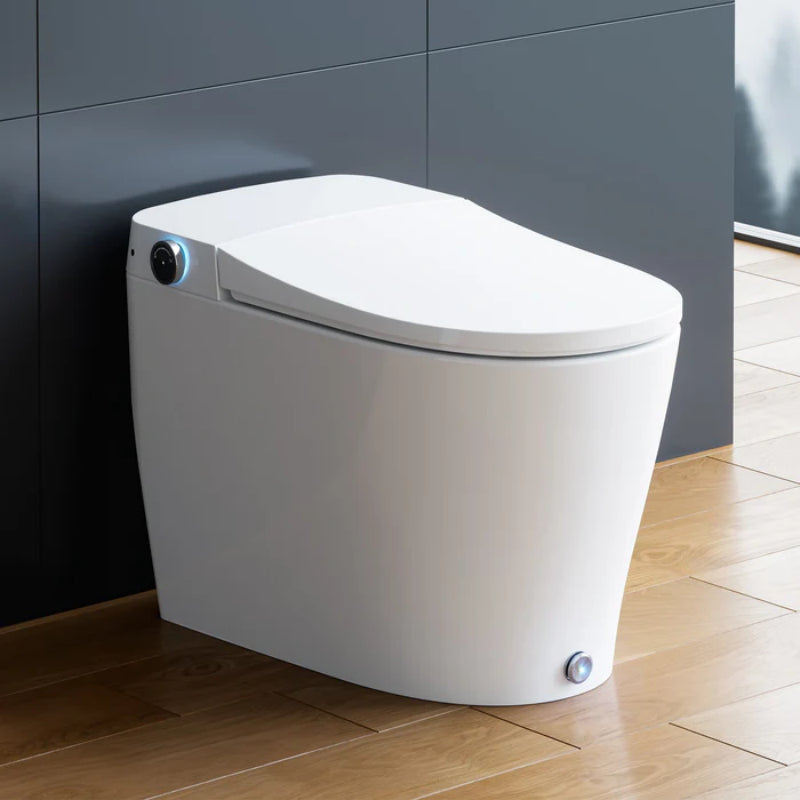
Smart toilets are designed with optimized flushing systems that precisely control water flow and timing. Many use pressure-assisted or advanced siphon designs, ensuring consistent performance even with low water usage. Their internal components are also engineered to work together efficiently, reducing the chances of weak or incomplete flushing compared to older or poorly maintained standard toilets.
5. How to clean mineral deposits from flush holes?
Mineral deposits can block rim holes and reduce flushing power. Based on household cleaning and disinfecting guidelines, the CDC says that using common household items like vinegar is a safe and effective method for breaking down buildup Use a descaling solution: pour a mixture of baking soda and vinegar into the overflow tube and let it sit for several hours to dissolve buildup. You can also gently clear visible holes with a small brush or wire. Regular cleaning may be needed in hard water areas to maintain consistent flush performance.
6. How to fix weak toilet flush without professional help?
Most homeowners can manage how to fix weak toilet flush on their own when the issue is limited to tank components or mineral buildup. Start by confirming the water level, inspecting the flapper, adjusting the float, and cleaning the rim holes. If these steps do not lead to a clear improvement—or if the toilet shows signs of a deeper blockage—it is time to call a plumber.
References


Leave a comment
This site is protected by hCaptcha and the hCaptcha Privacy Policy and Terms of Service apply.