
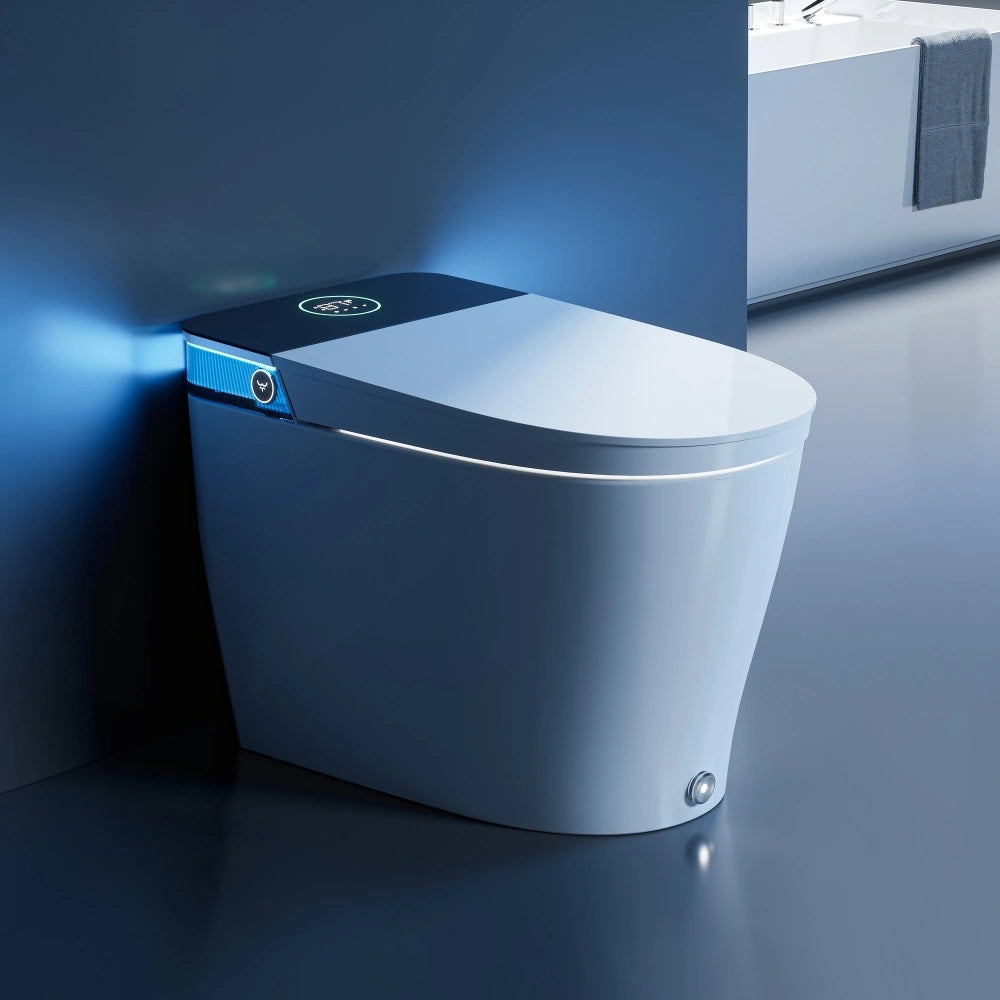
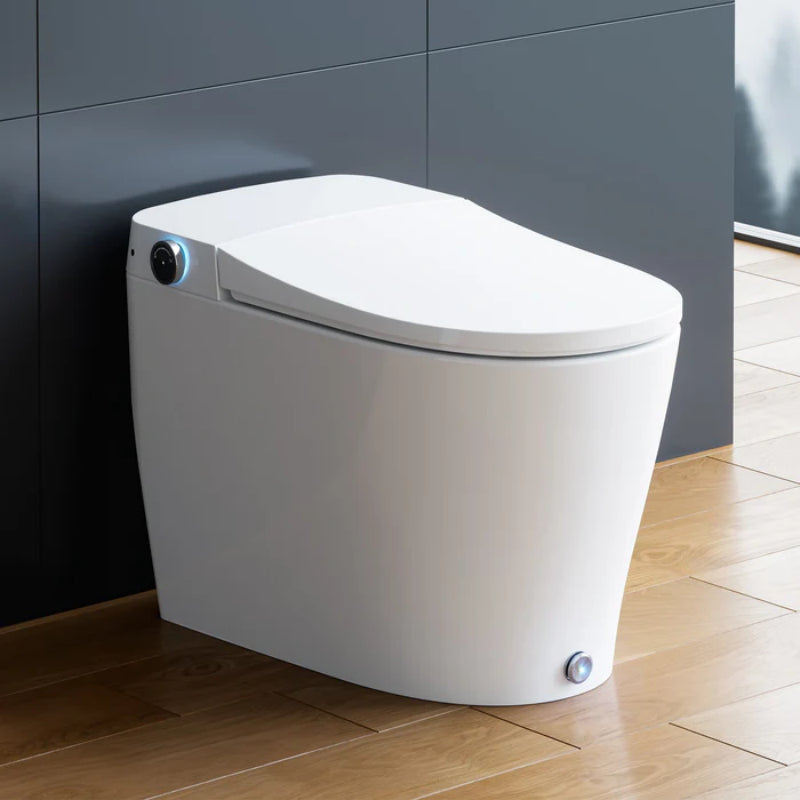
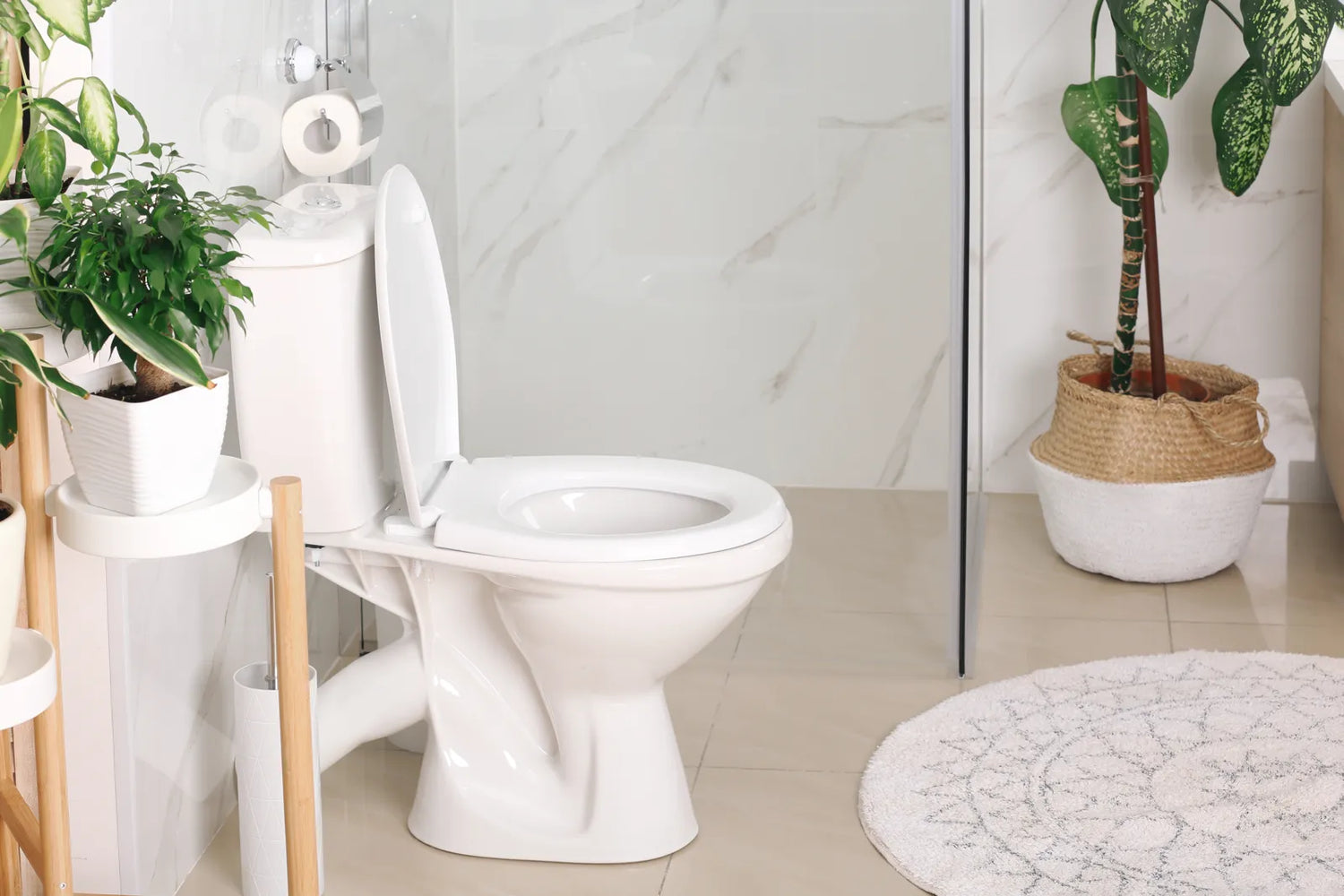
Dual flush toilet water savings are usually worth it when dual flush toilets feature are properly used in daily life, especially when people in the home actually use the half flush most of the time for liquid waste. It is often not worth it if habits will not change, your current toilet is already efficient, or the expected bill savings are very small.
Decision Snapshot: Is dual flush worth the upgrade?
Dual flush toilet water savings make sense if your home has frequent toilet use and people will reliably use the smaller flush for liquid waste. This usually works best in busy households where everyone understands the buttons and uses them correctly.
This is often unnecessary if your current toilet already uses little water, the bathroom gets light use, or people in the home will just press the full flush every time. In many homes, the feature sounds smarter than it ends up being.
Skip it if the numbers only work on paper, because there are often better way to save water through behavior changes or other efficiency upgrades. If your local water rates are low, your toilet use is modest, or installation costs are high, the savings may take a long time to pay back.
Baseline efficiency determines your real payoff
If your home already uses a modern low-GPF or water-efficient toilet, the potential savings from switching to a dual flush system will naturally be smaller, which directly affects overall cost-benefit value. For older high-volume toilets, however, the upgrade usually produces a more visible reduction in water use and long-term utility costs.
How much water does dual flush save?
Dual flush toilets feature a water-saving design, but the actual savings depend less on the technology itself and more on how it is used in everyday life. In practice, the difference between half flush and full flush usage is what ultimately determines how much water a household can actually reduce. This is why usage patterns matter just as much as the system’s design when evaluating real savings.
Half flush use drives savings
The main reason dual flush toilets save water is the dual flush technology, which lets you use less water for liquid waste and more only when needed.
A common dual flush setup uses about:
| Flush type | Typical water use |
| Half flush | 0.8–1.1 gallons |
| Full flush | 1.28–1.6 gallons |
| Older single flush | 1.6 gallons or more |
So if you are asking how much water does a dual flush toilet save, the honest answer is: it depends heavily on your habits.
In theory, a dual flush toilet can cut water use by a noticeable amount, especially compared with an older 1.6 gallon toilet or a much older high-volume model. Some promotional claims assume a household uses the half flush far more often than the full flush. Under that kind of pattern, annual savings can look impressive.
But that only happens when people actually use the smaller flush.

Real-world flushing behavior matters more than theory
Dual flush toilets save the most water when households consistently use the reduced flush for liquid waste and reserve the full flush for solids. Many published savings estimates assume an ideal and steady full-to-half flush ratio, but real household behavior often differs, with users unintentionally relying more on full flushes than expected, which can reduce actual savings in practice.
Full flush habits erase gains
This is the biggest expectation gap.
If people in your home always hit the larger button, or they are not sure which one to use, then dual flush toilet vs single flush water savings may be much smaller than advertised. In many homes, this ends up being ignored if the bathroom is used by kids, guests, renters, or anyone who does not want to think about flush choice.
That is why do dual flush toilets actually save water is not really a yes-or-no question. They can. But they do not save water by default. They save water only when behavior matches the design.
A practical way to think about dual flush toilet water usage per flush is this:
-
If most flushes are liquid waste and people use the half flush correctly, savings are real.
-
If many flushes still use the full flush, the gap narrows fast.
-
If the toilet needs a second flush often, some of the savings disappear.
This usually becomes useful when the household is consistent. It becomes less useful when the toilet is treated like a normal full-flush toilet with extra buttons.
Is the upgrade worth small bills?
Many homeowners ask, is a dual flush toilet worth the upgrade if the water bill is already low.
Often, no.
Water savings do not always turn into meaningful money savings. Water and sewer rates vary a lot by area. In some places, reducing toilet water use helps the bill enough to notice. In other places, the yearly savings may feel too small to justify a replacement or retrofit.
If you want to calculate ROI of a dual flush toilet, use simple math:
-
Estimate daily flushes in your home.
-
Estimate how many would be half flushes.
-
Compare your current gallons per flush to the dual flush average.
-
Multiply annual gallons saved by your local water and sewer cost.
A rough decision test:
-
If your home has high toilet use and higher utility rates, ROI can be reasonable.
-
If your home has low use or low rates, payback may be slow.
-
If you are replacing a toilet anyway, the water savings matter more.
-
If you are changing toilets only to save water, the financial case may be weaker than expected.
This is where how dual flush toilets reduce water bills gets oversold. The effect can be real, but not always dramatic.
When savings show up on your water bill
The return on investment depends heavily on local water and sewer rates and how much water your current toilet already uses. As a simple calibration, large savings typically become noticeable when you are reducing thousands of gallons (or several cubic meters) per year, while in low-consumption households the impact may only translate into very small monthly bill differences even if efficiency improves. In regions with low per-unit water pricing, the financial payback can therefore feel slow despite measurable water reduction.
Daily use trade-offs: dual flush toilet water savings
Dual flush toilets introduce a small but consistent decision into everyday bathroom use. While the idea is simple, the need to choose between two buttons can change how intuitive the experience feels, especially in shared or high-traffic spaces. This makes daily habits and user behavior just as important as the design itself when assessing how well the system performs in real life.
Buttons add a learning curve
A dual flush toilet is not hard to use and is usually operated through a button or lever, but it does require users to make a small decision every time. That sounds minor until the toilet is shared by many people.
This can be annoying when:
-
the buttons are not clearly marked
-
users forget which side is which
-
guests press whatever looks larger
-
children use the full flush every time
A standard toilet is almost automatic. A dual flush toilet asks for user attention. If that sounds trivial, it is — until nobody follows the system.
In many homes, the feature works well in a primary bathroom used by the same adults every day. It works less well in guest bathrooms or busy shared spaces where habits are inconsistent.

Liquid and solid flush choice matters
The whole point of a dual flush toilet for liquid waste vs solid waste is choice. But that also means performance depends on good judgment.
Some people use the half flush for nearly everything to maximize savings. That can backfire if waste does not clear fully, causing a second flush. Others get tired of guessing and default to the full flush to avoid any chance of a repeat.
That is why dual flush toilet gallons per flush comparison only tells part of the story. The lower gallon number matters only if it clears the bowl properly the first time.
If your home values simple, predictable use over small savings, a dual flush setup may feel like one more thing to manage.
What happens if guests flush wrong?
Usually, nothing serious. They just use more water than necessary.
But in real homes, guest behavior matters because guests do not read instructions. If the toilet is in a powder room or family bath used by visitors, the water-saving feature may get missed often. That does not make the toilet bad. It just means your real-world savings may be less than your expected savings.
If your household depends on everyone using the toilet “correctly” to make the numbers work, the feature may not be as reliable as it looks on paper.
Fit and installation realities
The real-world savings from installing a dual flush toilet are not determined by water efficiency alone, but also by how well it fits your existing setup and how smoothly it can be installed. In many cases, the condition and age of your current toilet, along with installation complexity, can significantly influence whether the upgrade feels worthwhile or only marginally beneficial.
Older toilets may limit payoff
If you are switching to a dual flush toilet to save water, think about what you already have.
If your current toilet is very old and uses a lot of water, the savings can be meaningful. If it already uses around 1.28 gallons per flush, then 1.28 gpf vs 1.6 gpf dual flush toilet savings may be modest, especially if your new toilet’s full flush is not much lower than what you already use.
This is one reason some homeowners feel underwhelmed after upgrading. They expected a major drop, but they were already starting from a fairly efficient toilet.
Retrofit costs can outweigh savings
Some people consider retrofit kits instead of full replacement. That can lower upfront cost, but it can also add uncertainty.
A retrofit only makes sense if:
-
the existing toilet is in good condition
-
the conversion works reliably
-
the savings justify the effort
If installation is awkward, parts are hard to fit, or flushing performance becomes less dependable, the water savings may not be worth the hassle.
This is often unnecessary if the old toilet is nearing the end of its useful life anyway. In that case, forcing a conversion to chase a small water reduction may create more frustration than benefit.

Maintenance risks to expect
Dual flush toilets can reduce water use, but their long-term performance depends heavily on maintenance. Because they rely on more components and tighter mechanisms than simpler systems, small issues like leaks or wear can gradually reduce or even cancel out expected savings if they are not addressed in time.
Leaks can cancel water savings
A leaking toilet can wipe out the whole benefit of a lower flush volume. Even a small ongoing leak wastes water day and night.
This is one of the biggest missing parts in many advantages and disadvantages of dual flush toilets discussions. Saving a little on each flush does not help much if the system develops a leak and nobody notices quickly.
So if you want water savings, maintenance matters as much as design.

Dual systems mean more parts
A dual flush setup often has more moving parts than a basic single flush setup. More parts do not always mean poor reliability, but they do create more points where adjustment or replacement may be needed.
That is why dual flush toilet maintenance and repair issues should be part of the decision, not an afterthought.
Possible issues include:
| Issue | Why it matters |
| Sticking buttons | Can make flushing awkward or incomplete |
| Worn seals | May cause silent leaks |
| Misadjusted mechanism | Half or full flush may not work right |
| Hard-to-find parts | Repairs can be less convenient |
This can be annoying when a simple toilet problem turns into a model-specific parts search.
What happens when buttons fail?
Usually, the toilet either becomes harder to flush or one flush mode stops working correctly. Sometimes the issue is minor and fixable. The bigger frustration is that a button system can feel less obvious to troubleshoot than a simple handle.
This does not mean dual flush toilets are fragile. It means common dual flush toilet problems and fixes may be slightly less familiar to homeowners and some repair techs than standard flush systems.
If you prefer the simplest possible toilet to own for many years, this is a fair reason to hesitate.
When dual flush is overkill
Not every home benefits equally from a dual flush toilet, and in some cases the potential savings are simply too small to justify the change. When usage is low or the existing toilet is already efficient, the real-world impact often shrinks to the point where the upgrade becomes more about preference than measurable benefit.
Low-use homes save less
If one or two people live in the home and spend much of the day away, toilet use may be too low to produce meaningful savings. In that case, a dual flush feature can be technically efficient but financially minor.
This is often where buyers feel disappointed. They did not make a wrong choice. They just expected a larger impact than their usage could produce.
Efficient toilets narrow the gap
If your current toilet is already efficient, the difference may be small enough to ignore. A lot of the dramatic savings claims compare dual flush systems to older, less efficient toilets, not to newer low-flow models.
So dual flush toilet vs single flush water savings may look large in marketing but much smaller in a modern bathroom.
Skip it if ROI stays weak
If you run the numbers and the annual savings are small, based on EPA WaterSense efficiency benchmarks, even small reductions in per-flush water use may not translate into meaningful financial savings in low-use or low-rate households.
A dual flush toilet is a practical fit when it lines up with your habits, utility costs, and use level. It is not automatically a smart upgrade just because it sounds more efficient.
Before You Choose
-
Check your current toilet’s gallons per flush before assuming the savings will be large.
-
Estimate whether people in your home will really use the half flush consistently.
-
Look at your local water and sewer rates, not generic national savings claims.
-
Consider how often the bathroom is used by guests, kids, or anyone likely to ignore the buttons.
-
Factor in repair simplicity and part availability, not just water use.
-
If replacing a working efficient toilet only for savings, make sure the payback is actually worth it.
FAQs
1. Does a dual flush toilet really save money?
Yes, it really does save money, especially when you understand dual flush toilet water savings in everyday use. By separating light and heavy flush options, it reduces unnecessary water waste. Over time, this leads to lower water bills and noticeable long-term savings, particularly in busy households where the toilet is used frequently.
2. How does the dual flush mechanism work?
The system is quite simple and practical. Unlike single flush vs dual flush efficiency comparisons where traditional toilets use a fixed amount of water, dual flush models let you choose between two water volumes. One button releases a smaller flush, and the other uses a full tank. This smart design improves control over water usage without sacrificing performance.
3. Can a dual flush toilet flush heavy waste?
Yes, it absolutely can. The full flush mode is designed for solid waste and uses a higher water volume to ensure proper clearance. When looking at GPF for dual flush toilets, the higher flush setting typically provides enough force to handle heavy loads efficiently, so performance remains reliable.
4. Average water savings per year with dual flush?
On average, households can save thousands of liters of water annually. This directly contributes to reducing utility bills with smart toilets, especially in families with frequent usage. Depending on usage habits, the yearly savings can become quite significant and help offset initial installation costs.
5. Are dual flush toilets more prone to clogs?
Not necessarily. Most clog issues come from improper usage rather than design. While some users worry about dual flush toilet problems and fixes, modern systems are engineered to handle waste efficiently. Choosing the correct flush option is key to avoiding blockages.
6. Do dual flush toilets leak more often?
No, they don’t. Leakage usually depends on internal seals or installation quality rather than the flushing system itself. With proper setup, they perform just as reliably as traditional models. Regular inspection helps maintain long-term efficiency.
7. Why choose HOROW dual-flush toilets for an eco-home?
HOROW dual-flush toilets are a strong choice for eco-focused homes because they balance performance with water efficiency. They help users track long-term calculating ROI on water-efficient toilets, making them a practical investment. The design supports sustainability goals while maintaining everyday comfort and reliability.
8. Do dual-flush toilets require more maintenance?
Not really. Maintenance needs are similar to standard toilets. Occasional checks of the flush buttons and internal valves are enough to keep the system running smoothly. As long as basic care is followed, performance remains stable without extra effort.
References


Leave a comment
This site is protected by hCaptcha and the hCaptcha Privacy Policy and Terms of Service apply.