



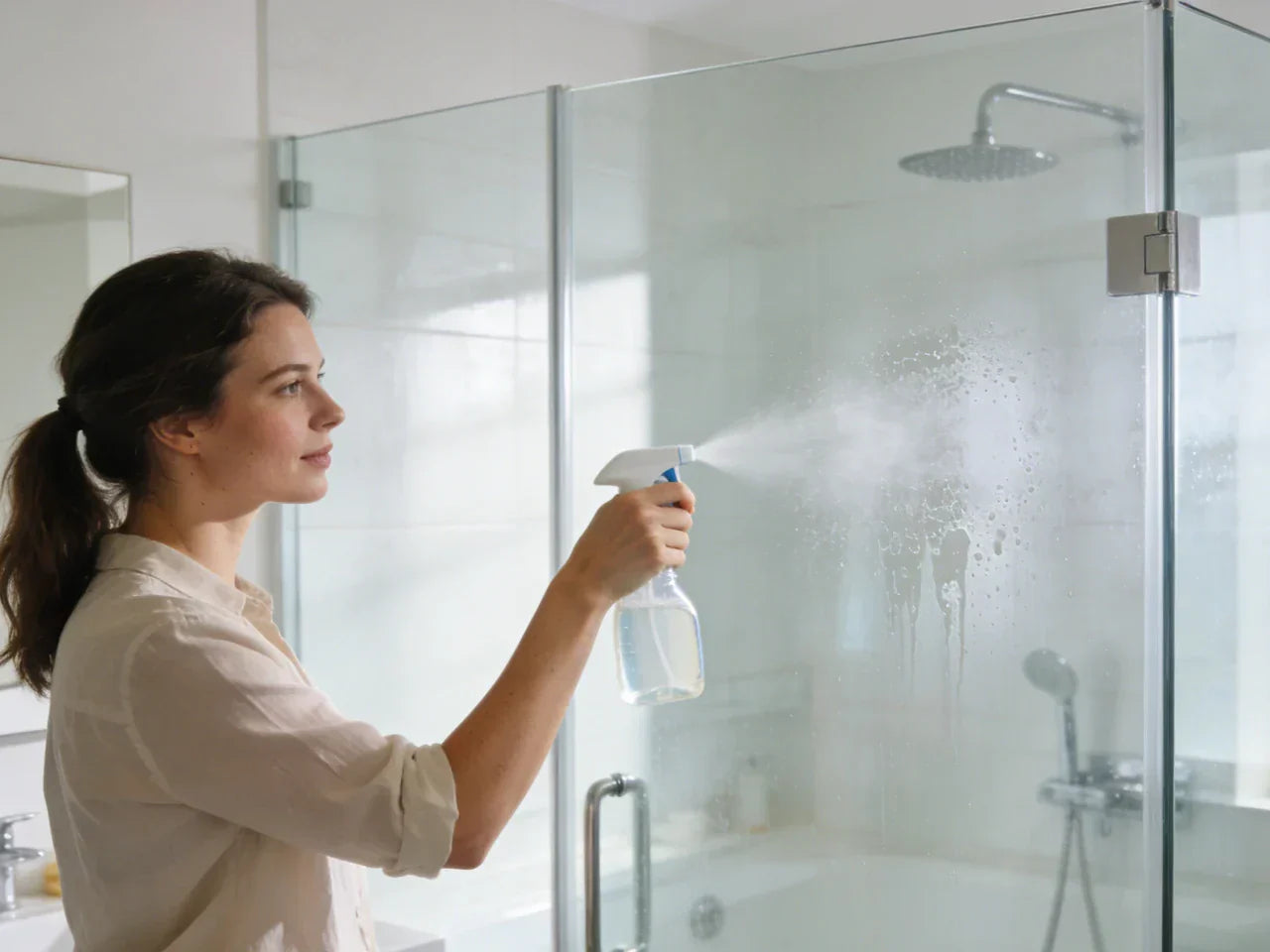
If you feel like your glass shower doors never stay clear, you’re not imagining it. Glass showers face two common problems at once: hard water stains from minerals in the water and greasy soap scum from soap and body oils. That’s why the most effective way to clean glass shower doors is to match the mess to the right cleaner and method.
The simple trick for cleaning your glass shower doors is this: a mild acid dissolves hard water stains, a surfactant (like dish soap) lifts soap scum, and drying the shower door after each use prevents new spots. Combining these three steps stops repetitive deep cleaning and keeps your glass shower doors sparkling longer.
This guide on how to clean glass shower doors starts with the quickest method you can do today, then covers tougher buildup, differences between framed and frameless shower doors, and tips for cleaning tracks, hardware, and corners. You’ll also learn common mistakes to avoid, how to spot true etching versus removable deposits, and how often to clean depending on hard water conditions.
Fastest Way to Clean Glass Shower Doors
If you want the best way to clean shower glass quickly, use a warm distilled white vinegar and dish soap spray, give it time to work, scrub gently, then rinse and dry completely. The drying step is what prevents streaks and water spots. This simple natural cleaning method is effective for tackling soap scum and mineral deposits without harsh chemicals.
Step-by-Step Guide to Cleaning Glass Shower Doors (10–20 min)
This is a reliable “reset” method for most showers. It works for light haze, soap scum, and early hard-water spots. By following this guide, you’ll learn how to clean shower glass, remove stains efficiently, and maintain sparkling doors with minimal effort.
-
Ventilate first. Turn on the fan or open a window. If your bathroom holds smells, this matters.
-
Rinse the glass with warm water. This removes loose grit so you don’t rub it against the glass.
-
Spray your cleaner from top to bottom. Start high so the cleaner runs down and covers everything.
-
Let it sit (dwell) 5–15 minutes. Use the longer time if you see white spots or thick scum.
-
Scrub gently with a non-scratch sponge or microfiber. Keep the surface wet while you scrub.
-
Rinse very well with warm water. Any leftover cleaner can leave streaks.
-
Squeegee top-to-bottom, then buff dry with microfiber. This is the easiest way to get a sparkling clean finish.
If you only remember one thing: dry the glass. Water left on the door becomes new mineral spots when it evaporates, which is why every shower should end with a quick drying routine.
DIY Glass Shower Door Cleaner: Vinegar + Dish Soap Recipe
A simple homemade shower door cleaner can handle most buildup.
A good starting mix is:
-
Equal parts warm white vinegar and water, plus
-
A small squeeze of dish soap (you want slip, not a foam party)
If your glass is very cloudy from minerals, you can try equal parts of white vinegar and dish soap instead of adding water, but start gentle if you have metal finishes nearby.
Use a spray bottle that gives a strong mist, not a skinny stream. A wide mist coats the door evenly, which helps the cleaner stay wet during dwell time. Warm vinegar also works faster than cold vinegar because warmth speeds up dissolving.
A common question is: Does dish soap and vinegar clean glass shower doors? Yes. Dish soap lifts the oily part of soap scum, and vinegar loosens mineral deposits. Together, they cover the two main problems most people are fighting when they want to clean the shower effectively.
Visual: 60-Second Cleaning Diagram
Step-by-Step Cleaning Process for Glass Shower Doors:
-
Spray: Apply your cleaner from top to bottom, ensuring full coverage of the glass surface.
-
Dwell: Let the cleaner sit for 5–15 minutes while keeping the surface wet. This allows the solution to break down soap scum and mineral deposits.
-
Scrub: Gently scrub using a non-scratch sponge or microfiber cloth, keeping the glass wet during scrubbing.
-
Rinse: Rinse thoroughly with warm water, making sure to remove all cleaner residue to avoid streaks. Rinse longer than you think is necessary.
-
Squeegee: Use a squeegee from top to bottom to remove water and prevent spots from forming.
-
Buff Dry: Finish by buffing the glass with a microfiber cloth to ensure a streak-free, sparkling finish.
What is the best way to clean shower glass without streaks?
For clean glass shower doors without streaks, the trick is not a special wipe pattern. It’s this: rinse fully, then remove all water with a squeegee, and do a quick microfiber buff. Most streaks are either leftover cleaning agent that didn’t rinse off or minerals left behind after air-drying.
If you’ve ever “cleaned” the door and it looked worse, that’s usually why. By following this step-by-step method and using a natural cleaning mix of distilled white vinegar and dish soap, you can clean a shower thoroughly while preventing streaks and protecting your glass.
How to Identify Soap Scum vs Hard Water Stains on Glass Shower Doors
Before you start deep cleaning your glass shower doors effectively, take ten seconds to figure out what you’re dealing with. Otherwise, you might scrub hard, get nowhere, and scratch the glass or wear down any protective coating.
Soap Scum, Hard Water Stains & Haze: Finger Test for Glass Shower Doors
If the glass looks cloudy, ask yourself: is it a greasy film or a crusty deposit?
Try this quick test after a warm rinse:
-
Run a finger across the glass.
-
If it feels slimy or waxy, you’re dealing with soap scum (soap + oils + minerals).
-
If it feels rough or gritty, you’re dealing with mineral deposits (hard-water scale).
-
If it feels mostly smooth but still looks foggy even after cleaning, it may be etching (tiny damage to the surface) instead of dirt.
Soap scum often collects where water hits and drips slowly, like around handles and the lower half of the door. Hard water stains show up as dotted spots, white lines, or a crust near the bottom edge where water sits.
Glass Shower Door Cleaning Decision Tree: Film, Scum, Scale, Etching
Quick Decision Guide: How to Choose the Best Method to Clean Glass Shower Doors
-
Check if the surface wipes off easily: Wipe the glass with a wet microfiber cloth. If it comes off easily: You are dealing with a light film (Tier 1). Use mild dish soap with water, then dry the glass. If it does not come off easily: Move to the next step.
-
Check for white spots, lines, or roughness: Feel the glass after wiping. If you see white spots or feel roughness: This indicates hard water deposits (Tier 2+). Apply vinegar or citric acid, let it dwell, and then scrub gently. If not: Proceed to the next step.
-
Check for thick, greasy, or smeary residue: If present: This is soap scum (Tier 2). Use a vinegar + dish soap solution, allow it to dwell, and scrub gently. If not: Go to the next step.
-
Check for persistent cloudiness after two cleanings: If cloudiness remains: The glass likely has etching (Tier 3). Polishing may help slightly, but professional treatment might be needed.
Hard Water Clues & Cleaning Frequency Tips for Glass Shower Doors
Hard water contains dissolved calcium and magnesium. When water dries on your glass, minerals stay behind, meaning you’ll need more regular cleaning of your shower to keep it sparkling.
You might live in an area with hard water if:
-
Faucets and shower heads get crusty buildup.
-
Your shower door looks spotted soon after you clean your shower.
-
Soap doesn’t lather well, and you use more detergent for cleaning clothes and maintaining plumbing.
Don’t blame your cleaner. Hard water can turn a “weekly cleaning” routine into a daily chore unless you start cleaning with preventive measures, like using a squeegee, drying after every shower, or a water softener.

Proven Methods to Clean Glass Shower Doors (Tier 1–2)
Most people don’t need ten different products. They need the right method for their level of buildup, plus a routine they can repeat without dread.
Method A: Vinegar + Dish Soap Cleaner for Glass Shower Doors
This is one of the best ways to clean a shower and target both soap scum and mineral buildup. The mild acid in vinegar removes minerals, while the surfactant (dish soap) breaks down grease.
Steps:
-
Rinse the glass with warm water. This removes grit that could scratch the glass.
-
Spray a mixture of vinegar and dish soap from top to bottom, covering all areas, including corners where scum hides. Mix equal parts white vinegar and water, plus a small squeeze of dish soap.
-
Let it dwell: 3–5 minutes for light haze, 10–15 minutes for visible hard water stains. Vinegar only works while wet, so keep it moist.
-
Scrub gently with a non-scratch sponge. Avoid force; let the cleaning power do the work.
-
Rinse thoroughly, then squeegee dry. This simple shower cleaning routine keeps your glass shower doors sparkling clean.
Method B: Citric Acid & Mild Detergent for Glass Shower Doors
If you dislike vinegar’s smell, citric acid is a natural alternative. Mix citric acid powder with warm water and a bit of dish soap. Lemon juice can work in a pinch. Always rinse metal parts and nearby stone to avoid damage.
Method C: Commercial Glass Shower Door Cleaner Options: Limescale & No-Scrub Sprays
For heavy buildup or extremely hard water, a commercial shower door cleaner or limescale remover may be needed. Look for products labeled “safe for glass shower doors” and non-abrasive. Weekly no-scrub sprays can help maintain the glass but work best after a thorough hands-on cleaning.
Method comparison table (time, cost, risk to coatings/metal, best for hard water spots)
| Method | Typical time | Typical cost | Risk to coatings/metal | Best for |
| Vinegar + dish soap | 10–20 min | Low | Low–medium (rinse metal, avoid stone) | Soap scum + early mineral deposits |
| Citric acid + mild detergent | 10–20 min | Low–medium | Low–medium (same cautions as acids) | Hard water stains with less odor |
| Glass-safe limescale remover | 5–20 min | Medium | Medium (follow label; test first) | Heavy mineral scale and thick buildup |
| Mild dish soap + water | 5–10 min | Low | Very low | Light film; weekly upkeep |
Spot Treatment for Stubborn Hard Water & Soap Scum on Glass Shower Doors
You’ve sprayed, waited, scrubbed, and the door still looks dotted or cloudy. This is where you shift from “whole door cleaning” to “spot strategy.”

Baking Soda & Vinegar Paste for Stubborn Glass Shower Door Stains
Baking soda is useful for stubborn stains that won’t budge with normal glass cleaner sprays—especially along the bottom edge of the door where water pools and minerals collect. The goal here is controlled, gentle abrasion, not aggressive scrubbing.
Make a thick paste with baking soda and a small amount of water. Apply it only to the affected areas onto the glass, focusing on visible mineral crust. Then lightly mist the area using water in a spray bottle filled with vinegar or a citric acid solution. You’ll see fizzing, which helps loosen hard water deposits.
Now the key rule: scrub gently with a soft sponge while the paste is still wet. Do not grind it in. Even mild abrasion can create micro-scratches that make future soap scum stick faster. Rinse immediately and dry the glass.
If you’re unsure, test a small area first. That quick test can help you get your glass shower clean without accidentally damaging the surface.
Dwell time strategy: when to reapply vs. when scrubbing becomes risky
When hard water stains from glass don’t come off, many people push harder with their sponge. That’s usually the wrong move.
A better approach is to reapply cleaner and extend dwell time. Acid needs contact time to dissolve minerals. If the surface dries, the reaction slows down a lot. Re-mist every few minutes to keep it wet.
If you’ve done two cycles and the stain barely changes, pause. You may be dealing with long-term buildup that’s acting like cement, or you may be seeing etching. At that point, heavy scrubbing can damage the door or wear down a protective coating.
Tool selection: what to use (and what to avoid)
Choosing what to use to clean glass shower doors matters just as much as the cleaner itself.
Safe tools include:
-
Microfiber cloths
-
Non-scratch sponges
-
Soft cleaning pads
-
A soft toothbrush for corners and edges
Avoid steel wool, abrasive pads, or gritty powders. Even though glass feels hard, it can still scratch. Those scratches make soap scum cling more easily and make clean shower glass regularly much harder over time—especially on coated glass.
How do I remove hard water stains from glass shower doors?
To remove hard water stains from glass shower doors, use a mild acid cleaner (vinegar or citric acid), keep it wet for 10–15 minutes, then scrub gently and rinse well. Dry immediately. If stains remain after two full cycles, switch to spot treatment (baking soda paste + light acid mist) or a glass-safe limescale remover, and stop short of aggressive scrubbing that could cause scratches or wear a coating.
Clean Shower Door Tracks, Seals & Hardware Without Damage
You can have a clean-looking glass door and still have a shower that smells musty or feels grimy. That’s often because the worst buildup is not on the main glass panel. It’s in the tracks, seals, and corners.
Sliding Door Tracks: “Plug → Soak → Scrub → Rinse → Dry” Workflow
Sliding door tracks trap soap scum, hair, and minerals. If left wet, they can also grow mildew.
A simple, effective method:
-
Vacuum or wipe out loose debris so you’re not spreading grime.
-
Plug drain holes with paper towel so liquid can soak.
-
Fill the track with warm vinegar or a vinegar-water mix and let it sit for 20–30 minutes.
-
Scrub gently with a soft brush, reaching corners.
-
Remove plugs, rinse thoroughly, and dry completely.
Once this deep clean is done, regular cleaning becomes much easier.
Hinges, handles, and metal finishes: prevent corrosion/pitting while descaling
Metal parts can pit or discolor if exposed to acid for too long. When using glass shower doors with vinegar, avoid soaking hardware directly.
A safer approach is spraying your cleaner onto a cloth and wiping around metal parts instead of spraying them directly. If acid touches metal, rinse and dry it promptly. This small habit helps protect finishes while still allowing effective shower cleaning.
Mold-prone edges: silicone seals, corners, and bottom sweeps
Check silicone seams and the bottom sweep closely. Dark specks usually indicate mildew. Peeling or gaps signal moisture issues, not just dirt.
Small areas can be cleaned with a mold-specific household cleaner, using gloves and ventilation. If mold keeps returning, the issue may be behind the wall, and professional help may be needed.
Glass Shower Door Cleaning Tips: Prevent Hard Water & Soap Scum
If you’re tired of repeating the same hard scrub, prevention is the part that gives the biggest payoff. The best cleaner for glass shower doors is only half the story—what really matters is maintaining clean glass between deep cleans. The best routine isn’t the one that sounds perfect. It’s the one you’ll actually do on a normal Tuesday night.

Daily (30–60 Seconds): Squeegee + Microfiber Drying Habit
If you can do one habit, do this: use a squeegee after the last shower of the day. Pull water from the top down in straight lines. Then do a quick microfiber wipe on the bottom edge and around the handle where drips collect.
This one minute habit can cut your deep cleaning time in half because it stops new hard water stains from glass shower doors from forming.
If you hate squeegees, keep a microfiber towel nearby and dry the glass instead. The point is to remove water before it evaporates.
Also, leave the door open for a while after showering. Airflow helps the shower dry faster, which slows mildew growth.
Weekly (5–10 Minutes): Quick Maintenance Clean for Shower Glass & Hardware
Once a week, spray a mild cleaning solution (dish soap + water works) and wipe the glass, then rinse and dry. This is also a good moment to wipe the corners, handles, and the bottom sweep.
If you live in a hard-water area, you may need a weekly acid-based wipe-down too. Think of it like brushing teeth: small, regular effort prevents the big painful job later.
Monthly or Quarterly: Tracks, Seals & Water-Repellent Maintenance
Every month or two, clean the tracks and inspect seals. Look for any spots where water is escaping or sitting.
If you use a water-repellent treatment, follow its directions and reapply on schedule. These treatments can help keep glass shower doors clean, but they still work best when you keep up with drying and light cleaning.
A Maintenance Schedule You’ll Actually Stick To
Instead of trying to be perfect, pick a “trigger” you already do. For example, you might do a weekly wipe-down when you change towels, or do track cleaning at the start of each season. A routine that fits your life beats a fancy routine you forget.
Protect coatings, surfaces, and indoor air quality (do-no-harm rules)
Cleaning should not turn into scratched glass, damaged stone, or irritated lungs. A few safety rules keep you out of trouble.
Chemical Safety: Never Mix Vinegar and Bleach
This is not a small warning. Mixing acids like vinegar with bleach can release dangerous gas. If you use bleach-based products for mildew, rinse the area very well and wait before using an acid cleaner.
Ventilate the bathroom, take breaks if smells bother you, and wear gloves if cleaners dry out your skin.
Surface Compatibility: Stone, Grout & Nearby Fixtures
Acids can damage natural stone like marble and travertine. If your shower has stone tile or stone trim, be careful with vinegar, citric acid, and many limescale removers. A safer option for stone areas is a pH-neutral cleaner meant for stone, and you can keep acids tightly on the glass only, applied with a cloth.
A safer option is applying glass shower doors with vinegar using a cloth instead of spraying freely. This keeps acid exactly where it’s needed—on the glass—and helps ensure your shower surfaces stay intact.
Coated vs. Uncoated Shower Glass: What to Use Safely
Some glass shower doors have a protective coating that helps water bead and slide off. If your door sheets water evenly and sticks instead of beading, it may be uncoated, or the coating may be worn.
To protect coatings, stick with mild, non-abrasive tools and avoid harsh scrubbing. Even if a coating makes cleaning easier, it’s not indestructible.
When Glass Shower Doors Still Look Cloudy: Etching vs. Removable Deposits
Sometimes people do everything “right” and the glass still looks foggy. That’s when you need to ask a hard question: is it still dirty, or is the surface damaged?
How to Tell Etching from Mineral Buildup on Glass Shower Doors
Mineral deposits often feel rough and can improve noticeably after an acid cleaner and a good rinse.
Etching is different. Etching is tiny damage on the glass surface. It can happen when minerals sit on glass for a long time, especially with heat and repeated drying. Etching often looks like a cloudy patch that stays even after you clean shower doors carefully. The glass may feel slightly uneven or “grabby” when you run your fingers over it.
If you clean twice and the look barely changes, that’s a clue you’re not dealing with removable scum anymore.
DIY Polishing for Etched Shower Glass (Limited Use Only)
Some people try glass polishing compounds for mild etching. These products can improve small areas, but they can also create uneven shine if used poorly. If you try polishing, treat it like a careful test, not a full-door project on day one.
Pick a small corner, follow the product directions, and check results in different light. If it starts to look patchy, stop. You may be trading “cloudy” for “uneven.”
When to Call a Professional: Restoration, Sealing, or Replacement
If the glass is etched across a large area, professional restoration may be the better path. Pros can often remove deeper mineral scale and reduce the look of etching more evenly than a DIY approach.
Replacement makes sense when the door is older, the damage is widespread, or the cost of restoration is close to the cost of new glass. If you’re renting, it’s also worth checking what your lease expects before you spend money trying to “fix” permanent damage.
Can etched shower glass be restored, or do I need replacement?
Mild etching can sometimes be improved, but deep etching is permanent damage and may not fully disappear. If cleaning and descaling don’t change the cloudiness, restoration may help the look, but replacement is sometimes the only way to get “like new” clarity again.
Cheat sheet and recap (actionable takeaways)
You don’t need to memorize everything. Use this as a quick “what to do next” guide.
Cheat sheet table: problem → best method → tools → dwell time → prevention step
| Problem you see | Best method | Tools | Dwell time | Prevention that helps most |
| Light haze after showers | Dish soap + warm water | Microfiber | 1–2 min | Squeegee + quick buff |
| Greasy soap scum | Vinegar + dish soap | Non-scratch sponge | 5–10 min | Switch from bar soap if it leaves heavy film; dry the glass |
| Dotted hard water stains | Vinegar or citric acid | Microfiber or soft pad | 10–15 min | Squeegee after each shower; consider a water softener |
| Thick crust near bottom edge | Baking soda paste + light acid mist | Soft sponge | 3–5 min | Dry bottom sweep; don’t let water sit |
| Grimy sliding door tracks | Soak with vinegar, scrub, rinse | Soft brush | 20–30 min | Monthly track wipe + drying |
| Cloudy look that won’t change | Likely etching | Spot-test polish or call pro | N/A | Prevention is key once restored/replaced |
Final 3-step recap
To keep glass showers clear without living in the bathroom:
-
Dissolve minerals with a mild acid (vinegar or citric acid).
-
Cut soap scum with a surfactant (dish soap).
-
Prevent spots by removing water (squeegee and dry the glass).
When these three steps work together, you don’t need extreme scrubbing, and your shower stays sparkling clean longer.

FAQs
1. What is the best thing to use to clean glass shower doors?
For most homes, the best thing to use to clean glass shower doors is something simple you probably already have: warm white vinegar and a little dish soap. This combination works because it tackles the two main problems at the same time. Vinegar helps dissolve hard water minerals, while dish soap cuts through greasy soap scum and body oils. When used together, they’re often more effective than many store-bought cleaners.
The key is how you use it. Spray the solution evenly, let it sit long enough to work, rinse thoroughly, and—most importantly—dry the glass with a squeegee or microfiber cloth. That drying step prevents new water spots from forming. For regular cleaning, this method is gentle, affordable, and safe for most glass shower doors, making it a reliable “best” option for everyday shower maintenance.
2. Does dish soap and vinegar clean glass shower doors?
Yes, dish soap and vinegar absolutely clean glass shower doors—and they do it for different reasons. Dish soap is designed to break down grease, which makes it great for removing soap scum made from soap residue, body oils, and shampoo buildup. Vinegar, on the other hand, is mildly acidic, which helps dissolve hard water stains caused by mineral deposits.
To get good results, timing matters. After spraying the mixture onto the glass, let it sit for about 5–15 minutes so it has time to work. If it dries too fast, lightly re-spray. Then scrub gently, rinse very well, and dry the glass completely. Many people skip the drying step and wonder why streaks come back. Used correctly, vinegar and dish soap are one of the most effective and budget-friendly ways to clean glass shower doors.
3. Does a melamine foam “magic eraser” clean glass shower doors?
A melamine foam, often called a “magic eraser,” can remove some marks from glass shower doors, but it should be used with caution. While it can help with light buildup or surface haze, it works through very fine abrasion. That means it’s gently sanding the surface, not dissolving buildup.
On uncoated glass, light use may be okay for spot cleaning. On coated or treated shower glass, however, a magic eraser can dull the finish or create uneven shine over time. If you decide to try one, always spot-test in a small corner first, keep the surface wet, and use very light pressure. Never scrub aggressively. For regular cleaning, non-abrasive methods like vinegar and dish soap are safer and more predictable.
4. How do you get hard water stains off shower glass?
To remove hard water stains from shower glass, you need a cleaner that can dissolve minerals—not just wipe the surface. Vinegar or citric acid works well because both are mild acids that break down calcium and magnesium deposits. Spray the cleaner onto the glass and keep it wet for about 10–15 minutes so it has time to work.
After dwelling, scrub gently with a non-scratch sponge or microfiber cloth, then rinse thoroughly. Dry the glass immediately to prevent new spots. For stubborn areas, especially along the bottom edge, you can use a baking soda paste as a targeted treatment, but only on the stained area and with light pressure. If stains don’t improve after two careful cleaning cycles, the glass may be etched rather than dirty.
5. What will take soap scum off glass shower doors?
Soap scum comes from a mix of soap, body oils, and minerals, so the best way to remove it is with a cleaner that handles grease and residue together. A vinegar-and-dish-soap spray works especially well because the dish soap loosens oily buildup while the vinegar helps break the bond between soap scum and the glass.
Let the cleaner sit long enough to work—usually 5–10 minutes—then scrub gently and rinse very well. Drying the glass is just as important as cleaning it. If you let water air-dry, leftover minerals can turn into new buildup. With regular cleaning and drying, soap scum becomes much easier to control and far less likely to return.
References




Leave a comment
This site is protected by hCaptcha and the hCaptcha Privacy Policy and Terms of Service apply.