
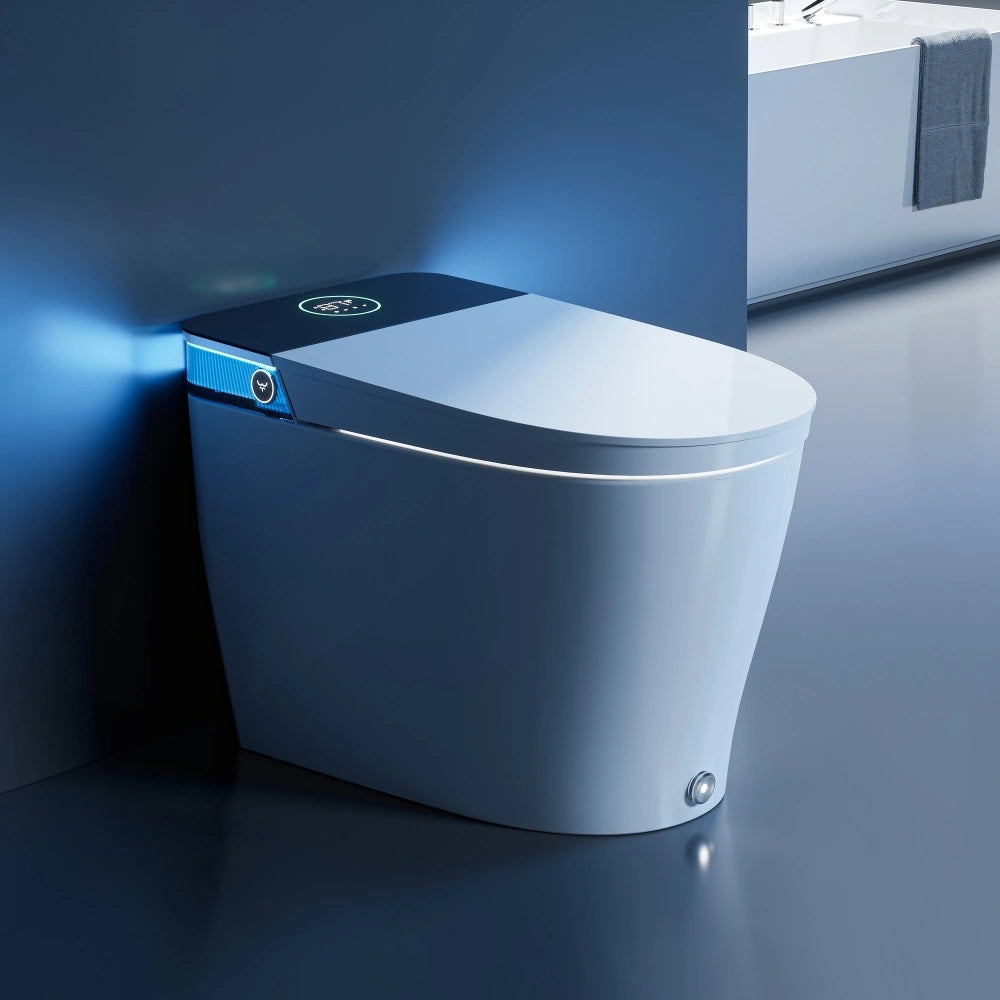
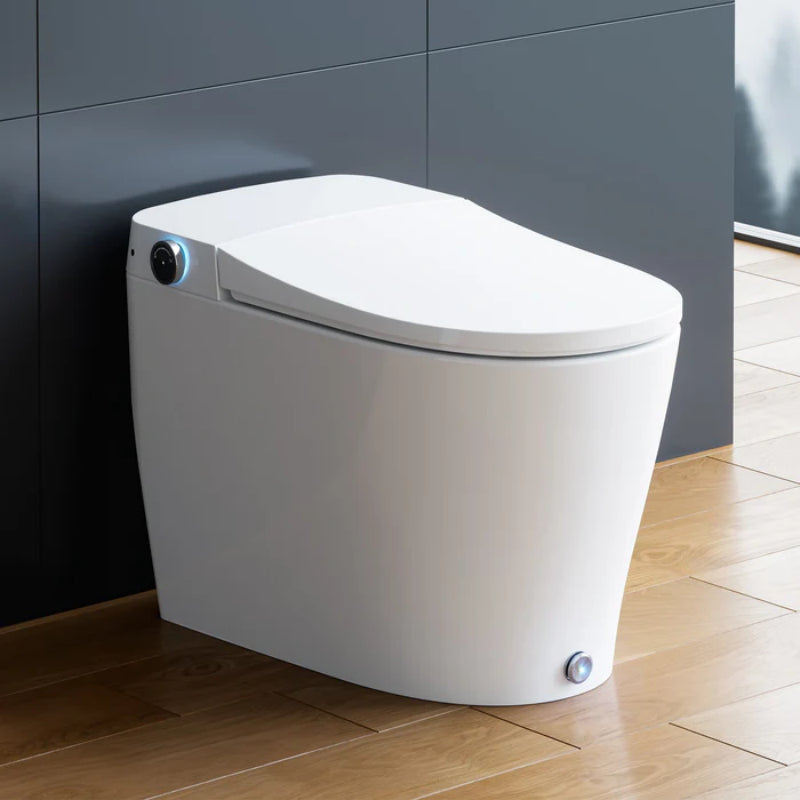

Yes, you can move with your smart toilet in some homes, but first explore the features of smart toilets and understand pros and cons of smart designs before planning relocation. But it only works well when the new bathroom matches the old one closely enough in rough-in, power, water supply, floor condition, and clearance.
Here’s where people usually run into trouble: they assume a smart toilet moves like a normal toilet. It does not. A regular toilet can often tolerate small floor issues, minor flange problems, and tighter spaces. A smart toilet usually has less tolerance for bad fit, weak power access, awkward cord routing, and low water pressure, highlighting key cons of smart toilets that come with advance features and sleek designs. That is why a move that looks simple on paper can turn into a plumber visit, an electrician visit, a failed seal, or a toilet that technically works but becomes annoying to live with.
If you are asking “can i move with my smart toilet,” use—whether you’re evaluating reliability, maintenance, or daily comfort like heated seats, the real question is not just whether it can be removed. The real question is whether the next bathroom will support it without extra work, hidden costs, or daily annoyances.
Can I Move My Smart Toilet?
Before you decide whether to relocate your smart toilet, it’s important to weigh key practical factors that determine if the move is safe, feasible, and worthwhile.
Decision Snapshot
Move it only if all of these are true:
-
Rough-in measurement from finished wall to center of flange/bolts matches the toilet’s required rough-in (10/12/14-inch common options) per the installation manual
-
GFCI outlet is within the factory cord’s reach without extensions; extension cords and power strips are prohibited
-
The floor is flat and the flange is soundWater pressure meets the toilet’s minimum required pressure as listed in the manual
-
You still have the original hardware, remote, and install parts
-
The toilet is floor-mount, not a more complex custom setup
Avoid moving it, or at least pause, if any of these apply:
-
The new bathroom has a different rough-in
-
The outlet is too far away, on the wrong side, switch-controlled, or shared with other problem loads
-
The flange is cracked, low, off-center, or the floor is uneven
-
You are moving into a rental where permanent plumbing or electrical changes are not allowed
-
The toilet is wall-mount or tied to custom plumbing behind the wall
The key point is simple: if rough-in or power changes, the move often stops being worth it.
Best fit: standard bathroom, nearby GFCI, solid flange
The smoothest moves happen when the old and new bathrooms are both basic floor-mounted toilet setups with a standard rough-in, a dedicated or reliable GFCI outlet nearby, good water pressure, and enough side and front room for the lid and seat to move freely.
In practice, this means a newer bathroom or a properly updated older one. If the old installation worked well and the new bathroom is nearly the same, your chances are good.
Avoid moving if rough-in or power will change
A lot of failed smart toilet moves start with one wrong assumption: “We’ll make it fit.” That usually means forcing a base onto the wrong rough-in, stretching a cord to an outlet that is too far away, or relying on an extension cord until “we fix it later.” Later often never comes.
If the rough-in is wrong, the toilet base may not sit over the flange correctly. Then you get rocking, poor sealing, odor, repeat wax ring failures, or water finding its way into the floor, which can contribute to household leaks as noted by the EPA’s water conservation guidelines. If the power is wrong, you get nuisance trips, dead features, sensor issues, and an outlet arrangement that is unsafe in a bathroom.
Simpler seat swap beats full toilet relocation
If what you really want is the wash and heated seat experience in the next house, an affordable bidet seat upgrade is often easier than relocating a full smart toilet from any major brand. A seat has fewer fit limits, less ceramic weight, lower transport risk, and much less dependency on exact base geometry.
That does not mean every seat transfer is automatic. You still need water access for spray functions, seat bolt compatibility, and nearby GFCI power to support essential operation. But compared with moving a full smart toilet, a seat swap is usually the lower-risk option.
Who should move it, and who should not
Not every smart toilet is equally easy or wise to relocate. Below we break down who can safely move their unit, who should avoid the hassle entirely, and why a simple bidet seat is often the lower-risk choice.
Good candidate: floor-mount, recent installation, saved parts
You are a good candidate for moving a smart toilet if the unit is floor-mounted, was installed recently, has not had prior leak or rocking issues, and you still have the original mounting plate, bolts, remote, filter, manuals, and packing material.
Recent installs matter because older seals, older hoses, and older mount parts are more likely to be worn, missing, or damaged during removal. Saved parts matter because many smart toilets use model-specific hardware. Once those small brackets and fasteners go missing, reinstall becomes slower and more expensive.
If you are wondering, “can you move a smart toilet to a new house,” this is the type of owner who usually can.
Bad candidate: rentals, wall-mounts, custom plumbing
Rentals are often a bad fit for full smart toilet relocation. Not because it is impossible, but because the bathroom may not allow electrical changes, flange correction, or outlet relocation. You may also be required to return the unit to the original fixture before move-out. If original parts were discarded, that becomes its own problem.
Wall-mount units are another category where risk rises fast. These rely on in-wall carriers, exact bolt spacing, hidden tank systems, and access behind finished walls. Removing and reinstalling them is not like moving a floor-mounted toilet. If the new home does not already have the right in-wall support system, the move can become a renovation project.
Custom plumbing is also a red flag. If your current toilet uses a non-standard shutoff location, hidden supply line route, custom trim work, or built-in cabinetry clearances, expect the next install to be less straightforward than it looks.
Moving a bidet seat is usually lower risk
Moving a bidet toilet seat to a new home is usually the safer call. The seat weighs less, is easier to uninstall, and usually does not care about rough-in. You still need to check bowl shape, seat bolt spacing, water connection access, and power.
This is also the better route for rentals. If you are asking “can you reinstall a smart toilet in a rental property,” the honest answer is that a removable seat attachment or bidet seat is often the more practical setup. A full smart toilet can work in a rental only if the lease allows the changes and the bathroom already supports the unit.

What extra work and cost does moving create
Moving a smart toilet involves far more than just transporting the unit—it brings a chain of extra labor, unforeseen repairs, and service fees that many homeowners overlook.
Uninstall costs rise with hidden plumbing issues
Removing a smart toilet is not always a quick disconnect and lift. Some are heavy and awkward. Some hide their mounting points. Some require trim removal or careful access to side bolts. If there is any caulk, corrosion, stuck supply fittings, or a prior bad install, labor goes up.
The hidden issue is that removal can expose problems that the toilet was covering. A cracked flange, water-damaged subfloor, old shutoff valve, or brittle supply line may not show up until the toilet is off the floor.
That is why the cost to uninstall and reinstall a smart toilet after moving can swing a lot. A basic remove-and-reset may stay fairly reasonable. Add flange repair, outlet work, new supply parts, or floor correction, and the bill changes fast.
Reinstall costs jump if outlet or flange fails
The new house is where surprise costs usually appear.
If the GFCI outlet is missing, too far away, or unreliable, an electrician may need to add or relocate one. If the flange is cracked, too low, or set wrong for the floor height, a plumber may need to repair it before the toilet can be set properly.
The typical cost pattern looks like this:
| Work item | Common cost range |
| Smart toilet uninstall | $150–$400 |
| Reinstall in ready bathroom | $250–$600 |
| Flange repair or reset | $150–$500+ |
| New shutoff or supply updates | $100–$300+ |
| Add or relocate GFCI outlet | $200–$600+ |
| Floor leveling or subfloor repair | $250–$1,000+ |
These are broad ranges, because labor and bathroom conditions vary a lot. The important part is not the exact number. It is that a “free toilet I already own” can still cost a meaningful amount to move.
Do plumbers and electricians both need involved?
Sometimes yes. If the new bathroom already has a proper GFCI outlet in the right place and the plumbing is sound, you may only need a plumber or an experienced installer.
But if there is no outlet within safe cord reach, or the existing outlet is weak, switch-controlled, or shared on a nuisance-prone circuit, an electrician should be involved. Smart toilets are more sensitive to poor power than many owners expect. Shared or weak GFCI setups can cause random shutdowns, sensor odd behavior, and features cutting in and out.
So when people ask, “do smart toilets need a plumber and electrician to move,” the answer is: not always, but often enough that you should budget for both until the new bathroom is checked.
Warranty risk starts with non-approved removal
Can moving a smart toilet void the warranty? It can, depending on the manufacturer terms and what happens during removal or reinstall.
Warranty trouble usually starts in a few ways:
-
The toilet is removed by someone not approved under the warranty terms
-
The power cord, control module, seat harness, or internal fittings are damaged in transit
-
The toilet is reinstalled in a way the maker does not allow
-
The unit is used with the wrong voltage, wrong outlet setup, or improper extension method
If warranty matters to you, check the paperwork before removal. This is one of those details people skip because they are focused on the move itself.
Will it fit in the new bathroom
Before you start the move, you need to verify several key dimensions and clearances to ensure your smart toilet will work safely and properly in its new space.
Rough-in must match the original base
This is the first hard pass or green light. Measure the rough-in from the finished wall to the center of the closet flange bolts or drain center. Most common is 12 inches. Some homes have 10-inch or 14-inch rough-ins. Verify the model’s required rough-in and rough-in tolerance (if provided) in the installation manual; if the manual does not list a tolerance, treat any rough-in mismatch as a hard stop and do not attempt to make it fit.
If your toilet was built around one rough-in and the new bathroom has another, the base may not line up correctly. That can lead to rocking, sealing problems, odor leaks, repeat wax ring failures, or pressure on the base that should not be there.
A smart toilet base often has tighter geometry than a basic toilet, so rough-in mismatch is a bigger problem than people expect.

What happens with a 10- or 14-inch rough-in?
If your unit expects a standard 12-inch rough-in but the new house has 10 or 14 inches, one of three things tends to happen:
It simply will not fit over the flange correctly
-
It fits poorly and leaves awkward gaps or contact points
-
Someone tries to force an adapter or fudge the position, and the toilet rocks or leaks later
Here’s why this matters: a base that does not align properly will not stay stable or seal reliably. A small misfit at the drain becomes a leak, odor, or floor problem over time.
Tight clearances can block the lid and seat functions
A toilet can “fit” and still not work right. Smart toilets need room for the lid arc, side controls or sensor areas, cord routes, supply line routes, and user movement.
This becomes a problem when the lid cannot fully open, the seat hits a vanity, or an automatic lid or arm mechanism keeps meeting an obstacle. Once installed, that turns into daily frustration.
Can any smart toilet fit in a new bathroom?
No. And this is where buyers make expensive assumptions.
A smart toilet will not fit any new bathroom just because a toilet is already there, as each brand and model demands specific clearances to enhance performance and preserve advance functions. You need to confirm:
-
Rough-in match
-
Floor-mount vs wall-mount compatibility
-
Enough front, side, and rear clearance
-
Proper outlet location
-
Working water supply placement
-
Floor and flange condition
If any one of those is off, the move may still be possible, but it becomes a modification job, not a simple relocation.
What must be checked before removal
Before disconnecting or lifting your smart toilet, there are several critical conditions to inspect upfront. Skipping these checks can lead to installation headaches, performance issues, or unexpected repairs in your new bathroom.
Shutoff, cord path, and outlet condition first
Before you uninstall anything, confirm the current shutoff valve works, note how the cord reaches the outlet, and inspect the outlet itself. If the cord is already stretched, pinched, or routed in an awkward path, that is a warning sign for the next install.
Also look at whether the outlet is GFCI-protected and whether it has had nuisance trips. A shared or weak outlet can make smart features unreliable.
Take photos before disassembly. You want records of hose routing, cord position, brackets, bolt locations, and remote mounts.
Flange cracks and floor tilt change everything
Take the toilet off and inspect what is under it. This is where many “simple moves” get delayed.
If the flange is cracked, low, off-center, or poorly anchored, note it. If the floor is uneven or the old toilet had hidden shims, note that too. Any rocking after dry-setting the toilet is not acceptable; significant floor unevenness or a flange that is set too low or too high requires repair before reinstallation, rather than attempting to shim and hope for a functional fit. Smart toilets often react badly to uneven support. Rocking causes seal failure, movement, and user complaints.
A lot of DIY removals miss this because the toilet seemed stable enough before. But once reinstalled in a new bathroom with another slightly uneven floor, the margin is gone.

Low pressure can ruin tankless performance later
If the unit is tankless, water pressure matters. Locate the toilet’s minimum required supply pressure in the installation manual and compare it to a measured or documented water pressure reading at the new home; do not proceed with reinstallation of tankless units until this pressure verification is complete. Older homes with marginal pressure can make these toilets flush weakly, leave residue, need double flushes, or throw performance errors. This catches people off guard because the toilet worked fine in the old house.
What to check before relocating a smart toilet is not only the toilet itself. Check the next home’s plumbing condition. If the incoming pressure is borderline, you may need plumbing upgrades or a booster solution.
Existing drain problems follow the toilet, not fix
If the current bathroom has had slow drains, partial clogs, wipes issues, or frequent plunging, do not assume the smart toilet was the problem or that the move will solve it.
Drain problems follow the drain system, not the toilet alone. And smart toilets often make plunging and drain access more awkward. So if the new house also has slow drainage or poor venting, the toilet may work no better there.
How to uninstall and pack it safely
Proper uninstallation and careful packing are critical to avoid damage to both the ceramic body and electronic components.
Electronic modules need separate protection
If you want to know how to uninstall a smart toilet before moving, start by treating it partly as plumbing and partly as electronics.
Shut off water and power. Unplug the unit. Drain what you can. Remove detachable electronic parts if the model allows it. Remotes, filters, side controls, deodorizer modules, and small covers should be packed separately in padded boxes and labeled.
How to protect electronic toilet components during a move comes down to three things: keep them dry, keep them from being crushed, and keep small parts with their matching hardware.
Ceramic base fails from side impacts and twisting
The ceramic body is heavy, but that does not mean it is hard to damage. The most common breakage in transport comes from side impacts, twisting force, and poor support under the base.
Never carry or lift the toilet by the seat, lid, or trim sections. Support it from strong points underneath. Keep it upright if possible. Do not let the base hang unevenly over a dolly edge or pallet gap.
How to avoid damage when transporting a smart toilet is mostly about avoiding shock loads. One sharp hit in the truck can crack a base that looked fine at loading.
Loose cords, hoses, and remotes get damaged first
The small parts usually fail before the big ceramic body does. Cords get pinched. Hoses get kinked or crushed. Remotes get lost. Mounting bolts end up in a random toolbox and never make it to the new house.
Bag and label each set of fasteners. Cap exposed fittings if possible. Tape cords carefully so they cannot whip around or get trapped under the unit. Do not tape directly onto delicate finish areas.
Transport mistakes often start with bad pallet support
If the toilet is going with household movers, make sure they understand it cannot just be wrapped and laid on its side under other boxes. Bad pallet support is a common cause of hidden cracks. The weight has to be supported evenly, not at two small points.
If you still have factory packaging, use it. If not, build support with dense foam and protect the base geometry, not just the visible finish. This matters more than adding extra moving blankets.
What can fail after reinstallation
Even a successful-looking reinstall can hide small issues that lead to frustrating malfunctions over time.
Uneven floors cause rocking and seal failure
A toilet that rocks even slightly is not “basically fine.” On a smart toilet, small rocking often leads to repeat seal problems, movement at the flange, stress on mounting points, and user discomfort.
Yes, shimming can help, but this is where quick fixes get botched. Shims need to be placed correctly, the toilet needs to be centered and tightened evenly, and the flange condition still has to be right. If the floor slope is severe or the flange is too low, shims alone are not the fix.
Weak or shared GFCI causes sensor glitches
After moving, some owners think the toilet is defective when the real issue is power quality. Weak GFCI protection, shared circuits, switch-controlled outlets, or plugs that are easy to bump into can cause the toilet to lose power briefly. Then the seat heater, auto-flush, lid sensors, or self-cleaning functions start acting inconsistent, undermining both hygiene and the reliable performance you expect from an advanced smart appliance.
This is common in bathrooms where the outlet was added as an afterthought. The toilet works, then does not, then resets, then misses a feature. It feels random because the electrical problem is intermittent.
Seat sensors misread posture after remounting
Can a smart toilet be reinstalled after moving? Yes, but even when the reinstall is clean, some feature issues show up later. Seat sensors are one example.
If the seat is not centered properly, the toilet sits slightly tilted, or users sit in a way that reduces sensor contact, the toilet may think nobody is there. Then wash cycles stop, warming cuts off, or auto-features do not trigger. In homes with kids or multiple users, this becomes more noticeable.
What tends to happen in practice is that people blame the electronics first. Sometimes the problem is really alignment and posture after remounting.
Can a smart toilet be reinstalled after moving?
Yes, but only if it arrives undamaged, the new bathroom matches its requirements, and reinstall is done correctly. Reinstall failure is usually not one big dramatic event. It is a chain of small mismatches:
-
Base slightly off on the flange
-
Floor not fully level
-
Outlet not ideal
-
Cord route awkward
-
Water pressure weaker than before
-
Seat not bolted quite evenly
Any one of those might be tolerable. Additionally, when combined, these small mismatches hurt overall reliability and can make the appliance function less effectively over time.
When a simpler replacement makes more sense
In many cases, moving your full smart toilet isn’t the most practical or cost-effective choice.
Bidet seat retrofit avoids rough-in mismatch
If the new bathroom has the wrong rough-in or the flange setup looks questionable, a bidet seat retrofit often makes more sense than dragging the full smart toilet with you.
A seat retrofit uses the toilet already suited to that bathroom. That removes the biggest relocation risk: base fit over the drain. You still need power and water access, but you avoid the rough-in mismatch problem that causes many failed moves.

Rental installs favor removable seat attachments
If you are moving into a rental, think hard before planning a full smart toilet reinstall. Even if the lease allows it, you may have to reverse the work later. Landlords also may not want outlet changes, flange work, or fixture swaps.
A removable seat attachment is usually the easier path. It is simpler to uninstall at move-out, easier to store, and less likely to create a dispute over plumbing changes.
Old homes may need upgrades before reuse
Older homes often have the exact conditions that make smart toilet relocation harder: low water pressure, no nearby GFCI, uneven floors, old shutoff valves, odd rough-ins, and drain issues that predate the toilet.
In that case, taking the smart toilet with you may still work, but only after upgrades. So the right question becomes: do you want to spend money making the bathroom ready for this specific toilet, or would a simpler toilet plus a bidet seat be the cleaner solution?
Smart toilet moving checklist for homeowners
Before You Buy or decide to move your existing unit, check these first:
-
Measure the rough-in at the new bathroom before you uninstall anything
-
Confirm a GFCI outlet is within the cord’s actual reach
-
Check front, side, and lid-opening clearance, not just bowl footprint
-
Inspect flange condition and floor level before committing to reuse
-
Verify the new home’s water pressure if the toilet is tankless
-
Save every bracket, bolt, remote, filter, and trim piece in labeled bags
-
Read the warranty terms on removal and reinstall
If several of those come back uncertain, the move is not really simple anymore.
FAQs
1. Can I take my smart toilet to my next house?
Yes, and answering can I move with my smart toilet depends entirely on whether the new bathroom matches your fixture’s rough‑in, power, water pressure, and clearance requirements. You’ll need a matching rough‑in, properly positioned GFCI outlet, level floor, and intact original hardware to avoid leaks, sensor glitches, or unstable seating. Even small mismatches can lead to extra plumbing work, higher costs, or unreliable performance after setup. This guide helps you determine if taking a smart toilet to a new home is practical before you start disassembling anything.
2. Is it hard to uninstall a smart toilet?
Uninstalling a smart toilet is typically more complex than a standard toilet, especially when planning for relocation. Many people also ask about uninstalling a bidet for relocation, which is simpler but still requires care with water lines and electrical connections. Smart toilets include delicate electronics, model‑specific mounting parts, and heavy ceramic that increases risk of damage during DIY removal. Rushing this step often leads to broken components, lost hardware, or issues that complicate later reinstallation.
3. Do I need a plumber to remove my bidet?
For basic bidet seats, homeowners can often handle removal when focused on uninstalling a bidet for relocation, as long as the shutoff valve works and connections are accessible. Full smart toilets, however, combine plumbing and electrical parts that make professional help safer to prevent damage. Improper handling can ruin seals, cords, or internal modules, especially if you later plan on reinstalling a smart toilet in a rental. If you want a stress‑free process without risking fixture damage, hiring a plumber is strongly recommended.
4. Will a smart toilet fit in any new home?
No, and this directly affects whether can I move with my smart toilet is a realistic option for your new space. Success depends on precise rough‑in size, GFCI outlet placement, floor flatness, flange condition, and lid‑swing clearance. Unlike standard toilets, smart models have tight tolerances that don’t allow forcing a fit in poorly matched bathrooms. If you’re considering reinstalling a smart toilet in a rental, limited modifications often mean the fixture will only work if the space already meets all factory requirements.
5. How to pack a smart toilet for moving?
Packing smart toilets requires special care focused on protecting electronic toilets during a move and securing fragile parts from impact or moisture. Start by removing remotes, sensors, filters, and control modules, then packing them in labeled, padded containers for safety. When packing luxury bathroom fixtures for moving, support the ceramic base evenly to avoid twisting, cracking, or hidden structural damage during transit. Bundle and label all hoses, cords, and mounting hardware to ensure nothing goes missing before reinstallation.
References


Leave a comment
This site is protected by hCaptcha and the hCaptcha Privacy Policy and Terms of Service apply.