
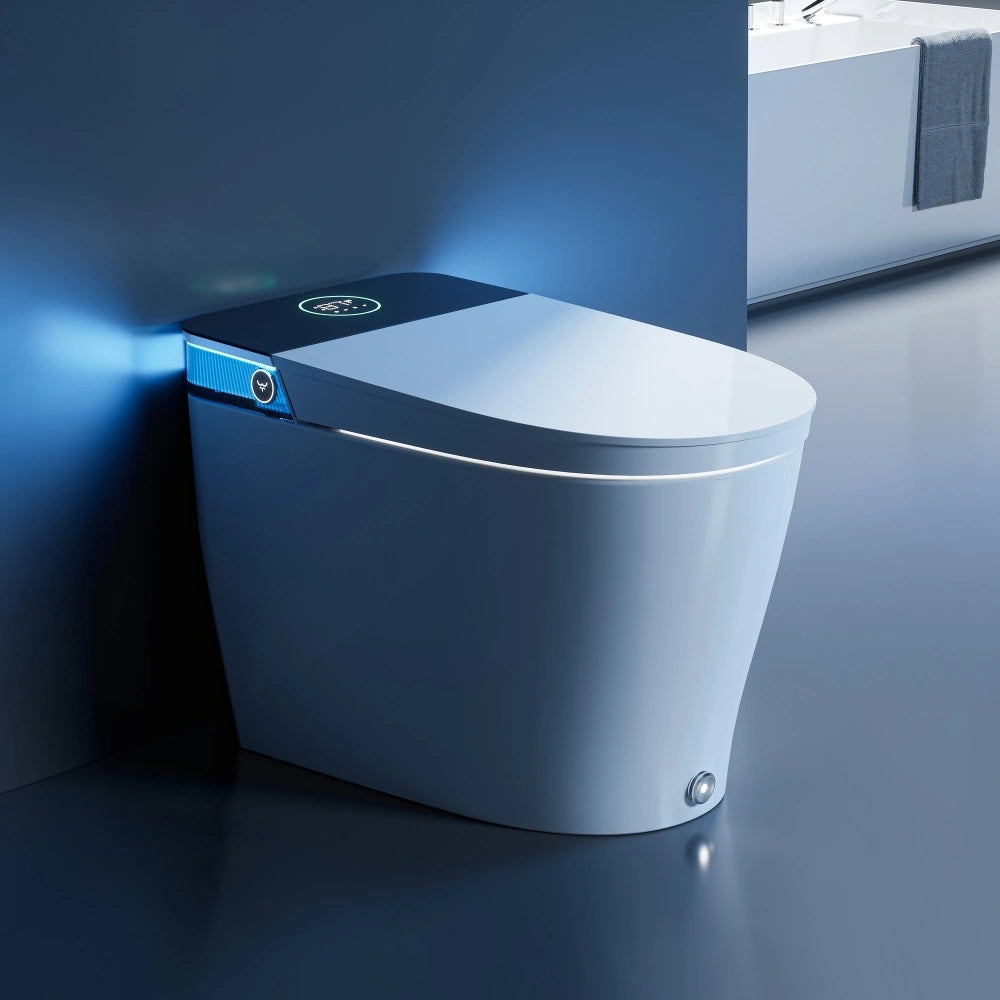
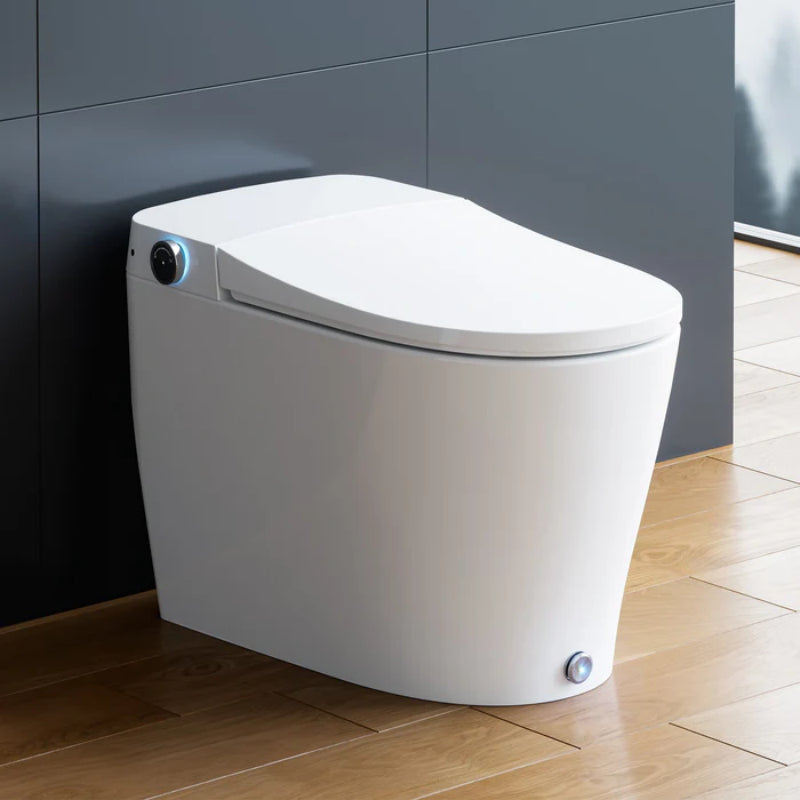
A booster pump for smart toilet use can be helpful, but only in a fairly specific situation: your toilet has confirmed low water pressure at the supply line, and that low pressure is clearly causing weak spray, inconsistent flushing, or both.
Advances in bathroom technology have made smart toilet technology one of the more innovative additions to the modern bathroom in recent years. Unlike traditional toilets, which rely on gravity and a full tank, these cutting-edge, high-tech fixtures offer luxurious features and a level of sophistication far beyond standard plumbing. Their sleek design appeals to homeowners looking to upgrade their bathroom, but their full functionality depends entirely on a stable water supply.
If your home already has normal pressure, a pump is often unnecessary. If your real problem is a drain clog, poor venting, long restrictive piping, or an installation issue, a booster pump for smart toilet setups may do little or make the problem more frustrating.
Decision Snapshot
First, diagnose which pressure issue you actually have
Before assuming a pump will help, identify the real problem:
-
Low pressure at the toilet fixture itself, even when no other water is running
-
Pressure that drops only when someone showers, runs the washer, or uses another faucet
-
Pressure loss from old, narrow, or clogged piping between the main supply and your bathroom
Understanding when to buy a booster pump for bath fixtures means matching the right diagnosis to the right solution—only then does a booster pump for smart toilet use make practical sense.
These three situations look similar but have very different solutions. A pump helps with the first two. For the third, piping improvements may be needed instead. According to the American Society of Plumbing Engineers (ASPE), system design—including pipe diameter, length, and internal condition—plays a major role in pressure loss and fixture performance.
When a booster pump actually solves the problem
A booster pump for smart toilet systems usually makes sense when a tankless smart toilet or bidet toilet is not getting enough incoming pressure to work as intended. Solving tankless toilet pressure issues often starts here—with a clear diagnosis of whether supply pressure is truly the limiting factor. In real homes, that often shows up as weak bidet spray, a bowl rinse that feels half-hearted, or a flush that sometimes clears the bowl and sometimes does not.
Here's what to do: Get a cheap water pressure gauge from a hardware store. Attach it to the supply line at the toilet. Write down the PSI reading when no other water is running, and again when someone is showering, using the washer, or running another faucet. Compare both numbers to your toilet's minimum requirement (check the manual or manufacturer website).
If the pressure at the fixture falls below that minimum—especially during normal household demand—a pump ensures the toilet can deliver consistent performance and powerful flushing with every flush.

Skip it for drain problems
If the toilet is flushing but waste is not moving well through the drain, the pump is not solving the right problem. A stronger push into a clogged, undersized, or poorly vented drain can lead to repeat backups, not fewer.
This is one of the biggest regrets: people assume “more force” means “better flushing,” when the restriction is really downstream.
Maybe if spray feels weak
If your main complaint is that the bidet wash feels too weak to clean well, a booster pump can help. But “can help” is not the same as “will transform everything.” If the supply piping is long, narrow, scaled up, or full of pressure loss, gains may be smaller than expected.
When It Actually Helps
To understand real benefits, it’s useful to look at how pressure affects everyday operation. Flush consistency is usually the first place problems show up.
Low pressure at the fixture hurts flush consistency
Tankless smart toilets demand steady incoming pressure. Without it, the toilet does not fail completely; it just gets unreliable. It may flush fully one moment, then not quite clear the bowl the next. It may rinse away liquid waste fine, then get stuck on solid waste or too much paper.
That inconsistency is exactly where a booster pump for smart toilet use can make a real difference—restoring the convenience and user experience the fixture was designed to provide.
Here is the pattern you might notice: early morning, the toilet works fine. But mid-morning when someone is showering, the washer is running, and another faucet is on—suddenly the toilet struggles. That is not a defect. That is your home's water supply being stretched thin across multiple fixtures at once. When the demand drops, the pressure bounces back and the toilet works again.
If this describes your situation—toilet works fine alone but falters when the house is using water—a booster pump can help because it gives the toilet its own steady supply, regardless of what is happening elsewhere.
If you are asking, "can a pump improve flush performance?" the answer is yes, if household demand is eating into your available pressure.
Weak spray needs pressure support
This is another case where people notice the problem every day. A weak bidet spray is not just a comfort issue—it directly affects hygiene. A properly functioning bidet is more sanitary and hygienic than dry paper alone: it can eliminate the need for toilet paper, reduce bacteria, and help prevent the spread of germs that contact-based cleaning methods may leave behind. A hands-free self-cleaning nozzle can only enhance that outcome when there is enough pressure to support it.
If your smart toilet has a tankless bidet system and the incoming pressure is too low, the spray may feel thin, inconsistent, or too soft to clean well. A booster pump can improve that. In homes with weak municipal pressure, well-system pressure swings, or upper-floor bathrooms, this is often the main reason people add one.
So if you are wondering how to increase water flow to a smart toilet bidet, pressure support may help more than adjusting settings alone.
Will cleaning actually improve?
A booster pump for smart toilet use raises this common question: will cleaning actually get better? Sometimes yes, but expectations need to stay realistic.
A stronger spray can improve cleaning and help the toilet operate at optimal efficiency. A better bowl rinse can reduce leftover residue after a flush, and when pressure is adequate, less water is used per cycle because the toilet does not need to compensate with repeat attempts. That makes it easier to save water, conserve resources, and minimize unnecessary water usage overall. Over time, a water-saving, eco-friendly bidet that functions properly can reduce utility costs and deliver real household savings—an environmentally responsible outcome. Based on EPA WaterSense guidelines, water-efficient fixtures not only lower household water bills but also reduce overall environmental impact. But this does not make the toilet clog-proof, and it does not fix user habits like too much paper or flushing wipes.
The key point is simple: a pump can improve water delivery, not toilet judgment, drain design, or bad plumbing.
Trade-Offs Buyers Miss
The downsides are often less obvious upfront but matter in daily use. Noise is one of the first trade-offs people notice.
Pump noise becomes daily friction
This gets glossed over too often. Even a fairly small inline booster pump can add a hum, click, or vibration that you notice every day. In a hall bath, maybe that is no big deal. In a quiet primary bath at night, it can become one of those small irritations that slowly wears on you.
Some homeowners expect near-silent operation because the toilet itself looks sleek and modern. Then they discover the pump is the loudest part of the experience.
If your bathroom is next to a bedroom, nursery, or home office, this matters more than spec sheets suggest.
Extra power adds complexity
A booster pump adds another powered part to a fixture that is already more complex than a standard toilet. That means more wiring concerns, more things to troubleshoot, and one more component that can fail.
This also matters during power outages. Depending on the toilet setup, a power loss may leave you with reduced function, limited flushing behavior, or no benefit from the pump at all. For some households, that is fine. For others, it is a real annoyance they did not think through.
Can stronger flushing cause backups?
Yes, it can, in the wrong plumbing setup.
If you have a partial clog, marginal venting, or an older drain line with poor slope or buildup inside, boosting water delivery may just push waste into a weak drain path faster. Then the blockage shows up farther down the line, where it is harder to clear and more disruptive.
So if your smart toilet is not flushing well due to low water pressure, confirm that low pressure is truly the cause before adding more force.
Fit and setup realities
Installation constraints play a bigger role than many expect. The existing plumbing layout can limit overall gains.
Line restrictions can limit what a pump can do
This is one of the most important reality checks before you buy. If your water has to travel through long, narrow, rough, or partially scaled pipes to reach the toilet, pressure drops along the way. Adding a pump may help less than expected, because the piping itself is already doing most of the damage.
Ask yourself: What is happening in the line between the main water source and your toilet? If the answer is "long old pipes" or "rusty buildup inside," a pump is fighting an uphill battle. You may add one and see only 5 PSI of real gain, not the 20 or 30 you hoped for.
For this reason, the question is not just "do I need a booster pump?" It is also, "would fixing the pipes themselves be a better investment?"
Tight spaces complicate install
Installing a pump for tankless bidet systems sounds simple on paper. In real bathrooms, it may not be. Inline pumps for bidet toilets are not always as user-friendly to install as the product listings suggest.
Smart toilets often already need careful alignment, accessible shutoff placement, and enough room behind or beside the unit for hoses, cords, and service access. The minimalist look of these fixtures conceals real installation complexity. Add a pump, and the setup gets tighter. In older homes, that can mean awkward pipe routing, stressed connections, or fittings that are harder to inspect later for slow leaks.
What people often wish they knew earlier is that a “small” add-on still needs practical space.

What pressure is actually needed?
The answer depends on the toilet’s minimum operating requirement. Some tankless smart toilets need more stable pressure than homeowners realize, especially for full bidet and flush performance.
What matters is not a vague sense that your water pressure is “kind of low.” It is whether the pressure at the fixture falls below the unit’s operating range, especially under normal household demand.
Here is a simple way to think about it:
| Situation | Pump may help? | Why |
| Measured low pressure at toilet | Yes | Toilet may not be getting its minimum needed supply |
| Weak spray only when other fixtures run | Yes | Pressure drop under demand points to supply limits |
| Good pressure but repeated drain backups | No | Problem is likely in drain or vent system |
| Normal pressure and normal spray | Usually no | Little real benefit, more complexity |
| Long old piping with heavy pressure loss | Maybe | Gains may be limited by pipe friction |
A booster pump for smart toilet installations is one piece of a larger system. Smart toilets let users personalize and tailor their experience—adjusting water temperature, spray position, and intensity to match each user's preference. Remote control panels and control functions manage everything from the heated seat to the automatic lid that opens and closes on approach. Tracking usage patterns over time helps confirm whether pressure is the real barrier to consistent reliability.
When it becomes overkill
At a certain point, adding more equipment stops delivering value. Many homes already meet the necessary conditions.
Normal pressure usually does not need a pump
If your home already has normal pressure and the toilet is meeting its performance requirements, adding a booster pump for smart toilet use is often solving a problem you do not have.
This is where regret is common. Homeowners hear that tankless smart toilets “like pressure,” so they assume more must be better. In practice, normal pressure is usually enough. Beyond that, the pump may add noise, cost, and maintenance with little visible payoff.
Oversizing causes hammer and wear (keep—clear)
A pump that is too strong creates its own problems. You may get on-off cycling, pressure spikes, vibration, and water hammer—that banging sound in the pipes. Over time, that stress can crack fittings, loosen connections, wear down valves, waste energy, and lead to slow leaks in places that never leaked before.
This is especially risky in older bathrooms or homes with aging plumbing. What worked fine before now starts to fail because the system was never designed for that much force and chatter.
Real consequence: You fix the weak spray, but six months later you are chasing a drip behind the toilet, or the whole fixture becomes unreliable.
So if you are thinking about a booster pump, the lesson is not "more power is better." It is correct sizing, right operation, and realistic goals.
Automatic features may still fail
Some buyers assume a pump will cure every smart-toilet complaint: weak spray, poor flush, incomplete rinse, sensor oddities, all of it. That is too optimistic.
A booster pump only helps where water pressure is the limiting factor. It will not fix sensor issues, control faults, scaling inside the toilet, bad installation, or software-related quirks. If an automatic feature is failing for another reason, the pump changes nothing.
Long-term annoyances
Over time, small inconveniences tend to add up. Maintenance is one area where expectations often differ from reality.
Maintenance is not fully hands-off
People often expect set-it-and-forget-it operation. Real life is less clean than that.
Depending on your water quality, pumps and connected parts may need periodic inspection, cleaning, or descaling. If vibration loosens something slightly over time, you may be chasing a drip you did not have before. If access is cramped, even basic service becomes annoying.
This is not extreme maintenance. It is just not zero.
Cold bathrooms add reliability issues
Booster pump for smart toilet use in cold climate bathrooms needs more thought than many listings imply. If the bathroom is poorly heated, or plumbing runs through cold exterior walls, pressure-related fixes do not remove freeze risk. In fact, more components can mean more points to protect.
Cold also tends to make vibration and mechanical noise feel more noticeable in a quiet bathroom.
What happens during power loss?
This matters more than many buyers expect. If the pump needs power and the toilet also relies on electricity for key functions, an outage may leave you with reduced performance exactly when you want basic reliability.
Ask yourself a plain question: if the power goes out, what will still work, and what will not? If you do not like that answer, think twice before adding another powered dependency.

Before You Choose
-
Check the toilet’s minimum water pressure requirement, then measure pressure at the supply line.
-
Rule out drain clogs, poor venting, and partial blockages before blaming pressure.
-
Make sure there is enough space for the pump, connections, and future service access.
-
Confirm your piping is not causing major friction loss that will limit pump gains.
-
Think about noise, power loss, and whether daily use will make those trade-offs annoying.
FAQs
1. Do I need a booster pump for my smart toilet?
Only if your toilet is not receiving enough water pressure at the supply line. If measured pressure drops below the unit’s minimum—especially during simultaneous water use—a pump can help stabilize performance. If your home already has normal pressure, adding a pump usually brings little benefit and may just add noise, cost, and complexity.
2. How to fix weak flush in tankless toilet?
Start by checking water pressure at the toilet. If pressure is low, a booster pump may help. If pressure is normal, look for other causes like partial drain clogs, poor venting, or restrictive piping. Weak flush is often a downstream issue, not a supply problem, so fixing the drain system may be more effective than adding pressure.
3. Can I add a pump to my HOROW bidet?
Yes, you can add an inline booster pump to a HOROW bidet, provided there is enough installation space and proper power access. However, it only helps if low incoming water pressure is the real issue. If weak performance is caused by piping restrictions or internal components, the improvement may be limited.
4. Why is my water pressure too low for a bidet?
Common reasons include low municipal supply, pressure drops when multiple fixtures run, or friction loss from long, narrow, or scaled pipes. Sometimes the issue is localized at the toilet fixture rather than the whole home. Measuring PSI at the supply line is the most reliable way to confirm the actual cause.
5. How much does a toilet booster pump cost?
A basic inline booster pump typically costs between $50 and $200, while higher-quality or quieter models can range from $200 to $500 or more. Installation costs vary depending on plumbing complexity. Keep in mind that cost is not just the unit—it may include fittings, electrical setup, and future maintenance.
6. Will a pump make my smart toilet louder?
Yes, in most cases. Even small booster pumps can produce a noticeable hum, vibration, or clicking sound during operation. In quiet bathrooms—especially near bedrooms—this can become a daily annoyance. Noise levels vary by model and installation quality, but a pump is often louder than the toilet itself.
Reference



Leave a comment
This site is protected by hCaptcha and the hCaptcha Privacy Policy and Terms of Service apply.