



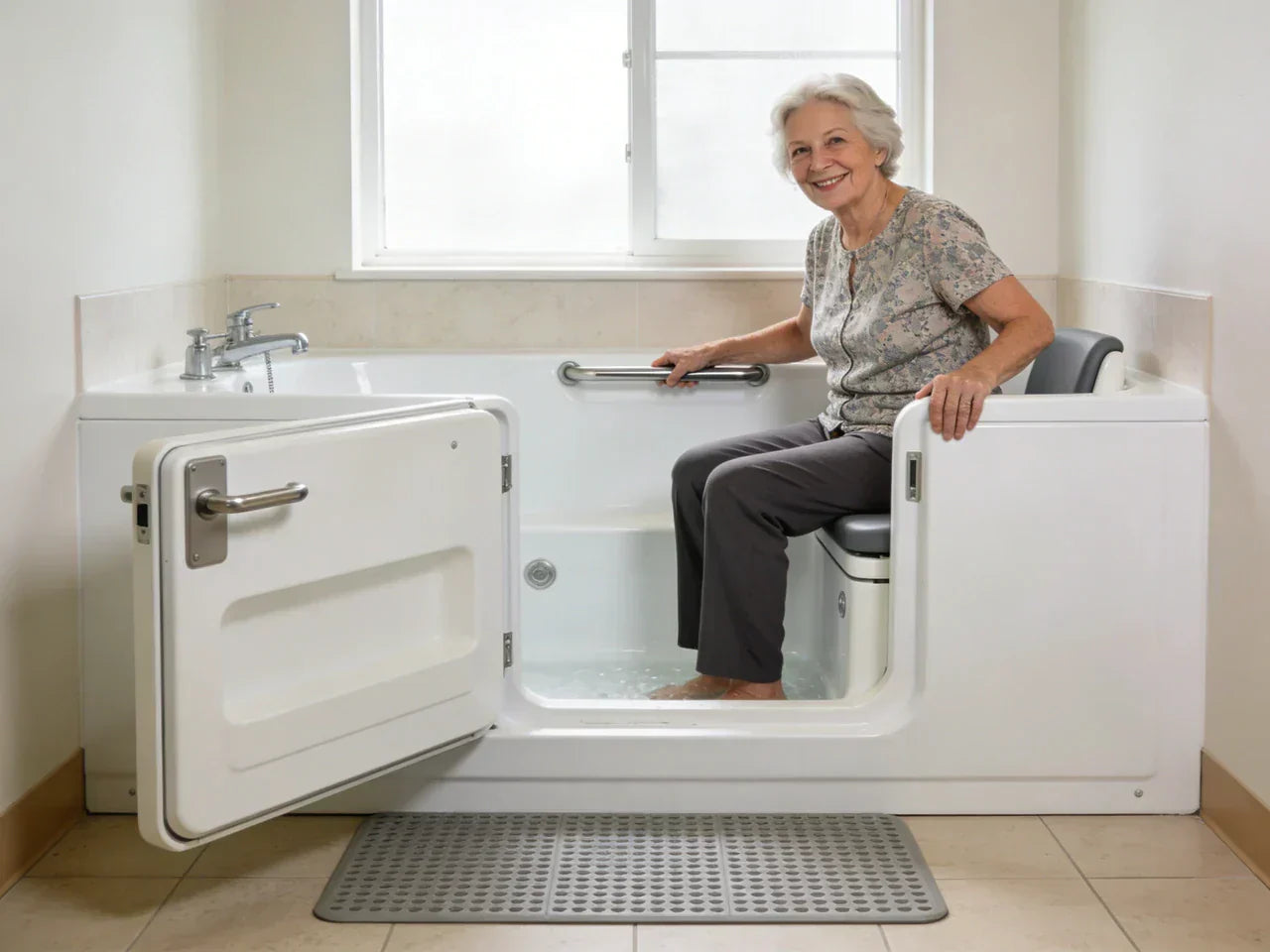
A walk in tub for seniors can lower fall risk in one of the most dangerous rooms in the home. Instead of stepping over a tall tub wall, you open a door, take a small step in, sit on a built-in seat, and bathe with more support. That matters because the CDC says about 1 in 4 adults over 65 falls each year, and bathroom surfaces are hard, wet, and slippery. This guide starts with quick “is it right for me?” answers, then walks through must-have safety features, types of tubs, real costs in 2026, installation realities, and ways to pay. You’ll also get real-life examples and a one-page checklist you can print.
Quick answer: Is a walk‑in tub right for you?
Before deciding, it helps to understand the basics. Many seniors ask, what is walk in tub, and how it differs from standard bathtubs for older adults. There are several types of walk-in tubs and walk-in baths, including soaking tub and bariatric models designed to accommodate people with mobility challenges. Most units include accessibility features such as a low step, grab bars, and a door that opens easily, all built to provide additional support and reduce the risk of falling. Of course, practical factors matter—installing a walk-in tub involves installation costs, and programs like Medicaid, HISA, SAH, and other federal and state options may help offset walk-in tubs cost. A no-obligation in-home consultation can help determine the right fit for your home. With that in mind, let’s look at who benefits most from walk-in bathtubs for seniors and when they truly enhance safety.
Who benefits most (mobility + aging in place)
If you’re reading this, you might be asking a simple question: “Can I keep bathing at home without feeling scared?” For many people, a bathtub for seniors is not about luxury. It’s about staying steady and staying independent.
A walk-in bathtub tends to help most when the main problem is stepping over a high tub wall or standing too long. Many older adults start to feel unsafe during the same two moments: when they enter and exit the tub, and when they turn to rinse off. If you’ve had a fall, a near-fall, or you catch yourself holding the towel bar for balance, that’s a clear sign your bathroom setup may need help.
A walk in tub for seniors is often a strong fit for people with limited mobility from arthritis, joint replacement, stroke recovery, Parkinson’s disease, neuropathy (numb feet), or general balance changes that come with age. It can also be a big quality-of-life upgrade for a senior who lives alone and wants to bathe without calling a family member for “just in case” help. That desire for dignity is real—and it’s common.
You’ll hear the phrase aging in place a lot. In plain terms, it means staying in your home as you age. A walk-in tub is a home modification that often supports that goal, especially when paired with grab bars, good lighting, and non-slip flooring outside the tub.
When a walk‑in tub may NOT be the best choice
A walk-in tub is not perfect for every home or every body. The biggest “deal breaker” is the fill and drain process. With many walk-in tubs, you step in, close the door, and then wait while the tub fills. At the end, you must wait again while it drains before the door opens. If someone has severe memory loss or gets anxious while waiting, a walk-in tub can create stress. In that case, a safer plan may be a curbless (roll-in) shower with a seat, because there is no waiting inside a closed tub.
Bathroom size can also rule it out. Some bathrooms cannot handle the door swing or the tub’s wider footprint. And for many wheelchair users, a walk-in tub is still not as practical as a true roll-in shower, because a tub usually requires a transfer.
If your main goal is basic safety and your budget is tight, simpler changes can help a lot. A tub transfer bench, a bath lift, a handheld sprayer, and properly installed grab bars can sometimes reduce risk enough without replacing the whole tub.
Are walk‑in tubs safe for the elderly?
For many people, yes—walk-in bathtubs for seniors can be safer than traditional bathtubs because they replace a high step with a low step and add a stable seat and support points. The low threshold and built-in seat reduce the amount of time you must stand on wet surfaces.
Still, there is a trade-off: you do have to manage the fill/drain waiting time, and hot water can raise dizziness risk if you soak too long. Safety comes from choosing the right features (like fast-drain and anti-scald control) and using the tub with a steady routine.
If you want to read more about fall prevention, the CDC and the National Institute on Aging both offer practical home safety guidance (links at the end).
Visual: a simple “decision tree” you can use now
You don’t need a fancy quiz to get value from a decision tree. Ask yourself these questions in order, and stop when you hit a clear answer.
-
Have you fallen, nearly fallen, or felt unsafe getting into your tub or shower in the last year? If yes, move to question 2. If no, smaller safety upgrades may be enough.
-
Can you sit down and stand up from a chair without help? If yes, a walk-in tub may fit well. If no, you may need a shower setup with a transfer-friendly seat and caregiver plan.
-
Do you strongly prefer soaking (pain relief, relaxation), or do you just need quick washing? If soaking matters, a walk-in tub makes sense. If not, a shower may be simpler.
-
Is your bathroom big enough for a tub door to open safely? If yes, keep going. If no, focus on a shower conversion or a smaller retrofit.
-
Is your budget able to handle a full tub replacement plus installation? If yes, get quotes. If no, start with grab bars and transfer aids while you explore funding.
Why walk‑in tubs matter: falls, costs, and independence
Modern walk in bathtubs for seniors are built for individuals with limited mobility, with safety features to provide a stable seat, low step entry, and grab bars that help to reduce stress. These tubs are made to be ADA-compliant and to provide a safe and comfortable way to bathe without climbing over a high wall. From simple fiberglass models to therapeutic, spa-like options with additional features, a new walk-in tub can restore independence. Costs matter too—installing a walk-in may be supported through programs like Rebuilding Together or by contacting your state’s Medicaid office to learn about assistance.
The fall-risk problem in bathrooms (data snapshot)
Falls are not rare “accidents.” They are a health risk that increases with age. The CDC reports that about 1 in 4 older adults falls each year. Falls can lead to head injuries, broken bones, fear of movement, and long recovery periods. Even when someone “seems fine,” a fall can change daily life. People start avoiding showers, rushing through bathing, or waiting until a caregiver is available, which can reduce hygiene and confidence.
Falls are also expensive. The CDC has reported tens of billions of dollars in medical costs from older-adult falls each year in the U.S. That cost is one reason doctors, physical therapists, and home health teams pay close attention to bathroom setup.
How walk‑in tubs reduce fall risk (what changes physically)
A traditional tub often has a sidewall around 14–17 inches high. That high “step over” is a problem when hips are stiff, knees hurt, or balance is not steady. A step in bathtub replaces that climb with a low threshold (often a few inches). That one change can reduce tripping and the need for a risky one-leg balance move.
The built-in seat changes the bathing posture, too. Instead of standing while soaping, shaving, or rinsing, you can sit. Sitting lowers the chance of slipping because your center of gravity is lower, and you can keep a hand on a handrail or grab bar while you move.
Many walk in tubs also include non-slip surfaces on the floor and seat, plus easy-reach controls so you are not twisting and reaching while wet.
Quality-of-life outcomes seniors report
Safety is the headline, but daily life is the reason people commit to the project. In surveys reported by the National Council on Aging, many users describe feeling more independent and less stressed about bathing. A common theme is simple: “I can bathe when I want, not only when someone can help.”
That matters even more for the many older adults who live alone. When bathing becomes scary, people often delay it. That can lead to skin problems, infections, and less social activity. A safer bath setup can remove that barrier and restore routines that support health.

Walk in tub for seniors: must‑have safety features
Not all walk-in tubs are created equal. Some models focus on comfort extras, while others are built with practical senior safety in mind. Before looking at jets, lights, or luxury upgrades, it helps to know which features truly protect balance, stability, and independence. The following checklist highlights the essentials every walk in tub for seniors should include, so you can separate real safety from simple add-ons.
Non‑negotiables checklist (senior safety first)
When you compare walk-in tubs for seniors, it’s easy to get distracted by spa-style extras. Start with the safety basics. The first must-have is a low step-in threshold. In real homes, a lower step can mean the difference between walking in normally and needing a helper.
Next is a comfortable seat at a practical height. Many people do best with an ADA-like seat height (not too low), plus back support so you are not balancing your trunk while washing. Good grab bars matter just as much as a good seat. You want a stable place to hold as you step in, turn, sit, and stand.
Water temperature control is also a core safety item. Look for anti-scald protection, such as a thermostatic mixing valve, so water temperature stays steady even if someone flushes a toilet or runs a sink.
You can think of these as the “keep me safe even on a bad day” features. If a salesperson focuses only on jets and lights before discussing the threshold, the seat, and the drain speed, pause and re-center the conversation.
Fast‑drain and fast‑fill: why it matters
People often ask, “Do you have to sit in a walk‑in tub while it fills?” In most cases, yes. You step in, close the door, then the tub fills around you. When you finish, you usually must stay seated until it drains low enough for the door seal to release. That is why fast fill and fast drain are not small details—they shape daily comfort and safety.
If draining takes too long, the water cools and you may feel chilled. You also may feel tempted to stand up early, which is risky in a wet tub. Fast drain helps you exit sooner and reduces that “waiting around” problem.
Here is a simple comparison you can use when reading quotes.
| Drain system | What it usually feels like | Common drain-time range (varies by plumbing) |
| Standard drain | Longer wait, water cools, more impatience | ~8–15 minutes |
| Fast-drain (upgraded drain + pump) | Shorter wait, easier daily use | ~2–8 minutes |
Times vary based on home plumbing and the tub’s size, but the key point is this: if you hate waiting, pay attention to drain speed early in the buying process.
Door styles and access ergonomics (inward vs outward)
A walk-in tub works because of a watertight door. Doors can swing inward or outward. The “best” option depends on space and on how a person moves.
An inward-swinging door can work well in tight bathrooms because it needs less outside clearance. The trade-off is that the entry opening can feel smaller, which may matter for larger bodies or stiff hips. An outward-swinging door can feel easier to step through, and it can be more caregiver-friendly. The trade-off is that you need enough clear floor space for the door to open without hitting a toilet, vanity, or wall.
Door seals are also part of the real-world experience. Ask what the seal is made of, how long it is expected to last, and how service calls work if a leak starts.
Visual: “Safety feature scorecard” (printable)
Use this table like a scoring sheet when you compare options and talk with an installer.
| Feature | Why it matters | Minimum spec to ask for | Questions for installer |
| Low threshold | Fewer trips when stepping in | “Low step-in,” often ~3–6 inches | What is the exact step height? |
| Built-in seat + back support | Less standing, more stability | Stable seat, easy to clean | What is seat height and depth? |
| Grab bars/handrails | Support during entry/exit | Securely mounted, easy grip | Where are bars placed, and can they be adjusted? |
| Non-slip floor + textured seat | Less slipping on wet surfaces | Textured, not just “smooth acrylic” | What is the surface texture and how do I clean it safely? |
| Anti-scald control | Burn prevention | Thermostatic control or anti-scald valve | How is temperature kept steady? |
| Fast drain | Less waiting, safer exit | Fast-drain option | What drain time do you estimate in my home? |
| Easy-reach controls | Less twisting and reaching | Large, simple controls | Can controls be used with weak hands? |
Types of walk‑in tubs and therapy options (hydrotherapy, air jets)
Once you understand the core safety features, the next step is choosing the style of tub that fits your daily needs. Walk-in tubs come in several designs, from simple soaking models to systems with jets and added comfort options. Knowing the differences helps you decide whether you want a straightforward bathing solution or a more therapeutic setup with extra features. Here’s a practical look at the main types and what they actually offer.
Soaker vs hydrotherapy walk‑in tub (water jets)
A basic soaker is the simplest type of bathtub in this category. It’s mainly about safe entry, safe seating, and a comfortable soak. Because it has fewer moving parts, it can be easier to maintain and may cost less.
A hydrotherapy model adds hydrotherapy jets (water jets) aimed at muscles and joints. People with arthritis or chronic back pain often like the targeted pressure because it can loosen stiff areas. The trade-offs are higher price, more noise, and more cleaning needs. Jets also add parts that may need service later.
If you like the idea of jets, ask yourself a practical question: “Will I use this feature weekly?” If the answer is no, you may be paying for a feature that looks good on paper but doesn’t fit your routine.
Air jets, microbubbles, heat, chromotherapy: what’s real vs hype
Air jets feel different from water jets. They create a gentler, “champagne-like” stream of bubbles. Many people find air systems relaxing, especially if strong jet pressure would bother sensitive joints.
Heated seats and backrests can help comfort during the fill and drain wait. That can be a bigger deal than people expect, especially in winter or for those who get chilled easily.
As for colored lights and aromatherapy: they may feel nice, but they are not the core safety items. If budget is tight, spend first on safety features like threshold height, grab bar placement, anti-scald control, and fast drain.
Walk‑in tub shower combo (multi-user households)
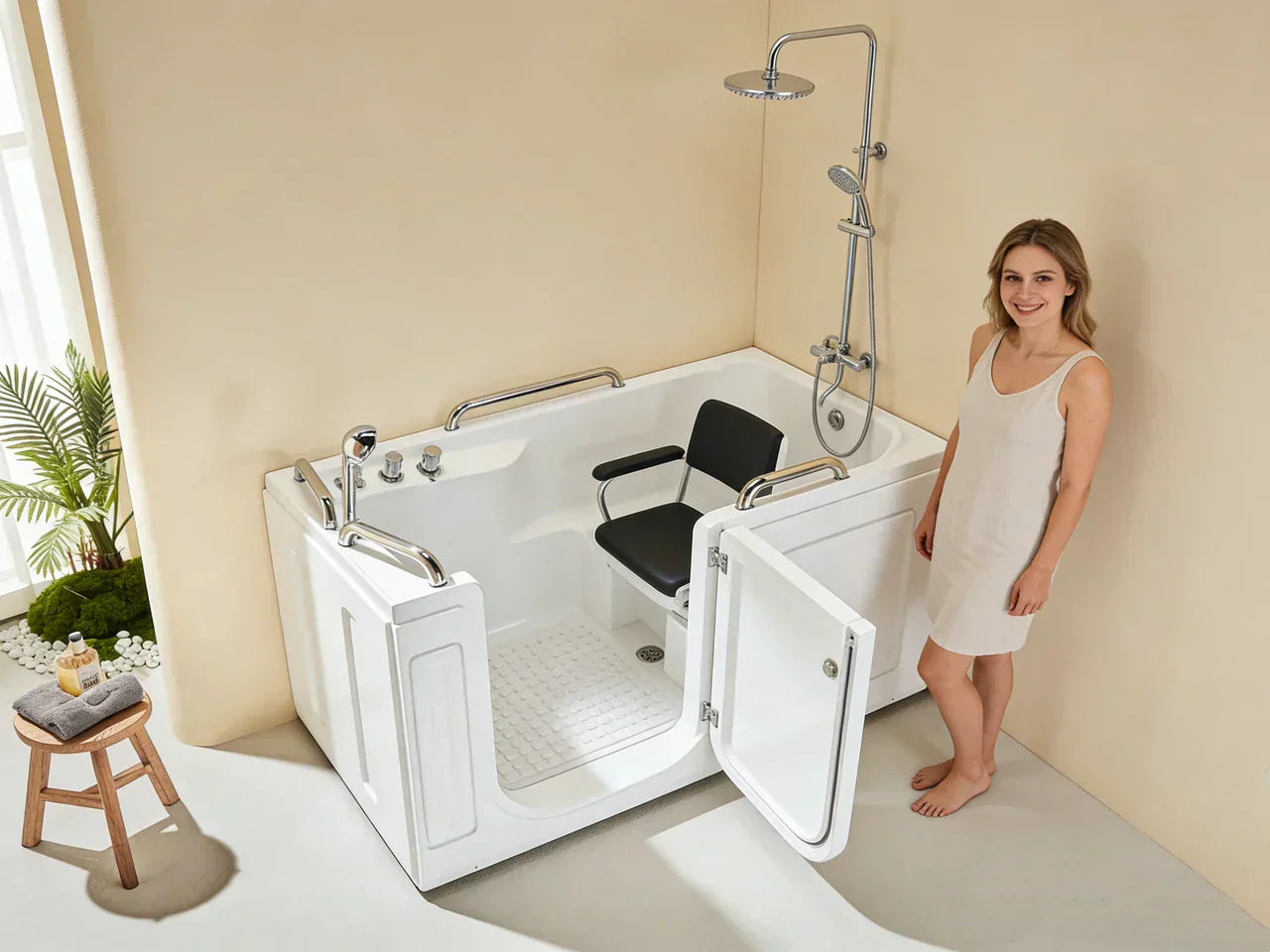
Many homes are shared by an older adult and other family members. In that case, a walk-in tub with a shower setup can be a peace-making choice. A seated bath user gets the door and seat, while a standing shower user can rinse quickly.
If you plan to use the tub as a shower often, pay close attention to the entry floor. Wet feet plus a door threshold can still be slippery. A handheld sprayer, solid grab bar placement, and a shower screen or curtain plan all matter. A shower combo can be safe, but only when the “shower mode” is treated as seriously as the “soak mode.”
Visual: “Feature-to-condition” matrix
This matrix is not medical advice, but it can help you match features to daily problems you want to solve.
| Common goal/condition | Helpful features that usually matter most |
| Arthritis or joint pain | Built-in seat, warm soak, optional jets, anti-scald control, fast drain |
| Balance issues / prior falls | Low threshold, strong grab bars, non-slip surfaces, easy-reach controls |
| Post-surgery recovery | Stable seat height, handheld shower wand, fast drain, wide door opening |
| Neuropathy (numb feet) | Non-slip floor, grab bars, low threshold, clear controls |
| Circulation concerns (comfort) | Warm soak with careful time/temp control, heated backrest, clinician-approved routine |
Cost of a walk‑in tub in 2026 (total installed price)
After comparing features and therapy options, most buyers reach the same practical question: what will all of this actually cost? The price of a walk-in tub is more than just the tub itself—it reflects equipment choices, bathroom conditions, and the complexity of installation. Understanding where the dollars go helps you set realistic expectations and compare quotes fairly. Let’s break down the main factors that shape the total installed price.

Typical price drivers (tub + features + bathroom constraints)
People often ask, “How much does the average step‑in tub cost?” The honest answer is that the tub unit is only part of the bill. In many homes, the cost of a walk-in tub is driven by the installation work: removing the old tub, adjusting plumbing, adding electrical protection for pumps, repairing walls, and making sure everything is sealed and inspected.
In 2026, many homeowners see installed project totals land in the several-thousand-dollar range, and it’s common for full projects to reach $8,000 to $15,000+ depending on features and bathroom conditions. Basic models can be lower, and high-end therapy builds can be higher. The biggest price swings usually come from jet systems, heated features, and how much remodeling is needed around the tub.
Installation line‑item breakdown (what quotes should include)
A clear quote should read like a scope of work, not like a mystery number. Here is a practical way to compare bids.
| Line item | Low complexity (range) | Medium complexity (range) | High complexity (range) |
| Tub unit | $2,500–$5,000 | $4,000–$8,000 | $7,000–$12,000+ |
| Remove/dispose existing tub | $300–$900 | $600–$1,500 | $1,000–$2,500 |
| Plumbing changes | $500–$1,500 | $1,200–$3,000 | $2,500–$5,000+ |
| Electrical/GFCI work (for pumps/heaters) | $0–$800 | $400–$1,500 | $1,000–$3,000 |
| Wall repair/surround | $300–$1,500 | $1,000–$3,500 | $2,500–$7,000 |
| Permits/inspection (where required) | $0–$400 | $150–$700 | $300–$1,200 |
| Typical installed total | $4,000–$8,500 | $7,000–$14,000 | $12,000–$25,000+ |
These are planning ranges, not promises. Labor rates and building requirements vary by location. Still, a quote should show these categories clearly so you can see what you are paying for.
Ongoing costs and “ROI” (water, energy, maintenance)
A walk-in tub often uses more hot water than a quick shower. That can raise water heating costs, and some homes need a water heater upgrade to fill the tub with consistently warm water. If your water turns lukewarm halfway through a normal bath today, that’s a warning sign to check heater size before you buy.
Pumps and heated surfaces use electricity. The cost per use is usually not huge, but it adds up over time if you bathe daily.
Maintenance is also real. Door seals can wear and may need replacement. Jet systems need cleaning routines to reduce buildup. A soaker model with fewer moving parts may have lower upkeep, which is one reason some families choose it even when therapy features sound tempting.
Paying for it: Medicare, Medicaid waivers, tax deductions, VA help
While a walk-in tub is primarily a home modification, there are several programs and funding options that may help offset the expense. From Medicare Advantage extras to Medicaid waivers, VA grants, tax deductions, and local aging services, understanding what support is available can make the investment more manageable. Here’s a practical look at the main ways families can get financial help.
Will Medicare pay for a walk‑in tub?
This is one of the most searched questions, and the answer can be disappointing. Original Medicare usually does not pay for a walk-in tub because it is generally treated as a home change, not as covered medical equipment under Part B rules.
That said, some people do find partial help through Medicare Advantage plans, because those plans can offer extra benefits that Original Medicare does not. Coverage depends on the specific plan and your location, so you must call the plan and ask directly. If you do call, ask what documents are needed and whether pre-approval is required.
Medicaid and HCBS waivers (state-by-state path)
Medicaid programs can be different in every state, and many states use Home and Community-Based Services (HCBS) waivers to help people stay at home instead of moving to a facility. In some cases, a bathroom modification may be covered when it is tied to safety and medical need.
Families often get the best results when they treat this like a paperwork project. You may need a clinician note, an assessment, and prior approval before any work begins. A good starting point is your state’s Medicaid office or your local aging services office, because they can tell you which programs specifically apply to home safety changes.
Tax deductions and documentation for medical necessity
Some households may be able to include part of the cost as a medical expense if the change is mainly for medical care or safety. Tax rules can be strict, and you should confirm your situation with a qualified tax professional.
If you plan to explore this, keep clean records: invoices that describe the safety purpose, receipts, and any letter of medical need from a clinician. Good documentation helps no matter what funding route you pursue.
VA and local aging resources
If the person needing the tub is a veteran, ask about VA benefits and home modification grants. The VA has programs that may help with accessibility changes for eligible veterans.
Also check local options. Area Agencies on Aging may know about county-level funds, non-profits, and “fix-it” programs. Some communities also partner with groups that provide grants or volunteer labor for safety repairs.
Installation, bathroom fit, and getting the right contractor
Once funding and budget are sorted, the next step is practical: how the tub will actually fit in your bathroom and who will install it. Even the best walk-in tub can be frustrating if the space is tight, plumbing isn’t ready, or the installer isn’t experienced. Careful measurement, understanding door swings, checking electrical and plumbing readiness, and vetting contractors all play a key role in a smooth installation. Here’s what to know before you schedule the work.

Measuring and space planning (small bathrooms)
Before you choose a tub, treat your bathroom like a puzzle. Measure the existing tub space (length, width, and height), plus the bathroom doorway width. Then think about how a person walks and turns in the room.
Door swing is the detail many families miss. If you choose an outward-swinging door, you need clear space so the door can open without hitting a toilet or vanity. If you choose inward swing, you need to be sure the opening still feels easy to step through.
If possible, take photos for quotes. A few clear pictures—tub area, plumbing access, electrical outlet locations, and the path from the front door to the bathroom—can help installers spot issues early.
Plumbing/electrical readiness (avoid surprises)
Many walk-in tubs need protected electrical power for pumps and heaters. Ask whether a dedicated circuit is required and whether a GFCI setup will be installed. You also want shutoff valves you can reach, because small leaks are easier to manage when you can turn water off quickly.
Drain location matters, too. If the new tub drain does not line up with the old drain, plumbing costs can jump.
Also check hot water capacity. A bigger tub filled with warm water can push older water heaters past their comfort zone. If you ignore this, you may end up with a beautiful tub that is never quite warm enough.
Vetting installers and warranties (avoid sales traps)
The tub matters, but installation quality often decides whether the experience is smooth or stressful. Ask if the installer is licensed and insured, whether permits are included when required, and what happens if there is a leak later.
Read warranty terms in plain language. You want to know what is covered for the tub shell, the door seal, any pump system, and labor. Also ask about service response time. Waiting weeks for a repair can be a major problem if the tub is the only bathing option in the home.
How long does it take to install a walk‑in tub?
People hear “one-day install” claims, but real timelines depend on ordering and on what the bathroom needs. A common project flow looks like this:
-
Estimate and measurements: 1–2 hours in the home, then a written quote.
-
Ordering the tub: often 1–6 weeks depending on model and supply.
-
Demolition and prep: typically 1 day.
-
Install + plumbing + electrical: often 1–2 days.
-
Wall repair and finishing: 1–3 days depending on materials.
-
Inspection (if required): scheduled based on local rules.
If your household only has one bathroom, talk through the “no bath for a day or two” plan before work begins.
Safety, health cautions, and daily-use best practices
Even with a well-designed walk-in tub, safety doesn’t end at installation. Daily routines, water temperature, soak time, and hygiene practices all affect health and comfort. Understanding how to use the tub properly, manage jets and seals, and plan for emergencies helps maximize independence while minimizing risks like burns, dizziness, or slips. Here’s a practical guide to safe daily use and maintenance.
Safe bathing routine (reducing burn and dizziness risk)
A walk-in tub can make entry safer, but you still want a routine that reduces dizziness and burns. Start with water temperature you can tolerate comfortably, not “as hot as possible.” Hot baths can lower blood pressure and make some people lightheaded, especially when standing up.
Soak time matters, too. Many people feel best with short, steady soaks rather than very long ones. When you are ready to stand, pause first. Sit upright, take a few breaths, then stand slowly while holding a grab bar. Keep a towel within reach so you don’t twist.
If the person using the tub has heart disease, diabetes, circulation problems, or is prone to fainting, it’s smart to ask a clinician about safe water temperature and soak time. Comfort is good, but safety comes first.
Are walk‑in tubs good for arthritis and chronic pain?
Many people with arthritis say warm water helps them loosen stiff joints. Even without jets, a warm soak can reduce the “rusty hinge” feeling in knees, hips, hands, and low back. For some, hydrotherapy jets add a massage effect that feels good after a long day.
Still, it helps to keep expectations realistic. A walk-in tub is not a cure. Think of it as a comfort tool that may help you move easier after bathing and may make bathing safer. If pain is severe or swelling is new, that’s a medical issue to discuss with a clinician.
Cleaning, hygiene, and infection control (jets & seals)
Cleaning is part of ownership, especially if the tub has jets. Soap scum and body oils can build up in lines over time. Ask the manufacturer or installer what the safe purge routine is. Some people do a simple cleaning cycle weekly, plus a deeper clean monthly.
Door seals need attention too. Wipe them clean and dry when possible, because standing moisture can lead to mold. Use cleaners that do not irritate lungs, especially if anyone in the home has asthma or chemical sensitivity. If you can smell strong fumes, that’s a sign to switch to a gentler product.
Power outage and emergency exit planning
It’s uncomfortable to think about, but it’s smart. Ask: “If the power goes out while I’m in the tub, what happens?” Some tubs can still drain by gravity, while others rely on pumps for fast drain.
Also ask whether there is a manual release or backup method, and what customer support looks like after hours. If the person bathing is frail or lives alone, consider a simple plan like keeping a phone within reach and using a medical alert device during bathing.
Real‑world case studies + final checklist (action steps)
Now that you understand features, safety practices, installation, and funding, it helps to see how these choices play out in real homes. Case studies show how walk in tubs for seniors can restore independence, reduce stress, and support caregivers—illustrating both practical benefits and daily routines. Following these examples, a final checklist provides clear, actionable steps so you can evaluate needs, compare options, and plan your installation with confidence.
Case study 1 — Post‑knee/hip surgery bathing independence
After a knee replacement, “Marian” could walk with a cane, but stepping over the old tub wall felt impossible. She tried a transfer bench, but she still feared slipping when pivoting her leg over the tub edge. Her family chose a step in bathtub with a low threshold, a stable seat, and a handheld sprayer.
The biggest change was not comfort—it was timing. She could bathe without waiting for a family member to be home. A fast-drain option mattered because she disliked sitting in cooling water. With clear grab bar placement and a non-slip floor, her bathing routine became predictable again, which lowered stress for everyone in the home.
Case study 2 — Arthritis + sleep improvement routine
“Leon,” in his late 70s, had hand and knee arthritis that flared in the evening. He didn’t need heavy caregiver help, but he avoided baths because climbing into the tub hurt. He switched to a walk-in tub focused on warmth and simple controls: anti-scald temperature control, a comfortable backrest, and optional gentle air bubbles.
He started tracking two things in a notebook: pain level before and after bathing, and how long it took to fall asleep. Over several weeks, he noticed his evenings felt calmer on bath nights. It didn’t erase pain, but it helped him move easier and settle down for bed. That “small win” was enough to make the purchase feel worth it for him.
Case study 3 — Caregiver workflow and reduced strain
In some homes, the main goal is not only the bather’s safety, but also the caregiver’s back and shoulders. “Tanya” helped her father bathe after a mild stroke. The hardest part was the old tub wall. She had to spot him closely, ready to catch him if he slipped while stepping over.
After the new tub was installed, the biggest change was the transfer movement. He could step in, turn, and sit with less lifting and less twisting. Tanya still stayed nearby, but her role shifted from “supporting body weight” to “being present for safety.”
| Care task | Before | After |
| Entry support | Hands-on lifting/spotting over high tub wall | Light guidance while stepping over low threshold |
| Bathing posture | More standing, more wobble | More seated bathing with stable handholds |
| Exit timing | Rushed due to fear of slipping | More controlled exit, especially with fast drain |
Printable: “Walk‑in tub for seniors” buying checklist (one-page)
Use this as a step-by-step plan you can print and bring to quotes.
-
Needs check (person, not product): fall history, balance, ability to sit/stand, hand strength, cognitive status, preference for tub or shower.
-
Bathroom check: tub space measurements, doorway width, door-swing clearance, photos of plumbing and walls, flooring condition.
-
Safety features you will not compromise on: low threshold, built-in seat with back support, grab bars, non-slip surfaces, anti-scald control, fast drain.
-
Comfort features you will pay extra for only if you’ll use them: jets, heated backrest, heated seat, shower wand upgrades.
-
Utilities check: hot water heater capacity, electrical panel capacity, GFCI needs, drain location.
-
Quote comparison: itemized scope, timeline, permit plan, cleanup plan, warranty details (shell, seal, pumps, labor), service response time.
-
Funding file: plan notes, clinician letter (if needed), receipts, invoices with clear descriptions, program contacts (Medicaid/VA/local aging resources).
-
Safety add-ons outside the tub: non-slip mat outside, night lighting, toilet grab bar if needed, clear path to the bathroom.

FAQs
1. Will Medicare pay for a walk-in tub?
Original Medicare usually does not cover a walk-in tub, since it’s considered a home modification rather than medical equipment. Some Medicare Advantage plans may offer limited help, but coverage depends on the plan and often requires approval. Families exploring this route should check documentation requirements carefully. In some cases, installing a walk-in bathtub with water safely might be partially funded through programs that offer several options for seniors with age-related mobility challenges. Planning ahead, collecting clinician notes, and confirming eligibility can make the process smoother, especially if you are considering a walk-in tub without extra features.
2. What are the disadvantages of a walk-in tub for seniors?
Walk-in tubs are generally safer, but there are trade-offs. You must wait inside while the tub fills and drains, which some seniors find uncomfortable. They have a higher upfront cost, and adding hydrotherapy or jets can add several hundred dollars. Some homes may need a water heater upgrade to ensure a hot tub-like experience, and tubs made of fiberglass require careful cleaning. Maintenance can be more involved if the tub has pumps or jets. Finally, space and bathroom layout matter—some bathrooms cannot accommodate a walk-in tub without remodeling. These factors are important when deciding if it’s the right fit.
3. What is an alternative to a walk-in tub for the elderly?
If a walk-in tub isn’t practical, there are several safe alternatives. A curbless or roll-in shower with a seat can be ideal for wheelchair users or those who cannot wait for fill and drain. Other options include a bath lift, a tub without high walls, or a transfer bench that makes stepping over the tub safer. Adding grab bars, non-slip mats, or rail systems can improve safety without major remodeling. These solutions can work well for age-related mobility issues, and some programs even provide financial help or guidance when installing a walk-in tub without complicated features.
4. How much does the average step-in tub cost?
The cost of a walk-in tub depends on size, materials, and features. Basic models made of fiberglass typically start lower, while tubs with hydrotherapy jets, heated seats, or therapeutic hot tub features can add several hundred dollars. Installation costs include plumbing, electrical work, and sometimes bathroom modifications. On average, the total installed price lands in the several-thousand-dollar range, and quotes should account for permits, labor, and materials. Some programs offer financial help to offset costs. Planning ahead ensures you can safely enjoy a walk-in tub without worrying about hidden expenses.
5. What is the best bath for the elderly?
The ideal bath combines safety, comfort, and independence. A walk-in tub for seniors often works best for those who can sit but may struggle to stand. Features like a low threshold, stable seat, grab bars, and anti-scald water controls make it safe. For those who prefer shorter routines, a tub without complex jets can still provide a bathtub with water for soaking without extra maintenance. Some seniors enjoy hot tub-like therapeutic features, while others prioritize simple, easy-to-clean fiberglass tubs. Programs and guidance for safe installation can help match each individual’s age-related mobility needs.
6. How does a walk-in tub work?
A walk-in tub is designed for safe entry and sitting. You open the door, step over the low threshold, and sit on the built-in seat. Once the door is closed and latched, the tub fills with water. Many tubs have options for jets or therapeutic airflow, but you can choose a walk-in tub without extra features for simplicity. Installing a walk-in may require minor plumbing or electrical adjustments, especially if you want a hot tub-like soak. When bath time is finished, the water drains, allowing the door to open safely. The process reduces balance stress and makes bathing predictable and comfortable for seniors.
7. Do you have to sit in a walk-in tub while it fills?
Yes, in most cases you remain seated while the tub fills and drains. This keeps your center of gravity low, lowering the risk of slips or falls. The seating design is standard, and some tubs include therapeutic features like hot tub-style jets, but you can select a walk-in tub without these extras if desired. Waiting while the water fills can feel long, so fast-drain or fast-fill options are worth considering. Proper planning, safe routines, and installing a walk-in carefully ensures a bathtub with water experience that is comfortable, safe, and practical for age-related needs.
References



Leave a comment
This site is protected by hCaptcha and the hCaptcha Privacy Policy and Terms of Service apply.