




A walk in shower for elderly adults is one of the most practical bathroom upgrades for cutting slip and fall risk. Falls are a leading cause of injury for older adults, and the bathroom is one of the easiest places to lose footing because water, soap, and tight spaces do not forgive mistakes. Swapping a high tub wall for a low or zero threshold, then adding stability features like grab bars and a seat, can make bathing safer while helping people keep their routines and privacy. This guide covers the safety essentials, who benefits most, walk-in showers vs. tubs, real cost ranges and financial help, and a clear checklist you can use to plan an aging-in-place bathroom.
Why Seniors Need a Safe Bathroom Now: Fall Risk, Data, and Aging in Place
To understand why bathroom safety upgrades matter, it helps to start with the data behind fall risk among older adults.
Key fall statistics that justify a bathroom upgrade
If you have ever watched an older parent “steady” themselves on a towel bar, you already know why this topic matters to seniors and their families. Falls are common, and the results can be serious—especially when they happen in a bathroom that was never designed with safety for seniors or ease of use in mind.
Here are the key numbers people cite when planning safety changes and transforming your bathroom into a safer space:
| What the data shows | Typical figure (U.S.) |
| Older adults who fall each year | about 25% (around 14 million) |
| Fall-related hospitalizations each year | about 800,000 |
| Hip fractures each year from falls | about 300,000 |
| Fall deaths (2021) | 44,686 |
A simple way to picture this is a “stat strip” (visual idea):
falls → medical treatment → hospitalization → life-changing injury → death.
Not every fall leads to disaster, but the chain often starts with something small—like a wet bathroom floor and a rushed step over a bathtub threshold that can pose a significant risk to individuals with reduced balance.
For readers who like to verify sources, national fall data from the CDC and aging-in-place research from major universities consistently show that bathroom-related falls are among the most preventable.
Why bathrooms are a high-risk zone (slip surfaces + thresholds)
Bathrooms combine several hazards in one small space. Water lowers friction. Soap creates a slick film. Tight layouts reduce reaction time. For individuals with mobility limitations, even a traditional shower or standard bathtub can become dangerous.
Common triggers highlighted in a bathroom hazard map include:
-
Wet flooring
-
High tub barriers from a traditional shower or bathtub
-
Weak towel bars mistaken for support
-
Poor lighting, especially at night
-
Clutter and sliding rugs
-
Awkward reaching within the shower area
Together, these factors explain why replacing a tub or shower with a safer alternative—such as modern walk-in showers designed with comfort in mind—can dramatically reduce fall risk.
A walk-in shower’s features that make entry seamless, such as a low or zero threshold, remove one of the most dangerous steps in daily bathing. For many households, this single change makes bathing safer while making it easier to maintain independence.
Aging-in-place demand and demographic pressure (2026–2050)
Most people do not want to move just because bathing becomes harder. In surveys of adults ages 50–80, nearly 9 in 10 say they want to age in place, rather than relocate due to mobility challenges.
At the same time, the population of adults over 85 is growing rapidly. This creates pressure for homes to adapt—especially bathrooms, where falls most often occur. As a result, walk-in showers are designed not as luxury upgrades, but as practical, safe step walk-in solutions that support long-term living at home.
A simple timeline chart (visual idea) can show how demand rises from 2026 → 2030 → 2050 as the older population grows and more homes need updates.
Who benefits most (mobility, balance, caregiver burden)
A walk-in shower is helpful for many people, but it offers the greatest benefit to individuals with mobility challenges, balance concerns, or fatigue. It is also ideal for those using a wheelchair or walker, especially when the layout allows for wheelchair access or assisted transfers.
Families often notice a second benefit: reduced caregiver stress. When a shower is designed with ease of use and stability in mind, supervision becomes simpler and safer. Instead of full physical support, caregivers can often assist from outside the shower, improving dignity for everyone involved.
In many homes, there is a quiet “bathing assistance gap.” An older adult may manage most daily tasks but avoid showering due to fear. A properly designed walk-in shower can close that gap and directly improve the quality of life for seniors.

Essential Safety Features in Senior-Friendly Walk-In Showers
Before looking at styles or upgrades, it’s important to understand which safety features are truly non-negotiable for seniors.
Non-Negotiable Essential Safety Features in a Safe Senior Bathroom
When people shop for safe showers, they often get pulled into style first—glass doors, tile patterns, sleek fixtures. Style matters, but safety should lead. If you only remember a few items, remember these: a low or zero entry, a floor that resists slipping, and solid supports for the body.
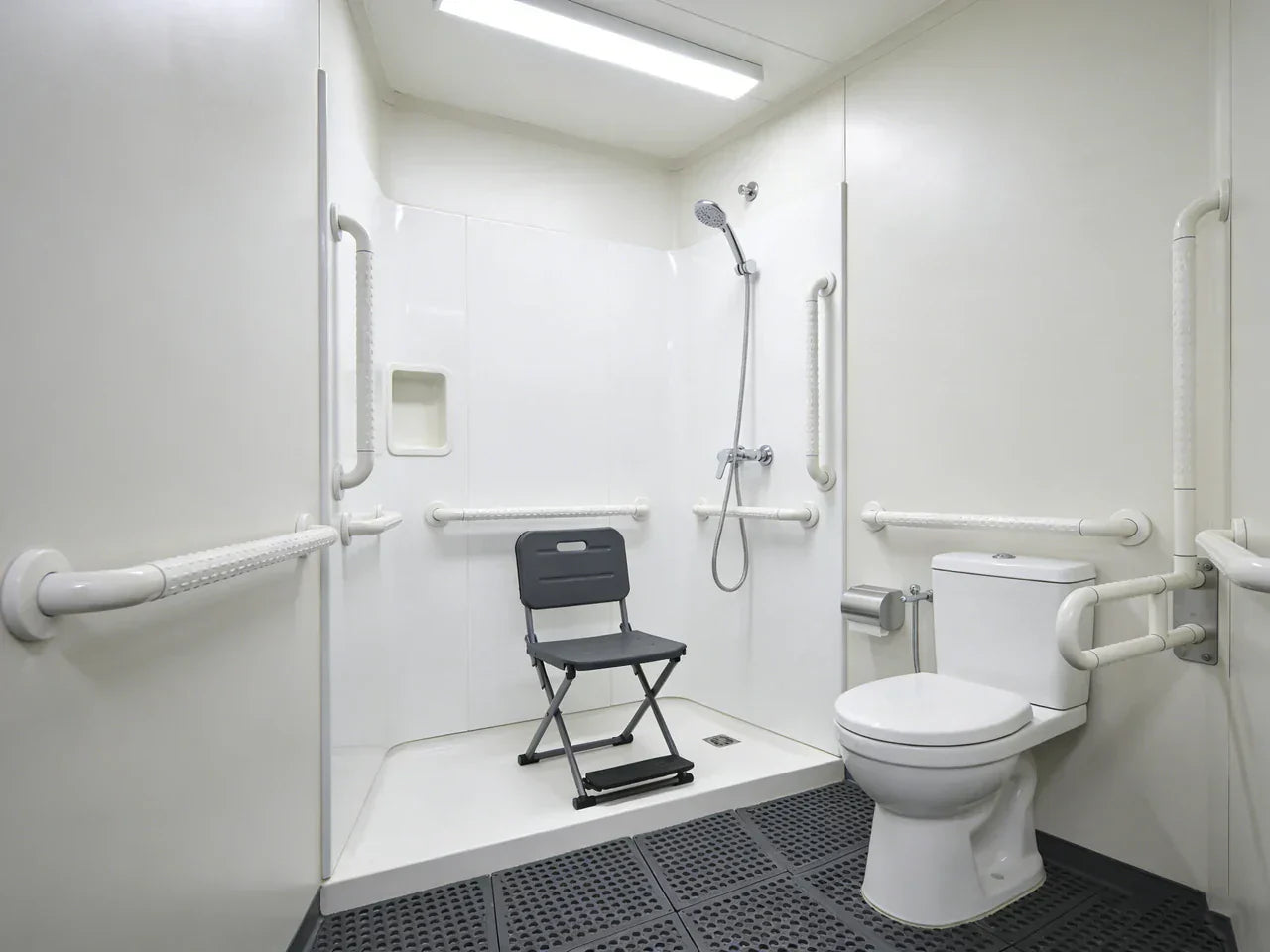
Whether you’re upgrading from a tub or shower, or choosing between a walk-in shower and a walk in bathtub for seniors, these are the walk-in shower features that matter most:
| Feature | Risk reduced | Notes / what to verify |
| Zero or low threshold | Tripping during entry/exit | Confirm slope and drainage for a seamless entry |
| Slip-resistant base | Slips on wet surfaces | Surface should be easy to clean and rated for wet use |
| Proper waterproofing | Hidden rot, mold, future repairs | Ask about system and warranty |
| Safety features like grab bars | Falls during transfer or standing | Confirm bars are anchored correctly, not just into tile |
| Built-in or fold-down seating | Falls from fatigue or dizziness | Confirm seat height and weight rating |
| Handheld showerhead | Slips from twisting/reaching | Helps bathing while seated |
| Anti-scald valve | Burns and sudden temperature shocks | Valves automatically adjust to pressure changes |
Many modern systems are customizable, allowing homeowners to achieve the perfect balance between safety and style while maintaining a cohesive design throughout the bathroom.
If you are planning ahead, think in stages. What works today should still work if mobility changes. The best walk-in shower solutions are designed to guide you every step of aging in place.
Grab Bars That Actually Improve Safety and Accessibility
Grab bars are essential—but only when installed correctly. Professional installation is critical, because a bar that pulls loose can cause more harm than good.
Effective placement supports natural movement patterns: entering, turning, reaching, sitting, and standing. Bars should be positioned where hands naturally reach, not where symmetry looks best.
Always confirm:
-
Bars are anchored into solid backing
-
The grip diameter supports arthritic hands
-
Bars are not blocked by doors or fixtures
These safety features like grab bars are among the most proven ways to improve bathroom safety when used correctly.
Seating Design Choices for Senior-Friendly Walk-In Showers
Seating transforms the bathing experience. For people who tire easily, recover from surgery, or experience dizziness, a seat can be the difference between fear and confidence.
Built-in benches offer stability and support, while fold-down seats preserve space. Both options can be effective when designed with comfort, clearance, and reach in mind.
Well-designed seating supports safer transfers and improves overall confidence—especially for those who need help every step of the way.
Water control upgrades (handheld, thermostatic mixing, pressure balance)
Water control is a quiet safety issue. Older skin burns more easily, and slower reaction time can make sudden hot water dangerous. A pressure-balance valve helps prevent sudden temperature swings when someone flushes a toilet or uses a sink elsewhere. A thermostatic valve can hold a set temperature more precisely.
A handheld showerhead is also a major safety win. It reduces twisting and reaching, which is a common way people lose balance. If the shower is used while seated, a handheld sprayer is close to essential.
When people ask, “What type of shower is best for the elderly?” the safest answer is usually: a walk-in shower for elderly adults with a low/zero threshold, slip-resistant floor, correctly installed grab bars, a stable seat, and easy-to-reach controls with anti-scald protection.
Who Should Choose a Walk-In Shower for Elderly Adults? A Smart Choice for Seniors
Choosing the right option often comes down to how safely and comfortably a senior can move during daily bathing.
Walk-In Shower or Bathtub: Making the Right Choice for Seniors
A shower is often the right choice when stepping over a tub wall feels risky or painful. A tub may still work when a person has strong balance and prefers soaking, but many people reach a point where the tub edge becomes the hazard.
Here is a simple decision cue list (use it like a conversation starter with family):
-
If stepping over the tub feels scary or has caused near-falls, a walk-in shower is usually safer.
-
If standing for a full shower is hard due to fatigue, pain, or dizziness, a shower with a seat often works better than a tub.
-
If soaking is needed for pain relief and the person can safely manage entry/exit and wait times, a walk-in bathtub for seniors may be considered, but the time factor matters (more on that below).
-
If multiple generations share one bathroom, a tub-shower combo can be a compromise, though it may not be the safest for the person at highest fall risk.
If you are unsure, consider a home safety assessment from an occupational therapist. It can feel like “one more appointment,” but it often saves money by preventing the wrong remodel.
Are Walk-In Showers a Safe Choice for Seniors With Dementia?
They can be, but the design should be simpler, not fancier. Cognitive decline can make multi-step tasks harder, and confusing controls can lead to panic or unsafe choices. For dementia-friendly bathing, focus on a predictable layout, clear hot/cold labeling, anti-scald protection, and strong visual contrast so edges are easy to see.
Color contrast helps when depth perception is changing. For example, a slightly darker floor than the walls can help the brain “read” the space. A stable, familiar routine also matters. Some families add a simple sign near the controls or use one lever with a clear direction.
Supervision planning is still important. Even the best shower cannot manage wandering risk by itself. If wandering is a concern, consider door alarms, hallway night lighting, and a routine that reduces rushed bathing.
Curbless vs. Low-Threshold: Best Walk-In Shower Solutions for Mobility Needs
A roll-in shower can be best when a wheelchair is used, or when a walker needs smooth entry with no lip. It can also be helpful when a person shuffles their feet and catches toes on even a small edge.
The tradeoff is water containment. Curbless designs require correct floor slope and drainage planning. In some bathrooms, this may mean more construction work to recess the floor or adjust plumbing. A low-threshold shower can be easier to retrofit in certain homes while still cutting tripping risk a lot.
In short, if wheelchair access is likely, curbless is often worth it. If the goal is safer stepping with minimal remodeling, low-threshold can be a strong middle ground.
What size walk-in shower is needed for a walker or wheelchair?
Sizes vary, but function matters more than numbers. The shower needs enough shower space to enter, turn safely, and use the seat without bumping into controls or doors.
A “sizing cheat sheet” (visual idea) can break it into three categories:
-
Small: workable for independent users who do not need a mobility device inside the shower.
-
Standard: more comfortable for a user who may need a seat and a bit more turning room.
-
Roll-in: intended for wheelchair entry and safer caregiver help.
Instead of guessing, measure the room, then map how a person moves with their walker or chair. Can they turn without clipping their knuckles on a glass panel? Can they back out safely? These details matter more than a brochure size label.

Walk-In Shower vs Bathtub Options: Safe Shower Solutions for Seniors
To make the best choice, it helps to look at how each option performs in safety, comfort, and daily use.
Data-driven pros/cons for elderly safety, comfort, and speed
Families often ask, “Should we do a walk-in shower, a walk-in tub, or a walk in tub with shower for seniors style setup?” The best answer depends on the person’s body, not the trend.
A shower is usually faster and easier to supervise. A tub can offer soaking relief but comes with waiting: you enter, sit, fill, soak, then drain before you can open the door and stand up. That waiting period can be uncomfortable or unsafe for some people, especially if they get cold or dizzy.
Here is a direct comparison table:
| Option | Safety | Comfort | Time to use | Caregiver ease | Typical installed cost range |
| Walk-in shower | Very strong for entry/exit | Strong with seat + handheld | Fast | Easier supervision | $3,000–$12,000+ |
| Walk-in tub | Strong for controlled sitting, but entry/exit still needs care | Strong for soaking | Slower (fill + drain) | Can be harder | $5,000–$15,000+ |
| Tub-shower combo | Mixed (tub wall remains a trip risk) | Mixed | Medium | Mixed | $2,500–$10,000+ |
These are broad ranges. Layout changes, tile choices, waterproofing, and plumbing moves can shift prices.
This also answers a common cost question: What is the average cost for a walk-in tub with shower? Many homeowners see totals in the $7,000–$18,000+ range when they want both a tub and an overhead shower system, because plumbing, waterproofing, and space requirements can rise quickly.
Condition-based recommendations (arthritis, neuropathy, stroke recovery)
Different health issues create different risks. Matching features to symptoms is where smart planning happens.
Arthritis often means pain with stepping high and trouble gripping. A low threshold, wider entry, and easy-to-grab bars help. Neuropathy can reduce foot sensation, so slip resistance and stable supports matter even more. Stroke recovery can bring one-sided weakness, so bar placement and seat transfers should be planned around the stronger side.
If dizziness is common, a seat plus reachable controls is key. People should be able to start water without stepping deep into the spray. That sounds small, but it prevents rushed steps on wet surfaces.
Real-world constraints: space, plumbing, water heater capacity
Removing a tub and building a new walk-in shower can be simple in some bathrooms and tricky in others. Drain placement matters. A curbless shower needs correct slope. If the bathroom is on a concrete slab, plumbing changes can be harder than in a raised-floor home.
If you are considering a tub, hot water capacity matters too. A large tub may need more hot water than the home can deliver in one fill. That can lead to lukewarm baths, longer waiting, and frustration.
A “retrofit constraints checklist” (visual idea) can help you and your contractor talk through:
-
drain location and slope plan
-
subfloor condition and waterproofing details
-
door swing conflicts
-
ventilation strength
-
where blocking will go for future grab bars

What professionals recommend (OT + contractor perspective)
A good remodel starts with function. Occupational therapists often focus on how the person moves: where they pause, where they reach, and where they rush. Contractors focus on what is possible inside walls and floors. The best results come when those views meet.
If you are hiring help, ask for a plan that explains not just what will look good, but how it supports safe movement. For example, moving the control valve to where it can be reached from the entry is a functional choice, not a design trend.
Installing a Walk-In Shower: Cost, Timeline, and Senior Bathroom Planning
Before diving into numbers, it helps to understand the main factors that influence the cost and timeline of a walk-in shower installation.
Typical cost ranges and what drives price (materials, layout, plumbing)
People often ask: How much should a walk-in shower cost for seniors?
A fair answer is, “It depends on how custom the work is,” but that alone doesn’t help families determine the best option for their situation. Understanding what actually drives cost makes planning clearer and reduces surprises.
Several factors strongly influence price:
-
A shower that’s truly curbless (zero-entry) usually costs more, because the floor slope and drainage must be rebuilt correctly to reduce the risk of tripping and water escape.
-
Tile installations often cost more than one-piece shower bases and wall panels. While tile offers a look that works for many design styles, it adds labor, waterproofing steps, and grout maintenance.
-
Moving plumbing—such as relocating controls, adjusting the drain, or adding a second showerhead—adds time and cost.
-
Glass enclosures increase cost. Some families choose a curtain instead because it’s a smart choice for easier access, fewer door obstacles, and simpler daily use.
In many markets, a basic tub-to-shower conversion may fall in the $3,000–$7,000 range. A more customized build—especially one that features a low threshold or fully curbless entry with tile, glass, and plumbing changes—often reaches $8,000–$12,000+, and more in high-cost areas or homes with structural constraints.
A simple cost breakdown chart (visual idea) can help families see where money typically goes: labor, waterproofing, fixtures, containment, and safety accessories like grab bars and seats.
Retrofitting an existing bathroom vs. full remodel
A retrofit focuses mainly on the shower area. A full remodel may also include new flooring, vanity height changes, wider doorways, and improved lighting—all with comfort in mind for aging in place.
When the home has only one bathroom, downtime matters. Planning ahead can reduce stress and fall risk. Some families arrange temporary bathing options, such as using another bathroom, staying with relatives, or scheduling work during a short trip.
Certain prefabricated systems can be installed quickly—sometimes in a day or two. Custom tile showers and plumbing changes take longer. The key is aligning the timeline with the senior’s routines, because disruption itself can increase fall risk during daily activities.
Financial assistance & reimbursement pathways (where available)
A question that comes up in almost every family meeting is: Does Medicare pay for walk-in showers? In most cases, Original Medicare does not pay for a bathroom remodel like a walk-in shower because it is considered a home modification, not durable medical equipment. There can be exceptions in limited situations where specific equipment is covered, but a full shower build is usually not.
Still, there may be other paths:
-
Some Medicare Advantage plans may offer limited supplemental benefits that can support safety improvements. Coverage varies by plan and location, so the plan must be asked directly.
-
Medicaid home- and community-based services (HCBS) waivers sometimes help with home modifications for people who qualify.
-
Veterans may qualify for housing grants that support accessibility upgrades.
-
Local Area Agencies on Aging sometimes know about community programs, low-interest loans, or grant options.
Because rules vary, it helps to gather documentation. A doctor’s note, an occupational therapy assessment, and clear fall-risk history can support applications.
Choosing an installer: bids, warranties, and red flags
A walk-in shower may look perfect on day one, but hidden failures show up later. That’s why installer quality is central to shower safety for elderly users.
When comparing bids, pay close attention to:
-
Waterproofing details and what the warranty covers
-
How the slope and drain will be handled (especially for curbless plans)
-
Whether backing will be installed for current and future grab bars
-
Proof of licensing and insurance (requirements vary by location)
-
Clear pricing for change orders so you are not surprised mid-project
If a bid is vague about waterproofing, that is a reason to slow down and ask better questions.
Safety and Accessibility in Modern Walk-In Shower Design Choices
Understanding key layout principles ensures the shower is both safe and comfortable for daily use.
Modern Walk-In Shower Layout Essentials for Safety and Comfort
Even if you are not building for formal ADA compliance, ADA-inspired best practices are helpful because they focus on safe reach and movement.
In plain terms, you want to minimize bending, twisting, and stepping backward on wet surfaces. A smart layout lets the user:
-
enter and exit without squeezing past a door edge
-
reach controls without stepping deep into the spray
-
sit without knees hitting the valve wall
-
stand with support nearby
A “reach zones” overlay (visual idea) can show ideal zones for controls and handheld shower placement so a seated person can reach without leaning.
Modern Design Solutions for Safe and Stylish Walk-In Showers
Curbless showers can be excellent, but only if water stays where it should. Water escaping into the bathroom increases slip risk and can damage subfloors.
Containment options have tradeoffs, especially for older adults:
| Containment option | Pros for seniors | Cons to consider |
| Shower curtain | Simple, forgiving, often easier to clean | Can cling; needs cleaning |
| Fixed glass panel | Open entry feel; blocks spray | Must be sized well to prevent puddles |
| Glass door | Strong containment | Door swing and track can create a trip point |
Flooring also matters outside the shower. A slip-resistant tile or other wet-area flooring can reduce falls when stepping out and drying off. Large-format tiles can reduce grout lines, which some people like for cleaning, but texture matters more than grout count for slip risk.

Stylish Yet Safe Bathroom Lighting for Aging in Place
Many bathroom falls happen at night. Motion-sensor night lighting can help. Reducing glare also matters, because shiny surfaces can confuse depth perception. Contrast strips at the edge of a shower entry or along a bench can help people “see” the change in surface.
For people with cognitive decline, clear visibility is calming. When the room is easy to read, the person is less likely to rush.
Smart safety add-ons (2026 trend)
Not everyone wants technology, but some features can add peace of mind:
-
Leak detectors
-
Anti-scald temperature limiters
-
Simple alert buttons near the shower
These tools help families feel ready to explore aging-in-place solutions, but they should always support—not replace—good physical design.
Maintaining a Safe Walk-In Bathroom: Cleaning, Longevity, and Slip Prevention
Keeping a walk-in shower safe goes beyond installation—regular cleaning and proper maintenance are key to preventing slips and prolonging its life.
Cleaning routines that preserve slip resistance and hygiene
Some cleaners leave residue that increases slipperiness. The goal is hygiene without buildup.
A simple routine works best:
-
Rinse after use
-
Weekly cleaning with non-waxy products
-
Rinse thoroughly
-
Use ventilation to control moisture
Keeping tools within reach makes upkeep easier for users with limited strength.
Preventing mold, mildew, and drainage issues
Mold and mildew are not just cosmetic. They can affect breathing for people with asthma or COPD, and they make surfaces harder to clean. Strong ventilation is one of the simplest fixes. If the fan is weak or loud and people avoid using it, upgrading the fan can pay off quickly.
Drainage problems also increase slip risk because puddles linger. If water pools, ask the installer to check slope and drain performance. Do not ignore it.
Long-Term Upkeep and Safety Checks
A walk-in shower can last many years, but some parts need upkeep. Caulk can crack. Grout can stain. Seats and bars can loosen with repeated use.
A simple inspection timeline helps:
| Component | What to inspect | Typical timing |
| Caulk at corners | Cracks, gaps, peeling | check every 6–12 months |
| Grout (if tile) | Crumbling, dark spots, loose areas | yearly |
| Grab bars | Any movement or loosening | every few months |
| Seat hinges (fold-down) | Wobble, rust, loose screws | every few months |
| Drain flow | Slow drain, odors | monthly |
How to keep the shower safe as mobility changes over time
Needs change. A shower that works today may need add-ons later. The best approach is to plan a “safe upgrade path.” For example, you can add extra bars, switch to a different handheld head, adjust the seat, or widen entry access if the layout allows.
If you are remodeling now, ask the installer to add wall backing for future grab bars even if you are not ready to install them. It is a small step that can prevent big rework later.
Real Results: How Senior-Friendly Walk-In Showers Improve Safety and Independence
Seeing real-life examples helps illustrate how thoughtful walk-in shower designs translate into safer, more independent daily routines for seniors.
Installation case example: low-threshold shower + bench + rails
A family I worked with (names changed) had an 81-year-old mother who had one “near miss” stepping out of a tub. She did not fall, but she said, “My legs did not listen.” After that, she started taking quicker, less thorough showers because she wanted to get out fast.
They replaced the tub with a low-threshold walk-in shower and added a bench and strategically placed grab bars. The biggest change was not just physical safety—it was behavior. She stopped rushing. She sat to wash her legs. She reached the handheld sprayer without twisting. The bathroom felt usable again, not like an obstacle course.
The family said the best part was that mornings became calmer. No one felt they had to “hover” outside the door. Even small design changes added an extra layer of confidence that changed how the space was used every day.
Caregiver perspective: reduced supervision and safer transfers
Caregivers often describe bathing as the most stressful daily task. It mixes privacy, water, hard surfaces, and lifting risks. When a shower has a stable seat and proper bars, the caregiver can assist with less pulling and fewer awkward angles. That reduces strain for both people.
Even when a caregiver still helps, the help can shift to gentle support instead of emergency catching.
User-reported results and community insights (what to validate)
Across many families, similar themes come up: easier entry, less fear, faster routines, and fewer close calls. It is wise to treat dramatic claims carefully, especially online. Still, when user stories line up with what we know about fall risk—wet surfaces plus thresholds plus poor supports—the direction makes sense.
The most believable “proof” is often simple: the person uses the shower more confidently and consistently. That improves hygiene, comfort, and dignity, which matter just as much as statistics.
Market and trend context (industry growth + demand signals)
The aging population and the push to age in place are driving more bathroom modifications. Industry reports show continued growth in accessibility-focused bathroom products and remodeling. The important point for a homeowner is not the market size. It is that installers are seeing more of these projects, building codes and best practices are improving, and product choices are expanding.
The Best Walk-In Shower Buyer’s Blueprint for Aging in Place
To start, it’s important to look at how the bathroom is used today—measuring space and noting challenges will guide every other decision.
Step 1: Home assessment (risk audit + measurements)
Start with how the person actually bathes today. Do they hold the wall? Do they avoid showering? Do they get tired standing? Then measure the room. You do not need fancy tools—just a tape measure and notes.
Use this step-by-step:
-
Measure bathroom doorway width and note any tight turns.
-
Measure the current tub/shower opening and the full space available.
-
Note the door swing and whether it blocks movement.
-
Identify where the plumbing wall is (moving plumbing raises cost).
-
Note lighting levels at night and fan strength.
-
List the top three “scary moments” the user reports (stepping in, turning, reaching controls, stepping out).
If you like tools, imagine a simple “Shower Fit Calculator” (visual idea): input dimensions and mobility needs, get a recommended type (low-threshold vs. curbless vs. tub option). Even without software, the logic is the same.

Step 2: Feature selection based on needs (must-have vs nice-to-have)
Think in mobility tiers:
-
Independent but cautious: low threshold, slip-resistant base, one grab bar, handheld.
-
Needs support: low/zero threshold, multiple bars, built-in seating, anti-scald valve.
-
Wheelchair user: curbless roll-in entry, enough turning room, reachable controls from seated position, caregiver space if needed.
This is also where you answer, “How to make a shower safe for seniors?” You make it safe by reducing barriers, improving traction, adding stable supports, making sitting easy, and simplifying controls.
Step 3: Questions to ask contractors and what to confirm in writing
When you get bids, ask questions that force clear answers:
-
What waterproofing system will be used, and what does the warranty cover?
-
How will you create proper slope to the drain, especially for curbless?
-
What is the plan for water containment outside the shower?
-
Will you add backing for grab bars, and where?
-
What slip-resistant surface is included for the shower base and bathroom floor?
-
Where will controls be placed so they are reachable from the entry and the seat?
-
What is the timeline, and what is the plan if the home has only one bathroom?
Confirm the answers in writing. Clear paperwork prevents confusion later.
Step 4: Final decision summary (safety-first, budget-aware, future-proof)
If you feel stuck between options, return to the core goal: reduce falls while preserving independence. A well-planned walk in shower for elderly adults removes the high tub wall, supports stable movement, and makes bathing less exhausting. It can also reduce caregiver burden and help people stay at home longer.
A “one-page decision tree” (visual idea) can help families agree: start with fall history and mobility needs, then choose threshold type, then choose supports (bars/seat), then choose finishes and containment.
FAQs
1. Does Medicare pay for walk-in showers?
In most cases, Medicare doesn’t cover the cost of installing a walk-in shower. Original Medicare is mainly focused on medical treatments and equipment, not home remodeling projects, so a bathroom overhaul usually falls outside its coverage. That said, some Medicare Advantage plans may offer small benefits for home modifications, like safety upgrades or fall-prevention measures, but these are often limited and vary by plan. Beyond Medicare, there are other avenues you might explore. Medicaid waivers, grants for veterans, and programs from local aging services offices sometimes provide financial help for making a bathroom safer. Eligibility rules differ widely depending on your state, income, and health status, so it’s worth checking what programs apply to you. Even small support can make a big difference when upgrading a bathroom for safety and accessibility.
2. How much should a walk-in shower cost for seniors?
The cost of installing a walk-in shower can vary a lot depending on what you want and the condition of your bathroom. On average, many projects land somewhere between $3,000 and $12,000 or more once installation is included. The final price often depends on a few big factors: whether you need to move plumbing, whether you want a curbless (zero-threshold) entry, and what materials you select—think tile versus prefabricated panels, or glass doors versus simple shower curtains. High-end finishes or custom layouts can push costs higher, while more basic setups stay on the lower end. Keep in mind that the price also covers labor, which can be significant if your bathroom needs modifications to make it safe for seniors. Planning carefully and comparing options helps you balance budget, safety, and style.
3. What type of shower is best for the elderly?
When it comes to showers for seniors, safety and accessibility are the top priorities. The ideal setup usually includes a walk-in shower with a low or zero threshold to make entering and exiting easy, even for those with mobility issues. A slip-resistant floor is essential to reduce the risk of falls, while grab bars placed in the right spots provide extra support. Adding a sturdy seat allows seniors to shower comfortably without standing for long periods. Anti-scald temperature controls protect against sudden hot water bursts, which is especially important for older skin. Lighting should be bright and evenly distributed, and the shower space should be free of clutter. Overall, a shower designed with these features combines safety, convenience, and peace of mind.
4. How do you make a shower safe for seniors?
Making a shower safe for seniors is all about reducing hazards and improving accessibility. Start by lowering or removing the entry barrier so stepping in and out is easier. Slip-resistant flooring or mats prevent falls, while grab bars anchored into solid walls give reliable support. Adding a stable shower seat lets users sit comfortably, and a handheld showerhead makes bathing easier for those with limited mobility. Good lighting helps prevent accidents, and proper ventilation reduces slippery surfaces from steam. Outside the shower, keeping the floor clear and avoiding loose rugs or clutter is equally important. Even small adjustments, like a bath mat or anti-scald devices, can make a noticeable difference in safety and confidence while bathing.
5. What is the average cost for a walk-in tub with shower?
A walk-in tub combined with a shower tends to be more expensive than a standard walk-in shower, largely because of the tub’s features and installation requirements. On average, you’re looking at $7,000 to $18,000 or more once everything is installed. Factors that influence the cost include plumbing changes, the size and shape of your bathroom, and any additional safety features like hydrotherapy jets, anti-slip floors, or built-in seating. Prefabricated units are generally cheaper, while custom designs and high-end finishes can push prices to the upper end. Even with the higher cost, a combined walk-in tub and shower setup can provide seniors with a safer, more comfortable bathing experience, giving both independence and peace of mind in daily routines.
References


Leave a comment
This site is protected by hCaptcha and the hCaptcha Privacy Policy and Terms of Service apply.