
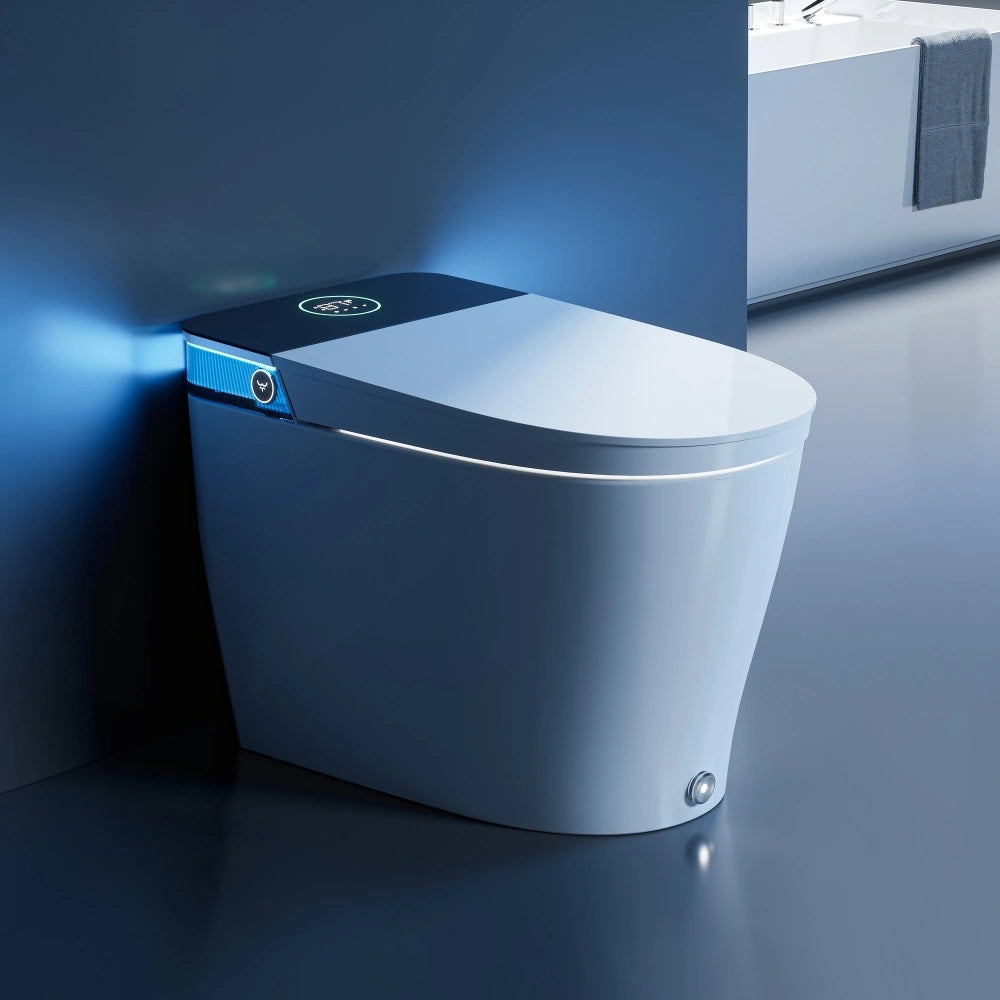
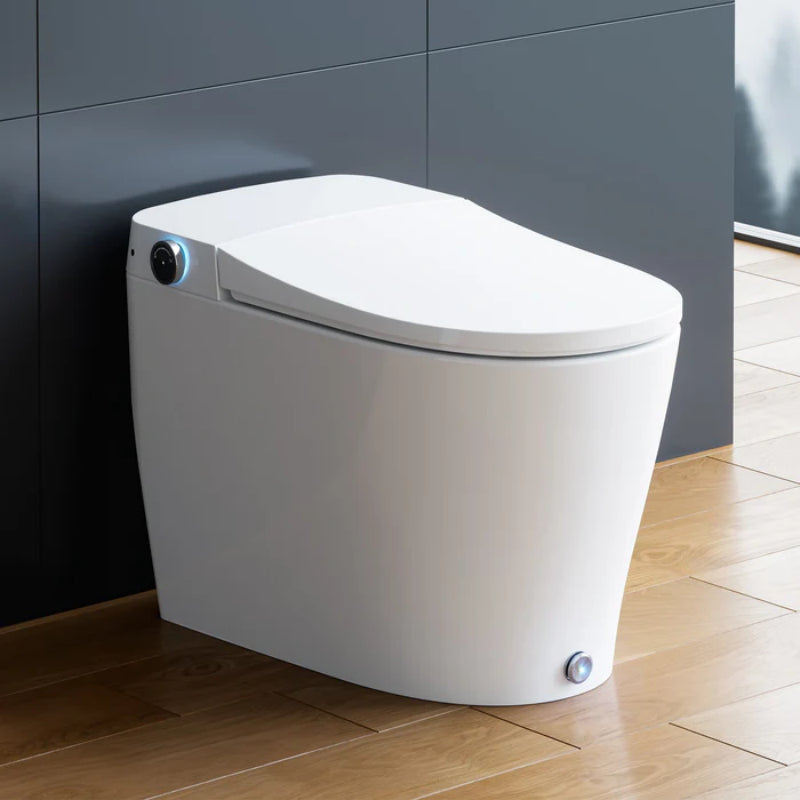
When shopping for the best smart toilets for small bathrooms, you will find that a smart toilet can solve one problem in a small bathroom and create three more if the room is tight, the rough-in is off, or power is not where it needs to be.
That is the main issue with the best smart toilets for small bathrooms. On paper, these intelligent toilets look ideal: tankless body, one-piece form, built-in bidet, heated seat, deodorizer, and fewer add-ons hanging off the toilet. In real homes, the trouble usually starts with depth, outlet location, wall clearance, and the bulky rear housing that does not show up clearly in product photos, especially in tight spaces.
If you are trying to choose the best compact smart toilets for small bathrooms, the goal is not finding the one with the most features. The goal is finding out whether a compact smart toilet will fit your room, your plumbing, and your daily use without making the bathroom harder to use, ensuring this innovation functions properly.
Decision snapshot: is this a good fit?
A compact smart toilet is usually a good fit if all of these are true:
-
You have a standard 12-inch rough-in
-
You have a GFCI outlet within about 3 to 4 feet
-
Your bathroom has enough front and side clearance for the full toilet projection
-
The room is used often enough that heated seat, wash, and drying features matter
-
The people using it are fine with a shorter or tighter seat shape, or prefer bidets for small bathrooms as an integrated solution.
It is usually a bad fit, or at least a risky one, if any of these are true:
-
The toilet sits close to a swinging door
-
The room is a small powder room used only by guests
-
The wiring is old and there is no nearby safe outlet
-
The rough-in is under 12 inches and you are hoping a “compact” model will solve that
-
Taller users already find standard short toilets uncomfortable, as small bathrooms often lead to these exact mismatches.
Here’s where people usually run into trouble: they measure bowl length, not full projection; they misunderstand tankless toilet benefits by assuming tankless means shorter; or they forget that an integrated smart toilet needs power and often has a larger rear section than a standard short projection toilet. That is why a space-saving bidet toilet works only when the room is measured around the installed body, not the marketing photo—especially when there’s a bidet integrated into the design and you are trying to save space.
Best in 12-inch rough-ins with nearby GFCI
If you have a basic modern layout with a 12-inch rough-in, exposed or accessible shutoff valve, and a GFCI outlet nearby, the best smart toilets for small bathrooms can work well. This is the cleanest install path, leaving the room looking cleaner.
In that setup, the toilet often replaces a standard floor-mounted toilet without major plumbing changes or a full renovation. You still need to verify side clearance and door swing, but the project stays in the “normal bathroom upgrade” category—meaning you don’t need a full remodel.
This is also where the best smart toilets for small bathrooms, featuring adjustable settings for powder rooms and small spaces, makes the most sense. The body is easier to wipe down, promoting better hygiene, there is no separate bidet seat overhanging the back, and the visual bulk can be lower than standard toilets with added electric bidet seats.
Avoid in tight clearances or old wiring
If your bathroom is smallIf your bathroom is small enough that your knees nearly touch the door now, even the best smart toilets for small bathrooms may still not help enough. Many integrated units save tank depth but add bulk behind the seat, which is how these toilets work. The result is that the toilet may not stick out much less than what you already have.
Old wiring is another stop point for any high-tech fixture. The best smart toilets for small bathrooms still need safe power. No nearby GFCI usually means electrician cost, possible circuit checks, and in some older homes, opening walls. This is where the “small upgrade” turns into a much bigger job.
Better to skip for occasional-use powder rooms
The best smart toilets for small bathrooms sound appealing, but many powder rooms are the worst place for one. They often lack outlets, have the least front clearance, and get used too little to justify the cost and maintenance.
For a guest bath that sees light use, bidets in small bathrooms with added electronics, filters, nozzle cleaning, and service complexity often do not pay off. In short, if the room is mostly for guests washing hands and occasional toilet use, a smart toilet is often more specification than the room needs.
What trade-offs come with the best smart toilets for small bathrooms?
Saving space typically means accepting performance compromises elsewhere. Understanding these trade-offs helps you decide if the savings are worth it.
Shorter bowls can reduce tall-user comfort
The best smart toilets for small bathrooms may still feel short to taller users. That matters more than people expect. In a showroom or online listing, a 1 to 2 inch reduction in projection sounds minor—until you sit on the toilet seat daily. In daily use, it can feel cramped, especially for anyone with long legs or joint issues.
This becomes a problem when the bathroom is also narrow. A shorter bowl can push the sitter into a more tucked posture, and if the vanity is close on one side, the whole setup feels tighter than the measurements suggest.
If anyone in the home already prefers comfort-height seating, check seat height carefully. Some compact units sit lower than expected, and lower seats in tight rooms can feel unstable when standing up.
Rear bulk can shrink usable seat space
This is one of the most common regrets with compact smart toilets. The outer body may be short, but the rear housing that contains the water path, heater, and controls often extends into the seat area. So the “usable” sitting space is smaller than the overall dimensions suggest.
In practice, that means some people sit farther forward than normal. Over time, they start noticing thigh pressure, less support, or a slight feeling of being pitched forward. This complaint comes up more in truly tight apartment bathrooms where buyers assumed “compact” meant it would feel roomy.
A smart toilet with self-cleaning nozzle for compact bathrooms can still have this issue. Self-cleaning nozzles and built-in wash systems do not change the fact that internal hardware takes up room somewhere.
Tankless designs save depth but complicate fit
Many buyers assume a tankless bidet toilet for limited bathroom space is always the right answer. Often it is the best way to reduce projection, but not always.
Tankless designs save depth because there is no tank sticking back toward the wall. But they can require more exact alignment with supply and drain positions. The body shape is often skirted and less forgiving around old shutoff valves, uneven walls, or supply lines placed higher than expected.
So yes, are tankless toilets better for small spaces? Often, yes, when the room is limited front-to-back. But they are less forgiving when your plumbing is slightly off or hidden in a way that conflicts with the toilet base.
Wall-mounted models save floor space, add retrofit cost
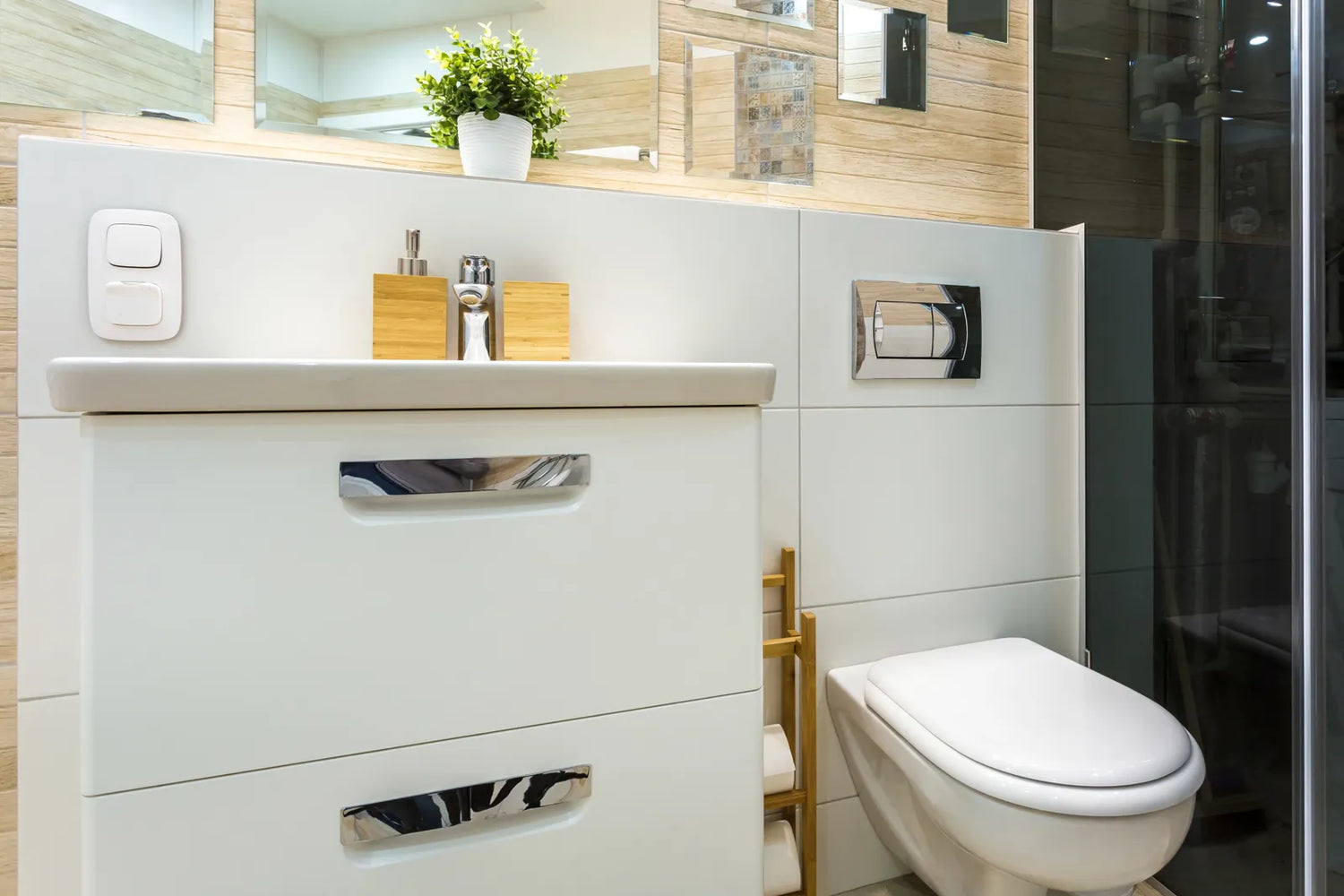
A wall-mounted toilet in a small bathroom can make a tiny room feel more open. Floor visibility helps, cleaning is easier below the bowl, and the projection can be shorter than many floor-mounted units.
But this works mainly when the wall can handle an in-wall carrier system and the plumbing can be moved. In an existing bathroom, especially one with finished tile or exterior walls, this is not a simple swap.
Are wall-mounted smart toilets better for small bathrooms? They can be, but mostly in new builds or full remodels. In a retrofit, they are often the most expensive way to gain a few inches.
What will installation really cost?
The hidden expenses emerge once installation planning begins. Here are the most common cost drivers beyond the toilet itself.
Outlet upgrades can stop the project
The toilet itself is often not the part that causes the budget jump. The electrical work is.
No nearby GFCI outlet means you may need a new protected receptacle close to the toilet. If the wall is tiled, if the circuit is full, or if access is poor from below or above, labor climbs fast. Some homeowners try to use extension cords or reach across the room. That is where the project should stop. A cord across a wet bathroom floor is not a workaround.
This is one reason smart toilet installation requirements for small bathrooms need to be checked before shopping. If the room cannot provide safe power, the feature list does not matter.

Rough-in corrections can exceed toilet savings
A standard 12-inch rough-in fits best. Once you move off that standard, costs rise quickly.
If your rough-in is wrong for the unit you want, there may be no neat fix. Adapters can help in a few cases, but many integrated designs are not forgiving. Pipe relocation can cost far more than the price difference between toilet models.
This is where homeowners get burned by “universal fit” language. Universal rarely means every old bathroom. It usually means common modern rough-ins with enough supply line and shutoff clearance.
Wall-hung installs need framing and plumbing changes
A wall-mounted smart toilet for small bathrooms often requires opening the wall, setting a carrier frame, rerouting the drain, adjusting supply lines, and then restoring finishes. If the wall is not thick enough or contains other mechanical runs, costs go higher.
This is not just plumbing labor. It can include framing, drywall, tile, painting, and possible permit requirements. In a small bath, one hidden obstacle can undo the whole plan.
Concrete and tile floors raise labor risk
Bathrooms on slab floors or with brittle finished tile bring another layer of risk. If the flange needs correction or relocation, the labor gets more invasive. If the installer has to work around expensive tile, one crack can turn into a repair project.
A skirted one-piece smart toilet for compact spaces also hides less of the floor hardware during install than some people expect. If the floor is uneven or the flange is not set well, the toilet may rock. Then the “easy replacement” becomes a return visit for shimming, resealing, or flange work.
Will this fit my bathroom layout?
Accurate measurements are the foundation of any successful installation. Let's break down what to measure and how:
Measure full projection, not bowl length
This is the most important measurement mistake people make.
Do not measure just the bowl.
How to measure full projection (correct method):
-
Start at the finished wall surface
-
Measure to the front-most point of the toilet, including:
-
seat
-
lid
-
any front overhang
-
-
Include rear housing offset (some units sit slightly away from the wall)
Front-clearance judgment for small bathrooms:
-
Pass: ≥ 21" usable clearance in front
-
Marginal: 18"–21" → usable but tight
-
Fail: < 18" → restricts movement and door function
A short projection smart toilet for small bathroom layouts should be judged on installed depth, not listed bowl type. A compact elongated bowl can still have a long overall projection once the electronics housing is added.

Door swing conflicts start around 26 inches
In very small baths, once toilet projection gets near the mid-20-inch range, door clearance becomes a real issue. The exact tipping point depends on room width, toilet placement, and hinge side, but this is where problems start showing up.
If the door already clears your current toilet by only a little, measure with the door fully open and partly open. Many problems happen not when the door is shut, but when someone tries to step in, close the door, and move around the toilet at the same time.
Which smart toilet is best for a 3x5 bathroom? Usually, not the one with the most built-in bulk. In a room that small, every inch of front projection matters more than wash settings or lid features.
Side clearance affects cleaning and sitting comfort
A toilet can technically fit and still feel bad to use. Side clearance is where that shows up.
If the toilet is squeezed between a vanity and wall, or a vanity and tub, sitting comfort drops fast.
Side-clearance benchmarks:
-
Minimum (code-level): 15" from centerline to each side
-
Comfortable: 16"–18"+ per side
Based on guidance from the United States Access Board, minimum clearances are established to ensure accessibility and safe use in bathroom layouts.
Pass / fail interpretation:
-
Pass: No elbow contact, easy cleaning access
-
Marginal: Fits but elbows or knees touch surfaces
-
Fail (“fits but feels bad”): user must sit angled or cannot clean sides properly
If the toilet has a skirted base, also verify shutoff valve access. Some compact designs block access completely if side space is too tight.
What tends to happen in practice is that buyers focus on front clearance and ignore hip room. Then after install, they realize they have to sit slightly sideways or cannot clean around the base well.
Will this work in a small bathroom?
It will work if the room still allows normal entry, door movement, leg room, and cleaning access after installation. That sounds obvious, but many “fits on paper” installs become annoying because the toilet became the largest object in the room.
A low-profile smart toilet for modern small bathrooms can help visually, but low profile does not always mean low projection. You need both.
Will my plumbing and power support it?
Beyond physical fit, your existing plumbing and electrical systems must support the upgrade. These are the critical infrastructure checks.
Standard 12-inch rough-ins fit best
If your toilet flange is 12 inches from the finished wall to the center of the bolts, your options are widest. Most compact smart toilets are built around that standard.
How to measure correctly (step-by-step):
-
Measure from the finished wall (not the baseboard) to the center of the closet bolts.
-
If baseboards are present, measure from the wall surface above them or subtract their thickness.
-
If the wall is uneven, take multiple measurements and use the smallest value.
-
Target measurement: 12 inches (305 mm) to bolt center.
Pass / fail tolerance for integrated smart toilets:
-
Pass: 12" to 12.5" → ideal fit
-
Marginal: 11.9"–11.99" → verify rear clearance carefully
-
Fail risk: under 11.9" → likely interference with rear housing
That is why how to choose a compact smart toilet for tight spaces starts with the rough-in, not the feature list. A perfect depth number means little if the toilet cannot sit properly over the flange.
What happens with an 11.75-inch rough-in?
This is where small measurement errors turn into hard installation failures.
Decision outcomes for an 11.75-inch rough-in:
-
Hard no-go:
-
Manufacturer requires full 12" rough-in
-
Rear clearance tolerance is under 0.25"
-
Toilet has a bulky rear housing (most integrated models)
-
-
Potentially workable (with caution):
-
Manufacturer explicitly supports 11.75"–12" installs
-
Rear housing is compact or recessed
-
Wall is flat and has no trim interference
-
Do this before ordering (required):
-
Check the manufacturer’s rear clearance requirement (distance from wall to back of unit)
-
Confirm minimum rough-in tolerance in the spec sheet
-
Measure your wall flatness and baseboard thickness
An 11.75-inch rough-in is not “close enough” by default. For integrated bidet for small bath, it is often the difference between a clean install and a unit that cannot sit flush against the wall.
Low water pressure weakens bidet performance
Smart toilet water and power requirements for small bathrooms are often overlooked because homeowners assume “toilet water is toilet water.” The flush may work fine even when bidet performance does not.
Built-in wash functions depend on stable water pressure. According to the United States Environmental Protection Agency (EPA), stable residential water pressure is essential for consistent fixture performance and efficiency.
Minimum water pressure benchmark:
-
Recommended: 35–60 PSI
-
Minimum workable: ~25 PSI
-
Below 25 PSI: weak or inconsistent spray likely
Simple self-check methods:
-
Use a basic pressure gauge on a hose bib or shutoff valve
-
Observe flow: slow tank refill, weak faucet flow, or pressure drops during peak hours are warning signs
If your home has weak pressure, old shutoff valves, scaling in lines, or shared pressure drops at peak use times, the spray can feel weak or inconsistent. Drying features then get leaned on more, which extends use time and may be disappointing in humid rooms.
If pressure is borderline, verify performance requirements before purchase or consider a bidet seat with better tolerance.
This matters if your main reason for buying is wash performance. A smart toilet vs bidet seat for small bathrooms can come down to this: in some homes, a separate bidet seat on a proven toilet gives more flexibility and easier future replacement if wash performance is poor.
No nearby GFCI means no safe install
This point is non-negotiable.
Usability rule (must meet all):
-
The factory power cord must reach a GFCI outlet directly
-
No extension cords allowed
-
Cord must not cross walking paths
-
Cord must not be exposed to wet-floor areas
Hard stop:
If these conditions cannot be met, do not install the smart toilet until a proper GFCI outlet is added.
Do smart toilets need a lot of clearance? Not always. Do they need safe nearby power? Absolutely. Without it, the unit is either unusable or unsafe.
Which small bathrooms cause regret?
Certain room layouts repeatedly disappoint owners even after installation succeeds. These are the most common problem scenarios.
Tight vanity gaps force awkward sitting
The most common regret layout is the toilet wedged beside a vanity with very little side room. Even if the unit fits, the user often has to sit slightly off-center or angle knees around the vanity corner.
A space-saving smart toilet with bidet for tight bathrooms does not solve a side-gap problem very well. It solves a front-to-back problem better.

Low seat heights strain taller users
Compact units often sit lower or feel lower because of bowl shape. For taller adults, older users, or anyone with knee or hip pain, this can become tiring fast.
This is where “compact” and “comfortable” split apart. If the bathroom is used every day by tall users, a shorter smart toilet may save space but create constant annoyance.
Hidden supply lines can block skirted bases
Skirted smart toilets look clean, but they are less forgiving when the shutoff valve or supply stub-out sits in the wrong place. In older bathrooms, these line locations are often not where newer integrated bases want them.
This becomes a problem when the installer cannot connect the hose cleanly or the base cannot sit flat because the line interferes. Buyers who measured only the footprint often miss this.
Are wall-mounted toilets better in tight rooms?
They are better when the room is being rebuilt anyway and when floor space matters more than budget. They are not automatically better in a simple toilet swap.
In a very tight room, wall-hung can free visible floor area and slightly reduce projection. But if the wall has to be rebuilt to get there, many homeowners spend a lot to solve a space issue that a simpler short-projection floor model could have handled.
What fails after installation?
Long-term dissatisfaction often stems not from the toilet itself but from how the room conditions interact with it. Watch for these common failure patterns.
Uneven floors lead to rocking and seal leaks
This is one of the first real-world failures. An integrated toilet set on an uneven floor may rock slightly. At first it feels minor. Later, movement stresses the seal and can lead to leakage at the base.
Because many smart toilets are heavy and skirted, the problem may not be obvious right away. If the installer rushes the setup or relies too much on caulk to hide movement, the callback comes later.
Humid rooms reduce drying and self-cleaning gains
A smart toilet with deodorizer for small bathrooms or a self-cleaning nozzle sounds ideal for a compact room. But in humid bathrooms with poor ventilation, those features do less than buyers expect.
If the room stays damp, surfaces remain damp. According to the Centers for Disease Control and Prevention (CDC), moisture and poor ventilation increase the risk of mold growth in indoor environments. Mold and grime can still build under rims, around hinges, and in places where splashing happens. Drying cycles also feel less effective in already humid air.
So if your small bathroom has no good exhaust fan, the smart toilet is not fixing the moisture problem. It is just living inside it.
Hard water clogs nozzles and weakens spray
Hard water is a quiet long-term issue. Over time, mineral buildup can narrow nozzles, affect spray consistency, and increase cleaning needs. This happens in compact bathrooms just as much as large ones, but owners of integrated toilets feel it more because the wash system is built in.
A smart toilet with self-cleaning nozzle for compact bathrooms still needs periodic descaling if your water is hard. Self-cleaning reduces residue. It does not remove mineral deposits the way homeowners often imagine.
What fails first over time?
Usually the first disappointments are not dramatic failures. They are reduced spray quality, slower lid or seat mechanisms, sensor quirks, or cleaning difficulty around tight clearances.
The bigger concern is serviceability. If a basic toilet fill valve fails, repair is usually simple. If an integrated smart toilet has an internal electronic or wash-system issue, repair can be more specialized and more expensive. In a small home with one main bathroom, that matters.
When is a simpler option better?
A smart toilet is not always the right answer, even when the space allows it. These alternatives often deliver better results.

Bidet seats work better in standard layouts
If your current toilet is comfortable, your bathroom has enough room for a seat to overhang slightly, and you mainly want washing features, a bidet seat often makes more sense.
This is the key point in the smart toilet vs bidet seat for small bathrooms question. A bidet seat gives you many of the same daily-use features with lower replacement cost and easier servicing. It can add depth behind the seat, so it is not perfect for every tiny bathroom, but in a standard layout it is often the smarter buy.
Non-electric models suit outlet-free powder rooms
If there is no nearby GFCI and adding one is expensive, a non-electric bidet option may be the practical answer. You lose heated seat, warm air drying, and some automation, but you avoid the wiring problem entirely.
For an occasional-use guest bath, that trade-off is often more sensible than forcing in an electric smart toilet.
Two-piece toilets ease future repairs
Integrated one-piece smart units are neat and compact, but two-piece or standard toilet plus bidet setups are easier to repair in stages. If one part fails, you do not always have to deal with the whole assembly.
That matters in older homes, rental properties, or households that want easier long-term maintenance.
When is a smart toilet overkill?
It is overkill when the room is used rarely, when you are solving for appearance more than function, or when the bathroom lacks the basics the toilet needs to work well: proper rough-in, proper outlet, stable pressure, enough clearance, and decent ventilation.
What to consider before buying a smart toilet for a small bathroom comes down to this: if the room has three constraints already, adding a highly integrated fixture usually increases the chance of one of them becoming a daily annoyance.
Before you buy
Use this checklist before ordering anything:
-
Measure from the finished wall to the front of your current toilet, then compare it to the full installed projection of the new unit.
-
Confirm your rough-in from finished wall to bolt center is truly 12 inches or whatever the toilet requires.
-
Check for a nearby GFCI-protected outlet without using extension cords.
-
Measure side clearance to vanity, wall, or tub so you can sit and clean comfortably.
-
Verify your shutoff valve and supply line location will not interfere with a skirted or tankless base.
-
Test door swing with a cardboard mockup if the room is very tight.
-
Consider who uses the toilet daily, especially taller adults or anyone needing comfort-height seating.
-
If the room is humid, fix ventilation first so drying and self-cleaning features are not wasted.
FAQs
1. Do smart toilets need a lot of clearance?
Not necessarily—but they do need correct clearance. Most compact smart toilets reduce tank depth, but the rear housing and full projection still matter. You need enough front clearance (ideally ≥21 inches) and proper side space to sit comfortably. In tight bathrooms, door swing and knee space are often the real limits, not width. So it’s less about “a lot” of space and more about measuring the installed footprint accurately.
2. How to measure for a compact toilet?
Measure full projection, not just the bowl. Start from the finished wall (not baseboard) and measure to the front edge of the seat/lid. Include any rear offset from the wall. Then check: front clearance (≥21" ideal), side clearance (15" minimum from centerline), and rough-in (typically 12"). This method prevents the most common mistake—buying a “compact” model that still feels too long once installed.
3. Can you put a bidet in a tiny bathroom?
Yes, and often more easily than a full smart toilet. A bidet seat works well if your existing toilet already fits the space. It adds minimal bulk compared to integrated units and avoids major plumbing changes. The main limitation is depth—some seats extend slightly behind the bowl. If you lack a nearby GFCI outlet, a non-electric bidet is usually the simplest and safest solution.
4. Which smart toilet is best for a 3x5 bathroom?
In a 3×5 bathroom, the “best” option is the one with the shortest total projection, not the most features. Look for compact, tankless, one-piece models with minimal rear bulk. Avoid oversized integrated units with deep housings. In many cases, a standard toilet plus bidet seat performs better spatially. Every inch matters in a room that small—especially for door clearance and legroom.
5. Does Horow save space?
Horow compact models are known for compact designs, especially short-projection toilets aimed at small bathrooms. Some units reduce overall depth compared to traditional toilets, which can help in tight layouts. However, not all models are equally compact, and integrated smart versions may still have rear bulk. Always compare the installed depth and rear clearance, not just marketing claims about “space-saving.”
6. What are the space-saving features of tankless bidet toilets?
Tankless bidet toilets save space mainly by eliminating the water tank, reducing back-to-front depth. Many also use one-piece, skirted designs for tighter footprints and easier cleaning. Integrated components remove the need for add-on bidet seats, reducing visual clutter. However, internal hardware shifts into the rear housing, so while they save wall depth, they may still limit usable seat space. True space-saving depends on the overall installed dimensions, not just the tankless design.
Reference


Leave a comment
This site is protected by hCaptcha and the hCaptcha Privacy Policy and Terms of Service apply.