
Which Should You Choose?
For most guest bathrooms, a standard toilet with a simple bidet seat offers the best balance of comfort, familiar flushing, and replaceable components. It adds useful washing or seat-comfort features without making the entire toilet dependent on one integrated electronic system.
An integrated smart toilet is better when the guest bathroom receives frequent use, the room is being remodeled, and seamless design matters more than repair flexibility. A conventional toilet remains the safest default for an occasional powder room, rental, children’s bathroom, or any space where visitors need immediately recognizable controls.
Choose Smart for Frequent Use and Planned Remodeling
Choose an integrated smart toilet when:
-
The guest bathroom is used regularly by family or long-term visitors.
-
Electrical and plumbing needs can be planned during remodeling.
-
A coordinated, one-piece appearance is a priority.
-
Guests will regularly use washing, heated seating, drying, or automatic functions.
-
You have confirmed the model’s outage procedure and service path.
It is less suitable when the room is rarely used, controls are difficult to understand, or replacement parts and qualified service are uncertain.
Choose a Bidet Seat for Flexible Upgrades
Choose a standard toilet with a bidet seat when you want smart comfort without replacing the entire fixture. The toilet retains its familiar flush control, while the electronic seat can usually be removed or replaced separately.
This setup is less suitable when the seat is incompatible with the bowl, noticeably reduces the usable seat opening, raises the sitting position uncomfortably, or makes a compact bathroom feel crowded.
Choose Conventional for Occasional or Unfamiliar Guests
Choose a conventional toilet when the bathroom is used primarily by occasional visitors, children, short-term renters, or guests who may not be comfortable with electronic controls.
It offers fewer premium features, but it minimizes uncertainty. A visitor can usually identify how to sit, flush, and leave the fixture ready for the next person without instructions.
Decision Snapshot: Who Should Choose Each?
Best Fit: Design-Focused, Tech-Comfortable Homeowners
An integrated smart toilet best suits homeowners who are already remodeling and expect the bathroom to receive consistent use. Daily or weekly users have time to learn the controls and benefit from features such as washing, seat heating, drying, automatic operation, or night lighting.
It can also suit a design-focused bathroom where visible bidet-seat hardware would disrupt the intended appearance. That visual advantage should be weighed against more specialized installation and service.
Alternative Fit: Children, Renters, and Occasional Guests
A bidet seat or conventional toilet is generally easier for mixed users. Children may press unfamiliar controls, renters may not know the outage procedure, and occasional visitors may simply look for a handle or clearly marked flush button.
A bidet seat is the middle option: guests can use the toilet conventionally, while those familiar with bidet functions can use the added controls.
Choose by Usage, Serviceability, and Power Reliability
The choice comes down to three questions:
-
How frequently will people use the bathroom? More use makes comfort features easier to justify.
-
What happens when an electronic component fails? Separate parts generally offer more replacement flexibility.
-
Can guests still operate the toilet during a power or control problem? Backup operation varies by model and must be checked in its current instructions.
Best Smart Toilet for Guest Bathroom vs Alternatives
Comparison Table: Cost, Fit, Usability, and Service
|
Decision factor |
Integrated smart toilet |
Standard toilet with bidet seat |
Conventional toilet |
|---|---|---|---|
|
Relative purchase cost |
Generally highest |
Usually between the other options |
Generally lowest |
|
Installation |
May require additional planning for power, water connections, and mounting |
Less disruptive if the toilet, seat, water connection, and outlet are compatible |
Usually the least complex |
|
Appearance |
Coordinated, integrated form |
Electronic seat remains visible |
Familiar, uncomplicated design |
|
First-time guest use |
Can be confusing if controls are hidden or crowded |
Familiar flush with optional bidet controls |
Usually easiest to recognize |
|
Comfort features |
Broadest integrated feature set |
Can provide many seat and washing functions |
Depends on basic fixture design |
|
Small-room fit |
Must be judged from the complete product drawing |
Seat may add height or rear bulk |
Broad range of fixture shapes |
|
Serviceability |
Electronics and toilet systems may be closely linked |
Seat and toilet can be serviced or replaced separately |
Fewest specialized components |
|
Power outage |
Basic operation is model-specific |
Electronic seat functions stop; the toilet’s normal flush may remain usable |
Basic operation does not rely on seat electronics |
|
Best fit |
Frequent use and planned remodels |
Flexible premium upgrade |
Occasional or mixed guest use |
Cost depends on the fixture and any necessary installation work, so compare the complete project rather than the toilet price alone.
Integrated Design vs Replaceable Components
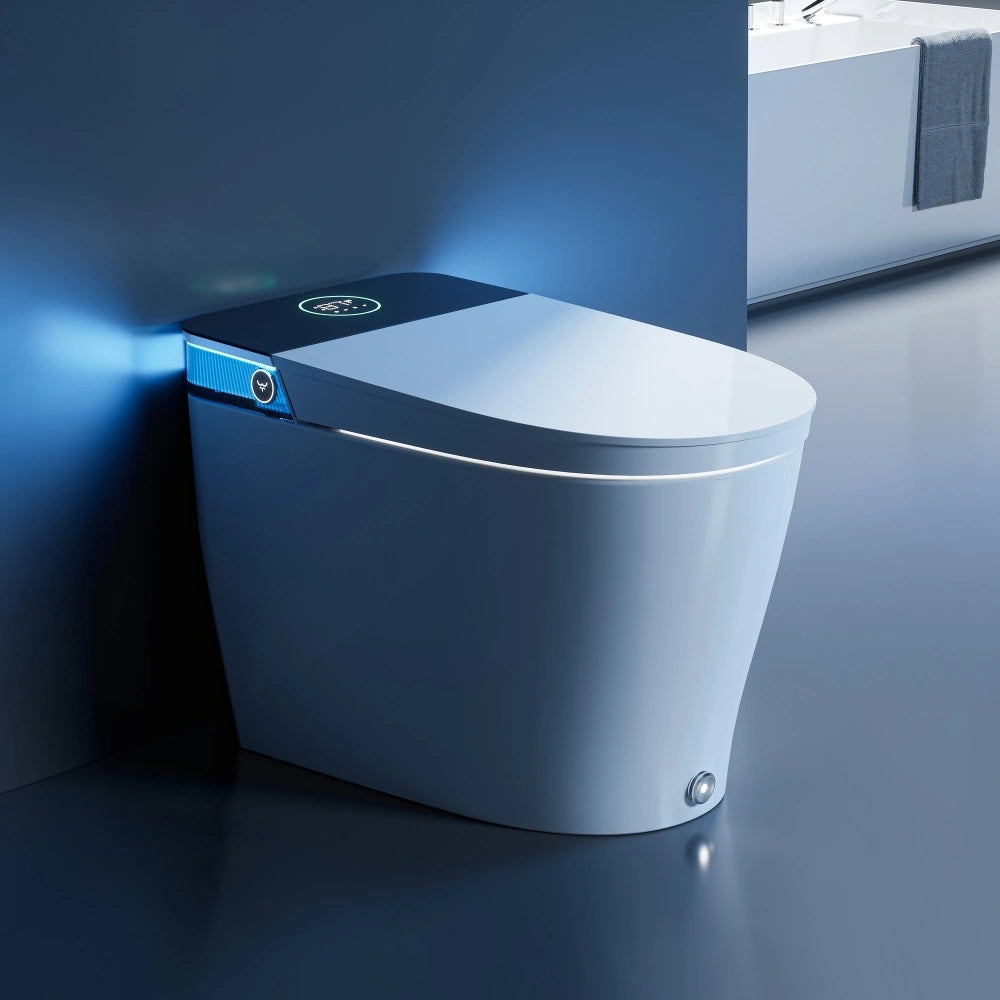
An integrated smart toilet combines the bowl, wash system, controls, sensors, and other functions into one coordinated fixture. This can create a cleaner exterior with less visible seat hardware, but it also links systems that would otherwise be separate.
With a bidet seat, an electronic problem does not necessarily require replacing the toilet. The seat can often be removed while the bowl and flush mechanism remain in service. An integrated model may also allow individual parts to be replaced, but that depends on its design and available support.
Before buying, ask which components can be accessed or replaced without removing the entire toilet. Confirm the service process for the remote, control panel, lid, wash wand, filter or screen, valves, and electronic modules. Warranty coverage does not automatically guarantee nearby technicians or readily available parts.
Guest Comfort vs Control Confusion
Warm-water washing, heated seating, drying, and hands-free functions can improve comfort. Those advantages disappear, however, if a guest cannot identify the flush or stop control.
For a guest bathroom, prioritize:
-
A visible and clearly identified flush control
-
An easy-to-find stop button
-
Controls that remain in a predictable location
-
Labels or symbols that first-time users can understand
-
Basic operation that does not require changing settings
-
A documented alternative if the remote is unavailable
A wall-mounted remote is less likely to be misplaced than a loose handheld controller, but it must remain visible and reachable. Side controls stay attached to the fixture, although some guests may have trouble seeing or reaching them.
Do Premium Guest Bathroom Ideas Justify Added Complexity?
Premium guest bathroom ideas often emphasize automatic lids, mood lighting, deodorizing functions, dryers, adjustable washing, and saved settings. Their value depends on how the room is used.
A night light may be practical in a guest suite used by relatives. Multiple personalized settings may offer little value in a powder room used during parties. An automatic lid can create a polished impression, but it also introduces behavior that some visitors will not expect.
Prioritize functions that reduce friction every time: comfortable seating, obvious flushing, usable controls, accessible cleaning points, and dependable basic operation.
Key Differences That Actually Matter: What Decides?
Will Guests Understand the Controls?
The best interface is not the one with the most settings. It is the one a first-time user can operate without assistance.
Consider the people most likely to visit. Older guests may prefer larger labels and a predictable flush. Children may touch every available control. A person with limited reach may benefit from automatic functions but struggle with a remote mounted too far away.
If the room serves many types of guests, simple controls should take priority over deep personalization. If possible, inspect control images or a display model before ordering. Verify whether automatic lid and flush functions can be adjusted if users find them distracting.
Will a Small Guest Bath Toilet Leave Enough Clearance?

A small guest bath toilet must fit both the floor plan and the person using it. Width alone is not enough.
Use the exact installation drawing to check:
-
Full projection from the finished wall
-
Door and cabinet swing
-
Knee and side room while seated
-
Space to sit down and stand up
-
Lid movement
-
Access to the shutoff and connections
-
Reach to toilet paper and controls
-
Cleaning space around the base
A streamlined or tankless-looking fixture may appear compact while projecting farther into the room than expected. A bidet seat can also alter the usable opening, sitting position, or clearance near the tank.
Mark the proposed footprint on the floor before purchasing. Confirm not only that the fixture can be installed, but that a person can use it comfortably without blocking the doorway or circulation path.
Seat height also requires judgment. A higher seat may help some adults stand, but shorter users and children may find it uncomfortable. Choose for the likely users rather than relying only on a general comfort label.
What Happens During a Power Outage?
Seat heating, water heating, drying, sensors, and electronic controls require power. Whether an integrated smart toilet can perform a basic flush without household power is model-specific.
Read the operating instructions and confirm:
-
Whether basic flushing remains available
-
Where the manual or backup control is located
-
Whether a guest can reach and understand it
-
What happens if the remote battery fails
-
Whether normal settings return after power is restored
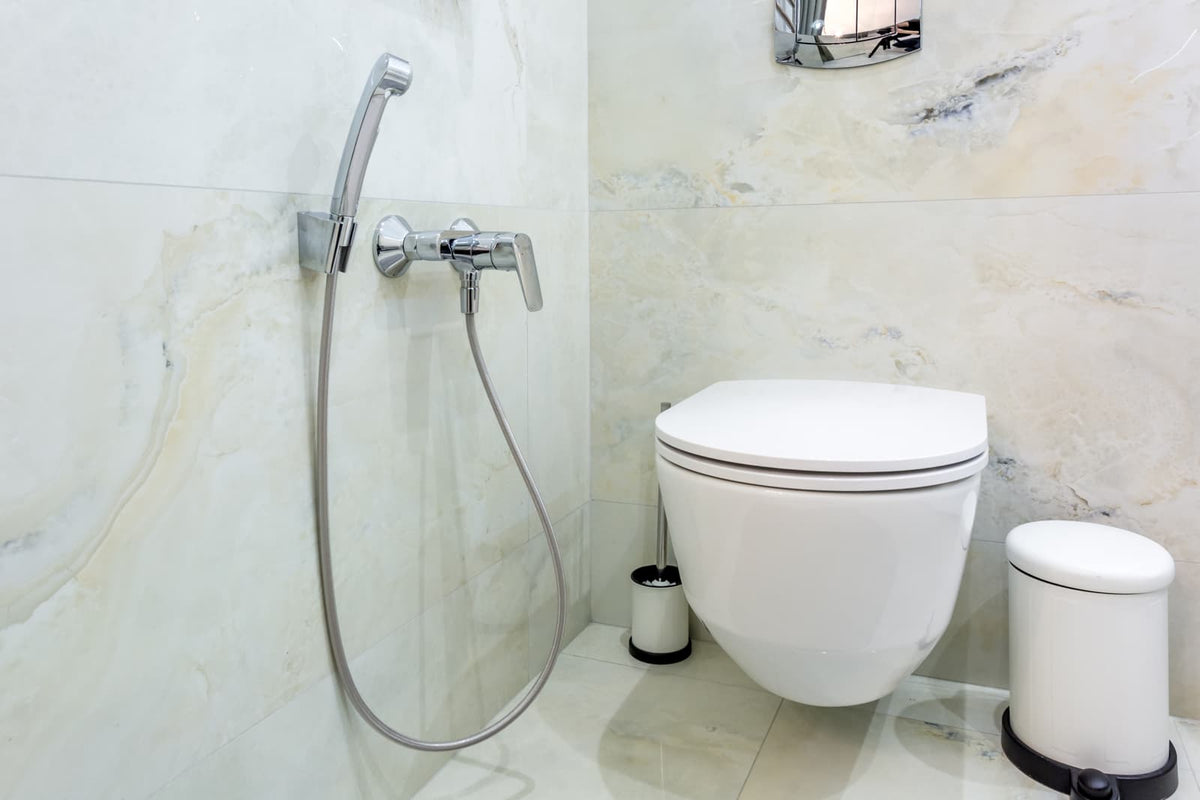
A standard toilet with an electronic bidet seat offers a clearer separation: bidet functions stop without power, but the toilet may retain its conventional flushing method. That still depends on the toilet and the availability of household water.
Any required electrical work should be evaluated for the specific room and product by a qualified professional. Do not assume that two powered toilets have identical connection requirements.
Are Repairs Worth the Integrated Design?
An integrated model is most defensible when its appearance and daily comfort are valuable enough to outweigh a potentially more specialized service process.
Before purchasing, find out who handles plumbing faults, electronic faults, and warranty service. Also check whether common service areas remain accessible after installation. A toilet fitted tightly between a cabinet and wall may look neat but be difficult to inspect or remove.
If long-term flexibility matters more than seamless design, a separate bidet seat is usually the stronger choice. If minimal ownership complexity matters most, choose a conventional toilet.
When Is a Smart Toilet the Better Choice?
Remodeling Makes Power and Plumbing Easier
A remodel allows the toilet location, floor condition, water connection, power access, and surrounding clearances to be considered together. The installer can review the exact product documentation before finished surfaces restrict changes.
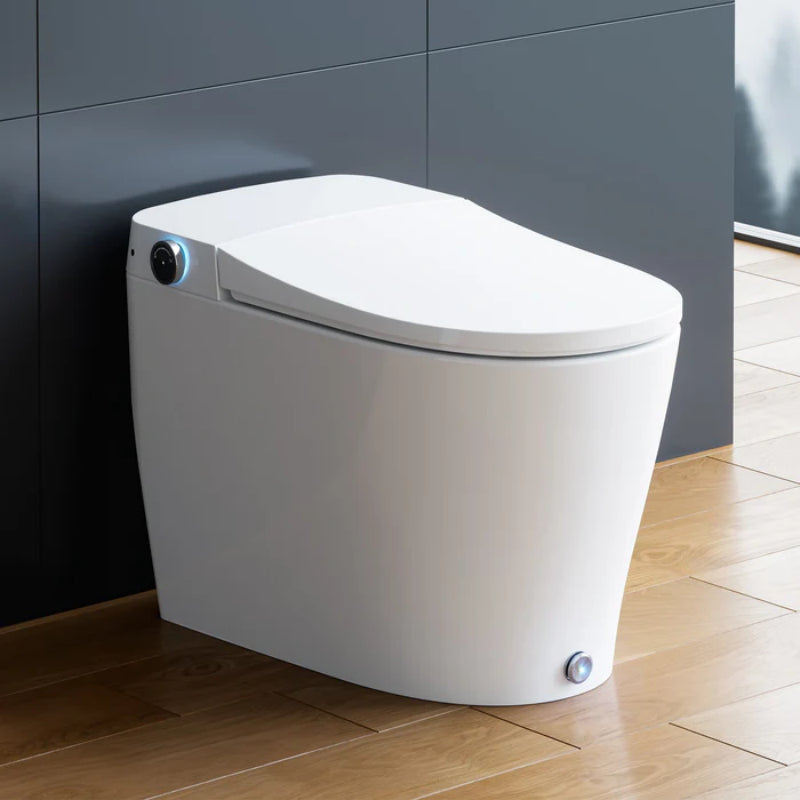
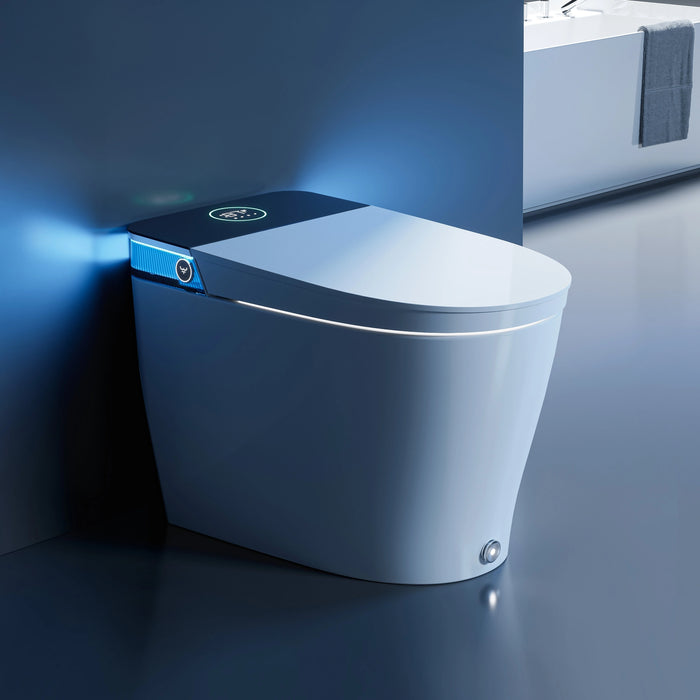
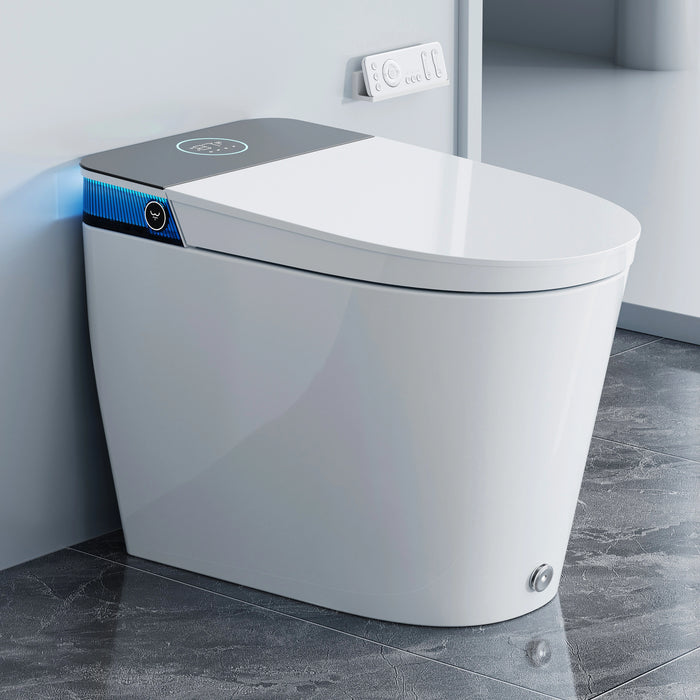
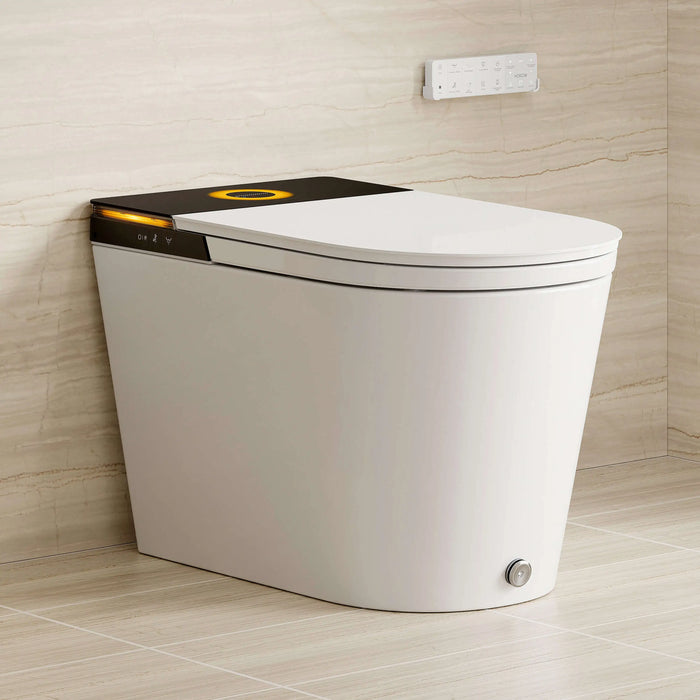
Do not assume every integrated toilet uses the same mounting method or connections. Homeowners can browse the HOROW smart toilet collection to compare available forms and control layouts, but each candidate still needs to be checked against its current product documentation and the room itself.
If you are considering an integrated smart toilet for a frequently used guest bathroom, these HOROW models are options to compare. Check the current product page for fit, installation, power, plumbing, backup operation, and service requirements before choosing a model.
Frequent Use Justifies Premium Comfort
An integrated toilet makes more sense in a guest suite used by relatives, adult children, or long-term visitors than in a powder room opened a few times a year. Regular users have time to understand the controls and receive repeated value from comfort functions.
The same applies when the guest bathroom doubles as a household bathroom. In that situation, the decision should reflect the regular user as well as visitors.
Seamless Style Outweighs Repair Flexibility
Choose an integrated design when the toilet is visually prominent and a coordinated silhouette is central to the remodel. It can reduce the appearance of add-on hardware and support a cleaner overall design.
The trade-off is reduced independence between the toilet and electronic bidet system. Confirm parts access, basic outage operation, and service options before allowing appearance to decide the purchase.
Simple Controls Can Support Mobility Needs
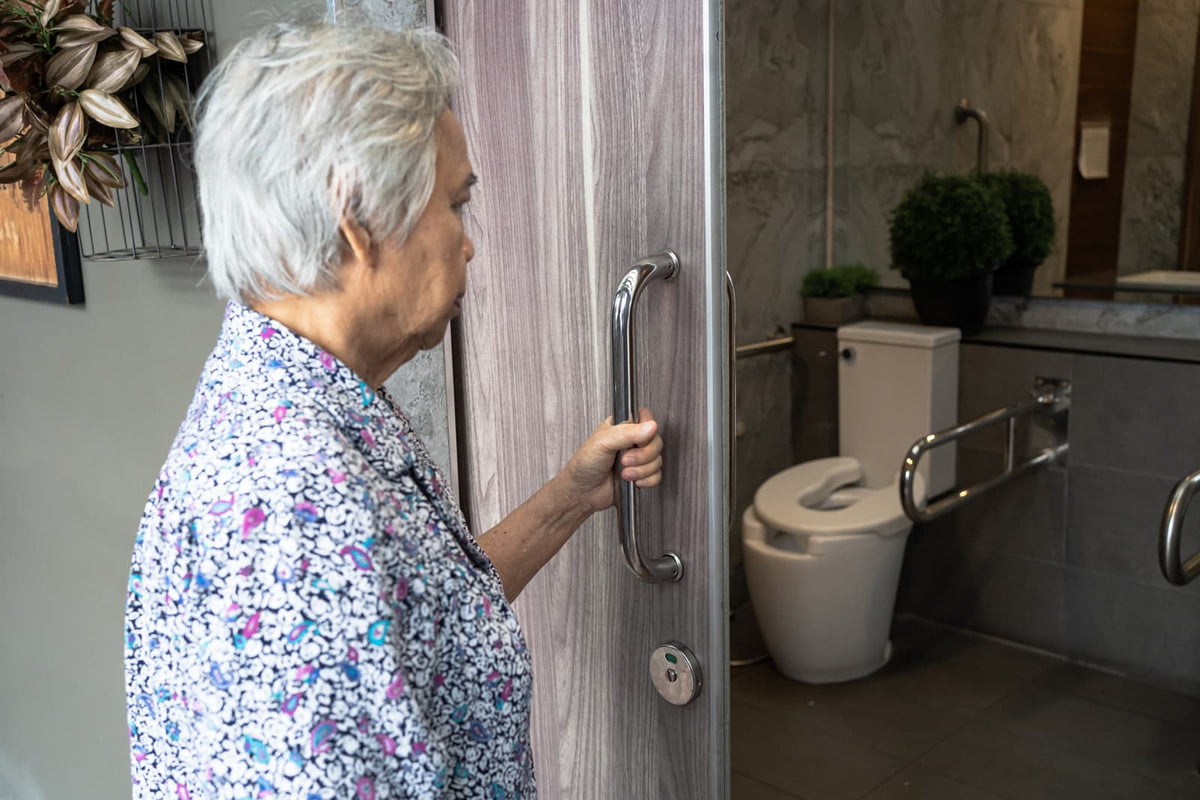
Washing, drying, automatic flushing, and reduced reaching may help some people with limited mobility. However, a smart toilet is not automatically suitable or accessible simply because it has hands-free features.
Seat height, control reach, approach space, transfer space, balance, and the individual user’s abilities still matter. Where accessibility is a formal project requirement, consult the applicable accessibility standards and local requirements. For a private home, use those principles as guidance while planning around the actual user.
When Is the Alternative the Better Choice?
Bidet Seats Make Future Replacement Easier
A bidet seat is the strongest compromise when you want washing and heated-seat functions but do not want one integrated system.
Choose the toilet’s bowl shape, seat height, projection, and flush control first. Then verify that the seat fits the mounting area and does not conflict with the tank, water connection, or available power location.
This option may look less streamlined and can add bulk around the hinges, but it allows the electronic component and toilet to be replaced independently.
Conventional Toilets Minimize Guest Friction
A conventional toilet is often the better choice for an occasional powder room, vacation property, children’s bathroom, or space used by many unfamiliar visitors. Its operation is recognizable, and there are fewer settings to explain.
A simpler toilet does not prevent the bathroom from feeling welcoming. Good lighting, a comfortable seat, reachable toilet paper, a visible flush control, and enough room for personal items may improve the guest experience more than another automated feature.
Hard Water Favors Simpler Maintenance

Electronic bidet systems include water-handling parts such as spray openings, screens, filters, or valves, depending on the design. Mineral deposits may increase cleaning needs where hard water is present.
Check the manufacturer’s care instructions before buying. If you are unlikely to perform the specified cleaning or inspect water-handling components, select a simpler fixture. Do not use unapproved cleaners or descaling methods.
Simpler Fixtures Reduce Long-Term Ownership Risk
A conventional toilet has fewer specialized parts. A bidet-seat setup keeps the electronic system separable. Both approaches reduce the risk that one unavailable component will affect the entire fixture.
This does not mean integrated toilets are inherently unreliable. It means the consequences of a fault can be different. Buyers planning to keep the bathroom unchanged for many years should weigh parts availability and service access as heavily as the initial feature list.
Final Verdict: Which Option Wins for Your Guests?
Best Overall: Frequent-Use Remodeled Guest Bathrooms
For a frequently used guest bathroom undergoing a planned remodel, an integrated smart toilet can be the better choice. It suits homeowners who value coordinated design and expect users to benefit regularly from its comfort features.
Choose it only after confirming physical fit, understandable controls, backup operation, cleaning access, and a realistic service path.
Best Compromise: Standard Toilet With Bidet Seat
For many homes, a standard toilet with a simple bidet seat offers the most balanced upgrade. It preserves familiar flushing, provides optional comfort features, and allows the seat and toilet to be replaced separately.
It is good for frequent family guests and mixed household use, but less suitable when seat compatibility or added bulk compromises comfort.
Safest Default: Conventional Toilet for Occasional Guests
A conventional toilet is the safest default for lightly used powder rooms, rentals, children, or visitors unfamiliar with bidet controls. It sacrifices automated comfort but minimizes confusion and specialized upkeep.
No option wins for every bathroom. The right choice depends on who uses the room, how often they use it, and whether integrated appearance is worth additional installation and service considerations.
Final Checklist: Fit, Power, Controls, and Service
Before purchasing:
-
Measure full projection, door swing, knee room, and lid clearance.
-
Confirm bowl shape, seat height, and comfortable sitting space.
-
Compare the actual installation drawing with the room.
-
Have the product’s plumbing and electrical needs reviewed.
-
Find and understand the manual or backup flush procedure.
-
Make sure guests can identify the flush and stop controls.
-
Check access to the shutoff, connections, wand, and cleaning areas.
-
Ask which components can be replaced independently.
-
Confirm how parts and qualified service would be obtained.
-
Decide whether frequent use justifies integrated features.
Common Buyer Questions
Is a smart toilet worth it in a guest bathroom?
It can be worth it when the room receives frequent use and the household values its comfort and appearance. For a rarely used powder room, a bidet seat or conventional toilet generally offers better value with less complexity.
Is a bidet seat easier to replace?
Generally, yes. Because the seat and toilet remain separate, the electronic seat can often be removed without replacing the bowl. Actual compatibility and service procedures depend on the selected products.
Can a smart toilet flush without power?
That depends on the model. Some integrated toilets provide a manual or backup procedure, while others operate differently. Verify the current operating instructions before buying.
What type works best in a small guest bathroom?
Choose according to full projection, door movement, seated knee room, lid clearance, and cleaning access. A streamlined appearance does not prove that a toilet occupies less usable space.
Are smart toilets suitable for older guests?
They can be when the controls, seat height, approach space, and automatic functions suit the individual user. Do not treat automation or a comfort-height label as proof that a fixture will meet a particular person’s needs.
References
https://www.access-board.gov/ada/
https://www.ada.gov/law-and-regs/design-standards/2010-stds/


Leave a comment
This site is protected by hCaptcha and the hCaptcha Privacy Policy and Terms of Service apply.