



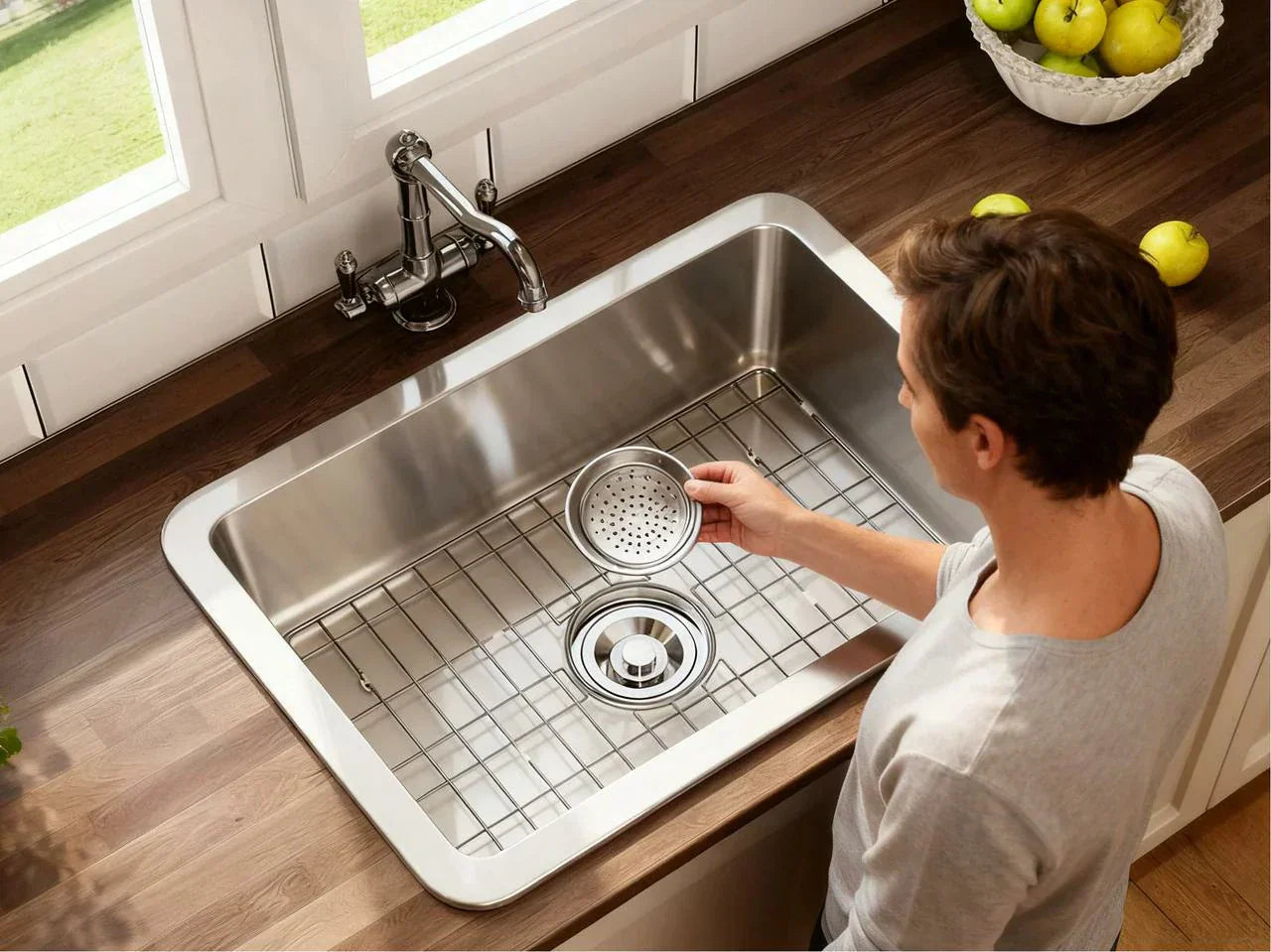
A kitchen sink strainer is a small part with a big job. It catches food scraps before they slip into your drain. That means fewer clogs, less odor, and a cleaner sink. With steady use and simple cleaning, a good strainer can prevent up to 90% of common drain blockages. That alone can save you $75–$150 in avoidable service calls for minor clogs or drippy fittings. In short, it pays for itself fast.
This guide gives you clear answers first, then practical detail. You’ll learn which sink strainers for kitchen sink setups work best for standard 3.5-inch drains, garbage disposals, farmhouse and undermount sinks. You’ll see the difference between kitchen sink strainer basket types, how to size and install, how to clean for long life, and which materials resist rust. If you just want the quick pick, start with the next section. Then scan to the parts that match your situation.
Quick Answer: Best kitchen sink strainer for most homes
For most kitchens with a standard 3.5-inch opening, the top choice is a stainless steel basket strainer. Here’s why it stands out and when to choose other types.
Top pick for 3.5-inch drains: Stainless steel basket strainer
A stainless basket model is durable, rust-resistant, and has a large flow surface so water drains fast even with food captured. The basket lifts out for quick emptying. If you cook most days or have kids, it’s hard to beat this option for a balance of capture and easy cleanout.
-
Why: Durable, rust-resistant, strong flow area, simple to clean
-
Best for: Families, heavy-use kitchens, frequent cooking
When to choose mesh or silicone strainers
Mesh is the champion at catching small bits like rice or pasta. It’s also usually the least expensive option. The trade-off is you’ll empty it more often because it clogs sooner if the mesh is very fine.
Silicone is flexible and gentle on finishes. It won’t scratch a glossy or composite sink. It’s a nice pick for light use, or if you prefer quiet, soft materials in the basin.
-
Mesh: Great for fine particles, often under $10, but needs frequent emptying
-
Silicone: Non-scratch, heat-resistant, flexible; best for light to medium use
Disposal-compatible option for garbage disposals
If you have a garbage disposal, use a disposal-compatible screen or stopper. These allow water and very small particles through while blocking larger scraps that can jam the unit. According to the EPA, preventing large food scraps from entering household drains protects plumbing and reduces maintenance needs (EPA, 2020). It’s a simple way to reduce accidental jams and protect the blades.
Snapshot comparison (quick table)
| Type | Best for | Price band | Cleaning frequency | Pros | Cons |
| Stainless basket | Most homes, heavy use | $8–$25 | Low to medium | Durable, fast flow, easy basket removal | Some budget baskets can stick |
| Mesh | Fine filtration, older pipes | $5–$12 | High | Catches small bits, very affordable | Clogs fast if not emptied |
| Silicone | Light use, gentle on finish | $8–$18 | Medium | Flexible, non-scratch, quiet | Less durable over years |
| Disposal-compatible | Homes with disposal | $8–$20 | Low | Reduces jams, safer for disposal | Not for deep debris loads |
| Flat rim (plate) | Quick clean, minimal debris | $5–$15 | Low | Simple, no moving parts | Less filtration than mesh/basket |
Tip: Prices vary by finish, material grade, and add-ons like stoppers or splash guards.
Types of Kitchen Sink Strainers (pros, cons, use cases)
Choosing the right strainer is about how you cook, how often you clean, and how your sink is set up. Here are the common kitchen sink strainer basket types and where each shines.
Basket strainers (single-cup)
This is the everyday workhorse. The strainer has a removable cup or “basket” that lifts out to dump waste. Because the holes are sized well for flow, water drains fast even when food scraps are caught.
-
Pros: Affordable, easy to clean, strong flow for daily cooking
-
Cons: On some budget models, the basket can be tricky to pull out if the rim flexes or gums up
-
Use: Standard residential sinks with a 3.5-inch opening
Double cup and deep base strainers
A double cup setup has one fixed cup and one removable basket. It’s sturdy and often seals well thanks to a rubber gasket. A deep base version adds height below the sink so it holds more debris before you empty it. You’ll see deep base bodies in metal with PVC below for a lighter, cost-effective build.
-
Double cup: Easy to install and durable; good seal
-
Deep base: Higher capacity; useful for busy kitchens that rinse lots of scraps
Mesh and flat rim (plate) strainers
Mesh strainers use fine stainless mesh or a silicone mesh insert to trap small particles. A flat rim (plate) model is a simple disc with holes and a rim that rests on the sink bottom. Plate types are fast to rinse clean but allow more small bits through than fine mesh.
-
Mesh: Best at fine filtration; requires more frequent emptying
-
Flat rim: Easiest to rinse; least filtration of the group
Disposal-compatible and stopper-integrated designs
Some strainers are shaped to sit above a disposal opening so they allow water and tiny bits through but catch larger items. Others combine a basket with a stopper so you can fill the sink, soak, then lift the stopper to drain while still catching solids.
These are handy if you often fill the sink for washing and want one part to do both jobs.

Feature matrix (type vs performance)
| Type | Filtration fineness | Flow speed | Install ease | Ideal users |
| Basket (single-cup) | Medium | High | Easy | Most homes, daily cooking |
| Double cup | Medium | High | Easy | Families, frequent cleanups |
| Deep base | Medium | High | Medium | High-debris kitchens |
| Mesh | High | Medium to low when full | Easiest | Older pipes, fine capture |
| Flat rim (plate) | Low | High | Easiest | Light debris, quick rinse |
| Disposal-compatible | Medium | High | Easy | Homes with disposals |
| Stopper-integrated | Medium | Medium | Medium | Soaking + straining in one |
Materials & Durability (rust resistance, lifespan, hygiene)
Material choice has a big effect on rust resistance, lifespan, and how clean the strainer stays. If you want a long-term pick, start with stainless steel. If you need gentle contact with delicate finishes, consider silicone or a hybrid.
Stainless steel (304/316): Best-in-class longevity
Most high-quality strainers use 304 stainless steel. In wet kitchens, it resists rust and pitting and handles hot water. If you want premium corrosion resistance (say, in coastal areas or very hard water), 316 stainless is the gold standard because it handles chlorides better. Either way, stainless stands up to daily use and scrubbing without flaking or staining, and it’s easy to sanitize.
Silicone and hybrid designs
Silicone strainers are flexible and quiet in use. They do not scratch the sink, which is helpful for enamel, composite, and polished finishes. They handle heat well, though long, high-heat exposure can age the material over time. In very busy kitchens, silicone can wear faster than metal, so expect a shorter replacement cycle if you cook often.
Some designs pair a stainless rim with a silicone basket. You get the stability of metal and the gentle touch of silicone. It’s a nice balance if you want both traits.
Brass, plastic, and PVC components
Brass gives a solid, premium feel and excellent durability, but it costs more and is less common for the basket itself. Below the sink, you’ll often see PVC on deep-base bodies and tailpieces because it’s light and cost-effective. Plastic parts can work well, but the seal comes down to the gasket and the fit. Always check the gasket quality and how the locknut tightens. Good compression and correct torque matter more than the material alone.
Durability scorecard (materials)
| Material | Corrosion resistance | Heat tolerance | Cleaning ease | Cost |
| 316 stainless | 5/5 | 5/5 | 5/5 | $$$ |
| 304 stainless | 4.5/5 | 5/5 | 5/5 | $$ |
| Brass | 4/5 | 5/5 | 4/5 | $$$ |
| Silicone | 3.5/5 | 4/5 | 4/5 | $–$$ |
| PVC/plastic | 3/5 | 3/5 | 4/5 | $ |
Notes: Ratings are general. Real performance depends on water chemistry, cleaning habits, and build quality.
Sizing & Compatibility (fit checklist for zero leaks)
Yes, most kitchen sinks in North America use a standard 3.5-inch (90 mm) drain opening. But not all do. Bar sinks and some older sinks may be smaller. Before you buy, take one minute to measure. This is the fastest way to avoid returns and leaks.
How to measure drain openings (focus on 3.5-inch standard)
-
Measure the inner diameter of the drain hole from rim to rim. Most modern kitchen sinks will read about 3.5 inches.
-
Check flange depth. This is the thickness of the sink at the drain plus any reinforcement. Thick farmhouse or cast iron sinks have more depth, which affects the length of the threaded section you need.
-
Note the tailpiece size under the sink. Most are 1-1/2 inch or 1-1/4 inch. You may need an adapter to match your trap if sizes differ.
-
Write down your sink material (stainless, cast iron with enamel, composite). Some materials prefer certain sealants or gasket types.
Are kitchen sink strainers standard size? In practice, yes for most modern kitchen basins: 3.5 inches is the common spec. But verify your opening and flange depth so you buy the correct type and length.
Sink style compatibility (undermount, farmhouse, drop-in)
Undermount, farmhouse, and top-mount sinks each interact with a kitchen sink strainer a bit differently, and each style brings its own advantages. Undermount sinks give you a seamless countertop edge and make cleanup easier, but they often have thicker lips at the drain because they mount below stone or solid-surface counters. Farmhouse sinks offer a deep basin and a front-apron design that’s great for handling large pots, though their fireclay or cast-iron build adds extra thickness around the drain. Top-mount (drop-in) sinks are the easiest to install and fit most countertop materials, with a standard drain profile that makes strainer selection simpler. Because undermount and farmhouse styles tend to be thicker, that added material can change how a sink strainer basket seats and seals. A high-quality gasket and even torque on the locknut help ensure a long-lasting seal. Aesthetics matter too: match finishes like brushed steel, polished chrome, matte black, or brass to your faucet and drain kit for a clean, coordinated look.
If you have a garbage disposal, the opening is usually the same diameter, but the flange is specific to the disposal. If you want a disposal-compatible strainer or stopper, choose one designed to fit that flange.

Gaskets, locknuts, and tailpiece connections
The seal depends on neat surfaces and correct torque:
-
The upper seal can be plumber’s putty or a seal ring, depending on the sink material and maker’s directions. Some composite or stone sinks prefer a seal ring instead of putty.
-
Under the sink, a rubber or fiber gasket compresses as the locknut tightens. Hand tighten first, then snug with pliers. Avoid over-tightening, which can warp the flange or split the gasket.
-
Tailpiece connections use slip nuts and washers. Make sure the washer faces the right way and the slip joint sits square. A quick hand-tight leak check saves hassle later.
Exploded view (parts callouts)
From top to bottom, a typical assembly includes:
-
Flange (visible top ring that sits in the sink)
-
Basket (removable cup or mesh that traps debris)
-
Upper seal (plumber’s putty or a seal ring)
-
Body (threaded section under the sink)
-
Gasket (rubber or fiber ring)
-
Locknut (tightening nut under the gasket)
-
Tailpiece (tube that connects to the trap)
Installation & Replacement (DIY steps, time, savings)
You can handle a sink strainer basket replacement in about 30 minutes with simple tools. If you’ve wondered how to install a sink strainer, here’s a clear method that follows common manufacturer steps.
30-minute DIY: Basket strainer replacement (standard method)
Tools: Slip-joint pliers or adjustable wrench, flat screwdriver, plumber’s putty or seal ring (as recommended), rag, bucket.
Step-by-step:
-
Turn off water to the faucet for safety. Place a bucket under the trap.
-
Loosen the slip nuts on the tailpiece and trap. Move them aside.
-
How to unscrew a kitchen sink strainer: Hold the strainer flange from above to keep it from spinning. Under the sink, use pliers to loosen the large locknut that holds the strainer body. If it’s stuck, use a screwdriver to hold the body tabs while turning the locknut. Remove the locknut, gasket, and body. Push the old strainer up and out.
-
Scrape away old putty from the sink rim. Clean the surface until smooth and dry.
-
Roll a thin rope of plumber’s putty and place it under the new flange. If your sink maker advises a seal ring instead, use that as directed.
-
Insert the new strainer into the sink opening from above and press down gently.
-
From below, add the gasket and locknut. Hand tighten first to center everything.
-
Tighten the locknut with pliers a little at a time, checking from above that the flange stays centered. You should see a small ring of putty squeeze out.
-
Wipe away extra putty from the sink.
-
Reconnect the tailpiece and trap. Hand tighten the slip nuts, then give a slight final snug.
-
Run water and check for leaks. If you see drips, slightly tighten the joint that’s leaking. Recheck in 24 hours.
Typical savings: Doing this yourself can save about $75–$150 in labor, depending on your area. Parts usually cost $8–$25 for a standard sink strainer basket.
Seal success checklist
-
Clean, dry mating surfaces before sealing
-
Even torque around the locknut (do not wrench one side only)
-
A light squeeze-out of putty means a full seal
-
Recheck slip-nut joints after the first day of use
Troubleshooting install issues
-
Slow seep at the flange: Loosen, remove, and reseat with fresh putty or the correct seal ring. Make sure the sink rim is clean and smooth.
-
Drip at tailpiece: Check the washer direction and that the tube is straight, not cocked. Hand tighten, then a small snug.
-
Basket doesn’t sit right: Confirm you have a 3.5-inch spec and the correct depth for thick sinks. Use an adapter ring if your sink is unusually thick.
Maintenance & Hygiene (prevent odors, extend lifespan)
A few simple habits will keep your kitchen sink strainer clean, odor-free, and working for years.
Daily and weekly cleaning routines
Daily: Empty debris after each meal prep or dish session. Rinse the basket with hot water. If you use mesh, tap it gently into the trash and rinse from the back to clear fine particles.
Weekly: Wash the basket with mild dish soap and a soft brush. Rinse well. Avoid harsh abrasives that can scratch and hold grime.
Deep clean and odor control
For a deeper clean, soak the basket or plate in warm, soapy water. For stainless, a white vinegar soak helps lift mineral film. If you want to sanitize, follow a safe diluted bleach method and rinse thoroughly with water afterward, especially for parts that contact dishes. Check the product’s care instructions first. Keep the drain and trap clear by not forcing grease or stringy food down the sink. Grease should go in a container and into the trash once cool.

When to replace
Replace the strainer if you see any of these:
-
Pitting or rust spots that spread after cleaning
-
Torn silicone or mesh that lets debris slip through
-
Persistent leaks that don’t resolve after reseating gaskets
-
A warped or deformed basket that sticks or won’t seal
Performance Comparisons & Real‑World Feedback
What do people say after months of use? A few patterns are clear. Mesh strainers win on fine capture for a very low price, but they need frequent emptying. Basket and double-cup models shine in busy kitchens because they hold more and maintain fast flow. Many plumbers point to poor or neglected strainers as a common reason for slow drains and emergency calls, especially in older houses with pipes that can’t handle stray debris.
Key stats to know
-
Proper use and daily cleaning can prevent up to 90% of common kitchen drain clogs.
-
Most sink strainer units cost under $25, with mesh often under $10.
-
Stainless steel accounts for most sales because it resists rust and cleans easily.
Side-by-side matrix (types vs KPIs)
| Type | Filtration | Flow | Durability | Install ease | Price | Warranty typical |
| Stainless basket | Medium | High | High | Easy | $ | 1–3 yrs |
| Double cup | Medium | High | High | Easy | $$ | 1–3 yrs |
| Deep base | Medium | High | Medium | Medium | $$ | 1–3 yrs |
| Mesh | High | Medium | Medium | Easiest | $ | 0–1 yr |
| Silicone | Medium | Medium | Medium | Easiest | $–$$ | 0–1 yr |
| Disposal-compatible | Medium | High | Medium | Easy | $ | 0–1 yr |
| Flat rim | Low | High | High | Easiest | $ | 0–1 yr |
Note: Warranties vary by maker; these are common ranges.
Case snapshots
-
Older homes with sensitive plumbing: A fine mesh plate can help protect older, narrower pipes. The key is frequent emptying so the mesh doesn’t block flow.
-
High-use kitchens: A stainless steel basket strainer or double-cup model keeps water moving and reduces how often you empty the basket. For families, that convenience matters daily.
Innovations, Sustainability & Health
Kitchen strainers keep improving. You’ll now find antimicrobial coatings on some stainless parts, soft splash guards that reduce water spray, and stopper-integrated baskets that make soaking and draining simpler. “Smart” reminders that prompt cleaning based on flow or time are on the horizon, though not common yet.
If you want a greener setup, choose recyclable stainless steel or BPA-free silicone. Look for minimal plastic packaging. Stainless steel is widely recyclable and has a long service life, so it’s a strong choice for durability and sustainability.
For design, match finishes to your faucet and drain kit: brushed stainless for a muted look, polished for shine, matte black or brass for a statement. If you use a garbage disposal, a flexible guard can lower noise and vibration in daily use.
Decision Guide & Tools
Choosing takes just a minute when you focus on fit and usage. Ask yourself the questions below and pick the best match.
Interactive buying checklist
-
Sink style: undermount, farmhouse, or drop-in?
-
Disposal: yes or no?
-
Opening size: 3.5 inches standard, or something else?
-
Filtration level: fine capture (mesh) or fewer cleanouts (basket)?
-
Material preference: stainless for durability, silicone for gentle contact?
-
Maintenance tolerance: daily quick empty only, or okay with frequent mesh cleanings?
-
Budget: under $10, under $25, or premium finish?
Outputs:
-
Most homes with a 3.5-inch drain and daily cooking: choose a stainless basket.
-
Homes with a disposal: add a disposal-compatible screen or stopper.
-
Older pipes or need fine capture: choose mesh and empty often.
-
Want gentle contact: choose silicone or hybrid designs.
What size strainer fits a standard kitchen sink?
Short answer: Most standard kitchen sinks take a 3.5-inch strainer. Measure the inner diameter to confirm. Also check flange depth if your sink is thick (farmhouse, cast iron). If the sink is very thick, you may need a longer-thread body or an adapter ring.
Which is better—basket vs mesh strainer?
-
Basket: Fewer cleanouts, strong flow, great for families and frequent cooking.
-
Mesh: Finer capture (stops rice and pasta), but needs more frequent emptying. Good for older pipes or if you prefer maximum filtration.
How often should I clean a kitchen sink strainer?
Empty daily, wash weekly with dish soap, and deep clean monthly. If you use mesh or cook often, expect to empty and rinse more frequently.
Can I install a strainer with a garbage disposal?
Yes. Use a disposal-compatible strainer or stopper that fits the disposal flange. Verify the fit with your disposal’s flange spec and choose a screen that allows water flow while blocking larger debris.
Conclusion & Action Plan
Choosing a kitchen sink strainer doesn’t have to be tricky. The key is to match your sink opening, your cooking habits, and the type of filtration you need.
3-step summary
-
Confirm size and compatibility: Measure for the standard 3.5-inch opening and note sink thickness and material.
-
Choose a material and type based on use: stainless basket for most homes; mesh for finer capture; disposal-compatible if you have a disposal; silicone for gentle contact.
-
Install and maintain: A 30-minute DIY install and simple daily cleaning extend lifespan and keep drains clear.
Best-for scenarios recap
-
Families and heavy use: Stainless basket or double-cup strainers keep flow strong and reduce cleanouts.
-
Fine filtration needs: Mesh or silicone mesh, emptied often.
-
Disposal owners: Disposal-compatible screen or stopper to reduce jams.
Next steps
-
Use the buying checklist above to pick your sink strainer type.
-
Follow the step-by-step guide for a safe install.
-
Start a simple cleaning routine to keep odors and clogs away.
Common questions come up when shopping, installing, or replacing. Here are quick answers to help you finish your plan today.

FAQs
1. Are kitchen sink strainers standard size?
Most modern kitchen sinks do come with a standard 3.5-inch drain opening, which fits the majority of sink strainers you’ll find in stores. That said, not every sink is exactly the same. Older homes, bar sinks, or custom setups might have slightly smaller or larger drains, so it’s always worth double-checking. Measure from rim to rim of the drain hole and take note of the flange depth, especially if you have a thick farmhouse or cast iron sink, because that affects the threaded portion you’ll need. Knowing these dimensions ahead of time avoids buying a strainer that’s too short or too long, which could lead to leaks or improper sealing. Also, check the tailpiece size underneath—usually 1-1/2 inch, sometimes 1-1/4 inch. By confirming these details, you ensure your new strainer fits snugly, seals well, and keeps your sink clog-free.
2. What is the best strainer for a kitchen sink?
For most homes, a stainless steel basket strainer hits the sweet spot between durability, ease of cleaning, and strong water flow. The basket design catches food scraps effectively but still allows water to drain quickly, which is why families and frequent cooks love it. Stainless steel resists rust, so it holds up well over time, even with hot water or acidic residues from cooking. If you’re in a high-use kitchen, double-cup or deep-basket versions can be even more convenient because they hold more debris before you need to empty them. While mesh strainers catch finer particles like rice or coffee grounds, they fill up faster and require more frequent cleaning. So unless you have very old plumbing or a specific fine-filtration need, a solid stainless basket is generally the most practical and low-maintenance option.
3. How to unscrew a kitchen sink strainer?
Unscrewing a sink strainer is easier than it sounds once you know the trick. Start by holding the flange firmly from above the sink so it doesn’t spin. Underneath, use pliers to loosen the large locknut that holds the strainer body in place. If it’s stuck, a flat screwdriver or gentle tapping can help release it. Once the locknut and any gaskets are removed, push the flange upward from inside the sink, and the whole strainer should come out in one piece. It’s a good idea to have a bucket handy to catch any leftover water in the trap and a rag for small drips. Doing it slowly and checking that the flange doesn’t scratch your sink surface keeps the process smooth. With a bit of patience, you can remove the strainer without damaging any components, making replacement or cleaning straightforward.
4. How to measure for a kitchen sink strainer?
Measuring for a kitchen sink strainer is all about accuracy, so you get a perfect fit. Start by measuring the inner diameter of your drain—most standard sinks will be around 3.5 inches, but a quick tape measure check prevents mistakes. Next, consider the flange depth, which is the thickness of your sink where the strainer sits. Farmhouse, cast iron, or composite sinks can have thicker edges that require a longer threaded body. Don’t forget to look under the sink and measure the tailpiece diameter—usually 1-1/2 inch, sometimes 1-1/4 inch—because this affects the connection to the trap. Finally, note the sink material, since some need plumber’s putty, seal rings, or specific gaskets. By gathering these details first, you avoid leaks, ensure easy installation, and pick a strainer that works smoothly with your plumbing setup.
5. How to know what sink strainer to buy?
Choosing the right sink strainer starts with matching your drain size. For most modern sinks, that’s 3.5 inches. Once you know it fits, pick the type based on how you use your kitchen. Basket strainers are ideal if you want fewer cleanouts and fast drainage, while mesh or silicone options catch finer particles like rice, coffee grounds, or pasta bits but require more frequent emptying. If you have a garbage disposal, a disposal-compatible strainer or stopper prevents jams while still letting water flow. Material matters too—stainless steel lasts longest, while silicone is gentle on delicate sink finishes. Consider how often you cook, how much debris your sink handles, and whether you want easy maintenance. By combining size, type, material, and your cooking habits, you’ll pick a strainer that fits your kitchen perfectly and keeps drains clear.
6. How much does it cost to replace a basket strainer in a kitchen sink?
Replacing a basket strainer is surprisingly affordable and a quick DIY project. The part itself usually costs between $8 and $25, depending on material and finish. If you hire a plumber, labor can range from $75 to $150, so doing it yourself can save a lot of money. With basic tools like pliers, a screwdriver, and plumber’s putty, most homeowners can complete the job in about 30 minutes. You remove the old strainer, clean the sink opening, apply putty or a seal ring, and tighten the new strainer with the gasket and locknut. After a leak check, you’re done. Even if you’re not very handy, following step-by-step instructions makes it manageable, and the cost savings combined with preventing clogs makes this a smart maintenance task.
References




Leave a comment
This site is protected by hCaptcha and the hCaptcha Privacy Policy and Terms of Service apply.