
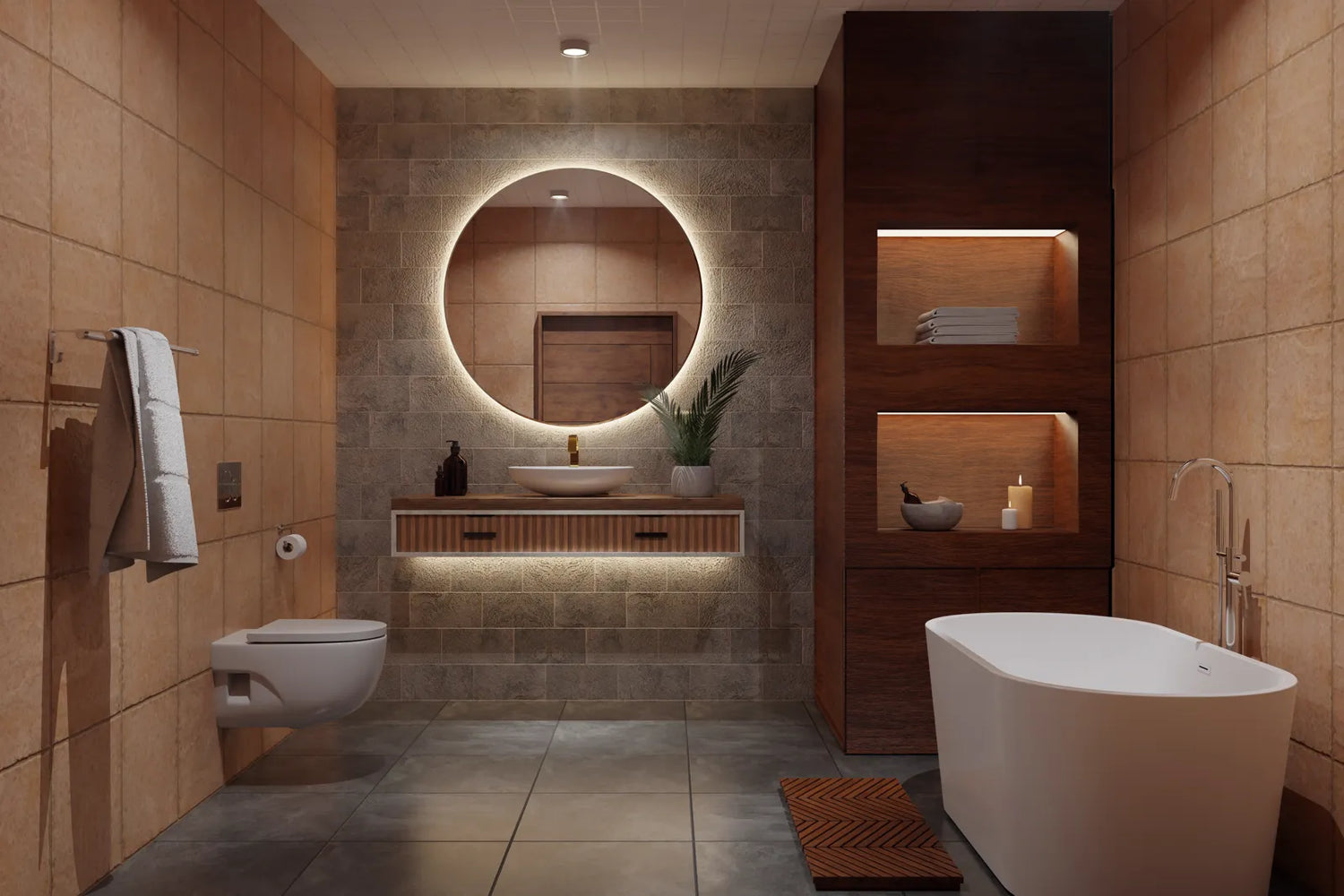
Choosing the best bathtub size for master bath is less about what looks right in a showroom and more about what still works after tile is set, doors swing, plumbing is connected, and you live with it for five years.
Most sizing mistakes are not dramatic on day one. They show up later. The shower feels cramped. The vanity drawers hit the tub edge. The freestanding tub looks good but is hard to clean around. The soaking depth is not deep enough for a real bath. Or the tub takes up a third of a small master bathroom and gets used twice a year.
Here’s the key point: the right tub size is the one that fits your room, your body, your water capacity, and your daily habits without forcing bad layout compromises.
Decision Snapshot
Choosing the right size helps you find a perfect tub and a functional bathtub for your bathroom, with tub options ranging in size from 45 to 72 inches to easily use the tub long-term.
Works best in 70+ sq ft baths
A true master bath tub works best when the room is at least 70 square feet, and better still when the tub area does not compete with a tight shower, toilet clearance, or vanity walkway. In that range, a 60-inch to 67-inch tub can usually fit without making the room feel pinched.
This is where a standard alcove, a compact freestanding tub, or a moderate soaking tub tends to make sense.
Avoid it below 60 sq ft
Below 60 square feet, bathtub sizing gets unforgiving fast. A standard 60 x 30 tub can eat up a large share of usable floor area. In small master baths, people often regret giving so much room to a fixture they do not use daily.
If your bathroom is under 60 square feet, the best bathtub size for a small master bathroom is often either:
-
a compact 54- to 59-inch tub, or
-
no tub at all if the shower is the real priority
Regret starts with unused tub space
The most common mistake is not buying too small. It is buying too large for how the room is actually used.
A larger tub is only worth it if:
-
someone in the home takes baths often
-
the room still has safe walking space
-
shower and vanity clearances do not suffer
-
the water heater can support a real fill
If those conditions are not there, the “best” size on paper becomes dead space in practice.
Who Should Choose This Size
Choosing the right size unlocks your perfect tub, delivering a tailored bathtub size for your bathroom with functional options sized from 45 to 72 inches to fully use the tub daily.
Best fit for daily bath users
If someone in the home uses a tub several times a week, sizing up can make sense. In practice, this usually means:
-
at least 60 inches long
-
enough interior depth for shoulder coverage
-
enough floor space to enter and exit safely
For many homes, the sweet spot is a 60-inch to 67-inch tub with better-than-basic soaking depth. That range covers many of the most popular bathtub sizes for master bathrooms in US homes because it balances fit and comfort better than oversized models.
Wrong fit for shower-first households
If everyone showers and almost no one bathes, a large tub in the master bath usually becomes the fixture people work around rather than use.
This is where people tend to make a resale-based decision that does not match real life. They keep a tub because they think they should, then lose:
-
shower size
-
storage
-
floor space
-
easier cleaning
In smaller master bathrooms, a rarely used tub is one of the first things homeowners later wish they had skipped.
Better in new layouts than retrofits
A bathtub is easier to size correctly in new construction or a full gut remodel. In a retrofit, old framing, fixed drain positions, small room dimensions, and out-of-square walls break assumptions.
That matters because how to choose the right bathtub size for a master bath layout is often not about catalog dimensions. It is about what your existing room will tolerate without expensive rework.

Trade-Offs Before You Commit
Choosing the right size secures your perfect tub, with a tailored bathtub size for your bathroom and sizes from 45 to 72 inches to easily use the tub in daily life.
Larger tubs shrink shower clearance
A bigger tub often steals inches from the shower. Those inches matter more than people expect.
A shower that drops below comfortable interior width starts to feel tight every day. A tub that gains 7 or 8 inches of length may not improve comfort nearly as much as a shower losing those same inches hurts comfort.
Here’s where people usually run into trouble: they compare fixture dimensions, not lived space. The shower is used daily. The tub may not be.
Deep tubs raise entry height
A deeper soaking tub can feel much better once you are inside, but the outside wall is often taller too. That means a higher step-over.
For younger homeowners, this may seem minor. Over time, it becomes a safety issue. A high tub wall is harder to enter with wet feet, sore knees, or reduced balance. This is one reason some deep tubs get less use than expected.
If you are looking at deep soaking tub measurements for a luxury master bath, check both:
-
interior soaking depth
-
exterior step-over height
Those are not the same thing.
Two-person tubs strain floor space
A large soaking tub for two in a master bathroom sounds practical until you place it in a real floor plan. Two-person tubs are often wider, longer, or both. They also need more hot water and more circulating space around them.
Can a 2-person tub fit in a standard bath? Usually not well. Not without giving up something else important.
In many standard master bathrooms, a two-person tub fits only if:
-
the shower is reduced
-
the vanity gets smaller
-
the room is fairly large already
-
or the tub sits in a corner with enough approach space.
Retrofit Costs That Change the Decision
Choosing the right size delivers a perfect tub, offering a reliable bathtub for your space with sizes from 45 to 72 inches to comfortably use the tub long-term.
Standard alcoves reduce plumbing changes
If your existing master bath already has an alcove tub, replacing it with the same general size is usually the least risky path. Common standard bathtub dimensions for a master bath in this setup are around:
-
60 x 30 inches
-
60 x 32 inches
-
sometimes 59 to 60 inches actual fit requirement
This keeps drain location, wall layout, and tile transitions more predictable.
Freestanding tubs add drain relocation risk
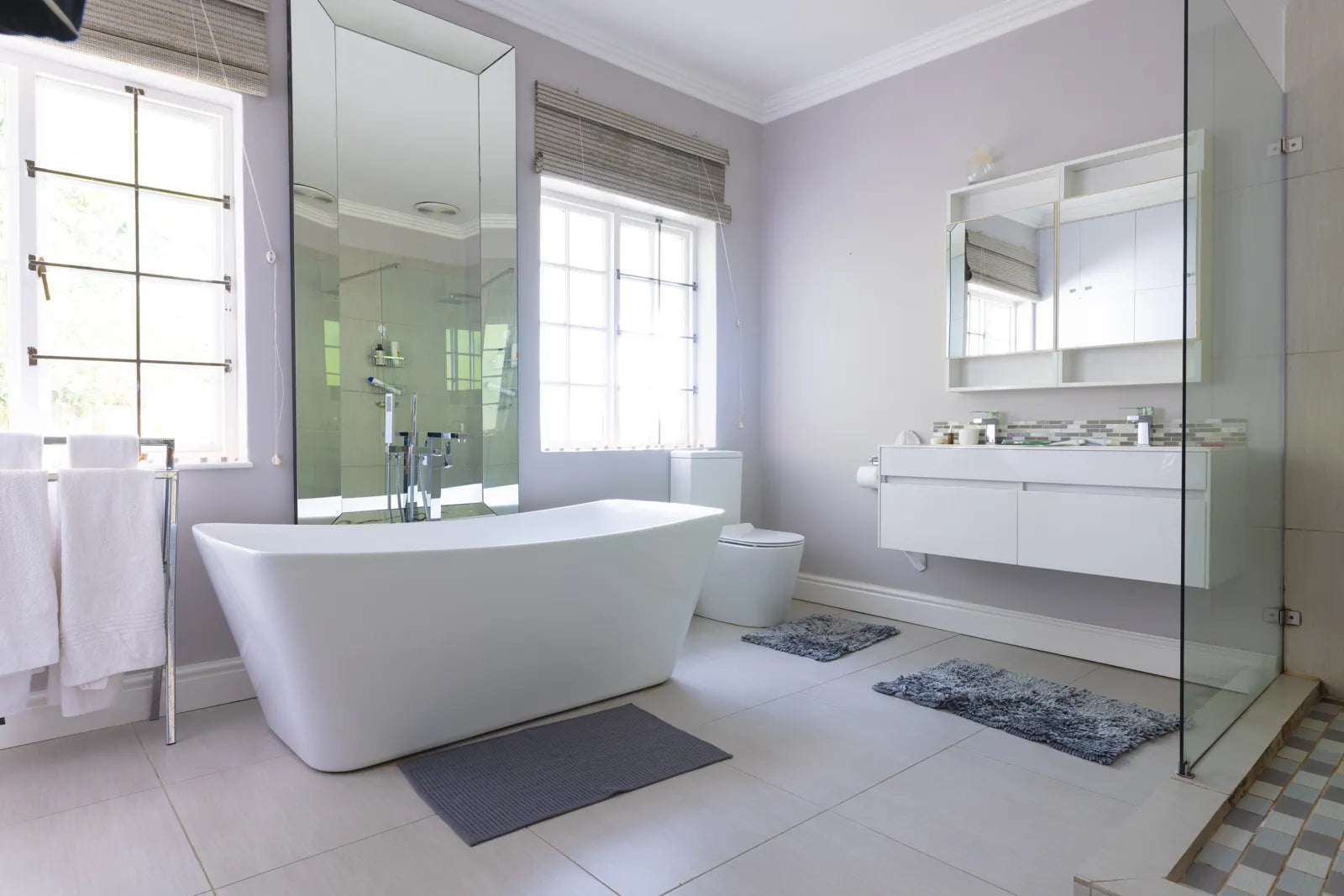
The best freestanding tub size for a master bathroom often looks smaller on paper than expected because freestanding tubs need clearance around them. They also place more demands on drain accuracy.
A freestanding tub can trigger:
-
slab cutting or floor opening for drain moves
-
patching finished flooring
-
more exact placement tolerances
-
extra work to center the tub visually in the room
This becomes expensive fast in retrofits. A tub that is only slightly larger can force much more plumbing work if the drain no longer aligns.
Older homes break standard assumptions
Older homes rarely behave like the plan drawing says they should. Walls are often out of square. Finished dimensions vary. Floors may slope. Existing framing may not support a simple drain shift.
This is where “standard” sizes stop being standard in practice. A 60-inch opening may measure 59 1/4 finished to finished. That kills a 60-inch tub installed unless walls are rebuilt.
In older homes, always assume:
-
the opening is smaller than expected
-
the floor may need correction
-
and the drain may not land where the spec sheet wants it
Custom sizing raises tile and trim work
The debate around custom bathtub size vs standard bathtub size for a master bathroom usually comes down to labor. Standard tubs are easier to frame around, easier to replace, and easier to finish cleanly.
Custom or odd-size tubs often increase:
-
tile cuts
-
apron or deck framing
-
trim work
-
surround waterproofing complexity
-
replacement difficulty later
Unless your room has an unusual shape or a strong use case, custom sizing tends to add cost faster than comfort.
Will the best bathtub size for master bath fit?
Finding the ideal tub for your bathroom ensures the best bathtub size for master bath, and a well-fitted tub is usually simple to install and blend with your space.
Measure finished walls, not studs
If you are trying to figure out how to measure a master bathroom for a bathtub, use the dimensions that will exist after backer board, tile, drywall, and trim are in place.
Not the stud-to-stud opening.
Install failures often happen because homeowners shop from rough framing dimensions. Finished surfaces steal space. Even half an inch matters with tubs.
Measure:
-
wall to wall at floor level
-
wall to wall at tub rim height
-
the opening at multiple points
-
and any trim, baseboard, or out-of-plumb wall condition
A 59-inch opening blocks 60-inch tubs
This is one of the most common surprises. A nominal 60-inch tub does not fit a real opening that is 59 inches finished. Even 59 3/4 can be tight depending on wall straightness and installation method.
So if you are debating a 67 inch vs 59 inch tub for a master bathroom, do not treat those as just comfort options. They are layout commitments.
A 59-inch tub is often the safer retrofit choice in tight rooms because it can preserve wall finishes, reduce reframing, and avoid forcing a full rebuild.
Outer size hides smaller bathing space
People often compare exterior dimensions and assume a larger tub means a much roomier bath. Not always.
Tub shell thickness, sloped backs, armrests, deck width, and drain-end shaping can make a large outer tub feel surprisingly tight inside.
This matters when asking: Is a 59-inch tub big enough for a tall person? Sometimes yes, if the interior floor is well designed and one end is sloped properly. Sometimes no, if the shell is thick and the usable floor is short.
Always compare:
-
overall length
-
bottom floor length
-
water depth to overflow
-
shoulder width at the waterline
Will this work in a small master bath?
For the best bathtub size for a small master bathroom, compact tubs in the 54- to 59-inch range often work better than trying to force a standard 60-inch model.
A smaller tub works if:
-
the bather is average height or shorter
-
bathing is occasional, not daily
-
preserving shower or vanity clearance matters more
-
and the room needs easier walking space
It does not work well for taller adults who want a true soaking experience.
Clearance and Layout Limits
Optimizing master bath layouts for luxury tubs means choosing a tub wisely, as bathtubs come in varied lengths, widths and unique types for every bathroom size.
Safe entry needs real floor space
The clearance needed around a bathtub in a master bathroom depends on layout type, but there is a practical difference between minimum code-style fit and comfortable daily use.
You need enough clear floor area to:
-
step in without twisting around a vanity
-
dry off without standing in the toilet zone
-
open drawers and doors without hitting the tub
-
and clean around it
What tends to happen in practice is that homeowners focus on tub placement and forget body movement. Then the room feels tight forever.
Vanity and door swings cause conflicts
A tub can fit perfectly on plan and still fail in use because of:
-
vanity drawer projection
-
cabinet door swings
-
entry door swings
-
shower door movement
-
toilet clearance overlap
Before you commit, mock up these paths with tape on the floor. A few inches of conflict around the tub will be noticed every day.
Freestanding tubs need perimeter access
When people ask how to measure your space for a freestanding tub, the main mistake is measuring only the tub footprint.
A freestanding tub needs room around it for:
-
cleaning
-
visual spacing
-
plumbing access planning
-
and safer entry
You do not want a freestanding tub jammed 1 or 2 inches from a wall unless it is designed for that use. It becomes hard to clean and awkward to reach fixtures.
What clearance is actually needed?
There is no single perfect number for every room, but in real installations these targets work well:
| Area | Tight but workable | More comfortable |
| Clear floor at tub entry side | 24 inches | 30+ inches |
| Space beside freestanding tub | 3–4 inches minimum | 6+ inches |
| Front clearance near vanity/tub conflict | 21–24 inches | 30 inches |
| Space between tub and toilet zone | avoid overlap | clear separation |
If your layout only meets the tight numbers on paper, expect a tighter-feeling room in real life.

Depth, Soaking, and Utility Limits
Bathtubs come in diverse styles and inches in length, so choose a tub that fits your large bathroom while optimizing master bath layouts for luxury tubs.
Shallow tubs disappoint taller adults
A standard tub may be long enough and still fail as a soaking tub because the water depth is too low. This is one of the most common post-install regrets.
Many basic tubs have interior soaking depth that leaves shoulders and knees exposed, especially for taller adults. So if you want the best soaking tub dimensions for a master bath, focus less on total length and more on usable water depth.
A shorter but deeper tub can be more satisfying than a longer shallow one.
Deep soaking tubs need more hot water
A deeper tub sounds good until the water heater cannot keep up.
This becomes a problem when:
-
the tub has a high water capacity
-
the home has a modest tank
-
multiple bathrooms are in use
-
or the tub is marketed for deep soaking but not matched to household hot water supply
Before buying a deep soaking tub, check whether your water heater can deliver enough hot water for a realistic fill. Otherwise the tub becomes a lukewarm compromise.
Overflow height limits usable depth
People often ask how to measure tub depth correctly. The useful number is not just floor-to-rim depth. It is the soaking depth to the overflow.
That is the water level you can actually use.
A tub can look deep from the outside and still provide disappointing soak depth if the overflow sits low. This is also where some homeowners notice splash-out or leakage around overflow areas during longer baths.
Is 67 inches worth the extra space?
The 67 inch vs 59 inch tub for a master bathroom decision depends on who is using it and what the room gives up.
A 67-inch tub is worth it when:
-
at least one user is tall
-
bathing is regular
-
the room is over 70 square feet
-
and shower, vanity, and walkway clearances stay comfortable
A 67-inch tub is not worth it when:
-
the bathroom becomes crowded
-
the shower gets reduced too much
-
installation forces plumbing moves
-
or the extra 8 inches does not give much more usable interior room
In short, 67 inches helps only if the whole layout supports it.
Long-Term Risks and Regret Points
Each type of bathtub varies in inches in width, and tubs require smart planning when optimizing master bath layouts for luxury tubs long-term.
Low use makes big tubs wasteful
A large tub that is rarely used becomes one of the most expensive square-foot decisions in the room. It takes space, cleaning time, and often money that could have gone to a better shower, stronger exhaust, more storage, or a wider vanity.
This is why many homeowners in tighter master bathrooms regret oversizing the tub.
Water leaks show up after install
Tub leaks do not always appear at installation. They often show up after repeated filling, draining, and movement.
Common trouble spots include:
-
overflow connections
-
waste-and-overflow fittings
-
poorly sealed deck edges
-
splash zones around freestanding tubs
-
tub-to-wall transitions in alcove installs
A larger or deeper tub can increase water volume and splash potential, so details matter more, not less.
High walls become mobility hazards
This issue gets overlooked because buyers imagine comfort while soaking, not getting in and out.
Deep tubs with high walls become harder to use with age, injury, or balance issues. If this is a long-term home, do not ignore entry height.
A lower, moderate-depth tub may get used more often than a very deep tub that feels risky.
What fails first over time?
In many master bath tub installs, the first real problems are not the tub shell itself. They are:
-
caulk joints
-
overflow seals
-
tile transitions
-
floor cleanup around freestanding bases
-
finish wear where people brace themselves entering and exiting
Sizing affects all of these because a too-tight layout makes maintenance harder. If no one can reach behind or beside the tub, cleaning and inspections get skipped.

Before You Buy
Use this checklist before ordering any tub for a master bath:
-
Measure finished wall to finished wall, not framing.
-
Confirm the room still has at least 24 to 30 inches of safe standing space at the tub entry side.
-
Check the usable soaking depth to the overflow, not just total exterior depth.
-
Compare the tub’s interior floor length if a tall adult will use it.
-
Make sure the tub size does not force an undersized shower or block vanity drawers and doors.
-
Verify whether drain placement will require plumbing relocation, slab cutting, or subfloor repair.
-
Check if your water heater can fill the tub with enough hot water for the depth you want.
-
In older homes, assume the opening is imperfect and leave margin for out-of-square walls.
FAQs
1. What is the standard size for a freestanding tub?
Standard freestanding tub dimensions range 55–72 inches long, with 59–67 inches as top master bath options. Mind clearance around the tub, as freestanding bathtub styles range in size to fit diverse bathroom layouts.
2. Is a 59-inch tub big enough for a tall person?
Comparing 67 inch vs 59 inch tubs, a 59-inch model suits small bathrooms and retrofits. Check interior space and the size of your bathroom space to find the right bathtub for tall, comfortable daily use.
3. How to choose the right tub size for my room?
Use a simple bathtub size guide and assess your space to start choosing the right size. Match tub type to your layout, optimize your design, and select an ideal bathtub that fits for your bathroom perfectly.
4. Can a 2-person tub fit in a standard bath?
A large soaking tub for two needs layout compromises in a standard bath. Skip custom tub upgrades and stick to the most popular tub sizes for US homes to ensure the bathtub fits your existing space easily.
5. How to measure tub depth correctly?
Master accurate deep soaking tub measurements by checking overflow water depth, not just outer height. This key measure helps you pick a deep model that is usually compatible with your home’s water system.
6. What is the best soaking tub size for comfort?
The best tub blends balanced length from 45 to 72 inches and ample soaking depth. Pick a practical ideal bathtub size to choose a bathtub size that works for your bathroom that can accommodate relaxed full-body soaks.
7. How to measure your space for a freestanding tub?
Measuring your bathroom for a tub relies on finished wall measurements. Follow a concise guide to bathtub sizes to simplify replacing a bathtub and reserve enough inches of space for easy access and cleaning。
References


Leave a comment
This site is protected by hCaptcha and the hCaptcha Privacy Policy and Terms of Service apply.