
Choosing between bathtub and a shower including walk-in styles is one of the most impactful decisions in any bathroom remodel, shaping daily routines, long-term home comfort, maintenance workload and even future property resale potential. Many homeowners make this pick based solely on visual appeal or fleeting trends, only to face practical inconveniences, extra cleaning burdens or mismatched household needs after renovation is finished.
Whether you are upgrading a compact single bathroom, renovating a spacious primary suite, or designing a forever home tailored for all age groups and mobility levels, it is essential to weigh real usage habits, budget limits, space conditions and long-term living demands before finalizing your layout.
This comprehensive guide breaks down all practical pros and cons, clear selection rules, cost differences and accessibility planning tips, helping you pick the most functional, cost-effective and regret-free bathroom fixture solution that perfectly fits your family’s actual lifestyle.
Quick Answer
If you have young kids, want regular soaks, or only have one bathroom, a bathtub or tub-shower combo is usually the safer choice. If you care most about speed, easier access, lower daily hassle, or aging in place, a walk-in shower is usually better. If you have two bathrooms, the best setup for most homes is one tub somewhere in the house and a shower in the primary bath.
A bathtub sounds nice on paper. A shower sounds practical on paper. In real homes, the right choice usually comes down to four things: who uses the bathroom, how often anyone actually takes baths, how much space you have, and whether removing the only tub will hurt daily life or resale later.
Here’s what usually matters in real homes: people regret making the bathroom look trendy more often than they regret making it useful. The tub that never gets used becomes dead space. The shower-only house works great until a toddler, a sore back, or resale conversations show up.
Decision Snapshot
If you want the shortest answer possible, use this.
Best for families with young kids
Choose a bathtub if you have babies, toddlers, or expect that soon. Bathing small kids in a shower gets old fast. A tub is also easier for bathing pets and handling messy cleanup.
Avoid removing the only tub in the house if your home is likely to appeal to family buyers.
Best for solo or couple routines
Choose a shower if most people in the home take quick daily showers and almost never soak. This is very common in primary bathrooms.
If your “bath person” takes a bath once every few months, that usually isn’t a strong enough reason to give up shower space.
Choose shower if mobility matters
Choose a walk-in shower if anyone in the home has knee, hip, balance, or mobility issues, or if this is your forever home. A tub wall is a real hazard, not a minor detail.
A curbless shower is often the best long-term safety choice when installed well, with slip-resistant flooring and grab bar blocking planned early.

Choose tub if resale needs one
If you have only one bathroom, keep at least one bathtub in the house unless your buyer pool is very specific, like an urban condo aimed at singles. In many family-friendly areas, buyers still ask, “Where is the tub?”
If you have two or more bathrooms, it’s usually fine for the primary bath to be shower-focused as long as another bathroom still has a tub.
Lowest-maintenance choice
Prioritize frameless walk-in showers paired with large-format low-grout tile to cut down weekly scrubbing and long-term upkeep demands.
Budget-reality choice
Stick to modest standard alcove fixtures and basic combo layouts for cost-friendly remodels; reserve fully customized walk-in showers and luxury freestanding tubs only for unrestricted renovation budgets.
Bathtub vs shower vs combo
This section covers exclusive functional configuration guidance to match distinct household layout needs.
Comparison table: tub, shower, combo
| Factor | Bathtub | Walk-in shower | Tub-shower combo |
| Best for | Kids, weekly soaks, one-tub homes | Fast routines, mobility, small baths | One-bath homes needing flexibility |
| Typical space need | About 12–13 sq ft footprint | About 9 sq ft minimum, often feels larger | Similar to standard tub footprint |
| Daily convenience | Slower for showers if no separate shower | Fastest daily use | Good, but not as open as shower-only |
| Access and safety | Hardest entry/exit | Best, especially curbless | Better than tub-only for daily use, but still a tub step-over |
| Water use | Usually higher per use | Usually lower if showers stay short | Depends on whether you bathe or shower |
| Cleaning | Tub basin and surround need scrubbing | Easier with simple tile and glass; grout can still be work | Can be the fussiest if curtains, tracks, or surrounds trap grime |
| Installation cost | Often moderate for standard alcove tubs | Can be cheaper or much pricier depending on tile, glass, drains | Often cost-effective in basic remodels |
| Best resale fit | Helps if it’s the only tub | Strong in primaries if another tub exists | Safest resale choice in one-bath homes |
| Main regret | “We never use it” | “We should have kept one tub” | “It does both, but neither perfectly” |
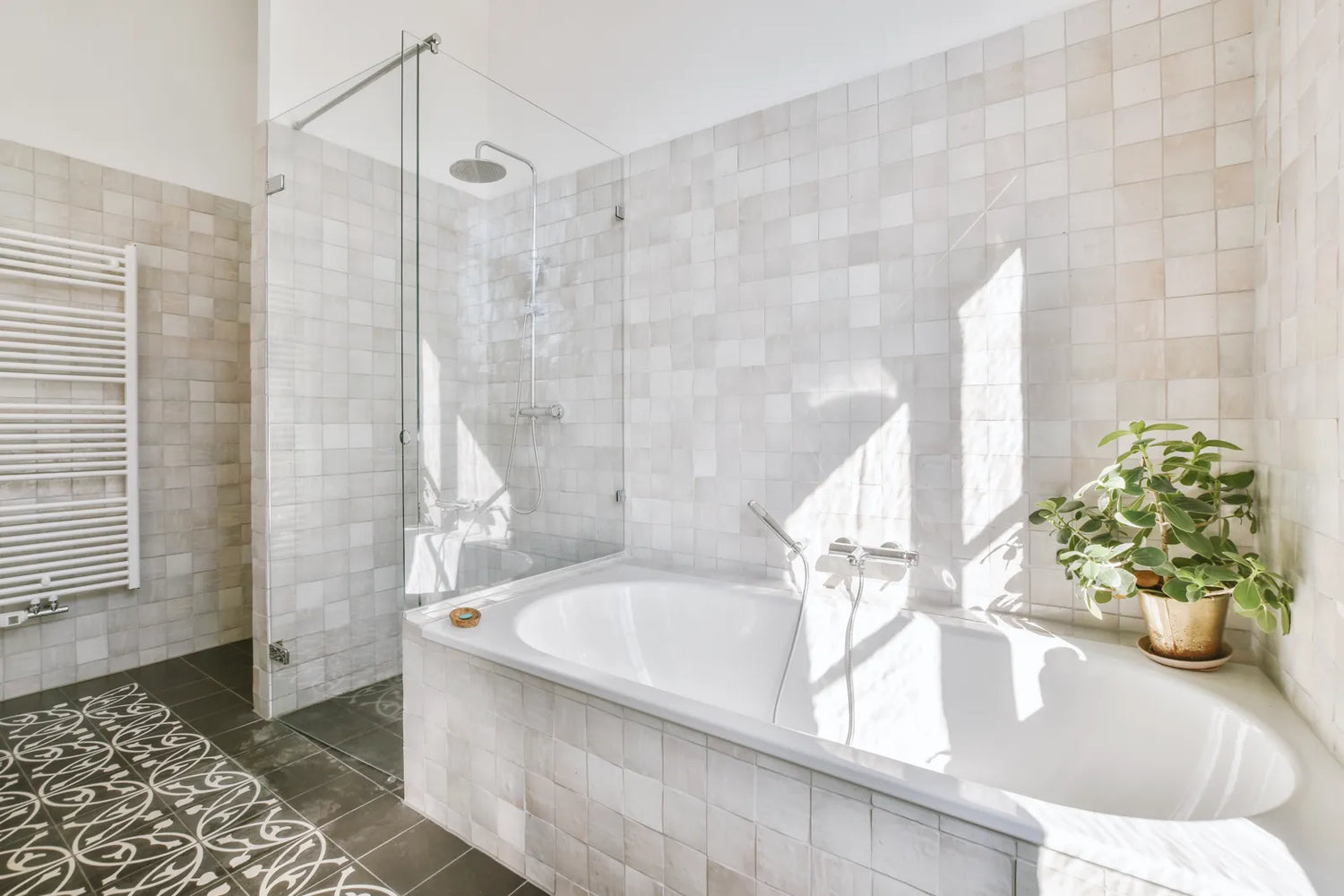
Compact bathroom layouts prioritize open walk-in showers to optimize indoor circulation and daily movement space. Core family-focused compact bathrooms benefit most from integrated tub-shower combo structures to retain dual usage functions within fixed space limits.
Daily showers or weekly soaks?
Be honest here. Not aspirational. Actual habits.
If you shower every day and take a bath twice a year, choose around the shower. If you soak every week for stress relief, sore muscles, or joint comfort, that is a real use case for a tub.
Some people ask, “Does taking a bath lower cortisol?” Warm baths may help your body relax, and relaxation can support lower stress. But that only matters if you truly use the tub. A wellness idea you don’t practice should not drive a major remodel.

Which differences actually matter?
There are dozens of little differences between tubs and showers. Most don’t matter enough to drive the purchase. These do.
Space changes the whole decision
A shower usually wins in bathrooms under about 50 square feet because it improves flow. You get easier movement, easier door clearance, and a less crowded feeling.
A freestanding tub, in particular, needs more breathing room around it. In a tight room, it can look good in photos and feel annoying in real life. You need space to walk, clean around it, and use nearby fixtures without feeling boxed in.
This is also why freestanding bathtub vs walk-in shower is not just a style question. It’s a space question. If your bathroom is compact, a walk-in shower usually gives more comfort per square foot.
Water use depends on habits
Set clear water consumption decision rules based on fixed usage thresholds, according to official water efficiency data from the U.S. Environmental Protection Agency. Standard full-filled bathtubs consume 30 to 70 gallons per use. Modern low-flow showerheads deliver 2.0 gallons per minute flow volume. Showers lasting under 10 minutes consume less water than average full baths; showers exceeding 15 minutes reach or surpass the water consumption level of regular household bathtubs. Deep-style soaking tubs maintain the highest overall water consumption volume in all scenarios.
Final explicit takeaway: Households with regular long-duration shower habits should select optimized large-capacity walk-in showers instead of bathtubs to control daily water consumption effectively.
Cleaning regret shows up fast
Ranked design-classified weekly maintenance burden guide sorted by cleaning difficulty level.
-
Tub structure maintenance ranking: Alcove tub paired with plain solid surround owns low weekly cleaning burden; freestanding open-style tubs have higher cleaning workload due to exposed gaps and peripheral dead corners.
-
Shower enclosure maintenance ranking: Frameless glass shower enclosures require only regular surface wiping with no hidden dirt accumulation areas; framed sliding shower doors have track gaps that easily store dirt and raise long-term cleaning frequency.
-
Wall tile maintenance ranking: Large-format seamless tiles with minimal grout lines need the least regular scrubbing; small dense splicing tiles with abundant grout joints are prone to mildew and require frequent deep cleaning.
Core direct recommendation for minimal weekly upkeep needs: Choose alcove standard tub with plain surround matched with frameless glass enclosure and large-format low-grout wall tile combinations.
Resale depends on tub elsewhere
This is where people get too absolute. You do not always need a tub in the exact bathroom you are remodeling. But in many markets, it helps to have at least one bathtub somewhere in the house.
That is why the question do you need at least one bathtub in the house usually gets this practical answer: if your home is family-oriented, yes, it is smart to keep one. If your home is a downtown condo aimed at singles or older downsizers, a shower-only setup may be just fine.
For bathtub vs walk-in shower resale value, showers often win in primary bathrooms because buyers like the open, updated look and better access. But homes with no tub at all can lose appeal with family buyers.
When bathtub vs shower favors a tub
There are clear times when a tub is the better call.
You need one tub in the house
If this remodel would remove the only tub, stop and think carefully. This is where many homeowners ask, should you replace a tub with a shower? If it’s the only tub in a family-sized home, usually no.
You may love the walk-in shower. Future buyers may still want somewhere to bathe kids. Even if resale is not your main goal, life changes. Guests change. Injuries happen. A home with one tub is simply more flexible than a home with none.
Kids make showers less practical
For adults, showers are easier. For young kids, tubs are easier.
Bathing toddlers in a walk-in shower can be awkward and messy. Parents often end up using bins, kneeling on hard floors, or improvising in ways that get old quickly. If children are part of your household plan in the next few years, a tub is often the simpler choice.
This is one reason is it better to have a bathtub or shower in a home does not have one universal answer. Households with small kids live very differently from households with two adults and no plans for children.
Soaking is a real weekly habit
If you truly bathe often, keep in the tub. This includes people who use baths for muscle recovery, stress relief, or quiet downtime.
A soaking tub vs walk-in shower decision should come down to frequency. Weekly soakers usually feel the loss of a tub. Occasional soakers usually adapt quickly to a larger shower and rarely look back.
You plan to stay long term
If this is your long-term home and the tub serves your real routine, your own habits matter more than trends. People often remodel around resale and then live with a less useful bathroom for ten years.
That said, if you plan to age in place, think beyond today. A standard tub may fit your current life but not your future mobility.

When a shower makes more sense
For many adults, especially in a primary bath, a shower is the better answer.
Small bathrooms work better with showers
If your bathroom feels cramped, replacing a tub with a walk-in shower can make a dramatic difference in daily comfort. The room often looks larger, moves better, and feels less boxed in.
This is why many people ask, is a walk-in shower cheaper than a bathtub. The answer is: sometimes, but not always. A plain fiberglass shower can be affordable. A custom tile walk-in with glass, niche, bench, and drain work can cost more than a standard tub install. The real win is often not costly. It’s better use of limited space.
Aging in place favors walk-ins
This is one of the strongest shower arguments.
A standard tub has a step-over wall, a slippery floor, and an awkward transfer in and out. For people with knee pain, balance issues, or reduced strength, that becomes risky. A walk-in shower, especially a curbless one, is much easier and safer to use.
The question walk-in shower vs bathtub for aging in place has a clear answer: walk-in shower.
And curbless shower vs bathtub safety also leans heavily toward the curbless shower, provided it is designed with:
-
slip-resistant flooring
-
good drainage and slope
-
grab bars or backing for future grab bars
-
enough room to turn or sit if needed
A shower bench can also help people who get tired standing for long showers.
Fast mornings beat occasional baths
Most people take a shower every day. That matters. Daily convenience should usually outweigh occasional luxury.
If your mornings are busy, if more than one person shares the bathroom, or if you simply prefer speed, a walk-in shower makes the room work better. This is why bathtub vs shower for master bathroom remodel often tilts toward the shower.
Many primary bath remodels feel more successful after switching from a bulky tub setup to a well-sized shower.
Should you replace a tub with shower?
Sometimes yes. Sometimes absolutely not.
You should consider replacing a tub with a shower if:
-
it is not the only tub in the house
-
no one takes baths
-
the room is cramped
-
mobility or safety is a concern
-
this is the primary bathroom used mostly by adults
You should think twice if:
-
it would remove the only tub
-
you have small kids
-
you plan to sell soon in a family-heavy neighborhood
-
someone in the home strongly values regular baths
Which alternative should you pick?
Sometimes the right answer is not just a tub or shower. It’s the right version of each.
Combo beats either in one-bath homes
If you have one full bathroom, a bathtub and shower combo vs separate shower decision often favors the combo simply because it does more with one footprint.
No, it is not as open as a walk-in shower. But it gives you:
-
a place to bathe kids
-
a place to soak if you want one
-
a shower for everyday use
-
better flexibility for future buyers
For many one-bath homes, this is the least risky choice.
Walk-in shower fits forever homes
If you are remodeling for the next 10 to 20 years, a walk-in shower is often the smartest use of money in the primary bath. Beyond basic safety advantages, this layout effectively relieves physical standing fatigue during long washing sessions and provides stable comfortable conditions for seated body cleaning behaviors, fully fitting gradual mild mobility decline physical state changes.
Core concrete pre-planning practical details: Low curbless or curbless design eliminates high step-over physical barriers; reserve fixed solid wall positions in advance for later grab bar installation and reinforcement; reserve sufficient internal space inside the shower area to complete body turning movements and place stable sitting facilities freely.
If you are asking what to consider before removing a bathtub, this is where the answer gets practical:
-
Is there another tub in the home?
-
Who uses this bathroom now?
-
Who may use it in five years?
-
Is mobility likely to matter?
-
Will a larger shower solve a real problem or just look better?
If the shower solves a real daily problem, that is a strong reason.
Freestanding tub needs extra space
A lot of homeowners are drawn to a freestanding tub because it looks high-end. But freestanding bathtub vs walk-in shower is often a contest between image and usefulness.
Freestanding tubs work best when:
-
the room is large
-
there is still a separate shower
-
you truly bathe often
-
you are okay cleaning around and behind the tub
In a moderate-size bathroom, they can become cold-looking, hard to clean around, and less comfortable than expected.
Practical anti-regret usage reminder: Freestanding tubs have obvious real-life usage defects including awkward body posture during in-and-out movement and rapid body temperature drop causing post-bath cold discomfort. This type of fixture is only suitable for households with stable weekly fixed soaking bathing habits; it is not recommended for users who only pursue decorative aesthetics and belong to occasional aspirational bathing groups.
Soaking tub suits luxury remodels
A soaking tub vs walk-in shower choice can make sense in a larger, higher-budget primary suite if relaxation is a true priority. Deep soaking tubs are more satisfying than shallow standard tubs for adults.
But they use more water, take longer to fill, and need enough bathroom space to feel worth it. If your remodel budget is tight, many homeowners get more daily value from a better shower than from a premium soaking tub.
Cost, conversion, and water questions
This section focuses purely on hierarchical installation cost guidance and core space conversion constraint points, removing repeated water usage descriptive content.
Clear cost-direction guidance
Standard basic grade installation: Ordinary alcove bathtubs and prefabricated simple walk-in showers maintain close overall construction investment levels.
Mid-range improved grade installation: Upgraded material bathtubs and showers with basic functional accessories bring moderate cost increase within controllable scope.
High-end customized grade installation: Fully customized tiled walk-in showers equipped with frameless glass, fixed sitting benches, storage niches and linear drainage systems produce obvious cost premium, far exceeding conventional standard bathtub installation expenses.
Core decisive conversion constraint factors
Bathtub to walk-in shower reconstruction must complete drainage pipeline position adjustment, overall wall waterproof layer reinforcement and local wall surface renovation, and partial regional renovation permits need to be submitted for approval in most areas.
Showers to bathtub reconstruction faces stricter space limitation, fixed drainage position restriction and original building frame size matching problems, with higher overall transformation difficulty and hidden construction cost increase risk. Any cross-fixture type large-scale transformation involving overall pipeline displacement and bathroom space pattern adjustment will greatly raise total renovation expenditure.
Final Verdict
Choose a bathtub if you have young kids, take real weekly baths, or need to keep at least one tub in the home for flexibility and resale. Choose a walk-in shower if this is an adult-focused bathroom, space is tight, or mobility and aging in place matter. If you have two bathrooms, the best setup for most households is a shower in the primary and a tub in another bath. The right choice is the one that matches how your household actually lives, not what looks best in showroom photos.
Before You Buy
-
Count how many tubs are already in the house.
-
Be honest about how often anyone really takes baths.
-
Measure the room and check walking space, not just fixture size.
-
Think about kids, pets, guests, and future mobility needs.
-
Ask whether this is a resale-driven remodel or a long-term home update.
-
Price the full install, including waterproofing, plumbing changes, and glass.
-
Choose surfaces you will be willing to clean every week.

FAQs
What is the 4 minute shower rule?
The 4 minute shower rule is a practical water-saving standard widely promoted for daily bathroom use, closely linked to the practical choice between bathtub vs shower. This simple habit limits daily shower time to control water waste and cut heating costs effectively. It works perfectly with low-flow shower fixtures and helps users clearly tell the difference between shower and bath in actual water consumption. Homeowners can follow this rule easily to build eco-friendly bathing routines and reduce long-term household utility expenses.
Is it more hygienic to have a bath or a shower?
Many homeowners struggle to decide bath or shower when prioritizing daily cleanliness and bathroom health. Showers feature flowing water that washes away body impurities instantly for cleaner daily bathing experiences. Bathtubs rely on static water soaking, which easily retains dirt and soap residue and needs frequent deep cleaning. Proper daily maintenance and regular surface scrubbing can greatly improve the hygiene level of either bathing option in family bathrooms.
Does taking a bath lower cortisol?
Regular warm soaking in bathtubs helps ease muscle tension and relieve daily mental pressure to regulate personal stress status. This relaxing effect is ideal for users who stick to fixed weekly soaking habits at home. People who prefer quick daily cleaning gain less wellness benefit from bathtub installation in ordinary family bathrooms. You should match bathing functions with real living habits instead of choosing fixtures only for wellness needs.
What takes more water, a shower or a bath?
Many household renovators care most about what takes more water a bath or a shower during bathroom layout planning. Fully filled standard bathtubs consume far more water than short daily showers with low-flow showerheads. Extended long showers will gradually narrow and even exceed the water usage of common household bathtubs. Reasonable control over daily bathing duration is the most direct way to balance comfort and water-saving needs for all families.
How much does a 10-minute shower use in water?
Water consumption of a fixed-time shower mainly depends on the flow rate of installed shower heads and actual usage habits at home. Modern energy-saving shower equipment keeps daily water usage within a stable and eco-friendly range for ordinary families. Different types of bathing methods form obvious usage gaps in long-term daily family use. Understanding specific water usage data helps families make more reasonable bathroom renovation and fixture matching decisions.
Is it cheaper to have a tub or walk-in shower?
Most budget-focused remodelers want to confirm is a walk in shower cheaper than a tub before starting bathroom renovation projects. Basic standard bathtub installation has lower overall material and construction costs in common family home upgrades. Custom-designed walk-in showers with glass enclosures, storage niches and non-slip floors will bring obvious cost increases. You can choose matching bathing fixtures reasonably according to your actual renovation budget and long-term use demands.
References



Leave a comment
This site is protected by hCaptcha and the hCaptcha Privacy Policy and Terms of Service apply.