



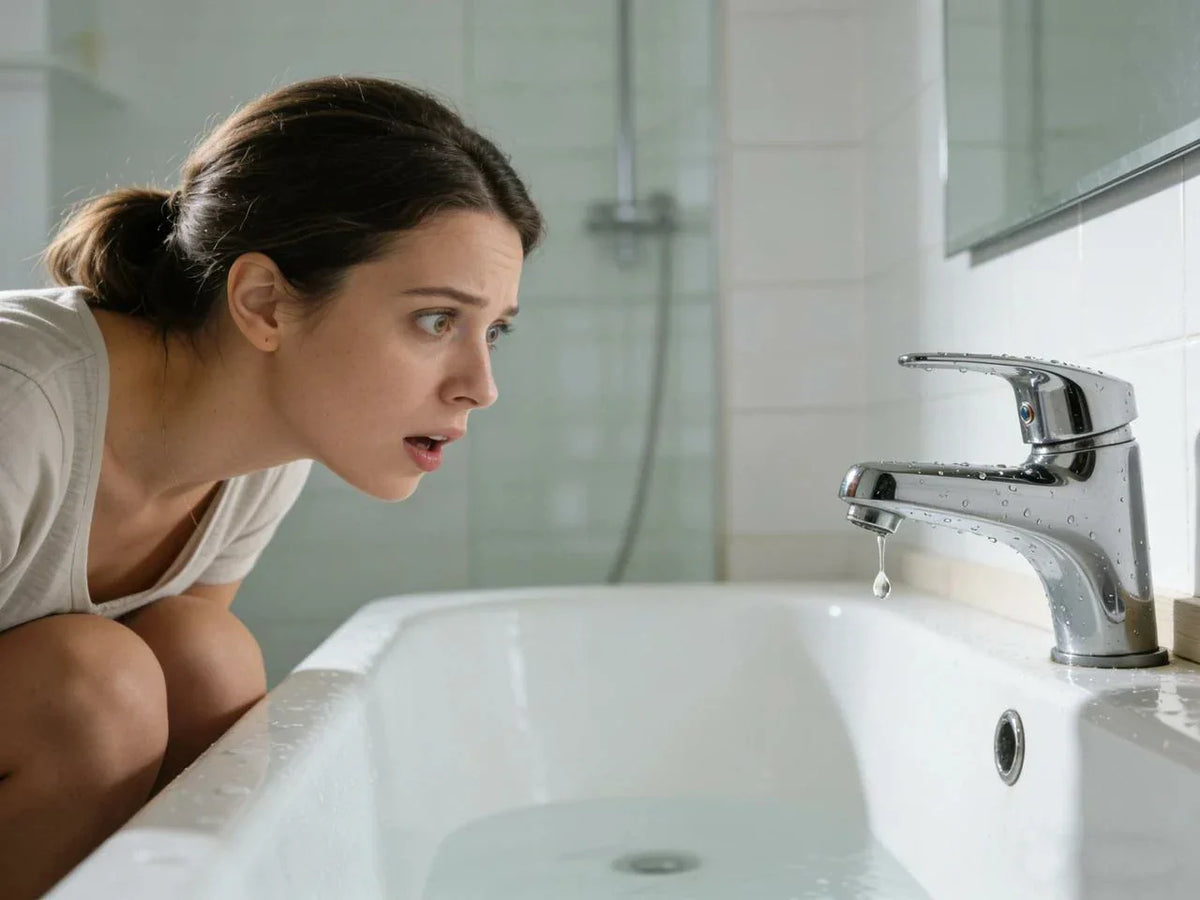
A bathtub faucet dripping is more than a small annoyance. A slow drip can waste over 3,000 gallons of water a year and add $240 or more to your water bill, especially if you also pay for hot water. The good news is that in most homes, a leaking bathtub faucet is simple to diagnose and repair. With a few basic tools and a $10–$20 part, many people can fix the problem in under an hour.
This step‑by‑step guide walks you from quick “stop the drip now” actions, through identifying your faucet type, to complete bathroom tub faucet repair. You will see common causes, repair costs, mold and damage risks, and clear signs that it is time to call a plumber instead of pushing DIY further.
How to stop a dripping tub faucet in the first 10 minutes
Before you start any actual repair, it helps to pause and get the situation under control. This short section bridges the gap between understanding the problem and taking action, focusing on what you should do in the first 10 minutes to limit water waste and prevent damage. A few quick, smart steps now can protect your bathroom—and your wallet—before you move on to hands-on fixes.
Immediate actions to protect your bathroom and wallet
When you first notice water dripping from a tub faucet, your mind might jump straight to “How do I stop my bathtub faucet from dripping?” Before you grab tools, take a few quick steps to protect your bathroom and control the water supply.
First, check if you have a local shutoff valve for the tub. Sometimes there are valves behind an access panel near the tub or in the room behind it. If you can reach them, gently turn the hot and cold valves clockwise to shut off water to the faucet. If you do not see local valves, you may need to use the main water supply valve for the home, usually near the water meter or where the main line enters your house. This will completely stop water from flowing to your tub while you prepare for repairs. Turning off the main will stop water to the whole plumbing system, so it is worth doing a quick check for local valves first.
Next, cover the drain. Use the tub stopper or a small rag so that if you drop a tiny screw, washer, or O‑ring, it does not vanish down the drain. Lay a towel in the bottom of the tub to protect the finish when you set down tools or faucet parts. A towel also softens the impact if you drop the faucet handle or a wrench.
Many people ask if they must turn off the water right away. If the tub faucet dripping is only a slow, steady drip, and you cannot get to the main valve easily, you can usually wait a few hours or even a day while you plan the repair. But if you see a thin stream of water, hear hissing inside the wall, or notice water pooling on the floor, treat it as urgent and shut off the water supply today. That step can prevent water damage and a much higher repair bill later.
How much a dripping tub faucet really costs you
A slow dripping faucet seems harmless, but the numbers tell a different story. The U.S. Environmental Protection Agency reports that a faucet leaking at about one drip per second can waste more than 3,000 gallons of water in a year. That is close to what one person might use in a month of showers and dishwashing.
If you pay average U.S. water and sewer rates, plus energy to heat that wasted hot water, that drip can add over $240 per year to your water bill. A faster leak, such as a thin stream instead of a drip, can multiply both water waste and cost several times over.
So, spending $10–$30 on tools and replacement parts to fix a leaky bathtub faucet often pays for itself in just a few months. It also lowers strain on your water heater and helps conserve a resource your whole community depends on.
Is it safe to use my tub if the faucet is dripping?
Many people wonder if they can still bathe while the bathtub faucet is generally dripping. In many cases, yes, you can still use the tub for a short time, but there are a few things to think about.
From a hygiene and comfort point of view, a slow bathtub faucet drip usually does not make the water unsafe. The bigger concerns are damage, mold, and safety around the tub. Constant moisture on grout, caulk, and walls creates a perfect place for mold and mildew to grow. Over weeks or months, that moisture can seep into drywall, subflooring, and framing. Mold can trigger breathing problems in sensitive people, especially kids, older adults, and anyone with asthma or allergies.
If the leak is small and you have no signs of water stains, soft spots, or musty smell, you can keep using the tub for a short time while you schedule your bathtub faucet drip repair. But if you see bubbling paint, dark spots on the ceiling below, or feel a warm, damp patch on the wall near the tub, stop using it and turn off the water supply. At that point, you may have a hidden leak behind the wall that needs a plumber.
If you are in a rental, it is smart to report a leaky tub or faucet leak right away. Landlords are often responsible for plumbing repairs, and quick action helps you avoid any blame for damage you did not cause.

Quick triage checklist before any repair
Before you start to fix a leaky bathtub faucet, it helps to know exactly where the water is coming from. This saves time and keeps you from replacing parts that are not the problem.
Use this quick check in order:
-
Check the faucet carefully. Watch the spout—does water drip only from the tub spout, or do you also see leaks around the faucet handle or trim plate?
-
Check the handle area. Is water oozing from around the handle, the escutcheon (the trim plate around the handle), or from under the spout where it meets the wall?
-
Test the shower diverter. If you have a tub/shower combo, pull up the diverter on the spout or flip the shower knob while the water is running. After you turn the faucet off, does water dripping from the tub faucet happen more often, less often, or the same?
-
Listen at the wall. With the room quiet, can you hear hissing, rushing, or ticking behind the wall even when all water is off?
You can sketch a simple flowchart: “Drip only from spout” usually points to worn washers, cartridges, or seats inside the faucet. “Water around the faucet handle” often points to bad O‑rings or packing nuts. “Sound in the wall” suggests a deeper plumbing leak that may be beyond basic DIY.
Water dripping from tub faucet: quick diagnosis checklist
This section helps you identify your tub faucet type and pinpoint the source of the drip. Use the checklist to match your faucet style with common leak patterns and run simple tests to see why water is escaping. Knowing this makes it clear whether you can handle a quick DIY fix or if a plumber might be needed.
Identify your faucet type (single-handle, two-handle, diverter)
To learn how to fix a dripping bathtub faucet, you first need to know what kind of faucet you have. Most tubs use one of three basic styles: a single-handle bathtub faucet, a double-handled faucet, or a separate diverter that sends water to the showerhead.
Inside these handles are different valve designs. The main ones are compression, cartridge, ball, and ceramic disc valves.
-
A compression faucet usually has two handles that you twist a full turn or more. Each handle has a faucet stem with a rubber washer at the end that presses against a faucet seat to stop water. These are common in older homes.
-
A cartridge faucet may have one or two handles, but the motion is smoother and often only a quarter to half turn. Inside is a valve cartridge that helps control water temperature and flow with flexible seals and O‑rings.
-
Ball and ceramic disc faucets are more common on sinks, but you will still see them in some tubs. They tend to last longer but can still drip when seals wear out.
Here is a simple comparison that helps match faucet type, drip pattern, and likely failing part.
| Faucet type | Common handle style | Typical drip pattern | Most common failing part |
| Compression (washer-style) | Two knobs, many turns | Drip from spout, hot or cold side only | Rubber washer, faucet seat |
| Cartridge | Single lever or two short levers | Steady drip from spout, often both temps | Cartridge seals, O-rings |
| Tub spout with diverter | Spout knob/lever for shower | Drip from spout after shower turned off | Diverter, spout O-ring, valve seals |
In many bathrooms, you will find that the bathtub faucet uses a cartridge behind a single handle. Knowing this helps you buy the right tools and replacement parts and understand which step‑by‑step DIY guide in this article applies to you.
Simple tests to pinpoint the source of the leak
Once you know your faucet style, a few easy tests can show why your tub faucet is dripping when the water is off.
Start with temperature. Turn off the faucet and wait a minute. Feel the water drip with your fingers. Is it warm, cold, or changing over time? If the drip is always hot, the leak is likely on the hot side of the valve. If it is always cold, the cold side is the issue. On a single‑handle faucet, you can move the handle toward hot or cold and see if the drip slows. That tells you which side of the valve cartridge is not sealing well.
Next, turn on another faucet in the house, such as the bathroom sink. Does the tub faucet dripping change when water is running elsewhere? If the drip stops or slows a lot while another tap is on, your home may have higher than normal water pressure. High pressure can push water past worn seals even when the faucet is “off.”
You can also listen and feel for pressure. Gently rest your fingers on the handle or the trim plate. If you feel a faint vibration or hear a soft hiss when everything should be off, there may be a small gap between the valve and the seat, or grit stuck inside the faucet.
These small tests help answer a common question: Why is my tub spout dripping when the water is off? In most cases, the cause is a worn washer, tired cartridge, rough or corroded valve seat, high pressure, or a mix of these. The water is not fully blocked inside the faucet, so it squeezes past the seal and drips out of the spout.
Can I fix a dripping bathtub faucet myself, or do I need a plumber?
Fixing a leaking bathtub faucet is one of the most common home plumbing tasks. In many cases, you can fix the issue yourself with basic tools and patience.
You are a good fit for DIY if:
-
The dripping bathtub faucet only leaks from the spout or around the handle, not from inside the wall.
-
Your tub’s finish and tile are in decent shape, so you can remove the faucet parts without breaking anything.
-
You can use a screwdriver, wrench, and pliers without trouble and are comfortable shutting off your water supply to the faucet.
About 70–80% of bathroom tub faucet repair jobs come down to replacing a washer, O‑ring, or cartridge. These are all parts inside the faucet that you can replace from the front without cutting into walls.
On the other hand, you should plan to call a plumber if you see heavy green or white crust on the faucet, broken or cracked metal parts, soft or wet walls, or leaks that keep coming back even after replacing common parts. Those signs often mean deeper corrosion, a damaged valve body, or even a leaking pipe behind the wall.
Most simple DIY repairs take 30–60 minutes once you have the right part. More complex jobs, like dealing with stuck stems or corroded seats, can take a couple of hours for a homeowner.
Use bathtub faucet replacement to identify the likely cause, the compatible part, and the safe next step before acting on the “Can I fix a dripping bathtub faucet myself, or do I need a plumber?” section.
Symptom checklist
-
“Drips only from hot side” often points to a worn hot-side washer or cartridge seal.
-
“Drips after shower is turned off” often points to a tired diverter or spout seal.
-
“Water seeping from around handle” points toward O‑ring or packing nut problems.
Most common causes of a dripping tub faucet
Dripping faucets don’t just waste water—they usually point to a few familiar culprits. From worn washers and tired cartridges to corroded valve seats and stubborn mineral buildup, knowing what commonly causes a tub faucet to leak helps you spot the problem faster and decide whether it’s an easy DIY fix or a job for a plumber.
Worn washers and cartridges (top causes across faucet types)
The most frequent causes of a leaky bathtub faucet are worn‑out washers and faulty cartridges. In a compression faucet, each handle presses a rubber washer against a metal faucet seat. Over years of use, the washer rubs against the seat every time you turn the handle. Water pressure presses it even harder. This friction slowly thins and hardens the rubber. When the washer can no longer form a tight seal that prevents water flow, you get a dripping tub faucet even when the handle is off.
In a cartridge faucet, the moving parts are inside a plastic or brass cartridge with built‑in seals and O‑rings. Hot water, minerals, and wear make these seals stiff or cracked over time. Once the cartridge can no longer block the water channels fully, water slips past and drips from the spout. That is why a faulty valve cartridge is such a common reason for a bathtub faucet leak in newer homes.
Plumbing repair videos and professional guides agree that if you want to stop the leak in most tubs, your first guess should be a worn washer (for compression faucets) or a tired cartridge (for cartridge faucets).
Deteriorated O-rings, valve seats, and packing nuts
Even if your washer or cartridge is fine, smaller parts can still cause water to leak. The O‑rings are small rubber rings that help seal gaps around the faucet stem and inside the faucet assembly. In a tub, where surfaces often stay damp, O‑rings can swell, crack, or flatten. When that happens, you may see water around the handle or feel dampness behind the trim plate.
The valve seat is the metal ring the washer or cartridge presses against to stop water. If the water in your area is slightly acidic or full of minerals, that seat can corrode. Tiny pits form on the metal, and even a new washer cannot press into all those pits to fully stop water flow. That is one big reason people ask, “Why is my bathtub faucet still dripping after replacing the washer?” The real problem may be the rough valve seat, not the washer itself.
The packing nut holds the stem in place and prevents leaks around it. If it loosens or the packing inside wears out, you may notice water seeping from around the handle when the faucet is on or off. Tightening the packing nut a quarter‑turn or replacing the packing material can often stop this type of leak.

Mineral buildup, hard water, and high pressure
If your home has hard water, meaning water with a lot of calcium and magnesium, minerals can build up inside the faucet. In some areas, hardness can reach 300 mg/L or more. According to the USGS on water hardness, these minerals slowly coat the insides of the valve, stem, and cartridge. They can cause seals to stick, prevent the handle from closing fully, or grind away at rubber parts, helping a dripping bathtub faucet form sooner.
High water pressure is another quiet enemy. When pressure is above about 60–70 psi, every part of the plumbing system works harder. Worn washers, O‑rings, and cartridges fail faster because more force is pushing water against any tiny gap in the valve. If your tub or shower faucet starts dripping after turning off water, and you also hear pipes bang or see strong spray at other taps, it is worth checking your home’s pressure with a simple gauge.
Why is my bathtub faucet still dripping after replacing the washer?
Many homeowners swap a rubber washer and, if you are tired of the constant dripping, still feel frustrated when the faucet continues to leak. There are a few common reasons for this.
One is hidden corrosion on the valve seat. Even with a brand‑new washer, a pitted or rough seat leaves small channels where water can pass through. In that case, you may need to remove the seat with a special tool or resurface it with a seat-dressing tool, if your faucet design allows it.
Another reason is using the wrong size or shape of washer. Washers come in many diameters and thicknesses. If you pick one that is a bit off, it may not sit flat and tight against the seat. The same goes for cartridge replacements; an almost-right cartridge can still let water leak. That is why many pros bring the old part to the hardware store and match it exactly.
Sometimes the washer is new, but other parts, such as the O‑ring or packing, are still worn or loose. In rare cases, the metal parts of the faucet are so corroded or cracked that a full valve body replacement is the only long‑term solution. When you have tried new washers, O‑rings, and even a new cartridge, and the bathtub faucet dripping persists, that is a strong sign it is time to call a plumber.
DIY steps to fix a leaking bathtub faucet (all major types)
Ready to tackle that dripping tub? This part walks you through all the major DIY fixes for bathtub faucets, whether you have a single-handle cartridge, a two-handle compression faucet, or a tub/shower diverter. You’ll get a clear rundown of tools, safety tips, and step-by-step instructions so you can stop the leak efficiently and confidently.
Tools, materials, and safety basics for tub faucet repair
Before you start any faucet repair, gather what you need. Having tools close at hand makes it easier to stay calm and focused while you fix a leaking bathtub faucet.
Here is a simple list of common tools and parts, with typical price ranges:
| Item | Typical use | Approximate cost (USD) |
| Phillips/flat screwdrivers | Remove handles and trim | $10–$15 |
| Allen (hex) wrench set | Loosen set screws on some handles | $5–$15 |
| Adjustable wrench | Loosen nuts and stems | $10–$20 |
| Slip-joint or channel-lock pliers | Grip stubborn parts, spouts | $15–$25 |
| Flashlight or headlamp | See inside the faucet | $5–$15 |
| Replacement washer/cartridge kit | Replace worn internal parts | $10–$30 |
| O‑ring assortment | Replace worn seals | $5–$10 |
| Plumber’s tape (PTFE) | Seal threaded connections | $2–$5 |
| Silicone faucet grease | Lubricate O‑rings and cartridges | $5–$10 |
Safety is simple but important. Always turn off the water supply before starting. Open the tub faucet to release any pressure, then close it again. Place a towel in the tub and cover the drain so you do not lose small parts. Keep metal tools away from finished surfaces to avoid scratches.
How to fix a single-handle cartridge bathtub faucet leak
If your tub has a single lever that controls both hot and cold, it likely uses a cartridge. Here is a step‑by‑step guide to fix a leaking single-handle tub faucet.
-
Shut off water and prepare the area. Turn off the local valve or the main water supply. Open the tub faucet to let water drain, then close it. Place a towel in the tub and plug the drain.
-
Remove the handle. Look for a small cap or plug on the handle. Pry it off gently with a small screwdriver to reveal a screw, or look for a tiny set screw under the handle. Use the right screwdriver or Allen key to pull the handle off the stem.
-
Take off trim and access the cartridge. Remove the trim plate and any decorative parts. You may see a retaining clip, nut, or ring holding the valve cartridge in place. Take a picture with your phone so you remember how parts fit.
-
Remove the valve cartridge. Use pliers or a cartridge puller, if needed, to gently remove the valve cartridge. Wiggle it straight out; avoid twisting hard, which can damage inside the faucet.
-
Inspect O‑rings and seals. Check for cracked or flattened O‑rings, torn rubber seals, or mineral buildup. Clean minerals with a soft brush and vinegar if needed.
-
Install the new cartridge. Match the new cartridge to the old one. Lubricate O‑rings with a small amount of silicone grease. Slide the new cartridge into the valve body in the same orientation as the old one. Reinstall the retaining clip or nut and tighten snugly, not overly tight.
-
Reassemble the faucet. Put the trim plate and handle back on. Screw the faucet parts in place the same way they came off.
-
Turn on the water and test. Slowly turn on the water at the shutoff. Open the tub faucet to clear air, then close it. Watch the spout for a few minutes. A dry spout means your bathtub faucet drip repair worked.
If the shower faucet drips after turning off water even after a new cartridge, check the diverter and spout section below, and make sure the cartridge is seated and aligned exactly as shown in your photo.
How to repair a two-handle compression or washer-style dripping tub faucet
If your tub has two handles that twist many turns, you likely have a compression faucet with washers at the ends of the stems. Here is how to fix a leaky bathtub faucet of this kind.
-
Shut off water and protect the tub. Turn off the local or main water supply. Open both hot and cold handles to relieve pressure, then close them. Protect the tub and cover the drain.
-
Remove the handles. Pop off any decorative caps and remove the screws beneath. Pull the handles straight off the stems. If they are stuck, gentle rocking usually works; special handle pullers exist if needed.
-
Remove the stems. Behind each handle you will see a packing nut or bonnet nut. Use an adjustable wrench to loosen it. Then pull out the entire faucet stem assembly.
-
Replace the washer. At the end of the stem, you will see a rubber washer held by a small screw. Unscrew it, remove the old washer, and compare it to a new one. Make sure the size and shape match. Install the new washer and screw it down firmly, but do not strip the screw.
-
Inspect and clean the valve seat. Shine a light into the valve opening in the wall. If you see roughness or pits on the metal seat, that may be the cause of a leaking tub faucet. If your faucet design allows, use a seat wrench to remove the seat and replace it. If the seat is fixed, you may be able to smooth it with a seat-dressing tool.
-
Reinsert the stems and reassemble. Slide the stem back into the valve, thread on the packing nut, and tighten it snugly. Reinstall the handles and screws.
-
Test the repair. Turn the water supply back on slowly. Check both handles for leaks around them and watch the spout. If the drip is gone from both hot and cold, your bathtub faucet repair is complete.
If only one side was dripping before, you might be tempted to fix just that side. In many older old bathtub setups, it is smart to change washers on both sides while everything is apart. That way, you do not have to repeat the job soon.
Fixing a leaky shower diverter and tub spout leaking issues
Many tub/shower combos use a tub faucet with a diverter on the spout. You pull up a knob or lever to send water to the showerhead. Over time, parts inside the spout and diverter wear out and water from leaking can show up as a drip from the spout or a showerhead that runs even when the diverter is down.
To figure out if the diverter is the main problem, run the water and pull the diverter to start the shower. If a lot of water still pours from the spout, or if the shower keeps dripping after turning off water, the diverter may be worn or clogged with minerals.
The basic steps are:
-
Shut off water and remove the spout. Make sure water is off. Many spouts are either threaded onto a pipe or held by a set screw under the spout. Loosen the screw or twist the spout counterclockwise to remove it.
-
Inspect the diverter and O‑rings. Look inside the spout. You may see rubber seals, a flap, or a slide that blocks flow when you pull the diverter. Check for cracks, broken parts, or hard mineral deposits. Inspect any O‑rings around the base that seal the spout to the pipe.
-
Replace the spout or seals. In many cases, the easiest tub spout leaking fix is a full replacement spout with a new diverter built in. Slide it onto the pipe and tighten it or the set screw as needed. If your spout design allows changing just the seals, match and replace them.
-
Test both tub and shower modes. Turn water back on. Run the tub, then pull the diverter. Water should flow cleanly to the shower with only a small amount from the spout. After you shut off the faucet, you should not see continuous dripping from the spout or showerhead.
If a shower faucet drips after turning off water even with a new spout and diverter, the leak is likely in the main valve (cartridge or washers), not the spout itself.

Costs, water waste, and hidden damage from ignoring drips
Ignoring a dripping tub faucet isn’t just an annoyance—it quietly wastes water, drives up your bills, and can cause hidden damage over time.
How much water and money does a dripping tub faucet waste?
Here is a simple view of how a tub faucet dripping affects water use and your wallet. The exact numbers depend on your local rates, but this table gives a sense of scale based on common estimates.
| Drip rate (approx.) | Estimated gallons wasted per year | Possible extra cost per year* |
| 1 drip every 2 seconds | ~1,500 gallons | $120+ |
| 1 drip per second | 3,000+ gallons | $240+ |
| Thin stream (not fully off) | 10,000–30,000+ gallons | $400–$900+ |
*Includes water, sewer, and hot water energy costs at typical U.S. rates.
Repairing a leaking faucet early is one of the easiest ways to prevent water waste. It also lowers stress on your hot water system, since many tub leaks are on the hot side.
DIY vs. plumber: repair cost breakdown
When people ask, “How much for a plumber to fix a leaking bathtub faucet?” the answer depends on how complex the problem is and where you live.
In many areas, a simple faucet repair that only needs a washer, O‑ring, or basic cartridge swap costs around $150–$300 when done by a pro. That price usually includes the service call, diagnosis, parts, and labor.
More complex work, like replacing a full valve, cutting into walls, or repairing damaged tile or drywall, can reach $200–$500 or more. If there is mold removal or subfloor repair, the cost rises again.
By contrast, most DIY jobs cost $10–$30 in parts if you already have basic tools, or under $50 total if you need to buy a simple tool set. This is why many owners try DIY first for standard bathtub faucet dripping problems, then call a pro if the leak continues or if they see signs of deeper damage.
Mold, mildew, and structural damage risks over time
A quiet bathtub faucet drip does not flood your floor in a day, but over time it can harm your home. Constant moisture on and around the tub can soak into grout, caulk, and tiny cracks. Behind those surfaces are drywall, insulation, wood framing, and subfloor panels. These materials do not dry well when wet every day.
Moist areas can grow mold and mildew, especially in warm bathrooms with poor airflow. Mold can spread to nearby walls and even ceilings below the bathroom. Some molds release spores that can trigger asthma attacks, sinus problems, or eye irritation in sensitive people. Over months or years, damp wood can rot, and drywall can crumble, leading to sagging floors or stained ceilings.
Fixing a small faucet leak now protects more than your water bill. It helps your home stay sound and healthy.
Is a dripping bathtub faucet dangerous?
In many cases, a dripping bathtub faucet is more of a slow problem than an immediate threat. But there are a few risks to keep in mind.
Extra water on surfaces makes tubs and floors more slippery. A child or older adult could slip on a wet spot left by a steady drip. Mold spores from long‑term moisture can cause health problems in people with breathing issues. Constant pressure on a damaged valve or pipe can also, in rare cases, lead to a sudden failure, causing a much larger leak or even a burst pipe.
On top of that, wasting thousands of gallons a year puts strain on local water systems and the environment. Fixing a leaky faucet is a small step with large benefits for your home, health, and community.
When to call a plumber for a bathtub faucet dripping
Sometimes a dripping tub faucet is more than a simple DIY fix. This section highlights the warning signs that signal it’s time to call a plumber, what you can expect in terms of costs, and how a professional repair typically works—so you can act before small leaks turn into bigger, more expensive problems.
Red flags that DIY probably won’t solve
DIY is great, but it has limits. You should consider calling a plumber if:
-
The tub faucet dripping continues even after you replace washers, O‑rings, and cartridges.
-
You see heavy green or white mineral crust, crumbling metal parts, or cracks inside the faucet.
-
You notice warm or damp spots on the wall, ceiling stains below the tub, or a musty smell.
-
The handles are loose or broken in a way that simple tightening does not fix.
These signs point to deeper issues such as corroded valve bodies, leaking pipes behind the wall, or damaged tile and waterproofing. DIY repairs on these problems can be risky and might make things worse.
How much does it cost to fix a dripping bathtub faucet?
As noted earlier, how much for a plumber to fix a leaking bathtub faucet depends on the job:
-
Simple faucet repair: usually $150–$300 for washer, O‑ring, or cartridge replacement.
-
Complex valve or pipe work: often $200–$500+, especially when walls, tile, or subfloors must be opened and then repaired.
Local labor rates, access to the valve, faucet brand and age, and the cost of parts all affect the final bill. Getting two or three quotes can help you feel more confident about the price.
Choosing a qualified plumber or plumbing company
When you decide it is time to call a pro about a leaky bathtub faucet, look for someone who is licensed and insured in your area. Ask if their work comes with a warranty on both parts and labor. That way, if the faucet starts dripping from the tub faucet again soon, you are covered.
It is reasonable to ask if they offer flat‑rate pricing for common tasks like bathtub faucet repair, or if they bill by the hour. For more complex leaks, you can ask if they recommend a camera inspection or pressure test of your plumbing system to check for hidden issues.
What to expect during a professional bathtub leak repair visit
When a pro comes to fix your leaking bathtub faucet, they will usually:
-
Inspect the faucet, spout, and nearby tile or wall for signs of water damage.
-
Ask how long the drip has been happening and if it changes with hot or cold water.
-
Shut off the water and remove the faucet handle and trim.
-
Check and replace washers, O‑rings, cartridges, or the spout as needed.
-
Test the faucet, diverter, and showerhead through several on/off cycles.
Most standard repairs take under an hour. If they find deeper damage, they will explain what is needed and often schedule a second visit with the right valve or parts. A good plumber will also clean up their work area so your bathroom is left tidy.

Prevention: keep your tub faucet from leaking again
Keeping your tub faucet in top shape is easier than you think.
Routine maintenance schedule for a healthy faucet
Once you fix the problem, a little simple care can prevent future leaks. Once or twice a year, check your tub faucet by turning it on and off and watching for any small drips from the spout or around the handle. Gently wiggle the handles; if they feel loose, tighten visible screws or ask a pro to check the packing nut.
If you see white mineral scale building up on the spout or around the faucet, wipe it away with a cloth dipped in vinegar. This can slow mineral buildup that makes parts inside the faucet wear faster. Keeping a small note in a home log, with the date you last changed a cartridge or washer, helps you know when parts might be nearing the end of their normal life.
Managing hard water and water pressure to prevent leaks
If you live in an area with very hard water, a simple softening system or point‑of‑use filter on your main line can reduce minerals that wear out faucets. If a softener is not in your budget, regular cleaning and a slightly shorter replacement cycle for washers and cartridges can still help.
High water pressure is another factor you can control. A plumber can measure your pressure and, if needed, install or adjust a pressure regulator so your household system runs around 50–60 psi. That level is usually enough to control water flow well without beating up your faucets.
Smart upgrades: cartridges, valves, and eco-friendly fixtures
If your home has very old, worn faucets, sometimes the best way to fix most leaks and prevent water waste is to replace the faucet or valve with a newer style. Many modern valves use ceramic discs or improved cartridges that last longer and resist mineral buildup better than older designs.
You can also look for fixtures that are certified to use less water while still giving good flow. These can cut your water use and make small leaks less likely to waste huge amounts if they do happen. Matching brands and models with the rest of your bathroom fixtures can also make future repairs easier because parts are simpler to find.
How often should I replace faucet cartridges and washers?
There is no single rule, because part life depends on use and water quality. In many homes:
-
Washers in compression faucets last about 5–10 years under normal use.
-
Cartridges in tub/shower valves often last 7–15 years, sometimes longer with softer water.
Signs that it is time for proactive replacement include handles getting stiff or hard to turn, temperature control becoming less smooth, or tiny drips that come and go. Changing parts before a full faucet leak forms can save water and stress.

Real-world examples: bathtub drip fixes that worked
Real-life stories show that fixing a dripping tub faucet doesn’t have to be expensive or complicated.
Quick DIY wins: most bathtub faucet drips fixed for under $25
Many homeowners share stories of fixing water dripping from a tub faucet in under half an hour for the price of a take‑out lunch. One common pattern is a single‑handle tub/shower valve that started dripping from the spout. After watching a couple of repair videos, the owner bought a matching cartridge for about $20, followed the steps to replace the cartridge, and the drip stopped as soon as they turned on the water again.
Online forums often show that roughly four out of five people who try a basic washer or cartridge swap have success when the leak is only at the spout and there are no signs of wall damage. The key is taking time to match the old part exactly and working slowly so you can reassemble the faucet in the right order.
Here is a simple summary of typical DIY cases.
| Faucet type | Problem described | Fix applied | DIY cost | Time spent |
| Single-handle | Steady drip from spout | New cartridge + O‑rings | ~$20 | ~30 min |
| Two-handle compression | Hot side dripping only | New washer + seat cleaning | ~$5 | ~45 min |
| Tub spout w/ diverter | Drip after shower off, worn diverter | New diverter spout installed | ~$25 | ~20 min |
When DIY failed and pros found deeper problems
Not every story ends with a quick DIY faucet repair. In older homes, especially those with decades‑old valves, the inside of the faucet can be badly corroded. Some homeowners report changing washers and even cartridges, only to see the leaky tub keep dripping. When a plumber opened the wall, they found valve bodies eaten away by rust or mineral buildup, or solder joints that had started to leak.
In one case, a tub that had “only” dripped for a year led to a rotten subfloor and a stained ceiling below. The final repair needed a full valve replacement and new tile. These examples show why you should not keep tightening handles or swapping washers forever if the bathtub faucet dripping does not stop. At some point, deeper plumbing work is needed.
Common mistakes to avoid when fixing a dripping tub faucet
A few simple errors can turn a quick step‑by‑step DIY guide into a longer project. Common mistakes include overtightening stems, packing nuts, or screws, which can strip threads or crack parts. Another easy mistake is mixing up hot and cold cartridges, or installing a cartridge rotated 180 degrees from its correct position. This can cause strange behavior like reversed hot/cold or continued dripping.
People also forget to use plumber’s tape on threaded connections or fail to clean out mineral buildup before installing new parts. Taking photos as you go, working gently, and double‑checking part numbers can keep fixing a leaky tub faucet simple.
Key takeaways and bathtub faucet drip troubleshooting summary
Here’s a quick wrap-up to help you troubleshoot, decide on DIY versus calling a plumber, and keep all the key steps in mind.
One-page decision checklist: DIY vs. call a pro
Use this quick table as a guide for common bathtub faucet drip symptoms.
| Symptom | Likely cause | DIY level | Next step |
| Drip from spout only | Worn washer or cartridge | Beginner–medium | Replace washer or cartridge |
| Drip mainly after shower use | Worn diverter or spout O‑ring | Beginner | Replace diverter spout or seals |
| Water around handle/trim | Bad O‑ring or packing nut | Beginner–medium | Replace O‑rings, tighten packing nut |
| Damp wall/ceiling below tub | Behind‑wall pipe or valve leak | Advanced/pro | Shut water off, call a plumber |
Condensed step-by-step cheat sheet to fix a leaking bathtub faucet
Use this short list as a memory aid when you are ready to fix a leaking bathtub faucet.
For cartridge and single-handle faucets:
-
Turn off water at local or main valve.
-
Open faucet to release pressure, then close.
-
Protect tub and cover the drain.
-
Remove handle and trim.
-
Pull out old cartridge, noting its orientation.
-
Replace O‑rings and install matching new valve cartridge.
-
Reassemble trim and handle.
-
Turn water back on slowly and test for drips.
For compression/two-handle faucets:
-
Turn off water and relieve pressure.
-
Remove handles and packing/bonnet nuts.
-
Pull out stems and replace end washers.
-
Inspect and clean or replace valve seats.
-
Reinsert stems and tighten nuts snugly.
-
Reinstall handles, turn water back on, and test.
For diverter and tub spout issues:
-
Turn off water.
-
Remove the tub spout (set screw or unthread).
-
Inspect diverter and O‑rings; replace spout or seals.
-
Reinstall spout, turn water on, and test tub and shower modes.
What happens if you ignore a dripping bathtub faucet?
If you ignore a dripping bathtub faucet, three things usually happen. You waste thousands of gallons of water each year. Based on EPA data on household water use, even minor leaks contribute significantly to overall water consumption. You pay more in water bill and hot water energy costs. And you raise the risk of mold growth and damage to walls, floors, and framing around the tub.
A small faucet can start leaking more over time. A drip can become a stream, and a worn valve can give way, turning a simple faucet repair into an urgent emergency call. Taking a weekend to learn how to fix your faucet or scheduling a pro visit soon is far better than dealing with a soaked ceiling later.
FAQs about bathtub faucet dripping
1. How do I stop my bathtub faucet from dripping right now?
If you just need the drip to stop immediately, the fastest move is to shut off the water. Turn off the local shutoff valves for the tub if you have them (they’re often behind an access panel). If not, shut off the main water supply to the house. Once the water is off, open the bathtub faucet to release any pressure that’s still in the line, then close it again. This usually stops the dripping right away. It’s not a permanent fix, but it buys you time until you can replace the washer, cartridge, or whatever internal part has worn out.
2. Why is my tub spout dripping when the water is off?
Even when the handle is in the “off” position, water is supposed to be sealed inside the faucet. If you’re still seeing drips, something inside isn’t sealing the way it should.
Most of the time, it’s a worn washer, a tired cartridge seal, a cracked O-ring, or a rough valve seat. Over time, these parts wear down or get damaged by mineral buildup, so a tiny bit of water sneaks past and slowly drips out of the tub spout.
3. How do I fix a shower faucet that drips after turning off water?
Start with the main valve inside the faucet. In modern setups, that usually means replacing the cartridge. In older faucets, it may be rubber washers. This is the most common fix and often solves the problem right away.
If the drip keeps going, take a look at the tub spout diverter and its O-rings. A worn or partially stuck diverter can let water leak through even after you shut the handle off. In many cases, replacing the cartridge or washers plus fixing the diverter seals will fully stop the drip.
4. How much does a plumber charge to fix a leaky bathtub faucet?
For a straightforward repair—like swapping out a washer or cartridge—most plumbers charge somewhere in the $150–$300 range, depending on where you live and the faucet type.
If the valve is badly corroded, hard to access, or the repair involves work behind the wall, the cost can climb to $200–$500 or more. The price usually depends on labor time, replacement parts, and how complicated the plumbing setup is.
5. Should I call a plumber for a leaky faucet?
You should call a plumber if you’ve already replaced the washers or cartridge and the faucet still leaks. It’s also a good idea to bring in a pro if you see heavy corrosion, stripped parts, or anything that looks damaged inside the valve.
Definitely don’t wait if you notice damp walls, ceiling stains below the tub, or any signs of mold. Those are red flags that the leak may be causing hidden water damage, and that’s when a simple drip can turn into a much bigger (and more expensive) problem.
References



Leave a comment
This site is protected by hCaptcha and the hCaptcha Privacy Policy and Terms of Service apply.