



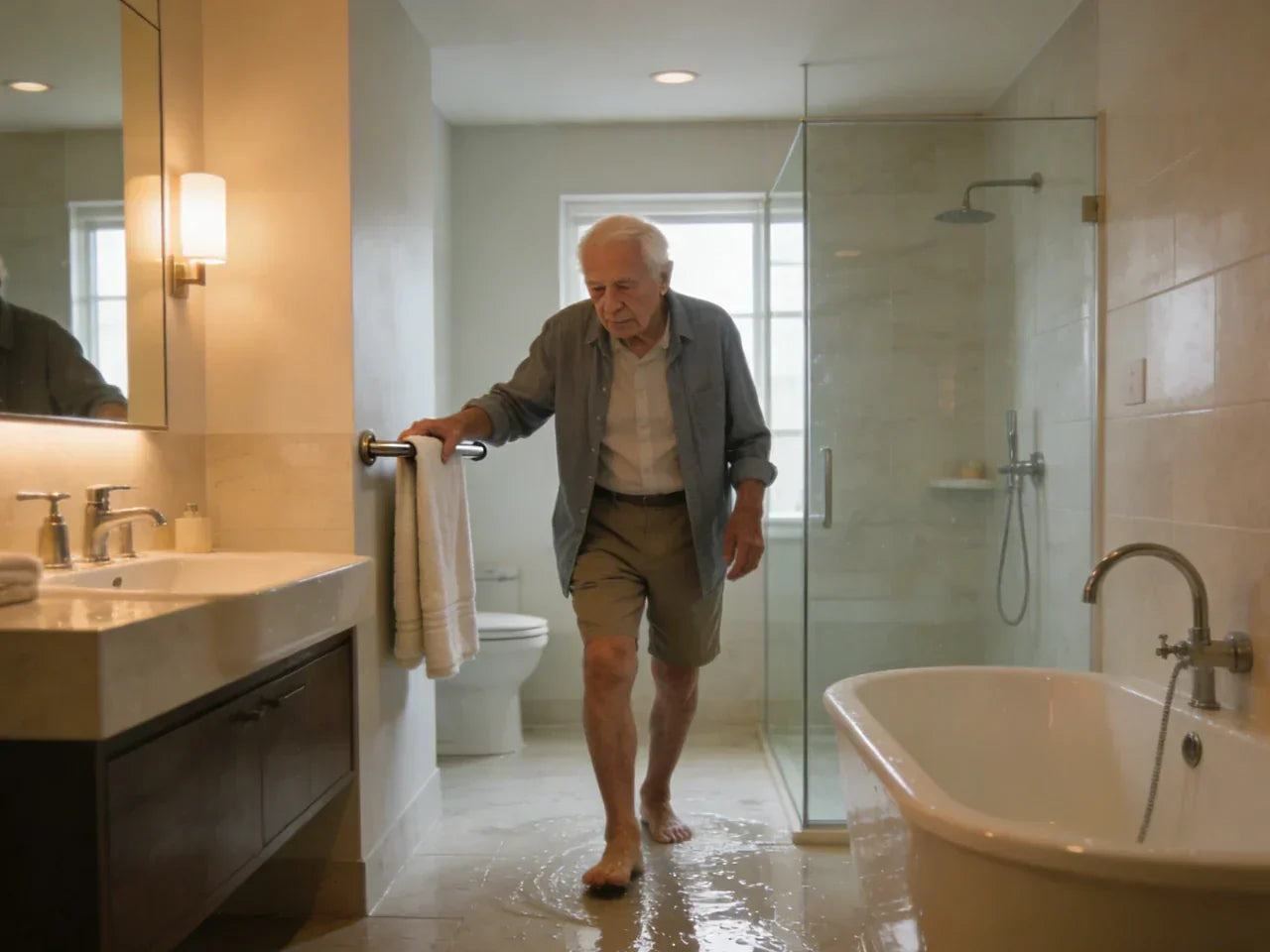
Bathrooms feel private and familiar, so it’s easy to drop your guard. But the bathroom is one of the most dangerous rooms in many U.S. homes. Wet floors, hard surfaces, tight turns, and quick “in-and-out” habits create the perfect setup for slips and falls—especially at the tub or shower entry.
The good news is that most risks can be lowered fast. This guide starts with the highest-impact bathroom safety tips you can do today (often in under 30 minutes), then walks through deeper upgrades like installing grab bars, improving lighting, controlling hot water, and setting up a safer layout for a senior or anyone with limited mobility. You’ll also get a printable checklist, a simple self-audit score, and a maintenance plan so your safer bathroom stays safer.
If you’ve ever stepped onto a wet bathroom floor at night and thought, “That was close,” this is for you.
Quick Bathroom Safety Tips for Seniors: 5–30 Minute Easy Wins
These are the fastest changes that reduce the risk of a fall or burn right away. If you only do a few things, do these first. These essential bathroom safety tips can make the bathroom environment safer and easier to navigate for seniors who have difficulty moving.
Top 7 Bathroom Safety Tips to Prevent Falls in the Bathroom
-
Add traction where you stand: put an anti slippery mat for bathtub use inside the tub/shower and a non-slip mat outside it. If you prefer strips, use anti slip strips for tubs on the floor of the tub.
-
Remove loose rugs. If you keep a rug, secure it with rug tape or a rubber backing so it doesn’t become a tripping hazard.
-
Follow a dry-floor rule: keep a towel or squeegee within easy reach so you can dry the floor right away.
-
Fix dark spots: replace dim bulbs and add motion-sensor night lighting for safer nighttime trips to use the bathroom.
-
Prevent scalds: set your water heater to 120°F (49°C) max, and consider anti-scald controls.
-
Store daily items where you can reach them safely: keep toiletries between hip and shoulder height so you don’t bend or reach too far.
-
If you need support now, a temporary suction grab handle can help as a short-term aid, but it should not replace a properly anchored grab bar.
Many people do the “mat part” but skip the “support part.” That’s a common gap. Data from the Centers for Disease Control suggests only about 19% of U.S. homes report having grab bars, even though mats and strips are much more common. That matters because the biggest injuries often happen during transfers—when you’re stepping in, turning, sitting down and standing, or trying to catch yourself. Following these tips to improve your bathroom setup can significantly enhance safety.
Bathroom Fall Prevention: 1-Minute Hazard Map for Seniors
Stand in the doorway and scan the room like you’re looking for spill points and wobble points. The highest-risk zones are usually the same in most homes:
-
Tub or shower entry – this is the wet zone and the highest-risk area.
-
Toilet transfer area – the space where you sit down and stand up.
-
Narrow paths at night – any tight walkways you use when moving to or from the toilet or sink.
-
Sink/vanity area – watch for slippery floors or items that could be knocked over.
-
Doorway/threshold – the entrance to the bathroom can be a tripping point, especially at night.
If you want a quick test, ask yourself: where would you put your hand if you slipped? If the answer is “the towel bar,” that’s a safety problem, because towel bars are not built to hold body weight.
Bathroom Safety Self-Audit for Seniors: 2-Minute Score & Priority List
Use this fast self-check to decide what to fix first. Give yourself 0, 1, or 2 points for each item.
-
Slips (wet/soapy surfaces): 0 = never slippery, 1 = sometimes, 2 = often slippery
-
Stability (no real support): 0 = sturdy grab bars where needed, 1 = one area missing, 2 = no bars
-
Lighting: 0 = bright with night light, 1 = okay but shadows, 2 = dark at night
-
Clutter: 0 = clear floor, 1 = small items sometimes, 2 = regular clutter (laundry, bins)
-
Temperature: 0 = water heater at 120°F + stable shower temp, 1 = unsure, 2 = gets suddenly hot
-
Electrical: 0 = GFCI outlets + cords away from water, 1 = unsure, 2 = cords near sink/tub
Score guide:
-
0–3: Keep up maintenance.
-
4–7: Do quick wins this week (mats, lighting, storage).
-
8–12: Treat this as high priority. Add grab bars and temperature control, and consider an accessibility upgrade plan.
Non-Slip Mat vs Adhesive Strips: Which is Safer for Your Tub or Shower?
People ask this because both work, but they solve slightly different problems. A non-slip mat feels softer underfoot and can cover a large area. Bath tub non slip stickers (strips or decals) are lower profile and can be easier to step over without catching a toe, but they must be applied correctly and cleaned so soap film doesn’t build up around edges.
Here’s a direct comparison table for quick choosing:
| Feature | Non-slip mat (inside tub/shower) | Adhesive strips/stickers |
| Traction coverage | High (covers big area) | Medium (depends on how many you apply) |
| Trip/edge risk | Medium (raised edge) | Low (low profile) |
| Cleaning effort | Medium to high (must lift/rinse/dry) | Medium (scrub around strips) |
| Mold/mildew risk | Higher if left wet | Lower if applied well and cleaned |
| Best for | People who want cushioned footing | People who want low profile traction |
If your main goal is how to make bathtub less slippery without adding a raised edge, strips or stickers often win. If your main goal is comfort and full coverage, a mat often wins. Some households use both: strips inside the tub and a low-profile non-slip mat outside it.

Bathroom Fall Prevention: Real Risks and How to Reduce Falls in the Bathroom
It’s not “just clumsy.” Bathrooms combine water, smooth materials, hard corners, and quick movements. That mix causes many falls in the bathroom, making it a high-risk environment, especially for seniors.
According to disease control and prevention data, about 235,000 annual emergency room visits in the U.S. are related to falls in the bathroom for teens and adults over 15. A large share of serious injuries affects older adults, with estimates showing around 79% of injuries in some datasets occurring among adults 65 and older. Cross-referenced summaries often describe roughly 370 people injured daily from slips and falls in the bathroom.
While percentages vary across studies, the pattern is clear: the shower or tub area is the main “hot zone,” and seniors face the highest risk of severe harm.
One more detail to make these numbers real: the average person spends an estimated 813.3 days of their lifetime in the bathroom. That’s over two years of exposure, often on hard, slick surfaces.
Why tubs and showers are the “hot zone”
The tub or shower combines the most dangerous ingredients:
You step over a threshold, your feet land on a wet surface, soap reduces friction, you turn your body to reach the faucet or showerhead, and your balance shifts while one foot is not fully planted. Then, when you exit, you step onto a wet floor again. Even if you’re strong, those are high-risk movements.
Who’s at highest risk (and why)
Seniors are particularly vulnerable because balance, vision, reaction time, and leg strength can decline with age. Medications may cause dizziness, and recovery from surgery can leave someone steady in other rooms but unsteady in the shower or tub.
Kids face different hazards—they are more likely to slip and suffer burns from hot water. Safe in the bathroom measures are essential for all ages.
In short, bathroom safety for seniors is about matching the room to the person using it today—not the person who lived there years ago.
Slips & Trips in the Bathroom: Non-Slip Surfaces, Mats, and Clutter Control
Before we dive into specific solutions, it’s helpful to understand how small changes in traction can make a big difference in preventing falls.
Non-slip surfaces that work (and how to choose)
Most people start with traction, and that’s smart. The key is choosing non-slip mats or anti-slip strips you will actually keep clean and in place.
-
A quality non-slip mat for the tub should grip well (often with suction cups), drain water instead of pooling, and be easy to rinse and hang-dry. If cleaning is neglected, mildew and slick buildup can form.
-
If you prefer strips, look for anti-slip strips for tubs designed for wet use. Applied correctly, bath or shower stickers increase safety without raising the surface.
-
Older tubs that remain slick may require textured resurfacing, a professional solution that can make making it easier for seniors to bathe safely.
Soap scum, bath oils, and cleaning residue (an often-missed hazard)
Many think the danger is just “water on tile,” but often it’s a thin film: soap scum, bath oils, or residue from cleaning products.
-
If the tub feels slick even when it looks clean, run your hand across the floor after it dries. If it feels waxy, deeper cleaning is needed.
-
A rinse-after-use habit helps maintain a safe in the bathroom environment and reduces slick buildup.
Rugs, thresholds, and doorway trip points
Loose rugs are one of the most common trip hazards in a bathroom. If you love a soft rug, keep it low-profile and secure all edges. If the rug curls, it’s not a rug anymore—it’s a ramp for your toe.
Pay attention to the doorway too. A raised threshold can catch a foot, a walker, or a wheelchair. If someone in the home has limited mobility, a small threshold ramp can reduce the risk of tripping without a major remodel. Even toilet paper stored on the floor near the toilet can become an obstacle during a quick nighttime trip, so move it into a holder or shelf.
What causes most bathroom falls?
People want a simple answer, so here’s a compact “top causes” table:
| Common cause | Why it happens | Quick fix |
| Wet/soapy surfaces | Water + soap reduce traction | Non-slip mat/strips + clean soap film |
| Transfers | Stepping in/out, turning, standing from toilet | Real grab bars + stable seating |
| Poor lighting | Hazards not visible at night | Motion lights + brighter bulbs |
| Clutter | Items on floor or tight pathways | Clear floor + store items in easy reach |
Installing Grab Bars for Bathroom Safety: Toilet, Tub & Shower Support
If traction is step one, support is step two. A well-placed grab bar can turn a scary moment into a controlled movement.
Grab bars: placement, specs, and common mistakes
The most important bathroom safety tip about grab bars is simple: a towel bar is not a grab bar. Towel bars are not designed for a full-body load. Real grab bars must be installed into studs or solid blocking, or into masonry with the correct anchors.
Basic technical specs (common guidance used in accessible design) are below. Always follow the bar manufacturer instructions and local building rules.
| Spec | Common target range |
| Height from floor | about 33–36 inches from the floor |
| Diameter you can grip | about 1.25–1.5 inches |
| Wall clearance | about 1.5 inches between bar and wall |
| Load rating | many are rated 250 lb or higher when installed correctly |
A common mistake is placing the bar where it “looks right” instead of where your hand naturally reaches during movement. Another mistake is installing only one small bar. Real movement often needs more than one support point: one to step in, one to turn, one to stand.
Where to place support for real-life movements
Think about the three moments people lose balance: entry, turning, and exit.
Near the tub or shower entry, many people benefit from a vertical or angled bar that helps with stepping over the threshold. Inside the shower, a horizontal bar can help while turning and washing. If you have a walk-in shower, a bar near the entrance plus another along the long wall can cover most reaching and turning needs.
Near the toilet, support matters for sitting down and standing. A stable bar on the side wall, or a properly installed assist bar that matches the person’s strongest side, can make transfers smoother. This is especially helpful for anyone with knee arthritis, hip weakness, or balance issues. If the bathroom is small, even a shorter bar placed precisely can help more than a longer bar placed too far away.
If you’re unsure, consider a home safety assessment by an occupational therapist or a qualified accessibility professional. It’s easier to place a bar right the first time than to patch holes later.
Bathroom Safety Tips for Seniors: Shower Chairs, Transfer Benches & Handheld Showerheads
A shower chair or bench can be one of the most practical upgrades for a person who gets tired, dizzy, or unsteady. Sitting reduces the chance of slipping during shampooing, shaving, or washing feet—moments when one hand is often busy and balance is weaker.
A handheld showerhead is a strong partner upgrade. It lets you rinse while seated, keeps you from twisting, and makes caregiver help easier. If you choose a transfer bench that spans the tub wall, it can reduce the high-risk “step-over” movement because you sit first, then swing your legs over.
These tools do take space, and they must be cleaned like anything else in a wet room. Still, for bathroom safety for seniors and post-surgery recovery, they can be a turning point.
Where should grab bars be placed in a shower?
There isn’t one perfect layout because showers differ. A simple way to choose placement is to trace the path of your hands.
In a standard tub/shower combo, many people do well with a secure bar near the entry to help stepping in, plus another bar on the back wall or side wall where you turn to face the water. In a walk-in shower, a bar near the opening and a long horizontal bar along the main wall often covers most needs. In a small bathroom, you may need shorter bars placed exactly in reach zones, rather than long bars placed too high or too far away.
The key point is that bars should be placed where your hand goes naturally when you are wet, barefoot, and turning—not where it looks symmetrical.
Bathroom Lighting & Visibility Tips: Improve Bathroom Safety at Night
Lighting is a quiet safety feature. People don’t notice it until they nearly step on water, a dropped cap, or a corner of a rug. Good lighting is one of the helpful tips to make a bathroom easier and safer for seniors.

Fix dark spots that hide water and obstacles
A single overhead light often creates shadows around the tub, toilet, and vanity. That’s exactly where you need visibility. Aim for layered light: overhead light for the whole room and focused light near the vanity and shower area. If mirrors create glare, use softer side lighting at the vanity so you can see without being blinded.
If someone in the home has aging vision, contrast helps too. A light-colored floor mat on a light floor can disappear visually, while a contrasting non-slip mat is easier to see and step onto safely.
Motion sensors, nightlights, and power-outage planning
Nighttime trips are high risk because you’re sleepy, the floor may be cool, and your eyes are adjusting. A simple motion-sensor night light can prevent a fall by showing the path from bedroom to bathroom door and on to the toilet.
If your area has outages, consider battery-backed night lighting. It’s not fancy—it’s practical. The goal is to avoid the “walk in the dark and feel for the wall” habit that increases the risk of tripping.
Mirror fog, contrast, and depth perception
Foggy mirrors seem harmless, but they lead to rushed wiping and quick movements. A small ventilation improvement or a mirror that resists fog can reduce that scramble. Depth perception also changes with age, so clear visual edges matter. If there’s a small step or threshold, a contrasting strip can make it easier and safer for an elderly person.
Bathroom Safety Tips: Scald Prevention, Electrical Safety & Safe Storage
Many people think bathroom safety is only about falls. Burns, shocks, and poisonings also occur in the bathroom, especially for senior living households.
Water temperature and anti-scald controls
Scalds happen fast, especially to children and older adults. A widely recommended home setting is keeping the water heater at 120°F (49°C) max. That temperature reduces burn risk while still allowing comfortable bathing.
If the shower temperature swings when someone uses the sink or runs the dishwasher, an anti-scald valve can help maintain steady water temperature at the shower or bathtub, improving safety and making it easier for seniors.
Electrical hazards in wet zones (especially older bathrooms)
Water and electricity are a dangerous mix. Older bathrooms sometimes have outdated outlets. A GFCI outlet (ground-fault circuit interrupter) can shut off power quickly if it senses a fault, which helps prevent shocks.
Daily habits matter too: hair tools left plugged in near the sink, cords across the vanity, or space heaters near wet towels can increase risk. Keep cords away from the shower or bathtub and sink. Unplug tools after use and store them dry. This is another step to allow seniors to maintain a safe bathroom environment and stay seniors safe.
Medications and cleaners: poisoning, dizziness, and fall risk
A bottle of cleaner under the sink is easy access for adults—and for kids. Medications and cleaners also affect fall risk because some products cause dizziness or sleepiness, and mixing chemicals can create harmful fumes.
Simple rules help: use child-resistant storage, keep labels readable, and don’t store cleaners in drink containers. If a home has children or a person with memory changes, a lockable cabinet is a strong safety step.
Bathroom Safety Upgrades for Seniors: Walk-In Tub, Raised Toilet & Grab Bars
If you’re planning for a senior bathroom safety upgrade, think about making the safest option also the easiest option. People are more likely to follow safe habits when the room supports them naturally.

Step-free bathing options: walk-in shower or walk-in tub
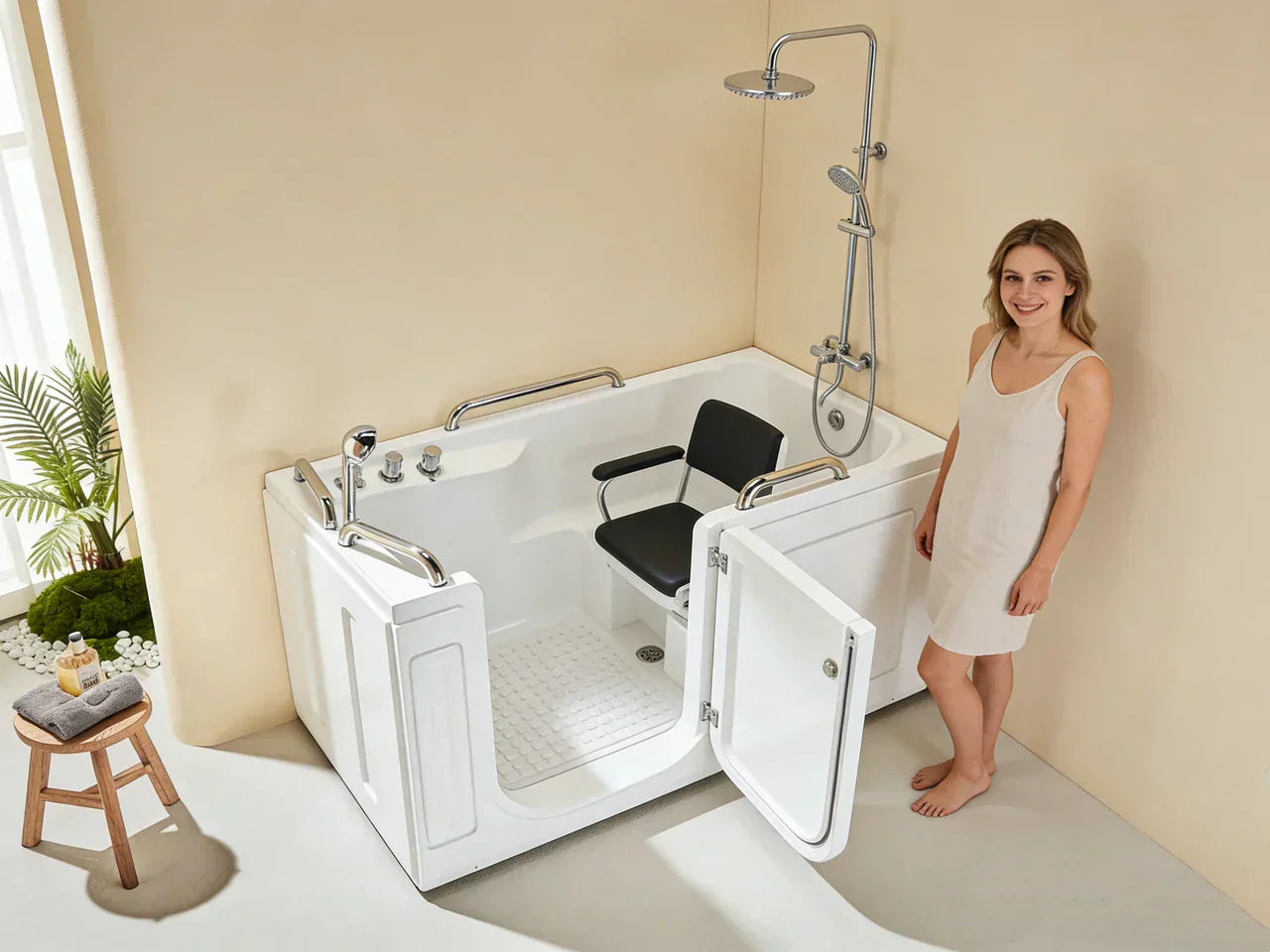
A walk-in tub or step-free shower reduces the high-risk step-over. That’s a major change for people with balance problems. The tradeoffs are real: walk-in tubs can take time to fill and drain, and you may sit while it drains before you open the door. Step-free showers can be easier for caregivers, but they need good drainage and a properly sloped floor to avoid puddles.
If an aging loved one has already had a fall, or is afraid to bathe, step-free access can restore confidence. Fear of falling often leads people to bathe less, which then creates other health problems. A safer setup supports independence and dignity.
Raised toilets, toilet frames, and bidet seats
The toilet transfer is a common struggle point. A raised toilet or installing a raised toilet seat can reduce how far you have to lower your body. That helps knees and hips, and it reduces the “plop down” motion that can throw off balance.
Some people prefer a stable frame around the toilet for arm support. Others prefer wall-mounted bars. The best option depends on bathroom size and how steady the person is when shifting weight.
Bidet seats can also improve hygiene, which matters when twisting and reaching becomes difficult. Less twisting can mean fewer near-falls.
Storage redesign to prevent overreaching and bending
A lot of falls happen during small tasks: reaching for a towel, bending for a bottle, turning while holding something. Move daily items so they are within reach and within easy reach—not under the sink and not on the floor. If you want one simple rule, store heavy items at waist height and keep “every day” items between hip and shoulder level.
This is a quiet way to make your bathroom safer without changing fixtures. It also keeps the floor clear, which lowers the risk of tripping at night.
How can I make a small bathroom safer for seniors?
Small bathrooms can be safer than large ones if they’re arranged well. In tight spaces, wall-mounted solutions help: a fold-down shower seat, a handheld showerhead, and carefully placed grab bars that don’t crowd the pathway. A pocket door or an outward-swinging door can also help in emergencies, because it’s easier to access someone who has fallen behind the door.
If you’re planning changes, measure carefully so bars, seats, and mats don’t create new obstacles.
Evidence, case examples, and a maintenance plan (keep it safe long-term)
To make this practical, let’s break down the main bathroom hazards, show real-world fixes, and highlight the expected impact—so you know what to tackle first and how to maintain safety over time.

Evidence snapshot: hazard → fix → expected impact
The table below pulls the main risks into one view. Cost ranges vary by home and region, but the goal is to help you choose what to do first.
| Hazard | Who’s at risk | Best fix | Cost range (typical) | DIY vs Pro | Source type |
| Slippery tub/shower floor | Everyone; higher for older adults | Non-slip mat or anti slip strips for tubs; clean soap film | $10–$60 | DIY | CDC injury prevention data (risk context) |
| No stable handhold during transfers | Seniors, post-surgery, disability | Properly anchored grab bar near tub/shower and near the toilet | $25–$200+ | Often pro (recommended) | NIA falls prevention guidance |
| Poor nighttime visibility | Everyone; higher for seniors | Motion night lighting + brighter bulbs | $10–$80 | DIY | NIA falls prevention guidance |
| Sudden hot water / scald risk | Kids, older adults, sensory loss | Set water heater to 120°F; anti-scald valve | $0–$300+ | DIY + pro for valves | CPSC scald guidance |
| Electrical shock hazard | Everyone | GFCI outlets; keep cords away from water | $0–$300+ | Pro for outlets | CPSC electrical safety guidance |
A prevention gap that stands out in many summaries: only about 19% of homes report having grab bars, even though tubs/showers are where a large share of injuries occur. That means many people try to solve a support problem with a mat alone. Mats help, but they don’t give you a handhold when you lose balance.
Real-world examples (what changed, what improved)
A family I worked with did a quick home safety assessment after their parent had two “near falls.” Nothing dramatic had happened—yet. The bathroom looked clean, but three small things added up: a loose rug, dim lighting, and shampoo bottles stored on the tub edge. The parent would lean and twist to reach them, and that twist was the moment their foot slid.
They didn’t remodel. They cleared the floor, added a brighter light with a motion night setting, moved daily items to a shelf at chest height, and installed a properly anchored grab bar. The parent later said the biggest change wasn’t physical—it was mental. They stopped “bracing for a slip” each time they stepped in.
In another home with young kids, the issue was scald risk. The shower would surge hot when the washing machine ran. The fix started with setting the water heater to 120°F, then adding an anti-scald control at the shower. Bath time became calmer because parents weren’t constantly testing the water while trying to hold a slippery toddler.
Printable checklist: room-by-room bathroom safety tips
If you want a simple “print and walk through” list, copy and print this section:
Floors and surfaces: Check that the tub has traction, the outside mat doesn’t slide, and the floor is clear of clutter.
Shower/tub area: Confirm you have safe support (a real grab bar), and keep soap and shampoo within easy reach.
Toilet area: Make sure transfers feel steady; consider a raised seat or support bars if standing is hard.
Sink/vanity: Keep cords away from water and store daily items at safe height.
Lighting: Confirm the path is lit at night from bed to bathroom and back.
Temperature: Confirm water is not set above 120°F, and shower temp is steady.
Emergency plan: Consider an emergency call button or call button in the bathroom for anyone at high risk, especially if they live alone.
If you rent and can’t install hardware, ask your landlord about safety upgrades, or contact your local aging or housing support office for options. The goal is a safe bathroom, not a perfect-looking one.
Ongoing inspection schedule (monthly/quarterly)
Use this simple schedule to keep your safety bathroom setup working:
-
Monthly: Wash and dry mats; check that rugs still grip; wipe soap film buildup where feet stand most.
-
Quarterly: Tighten any grab bar hardware (if the bar shifts at all, treat it as urgent); test GFCI outlets; check bulbs and nightlight batteries.
-
Twice a year: Re-check water temperature at the tap; review storage so nothing has drifted back onto the floor; replace worn mats or peeling strips.
How to Install Non-Slip Mat & Tub Stickers: Bathroom Safety Tips
If you chose stickers/strips, careful prep matters. Poor prep is why many people think they “don’t work,” when the real issue is trapped soap film or moisture under the adhesive.
-
Clean the tub floor with a degreasing cleaner that is safe for your tub type. Focus on the area where feet stand.
-
Rinse very well so no cleaner residue is left behind (residue can reduce adhesion).
-
Dry completely. Use a towel, then let it air-dry. Adhesive sticks best to a dry surface.
-
Plan your layout before peeling backing. Place strips where your feet land and where you pivot, leaving drainage paths open.
-
Apply with firm pressure from the center outward to push out air bubbles.
-
Wait before using the tub based on the product instructions (often several hours to a full day).
-
Maintain by scrubbing gently around edges so soap film doesn’t lift them.
This is one of the simplest answers to what can I put in my bathtub to make it less slippery?: well-applied, textured strips or stickers, plus routine cleaning.
Bathroom Safety FAQs: Common Questions About Non-Slip Mats, Grab Bars & Falls
What are the safety measures in a bathroom?
The key to a safer bathroom is covering a few core areas. First, traction matters—a non-slip mat or textured surface can prevent slips in the tub or shower. Support comes next: grab bars near the shower, tub, or toilet, and stable seating for bathing or dressing, help you stay steady if you lose balance. Visibility is critical, too: good lighting, nightlights, and clear sight lines reduce trips and missteps. Temperature control also plays a role—keeping water heaters set to a safe level or installing anti-scald devices prevents burns. Finally, hazard control matters: clear floors, organized storage, and GFCI outlets for all wet areas keep the environment safe. Altogether, these measures don’t just prevent falls—they make everyday bathroom tasks easier, let seniors or anyone with mobility challenges feel more confident, and protect against shocks, burns, and other common bathroom injuries.
What is bathroom safety?
Bathroom safety is really about designing the room and habits to reduce everyday risks. It’s not just about installing equipment—it’s about making sure stepping into the tub, turning to reach toiletries, washing, or getting up from the toilet can happen without fear of slipping, losing balance, or getting burned. That includes structural changes like grab bars, non-slip surfaces, proper lighting, and anti-scald devices. It also involves habits: drying floors after use, keeping clutter off the ground, and checking that cords and cleaning supplies are stored safely. Essentially, bathroom safety is both the physical setup of the room and how people interact with it daily. When done right, it gives everyone—especially seniors—a chance to maintain independence, prevent accidents, and handle daily routines comfortably and confidently.
Do anti-slip shower mats work?
Yes, they absolutely can—but only if you choose the right type and maintain it properly. A mat that fits snugly against the tub floor, grips well with suction cups or adhesive, and drains water instead of holding it will reduce slipping significantly. Problems usually happen when mats curl, bunch up, or develop a slippery soap film over time. That’s why regular cleaning is key; rinse and dry mats after use to prevent mildew and keep the surface grippy. Some people switch to anti-slip strips or decals if mats are inconvenient or tend to move. Essentially, an anti-slip mat works best when it’s the right size, in good condition, and part of a broader bathroom safety plan including grab bars and clutter control. With the right setup, it can make shower or tub use much safer, especially for seniors or anyone with mobility challenges.
What is the best non-slip bath mat for a bathtub?
The best mat isn’t about brand or style—it’s about function. Look for a mat made specifically for tub use, with strong suction cups that keep it firmly in place and a textured surface that feels secure underfoot. Drainage is important, so water doesn’t pool underneath, which could create a slipping hazard. Avoid mats with thick or raised edges that can catch toes, especially if balance is an issue. Easy cleaning matters, too: a mat you can rinse, dry, and store quickly is more likely to stay hygienic and safe. Decorative rugs might look nice, but they don’t usually grip well or hold up in a wet tub environment. A good mat, combined with proper grab bars and cleared floors, creates a safe, confident space for bathing, helping seniors safe while reducing the risk of slips or falls.
Does Medicare pay for bathroom safety equipment?
In many cases, Original Medicare doesn’t cover home modifications like grab bars, raised toilets, or bathroom remodels because they’re considered safety improvements rather than medical equipment. Some items, like certain commodes or shower chairs, might qualify as durable medical equipment if a clinician documents a medical need, but coverage is limited. Medicare Advantage plans sometimes offer additional support, and local aging services or state programs may help cover costs for seniors on a budget. If you’re concerned about expenses, it’s worth asking your doctor, insurer, or local senior services office what options exist. Even if Medicare doesn’t pay, small investments like suction grab bars, anti-slip mats, or portable stools can make the bathroom easier and safer for an elderly person, helping them maintain independence and confidence at home.

FAQs
1. What’s the fastest way to make a bathroom safer today?
If you’re looking for quick wins to make your bathroom safer right now, start with a few high-impact changes. First, add a non-slip mat or adhesive strips inside the tub or shower, and place a low-profile non-slip mat just outside it to reduce the risk of slipping on wet floors. Next, remove any loose rugs or clutter that could cause trips, and make sure pathways are clear. Lighting is another simple fix—install motion-sensor nightlights or brighter bulbs to help see the floor clearly during nighttime trips. If balance is a concern, a properly installed grab bar near the tub, shower, or toilet can make a huge difference, providing support for stepping, turning, or sitting. Even small changes like this can dramatically lower the risk of falls and make the bathroom easier to use, especially for seniors or anyone with mobility challenges.
2. Should I put a rug in front of the shower?
You can, but only if it’s safe. Loose rugs are a major cause of bathroom trips and falls, especially on wet floors. The safest option is a rug with a non-slip backing or one that’s secured with a rubber mat underneath or double-sided rug tape. Low-profile mats are ideal—they reduce the chance of catching a toe or tripping when you step out of the shower. Make sure the rug stays flat, dries quickly, and doesn’t curl at the edges. For extra safety, some households skip the rug entirely and rely on a textured floor surface or anti-slip strips just outside the shower. Ultimately, the goal is to reduce slippery surfaces and hazards while still making the floor comfortable for bare feet. Proper placement and maintenance are key to keeping seniors safe and avoiding common bathroom accidents.
3. Can I rely on a suction grab handle?
Suction grab handles can feel helpful, but treat them as temporary aids rather than permanent safety solutions. They rely on suction, which can weaken over time or fail if the surface is wet, textured, or dirty. For real safety, especially for seniors or anyone with balance concerns, a grab bar securely anchored into studs or a solid backing is much more reliable. Properly installed bars can support full body weight and provide confidence when stepping in and out of a shower, turning, or sitting on the toilet. Suction handles are better for short-term use, travel, or testing locations, but they shouldn’t replace a professional installation. Think of them as a bridge solution—useful in a pinch, but long-term safety depends on sturdy, permanent support that you can truly trust every time.
4. Is a walk-in tub safer than a regular tub?
Yes, a walk-in tub can be safer than a traditional tub for many seniors, mainly because it eliminates the high step-over that often causes falls. With a walk-in tub, you can enter and exit with less risk, and many come with built-in seating and handholds to improve stability. However, a walk-in tub isn’t automatically safe on its own. You still need non-slip flooring or mats, grab bars, and proper water temperature controls to prevent scalding. The goal is to combine features so the whole bathing experience is safer and more comfortable. For older adults or anyone with mobility challenges, a walk-in tub can reduce fear and increase confidence, allowing them to maintain independence in daily bathing. Proper setup, maintenance, and attention to other hazards still matter to get the full safety benefit.
5. How often should I replace mats or strips?
Non-slip mats and adhesive strips need regular checking and replacement to stay effective. Replace them when they lose grip, start curling at the edges, or can’t be cleaned properly. Over time, soap, water, and general wear can reduce traction, making mats and strips less effective and even dangerous. Many households reassess every six to twelve months, but replace sooner if visible wear appears. Mats that smell, slide, or hold water are also a sign they need updating. The key is to maintain consistent traction in all wet zones—the tub, shower, and floor outside. Regular inspection and timely replacement keep the bathroom safer for seniors or anyone who might be prone to slipping, ensuring that even small hazards don’t turn into serious accidents.
References


Leave a comment
This site is protected by hCaptcha and the hCaptcha Privacy Policy and Terms of Service apply.