
Modern toilets have changed a lot in a short time. We now move from simple gravity-flush models to smart toilets with heated seats, built‑in bidets, and even self‑cleaning functions. Choosing the right toilet type affects comfort, hygiene, water bills, and long‑term repair costs. It also shapes how your bathroom feels day to day.
The smart toilet market alone was worth about $8.27 billion in 2023 and is expected to reach $15.05 billion by 2029, which shows how fast people are upgrading. This guide walks through every major toilet design used in homes and public buildings in 2025. You’ll see how one‑piece, two‑piece, wall‑hung, smart/bidet, Western pedestal, and squat toilets compare, and how to pick the right toilet for your home or project with confidence.
Different Toilet Types Explained (Fast Comparison)
Toilets can be grouped in several ways, but for quick comparison, most people focus on overall structure and everyday use. The overview below gives you a fast snapshot of the main toilet categories and how they differ at a glance.
Main toilet categories at a glance
When people say there are different toilet types, they are usually talking about a mix of bowl design, flush system, and cultural style. In everyday use, the main groups are standard gravity‑flush toilets, smart and bidet‑integrated toilets, wall-mounted toilets, Western pedestal toilets, Eastern and squat toilets, and a few specialty types such as pressure‑assisted toilets, composting toilets, and portable or upflush toilets for tricky plumbing layouts.
So, what are the three main types of toilets in simple terms? When you sort by how the tank and bowl are arranged, most plumbers will point to one‑piece toilets, two‑piece toilets, and wall‑hung toilets as the three core families. Almost every modern model is a variation of one of these.
Comparison table of major toilet types (features, costs, use cases)
The table below gives a quick, data‑focused look at how the main toilet bowl types compare in 2025.
| Type | Typical Use | Main Flush System | Typical GPF Range* | Average Price (USD) | Best For |
| One-piece | Residential bathrooms, small spaces | Gravity or dual-flush | 1.1–1.6 | 200–1,000+ | Easy cleaning, modern look, tighter spaces |
| Two-piece | Most homes, rentals, light commercial | Gravity or dual-flush | 1.28–1.6 | 200–500 | Affordability, easy repairs, wide choice of heights and bowls |
| Wall-hung (wall-mounted) | High-end homes, hotels, modern apartments | Gravity or pressure-assisted (in-wall tank) | 0.8–1.6 | 500–1,500+ (plus install) | Saving floor space, easier mopping, sleek design |
| Smart/bidet-integrated | Premium residential, accessibility upgrades | Tankless or low-tank, often dual-flush | 0.8–1.28 | 599–3,200+ | Maximum hygiene, heated seats, reduced toilet paper |
| Squat (Eastern) | Public restrooms in parts of Asia, trains, older homes | Gravity flush, often low GPF | 0.8–1.6 | 50–300 | Simple design, low cost, high water efficiency |
| Composting | Off‑grid homes, cabins, tiny houses | No traditional flush (little or no water) | 0–0.2 | 900–3,000 | Off‑grid, water‑scarce areas, eco‑focused users |
| Pressure-assisted | High-traffic homes, commercial restrooms | Pressure-assisted tank | 1.0–1.6 | 350–800 | Strong flushing power, clog resistance, multi‑story buildings |
*GPF = gallons per flush. Outside the US, this is often shown in liters per flush (1.6 GPF ≈ 6.0 L).
Key 2025 market stats that matter for buyers
To understand where different types of toilets are heading, a few numbers help:
The smart toilet and bidet toilet segment is valued at around $9.75 billion in 2025, with an expected growth rate above 12.8% per year. Many of these toilets are tankless toilets or have very small tanks and advanced flush mechanisms.
Inside the smart category, wall‑hung toilets now make up about 25% of the segment, with growth around 13.2% per year through 2030. This reflects the demand for easy‑to‑clean, floating designs in modern bathrooms.
Bidet‑integrated toilets and bidet seats hold roughly 40% of the smart/bidet segment in 2025. This grew sharply after the COVID‑19 years as people paid more attention to hygiene and wanted to use less toilet paper.
Prices sort into clear bands:
| Category | Typical Price Range (USD) |
| Standard gravity or dual-flush toilets | 200–500 |
| Wall-hung (bowl only, not full system) | 300–800 |
| Smart/bidet seats (added to an existing toilet) | 300–600 |
| Fully integrated smart/bidet toilets | 1,500–3,200+ |
For hard data, it is helpful to look at EPA WaterSense listings for water use, and MaP Testing reports for flush performance. These sources rate how much waste and toilet paper a toilet can clear in one full flush while using less water.
Core Flush and Bowl Designs (One-Piece, Two-Piece, Wall-Hung)
This section focuses on the core toilet designs most people choose from. The main difference comes down to how the tank and bowl are built and mounted, which affects cleaning, space, cost, and installation.
One-piece toilets: seamless design, pros/cons, ideal users
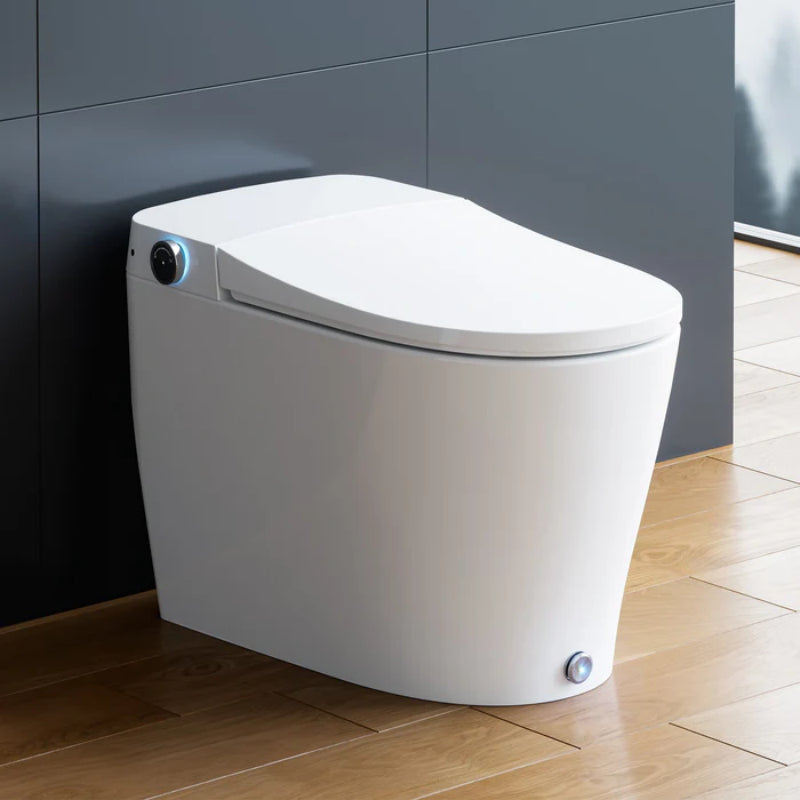
A one‑piece toilet has the tank and bowl molded as a single unit. There is no joint between them, which means fewer places for leaks and less room for dirt to collect. Many people like this toilet design because it looks sleek and is easier to wipe down.
Most modern one‑piece models are gravity‑flush toilets or dual‑flush toilets. A common setup is two flushing options: a half flush of around 1.1 GPF for liquid waste, and a full flush of around 1.6 GPF for solid waste. This dual flush system lets you use less water per flush when you do not need full power.
One‑piece toilets tend to be a bit shorter from the back of the toilet to the front of the toilet seat, which helps in small bathrooms or powder rooms. On the other hand, they are heavier to move and can cost more than two‑piece toilets in the same performance class. If you want a toilet that cleans quickly, looks modern, and fits a smaller bathroom space, a one‑piece model is often a strong choice.
Two-piece toilets: affordability, flexibility, and comfort options
Two‑piece toilets are the most common toilet in many American homes. The tank and toilet bowl are separate parts that bolt together during installation. This layout makes shipping and handling easier and often keeps prices lower, which is one reason these are standard in many rentals and starter homes.
Two‑piece toilets give you a wide range of toilet bowl types. You can choose a round bowl (about 25–28 inches from wall to front) to save space, or an elongated bowl (often 28–31 inches) for more comfort. You also see more height options, from standard height to comfort height that lines up better with chair height, which many adults and seniors find easier on the knees.
The main tradeoff is cleaning. The gap between tank and bowl, plus the exposed bolts and curves, can trap dust and bacteria. If you are okay spending a little more time with a brush and cloth, two‑piece toilets offer strong value, high flushing power, and simple repair parts in most hardware stores.

Wall-hung toilets: space-saving and hygienic but complex install
A wall‑hung toilet (also called a wall‑mounted toilet) attaches to a steel frame hidden inside the wall. The tank and flush pipe are also inside the wall, and only the bowl and flush buttons show. The floor under the bowl stays clear, which makes mopping and wiping much faster. Some hotels and care homes report about 30% less cleaning time with wall‑hung systems compared to floor‑mounted models.
Because the weight is carried by the frame and wall, the wall must be strong enough. Most systems are tested to handle well over the weight of a typical user, but they require careful installation and often a thicker stud wall. In older buildings, this may mean building out a small false wall behind the toilet, which takes a few inches of space.
Wall‑hung toilets are popular in modern European bathrooms and in the growing smart segment. As of 2025, they make up about a quarter of the smart toilet category, especially in high‑end apartments and hotels that want both style and easy cleaning. If you are planning a full renovation and can open the walls, a wall‑hung fixture gives a very clean toilet style and can free up floor area in tight rooms.
Pressure-assisted and specialty flushing systems
Most standard toilets use a gravity‑flush system. Water falls from the tank into the bowl, and the siphon effect pulls waste through the trapway. This is quiet and simple, and it works well when the plumbing is designed for it.
Pressure‑assisted toilets are different. Pressure‑assisted toilets use compressed air inside a special inner tank. When you press the flush handle, the air helps push water into the bowl at high speed. This gives strong flushing power and helps prevent clogs, especially in buildings with long horizontal drain lines or where many people use the same toilet each day.
Because of that strong rush of water, pressure‑assisted toilets are louder than gravity models. They are common in commercial restrooms, schools, and some home bathrooms that often clog. If you hear a sharp blast when the toilet flushes in a restaurant or office, it is probably pressure‑assisted.
Some modern designs also use vortex‑style or “tornado” flush systems. These swirl water around the bowl in a strong circular motion, which cleans the sides better and can reduce the need for a toilet brush. You also see touchless flushing, where a sensor triggers the flush when you wave your hand or stand up. This is popular for hygiene in public restrooms and in high‑tech homes.
Smart, Bidet, and High-Tech Toilets
Smart and bidet toilets add electronic features that change how the toilet cleans, flushes, and feels to use. The parts below explain what makes them different from standard toilets and who they make the most sense for.
Smart toilets vs. standard toilets: feature overview
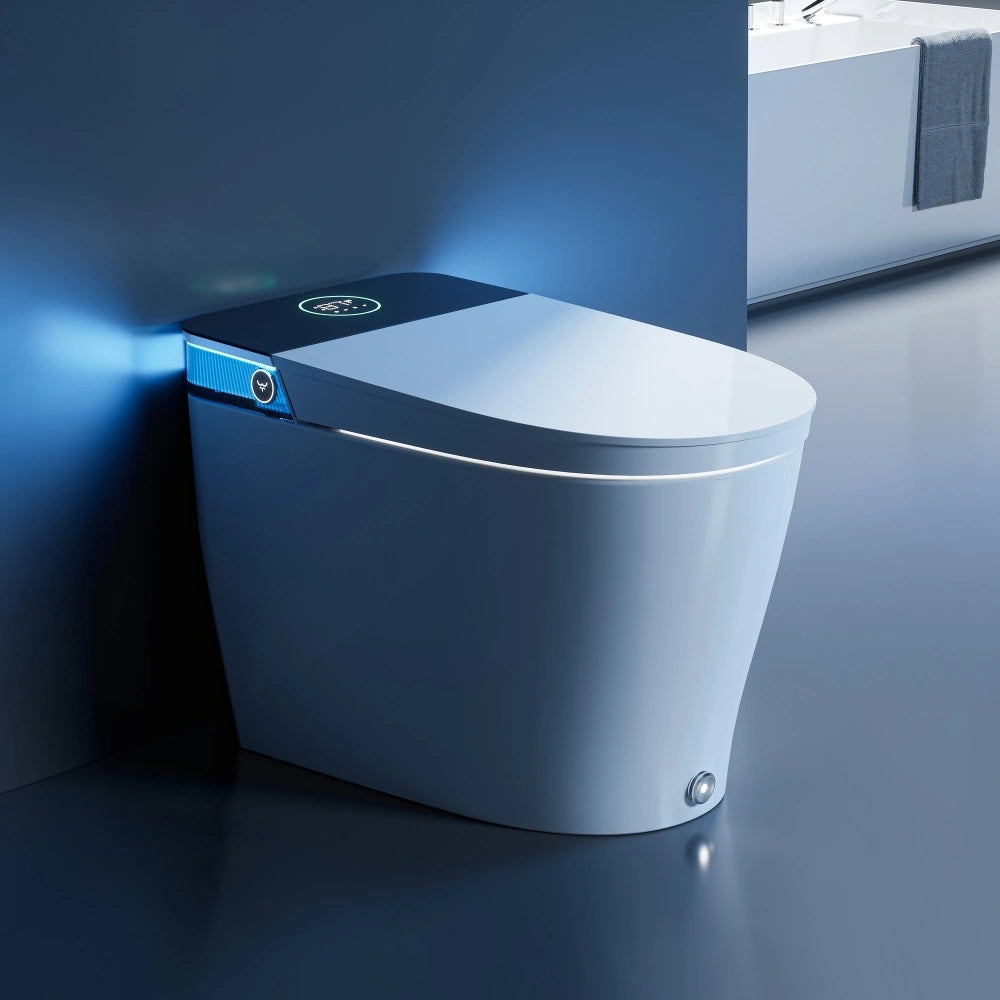
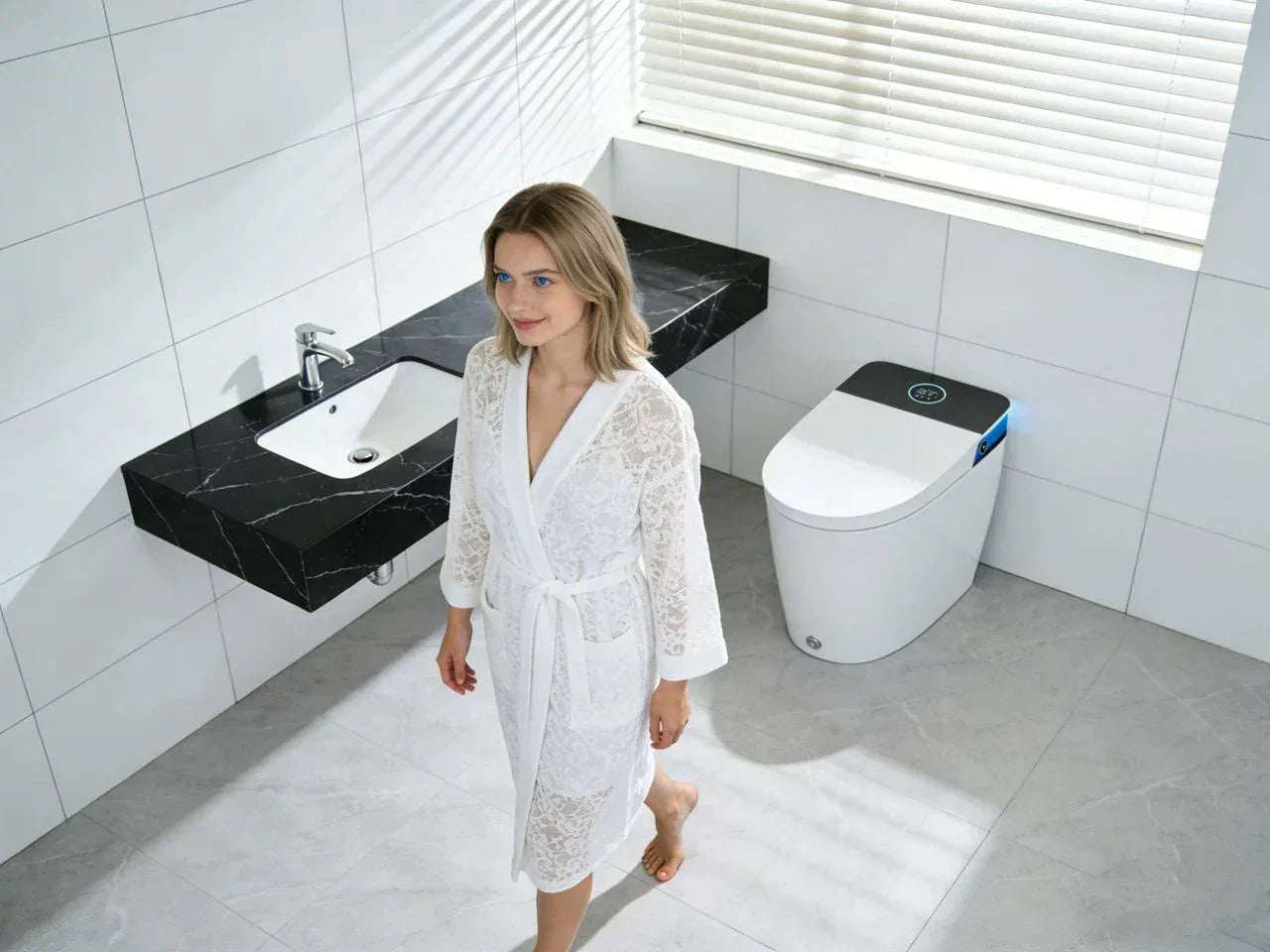
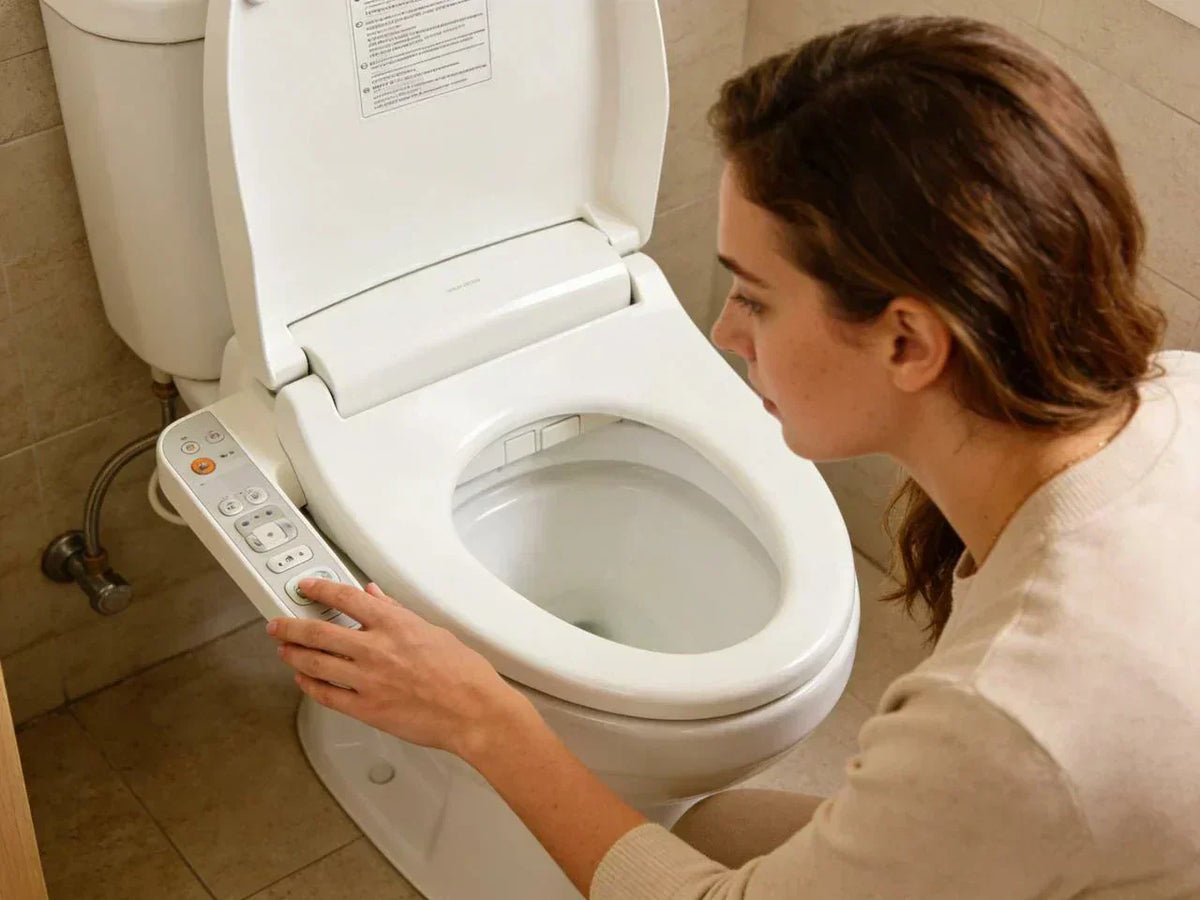
Smart toilets are one of the fastest‑growing toilet types worldwide. A smart toilet combines a modern bowl and flush system with electronic features like a built‑in bidet, heated seat, warm air dryer, and automatic lid. Many also offer UV cleaning, deodorizing fans, bowl misting, and soft night lights for safe trips in the dark.
Most smart toilets still rely on a gravity or dual flush toilet setup, but some are tankless toilets that use an electric pump to move water from the supply line into the bowl. Common flush volumes range from 0.8 to 1.28 GPF, which means these toilets often use less water than older standard models.
On the control side, many 2025 smart toilets use a side panel or handheld remote. Some offer Bluetooth controls, and a growing number connect by Wi‑Fi so you can adjust settings in a phone app or connect to voice assistants. Because these fixtures have electronics and moving parts, they usually need a power outlet near the toilet and sometimes a GFCI outlet for safety.
Bidet-integrated toilets and seats: hygiene and health benefits
A key feature in many modern toilets is the bidet function. Some toilets are built as full bidet toilets with a nozzle inside the bowl, while others use bidet seats that can be added to an existing toilet. Both aim to wash instead of relying only on toilet paper.
Water cleaning has clear hygiene benefits. Users often report feeling cleaner, and some studies suggest that washing with water can be gentler for sensitive skin and certain health conditions. In offices and homes that tracked paper use, good quality bidet seats have cut toilet paper use by around 70–75%, which lowers both cost and plumbing strain from extra paper.
Demand for bidets jumped in North America and Europe after COVID‑19. In 2025, bidet‑integrated toilets and seats make up about 40% of the smart/bidet segment in those markets. People also see them as helpful for aging in place, because they reduce the need to twist and reach when cleaning.
Price, lifespan, and ROI of smart/bidet toilets
When you compare smart toilets to standard toilets, price and lifespan are key questions. A basic smart bidet seat usually costs around 300–600 dollars. A full integrated smart toilet with advanced washing, dryer, auto lid, and self‑cleaning functions can range from about 1,500 to over 3,200 dollars.
The ceramic toilet bowl on a smart model can last 20 years or more, just like a standard bowl. But the electronic parts—heaters, control boards, pumps—often have a shorter life, commonly 7–10 years before major repair or replacement is needed.
The return on investment (ROI) depends on a few things:
-
Paper savings: Reduced toilet paper use can add up, especially for large families or commercial buildings.
-
Fewer clogs: Washing instead of wads of paper can lower plumbing call‑outs.
-
Accessibility: For seniors or people with limited mobility, the extra independence may be worth more than the strict cost savings.
-
Water use: Many smart toilets use less water for flushing than old 3.5 GPF models, especially when paired with a dual‑flush system.
Are smart toilets worth it for most homes?
So, are smart toilets a good choice for a typical home bathroom? The answer depends on your priorities.
They tend to work best for people who value comfort and hygiene, such as older adults, people with joint pain, or anyone who wants to reduce paper waste. They are also popular in higher‑end remodels, where the bathroom is seen as a “spa” space and a heated seat and gentle wash feel like daily luxuries.
On the other hand, smart toilets need electricity, regular filter and nozzle cleaning, and more careful servicing if something goes wrong. If your bathroom does not have an outlet near the toilet, you may need an electrician. For a busy family on a tight budget, a good dual‑flush toilet with a separate bidet seat can be a nice middle ground: better hygiene and water savings without the highest upfront cost.

Global Toilet Styles: Western, Eastern, and Squat Toilets
Toilet design also varies by region and culture. Around the world, differences in posture, water use, space, and habits have shaped distinct toilet styles. The sections below compare Western pedestal toilets with Eastern and squat toilets, and explain where each is most commonly used. One common question travelers ask is about Japanese toilet vs American toilet, because these two styles show clear cultural and technological differences.
Western pedestal toilets: global standard and regional variations
The Western pedestal toilet—a raised seat with a water‑filled bowl—is the standard type of toilet in North America, Europe, and much of Latin America. It is what most people picture when they hear the word “toilet.” These toilets are often close‑coupled toilets, where the tank sits directly on the back of the bowl, or back‑to‑wall toilets, where the tank is hidden in a furniture unit or wall.
In many European countries, you see more wall‑hung toilets and back‑to‑wall designs than in the United States. There is also a stronger push for water‑efficient toilets, driven by strict rules and energy labels. It is common to see dual‑flush buttons on the top of European toilets instead of a side handle.
When people ask about European toilets vs American toilets, the core differences are:
-
European toilets often use two flushers (two buttons) for half/full flush, while many American models still use a single handle.
-
European bathrooms often have more wall‑mounted or back‑to‑wall designs; American homes still lean toward simple two‑piece floor‑mounted toilets.
-
Water levels in the bowl are often lower in European toilets, while many American toilets have a larger pool of water.
Similarly, Japanese toilet vs American toilet highlights even more noticeable differences. Toilets in Japan often feature smart technology like heated seats, built-in bidets, air dryers, and automatic lids. They are usually compact, efficient with water, and designed for smaller bathrooms. In contrast, typical American toilets focus on simplicity, larger water pools, and basic flushing, although interest in bidets and smart features is slowly increasing.
Eastern and squat toilets: posture, hygiene, and accessibility
In many parts of Asia and the Middle East, you still find squat toilets, sometimes called Eastern toilets. A squat toilet may be set into the floor (Western squat) or raised on a small platform (Eastern squat), but in both cases you squat instead of sit. The bowl or pan is shaped so waste drops directly into the drain.
Supporters say squatting is a more natural posture for the body and may help with complete emptying. Squat toilets are often cheaper to install and can be very water‑efficient, since they do not need as much water to rinse the bowl. They can also be seen as more hygienic in busy public restrooms because there is no shared seat.
The tradeoff is accessibility. For many older users, people with balance issues, or people with certain disabilities, getting into and out of a deep squat is not safe or comfortable. That is why many newer public buildings across Asia now offer a mix of squat and Western pedestal toilets.
Cultural and commercial context: where each type dominates
Toilet style often follows culture and building age. In many Asia‑Pacific cities, new apartments combine Western pedestal toilets in homes with squat toilets in some public or transport restrooms. Smart Japaneese toilets are growing fast in countries like Japan, South Korea, and China, showing how advanced toilet technology can influence habits globally.
In Europe, European toilets lean towards compact back‑to‑wall or wall‑hung models, especially in apartments with smaller bathrooms. Many European hotels and homes now include at least one dual‑flush toilet to meet water rules.
In North America, standard toilets with gravity flush are still common, but interest in bidets and smart features has grown, often fueled by travelers comparing Japanese toilet vs American toilet after experiencing toilets in Japan. Many users discover features like warm water washes, deodorizing functions, and automatic lids, which are rare in conventional American toilets.
Are squat toilets more hygienic than Western toilets?
People often ask whether squat toilets are “more hygienic” than Western toilets. It is true that a squat toilet avoids direct contact with a seat, which reduces worry about skin contact with surfaces. But hygiene also depends on other factors: how often toilets are cleaned, how well floors drain, and whether there is good ventilation.
A dirty squat toilet with water and waste on the floor can be just as unpleasant as a dirty Western toilet. The key point is that good cleaning practices and design matter more than style alone. Raised Western toilets with touchless flushing and smooth surfaces can be very hygienic when well maintained. So can squat toilets with proper floor slopes and easy‑clean walls.
Performance, Water Efficiency, and Hygiene Data
Here, the focus is on real-world performance. Flush strength, water use, and hygiene are compared using measurable data, helping you judge how well different toilets actually work beyond marketing claims.
Flush performance metrics (MaP scores, lab tests, clog resistance)
Not all toilets flush the same. To measure this, independent groups run lab tests using MaP (Maximum Performance) scores, which show how many grams of waste a toilet can clear in a single flush. For a modern toilet, a MaP score of 600 grams or higher is usually seen as strong performance, and many good toilets reach 800–1,000 grams or more.
Testers use plastic balls, sponges, and simulated waste to see how well a toilet handles different materials. They also watch for partial clogs, bowl streaking, and how clean the bowl looks after one flush. These tests help separate models that just meet the basic standards from those that stay clear with less water.
In shopping terms, if you see a WaterSense‑labeled toilet with a MaP score above 800 grams, you are likely getting both good performance and water savings.
Water-efficient toilets: low-flow and dual-flush systems
In the United States, federal law sets a maximum of 1.6 gallons per flush for new residential toilets. Many states and cities go further and promote high‑efficiency toilets (HETs) that use 1.28 GPF or less. Toilets that meet both performance and efficiency goals can earn the EPA WaterSense label, which signals that they use less water and still flush well.
-
A low flush of about 0.8–1.1 GPF for liquid waste.
-
A full flush of about 1.28–1.6 GPF for solid waste.
So why do European toilets have two flushers so often? The answer is water policy. Many European countries encouraged or required dual flush early, so European toilets often offer two flushing options as standard. Press the small button for liquid waste and the big button for a stronger flush. American toilets, in contrast, still often have a single handle, though dual‑flush models are becoming more common in new builds.
Water‑efficient toilets can save thousands of gallons of water a year. The EPA estimates that replacing older 3.5 GPF toilets with WaterSense models can cut toilet water use by 20–60%, which shows how much water toilets use in a typical home.


Surface technology and self-cleaning features
Modern toilet designs pay a lot of attention to how easy the bowl is to keep clean. Many toilets now use smooth, anti‑stick glazes that make it harder for waste to cling. Rimless bowls and strong rim jets help rinse the whole surface in one flush.
In smart toilets, you also see extra systems such as:
-
UV light inside the bowl or on the nozzle to reduce bacteria.
-
Electrolyzed water or disinfecting sprays that coat the bowl after each use.
-
Deodorizing fans that pull air through a filter when someone sits down.
Some makers claim “up to 99% bacteria reduction” from these features. Independent lab tests support large reductions on treated surfaces, though normal cleaning is still needed. These add‑ons do not replace a brush and cleaner, but they can stretch the time between deep scrubs and keep smells down, especially in tight bathrooms with poor airflow.
Suggested charts and authoritative references
If you like numbers, one useful chart compares GPF to annual water use and cost. For example, a family of four may flush the toilet 15,000 times per year, using thousands of gallons of water annually depending on the flush volume, according to USGS Domestic Water Use. At 1.6 GPF, that is 24,000 gallons. At 1.28 GPF, it drops to about 19,000 gallons. Multiply the difference by the price of water in your city and you can see real savings over 10–20 years.
Another helpful table compares toilet types by average MaP score range and how much cleaning effort users report. That kind of overview helps you see why high‑efficiency gravity toilets with good MaP scores are so popular: they balance low water use and strong waste removal.
For trusted data, it helps to read EPA WaterSense, EU water‑efficiency labels, MaP Testing reports, and peer‑reviewed hygiene studies in medical journals.

How to Choose Between Different Toilet Types for Your Bathroom
Choosing the right new toilet comes down to practical fit, daily use, and budget. By looking at space, plumbing limits, and who will use the bathroom, it becomes much easier to narrow down which toilet type makes the most sense for your home.
Step-by-step decision checklist (space, plumbing, users, budget)
Choosing a toilet can feel confusing because there are many different styles of toilets. A simple checklist can make it clear:
-
Measure your space. Check the rough‑in (distance from the wall to the drain bolts), door swing, and free space in front of the bowl. Small rooms may need a compact round bowl or wall‑hung toilet.
-
Check your plumbing and walls. Standard gravity‑flush toilets work with most layouts. Wall‑hung toilets need strong walls and an in‑wall frame. Upflush toilets are useful when you add a bathroom below the main drain line, such as in a basement.
-
Think about who will use it. Families with kids may want simple, durable standard toilets. Seniors or people with limited mobility may benefit from comfort height and bidet functions.
-
Choose a budget band. Decide if you want basic (standard gravity), mid‑range (dual‑flush, one‑piece), or premium (wall‑hung or smart/bidet) fixtures.
-
Decide on features. Do you want dual flush, a soft‑close toilet seat, touchless flushing, or heated seats? Pick the features that match your daily habits instead of every extra.
Matching toilet types to bathroom sizes and layouts
Bathroom layout plays a big part in choosing the right toilet. In a tiny powder room under the stairs, a compact one‑piece toilet or a slim wall‑hung toilet can free up legroom and make the space feel less cramped. In a standard family bathroom, a two‑piece toilet with an elongated bowl may offer the best mix of comfort, price, and easy repair.
For a large master bath, many people now choose smart toilets or a pairing of a comfortable gravity‑flush toilet with a high‑quality bidet seat. This lets the main users enjoy a better flushing experience and wash function, while any guests can still use it like a normal toilet.
Corner toilets, back‑to‑wall toilets, and close‑coupled toilets all help when your drain is in a fixed spot but walls or doors are tight. If you often bump your knees on the door when seated, a different bowl shape or a wall‑hung model could solve the problem.
Which toilet type is best for small bathrooms?
For small bathrooms, a few details matter more than anything else: projection from the wall, room to move in front of the bowl, and how easy it is to clean around the base.
Round‑front bowls can save several inches compared to elongated bowls. A wall‑hung toilet can also give a strong feeling of openness because the floor runs under the bowl. That said, installation costs for wall‑hung fixtures are higher, so many people choose a compact one‑piece or small close‑coupled two‑piece model instead.
If your bathroom is very narrow, sketching a simple floor plan with measurements helps. Many building codes suggest at least 15 inches from the center of the bowl to each side wall and about 24 inches of open space in front of the toilet. Checking these clearances early will prevent surprises later.

Health, accessibility, and comfort considerations (ADA, seniors, kids)
Toilets are not only about style. They also affect comfort and safety. For an older adult with knee or hip pain, a comfort height bowl that stands about 17–19 inches from floor to seat can make standing up less painful. For children, a standard height may feel more secure, or a small step stool can help.
ADA‑compliant design in public and many home bathrooms includes clear space for a wheelchair, grab bars near the toilet, and lever handles that are easier to operate. When you plan a bathroom for long‑term living, thinking about these details early can save major changes later.
Bidet and smart features also help with aging in place. A built‑in wash and warm air dryer can reduce the need for a helper, which protects privacy and dignity. For people with certain medical conditions, gentle water cleaning can be more comfortable than wiping with paper alone.
Installation, Maintenance, and Lifetime Costs
When picking a toilet, it’s important to think beyond the sticker price. Installation difficulty, ongoing maintenance, and long-term costs can vary widely by type, so understanding these factors helps you choose a toilet that fits your budget, skill level, and lifestyle.
Installation complexity by toilet type
Not every toilet is a good match for a do‑it‑yourself project. Two‑piece toilets are usually the easiest to install because the bowl and tank can be moved separately. Many handy homeowners can replace an old two‑piece toilet in a few hours with basic tools.
One‑piece toilets are heavier and awkward to lift, so a second person helps. The install steps are similar, but you may need more care when lowering the whole unit over the flange and bolts.
Wall‑hung toilets are a different story. They need an in‑wall carrier frame, careful alignment of the bowl height, and good sealing where the waste pipe passes through the wall. Installation often includes opening the wall, adding or adjusting studs, and then patching and tiling afterward. This is why many people hire a professional plumber and sometimes a carpenter for wall‑hung systems.
Smart toilets add electrical needs to the mix. You may need a new GFCI outlet near the toilet and enough space for the power cord. Retrofitting a smart toilet into a small existing space can be tricky if walls are tiled and outlets are not nearby.
Ongoing maintenance, repairs, and parts availability
Every toilet has parts that wear out over time. For standard toilets, common repairs include replacing fill valves, flappers, wax rings, and seat hinges. These parts are cheap and easy to find.
Pressure‑assisted toilets use cartridges and special tanks that can be more expensive to replace. Smart toilets and bidet seats may need new filters, nozzles, or control boards after some years. Cleaning around sensors and small spray holes is important to keep them working well.
When you pick a toilet, it helps to check how easy it is to get spare parts in your country and whether local plumbers are familiar with that toilet model and flush system. A beautiful but unusual design can be costly if a simple repair needs special order parts every time.

Total cost of ownership (TCO) over 10–20 years
The toilet you choose costs more than its price tag. You also pay for installation, water, and future repairs. A basic gravity‑flush toilet might cost less at the start but use more water than a high‑efficiency dual‑flush model. A smart toilet costs more upfront but can save on paper and may reduce some plumbing calls.
A simple way to compare types is to look at a 10‑year total cost for a single bathroom, assuming a family of four and average water prices:
| Toilet Type | Purchase + Install (approx) | 10-yr Water Cost* | 10-yr Parts/Repairs | Estimated 10-yr TCO |
| Basic gravity (1.6 GPF) | 300–600 | Medium | Low | Medium |
| High-efficiency dual-flush | 350–700 | Low | Low | Low–Medium |
| Wall-hung (standard flush) | 800–1,500 | Low–Medium | Medium | Medium–High |
| Smart/bidet integrated | 2,000–4,000 | Low | Medium–High | High |
*Water cost varies by region; this row compares only relative levels.
In some commercial settings, wall‑hung toilets and smart features can pay back faster. For example, hotels that switched to wall‑hung bowls with smooth walls reported about 30% less cleaning time, which cuts labor costs. In an office or clinic, a bidet‑equipped toilet can reduce paper restocking and blocked pipes.
Trends Shaping the Future of Toilet Types
Toilet design is evolving fast, driven by technology, sustainability, and changing lifestyles. Looking at regional trends, eco-focused solutions, and smart features helps understand where toilet types are heading and what to expect in homes and public spaces over the next few years.
Market growth by region and segment (2025–2030 outlook)
From 2025 to 2030, demand for toilets grows for different reasons in each region. In Europe, tighter building rules and a strong focus on sustainability are driving low‑flow and smart toilets in both homes and public buildings. European toilets are likely to continue shifting toward dual‑flush, wall‑hung, and back‑to‑wall designs.
In Asia‑Pacific, growth is fastest. Rapid urban building, rising incomes, and strong interest in technology all push for more smart toilets, bidet seats, and compact designs for small apartments. Countries like Japan and South Korea have long used advanced toilets, and this style now spreads across the region.
In North America, many homes still use older standard toilets, but remodels now often include at least one bidet or smart fixture. Commercial spaces, airports, and hospitals are early adopters of touchless flushing and pressure‑assisted toilets for hygiene and reliability.
Sustainability, circular design, and off-grid solutions
Water stress and climate concerns are changing how toilets are made and used. Many new building codes and green‑building standards encourage or require high‑efficiency toilets, dual‑flush systems, and in some cases ultra‑low‑flow toilets under 1.0 GPF.
For off‑grid cabins, tiny houses, and areas without reliable water supply, composting toilets and incinerating toilets offer a way to manage waste with little or no water. Composting toilets turn waste into a stable material that can be processed further, while incinerating toilets burn waste at high temperatures. Both need care and correct use, but they show how various toilet technologies can fit different living situations.
On the materials side, some makers are looking at more recyclable parts, lower‑impact ceramic production, and fixtures that are easier to repair instead of replace. This “circular” thinking treats the toilet as a long‑term fixture rather than something to change every few years.
Tech innovations: sensors, health monitoring, and connectivity
Looking ahead, modern toilets may do more than flush. Many high‑end toilets already use sensors to trigger touchless flushing, auto open and close lids, and adjust the spray position for each user. Some prototypes can analyze urine and stool for markers linked to health conditions and send data to a phone app.
These features could help with early health checks, but they also raise questions about privacy and data security. A Wi‑Fi–connected toilet needs safe software just like any other smart device. If you plan to use connected features, it is worth checking how data is stored and shared.
Will smart toilets replace standard toilets?
People often wonder if smart toilets will replace standard gravity‑flush toilets. In the next decade, full replacement seems unlikely. There are barriers such as higher cost, the need for power outlets, fear of complex repairs, and simple habits—many people are happy with what they know.
A more likely future is a hybrid pattern. Many homes may keep a basic standard toilet in some bathrooms and add smart seats or one full smart toilet in the main bathroom. Public buildings may keep strong pressure‑assisted toilets but add touchless flushing, better surface coatings, and some bidet options in accessible stalls.
What is clear is that different toilet types will remain, each serving a niche: from simple squat toilets in small stations to high‑tech fixtures in city apartments.
FAQs About Different Toilet Types
1. What are the three main types of toilets?
The three main types of toilets are gravity-flush, pressure-assisted, and dual-flush. Gravity-flush toilets are the most common and rely on tank water and gravity to move waste. Pressure-assisted toilets use compressed air for a stronger, more clog-resistant flush. Dual-flush toilets offer two flush options—light and full—helping save water while still flushing effectively.
2. What is the difference between American and European toilets?
When people compare European toilets vs American toilets, they usually notice that European models often have two flush buttons (half and full flush), more wall‑hung or back‑to‑wall designs, and a bit less water standing in the bowl. American toilets tend to be floor‑mounted, two‑piece designs with a single side handle, though this is slowly changing.
3. What is special about Japanese toilets?
A modern Japan toilet is famous for high tech features. Many Japanese toilets include built‑in bidet wash, heated seats, warm air dryers, automatic lids, and self‑cleaning sprays. These features aim to improve hygiene and comfort and are common in homes, hotels, and even some train stations.
4. Do you need to wipe with a Japanese toilet?
With a full Japanese bidet toilet, the wash and dryer functions can reduce or even remove the need for wiping with paper. Many users still choose to lightly wipe or pat dry, either with a small amount of toilet paper or a towel, but far less than with a standard toilet.
5. How are Japanese toilets different from American toilets?
Compared to a typical American toilet, which is often a simple gravity‑flush two‑piece unit, a Japanese toilet usually offers more features built into the bowl and seat. In Japan, toilets often feature warm water cleaning, adjustable spray, heated seats, and sometimes automatic flushing. The focus is on hygiene and comfort, while many American toilets stay basic, though smart and bidet add‑ons are now more common.
References



Leave a comment
This site is protected by hCaptcha and the hCaptcha Privacy Policy and Terms of Service apply.