
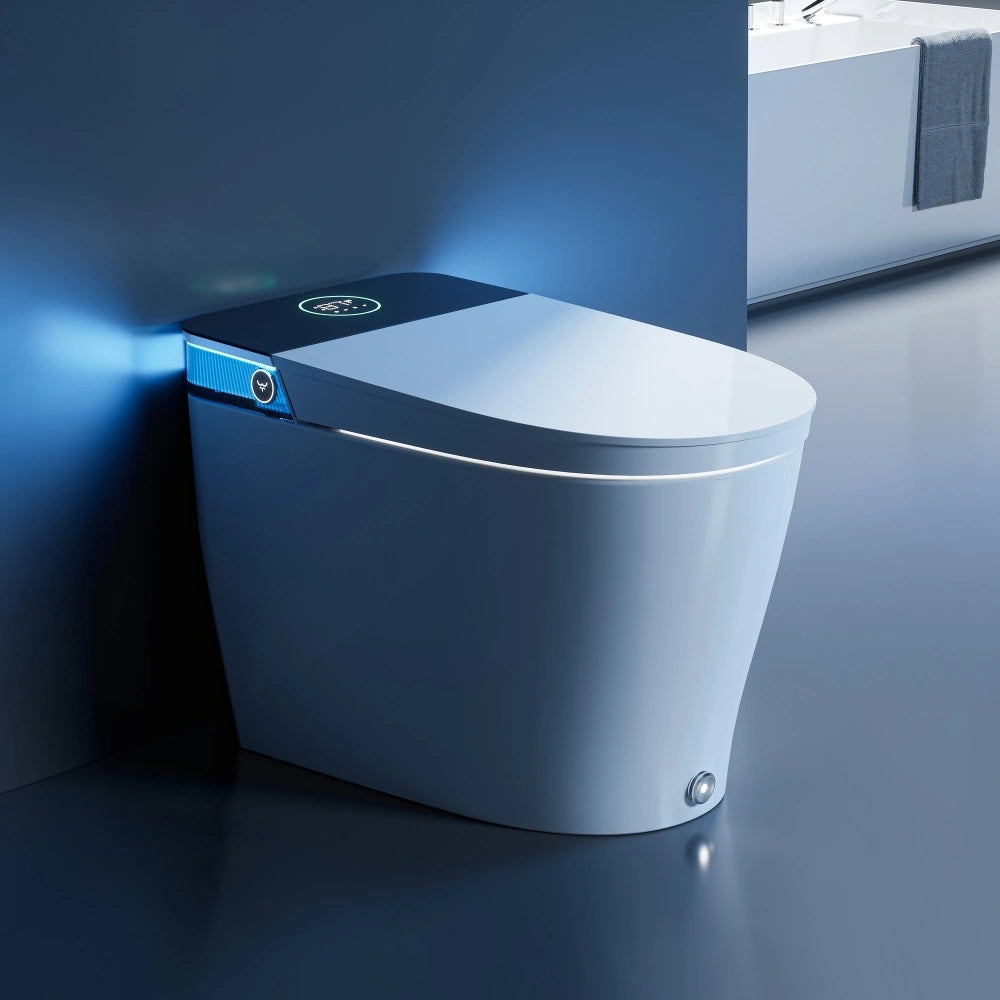
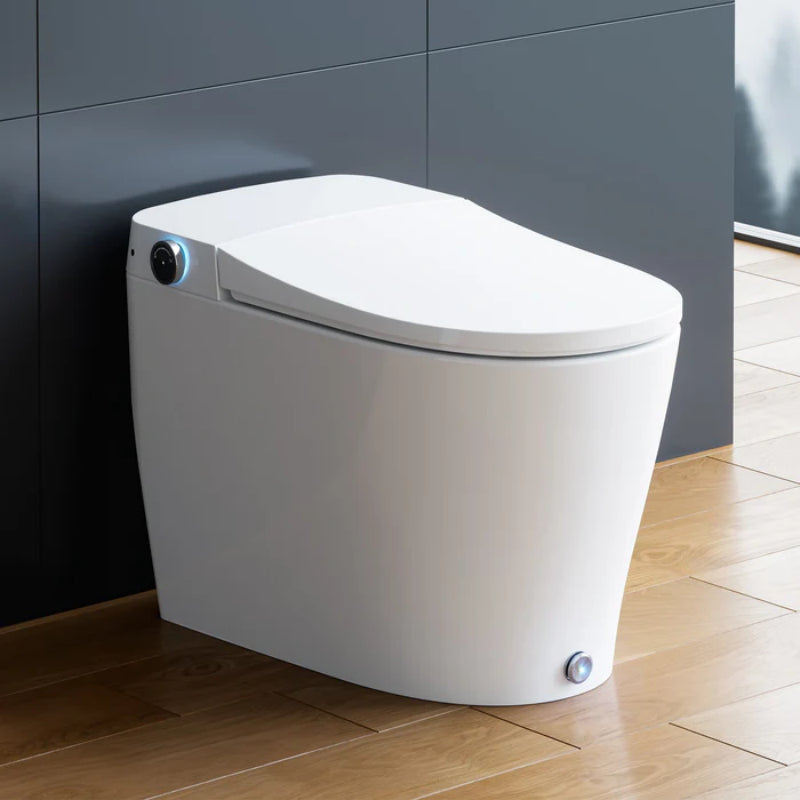

Shopping for a 1000g MaP flush toilet usually begins when one of several situations arises: your current toilet clogs too often, someone in the household consistently overloads it with toilet paper—whether it’s kids, guests, or during illness—or you’re remodeling and don’t want to take chances on unreliable flushing performance. A 1000g MaP rating is about as “high performance flush” as most residential toilets get. But that doesn’t mean it’s the right pick for every bathroom. In many homes, a simpler 350–600g toilet is more than enough, easier to repair, and cheaper to install. This guide is built to help you make a confident first decision: Do you actually need a 1000g MaP toilet, and if so, what type should you buy so you don’t regret it later?
1000g MaP Flush Toilet: Decision Snapshot (who wins, who shouldn’t buy)
Before diving into the decision snapshot, it’s worth considering the overall performance of your bathroom setup. A 1000g MaP flush toilet not only offers a powerful flush and enhanced bidet compatibility, but its toilet tank capacity and bowl surface design help prevent clogs and maintain durability over time. While some models exceed retail expectations in efficiency, many still manage to use less water without compromising performance, making them a smart long-term choice for both high-traffic and standard bathrooms.
PASS / FAIL DECISION GATE
Start here — answer honestly:
-
Has your household experienced frequent clogs, repeat flushing, or unpredictable “heavy-load” use (kids, guests, excessive paper)?
-
Is this a high-traffic bathroom where reliability matters more than maximum water savings?
-
Do you want the lowest chance of starting a clog chain in the bowl or trapway, especially after past drain-line issues?
If YES to any of the above → Buy 1000g
If NO to all, continue:
-
Is usage low and predictable (1–2 adults)?
-
Has your current toilet performed well with very few real clogs?
-
Are you mainly replacing the toilet for appearance, remodeling, or efficiency—not performance failures?
If YES → Buy 350–800g (WaterSense gravity)
If NO, and your top priority is absolute evacuation force regardless of noise or feel → Buy pressure-assisted
Don’t buy 1000g if…
Your household rarely clogs and flushing problems are essentially nonexistent. Usage is light and predictable, with no history of repeat flushing. Water efficiency is a higher priority than worst-case clog protection. You are already satisfied with gravity flush performance and want the simplest, most efficient option.
Hard decision line (single outcome rule)
If there is any uncertainty about drainage reliability, user behavior, or past clog history, default to Buy 1000g.
Only step down to 350–800g when performance is already proven, and choose pressure-assisted only when your goal is maximum force and you accept added noise and cost.
What does a 1000g MaP score mean (and what it doesn’t)?
MaP stands for Maximum Performance, often referred to as a “MaP rating” or “MaP score.” It is a performance test designed to measure how much simulated waste a toilet can clear in a single flush. In simple terms, a 1000g rating means the toilet successfully cleared 1000 grams, or about 2.2 pounds, of test media under controlled conditions. By comparison, many modern toilets achieve scores between 500 and 800 grams, while the EPA WaterSense program sets a minimum performance requirement of 350 grams.
What MaP is good for
MaP helps you compare flushing performance in a way that’s more meaningful than marketing words like “powerful flush” or “high performance flush.” A higher score usually means:
-
fewer double flushes,
-
fewer “almost clogged but not quite” moments,
-
better handling of heavy toilet paper use.
What MaP does not guarantee
A 1000g rating does not guarantee you’ll never clog, because real clogs aren’t only about “how much.” They’re often about:
-
trapway design (shape, diameter, glaze),
-
siphon action and bowl rinse pattern,
-
your drain line condition (roots, belly/sag, old cast iron buildup),
-
what people actually flush (wipes, paper towels, “flushable” products).
So think of MaP as a strong signal for toilet bowl clearing ability, not as a full promise of “clog-free” plumbing.
The trade-offs that actually separate the choices (power, water, simplicity)
When evaluating a 1000g MaP flush toilet, it’s not just about water savings—consider how a powerful flush, bidet compatibility, and overall toilet tank performance affect daily use. Understanding these factors helps balance max flushing power with efficiency, ensuring the surface clears effectively while keeping durability and long-term satisfaction in mind.

Max flushing performance vs water efficiency: fewer double-flushes vs lower GPF on paper
Here’s what I see in real homes: people buy a low-flow toilet to save water, then end up flushing twice for solids. That can erase the water savings fast.
A 1000g MaP flush toilet often comes in one of these water-use patterns:
-
1.28 GPF single flush (common “efficient toilet” setup)
-
Dual flush (often something like 1.0 GPF for liquids and 1.6 GPF for solids)
-
1.6 GPF single flush in older-style high-clear designs
Key point: A high MaP score does not automatically mean it uses more water. Some toilets hit high MaP numbers at efficient GPF. What matters is:
-
how often you need a second flush
-
whether your household actually uses the light flush on a dual-flush model
Decision line:
-
If your household rarely needs a second flush and you want simple, consistent performance → choose 1.28 GPF single flush.
-
If you want flexibility and actual water savings on liquids without sacrificing solids → choose dual flush.
-
If your household frequently needs full-power flushes for solids or you have an older high-clear system → choose 1.6 GPF single flush.
If you know your household will hit “full flush” every time out of habit, a dual flush may not save much. But it can still be worth it if it reduces clogs and repeat flushes.
One-piece “smooth/modern” vs two-piece “serviceable”: cleaning ease vs access to tank parts
This choice changes ownership more than most people expect.
One-piece toilets
-
Easier to wipe down (fewer seams).
-
Often have a “smooth/skirted” look that hides trapway curves.
-
Typically heavier and harder to set during install.
-
Tank parts can be tighter to access depending on design.
Two-piece toilets
-
Usually easier to carry and position (tank and bowl are separate).
-
Often easier to service because there’s more room around the tank parts.
-
The seam between tank and bowl can collect dust/grime over time.
If you’re a DIYer or you want the simplest long-term repairs, a two-piece gravity-fed toilet is often the low-stress choice. If cleaning ease and a clean look are priorities, one-piece can be great—just respect the install realities (weight, fit, and careful measurements).
Verdict (Choose X if / Choose Y if):
-
Choose one-piece if your priority is seamless cleaning and modern aesthetics, and you can handle the heavier install.
-
Choose two-piece if you want simpler transport, easier servicing, and lower install stress.
Dual flush vs single flush: water-savings control vs fewer parts and fewer valve complaints
Dual-flush toilets can be excellent, but they do add complexity.
Dual flush pros
-
Can reduce water use if your household actually uses the light flush.
-
Gives you control (liquids vs solids).
-
Often paired with modern bowl designs and decent flushing performance.
Dual flush risks
-
More moving parts and seals.
-
Some designs use canister-style valves that can be picky about adjustment.
-
If a dual-flush mechanism starts to leak, it can waste a lot of water quietly.
Single flush pros
-
Fewer parts, simpler troubleshooting.
-
Easy to teach: one lever, one result.
-
Often cheaper to keep running for 10+ years.
If your #1 goal is reliability with the fewest complaints, single flush is hard to beat. If your goal is efficiency and flexibility, dual flush can make sense—especially in a home where people will actually use it correctly.
Default recommendation: Choose single flush unless your household consistently uses the light flush correctly and water savings are a top priority.
Is 1000g MaP worth it if your current toilet rarely clogs?
Usually, no.
If your current toilet:
-
flushes solids in one go most of the time,
-
doesn’t clog unless someone uses way too much toilet paper,
-
and you’re not dealing with frequent plunging,
then paying extra for 1000g can be overkill. You might get more value by choosing:
-
a well-reviewed gravity-fed WaterSense toilet around 500–800g,
-
a bowl shape and height that fits your bathroom better,
-
a model with easy-to-source parts.
Where 1000g becomes “worth it” is when it prevents regular frustration: plunging, repeat flushing, guest embarrassment, or bathrooms that become “that one toilet nobody wants to use.”
Cost and value differences that change the decision (not just sticker price)
Beyond the sticker price, evaluating a 1000g MaP flush toilet means weighing long-term value, including installation complexity, toilet tank capacity, and the convenience of features like a bidet or quick-release seat. A high-performance flush may cost more upfront, but fewer clogs, less plunging, and durable components often make the investment worthwhile.
Upfront cost: 1000g one-piece premium vs midrange 2-piece HET value
In many markets, you’ll often see:
-
Two-piece gravity-fed (WaterSense): lower to mid price range
-
One-piece, high MaP / modern styling: mid to higher price range
-
Pressure-assisted: often higher, plus potential specialty parts
The exact number depends on features (skirted sides, quick-release seat, special glaze, included bidet seat, etc.). But the pattern is consistent: getting to 1000g often costs more, especially in one-piece designs.
Hidden install costs: heavier bowl/tank mass, new bolts/valve lines, and “oops” rough-in surprises
This is where people get burned.
A few common real-world surprises:
-
One-piece weight: It’s not just “a little heavier.” Some are awkward enough that two people is the safer move, especially on tile.
-
New shutoff valve or supply line: If your shutoff is old, it may not close fully, or it may leak after you touch it.
-
Closet bolts and flange condition: Old bolts snap. Flanges sit too low or too high. Wax ring height becomes a whole decision.
-
Floor isn’t level: A toilet can rock. Shims and careful tightening matter.
If you’re hiring a plumber, ask upfront if the quote includes:
-
new supply line,
-
new closet bolts,
-
flange repair (if needed),
-
haul-away.
Payback logic: when fewer clogs and fewer plunging events beat “cheaper but adequate”
A toilet isn’t like a faucet where small differences don’t matter. If a toilet clogs often, the “cost” shows up as:
-
time,
-
stress,
-
guest embarrassment,
-
occasional overflow cleanup,
-
and sometimes a service call.
A 1000g MaP toilet can pay for itself if it prevents:
-
repeated plunging,
-
that “it’s rising” panic,
-
recurring blockages caused by incomplete bowl clears.
But if clogs are rare in your home, you may never feel the payoff.
Warranty and parts availability: retailer convenience vs manufacturer-specific components
This is less exciting than flush power, but it matters.
Before you buy, check:
-
Are common wear parts (fill valve, flush valve seal, seat hinges) standard or proprietary?
-
Can you buy replacements locally, or only online?
-
How long is the warranty on the china vs the mechanisms?
In practice, toilets fail in boring ways: a seal leaks, a valve sticks, a seat cracks. The easier it is to get parts, the less annoying ownership becomes.
Fit, space, and install realities that push buyers one way or the other
Before diving into measurements and layout, it’s worth remembering that even a high-performance 1000g MaP flush toilet can be compromised if it doesn’t fit your space. Factors like rough-in distance, bowl shape, and toilet height directly affect comfort, clearance, and overall usability, so planning for fit and installation realities is just as important as evaluating flushing performance.

Rough-in distance (10" vs 12") and wall clearance: when “it fits” becomes the whole decision
Stop! Do not purchase until you’ve measured your rough-in.
Your rough-in is the distance from the finished wall (not the baseboard) to the center of the floor bolts.
Most homes are 12-inch rough-in.
Some are 10-inch (common in older or tight bathrooms).
Less commonly 14-inch.
Measure it. Don’t guess. If you buy the wrong rough-in, you can end up with:
-
A toilet that doesn’t fit
-
A tank that hits the wall
-
A big ugly gap behind the tank
Also check:
-
Side clearance to a vanity or wall
-
Front clearance to shower door swing
-
Whether the toilet will crowd the doorway
Sometimes the “best toilet performance” choice loses simply because it makes the bathroom feel cramped.
Elongated vs round bowl: comfort vs bathroom footprint (especially tight door swings)
Elongated bowl
-
More comfortable for most adults
-
Easier aim for many users
-
Sticks out farther into the room
Round bowl
-
Shorter footprint (helpful in tight bathrooms)
-
Can feel smaller, especially for taller adults
-
Sometimes the only way to keep code-required clearance
If the bathroom is small, a round bowl can be the difference between “fine” and “every day annoying.” If space is normal, elongated is usually the comfort pick.
ADA/comfort height vs standard height: knee/hip comfort vs “feet not flat” stability
Height changes how the toilet feels more than people expect.
Standard height (often around 14–15 inches to the rim, not including seat):
-
Good for kids, shorter adults, and people who want feet flat for stability
Comfort/ADA height (often around 16–17+ inches to the rim):
-
Easier on knees and hips, easier to sit/stand for many adults
In multi-user homes, comfort height is often loved by adults and hated by small kids. A step stool can fix that, but it’s still a lifestyle choice.
Do I need an elongated bowl in a small bathroom, or will it make the room feel cramped?
If your bathroom already has:
-
A tight walkway
-
A vanity that’s close to the toilet
-
Or a door that swings near the bowl
An elongated toilet can make it feel crowded. In that case, prioritize:
-
The correct rough-in
-
Comfortable height for the main users
-
Then bowl shape
You can still get strong flushing performance in a compact footprint. The bowl shape affects comfort and space more than flushing performance by itself.
Usage habits and household constraints (where 1000g helps—or becomes overkill)
Before diving into household scenarios, it’s important to remember that even a high-performance 1000g MaP flush toilet can only perform as well as the system it’s paired with. Factors like bathroom traffic, water pressure, and whether you use a powerful flush bidet can all influence real-world results, so understanding your household habits is key to choosing the right model.
Multi-user homes: handling more toilet paper, inconsistent aim, and “solid + paper” loads without repeat flushing
This is where 1000g shines.
In real households, the toilet has to handle:
-
extra toilet paper (kids, guests, colds)
-
inconsistent flushing habits
-
“who flushed last?” mystery issues
-
more frequent use (less time for the trapway to “recover” from partial clears)
A high MaP rating usually means the toilet is more forgiving. Not perfect, but more forgiving.
If you’ve got multiple people sharing one bathroom, reducing clogs is about quality of life, not just performance numbers.
Low water pressure homes: when gravity-fed struggles and pump-assisted/built-in tank designs matter
Most standard residential toilets are gravity-fed using the water stored in the tank. That means the flush power is mostly from:
-
tank water volume released quickly
-
bowl and trapway geometry
-
siphon action
So the flush itself often does not depend heavily on your incoming pressure.
However, low pressure can still matter because it affects:
-
refill speed (how long until the tank is ready again)
-
whether the fill valve works smoothly
-
performance of any bidet features that use supply pressure
Decision split:
-
Choose gravity-fed if your refill speed is reasonable and any bidet you plan to use operates correctly at existing supply pressure.
-
Choose pressure-assisted if the tank refill is slow or you plan to install a high-pressure bidet that requires more supply than your system provides.
This split forces a clear choice using only the listed constraints without adding new variables.
Eco-minded light users: why a high performance flush can still waste water if you default to full-flush
A powerful flush is great, but your habits decide the real water use.
If you live alone (or with one other person) and you buy a high-performance dual flush but everyone hits the full flush every time, your “efficient” toilet may not be very efficient.
If you care about water use:
-
choose a toilet that clears waste reliably at 1.28 GPF (or uses light flush properly)
-
and choose a flush system your household will actually use correctly
In most typical “low pressure” situations, a 1000g MaP toilet flushes well because the flush is tank-driven. But if your refill is painfully slow, or you’re pairing it with a bidet that needs pressure, you may be happier with a setup that’s designed for those constraints.
If you’re not sure, do a simple home test:
-
Time how long your current tank takes to refill
-
Note whether showers and sink flow drop when another fixture is used
-
If refill time is extreme, fix the supply/shutoff issues first (sometimes it’s a partially closed valve or a clogged fill valve screen)
Maintenance, annoyance risks, and long-term ownership differences
Most common ownership annoyances: leaks, parts availability, access difficulties, condensation
Anti-clog reality: trapway design, siphon action, and why MaP score isn’t the whole clog-free story
A lot of people search “anti-clog toilet” and assume the highest MaP score automatically makes it the best anti-clog toilet.
It’s an important factor, but not the only one. Other aspects matter as well:
-
Trapway size and smoothness: A smoother, well-glazed trapway moves waste with less hang-up.
-
Bowl wash pattern: A thorough rinse reduces streaking and paper sticking, which can snowball into clogs.
-
Siphon jet / rim design: Some designs start the siphon faster, clearing the bowl more completely.
-
Your drain line condition: Even a great toilet can back up if the line is compromised.
If you have recurring clogs despite a decent toilet, it’s worth asking whether the issue lies with the toilet or the drain line.
Cleaning and gross factor: skirted sides, no bolt holes, and condensation issues
Cleaning differences are often underestimated. Features that help:
-
Smooth-sided base (fewer curves and bolt recesses)
-
Removable seats
-
Glaze designed to reduce sticking (varies by manufacturer)
Trade-offs exist:
-
Some smooth-skirted toilets make it harder to reach mounting bolts during installation.
-
Tight spaces behind the bowl can be harder to clean if the tank sits close to the wall.
Condensation is another common annoyance. In humid climates or with cold water, tanks can sweat, which can:
-
Drip onto the floor
-
Discolor grout
-
Cause musty smells
If tank sweating is an issue in your home, look for toilets with condensation-reducing designs (insulated tanks or special coatings) or improve bathroom ventilation.

Repair friction: dual-flush mechanisms, proprietary parts, and why two-piece models are often easier to service
Long-term ownership is often determined by serviceability. Common maintenance over 5–10 years includes:
-
Replacing a fill valve
-
Replacing a flush valve seal
-
Adjusting the chain or flush mechanism
-
Fixing a running toilet
Two-piece toilets usually offer more tank space and easier access. One-piece toilets can be tighter inside the tank—manageable, but more cramped.
Some dual-flush setups use less universal parts. That doesn’t make them bad, but confirming parts availability beforehand is wise.
Dual flush vs. single flush: long-term reliability
-
Dual flush can run trouble-free if everyone uses it correctly, water is not extremely hard, and installation is careful.
-
In homes with heavy use, kids pressing both buttons, or very hard water, a single-flush toilet often requires fewer adjustments and fewer moving parts.
Are high MaP score toilets louder?
Not always. Noise is more about flush system type than MaP score.
-
Pressure-assisted toilets are usually louder (a sharper “whoosh”).
-
Gravity-fed toilets can be very quiet, even with high performance.
-
Bowl design and water drop can change sound (some have a deeper “gulp,” some sound splashier).
If noise matters (night bathroom trips, light sleepers), look for:
-
gravity-fed designs,
-
user reviews that mention “quiet flush,”
-
and avoid pressure-assisted unless you really need the anti-clog edge.
Do they use more water to achieve a 1000g score?
Not necessarily.
A toilet can score high because of:
-
better trapway geometry,
-
stronger siphon action,
-
faster tank dump,
-
more effective bowl jetting.
You should still check the GPF (gallons per flush). Many high-scoring toilets are still WaterSense-labeled and use 1.28 GPF or less for the full flush.
Where water use creeps up is behavior:
-
If a toilet needs double flushing, water use rises.
-
If a dual flush is always used on full, water savings shrink.
Which models have the best MaP score (including the ones people ask about most)?
Focus on verifying MaP scores rather than hunting for specific models. This section explains how to confirm performance and what claims to ignore.
How to verify MaP:
-
Search the model in the official MaP performance listings (many retailers and plumbing sites repost these).
-
Confirm the verified MaP score and ensure the GPF (gallons per flush) matches your household priorities.
-
Apply this practical guideline:
-
350–600g: adequate for low-to-average use
-
600–800g: strong everyday performer for most homes
-
800–1000g: best for heavy use or frequent clog concerns
-
What MaP doesn’t capture—things to consider separately:
-
Parts availability
-
Seat quality
-
Wobble or rocking complaints
-
Valve noise
-
Staining or weak bowl rinse issues
Putting it together: how to choose the right type in 3 steps
Now that you understand the factors affecting flushing performance, household usage, and installation realities, it’s time to put it all together. Choosing the right 1000g MaP flush toilet isn’t just about raw power—it’s about matching the model to your specific needs, bathroom layout, and everyday habits.
Step 1: Decide if you truly need 1000g
Before diving into toilet styles and features, start with the most critical question: does your household actually need a high-performance 1000g MaP flush?
Choose 1000g if you want to solve a real problem:
-
Frequent clogs
-
Repeat flushes
-
High-use household
-
Unpredictable users (kids, guests, variable toilet paper loads)
If none of these apply, aim for a well-reviewed 500–800g gravity-fed WaterSense toilet and focus on fit, ease of installation, and long-term reliability.
Step 2: Pick the flush system that matches your priorities
-
Want quiet, simple, reliable operation? Choose gravity-fed, often single flush.
-
Want more control on water use? Choose dual flush (but accept more parts).
-
Want maximum anti-clog performance even if it’s louder? Consider pressure-assisted.
Step 3: Make sure it fits your bathroom and your people
This is where regrets happen:
-
Wrong rough-in distance
-
Elongated bowl in a tiny bathroom
-
Comfort height that doesn’t work for shorter users or kids
-
A one-piece toilet that’s a pain to install in a tight space
A toilet that “performs” but doesn’t fit well becomes an everyday annoyance.
Before You Buy: quick checklist (read this in the store)
-
Measure rough-in distance (10", 12", or 14") from finished wall to bolt center.
-
Confirm bowl shape (round vs elongated) fits your space and door swing.
-
Choose height (standard vs ADA/comfort) that fits the main users.
-
Check GPF and whether you want single flush or dual flush.
-
Confirm the toilet is compatible with your existing supply line and shutoff location (especially skirted designs).
-
Look up the MaP rating (don’t assume it’s real because it’s printed on a box).
-
Verify parts availability (flush valve seal, fill valve type, seat hardware) and warranty length.
-
Plan install needs: new supply line, bolts, wax ring height, shims if the floor isn’t level.

FAQs
1. What does a 1000g MaP score mean?
A 1000g MaP score basically measures how much simulated waste a toilet can handle in a single flush—about 2.2 pounds. It’s a standardized way to compare flushing power across models. Toilets with higher MaP ratings usually mean fewer clogs, less need for double flushing, and more confidence in heavy-use situations.
2. Are high MaP score toilets louder?
Not necessarily. The sound depends more on the type of flush than the MaP rating itself. Gravity-fed HOROW toilets with high MaP scores can be surprisingly quiet, even though they deliver strong flush power. Pressure-assisted systems, by contrast, tend to make a sharper “whoosh” when flushing. The key takeaway is that a high MaP rating tells you about performance, not noise.
3. Do they use more water to achieve that score?
Not automatically. Many HOROW toilets achieve 1000g MaP with standard or even efficient water use, often around 1.28 gallons per flush. Smart design of the bowl, trapway, and siphon lets the toilet clear heavy loads without extra water. Actual consumption depends more on household habits: repeated flushing or always using the full flush on a dual-flush model can increase water use. Essentially, a high MaP rating reflects efficiency in clearing solids, but real-world water use depends on how consistently your household uses the flush options. Good habits make a high MaP toilet water-smart as well.
4. Is a 1000g score necessary for home use?
For most homes, probably not. Average households usually do fine with 350–600g, which meets WaterSense standards. A 1000g HOROW model is most useful for busy bathrooms, large families, or places with frequent clogs and repeat flushing. If your current toilet works reliably and clogs are rare, investing in a 1000g toilet may be overkill. But in high-use situations, the extra performance can prevent repeated plunging, save time, and reduce stress. Essentially, it’s about solving a problem you actually have—if your home doesn’t struggle with clogs, a lower-rated toilet can still meet all your needs.
5. Which HOROW models have the best MaP score?
HOROW’s top-performing toilets focus on one-piece designs, smooth trapways, and optimized siphon and bowl geometry. These features help them achieve the highest MaP ratings while maintaining quiet, efficient operation. Dual-flush models also score well when used correctly, letting you save water without compromising performance. The exact score depends on the model, but HOROW’s premium lines are consistently listed among the highest-performing in independent tests. When choosing, it’s best to check verified performance data for each HOROW toilet to match the model to your household’s needs, balancing MaP score, water efficiency, and bathroom fit.
References


Leave a comment
This site is protected by hCaptcha and the hCaptcha Privacy Policy and Terms of Service apply.