
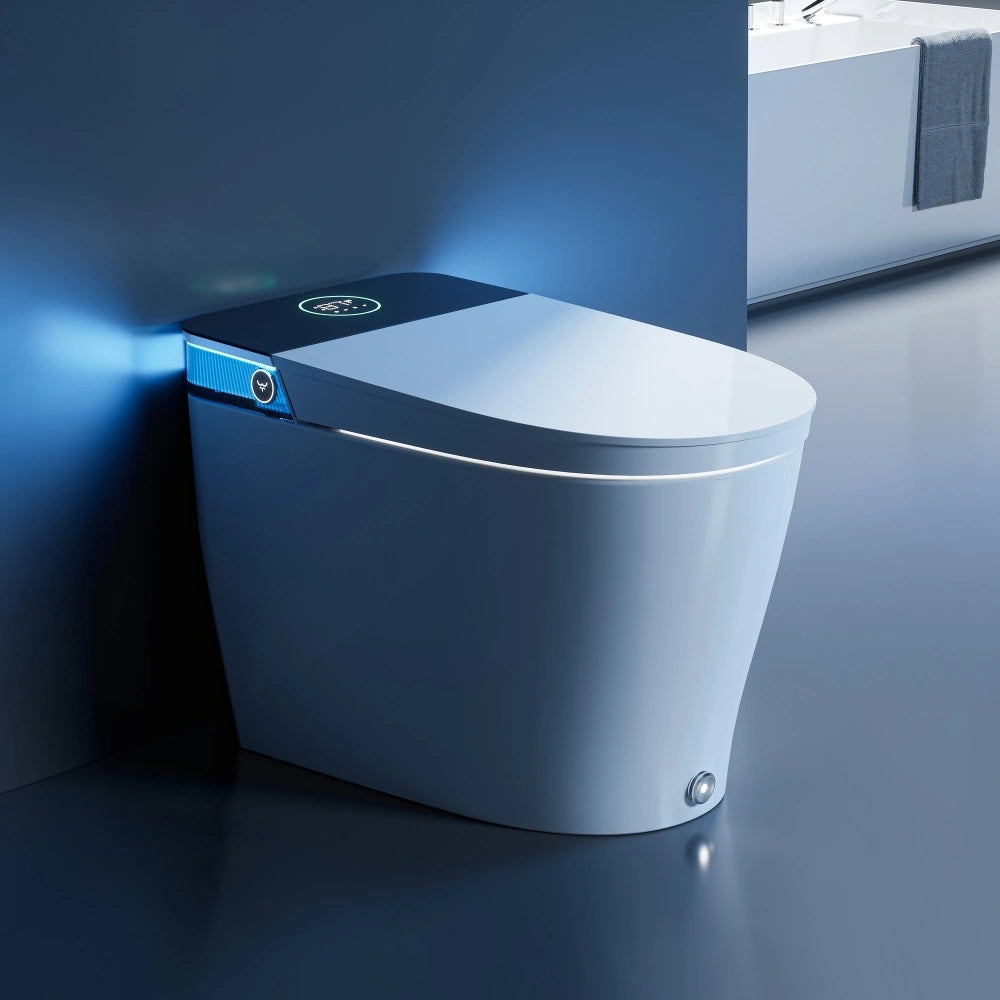
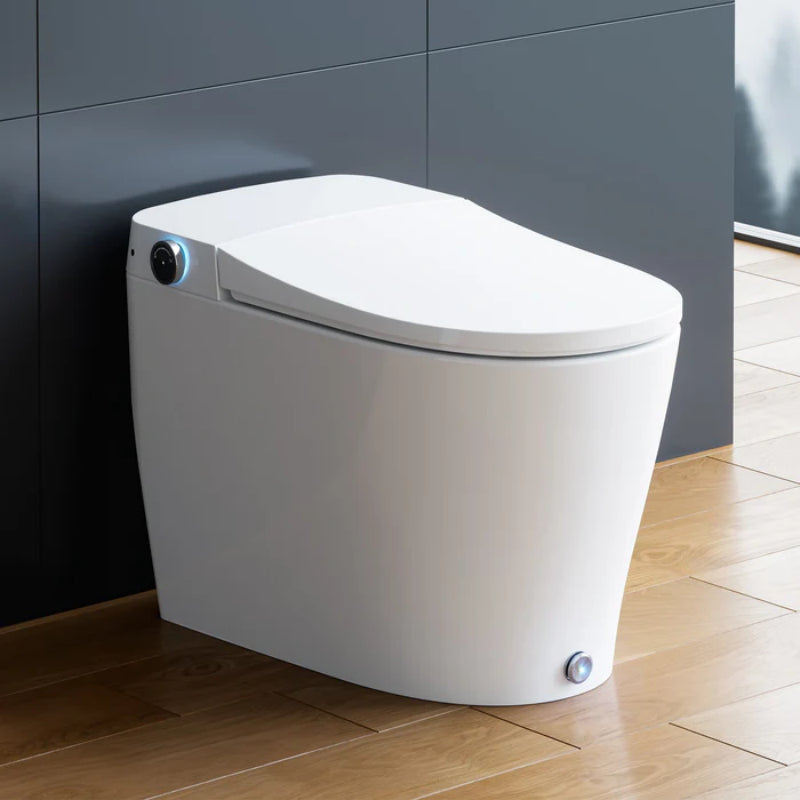
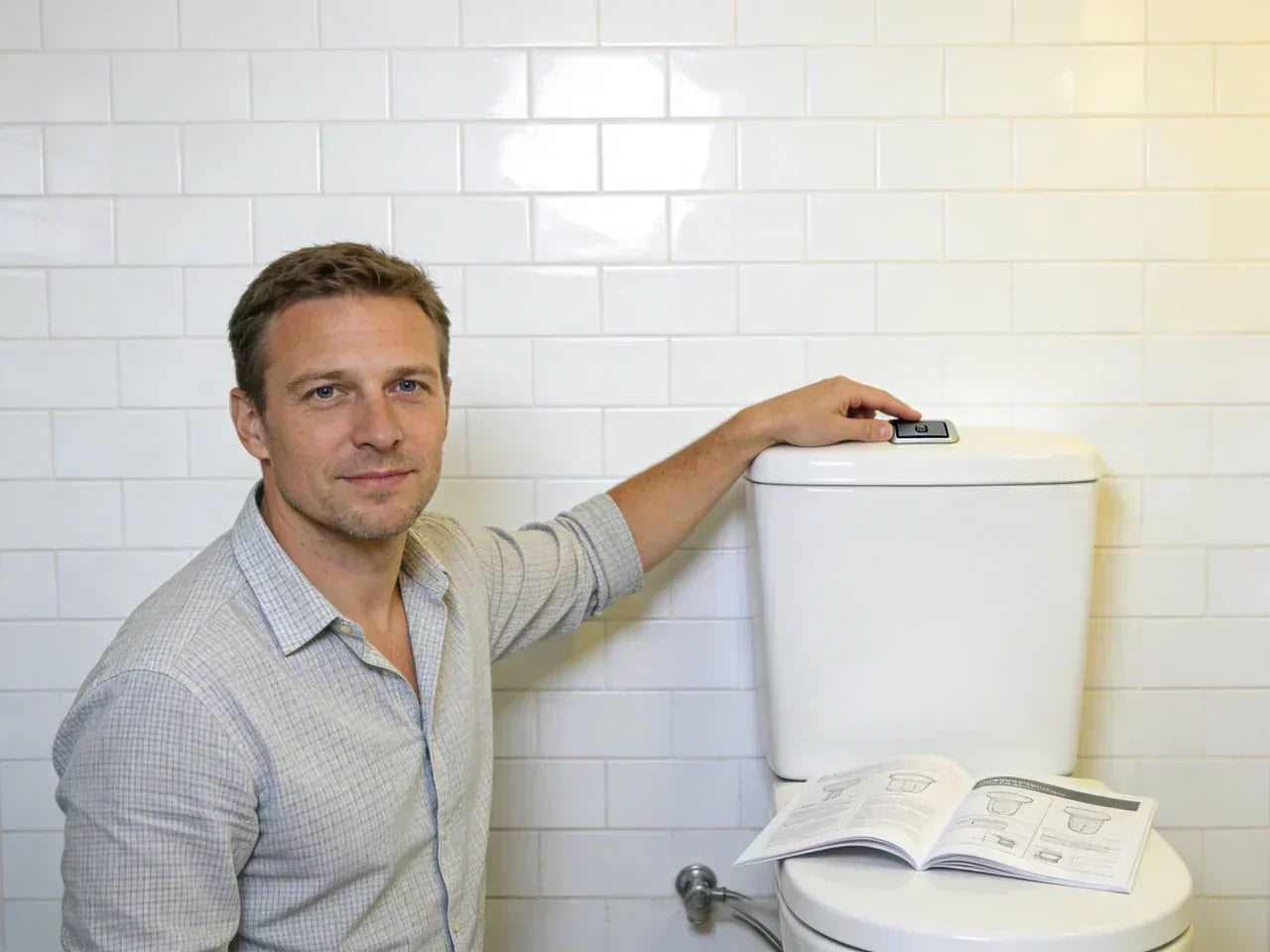
The best flushing toilet for a home is one that clears waste reliably at its rated flush volume, fits the bathroom, and matches the household’s actual clog risk. A 1000g MaP score is the highest loading reported under the MaP testing protocol, but it is not necessary for every bathroom and does not make a toilet clog-proof. Compare the exact model’s MaP score, GPF, flush system, rough-in, bowl fit, and replacement-part availability before buying.
1000g MaP Flush Toilet: Decision Snapshot
A published 1000g MaP score can be useful when frequent clogs, repeat flushing, heavy bathroom traffic, or unpredictable paper use are recurring problems. It should still be treated as one part of the buying decision. Drain-line condition, flush volume, bowl design, rough-in, service access, noise, and replacement parts can matter just as much in daily use.
Consider a 1000g MaP toilet when:
-
Your household experiences frequent clogs or repeat flushing.
-
The bathroom receives heavy or unpredictable use from children, guests, or multiple household members.
-
You are replacing a poorly performing toilet and want a model with a high published extraction score.
Consider a lower verified MaP score when:
-
Usage is light and predictable.
-
Your current toilet clears normal loads without recurring clogs.
-
Quiet operation, simpler repairs, bathroom fit, or a wider product selection matters more than the highest available score.
Consider pressure-assisted flushing when:
A pressure-assisted toilet may be worth comparing for a high-traffic bathroom when you accept a sharper flush sound and have confirmed the manufacturer’s supply-pressure, installation, and service requirements.
A higher MaP score cannot correct a restricted, damaged, poorly vented, or improperly sloped drain line. Persistent backups should be diagnosed before the toilet is replaced.
What Does a 1000g MaP Score Mean?
MaP, or Maximum Performance, identifies the highest standardized test-media load a toilet clears while restoring the required trap seal under the testing protocol. A 1000g result is the protocol ceiling because testing is not conducted above 1,000 grams. The result applies only to the exact model and flush setting that were tested.
What MaP is useful for
MaP provides a standardized way to compare solid-waste extraction. It is more specific than general marketing phrases such as “powerful flush,” but it should be reviewed together with the exact model’s rated GPF and installation requirements.
-
Comparing tested extraction results between exact toilet models.
-
Identifying models designed for households concerned about heavy or unpredictable loads.
-
Separating a published test result from an unverified performance claim.
What MaP does not guarantee
A 1000g score does not guarantee that a toilet or household drain line will never clog. It also does not measure every part of toilet performance or ownership.
-
Drain-line condition, including roots, buildup, bellies, or poor slope.
-
Complete bowl rinsing and surface cleaning.
-
Flush noise, refill speed, repair access, or replacement-part availability.
-
Misuse involving wipes, paper towels, or other products that should not be flushed.
Before relying on a score, search the exact brand and model number in the official MaP toilet database. Confirm that the listed model, tank-and-bowl combination, GPF, and flush setting match the product being purchased.
The Trade-Offs That Separate the Choices
A high extraction score is only one part of toilet selection. Compare water use, single- or dual-flush operation, one- or two-piece construction, installation access, bathroom fit, serviceability, and the way people in the household will actually use the toilet.

MaP score vs. water use
MaP and GPF measure different things. MaP reports solid-waste extraction under a standardized test, while GPF states the rated water volume used for a flush. A higher MaP score does not automatically mean that the toilet uses more water.
Depending on the model, buyers may encounter:
-
A single-flush system with one rated flush volume.
-
A dual-flush system with separate light- and full-flush volumes.
-
Gravity, pressure-assisted, or powered flushing designs with different operating requirements.
Compare the exact model’s published GPF with the MaP listing. Do not transfer a score or flush volume from another version in the same product family.
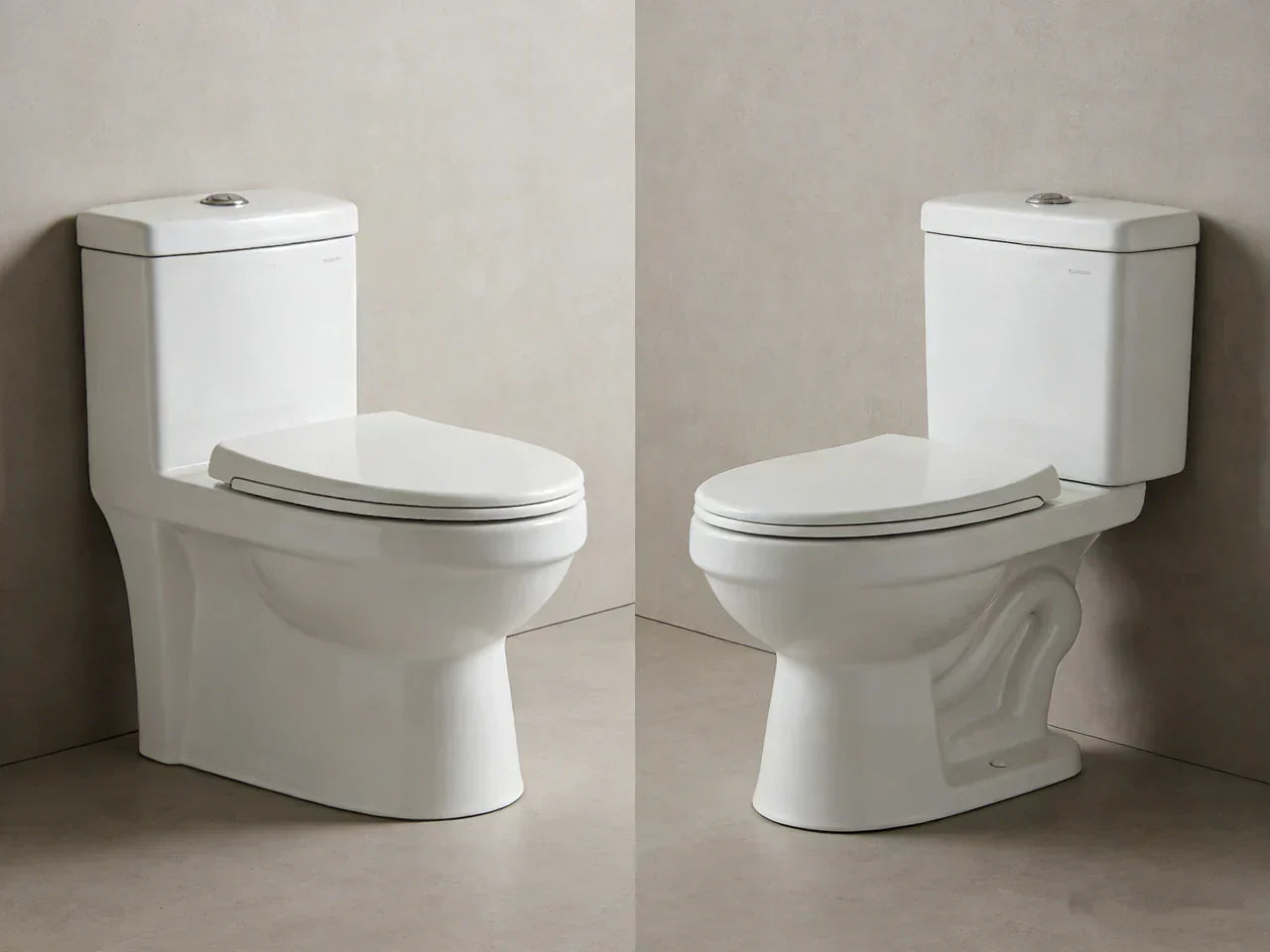
One-piece vs. two-piece toilets
Construction affects cleaning, transport, installation, and service access more directly than it affects the MaP score by itself.
One-piece toilets
-
Have fewer exterior seams to clean.
-
May use a smooth or skirted exterior.
-
Are often heavier and more difficult to position during installation.
-
Can provide tighter access to mounting hardware or internal parts, depending on the design.
Two-piece toilets
-
Can be carried and positioned as separate tank and bowl sections.
-
Often provide familiar access to tank components.
-
Have a seam between the tank and bowl that requires cleaning.
Choose based on installation access, cleaning preference, available help during installation, and the availability of replacement parts for the exact model.
Dual flush vs. single flush
A dual-flush design provides separate flush choices, while a single-flush design uses one control and one rated volume. Neither design is automatically the stronger or more reliable choice.
Dual-flush considerations
-
May reduce water use when household members consistently select the appropriate flush.
-
Uses additional seals or mechanism components that may be model-specific.
-
Requires confirmation of both the light- and full-flush ratings.
Single-flush considerations
-
Provides one control and one rated flush result.
-
May be easier for every household member to use consistently.
-
Still requires confirmation of replacement-part availability and service access.
Is 1000g MaP worth it if your current toilet rarely clogs?
Not always.
A lower verified score may be adequate when:
-
The current toilet clears normal loads consistently.
-
Clogs are rare and generally linked to unusual paper use or inappropriate items.
-
Bathroom fit, seat height, serviceability, or price is a higher priority.
A published 1000g result becomes more relevant when recurring performance problems are real and the exact model also meets the bathroom’s installation and ownership requirements.
Cost and Value Differences
Compare more than the product price. Installation labor, toilet weight, rough-in compatibility, flange condition, supply-line changes, service access, proprietary parts, and haul-away can all affect the total cost.
Product price and construction
Prices vary by construction, design, flushing system, included seat, electronic functions, finish, and retailer. Do not assume that a higher MaP score alone explains the price difference between two toilets.
Installation costs to check
-
Whether a one-piece toilet requires two people to move and position safely.
-
Whether the shutoff valve or supply line needs replacement.
-
Whether the flange, closet bolts, or seal require repair or adjustment.
-
Whether the floor requires shimming to prevent rocking.
-
Whether the plumbing quote includes haul-away and disposal.
Warranty and replacement parts
Before buying, confirm:
-
Whether the fill valve, flush valve seal, seat hinges, and other wear parts are standard or model-specific.
-
Where replacement parts can be purchased.
-
Which components are covered and for how long.
Fit, Space, and Installation
Even a toilet with a high published score is a poor choice if it does not fit the bathroom. Rough-in distance, overall dimensions, bowl shape, finished seat height, door clearance, supply-line position, and service access should be confirmed before ordering.

Rough-in distance and wall clearance
Measure the rough-in before purchasing.
For a standard floor-mounted toilet, the rough-in is generally measured from the finished wall—not the baseboard—to the center of the floor bolts. Confirm the manufacturer’s drawing for the exact model and installation type.
An incorrect rough-in can result in:
-
A toilet that cannot be installed in the available space.
-
A tank or body that conflicts with the finished wall.
-
An unexpected gap behind the toilet.
Also check:
-
Side clearance to a vanity or wall.
-
Front clearance and door or shower-door movement.
-
Supply-line and shutoff-valve access.
Elongated vs. round bowl
Elongated bowl
-
Provides a longer seating surface.
-
Extends farther into the room.
Round bowl
-
Uses a shorter bathroom footprint.
-
May feel more compact for some adults.
Bowl shape affects comfort and room clearance more directly than it affects the MaP score by itself.
Seat Height: Measure the Finished Seat
Product pages may list bowl height, rim height, or finished seat height. These measurements are not interchangeable.
Measure from the finished floor to the top of the installed seat, then compare that measurement with the needs of the people who use the bathroom most often.
-
A taller seat may make sitting and standing easier for some adults.
-
A lower seat may provide better foot contact for shorter users and children.
Do not treat the phrase “comfort height” as proof of ADA compliance. Verify the exact model, finished installation, and applicable accessibility requirements separately.
Will an elongated bowl crowd a small bathroom?
Check the actual product dimensions when the bathroom has:
-
A narrow walkway.
-
A vanity close to the toilet.
-
A door that swings toward the bowl.
Prioritize the correct rough-in and overall dimensions before selecting bowl shape or styling.
Usage Habits and Household Constraints
The same toilet may perform differently across households because bathroom traffic, paper use, drain condition, supply conditions, maintenance, and user habits are different.
Multi-user homes
A higher published extraction score may be worth comparing when one bathroom regularly handles:
-
Variable amounts of toilet paper.
-
Children, guests, or users with different flushing habits.
-
Frequent use throughout the day.
The score still cannot compensate for a restricted drain or inappropriate items being flushed.
Low Water Pressure: Diagnose the Supply First
A tank-type gravity toilet stores water before each flush. Incoming pressure affects how the tank refills and whether the fill valve operates within its specified range.
Pressure-assisted toilets are not a universal fix for weak supply pressure because they also require sufficient line pressure to operate correctly.
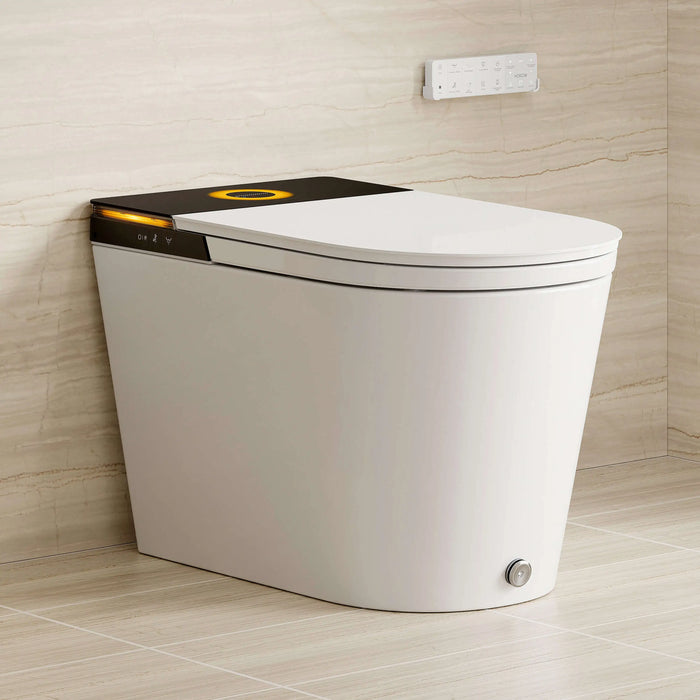
Smart toilets with a built-in tank or pump have model-specific electrical, water-pressure, and installation requirements. Check the official instructions for the exact model rather than assuming that every powered system works under the same conditions.
If refill time is unusually long, first check:
-
The shutoff valve.
-
The supply line.
-
The inlet screen.
-
The fill valve.
Select a toilet only after confirming that the bathroom meets the exact model’s stated operating range.
Water-conscious households
Real-world water use depends on both the rated flush volume and the way the toilet is used.
-
Confirm the exact model’s full-flush and light-flush volumes.
-
Choose a control system household members will use consistently.
-
Do not assume a WaterSense label from the GPF alone; verify the exact model’s certification separately.
Maintenance and Long-Term Ownership
Common ownership issues include leaks, difficult service access, unavailable parts, mineral buildup, loose seats, and condensation.
Why MaP is not the whole anti-clog story
A high MaP score is useful evidence for tested extraction, but it does not automatically make a toilet clog-proof.
-
Trapway geometry and surface condition affect how waste moves through the fixture.
-
Bowl wash and rinse coverage affect residue left on the bowl surface.
-
Jet and rim design affect how the flush and siphon begin.
-
A damaged or restricted drain line can cause backups regardless of the toilet’s score.
Recurring clogs with a reasonably performing toilet may justify a drain-line inspection before another toilet is purchased.
Cleaning and condensation
Cleaning access varies by exterior shape and installation design.
-
Smooth-sided bases have fewer exterior curves and bolt recesses.
-
Removable seats may simplify cleaning around the mounting area.
-
Some skirted designs provide tighter access to mounting hardware.
In humid conditions, cold tank water can contribute to condensation. Improve ventilation and check whether the exact model offers a condensation-reducing design when this is a recurring concern.

Repair access and model-specific parts
Common maintenance can include:
-
Replacing a fill valve.
-
Replacing a flush valve seal.
-
Adjusting the flush mechanism.
-
Correcting a running toilet or loose seat.
Two-piece toilets often provide familiar tank access, while some one-piece or dual-flush designs use tighter spaces or more model-specific parts. Confirm service access and parts availability before purchase.
Are High MaP Score Toilets Louder?
Not necessarily. Noise depends more on the flushing system and fixture design than on the MaP score itself.
-
Pressure-assisted toilets commonly produce a sharper flush sound.
-
Gravity-fed toilets may operate more quietly, depending on the model.
-
Bowl geometry, water movement, refill operation, and bathroom acoustics also affect perceived noise.
When noise matters, review the exact flush-system type and model documentation rather than using the MaP score as a noise rating.
Do Toilets Use More Water to Achieve a 1000g Score?
Not automatically.
A model’s extraction result can be influenced by:
-
Trapway geometry.
-
Siphon development.
-
The rate at which stored water enters the bowl.
-
Jet and bowl design.
Always compare the score with the exact model’s rated GPF. Verify any WaterSense claim separately for that model.
How to Verify a Toilet’s MaP Score
-
Search the exact brand and model number in the official MaP toilet search.
-
Confirm that the score and rated full-flush GPF appear on the same listing.
-
For a two-piece toilet, verify the exact tank-and-bowl combination rather than checking only the product-family name.
-
For a wall-hung toilet, verify the tested bowl-and-carrier or tank combination.
-
Do not transfer a score between different rough-in, flush-volume, tank, bowl, or model variants unless the listing includes those exact variants.
-
When no official listing or report is available, describe the published flush type and GPF without presenting a numeric MaP score as independently verified.
MaP does not replace checks for:
-
Parts availability.
-
Seat quality and finished height.
-
Installation stability.
-
Flush and refill noise.
-
Bowl rinsing and surface cleaning.
How to Choose the Right Toilet in Three Steps
Step 1: Decide whether a 1000g score addresses a real problem
Give more weight to a 1000g result when the household regularly experiences frequent clogs, repeat flushing, heavy bathroom traffic, or unpredictable paper loads.
When those problems are absent, compare lower verified scores and give more weight to fit, noise, serviceability, price, and replacement parts.
Step 2: Match the flush system to the bathroom
-
Compare gravity-fed models for familiar tank operation.
-
Compare dual-flush models when separate flush controls match household habits.
-
Compare pressure-assisted or powered designs only after confirming supply, power, noise, and installation requirements.
Step 3: Confirm the exact fit
-
Measure the rough-in.
-
Check overall dimensions, door movement, and vanity clearance.
-
Compare the finished seat height with the needs of regular users.
-
Confirm supply-line, shutoff-valve, electrical, and service access where applicable.
A toilet with a strong test result can still be the wrong purchase when its fit or installation conditions do not match the bathroom.


Before You Buy: Quick Checklist
-
Measure the rough-in from the finished wall to the center of the floor bolts and confirm the manufacturer’s drawing.
-
Confirm that the bowl shape and overall dimensions fit the room and door movement.
-
Compare the finished seat height with the needs of regular users.
-
Confirm the rated GPF and whether the toilet uses single- or dual-flush controls.
-
Check supply-line, shutoff-valve, mounting, electrical, and service-clearance requirements.
-
Search the exact model in the official MaP database rather than relying only on packaging or retailer copy.
-
Verify replacement-part availability and the exact warranty terms.
-
Plan for the supply line, closet bolts, flange condition, seal, shims, labor, and haul-away.

FAQs
1. What does a 1000g MaP score mean?
A 1000g MaP score means the tested model cleared 1,000 grams of standardized test media at its rated flush setting under the MaP protocol. Because the protocol does not test above 1,000 grams, it is the highest reported score. It does not guarantee that the toilet or household drain line will never clog.
2. Does a 1000g MaP toilet use more water?
Not necessarily. MaP and GPF measure different things. MaP measures standardized test-media extraction, while GPF states the rated flush volume. Compare both values for the exact model instead of assuming that a higher score requires more water.
3. Is WaterSense certification the same as a 1000g MaP score?
No. WaterSense is an EPA certification covering water efficiency and required performance criteria. A 1000g MaP score is a separate result from the MaP testing program. Confirm each claim independently for the exact model.
4. Is a 1000g MaP score necessary for home use?
Not always. It may be worth comparing when frequent clogs, repeat flushing, or heavy bathroom traffic are recurring problems. When clogs are rare and the drain line is in good condition, a lower verified score may provide adequate performance with more choices in design, price, and serviceability.
5. What should I check before buying a strong-flushing toilet?
Confirm the exact MaP score and GPF, measure the rough-in, check the bowl dimensions and finished seat height, identify the flush system, review the required supply conditions, and confirm that replacement parts are available. Persistent drain-line backups should be investigated before replacing the toilet.
References


Leave a comment
This site is protected by hCaptcha and the hCaptcha Privacy Policy and Terms of Service apply.