
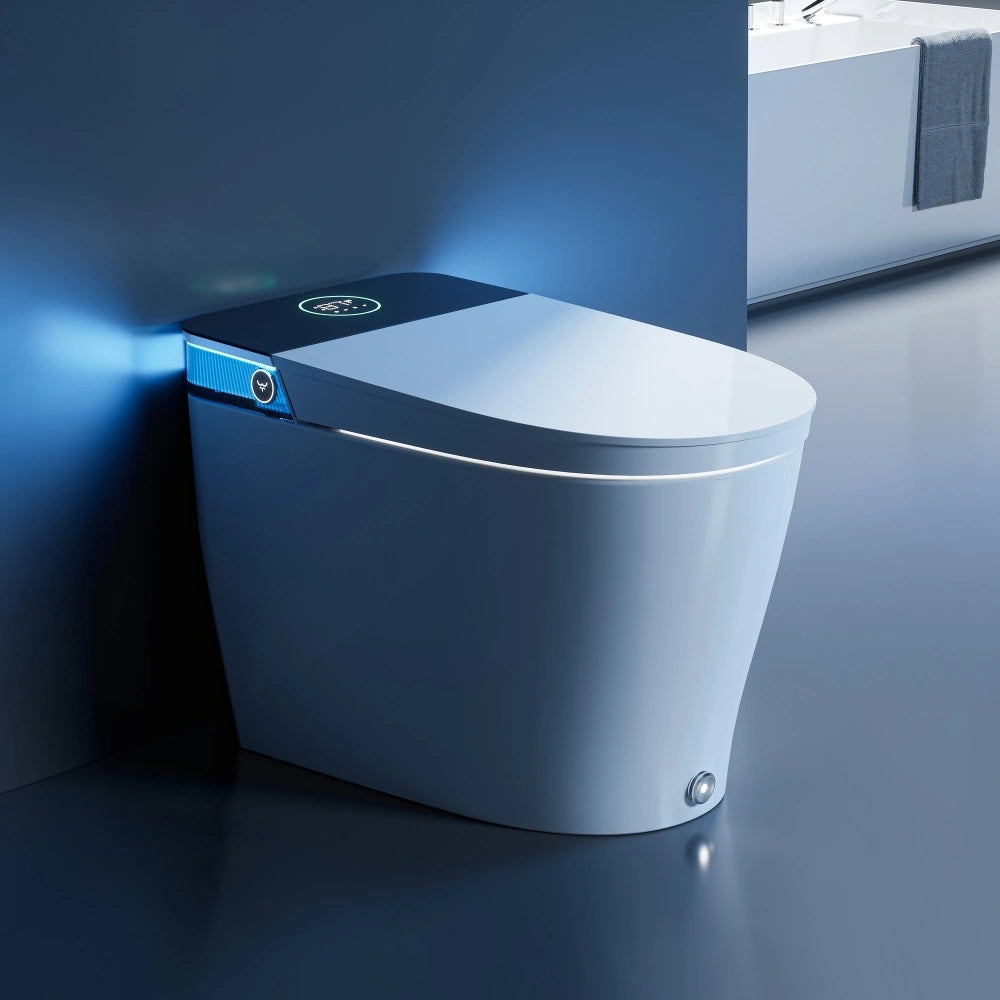
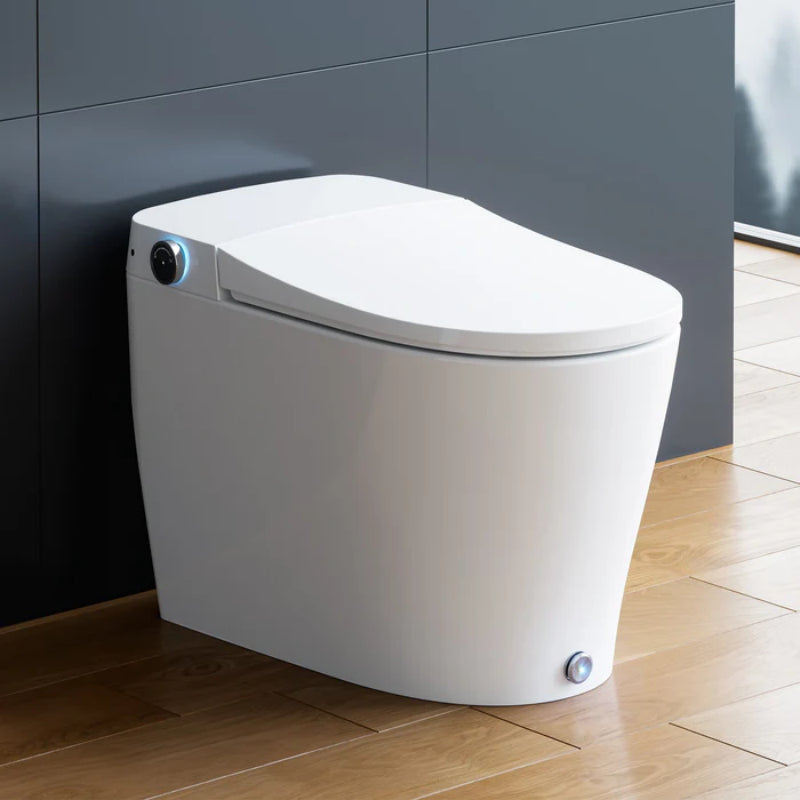
A 10 inch rough in toilet is not a “small space toilet” upgrade by default. It’s a fit solution for one specific problem: your drain (the closet flange) sits closer to the finished wall than a standard 12" setup.
Here’s what tends to happen in real homes: people measure “about 10 inches,” order a 10" rough toilet, and then find out the last 1–2 inches behind the tank is already taken by a thick baseboard, a heater pipe, a wall that isn’t straight, or a shutoff valve in the wrong spot. The toilet may technically match the rough-in but still won’t physically sit down and seal right.
This guide is about execution: how to confirm a 10" rough toilet will actually install, what clearances matter (not just the pipe), and what breaks or becomes annoying when you force it.
Decision Snapshot: When a 10 Inch Rough In Toilet Is the Right or Wrong Fit for Your Space
Choosing a 10 inch rough in toilet for small space toilet layouts demands precise clearance checks, with rear space and room layout key to picking the right compact commode or 10" rough in bidet-compatible model.
Valid Fit: 10" Flange Measurement + ≥2" Rear Clearance
A 10 inch rough in toilet only installs smoothly when your finished wall to flange measurement is an accurate 10 inches, and the area behind the fixture has ample space, a layout consideration that also applies to wall hung toilets designed for tight bathroom setups.
Many small bathrooms are purpose-built for this rough size, letting the right compact commode fit without modifications.
Rear clearance is non-negotiable, as you need at least 2 inches behind the toilet to accommodate the tank, bolt caps, supply lines, and minor room unevenness, a clearance standard that differs from the wall-mounted framing requirements of wall hung toilets.
Avoid: Rear Clearance Below 2" With Obstructions
Insufficient rear space is the top reason a 10 inch rough in toilet fails to fit, even with correct rough measurements.
Baseboard heating units, floor-level radiator pipes, thick baseboards with shoe molding, and protruding tiled wainscot ledges all eat into critical rear space.
When these obstructions drop clearance below 2 inches, the toilet tank or base will make contact before seating on the flange, breaking proper installation and sealing.
Reconsider: Front & Side Clearance Conflicts
Saving rear space with a compact commode can shift layout issues to the front and sides of your small space toilet area.
Adjusting the toilet position or choosing a shorter bowl impacts bathroom door swing, vanity drawer operation, and standing or sitting maneuvering space.
Tight bathroom layouts function like a puzzle, so rear space savings are useless if the bowl’s front projection blocks the door’s full arc.
Prefer 12" Rough In When Measurements Allow
If your rough measurement falls between 11.5 and 12.5 inches, forcing a 10 inch rough in toilet leads to unsightly gaps behind the tank and unwanted visual flaws.
Standard 12" rough toilets offer far more model options, simpler part replacement, and fewer design compromises than niche 10" versions.
Many homeowners misjudge their rough size based on old fixtures, only to find they have a 12" rough with a thin wall finish or outdated tank shape after removal.
What You Gain and Sacrifice With a 10 Inch Rough In Toilet
Opting for a 10 inch rough in toilet involves tradeoffs in selection, space gain, comfort and fit, especially for small space toilet, compact commode and 10" rough in bidet installations.
Limited Selection & Performance Trade-offs
A 10 inch rough in toilet is a niche product, so the available bowl and trapway designs are far fewer than standard options.
You will also find fewer high-performance flush setups than mainstream 12" rough toilet models, limiting matching to your household usage.
Custom seats, special supply connections and height choices are less flexible for this compact toilet size.
These toilets can flush effectively, but narrow selection often leads homeowners to settle for adequate performance, increasing plunging and cleaning needs.
Parts availability varies widely; standard valves and flush parts are easy to source, while proprietary components may mean longer waits and higher costs.
Actual Space Gain Is Less Than Expected
Most buyers assume a 10" rough in toilet delivers a full 2-inch space gain in a small space toilet layout.
Real-world space savings are reduced by the curved rear of the tank, the necessary anti-friction air gap against the wall, and thick baseboards.
Actual usable floor space added usually ranges from ½" to 1½" after all obstructions and clearances are considered.
This modest gain can still support a compact commode layout, but it rarely matches the dramatic improvement many homeowners anticipate.
Bowl Shape: Fit vs Comfort Tradeoffs
Bowl shape directly impacts daily comfort and space use in a small bathroom built for a 10 inch rough in toilet.
Round-front compact commode and one piece toilet models have a shorter front-to-back profile, improving door swing and knee clearance in tight areas.
Elongated bowls offer better comfort for adult users, but they extend further into the room and raise collision risks.
Rough-in size only defines drain position, not bowl projection, so a 10" elongated toilet can still block doors or crowd vanities.
Even if the toilet seats correctly on the flange, poor front clearance can make the small space toilet frustrating to use long-term.
10" Rough In Bidet: Space & Clearance Impacts
A 10" rough in bidet assembly adds extra bulk that quickly consumes the limited space around a compact commode.
Bidet seats enlarge the rear hinge area, add side water hose connections, require power cords for electric models, and may create a rear raised section.
These additions demand extra routing space behind and beside the tank, a nearby GFCI outlet, and proper bend radius to prevent hose kinking.
Many users successfully install the 10 inch rough in toilet alone, but struggle to fit the bidet seat without wall friction or pinched supply lines.
The space saved by choosing a compact toilet is often canceled out by the clearances required for a functional 10" rough in bidet setup.

Hidden Costs and Practical Constraints of 10 Inch Rough In Toilet Installation
Installing a 10 inch rough in toilet brings hidden costs & constraints, affecting small space toilet, compact commode and 10" rough in bidet projects long after purchase.
When to Move Flange vs Use a 10" Toilet
Moving the closet flange can be a practical long-term solution for a 10 inch rough in toilet space, even if it seems intensive.
This route is more cost-effective if you’re already opening the floor for renovation, or the bathroom remodel has open, easy access.
It also makes sense when your 10" rough is an accidental result of wall changes, and a 12" rough supports future simple toilet swaps.
Conversely, moving the flange is typically costly with intact finished tile floors, slab foundations, or limited drain and vent relocation.
Costs scale with access: wood floor projects may run a few hundred dollars, while difficult floor openings or full plumbing reworks can reach thousands.
Hidden Retrofit Parts & Labor Costs
Older bathrooms fitting a 10 inch rough in toilet often need extra retrofit parts to ensure a stable, sealed compact commode installation.
Flange extenders or spacers fix low flange height from new flooring, while damaged flanges require full replacement.
Extra-thick wax or wax-free seals handle marginal height gaps, and plastic shims stabilize the toilet on uneven tile or flooring.
You may also need longer supply lines or new angle stops to match the new tank position of your small space toilet.
While individual parts are low-cost, they accumulate in total expense, and repeat store trips or reinstalls add major hidden labor cost.
Bidet Electrical & Code Requirements
A 10" rough in bidet setup relies on proper electrical work, and you cannot overlook cord routing in a tight compact commode space.
Common issues include cords crossing walkways, non-GFCI or frequently tripping outlets, and no room for large transformers behind the tank.
The reduced rear clearance of a 10 inch rough in toilet limits safe cord paths, often requiring professional electrician work.
The cost of adding a compliant GFCI outlet can even surpass the price gap between a 10" rough toilet and a standard 12" model.
Return Costs & Fit Regret Scenarios
Toilets are difficult to return, with many retailers refusing opened units or charging mandatory restocking fees.
Fit failures after wax ring installation make returning your 10 inch rough in toilet impractical in most cases.
Top regret triggers include measuring to baseboard instead of finished wall, rear obstructions blocking proper seating, and elongated bowls blocking door swing.
Using an adapter to fit a 12" toilet on a 10" rough also frequently results in unworkable small space toilet layouts and costly do-overs.
How to verify Flange Alignment for a 10 Inch Rough In Toilet
Accurate measurement and edge case checks are vital to fit a 10 inch rough in toilet in small space toilet layouts, avoiding issues for compact commode and 10" rough in bidet setups.
How to Measure Rough In Correctly
Precise measurement is the foundation of installing a 10 inch rough in toilet, and many small space toilet projects fail from incorrect readings.
You should measure from the finished drywall or tile surface directly to the centerline of the closet bolts or the flange itself.
Avoid measuring to the baseboard face, the rear of the old toilet, the flange edge, or a single off-center bolt, as these create misleading numbers.
Real-world errors come from thick baseboards with shoe molding, unplumb walls, out-of-square floor-wall angles, and deep old tanks that understate the rough size.
For thick baseboards, measure to the bare wall and subtract the molding thickness, or use a straight board above the baseboard as your reference plane.
Handling 9.5" & 10.5" Rough In Measurements
Intermediate rough measurements are a common source of wasted cost for 10 inch rough in toilet and compact commode projects.
A 9.5" reading puts you in a high-risk zone, as the tank of your small space toilet may strike the wall before the base seats on the flange.
A 10.5" measurement usually fits most 10" models, but it can leave a visible rear gap that looks unappealing and complicates cleaning.
A practical rule is that ±½" tolerance can work with sufficient rear clearance and a straight wall, while larger deviations bring fit or gap problems.
At 9.5", it’s wiser to adjust wall finishes, pick a different tank-bowl shape, or reposition the flange instead of forcing a tight compact toilet fit.
Why Your Labeled 10" Rough In May Be Inaccurate
Wall modifications and uneven surfaces can alter your actual rough-in without any plumbing changes to your 10 inch rough in toilet space.
Added wall layers like tile over plaster, wainscoting, or moisture board with tile can push the finished surface forward ⅜" to 1"+.
Bowed or leaning walls lead to inconsistent measurements, with 10" at the flange but only 9.5" at the tank height of your compact commode.
Professional installers double-check measurements at flange level and the upper tank position to account for unstraight walls in small space toilet layouts.
Why Rough In Adapters Fail in Small Spaces
Adapters meant to fit a 12" toilet on a 10" rough often ruin small space toilet installations and 10" rough in bidet compatibility.
Adapters may shift the compact commode forward to avoid wall contact, but this creates new front clearance conflicts with doors or vanities.
Bolt alignment becomes far less forgiving, and an off-center flange can stop the toilet from sitting evenly on the base.
Tight rear space combined with adapter hardware leads to angled positioning and hard-to-seal gaps around the flange.
Adapters do not resolve existing rear obstructions, and they thicken the assembly in the area with the least room.
In cramped bathrooms, converter setups often lead to repeated toilet removal, wax ring changes, and failed installs of your 10 inch rough in toilet.
Room Clearance Checks: Ensuring Your 10" Toilet Fits the Whole Bathroom
Verifying room clearance is key for 10 inch rough in toilet, small space toilet and compact commode installations, ensuring usable layout for 10" rough in bidet too.
Fit for Small Bathrooms With Swinging Doors
Most users choose a 10 inch rough in toilet to fix small space toilet door swing issues, but rough-in size alone can’t solve the problem.
Bowl projection from the finished wall matters more than drain position, as this directly determines whether the swinging door can clear properly.
Switching from a short round-front bowl to an elongated 10" rough toilet often makes door collisions or knee contact worse.
For tight door arcs, a round-front compact commode delivers better results than only changing the rough-in dimension.
Minimum Clearances to Avoid Daily Regret
Practical clearances matter more than code minimums for a 10 inch rough in toilet in a compact bathroom.
You need enough front space to stand, turn and close the door without contacting the bowl.
Sufficient side space keeps legs from pressing against adjacent vanities while seated.
Adequate toe space lets you mop and clean around the toilet base without scraping your knuckles.
When selecting a small space toilet, treat bowl projection as a core specification, not an afterthought.
Side Clearance & Vanity Collision Risks
Bathrooms are rarely perfectly symmetrical, even with a centered flange for your 10 inch rough in toilet.
Collision risks appear at the widest front section of the bowl, the seat hinge zone (especially with 10" rough in bidet seats), and side supply valves.
Close vanities can cause knee bumps when seated, and tile trim may block the toilet base from leveling evenly.
Checking these side clearances prevents daily discomfort and install issues for your compact commode.
Cardboard Mockup for Compact Commode Fit
A cardboard mockup is the most reliable way to validate fit for a 10 inch rough in toilet in a small space toilet layout.
First, get the official footprint and projection from the toilet spec sheet, or measure your current fixture.
Cut cardboard to match the projection and width, then tape it to the floor at the install location.
Test full door swings, vanity drawer operation, and simulate sitting, standing and turning motions.
This quick 20-minute step avoids purchasing a compact commode that only fits on paper, not in your actual bathroom.

Common Installation Issues That Ruin a 10 Inch Rough In Toilet
Rear obstacles, floor & flange issues, supply conflicts can derail 10 inch rough in toilet installs, harming small space toilet & compact commode, 10" rough in bidet fit.
Rear Obstructions Blocking Proper Installation
Even with an accurate 10" rough-in measurement, rear obstructions can make a 10 inch rough in toilet fail to seat properly.
Baseboard heater covers at tank height, copper pipe stub-outs, thick baseboards and decorative wall ledges are frequent blocking elements.
These protrusions stop the toilet from laying flat and centered on the flange, lifting the front and unevenly compressing the wax ring.
This uneven placement directly leads to rocking toilet issues and persistent water leaks in your small space toilet setup.
Uneven Floors: Rocking & Seal Failure Risks
A rocking compact commode damages the wax seal and causes delayed leaks, even if the initial test flush works well.
The toilet may seem stable at first, but daily use deforms the seal, creating faint water marks, musty odors and eventual subfloor moisture damage.
Older small bathrooms with layered tile often have uneven floors, and tight clearances of a 10 inch rough in toilet lead to rushed, unshimmed installs.
Any slight rocking must be fixed with shims before caulking, as stable positioning keeps the seal evenly compressed long-term.
Flange Height & Damage Issues in Old Floors
Flange flaws are a hidden leak caused by 10 inch rough in toilet installations, even when all visible fit checks pass.
Tile layers can make the flange sit below finished flooring, while cracks, corrosion and loose anchoring break proper sealing function.
A recessed flange leads to weak seal compression, causing intermittent leaks that only appear under heavy use, not quick flush tests.
You may need flange extenders or spacers to correct height and ensure your small space toilet forms a reliable, watertight seal.
Water Supply & Hose Routing Conflicts
Tight rear clearance of a 10 inch rough in toilet turns water supply routing into a critical geometry challenge for compact commode setups.
Inaccessible shutoff valves, sharply bent kinking hoses, wall-rubbing tubing and bidet T-connections all create functional conflicts.
Adding a 10" rough in bidet seat worsens crowding, pushing connections into the wall or toilet skirt.
Poor shutoff valve access only gets worse with time, so you should never settle for hard-to-reach supply components on installation day.
Long-term ownership: what fails first and what becomes a maintenance tax
Long-term use of a forced-fit 10 inch rough in toilet brings recurring maintenance issues, impacting small space toilet, compact commode and 10" rough in bidet durability.
Early Failures of a Forced-Fit 10" Toilet
A 10 inch rough in toilet squeezed into an undersized space will develop predictable failures from rear obstructions, uneven floors or angled walls.
Constant shifting loosens the closet bolts, and the wax or rubber seal begins to weep, often only noticeable by a faint musty odor.
Caulk can conceal slow leaks for months, allowing hidden staining and gradual rot to spread across the subfloor.
The real expense lies in floor repair and labor, not inexpensive replacement seals, even if the toilet specs appear ideal for your small space toilet layout.
Hard Water Maintenance Challenges
Hard water creates obvious mineral deposits and blockages that raise maintenance for any compact commode, including 10 inch rough in toilet designs.
You will see mineral rings at the water line, clogged rim jets, and buildup inside trapways that demand frequent scrubbing.
The limited model selection for 10" rough toilets means fewer high-performance easy-clean glaze options to resist buildup.
Plan for a deep-reach toilet brush, safe periodic descaling treatments, and regular checks for weak flushing caused by clogged jet ports.
This does not rule out a 10 inch rough in toilet, but means you cannot expect low-maintenance performance from the narrower product range.
Post-Install Drain & Vent Issues
New 10 inch rough in toilet installations can expose pre-existing drain and vent issues that older, more tolerant fixtures masked.
Common symptoms include gurgling in adjacent fixtures, inconsistent clearing speed, and repeated clogs despite strong flush performance.
Root causes include partial downstream clogs, inadequate venting, scale buildup in cast iron pipes, and slight slope flaws in the drainage line.
Changing to a new trapway design in your compact commode alters flush dynamics, turning borderline plumbing problems into noticeable daily annoyances.
standard rough sizesLong-Term Issues From Limited Model Selection
The limited market for 10 inch rough in toilet models creates long-term flexibility issues for small space toilet setups.
You will have fewer compatible toilet seats, smart toilet bidet modules, and custom lids that match the bowl shape precisely, along with fit conflicts for 10" rough in bidet seats.
Hinge clearance, cord routing, and water hose space all become more restrictive with niche compact commode designs.
Future remodels will be simpler with a standard 12" rough-in, so resolving the core measurement issue long-term is often better than permanently adapting to 10" parts.
Before You Buy
-
Measure from the finished wall to the closet bolt centerline (not the baseboard).
-
Confirm you have at least 2" of real rear clearance with baseboards/heaters/pipes accounted for.
-
Check bowl projection against your door swing and knee room (mock it up with cardboard).
-
Verify side clearance where the bowl is widest, not just at the tank.
-
Inspect flange condition: secure to floor, not cracked, correct height relative to finished floor.
-
Confirm shutoff valve access and supply hose routing space (especially if adding a bidet).
-
If installing a bidet seat: plan for a GFCI-protected outlet placement and safe cord routing.

FAQs
1. What happens if I use a 12-inch on a 10-inch rough?
Using a 12-inch rough toilet on a 10-inch rough-in will typically lead to tank-to-wall collision in your small space toilet layout, and you may have to install adapters to resolve the conflict. These adapters reduce precious rear clearance, disrupt proper flange sealing, and often create new front clearance issues with doors or vanities, making this a risky choice for a compact commode install that often results in duplicate purchases and installation reworks.
2. How do I measure my toilet rough-in?
To accurately measure your toilet rough-in for a 10 inch rough in toilet, start from the flat surface of your finished wall, whether it’s drywall or tile, and measure directly to the center of the closet bolts or the toilet flange. Never take measurements from baseboards, trim, or the back of your old toilet, as these inaccurate reference points will ruin the fit of your compact commode and small space toilet setup.
3. Are 10-inch rough-in toilets more expensive?
10-inch rough-in toilets are often pricier than standard 12-inch models, or offer fewer compact commode and flush performance options at the same price point due to their niche status for small space toilet layouts. The larger hidden cost comes from return fees, retrofit parts like flange extenders, and repeat installation labor if your 10 inch rough in toilet fails to fit properly around obstructions or clearance limits.
4. Can I convert a 12-inch to a 10-inch?
Converting a 12-inch rough-in to fit a 10 inch rough in toilet usually involves rough-in adapters that alter the toilet position, but these devices worsen rear clearance issues critical for small space toilet and 10" rough in bidet setups. Adapters can cause bolt misalignment, uneven seating, hard-to-seal gaps around the flange, and shifted bowl projection that blocks doors or vanities, so a permanent flange adjustment is often a more reliable long-term fix than a quick conversion.
References



Leave a comment
This site is protected by hCaptcha and the hCaptcha Privacy Policy and Terms of Service apply.