



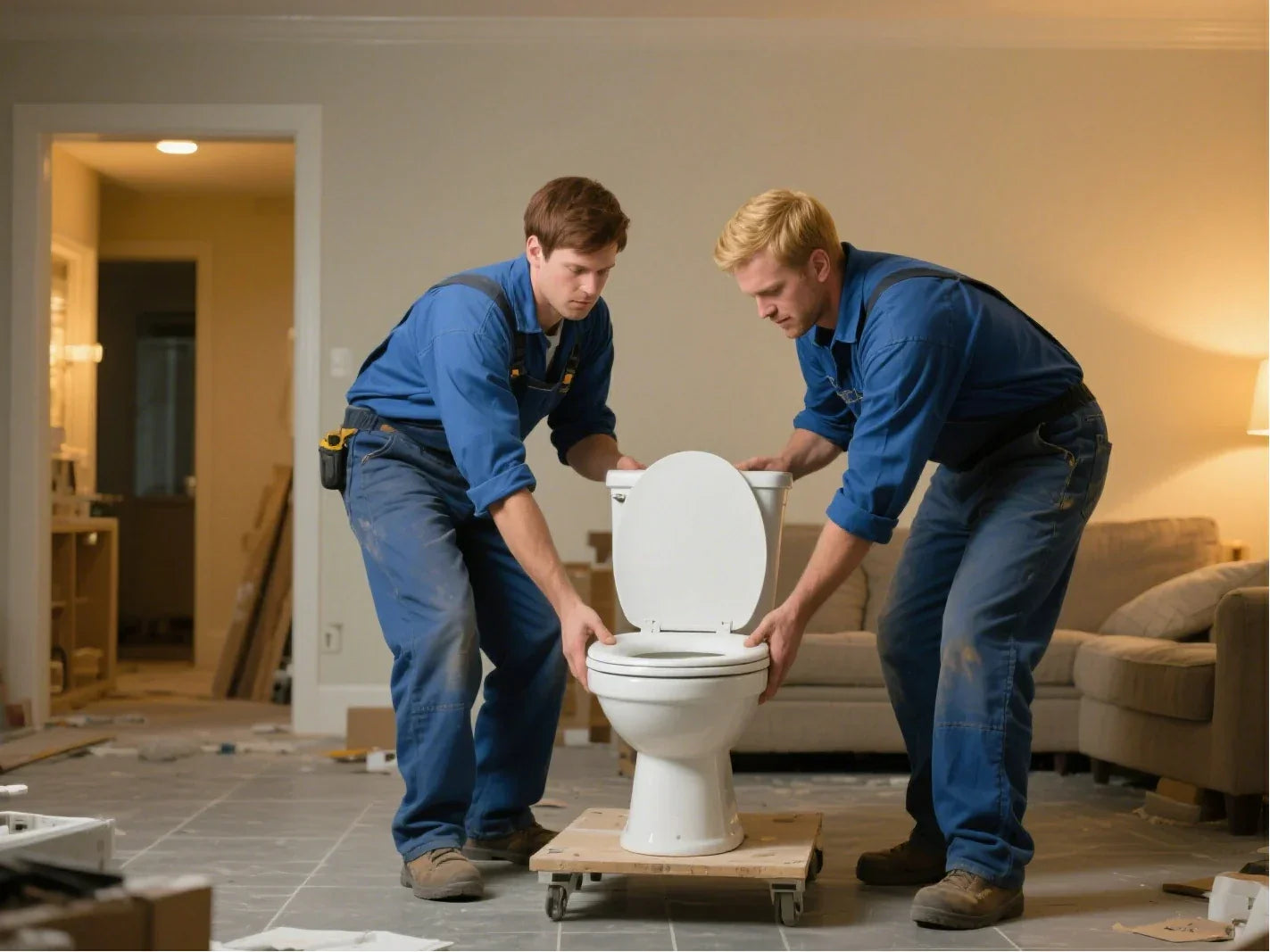
A plumber's job before smart toilet installation is to identify plumbing conditions that could stop a straightforward replacement. That usually means checking the drain location, flange condition, shutoff valve, water-supply connection, signs of leakage or drainage trouble, and any plumbing that may interfere with the selected toilet.
This page focuses narrowly on what a plumber checks before arriving or before installation begins. For the complete bathroom readiness review covering rough-in, flange, floor, clearance, electrical readiness, water requirements, shutoff-valve access, and handling, use the main smart toilet installation checklist.
What Information Should Be Ready Before the Plumber Arrives?
Before scheduling plumbing work, identify the exact smart toilet you plan to install and keep its Product Page, specification drawing, and current installation manual available. A plumber can evaluate the bathroom more accurately when the required drain location, water connection, and installation conditions for the exact model are clear.
Helpful information to prepare includes:
- The exact smart toilet model
- The current product drawing or installation manual
- Your measured rough-in
- Photos of the existing toilet, shutoff valve, and surrounding space
- Any known history of leakage, rocking, slow drainage, backup, or previous plumbing repair
- Whether the bathroom is a straightforward replacement or part of a larger remodel
Do not rely on specifications from another HOROW model. Plumbing connections and installation requirements can differ by product.

What Does a Plumber Check Before Smart Toilet Installation?
The plumber should focus on plumbing conditions that could require repair or modification before the toilet is placed. This is different from repeating the complete smart toilet installation checklist.
Drain and Rough-In Compatibility
The plumber can compare the existing drain location with the requirement shown for the exact toilet. If the rough-in or drain position does not match, the next step is to determine whether the plumbing can reasonably be corrected or whether another toilet should be considered.
For the full measuring method, use the toilet rough-in measurement guide.
Flange Condition
The plumber should inspect whether the flange is secure, undamaged, and suitable for the mounting method required by the selected toilet. A loose, cracked, damaged, poorly positioned, or otherwise unsuitable flange should be corrected before installation.
This page does not prescribe a universal flange height, repair ring, gasket, sealant, or replacement method. The appropriate repair depends on the existing plumbing, floor condition, and installation requirements for the exact toilet.
Shutoff Valve and Water-Supply Access
The shutoff valve should operate correctly and remain accessible after the smart toilet is positioned. A plumber should also confirm that the existing water-supply arrangement can connect according to the exact model instructions without forcing hoses, fittings, or the toilet body into place.
If the valve leaks, does not fully shut off, interferes with the fixture, or needs relocation or replacement, address that work before installation.
Existing Drainage Problems
If the current toilet already drains slowly, backs up, bubbles, gurgles, or repeatedly performs poorly, the plumber should investigate that condition before the fixture is replaced. A new smart toilet should not be expected to correct an unresolved drain or vent problem.
What Should the Plumber Inspect After the Old Toilet Is Removed?
Some important conditions cannot be fully evaluated until the existing toilet is removed. At that point, the plumber can inspect the exposed flange, surrounding floor area, drain opening, previous sealing condition, and signs of past leakage.
Potential reasons to stop the replacement and correct the bathroom first include:
- A damaged or unstable flange
- Evidence of previous leakage around the toilet base
- A drain condition that needs diagnosis or repair
- Plumbing that does not align with the selected toilet
- A shutoff valve or supply connection that cannot be used as required
- Floor damage that may have resulted from previous plumbing leaks
If structural floor repair is required, another qualified trade may also need to become involved before the toilet can be installed.
Water Requirements Must Come From the Exact Model
A plumber may need to evaluate the available water supply, but this page should not use one universal pressure range, valve size, hose specification, or pump recommendation for all HOROW smart toilets.
Compare the available water conditions with the Product Page or installation manual for the exact model. If the existing plumbing does not meet those requirements, the plumber can determine what correction is appropriate before installation.
Do not select a model or modify plumbing based only on the assumption that a built-in tank, pump, or another feature will solve an existing water-supply problem. Verify the product first.

Electrical Preparation Is Not the Plumber's Main Scope
A plumber may notice that the bathroom is missing the electrical setup required by the selected smart toilet, but electrical specifications and electrical modifications belong outside this plumbing guide.
If an outlet, wiring, circuit, grounding, or another electrical component needs to be added, relocated, repaired, or evaluated, use a qualified electrician. The exact electrical requirements should be checked for the selected toilet rather than assumed from another model.
For detailed electrical planning, see the Smart Toilet Electrical Requirements guide.
What About Bathroom Clearance and Fixture Fit?
A plumber may identify obvious conflicts between the plumbing and the toilet body, such as a shutoff valve positioned where a skirted fixture needs to sit. However, the full clearance review belongs in the main installation checklist and the exact product drawing.
Homeowners should confirm the complete fixture dimensions, nearby walls, vanities, doors, plumbing connections, power connection, and service access before installation is scheduled.
If the toilet does not fit the bathroom according to its product drawing, plumbing work should not be used simply to force an unsuitable model into the space.
When Should Plumbing Work Be Completed Before Installation Day?
Resolve known plumbing problems before bringing the smart toilet into final position. This can reduce repeated lifting, improve access to the drain and wall connections, and avoid treating installation day as an open-ended repair project.
Plumbing work that may need to happen first includes:
- Repairing or replacing a damaged flange
- Correcting a drain location that does not work with the selected toilet
- Repairing or relocating a shutoff valve
- Changing supply plumbing when required for the exact model
- Diagnosing existing slow drainage, backup, leakage, or venting symptoms
- Correcting plumbing damage revealed after the old toilet is removed
If electrical work is also required, coordinate the plumber and electrician before final installation.
When Is a Plumber Not Necessary?
A homeowner may not need plumbing modifications when the bathroom already works with the selected toilet, the existing drain and flange are suitable, the shutoff valve operates correctly, the water connection can be made according to the exact model instructions, and there are no unresolved drainage or leakage problems.
That does not automatically mean every homeowner should complete the installation alone. DIY also depends on tool skills, safe fixture handling, and the ability to follow the model-specific instructions without improvising.
For the DIY-versus-professional decision, use the site's DIY smart toilet installation guide rather than turning this plumber-preparation page into a full installation tutorial.
When Should a Plumber, Electrician, or Both Be Involved?
| Condition | Who Should Handle It |
|---|---|
| Drain, flange, shutoff valve, supply piping, or existing drainage problem | Plumber |
| Outlet, wiring, circuit, grounding, or other electrical modification | Electrician |
| Both plumbing and electrical changes are required | Plumber and electrician |
| Bathroom already meets the exact model requirements and no trade work is needed | Proceed according to the exact model installation instructions and your own skill level. |
Actual Installation Steps Belong to the Exact Model Guide
This page does not provide a universal step-by-step smart toilet installation sequence. Mounting hardware, sealing methods, plumbing connections, power requirements, backup-flush components, remote setup, and final testing can differ by model.
After the bathroom and plumbing are ready, follow the current installation manual for the exact HOROW toilet being installed.
The video below demonstrates installation for the HOROW T38 and should be treated as model-specific guidance rather than a universal procedure for every HOROW smart toilet.
What Should a Homeowner Ask the Plumber Before Installation?
- Does the existing drain location work with the exact toilet I selected?
- Is the flange suitable for this installation, or does it need repair?
- Does the shutoff valve work correctly and remain accessible?
- Does any water-supply plumbing need to be changed before installation?
- Are there signs of an existing drainage or leakage problem that should be corrected first?
- Will any plumbing work require access that should be completed before electrical or finish work?
These questions keep the plumber focused on plumbing readiness instead of duplicating the complete bathroom checklist or the manufacturer's installation instructions.
FAQs
1. What does a plumber check before installing a smart toilet?
A plumber typically focuses on the drain location, flange condition, shutoff-valve operation, water-supply compatibility, existing drainage problems, and plumbing changes required for the exact toilet. The full bathroom readiness review belongs in the Smart Toilet Installation Checklist.
2. Should the plumber check the rough-in?
Yes. The measured drain location should be compared with the specification for the exact toilet. If they do not match, determine the plumbing solution before installation rather than assuming the toilet will fit.
3. Should a plumber install the electrical outlet for a smart toilet?
Electrical modifications should be handled by a qualified electrician. Use the Smart Toilet Electrical Requirements guide and the exact model documentation to determine what electrical preparation is required.
4. What plumbing problems should be fixed before installation day?
Repair damaged flanges, leaking or unusable shutoff valves, incompatible supply plumbing, unresolved drainage problems, and other plumbing conditions that prevent the selected toilet from being installed according to its instructions.
5. Does this page replace the smart toilet installation checklist?
No. This page is limited to plumber preparation and plumbing readiness. Use the main Smart Toilet Installation Checklist for the complete pre-installation review, then use the exact model manual for the actual installation procedure.
Prepare the Bathroom Before Installation Day
Start with the complete installation-readiness check, resolve any plumbing conditions that require a plumber, and use the exact model documentation before the toilet is installed.



Leave a comment
This site is protected by hCaptcha and the hCaptcha Privacy Policy and Terms of Service apply.