
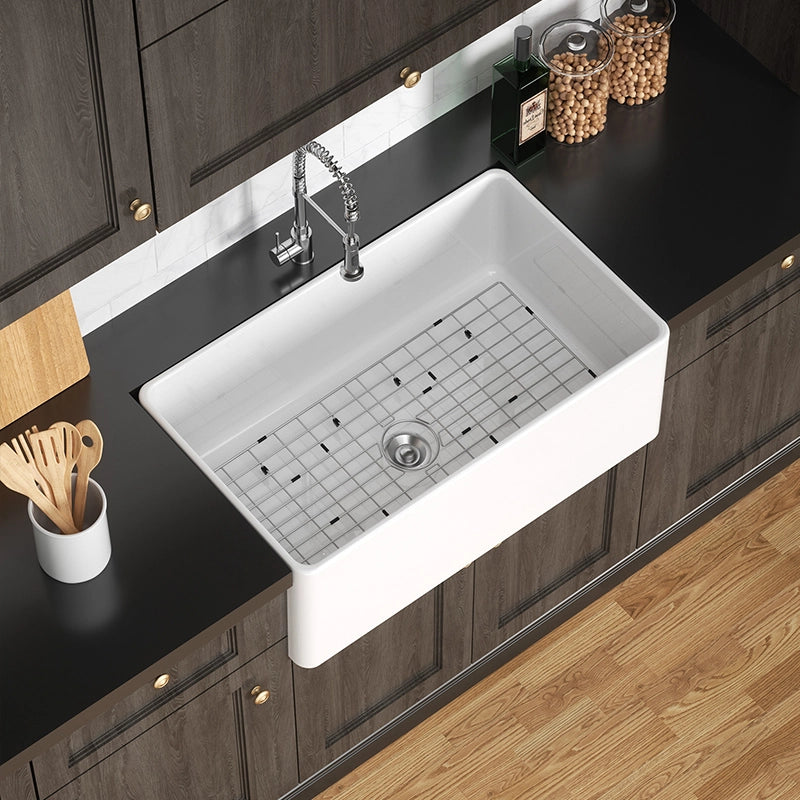
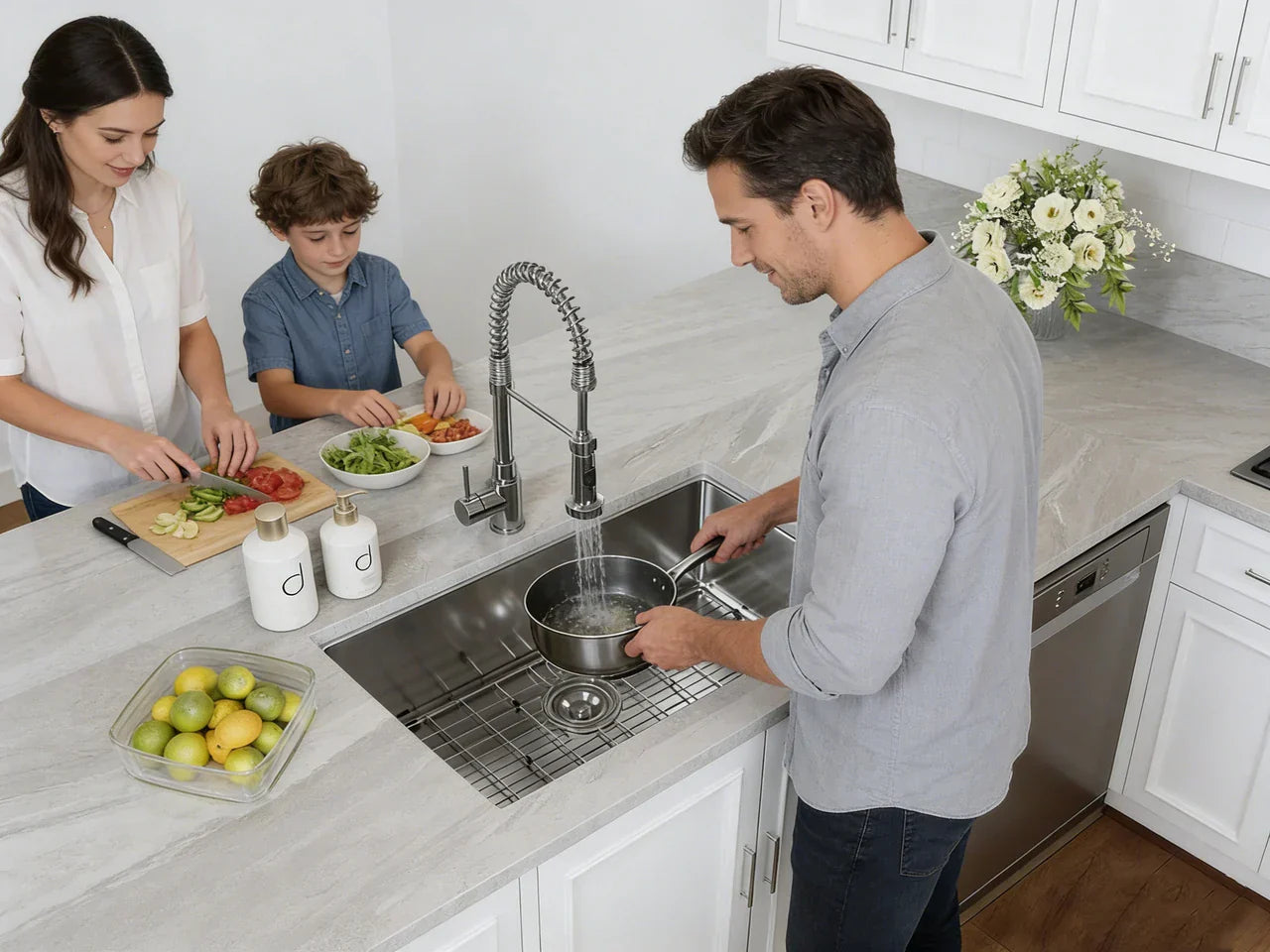
An undermount single bowl sink is one of those choices that feels “obvious” in a showroom—big, clean, modern. Then real life happens: a weeknight rush, a giant sheet pan, someone trying to rinse produce while you’re washing a pot, and a sink full of cups.
According to the U.S. Centers for Disease Control and Prevention (CDC), proper food handling and cleaning practices in home kitchens play a critical role in preventing foodborne illnesses. Areas around the sink—where raw food residue, utensils, and hands frequently interact—require special attention to sanitation and rinsing habits.
This guide is meant to help you make a confident first decision: whether an undermount single bowl sink, a double bowl, or a workstation sink fits your workflow—plus the sizing, depth, material, and install details most homeowners only learn after the fact.
Decision Snapshot: Undermount Single Bowl Sink vs Other Common Options
If you only read one section, read this.
Choose an Undermount Single Bowl Sink If
You’ll be happiest with an undivided basin and you regularly wash:
-
big pots, stockpots, Dutch ovens
-
sheet pans, roasting trays
-
bulky cutting boards and oven racks
This is also a great fit if you:
-
use the dishwasher for most dishes
-
have a smaller kitchen and want simple workflow and a cleaner counter line
-
like modern sink design and want fewer edges and corners to wipe around
Rule of thumb: If “divider gets in my way” is something you’ve ever thought, an undermount single bowl sink is usually the right answer.

Choose an Undermount Double Bowl Sink If
You need two-zone control more than you need one big open space. Double bowls make sense when you:
-
hand-wash most dishes
-
want one side for washing and one for rinsing/drying
-
often prep food in the sink and want separation for food safety
-
have more than one person using the sink at the same time
Rule of thumb: If you often think “I need a clean side right now,” a double bowl is safer.
The U.S. Department of Agriculture (USDA) Food Safety and Inspection Service (FSIS) advises separating raw food preparation from cleaning and rinsing zones whenever possible to reduce the risk of cross-contamination, a consideration that directly affects whether a single or double bowl sink makes more sense for a household.
Choose a Workstation Sink With Single or Low-Divide Design If
You want to “buy back” counter space using ledges and accessories like:
-
a fitted cutting board
-
a drying rack or colander
-
a bottom grid and sliding trays
This is best for people who actually use those add-ons daily. If you hate countertop clutter, you may end up resenting the parts.
Rule of thumb: If your counters are always full, a workstation kitchen sink can help—if you’ll commit to using the accessories.
Which Daily Workflow Are You Choosing: Big Basin Freedom or Two-Zone Control
Most sink regret comes from choosing based on looks instead of workflow. The sink is a tool you use many times a day. So decide what problem you’re solving.
Why a Single Bowl Wins When One Large Basin Prevents Bottlenecks but Encourages Stacking
An undermount single bowl sink gives you freedom of movement when handling oversized cookware and cleanup tasks. You can:
-
lay a sheet pan flat
-
soak a roasting tray
-
wash a big pot without doing sink gymnastics
In real homes, this matters most after cooking: the sink becomes the landing zone for bulky cookware. A divider can turn one big problem (cleanup) into two smaller, more annoying problems (nothing fits well).
The trade-off: a single bowl can become a “dish pile” faster. With no second basin, it’s easier for the sink to take over your whole cleanup area. If your household leaves dishes “to soak” a lot, a big single bowl makes that habit easier—sometimes too easy.
What I’ve seen in practice: single bowls work best when the home has either (1) a dishwasher doing most of the work, or (2) a cook who cleans as they go.
Why a Double Bowl Wins When Separation Prevents Chaos but Limits Large Pan Space
A double bowl undermount sink is about control:
-
One side can hold soapy water
-
the other stays open for rinsing, draining, or food prep
If you hand-wash, this is a big deal. It also helps when two people are in the kitchen: one can wash while the other rinses produce or fills a pot.
The trade-off: each bowl is smaller. Even in a “large” double bowl, you may end up washing sheet pans at an angle, splashing more, and feeling like you’re always fighting the divider.
If you love the idea of double bowls but hate cramped washing, look at split ratios. A 60/40 or 70/30 layout keeps one bowl usable for cookware.
Low-Divide Double Bowl as a Compromise for Occasional Two-Zone Use
A low-divide design gives you:
-
the “two areas” feeling for sorting or draining
-
more flexibility for oversized pans because you can span the divider
If you’re on the fence—especially in a household that sometimes hand-washes and sometimes relies on the dishwasher—low-divide is often the least risky option.
Deep Kitchen Sink vs Standard Depth: The Comfort Trade-Off Most Buyers Skip
Depth sounds simple: deeper is better, right? Not always.
The U.S. Environmental Protection Agency (EPA) points out that efficient water use around kitchen fixtures—including sinks and faucets—can significantly reduce household water waste, with sink depth and splash control playing an important role.
Standard Depth Ranges for Undermount Kitchen Sinks
Most undermount kitchen sink bowls land around:
-
Standard depth: about 8–9 inches
-
“Deep” kitchen sink: about 10–12 inches
You’ll also see “extra deep” beyond that, but depth can start working against you.
When a Deep Kitchen Sink Becomes Uncomfortable for Shorter Users or Frequent Leaning
A deep kitchen sink can mean less splashing and more capacity, but it also means more bending. If you’re shorter, or you already get a sore lower back from kitchen tasks, an extra-deep bowl can make dishwashing uncomfortable.
Two things make this worse:
-
Countertop height (many kitchens are around 36")
-
A tall faucet reach that pushes the working area farther away
A simple test: measure from your elbow down to your fingertips. If the sink bottom will sit far below where your hands naturally land, you’ll feel it.
Practical advice: If comfort is a concern, a standard depth bowl with a bottom grid often feels deep enough without forcing you to lean.
When a Deeper Kitchen Sink Is Worth It for Tall Users and High-Use Homes

Deep makes sense when:
-
you’re tall (less bending)
-
You regularly wash tall stockpots
-
you have a busy household and the sink gets used hard all day
-
you want to keep water contained when rinsing large items
If you’ve ever rinsed a roasting pan and watched water bounce onto the counter, depth helps.
How a Single Deep Bowl Affects Workflow When Two People Cook at the Same Time
It can. This is one of the most overlooked points.
A deep undermount single bowl sink is great for big items, but during peak times (after dinner, baking, or holiday cooking), one large basin can become a single point of failure. If one person fills it with soapy water or stacked dishes, nobody else can use the sink.
If your household often has two people working at the sink at the same time, you have three safer options:
-
a double bowl
-
a low-divide double bowl
-
a workstation sink that provides “zones” above the basin with accessories
Style and Material Choices That Influence Function, Not Just Appearance
Material affects noise, maintenance, denting, staining, and how “busy” the sink feels day to day. This is where people often overpay or underbuy.
304 Stainless Steel Undermount Sinks vs Fireclay and Granite for Feel and Color
For most homeowners, 304 stainless steel undermount sinks are the most forgiving:
-
they don’t chip like some ceramic-style materials
-
They handle hot pans and temperature swings well
-
they’re lighter than some alternatives, which helps with undermount installation stress
-
They pair easily with modern kitchens and appliances
The downside is cosmetic: water spots, visible scratches, and a “lived-in” look over time.
Other common materials:
-
Fireclay/ceramic-style: beautiful, bright, and smooth, but chipping is the long-term risk (especially if heavy cookware hits the edge).
-
Granite/composite-style: softer sound and a different feel, but can show light staining over time depending on finish and what you pour down it.
If you want the lowest-stress sink, it’s hard to beat stainless steel kitchen sink ownership—especially in a high-use household.
16 Gauge vs 18 Gauge Stainless Steel and When Thickness Truly Matters
Gauge is confusing because the numbers run backward: 16 gauge stainless steel is thicker than 18 gauge.
Here’s the decision angle—not the trivia:
-
Choose 16-gauge stainless steel if you care about a quieter sink, less flex, and a sturdier feel when you drop a pot or set down a heavy pan.
-
18 gauge stainless steel can still be a good sink if it’s well-made and has solid sound-deadening pads, but thin steel can feel “tinny,” especially in a large single bowl.
For an undermount single bowl 16 gauge sink, the thickness helps because a large bowl has more open surface area that can vibrate and sound loud.
What matters as much as gauge: sound-deadening (pads/coating), tight corners vs rounded corners (tight corners are harder to clean), and how the sink is supported under the countertop.
Modern Sink Design vs Function-First Workstation Setups and Where They Conflict
A sleek undermount look is simple: clean counter lines, minimal visual clutter.
A workstation setup adds rails, ledges, and accessories. Functionally, it can be great. Visually, it can look “busier,” especially if accessories live on the counter instead of inside the sink.
Ask yourself one honest question: Do you like leaving tools out?
-
If no, keep it simple: a clean stainless undermount, maybe a bottom grid, and you’re done.
-
If yes, and you’ll actually use the cutting board and rack daily, a workstation makes sense.
Cost and Value Considerations Beyond the Sink Price
The sink price is only part of the cost. Install and plumbing can swing the real total.
Single Drain vs Dual Drain Systems and the True Cost of Double Bowls
A single bowl undermount sink typically uses:
-
one drain
-
one trap setup
-
simpler plumbing
-
easier disposal installation (if you use one)
A double bowl can mean:
-
two drains (or one drain plus a second connection)
-
more fittings
-
more install time
-
sometimes a more complicated disposal + dishwasher connection
This isn’t always dramatic, but it’s common for doubles to cost more in labor and parts.
Undermount vs Drop-In Sinks and When the Cleaner Look Is Not Worth the Premium
An undermount sink gives you:
-
a cleaner look
-
easier “wipe crumbs straight into the sink” cleanup on stone counters
-
no rim sitting on the countertop collecting grime
But undermount also requires:
-
proper countertop fabrication and sealing
-
correct support under the counter
-
periodic attention to the caulk line
A drop-in sink can be cheaper and simpler, especially if you’re not changing countertops. It also avoids some undermount support concerns.
Is undermount more hygienic than drop-in? In daily use, undermount often feels more hygienic because you can wipe the counter straight into the bowl without catching debris under a rim. On the other hand, undermount sinks rely on a seam at the counter cutout (usually sealed with silicone). If that seam is neglected or fails, it can trap grime or moisture. So it’s not “set and forget”—it’s just easier to wipe down when installed and sealed correctly.
Workstation Sink Value Check and Whether Accessories Become Useful Tools or Clutter
Workstation sinks cost more because you’re paying for:
-
integrated ledges
-
fitted accessories (cutting board, rack, colander)
-
sometimes tighter manufacturing tolerances so parts fit well
They’re worth it when you’ll use them weekly—especially in a small kitchen with limited counter space.
They’re not worth it if:
-
you already have plenty of counter space
-
You dislike storing bulky accessories
-
you prefer a clear sink area with nothing to manage
A common “wrong choice” pattern is buying the workstation dream and then leaving the accessories in a cabinet because they’re annoying to wash or store.
Fit and Space Constraints That Push Sink Choices in One Direction
This is where online shopping can go wrong: a sink looks huge in photos and then shows up… and doesn’t fit the cabinet, or it fits but leaves no room for plumbing and storage.
Cabinet Width and Bowl Size That Actually Work in Real Kitchens
The base cabinet sets your max sink size. The safest approach is to work backwards:
-
Measure your sink base cabinet width (inside dimension is what matters most).
-
Leave room for mounting hardware and clips (undermount needs it).
-
Leave room for plumbing and disposal.
-
Decide bowl size.
Typical pairings (general, not universal):
-
24" sink base: bar/prep sink territory; most full-size single bowls won’t fit well
-
30" sink base: common for compact single bowls or small doubles
-
33" sink base: a sweet spot for many single bowl kitchen sink sizes
-
36"+ sink base: allows wider single bowls and larger double bowls
Also check front-to-back depth. Some modern sinks are very deep front-to-back, which can crowd the faucet, backsplash, or rear mounting area.
Real-world mistake I see: choosing the widest bowl possible and forgetting the disposal and trap need space. The sink fits, but the under-sink cabinet becomes awkward or unusable.

Whether an Undermount Single Bowl Sink Makes Sense in Small Kitchens
Often, yes—if your workflow matches it.
In a small kitchen, a single bowl undermount can be the most flexible:
-
it handles big items without needing extra counter space
-
it avoids the divider that makes small spaces feel tighter
-
it typically keeps plumbing simpler (one drain)
But if your small kitchen also has:
-
no dishwasher, or
-
frequent hand-washing, or
-
multiple cooks at once
…then a small double bowl or low-divide may still be better, even if each side is smaller. The goal is to prevent the sink from becoming a traffic jam.
Countertop Compatibility for Undermount Sinks Including Stone and Laminate Limitations
This is the question many homeowners Google right before they buy:
Can an undermount sink be installed in laminate counters? Usually, it’s not recommended. Laminate countertops have a particleboard/MDF core that can swell if water reaches it. Undermount installation exposes a cut edge around the sink opening. Even when sealed, that edge is still a long-term risk point.
It can be done with special build-ups, edge treatments, and careful sealing, but you’re relying on perfect workmanship and ongoing maintenance. If the seal ever fails, water can creep in and damage the countertop.
Best match for undermount: stone countertops like quartz or granite, because the cut edge is solid and can be sealed properly.
If you have laminate and don’t want to replace counters, a drop-in sink is often the safer choice.
Maintenance and Long-Term Annoyances That Affect Daily Use
A sink can look perfect on day one and still annoy you daily. These are the quiet issues that matter.
Undermount Seam and Caulk Line Maintenance and Who Will Notice It
Every undermount sink has a seam where the sink meets the countertop. That seam is usually sealed with silicone.
If you’re the kind of person who:
-
notices grime lines
-
hates cleaning details with a brush
-
wants “wipe once and done”
…you should know the seam may need occasional scrubbing and, eventually, re-caulking.
If you’re more relaxed about details, you may never care—as long as it’s sealed correctly and you clean it like the rest of the sink area.
Key point: undermount isn’t maintenance-free; it’s just a different kind of maintenance than a drop-in rim.
Deep Single Bowl Cleaning Realities Including Scrubbing Effort and Bottom Grids
Deep bowls can be harder to scrub because you’re reaching down farther. They can also show a “water line” or residue ring if you soak items often.
A bottom grid helps by:
-
keeping pans off the sink floor
-
reducing scratch patterns
-
improving drainage under dishes
But some people hate grids because:
-
crumbs get trapped underneath
-
it’s one more thing to lift out and clean
If you like a clean, empty sink, choose a grid that’s easy to remove and rinse, or skip it.
Stainless Steel Sink Aging Compared With Fireclay Chipping and Composite Staining
No material stays showroom-perfect.
-
Stainless steel undermount sinks show scratches and water spots. The finish becomes more uniform over time. Many owners stop noticing after a month.
-
Fireclay/ceramic-style: can look amazing for years, but chips are forever. A single dropped pan can leave a mark.
-
Composite/granite-style: hides water spots well and sounds quieter, but light finishes can stain if you leave certain foods or liquids sitting too long.
If you want the most predictable aging, stainless is usually the least surprising. If you want a specific color or a softer sound, other materials may be worth the trade.
Installation Realities Where Many Undermount Sink Problems Begin
Even the best sink can fail if it’s not supported correctly.
Proper Support Methods for Heavy Undermount Sinks
Undermount sinks should not “hang” from caulk. They need mechanical support. Common methods include:
-
mounting clips anchored into the countertop or substrate
-
brackets mounted to the cabinet walls
-
a rail system or cradle that supports the sink from below
Heavier sinks (and deep single bowls full of water and dishes) put more stress on supports. If you’re choosing a heavy material or a large deep kitchen sink, ask your installer exactly how it will be supported.
A good sign: the installer talks about brackets/rails/cradles and load support, not just adhesive.
Putting It All Together With a Five-Minute Sink Selection Method
If you’re stuck between options, run this quick decision path:
-
Do you wash big sheet pans and stockpots weekly?
-
Yes → lean undermount single bowl
-
No → either could work
-
-
Do you hand-wash most dishes (no dishwasher or you don’t use it)?
-
Yes → lean double bowl or low-divide
-
No → single bowl is usually simpler
-
-
Do two people regularly need the sink at once?
-
Yes → double or low-divide, or a workstation that creates zones
-
No → single bowl is fine
-
-
Is your countertop laminate?
-
Yes → think carefully; undermount is riskier
-
No (stone) → undermount is a natural fit
-
-
Do you care more about quiet and sturdy feel than saving money?
-
Yes → 16-gauge stainless steel is a safer bet
-
No → 18 gauge can be fine if well insulated
-

Before You Buy Checklist for Choosing the Right Sink
-
Measure the inside width of your sink base cabinet, not just the outside label size.
-
Decide your workflow: big basin freedom (single) vs two-zone control (double/low-divide).
-
Choose depth intentionally: standard (about 8–9") for comfort, deep (about 10–12") for capacity.
-
If buying stainless, prioritize 304 stainless steel and consider 16-gauge if you want less noise and flex.
-
Confirm your countertop is undermount-friendly (stone is easiest). If it’s laminate, understand the long-term swelling risk.
-
Ask how the sink will be mechanically supported (brackets/rails/cradle), especially for heavy or deep bowls.
-
Plan plumbing space: disposal, trap, and pull-out trash can all compete under the sink.
-
Decide now if you’ll really use workstation accessories (grid, cutting board, rack) or if they’ll become clutter.
FAQs
1. Is a single bowl better than a double bowl sink?
A single bowl sink is often considered better if you frequently wash large cookware, baking sheets, roasting pans, or oversized pots. The uninterrupted basin provides more usable space, which is especially practical in an undermount single bowl sink where counter crumbs and water can be swept directly into the sink.
A double bowl sink, on the other hand, works well for people who hand-wash dishes regularly or prefer multitasking—such as washing in one bowl and rinsing or prepping food in the other. The better choice depends less on “which is superior” and more on how you actually use your kitchen day to day.
2. Can an undermount sink be installed in laminate counters?
In most cases, installing an undermount sink in laminate countertops is not recommended. Laminate countertops have a particleboard or MDF core, which can swell, warp, or deteriorate if water penetrates the exposed cut edge.
While installation is technically possible with added reinforcement, waterproof sealing, and precise workmanship, it is considered a higher-risk option compared to stone, quartz, or solid surface countertops. For long-term durability, undermount sinks—including heavier models—perform best when paired with water-resistant counter materials.
3. What is the standard depth for an undermount kitchen sink?
The most common depth for an undermount kitchen sink is around 8 to 9 inches. This depth strikes a balance between sufficient capacity and everyday comfort for washing dishes.
Deeper sinks, typically 10 to 12 inches, offer extra space for stacking dishes and cleaning large items, which many homeowners like when choosing an undermount single bowl sink. However, deeper basins may require more bending and reaching, which can be less ergonomic for shorter users or for kitchens used heavily throughout the day.
4. How do you support a heavy undermount sink?
A heavy undermount sink should always be supported by mechanical fastening systems rather than relying solely on adhesive or silicone caulk. Common support methods include mounting clips, brackets, support rails, or full cradle systems attached to the cabinet.
These supports help carry the weight of the sink when it is filled with water, dishes, or cookware. Adhesive and caulk are essential for sealing and stability, but they should never be the primary load-bearing solution for an undermount installation.
5. Is undermount more hygienic than drop-in?
An undermount sink can be easier to keep clean because there is no raised rim sitting on top of the countertop. Food scraps, water, and debris can be wiped directly from the counter into the sink without catching on an edge.
However, undermount sinks have a sealed seam beneath the countertop that may collect residue over time. This area should be cleaned periodically and may require re-caulking after years of use. When properly maintained, undermount and drop-in sinks can both be hygienic—the difference lies more in cleaning habits than in design alone.
References



Leave a comment
This site is protected by hCaptcha and the hCaptcha Privacy Policy and Terms of Service apply.