
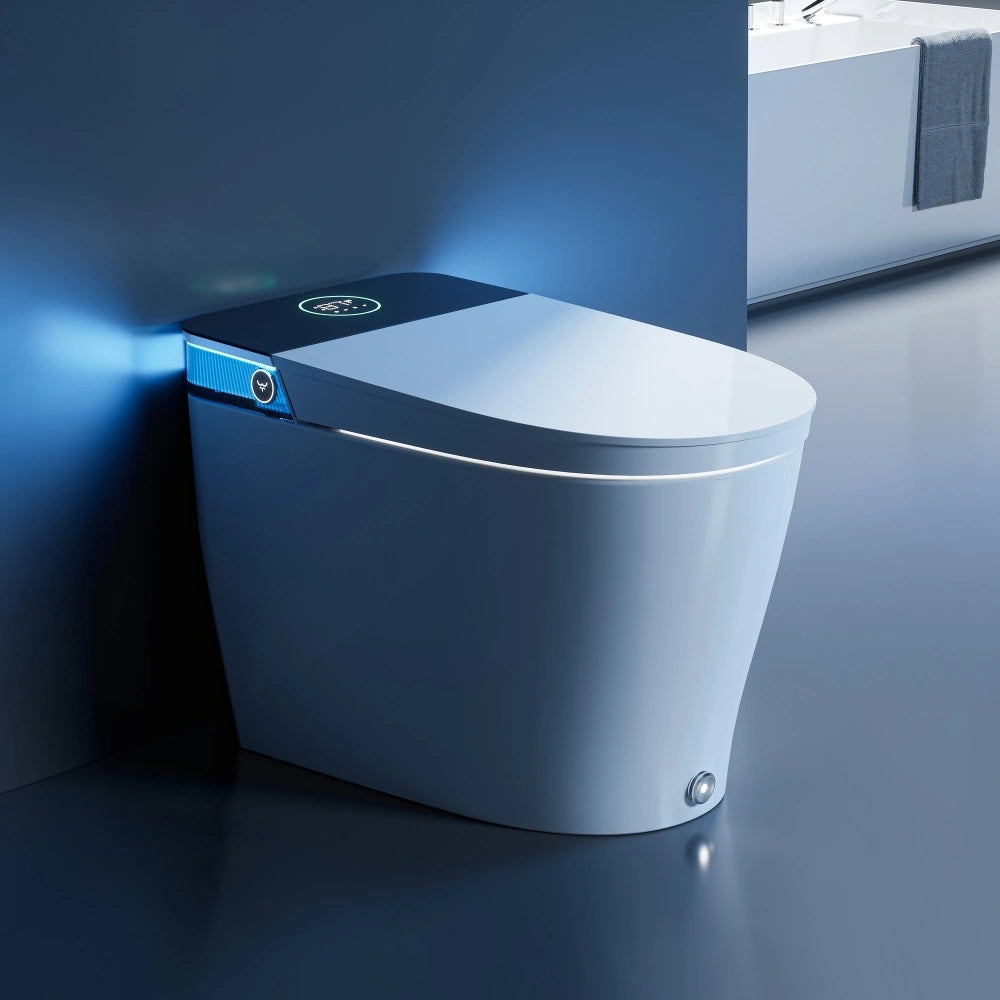
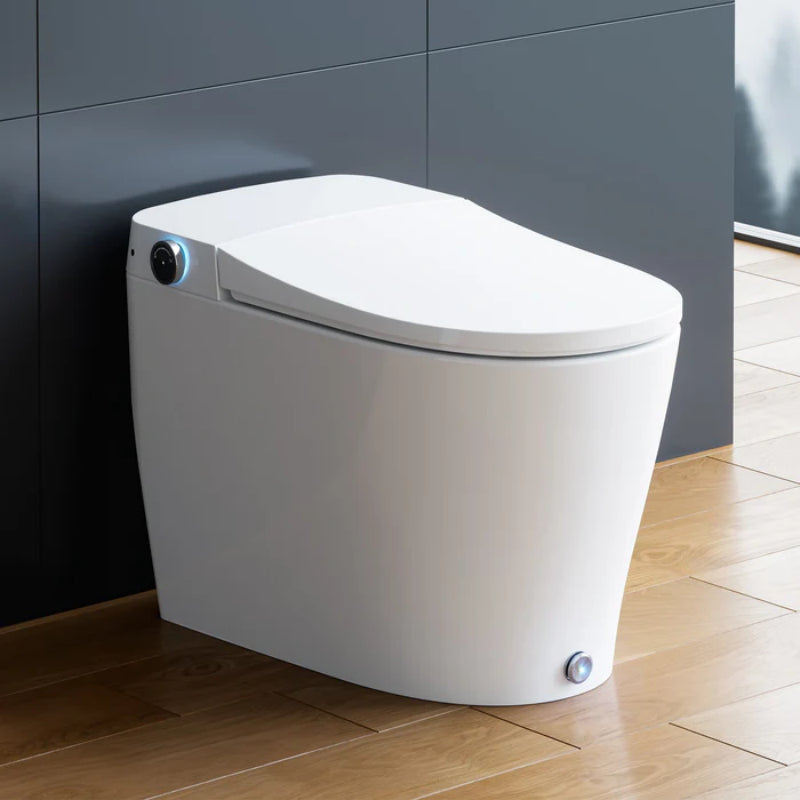

A toilet with LED night light sounds like simple “cool bathroom tech”: a small motion sensor light that makes a glowing toilet bowl so you can use the bathroom at night without flipping on harsh lights.
In real homes, it can be genuinely helpful—or it can turn into one more small gadget you clean around, replace batteries in, and eventually toss when the sensor gets unreliable. Here’s where it tends to work, and where people regret it.
Decision Snapshot: who a toilet with led night light is for (and who should skip)
Makes sense if:
-
Your bathroom gets very dark at night and you want a dim, motion sensor light for safer navigation and better aim without waking others.
-
You have kids (or guests) who miss the bowl at night, and a gentle glow would reduce mess.
-
You don’t mind small maintenance tasks (battery changes and wiping around the device).
-
You want targeted illumination at the bowl, not ambient lighting for the entire bathroom.
Probably skip it if:
-
You want “set-and-forget” bathroom tech and get annoyed when small gadgets break or act finicky.
-
You strongly dislike battery swapping, or your household already struggles to keep basics (soap, TP) stocked.
-
You’re sensitive to light at night, or you know you’ll hate the look of a glowing bowl once the novelty fades.
-
It doesn’t address trip hazards or clutter and isn’t a fall-prevention solution.
Quick pre-buy checklist (60 seconds):
-
Is it truly dark there, or do you already have enough ambient light?
-
Who uses this bathroom at night (kids, older adults, light sleepers nearby)?
-
Are you willing to clean around a clip-on device on the rim?
-
Can you easily access the rim area for battery changes without it feeling like a chore?
-
Could pets trigger the sensor at night and disturb your sleep?
Does a glowing toilet bowl actually improve night use in your bathroom?
This article evaluates only the LED night-light feature itself—how it behaves, helps, or annoys in daily use. It does not assess toilet flushing performance, installation quality, plumbing design, or overall toilet reliability.
The main promise is simple: less stumbling, less squinting, and fewer “misses” without flipping on an overhead light.
Is a toilet with led night light worth it if you already have a hallway/bathroom nightlight?
If you already have steady, low light spilling into the bathroom, a rim-mounted glow may not add much. Many people picture a dramatic “beacon,” but the real value is targeted light right at the bowl.
A night light helps you find the path into the bathroom; a toilet glow helps you find the bowl—not the light switch.
It’s most worth it when:
-
The toilet area is shadowy even if the sink area has some light
-
The light switch is across the room (so you walk in darkness)
-
You’re trying not to wake someone up with bright lights
It’s least worth it when:
-
The bathroom is already easy to navigate with existing dim light
-
Your eyes adjust quickly and you rarely “miss” anyway
-
You keep the door open at night and the hallway light does the job
The key point is: if your problem is finding the toilet, a glow helps. If your problem is finding the switch, it might not.
When motion + sensor glow helps most
In practice, the best-case homes look like this:
-
Households try not to wake others. A soft bowl light can be less disruptive than ceiling lighting during 2 a.m. trips.
-
Bathrooms used by kids. Kids often respond well to a clear visual target, and the “cool” factor can make them more willing to go without turning on every light.
-
Aim and cleanup issues. If your household has frequent night misses, lighting the bowl area can reduce the number of wipe-ups (and the arguments).
It also helps some older adults, not because it’s “fun tech,” but because it reduces stepping around in the dark.
Just note: depending on LED placement, the light can be partially blocked once seated—see the section below.
When the light is useless or disruptive
A glowing toilet bowl can backfire when:
-
It’s brighter than you expected. Some units are “night light” in name but still feel sharp in a dark room.
-
The color is wrong for your brain at night. Red can feel unsettling to some people. Blue can feel cold and wakeful. Yellow can look dirty fast.
-
It triggers at the wrong times. Motion sensors can light up when someone walks past the bathroom door, or when a pet wanders in, which can bother light sleepers.
-
Sensor false triggers are a top regret and aren’t always fixable by repositioning.
If your goal is “no stimulation at night,” even a gentle glow can become one more thing your body reacts to.

What problems show up after the novelty fades?
Top regrets usually come down to three things: frequent battery swaps, sensor unreliability, and added cleaning friction.
Many people like it for the first weeks. Regret usually shows up months later, when the sensor, batteries, and cleaning friction become the real story.
Will the motion sensor light toilet still work when the sensor gets finicky months later?
A common complaint is that the motion detection becomes unreliable over time—even after fresh batteries. In many cases, this is an end-of-life issue rather than user error, so replacement—not fixing—is the realistic expectation. You may see things like:
-
It doesn’t trigger unless you wave a leg near it
-
It triggers late (after you already sat down)
-
It triggers randomly, then stops for days
This is where expectations matter: treat it like a small gadget, not a built-in bathroom fixture. If you’ll be annoyed when it starts acting “cheap,” it may not be worth adding to your routine.
Color and brightness surprises
Color feels like a fun feature until you live with it at night. A few real-world “surprises” people report:
-
Red can feel creepy or alarm-like in a dark bathroom.
-
Yellow can highlight stains and splash marks—on the bowl, on the rim area, and sometimes on the device itself.
-
Cool colors can feel harsh at 2 a.m. even if they look nice during the day.
Also, some people expect the glow to be subtle like a hotel night light. If it’s brighter than expected, it can make it harder to fall back asleep.
Sitting can block the glow (why the effect may disappear right when you need it)
This catches people off guard: depending on where the LEDs sit, your body and the seat can block the light path. To sanity-check in your own bathroom, temporarily hold the device where it would clip, then sit normally. Check whether the bowl stays visibly lit from your seated angle, not just when standing. Also test with the seat down, lid up, and lid down—small placement shifts can change the usable glow more than people expect.
Fit, setup, and daily-use realities people don’t expect
Most toilet LED night lights are clip-on devices that hang on the rim. “Easy install” is often true—but “stays put forever” is not.

Clip-on install isn’t universal: rim shapes, loose fit, and wobble
Toilet rims vary more than people think. A clip that feels snug on one bowl can feel loose on another. Before buying—and after installing—verify seat clearance and rim compatibility to prevent wobble or slipping. When the fit is off, you may notice:
-
The light wobbles when the seat drops
-
It shifts position during cleaning
-
It sits at a weird angle, so the light points the wrong way
Even a small wobble can make it feel flimsy, especially in a main bathroom guests use.
What happens if it slips off the rim and falls into the bowl?
It sounds unlikely until it happens. The risk goes up if:
-
The rim is rounded or slippery
-
The device is bumped during cleaning
-
Kids fiddle with it
-
The seat slams down and knocks on it
Best case: you fish it out with gloves and disinfect. Worst case: it gets lodged in an awkward spot and turns into a stressful “why is the toilet not working right?” moment. Anything that can fall into the bowl is one more failure mode.
Visual: rim-clearance diagram (where it sits, splash zones, and how the bowl/seat can block light)
Think of the device living in a messy zone:
-
It clips right under the seat line, where hands and cleaning tools often go.
-
It sits near splash zones (especially for households with frequent misses or vigorous flushing).
-
Depending on placement, the seat and your legs can block the LEDs, so the bowl doesn’t glow when you’re actually using it.
A simple way to picture it:
-
Rim top = where the seat rests
-
Inner rim edge = where clip-on lights usually hang
-
Splash zone = inner rim + underside of seat
-
Block zone = front/side areas where legs and seat shadow the LEDs
If you already dislike cleaning under the seat, adding a device there may feel like adding friction to the worst part of toilet cleaning.
Maintenance and long-term annoyance risk (battery, cleaning, lifespan)
This is where “cool tech” becomes either “nice to have” or “why did I buy this.” If battery changes and cleaning chores already annoy you, this feature is likely not worth it.
Battery life reality check (often 4–5 months)
Many homeowners expect a year of battery life. In practice, frequent nightly triggers often mean battery changes a few times per year.
Here’s a realistic cost range for disposable batteries (varies by battery type and how many the device uses):
| Replacement pace | Sets of batteries/year | Estimated annual battery cost |
|---|---|---|
| Light use (few triggers/night) | 2 sets | ~$4–$12 |
| Typical use | 3 sets | ~$6–$18 |
| Heavy use (busy household/pets) | 4 sets | ~$8–$24 |
That cost isn’t huge, but the annoyance is real—especially if the unit dies at night and you don’t notice until you’re already in the dark.
Cleaning and sanitation friction
A rim-mounted light creates one more surface in a high-splash area. People often don’t mind it at first, then realize:
-
Grime collects around the clip points
-
The device can trap moisture
-
Lighter-colored plastics can look stained faster
-
You need to remove it (or clean around it) during deeper cleanings
If you’re strict about bathroom hygiene, you may find yourself removing it often—which increases wear, wobble, and “why is this always in the way?” feelings.

“Disposable tech” expectations: water resistance vs eventual sensor failure
Most of these devices handle normal humidity and minor splashes. That’s not the same as lasting for years. A common ownership arc looks like:
-
Works great out of the box
-
Batteries die sooner than expected
-
Sensor starts missing motion or triggering late
-
You replace batteries, reposition it, clean it… and it still acts up
-
It becomes drawer clutter or e-waste
If you’ll be irritated by a short lifespan, this feature may not match your priorities.
Before You Choose (checklist)
-
Will it fit your rim securely without wobbling or slipping?
-
Will the glow still be useful when seated from your normal posture?
-
Will cleaning around a rim-mounted device annoy you over time?
-
Could sensor triggers or brightness disturb sleep for you or others?

FAQs
1. Can the night light be turned off?
Most toilet LED night lights are designed to be motion-activated, so they usually don’t stay on all night — they come on only when someone approaches and then turn off after a short period of inactivity. Some models have a manual power switch or a button you can press to cycle through modes, which can effectively turn the light off, but others don’t have a dedicated “off” button and rely entirely on the motion/light sensor logic. That means if you want to completely disable the light, you might have to remove it from the toilet, take the batteries out, or choose a model with better control options rather than a sensor-only unit.
2. Does the light stay on all night or use a sensor?
Toilet LED night lights almost always use a motion and light sensor, meaning they only turn on when it’s dark and they sense movement nearby. When you walk toward the toilet, the sensor triggers the LED, and it switches off a short time after you leave. This is intentional — it helps conserve battery life and avoid unnecessary light in the middle of the night. Some units also include a photosensitive sensor so they won’t trigger during the day even if there’s motion. So, in normal use you shouldn’t see the light glowing all night continuously unless a sensor or light threshold is misbehaving.
3. What color is the LED light?
Most toilet bowl night lights come with multiple LED color options — often around 7–8 colors like blue, red, green, yellow, purple, aqua, and white. On many models, the default mode cycles through all colors, or you can select a single preferred color with a button. This lets you pick something gentle on sleepy eyes — for example, red or yellow tends to feel softer at night than bright blue or white. The LED usually wraps around the underside of the bowl, creating a soft halo rather than a harsh spotlight.
4. Does it require extra batteries?
Yes — most toilet LED night lights are battery-powered and typically use 3 AAA batteries (not included). The idea is that by running off small batteries you don’t need any wiring or electrical installation in the bathroom, and the LEDs use very little power, so a set of batteries can last months with typical use. Because they’re not hard-wired, you do need to plan for periodic battery changes — somewhere around 2–4 times a year in many homes — depending on how often motion is triggered.
5. Is the light bright enough to see without other lights?
These LED toilet night lights are meant to be subtle guiding lights, not bright room illumination. They’re usually dim enough to avoid waking you or anyone else up, but bright enough to help you see the toilet bowl and surrounding area without flipping on overhead lights. Whether the glow feels “enough” depends on your eyes and how dark your bathroom normally is; for many people, the light is just right to navigate and aim safely at night, but it won’t light up the whole space like a ceiling fixture would. If you want a stronger overall bathroom glow, you might still need a hallway or soft wall light in addition to the toilet LED.
6. Can I disable motion or set a timer/brightness?
In most cases, not really — and this is where expectations matter. Many toilet LED night lights are designed to be simple, low-cost gadgets, so the controls are usually very limited. Some models let you switch colors or cycle through modes with a button, but motion sensitivity, brightness level, and how long the light stays on are often fixed. That means you can’t fine-tune it the way you would a smart bulb or app-controlled night light. If motion triggers too easily, stays on longer than you’d like, or feels brighter than expected, there may be no real adjustment beyond repositioning the unit or removing it entirely. A few higher-end versions offer basic on/off switches, but fully disabling motion or setting custom timers is rare. The safest mindset is to assume “basic automation” — helpful, but not customizable. If control matters to you, this category can feel restrictive fast.
7. Why did my motion sensor light stop working even with new batteries?
This is one of the most common frustrations, and it’s not always something you’re doing wrong. Over time, motion sensors in these small devices can become less reliable due to moisture exposure, grime buildup, or internal wear. Even with fresh batteries, you might notice delayed activation, random triggering, or no response at all. Cleaning the sensor window and reseating the batteries can help temporarily, but it doesn’t always fix the underlying issue. In many cases, this kind of behavior signals that the unit is simply reaching the end of its useful life. These lights aren’t built like permanent fixtures — they’re disposable gadgets. If basic cleaning and battery replacement don’t restore normal function, it’s usually best to stop troubleshooting and replace or return it, rather than sinking more time into a device that’s unlikely to recover.
References


Leave a comment
This site is protected by hCaptcha and the hCaptcha Privacy Policy and Terms of Service apply.