

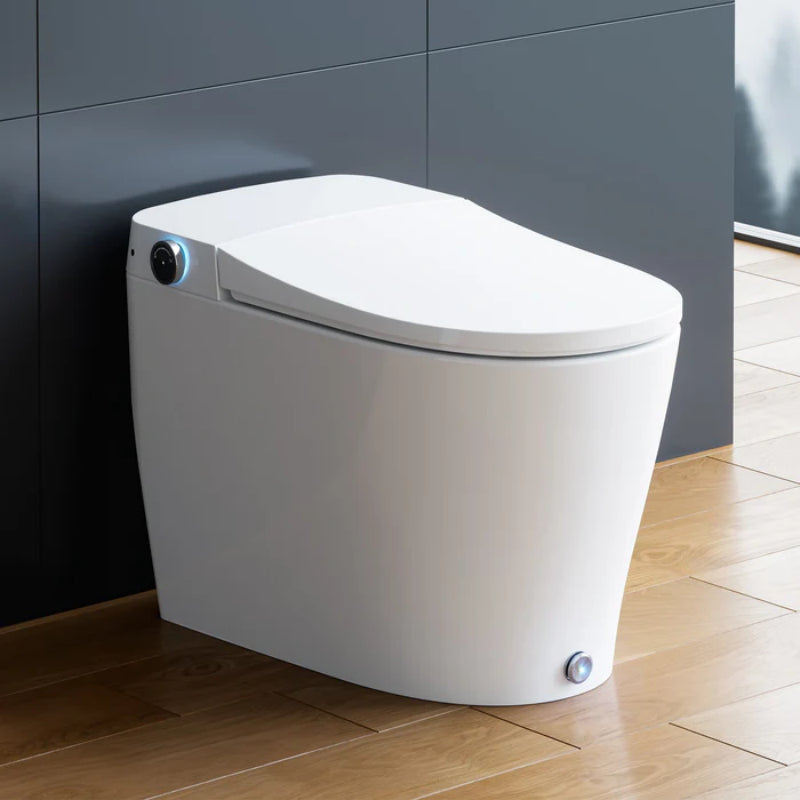

A one-piece toilet is less forgiving at the floor connection than most people expect. It’s heavier, the base is often wider, and many models (especially skirted styles) limit access to the closet bolts after the toilet is down. So the “toilet flange for one-piece toilet” question is not really about a special flange made for one-piece toilets. It’s about whether your existing flange location, height, anchoring, and bolt access match what a one-piece base demands.
Here’s where people usually run into trouble: the toilet seems to fit, but it rocks slightly, the bolts won’t line up cleanly, or the flange sits too low after a tile job. Then the wax seal fails slowly, you get odor or staining, and the fix becomes a full pull-and-reset (or a floor repair) that costs more than doing the flange correctly in the first place.
Decision Snapshot: when this works (and when it backfires)
Before diving into the specifics of installing a one-piece toilet, it's important to evaluate your bathroom's readiness for the task. In this section, we'll highlight key factors to consider, including rough-in measurements, flange compatibility, and access to essential components. By ensuring these conditions are met, you'll be able to avoid common pitfalls and make a smooth installation process.
Choose this only if your rough-in and clearances match the toilet’s spec (typically 12" ± 1/4") and the flange can be rigidly anchored to the subfloor
A standard closet flange works with a one-piece toilet if all of this is true:
-
The rough-in (wall to flange center) matches the toilet’s requirement, usually 12 inches, and you’re close enough that the tank/body clears the wall without forcing the toilet forward.
-
The flange is the right size for the drain (most commonly 3" or 4" drain lines with a 4x3 flange style) and is not cracked, bent, or corroded where the bolts lock in.
-
The flange can be screwed down tight to solid structure (wood subfloor or properly anchored into concrete). A one-piece toilet will punish a flange that “sort of” stays put.
Room Fit:
-
Side clearance/centerline-to-side obstruction: Ensure at least 1-2 inches between the toilet and any side obstructions like walls or cabinets.
-
Front projection/front clearance: Confirm there is at least 24 inches of space from the toilet's centerline to any obstruction in front of the toilet.
Shutoff valve/supply line access check for skirted one-piece bases: Verify that the shutoff valve and supply line are accessible after the toilet is placed, especially for skirted one-piece bases that may limit access. This is a critical pre-purchase compatibility requirement.
Avoid or reconsider if the flange is loose/spinning, the floor is uneven, or the finished floor height changed (tile overlays) without resetting flange height
This becomes a problem when:
-
The flange spins or lifts when you try to tighten closet bolts (often means broken screws, rotten subfloor, or a flange that was never anchored right).
-
The finished floor is higher than it used to be (new tile over old, or a leveling pour), leaving the flange too low.
-
The floor is not flat, and the toilet rocks before you even tighten it down.
Those issues can be “tolerated” on some two-piece toilets for a while. A one-piece toilet often turns them into early wax failure.
Rule of thumb checks before you buy anything: rough-in to flange center, flange levelness (≤ 1/8" out), and flange top relative to finished floor (not buried, not 1"+ proud)
Early Decision Ladder for Flange Height (Rule of Thumb Guidance):
-
Acceptable Target: The flange top should sit on top of the finished floor (or very slightly above it). This is the optimal situation.
-
Slightly Below: Flange slightly below the finished floor can work, but it typically requires an extender to prevent sealing issues.
-
Far Below: If the flange is significantly below the finished floor, replacement or resetting is typically required to avoid long-term leaks.

Will this work with a skirted one-piece base that hides the bolts and limits access to the flange?
Skirted one-piece toilets can work fine, but they raise the stakes. If the flange is slightly off, you may not have room to reach the bolts, slide the toilet into position, or correct the angle once the wax touches.
If your toilet uses a concealed trapway or mounting adapter, flange location can be “technically correct” and still be practically unworkable because you can’t get the hardware aligned through the access openings.
Key trade-offs you accept with one-piece toilets at the flange
When installing a one-piece toilet, several key trade-offs come into play, especially when it comes to the flange and its compatibility. These trade-offs are critical for ensuring the toilet stays securely in place without compromising its performance over time. The following sections explore the potential challenges and considerations that come with flange height, base flexibility, and material choices, along with the impact of using offset flanges or skirted designs.
Heavier toilet + less base flex means small flange height/level errors cause rocking and wax ring failure sooner
A one-piece toilet often weighs enough that:
-
It compresses wax unevenly if the flange is low or the floor is uneven.
-
It “bridges” high spots on tile, so the base rocks even when the flange is fine.
-
Tightening the bolts to stop rocking can crack the base (or strip the flange bolt slots).
In practice, the callback happens like this: it feels okay day one, then the wax relaxes, micro-movement starts, the bolts loosen a bit, and the seal opens up just enough for odor or moisture.
Limited access under skirted/one-piece bases raises the penalty for bolt alignment mistakes and weak anchoring
With many one-piece or skirted designs:
-
You can’t easily see the closet bolts as you lower the toilet.
-
You may have only small access windows to tighten bolts.
-
If the flange isn’t anchored well, the whole flange can shift while you’re tightening from an awkward angle.
That’s why one-piece installs benefit from a “dry set” before any wax is involved (covered later).
What do you give up by using an offset flange for tight rough-in (shifted outlet path, reduced tolerance for clogs, harder positioning)?
An offset flange for tight rough-in is a real tool, but it’s not free:
-
The outlet path shifts, which can reduce the smoothness of the flow path.
-
Because the toilet outlet is no longer straight down into the drain, paper can catch more easily in some layouts.
-
You often lose wiggle room for placement because the offset dictates orientation.
If you’re trying to make an 11 1/2" rough-in behave like 12", an offset flange might get you clearance at the wall, but you accept more sensitivity to clogs and positioning.
Material choices that change outcomes: stainless reinforcement vs plastic rings, and why “stronger” can still fail if the subfloor is weak
A reinforced ring can prevent bolt-ear breakage, but the ring is only as good as what it’s screwed into.
-
A “strong” ring over rotten wood still moves.
-
A metal ring in constant moisture can corrode if the leak continues.
-
Plastic flanges can crack if over-tightened or if the toilet rocks and loads the bolt ears.
The key point is anchoring to solid structure matters more than ring material. If the subfloor is compromised, upgrading the flange alone won’t stop repeat failure.
Cost and practical constraints that decide whether this is worth attempting
When deciding whether to attempt replacing or repairing your toilet flange, it's important to evaluate both the costs and practical constraints of the project. Some issues are straightforward, but others may involve unforeseen challenges, such as dealing with the flooring or pipe connections.
Tile floor reality: when the toilet can be pulled and reset vs when tile must be cut to replace an old toilet flange
If the flange is simply the wrong height or damaged, the “nice” scenario is:
-
Pull toilet
-
Remove old flange or repair it
-
Set new flange at correct height
-
Reset toilet
Where it gets expensive is when the flange is trapped under tile or the pipe connection is not accessible without breaking flooring.
Typical homeowner reality:
-
Simple pull-and-reset with new seal and bolts: often a manageable job.
-
Flange replacement that requires cutting tile: time, dust, risk of cracked tile, and sometimes you can’t match replacement tile.
If your tile was installed around the flange incorrectly (tile tight to the throat, no room to cut cleanly), replacement becomes slower and riskier.
Pipe type dictates labor and tools: PVC/ABS solvent-weld vs cast iron vs lead/oakum (and when each makes replacement high-risk)
Your drain material controls what “replace the flange” really means:
-
PVC/ABS: Often solvent-welded. Replacement can mean cutting pipe and using a repair coupling, or using an inside-fit flange. Inside-fit options save demolition but can reduce internal diameter and can be picky about depth.
-
Cast iron: Often uses a hub connection or a mechanical connection. Removing an old flange can crack an old pipe if forced. Sometimes a compression-style replacement is safer than trying to break out old joints.
-
Lead/oakum (very old work): Can be workable but is easy to damage if you don’t know what you’re looking at. Replacement can snowball into a larger drain repair.
If you’re not sure what you have, don’t guess. Pull the toilet and look at the pipe from above with a flashlight. The wrong replacement method can turn “flange day” into “open the ceiling below” day.

Concrete vs wood subfloor anchoring: why fastener type and hole size control whether the flange stays tight over time
A flange must be mechanically anchored. On wood, that means screws into sound subfloor. On concrete, that means concrete anchors installed correctly.
Common failure patterns:
-
Holes drilled too large in concrete → anchors don’t bite → flange loosens → wax fails.
-
Screws into crumbly wood or patched areas → flange feels tight, then strips later.
-
Flange screwed into underlayment only (not structure) → loosens with normal use.
A one-piece toilet amplifies this because movement is harder to “absorb.”
Hidden costs that show up late: new shutoff location conflicts, supply line reach, flange extender stacks, and floor repair after rot
Even when the flange issue seems small, these add-ons show up:
-
One-piece toilets sometimes have different supply connection geometry, so your shutoff may be too close to the skirt.
-
A raised floor may require flange extenders, longer bolts, and a different sealing plan.
-
If the old wax has been leaking, you may find soft subfloor. Repairing that can be the real cost.
Proper safety precautions should always be taken when working with plumbing systems, as outlined by OSHA. If you smell sewer gas or see staining at the base, assume moisture until proven otherwise.
Toilet flange for one-piece toilet: fit, sizing, and layout checks
When installing a one-piece toilet, several critical factors must be checked to ensure proper fit and function. These include rough-in measurements, floor flange height, bolt alignment, and compatibility with skirted designs. Each of these considerations plays a role in ensuring the toilet is securely installed and that potential issues, such as leaks or rocking, are avoided.
Rough-in fit thresholds: what happens if your rough-in is 11 1/2", 12", or 12 1/2" and the one-piece tank/body won’t clear the wall
Measure rough-in from the finished wall to the center of the flange (or the centerline between closet bolts).
Rough-in Fit Tolerance vs. Model-Specific Requirements:
Screening Tolerance: If your rough-in is close to 12" (e.g., 11 1/2" to 12 1/2"), you may still be fine in practice. However, Model-Specific Spec Sheet Requirement: Always check the toilet’s published rough-in clearance before purchasing, as some one-piece designs may require stricter tolerances, especially for clearance behind the unit. Confirm that your toilet’s required rough-in matches the actual measurement and provides the needed clearance for proper installation.
-
12" rough-in: Usually fine, but only if the wall is straight and the flange is actually centered where it should be.
-
12 1/2" rough-in: Toilet may sit farther from the wall than you expected. Not a leak issue by itself, but it can look odd and may affect skirted models if the mounting system has limited travel.
If you are tight on rough-in, verify the toilet’s required clearance behind the unit. One-piece backs are often more sculpted than two-piece tanks, so they can hit early.
Floor flange height for tile floor: acceptable ranges, when extenders work, and when “too low” guarantees a leak-prone wax stack
For a tile floor, the reliable target is:
-
Flange top sitting on top of the finished tile, or very slightly above.
Acceptable real-world range (because houses aren’t perfect):
-
Up to slightly above finished floor can still seal well.
-
Slightly below can still seal if you use the correct seal strategy (often an extender rather than stacking wax).
When extenders are reasonable:
-
The flange is structurally sound, anchored, and level.
-
You only need to make up a small height difference.
-
You can fasten the extender stack securely and seal it correctly.
When “too low” becomes a repeat-leak setup:
-
The flange is significantly below the finished floor and you try to solve it with extra-thick wax or stacked wax alone.
-
The toilet rocks even a little.
-
The flange isn’t anchored well, so the whole stack moves.
Wax is a gasket, not a shim. If you use wax thickness to make up for a low flange, you usually end up with a soft, unstable seal that fails earlier under a heavy one-piece.
Bolt slot alignment and base footprint: when you must dry-fit the toilet before wax (and how much misalignment you can realistically tolerate)
Closet bolt slots should allow a little adjustment, but one-piece toilets often have:
-
Narrower tolerance where the bolts come through the base
-
Less ability to “tilt and drop” the toilet into place
Dry-fit matters when:
-
The base is skirted or has concealed bolt caps with small access.
-
Your flange is not perfectly square to the wall.
-
Your rough-in is tight and you can’t slide the toilet once it’s down.
Bolt Alignment Pass/Fail Criterion: Dry-fit the toilet and check the bolt alignment. The bolts must drop through the flange slots without prying, twisting, or forcing. If the bolts don’t align easily, it’s a sign of a potential misalignment that should be addressed before proceeding.
Realistic tolerance: if you need to force the bolts outward, twist them, or pry the toilet over, that’s already the danger zone. Misalignment that requires force usually translates into a toilet that never sits perfectly relaxed on the floor, which leads to rocking and seal stress.
Skirted toilet flange compatibility: concealed trapway adapters, bolt access windows, and when flange location is “correct” but still unworkable
Skirted and concealed-trapway toilets often use one of these approaches:
-
Standard flange and bolts, but bolts are tightened through side access ports
-
A mounting plate/adaptor that must align precisely over the flange
-
Special anchor points that must hit solid floor, not hollow tile or weak underlayment
Common “it should work but doesn’t” situations:
-
The flange center is correct, but the skirt blocks your hand from reaching the shutoff or bolt access.
-
The flange is close to the right spot, but the adapter plate needs more room to rotate or slide than your base allows.
-
The closet bolts sit too high above the flange due to extenders, interfering with the skirt’s internal clearance.
If your one-piece toilet hides the bolts, plan extra time for test-fitting and consider whether your flange height changes (extenders) will interfere with the toilet’s base cavity.
Replacing an old toilet flange vs fixing a broken toilet flange (what actually holds)
When dealing with a damaged toilet flange, understanding the condition of your existing flange is crucial to determining whether it can be repaired or needs a full replacement. Here, we'll explore the different scenarios you'll encounter, from simple fixes to when you should consider a complete replacement to avoid recurring issues. The key is identifying the underlying cause of the damage and choosing the most effective solution to ensure a long-lasting, leak-free installation.
Old flange triage: cracked ring, corroded metal, broken bolt ears, or a flange that spins—what each symptom usually means underneath
Use the symptom to predict the real problem:
-
Cracked ring or broken bolt ears: Often from over-tightening, toilet rocking, or a brittle flange. Could also mean the flange was never anchored and the bolts took the load.
-
Corroded metal ring: Usually means long-term moisture exposure from a small leak. The subfloor may be soft even if the top looks okay.
-
Flange that spins: Almost always an anchoring issue—stripped screws, missing screws, rotten wood, or anchors that failed in concrete.
-
Flange sitting below tile (after remodel): Not “broken,” but functionally wrong height, which leads to repeat seal issues.
A one-piece toilet should not be used to “stabilize” a questionable flange. If the flange moves, you’re not just risking a leak—you’re risking hidden rot.
When a repair ring/overlay is enough (and when it masks rot and fails again under a heavy one-piece toilet)
A repair ring or overlay can work when:
-
The flange body is intact and bonded to the drain correctly.
-
Only the top ring (where bolts lock) is damaged.
-
The subfloor is solid and you can screw the repair ring down firmly.
Where it backfires:
-
The repair ring is installed into weak wood or into tile without proper anchoring.
-
The original flange is already loose, so the repair ring just “sandwiches” a moving problem.
-
You’re using it to avoid fixing a low flange height, then compensate with extra wax.
Repair rings are best for restoring bolt strength, not for solving height, rot, or a flange that’s not tied in properly.
When full replacement is the only reliable option: severe corrosion, wrong height, wrong diameter, or a flange not tied into the drain correctly
Full replacement is usually the right call when:
-
The flange is badly corroded or cracked where it meets the pipe.
-
The flange height is wrong enough that you’d need a tall stack of extenders or wax.
-
The drain size or flange type is mismatched and causes chronic sealing problems.
-
The flange is not actually connected correctly (for example, it was set “inside” without enough engagement, or it’s sitting on top without a proper bond/mechanical connection).
If you’ve already had to reset the toilet once for a leak, take that as a signal: you’re past quick fixes.
Can you fix a broken toilet flange without opening the floor—and what must be true for that to be safe?
Sometimes, yes—but only if these are true:
-
The pipe and flange connection is sound (no movement at the pipe).
-
You can anchor a repair ring or replacement flange securely to structure.
-
The finished floor height can be made correct with a safe method (minimal extender stack, properly sealed and fastened).
If the subfloor is soft, if the flange is below tile by a lot, or if the flange moves with hand pressure, “no-floor-opening” fixes tend to turn into repeat pulls.
Installation realities that prevent leaks, rocking, and repeat pull-and-reset
Before diving into the details of installation, it’s important to understand the realities that can affect the long-term success of your toilet setup. Proper installation requires more than just placing the toilet; it involves making sure the toilet is securely anchored, level, and aligned properly to avoid issues like leaks, rocking, and the need for costly reinstallation.
Dry-fit sequence that avoids regret: set toilet without wax, confirm clearance, mark bolt position, confirm no rocking before final install
A practical dry-fit sequence:
-
Place closet bolts in the flange and snug them so they stand straight.
-
Set the toilet down without wax (yes, it’s heavy; get help).
-
Confirm:
-
Back clearance at the wall
-
Side clearance at vanity/tub
-
The base sits flat or needs minor shimming
-
Bolt alignment is workable without forcing
-
-
Mark the floor around the base lightly (reference outline).
-
Lift the toilet back off.
If it rocks now, it will rock after wax. Fix the floor contact first (flatten or shim plan), not by cranking bolts.
Wax ring sealing logic: single vs extra-thick vs stacked wax, and what happens if the flange sits below the finished floor
Wax works best when the flange height is right and the toilet drops straight down.
General rules that prevent annoyance later:
-
If the flange is at the correct height: a standard wax seal is usually fine.
-
If the flange is slightly low: a thicker seal or a correctly installed extender can work.
-
If the flange is significantly low: prioritize bringing the flange height up (extender or replacement). Stacking wax is where long-term weeping leaks start, especially with heavy toilets.
What happens with a low flange and a big wax stack:
-
The wax can deform unevenly.
-
The toilet can settle slightly over time.
-
That tiny movement opens a path for moisture or sewer gas.

Anchoring standards that stop seal failure: flange must be screwed to structure (not “held” by closet bolts), and why oversized holes in concrete don’t grip
A closet flange should be anchored to the floor. The closet bolts are not anchors; they’re clamps.
Anchoring basics that matter:
-
Wood subfloor: screws should bite into solid wood, not just tile backer or thin underlayment.
-
Concrete: use anchors sized to the drilled hole and installed to correct depth. If the hole is oversized or dusty, the anchor can spin or pull out later.
If the flange is not anchored, the toilet can move just enough during use to break the wax seal, even if the toilet feels “tight” on day one.
Final stability controls: shimming thresholds (rock > 1/16"), tightening limits to avoid cracking, and why caulk strategy changes long-term detection of leaks
If the toilet rocks more than about 1/16 inch, plan to shim. Don’t use bolt tension to pull a rocking toilet flat.
Practical tightening limit:
-
Tighten evenly until the toilet is stable, then stop. Over-tightening can crack porcelain or strip bolt slots.
Caulk strategy (what tends to work in real homes):
-
Many installers leave a small gap at the back (or don’t caulk the back edge fully) so a leak shows itself instead of staying trapped under the toilet. Trapped leaks rot floors quietly.
If you do caulk, stability and a correct flange height matter even more, because you may not notice a slow leak early.
What fails over time if conditions aren’t met (and how to catch it early)
When the conditions for a proper toilet flange installation aren't met, issues often develop gradually, leading to long-term problems. These subtle failures, such as micro-movement or loosening bolts, can cause leaks, odor, and even damage to the subfloor. Early detection of these issues can save you from costly repairs down the line.
The most common long-term failure mode: micro-movement breaks the wax seal, leading to subfloor rot and recurring odor
Most toilet flange failures aren’t dramatic. They’re slow:
-
The toilet moves slightly when someone sits down.
-
The wax seal shears or relaxes.
-
Moisture escapes during flushes.
-
The subfloor gets damp, then soft.
-
The flange loosens more because the floor can’t hold screws.
-
Now you have rocking, odor, and often staining.
One-piece toilets speed this up because their weight and stiffness translate movement into seal stress.
Early warning signs you shouldn’t ignore: persistent rocking, bolt loosening, staining at the base, slow leaks that only appear after flushes
Watch for:
-
Rocking that returns after you “tighten it again”
-
Closet bolt caps that keep popping loose because nuts back off
-
Musty smell or sewer odor that comes and goes
-
Darkening grout or staining at the base
-
Moisture that appears only after several flushes, not right away
If you see any of these, assume the seal is compromised until you confirm otherwise. Waiting is how small flange problems become floor repairs.
Maintenance access constraints: why one-piece/skirted designs make future flange work slower and more expensive
A one-piece or skirted toilet can turn a simple reset into a longer job because:
-
Access to bolts is limited.
-
The toilet is heavier to lift and reposition.
-
Some designs require extra steps to remove side panels or access caps.
That doesn’t mean “don’t buy one.” It means you should be stricter about flange condition and height before installing, because future corrections cost more.
Remodel trap: raising floor height (new tile) without resetting flange height—when you should replace instead of “extend and hope”
Raising the floor is one of the most common reasons people end up searching for “fixing a broken toilet flange” even when the flange isn’t broken.
If your tile is newer than the flange, check whether the flange is now low. Extenders can be fine in small amounts, but replace/reset is often better when:
-
The flange is far below the finished floor.
-
The flange is already old and slightly corroded.
-
The toilet is heavy (one-piece) and will stress a marginal seal.
Extending and hoping is how you end up pulling the toilet again after the first warm season when the house shifts slightly.

Before You Buy checklist
-
Measure rough-in from finished wall to flange center; confirm your toilet’s required rough-in before committing.
-
Confirm flange top height relative to finished tile: aim for flange on top of the finished floor, not buried below.
-
Check flange anchoring: it must be screwed to solid structure; if it spins or lifts, plan repair of the floor/anchoring, not just a new wax ring.
-
Check level: if the flange/floor is more than about 1/8 inch out, plan to correct it or expect rocking.
-
Dry-fit the one-piece toilet without wax to confirm bolt alignment and that the base sits flat with minimal shimming.
-
Identify drain pipe type (PVC/ABS vs cast iron vs lead) so you don’t buy a flange that can’t be installed safely in your setup.
-
If using a skirted or concealed-mount toilet, confirm you can access bolts/shutoff after placement and that extenders won’t interfere with the base cavity.
FAQs
1. Is a toilet flange different for a one-piece toilet?
Usually no. Generally, a toilet flange for one-piece toilet works like a standard closet flange, but one-piece toilets are less forgiving in terms of skirted toilet flange compatibility. A one-piece toilet places more stress on the flange due to its heavier, rigid base. If the flange is not installed correctly, such as being the wrong height or poorly anchored, you can expect issues like rocking or leaks.
2. What kind of flange do I need for a one-piece toilet?
For a one-piece toilet, you typically need a standard toilet flange for one-piece toilet. However, it’s crucial to ensure that the flange is properly installed and compatible with your specific toilet model. The flange should be anchored securely to the floor, whether it’s wood or concrete, and positioned at the correct height. If you have a skirted toilet flange compatibility issue, you might need a flange with extended bolts or a different type of flange to fit within the confined spaces. Additionally, if your rough-in measurement is not exact (e.g., an 11 1/2” rough-in), you may need to consider an offset flange for tight rough-in to achieve the necessary clearance for your toilet.
3. Is the flange supposed to be flush with the tile?
The floor flange height for tile floor should ideally sit on top of the finished tile or slightly above it. If the flange is buried below the tile, it can create problems with the wax seal, which may cause leaks and odor. Similarly, a flange that sits too high above the tile can result in instability, especially for a heavy one-piece toilet. To avoid these issues, ensure the toilet flange for one-piece toilet is positioned correctly, neither too high nor too low, for a secure and long-lasting installation.
4. Can I use an offset flange for a tight rough-in?
An offset flange for tight rough-in is a useful tool when the rough-in is slightly off, such as a 11 1/2" measurement. It allows you to gain clearance, but using it has its trade-offs. The offset shifts the outlet path, which can reduce the flow smoothness and make your toilet more sensitive to clogs. While this can be a good solution for a toilet flange for one-piece toilet in tight spaces, it’s important to keep in mind that it can affect the overall positioning and may complicate installation.
5. How do I know if my flange needs replacing?
If the flange is cracked, corroded, or spinning, or if it isn’t securely anchored to the subfloor, it likely needs replacing. A toilet flange for one-piece toilet that is too low, misaligned, or damaged can lead to leaks and repeated issues. Replacing an old toilet flange is often the best solution when these problems arise, as relying on repair rings or overlays can only mask the issue temporarily. A proper flange replacement ensures a tight seal and reduces the risk of future complications, especially with a heavy one-piece toilet.
6. Why does my toilet keep rocking even after tightening bolts?
Rocking usually occurs when the toilet flange for one-piece toilet is not installed correctly. This could be due to a floor flange height for tile floor that is uneven, a loose flange, or poor skirted toilet flange compatibility. Tightening bolts won’t fix these issues. If your toilet rocks, it may indicate that the flange is poorly anchored or the floor is uneven. You must address these root causes, either by leveling the floor or ensuring the flange is secured properly to avoid long-term seal failure.
References




Leave a comment
This site is protected by hCaptcha and the hCaptcha Privacy Policy and Terms of Service apply.