



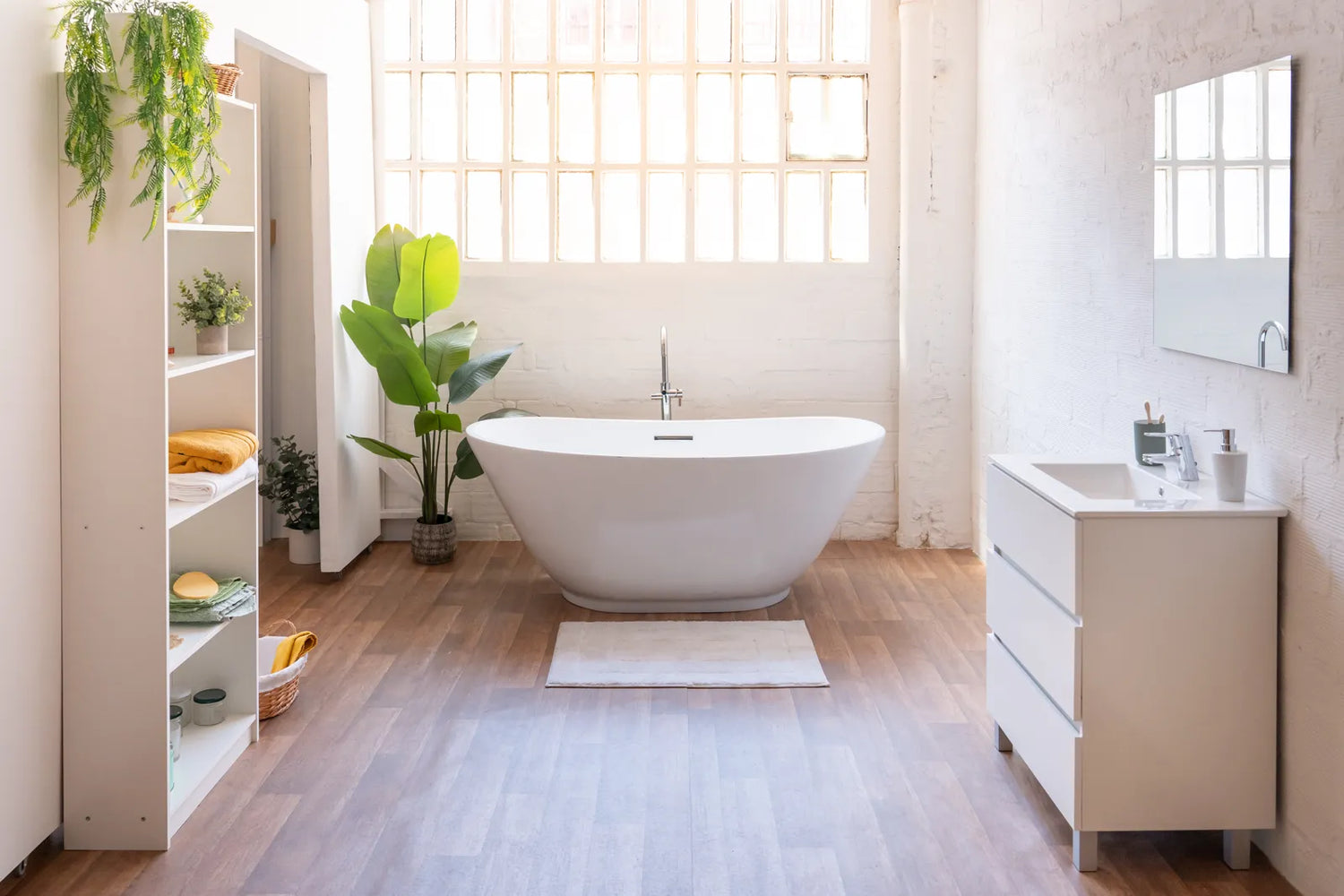
People usually search soaking tub sizes because they want a deeper bath. What they often need is a straight answer to a harder question: will this tub actually fit, function, and stay livable in a real bathroom?
That is where many remodels go sideways.
A soaking tub can fit on paper and still fail in real life. The usual problems are simple: the finished walls steal inches, the basin is much smaller than the outside shell, the drain lands in the wrong place, the step-in height is annoying, or the room becomes so tight that using the toilet, vanity, or shower feels cramped every day.
This guide focuses on those failure points.
Quick Answer
A soaking tub works if your bathroom can handle the tub’s true exterior size, entry clearance, plumbing location, floor load, and hot water demand—not just the catalog dimensions. It does not work well when the finished alcove is under 60 inches, walking space stays under about 6 inches around a freestanding tub, or the tub is so deep that daily showering, cleaning, or stepping in becomes a hassle.
Decision Snapshot
Baseline specs: standard tub vs soaking tub
-
Standard bathtub overall dimensions: 60 x 30 inches with shallow interior bathing depth
-
Regular soaking tub standard range: 60 to 72 inches long, 30 to 40 inches wide, 20 to 24 inches deep overall
-
Compact soaking tub range for small bathrooms: 48 to 54 inches in total length
-
Tall user preferred size range: 66 to 72 inches extended length models
Works best in 5x8 baths or larger
A soaking tub usually makes sense in a bathroom that is at least 5x8 feet, and even then, layout matters. A standard 60-inch alcove can work there. Larger freestanding or drop-in tubs usually need more room than people expect because they also need walking and cleaning space around them.
Avoid if finished alcove is under 60 inches
This is one of the most common mistakes. If your finished wall-to-wall opening is under 60 inches, a standard alcove soaking tub probably will not slide in without wall work. Stud-to-stud measurements are not enough. Drywall, backer board, tile, and uneven walls eat up the margin.
Reconsider when clearance stays under 6 inches
For freestanding tubs, tight perimeter spacing creates daily frustration. If you cannot maintain roughly 6 inches or more beyond the tub where needed for visual breathing room, cleaning access, or fixture use, the install often feels squeezed and unfinished.
Skip deep tubs for daily family shower use
A very deep soaking tub sounds good until it becomes the main family shower. That is where many people regret the choice. Taller walls are harder to step over, water splashes farther, drying is slower, and kids or older adults often struggle with entry and exit.

Who Soaking Tub Sizes Suit
Not every soaking tub fits every home. The right choice depends on your space, your goals, and who will use it.
Best for remodels with movable plumbing
If you are already opening floors or walls, a soaking tub is much easier to plan correctly. Drain location, supply lines, overflow position, and faucet rough-ins can all be adjusted before finishes go back in.
Best for adults needing real soak depth
If your goal is actual body immersion, soaking tubs solve a real problem that standard tubs often do not. A standard tub may be 60 x 30 inches but still offer only modest water depth. A soaking tub gives more depth at the bather’s torso, which is what most buyers are really after.
Not for tight family bathrooms
If one bathroom serves everyone and the tub also has to work as the daily shower, laundry spot, kid wash station, and rushed morning traffic lane, a deep tub can become more trouble than value. In compact homes, simpler usually works better.
Not for homes with mobility concerns
This gets missed too often. A deeper tub usually means a higher step-over. That alone can turn a nice idea into a safety issue. If anyone in the home has limited balance, knee pain, hip issues, or may age in place there, tub depth and wall height matter as much as floor plan.
Tradeoffs That Cause Regret
Before you fall for a tub that looks roomy on the outside, make sure the inside isn’t secretly shrinking your soak.
Exterior size can hide a small basin
This is where most people get it wrong. They shop by outside dimensions only.
A tub listed at 60 inch soaking tub dimensions might still have a short or narrow interior because of thick walls, sloped backs, armrests, or a raised deck edge. That means the tub “fits” the room but not the person. You end up with bent knees, exposed shoulders, or less water around your body than expected.
When comparing standard soaking tub dimensions, always ask for:
-
exterior length and width
-
interior basin length at the bottom
-
interior width at shoulders
-
soaking depth to overflow
Those numbers matter more than the marketing label.
More depth often means harder entry
People ask, how deep should a soaking tub be? In practice, enough to soak comfortably without turning entry into a climb.
A tub can have excellent soak depth but still be wrong for the room or user. Once the outer wall gets into the 20- to 23-inch range, many households start noticing the step-over every single day. This is especially true in shower combos.
Deeper tubs need more hot water
Gather these exact figures before finalizing your purchase:
-
official tub total fill volume rating
-
maximum usable fill height up to overflow line
-
residential water heater tank capacity and hot water recovery rate
-
plus cold and hot water mixing ratio for regular bathing use.
Compare calculated hot water demand against your household hot water output to confirm sufficient supply.
Stop and fully verify your home hot water system capacity if you select any deep full-body immersion soaking tub, as insufficient hot water supply will render the tub impractical for regular use after installation.
Showering daily in deep tubs gets messy
If this tub will also be the everyday shower, think beyond soaking. Deep tubs are slower to enter, harder to keep splash contained, and slower to dry. In small baths, that often means more wet floors, more mildew at corners, and more cleaning around the surround and caulk lines.
Decision line: If the tub will be used more for showering than soaking, deep is not always better.
Retrofit Costs Before Size Selection
A soaking tub can be affordable as a product and still expensive as a project. The tub size affects what must move behind the walls or below the floor.
Drain location can force floor demo
Run full drain compatibility checklist prior to purchase:
-
confirm matching drain orientation including end drain versus center drain layout and left-side versus right-side drain positioning
-
verify identical overflow installation height and side placement
-
align preset water supply pipe rough-in positions with new tub specifications
Any noticeable mismatch in drain structure, overflow placement or pre-plumbed fixture rough-in points will turn a straightforward tub replacement project into full-scale floor demolition and layout rework.
Freestanding tubs need new rough-ins
Complete fixture rough-in compatibility verification: check dedicated floor drain installation requirements, confirm vertical water supply line routing rules, cross-check overflow pipe routing standards and match freestanding tub exclusive faucet mounting type against existing wall and floor plumbing layouts.
All inconsistent rough-in layouts and dedicated fixture installation requirements will inevitably raise construction costs and turn basic unit replacement into comprehensive bathroom plumbing renovation work.
Heavy filled tubs may stress subfloors
Complete this pre-check list to confirm floor bearing safety: collect empty tub dead weight, maximum full water volume converted to total water weight, average intended bather weight, and record installation floor level plus existing floor joist spacing and framing material details. Sum all combined static and dynamic load values.
Call a professional contractor and schedule formal structural review and load-bearing inspection immediately if you install large-capacity deep soaking tubs on upper floors, inside aging residential structures or areas with unknown floor framing conditions.
Heated models may need new circuits
If the tub includes a heater, the electrical side changes too. That can mean a dedicated circuit, GFCI protection, and electrical work that was not in the original budget. This matters less for basic tubs and more for feature-heavy units, but it should be checked before buying.

Will Soaking Tub Sizes Actually Fit?
Learn key space constraints and practical measuring rules to confirm whether your bathroom can accommodate your chosen soaking tub smoothly.
Finished alcoves lose critical inches
A classic mistake is measuring the framing or old opening and assuming a 60-inch tub will fit because the room is “about five feet.” Once the walls are finished, the usable span can shrink enough to stop the install.
If your finished alcove is under 60 inches, a standard alcove soaker usually will not work without one of these:
-
wall modification
-
thinner finish layers
-
a shorter tub size
-
a different tub type
That is why soaking tub dimensions for alcove installation must be matched to the final finished opening, not rough framing alone.
Uneven walls can kill a tight fit
Even if you measure 60 inches in one spot, walls are not always straight. Tile buildup, bowed studs, corner mud, and out-of-square framing can steal another quarter inch where you need it most. Tight-fit alcove installations fail because the tub has to go in at an angle and settle flat. No margin means no installation.
Will this work in a small bathroom?
It depends on what else shares the room.
The best soaking tub size for a small bathroom is usually not the deepest or widest one you can physically squeeze in. It is the one that still leaves the room usable. In bathrooms under about 35 square feet, even compact 48- to 54-inch tubs can create bad clearances, awkward toilet access, vanity crowding, or door conflicts.
This is especially true when someone tries to replace a shower-only layout with a tub because resale feels safer. On paper it fits. In real use, the room becomes frustrating.
Door swing and walkway space still matter
Do not stop at tub dimensions. Open the door. Stand where the vanity drawers open. Check the toilet knee space. Walk the path with a laundry basket. If the tub leaves only a narrow pinch point, the room may technically pass but still feel wrong.
Fit summary
Before buying, confirm these basics:
-
Alcove width: finished wall-to-wall opening, not framing
-
Length clearance: enough room to move the tub into place
-
Freestanding access: about 6 inches or more where needed around the tub
-
Entry path: hall, stair, and door widths for bringing the tub in
-
Step-in use: safe height for the people using it
-
Water supply: enough hot water for the intended soak
-
Floor support: suitable for filled tub weight
-
Plumbing alignment: drain and overflow location match or are budgeted to move
If any one of those fails, the tub is not really a fit.

Which Dimensions Matter More Than Length?
Many shoppers only prioritize overall tub length while overlooking other critical measurements. Several key internal and functional dimensions play a bigger role in actual comfort and practical daily use.
Interior basin depth determines real soaking
If you want to know what is the ideal soaking depth for a bathtub, start with the interior water depth to the overflow, not the overall shell height.
A common standard tub may offer roughly enough water for a basic bath, but many adults still feel half exposed. A true soaking tub usually has a deeper bathing well. That is what creates the real difference between deep soaking tub vs standard bathtub dimensions.
In plain terms:
-
standard tubs often feel shallow for adults
-
soaking tubs usually improve torso submersion
-
very deep tubs improve immersion but increase entry difficulty and fill demand
For many adults, the sweet spot is not “as deep as possible.” It is “deep enough to soak without making access awkward.”
Width at shoulders changes adult comfort
Many buyers focus only on length because they assume width is standard. It is not. Soaking tub width and length for bathroom remodels both matter, but shoulder width often decides whether the tub feels spacious or coffin-tight.
Some 60-inch tubs are narrow inside. Others flare wider at the upper body. If two adults will use the tub at different body sizes, interior shoulder width is a better comfort indicator than outside width alone.
60-inch tubs vary more than expected
Searches for 60 inch soaking tub dimensions are common because 60 inches matches the old alcove standard. But not all 60-inch tubs behave like standard 60-inch tubs.
At the same exterior length, one model may:
-
have a centered drain instead of end drain
-
be wider at the rim but not in the basin
-
be taller outside but not much deeper inside
-
require different faucet placement
-
need more side clearance for cleaning or access
That is why “60 inch” alone does not answer fit.
Tall adults often need more than depth
People also ask, which soaking tub size is best for taller adults. The answer is usually not just “the deepest one.” Tall users need a balance of:
-
useful interior length
-
recline angle
-
footwell shape
-
enough depth for shoulders
-
back support without knees jammed high
A very deep but short tub can still feel cramped for a tall adult. This is one place where a larger standard soaking tub or a long Japanese-inspired upright tub each solve the problem differently.
Installation Limits by Tub Type
Different soaking tub styles come with distinct sizing rules and installation restrictions that directly affect layout planning and on-site fitting.
Alcove installs need exact wall spans
Alcove tubs are usually the simplest if the room was built for one. But they are also the least forgiving on length. If the opening is short, the tub does not fit. If the walls are out of square, it may fit badly. If the drain is wrong-side or offset, plumbing work begins.
For standard soaking tub dimensions, the common alcove footprint stays around the familiar 60-inch length, but greater depth or width can still complicate surround panels, tile lines, and faucet reach.
Freestanding tubs need perimeter access
Freestanding tubs look simple in a photo and cause the most layout surprises in small baths. They need visual breathing room, cleaning access, and enough surrounding floor area so they do not feel jammed into corners.
This is why a freestanding soaking tub size guide should always include room planning, not just tub dimensions. A freestanding tub that barely fits usually looks wrong and is harder to clean behind or around.
Drop-in tubs require deck and service space
Drop-in soaking tubs need more than tub dimensions. They require a framed deck, finish material, and often access planning for plumbing or service. That deck makes the total footprint larger than many buyers expect. In small bathrooms, the deck can consume too much usable floor area.
Japanese tubs trade length for height
A lot of homeowners compare japanese soaking tub dimensions vs standard tub and assume the Japanese style is the perfect small-space answer. Sometimes it is. Sometimes it is not.
Japanese tubs are often shorter in length but taller in height, with a more upright bathing position. They can work well in tight layouts where long wall space is limited. But they also create a higher step-over and may feel less natural for people who want to recline rather than sit.
They solve one problem by trading into another.
Decision line: If floor space is tight but mobility matters, a Japanese tub may not be the right compromise.

Long-Term Problems After Installation
Improperly sized soaking tubs can trigger various hidden issues after long-term use. Here are the most common practical drawbacks you need to watch out for.
Tight layouts make leak access harder
The tighter the install, the harder future access becomes. If the tub is pinned into a corner with no realistic service access and no thought given to drain maintenance, small leaks become bigger repair jobs. That matters more for freestanding and decked-in tubs than people realize.
Splashing and slow drying increase mold risk
Deep tubs often throw more water onto nearby walls and floors during entry, exit, and showering. In compact bathrooms with weak ventilation, this slows drying and increases mildew around trim, grout, corners, and the tub base. The U.S. Environmental Protection Agency (EPA) notes that keeping indoor humidity between 30% and 50% is critical to preventing mold growth, and poor bathroom ventilation directly contributes to persistent moisture problems.
Caulk and grout fail sooner in cramped installs
When a tub is shoved into a too-tight spot, finishing details usually suffer. Caulk joints get stretched, tiled returns get narrow, and cleaning becomes awkward. Over time, those edges trap moisture and fail earlier. That leads to repeat resealing, cracked grout, and call-backs nobody wanted.
What fails first over time?
In real bathrooms, the first regrets are usually not the tub shell itself. They are:
-
bad access around the tub
-
not enough hot water
-
hard entry and exit
-
poor shower use
-
impossible cleaning around the base
-
cramped vanity or toilet clearances
-
disappointment with actual interior space
That is why how to choose the right soaking tub size is less about style and more about choosing the largest size that still leaves the bathroom functional.
Step-by-step size check
If you want a practical way to decide, use this order before you buy.
Measure the finished opening
For alcoves, measure wall to wall at the front edge, mid-height, and low near the floor. Use the smallest number. If it is under 60 inches, stop and reassess. Do not assume you can “make it work” without extra labor.
Measure real walking space
Mark the tub footprint on the floor with tape. Then open the door, stand at the vanity, and sit at the toilet. If any path feels squeezed, the room is too tight even if the tub technically fits.
Check the basin, not just shell
Compare exterior size to interior bathing well. This matters most when evaluating small soaking tub sizes for limited floor space. A compact shell with a poor basin can cost more and feel worse than a standard tub.
Confirm drain and faucet locations
Match the drain side, overflow position, and faucet plan to the existing plumbing. If they differ, price the changes before ordering. This is usually where “cheap tub swap” budgets break.
Test step-over height
If the tub is deep, simulate the wall height with a box or taped mark. Think about stepping in wet, stepping out tired, or lifting a child in and out. This is the part many buyers ignore in the showroom.
Verify hot water capacity
Look at your water heater size and recovery. A deep tub that drains the hot supply before you reach shoulder depth is a poor buy. Soaking tub size vs water depth always ties back to water heater reality.
Consider floor load and access
If the tub goes upstairs, in an older home, or over questionable framing, have the floor checked. Also confirm the tub can physically get through doors, turns, and stairs before delivery day.
What size usually works best?
Japanese-style tubs can solve short-wall problems if users are comfortable with upright bathing and higher entry
For depth, a useful real-world answer to how deep should a soaking tub be is: deep enough for meaningful torso immersion, but not so tall that entry, showering, and fill time become daily annoyances.
For width, buyers often ask how wide a soaking tub is. The practical answer is wide enough at the shoulders for comfort, but not so wide that it breaks the room layout. Many bathrooms can absorb a modest increase in width; far fewer can absorb a jump in overall footprint plus deck space plus clearance loss.
Do soaking tubs increase value?
Sometimes, but not automatically.
A soaking tub may help in a home where buyers expect a real primary bath retreat. It usually does less in a tight starter home where the second bathroom becomes harder to use because the tub is oversized. If the install reduces practical function, it can hurt more than help.
This becomes a problem when homeowners choose a larger tub for resale but end up with:
-
cramped circulation
-
poor shower utility
-
higher water use
-
less family-friendly access
A well-sized tub can add appeal. An overbuilt one often just adds cost.
Before You Buy
Use this checklist before ordering any soaking tub.
-
Measure the finished space, not rough framing
-
For alcoves, confirm the opening is truly suitable for the tub length
-
Check for uneven walls and tile buildup
-
Tape the tub footprint on the floor
-
Test door swing, toilet use, vanity access, and walkway width
-
Review interior basin length, width, and soaking depth
-
Confirm the drain side and overflow match your plumbing plan
-
Price drain relocation before buying if anything shifts
-
Check whether the tub needs floor-mounted or wall-mounted fixtures
-
Verify your water heater can fill the tub to a useful level
-
Think hard about step-over height for kids, guests, and aging users
-
If the tub doubles as a shower, decide whether deep walls will become annoying
-
Check floor structure if the tub is large, deep, upstairs, or in an older home
-
Confirm the tub can get through the house during delivery
-
Leave enough access to clean around it and maintain caulked joints
If you cannot clear that checklist without “maybe,” keep shopping.
FAQs
What is the standard size of a soaker tub?
The common standard soaking tub falls within classic dimension ranges matching mainstream home renovation demands, and the widely recognized soaking tub sizes cover 60 to 72 inches in length, 30 to 40 inches in width and 20 to 24 inches in overall depth. Compact short designs measure 48 to 54 inches to fit narrow layouts, while extended specifications cater to tall users for relaxed bathing postures. Basic regular bathtubs adopt fixed 60×30-inch exterior specs with shallow inner depth, failing to meet deep body immersion needs for most users.
How much space is needed for a soaker tub?
A functional soaking tub requires a minimum 5×8 feet bathroom space and a finished alcove opening above 60 inches to complete smooth installation and daily usage. You need to follow practical layout rules referring to practical soak tub dimensions and reserve 6 inches of surrounding gap for freestanding models to ensure cleaning access and free movement. Sufficient transporting passage and reserved operating space for toilets and cabinets are also essential pre-installation preparations. Reasonable space reservation prevents crowded layouts that affect long-term bathroom usability.
What is a good depth for a soaking tub?
Many household renovators keep asking how deep is a soaking tub to pick a user-friendly bathing unit that balances comfort and practicality perfectly. The most practical depth can fully submerge users’ torsos for stress-relieving soaking without bringing tough entry and exit troubles to elders and kids. This moderate depth avoids excessive hot water waste and speeds up wall and floor drying after daily bathing use. It is the most cost-effective and family-friendly depth standard for most ordinary residential bathrooms.
What is the difference between a Japanese soaking tub and a soaking tub?
Many homeowners confuse traditional Japanese-style bathing units with common household soaking tubs and ignore their core structural and usage distinctions in advance. The core distinction lies in overall layout design and applicable crowds, which also directly changes the practical size of soaker tub chosen for different bathroom environments. Japanese versions feature short length and high height for upright sitting bathing, while regular styles support lying down relaxation with longer inner body space. Users with limited mobility need to stay cautious about the higher step-over height of Japanese soaking tubs during selection.
Do soaking tubs increase home value?
Well-matched soaking tub installations can greatly upgrade master bathroom comfort and raise overall house appeal among potential property buyers in the real estate market. Unreasonably oversized models that occupy too much indoor space and damage basic bathroom practical functions will conversely drag down the actual living experience and residential value of the whole house. Such bathing facilities create obvious value-added effects mainly in spacious private master bathrooms instead of compact shared family restrooms. Rational space matching is the core premise to let soaking tubs exert positive property appreciation effects.
How wide should a soaking tub be?
When confirming the final installation specification, buyers should prioritize inner shoulder space instead of merely referring to outer shell numerical data for better bathing experience. Properly adjusted soaking tub width fits most ordinary home bathroom layouts without disturbing the placement and daily use of surrounding sanitary wares. Wider inner space is highly recommended for multi-person households or users with larger body shapes to eliminate cramped feelings during long-time soaking. Always combine actual space limits and usage demands to lock in the most appropriate tub width range before purchasing.
References


Leave a comment
This site is protected by hCaptcha and the hCaptcha Privacy Policy and Terms of Service apply.