



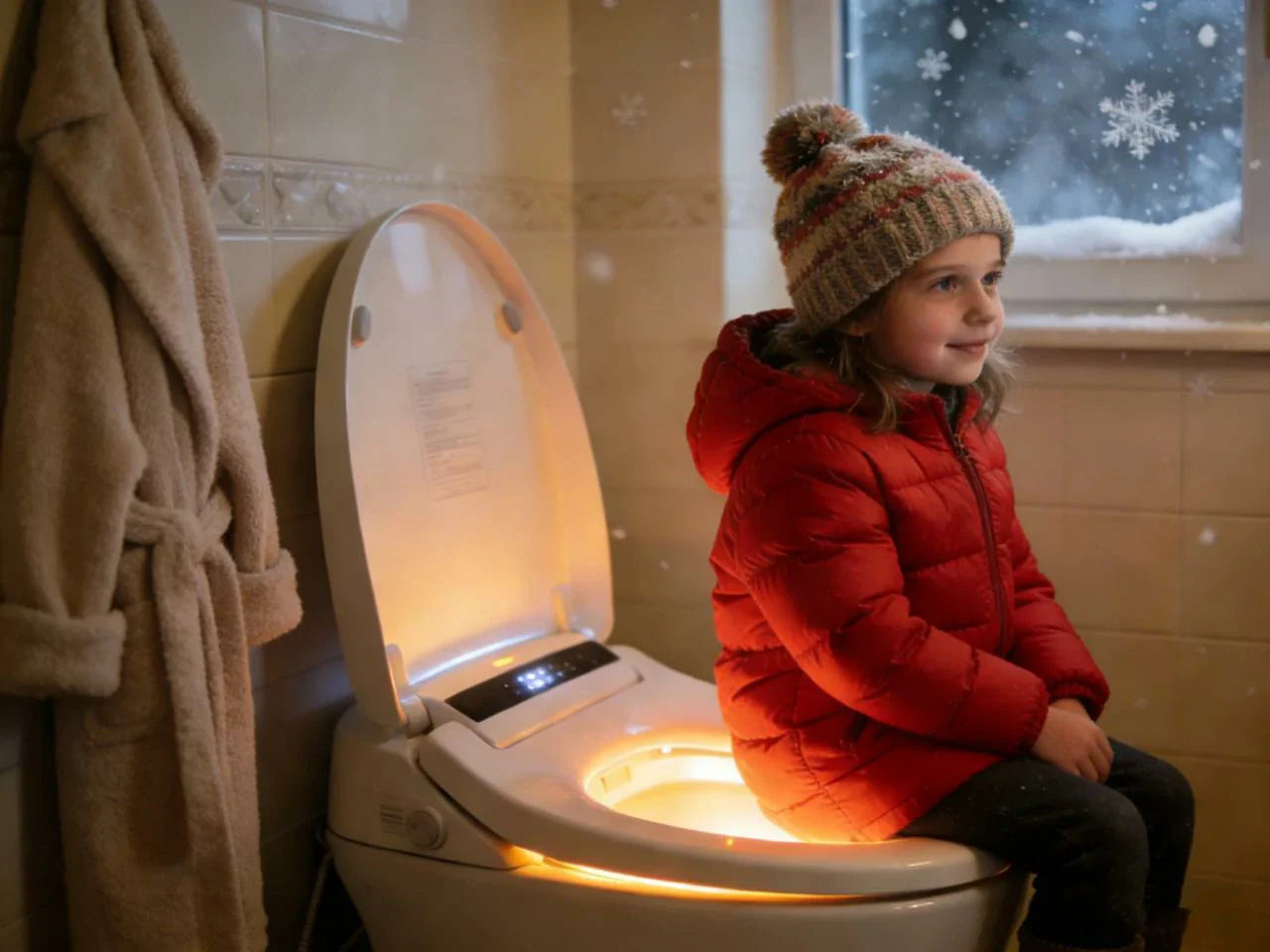
A smart toilet with a warm air dryer sounds simple: wash with warm water, enjoy customizable water and seat temperature, dry with warm air, reduce or eliminate the need for toilet paper, and take advantage of all the smart features a smart toilet offers, including a heated seat and hands-free flush.
In real homes, it’s a little more nuanced.
The dryer is the make-or-break feature. Some people love the “wash + dry” routine and never go back. Others like the wash but get impatient with drying time and end up keeping a small amount of toilet paper anyway. The best choice depends less on “features” and more on your bathroom layout, who uses the bathroom, and how patient you are with air drying.
This guide is built to help you make a confident first decision: integrated smart toilet vs bidet seat with warm air dryer vs simpler options—and avoid the common regrets.
Decision Snapshot: smart toilet with warm air dryer vs bidet seat vs basic toilet
Whether a smart toilet with a warm air dryer is worth it depends less on the features themselves and more on how the bathroom is used. Primary ensuites, shared family baths, and guest-facing powder rooms all have very different tolerance levels for drying time, electronics, and learning curves. This snapshot compares an integrated smart toilet, a bidet seat with warm air dryer, and a basic toilet so you can quickly match the right setup to your space and habits.
Choose an integrated smart toilet if you want the most “hands-free + spa” experience (and can live with drying time)
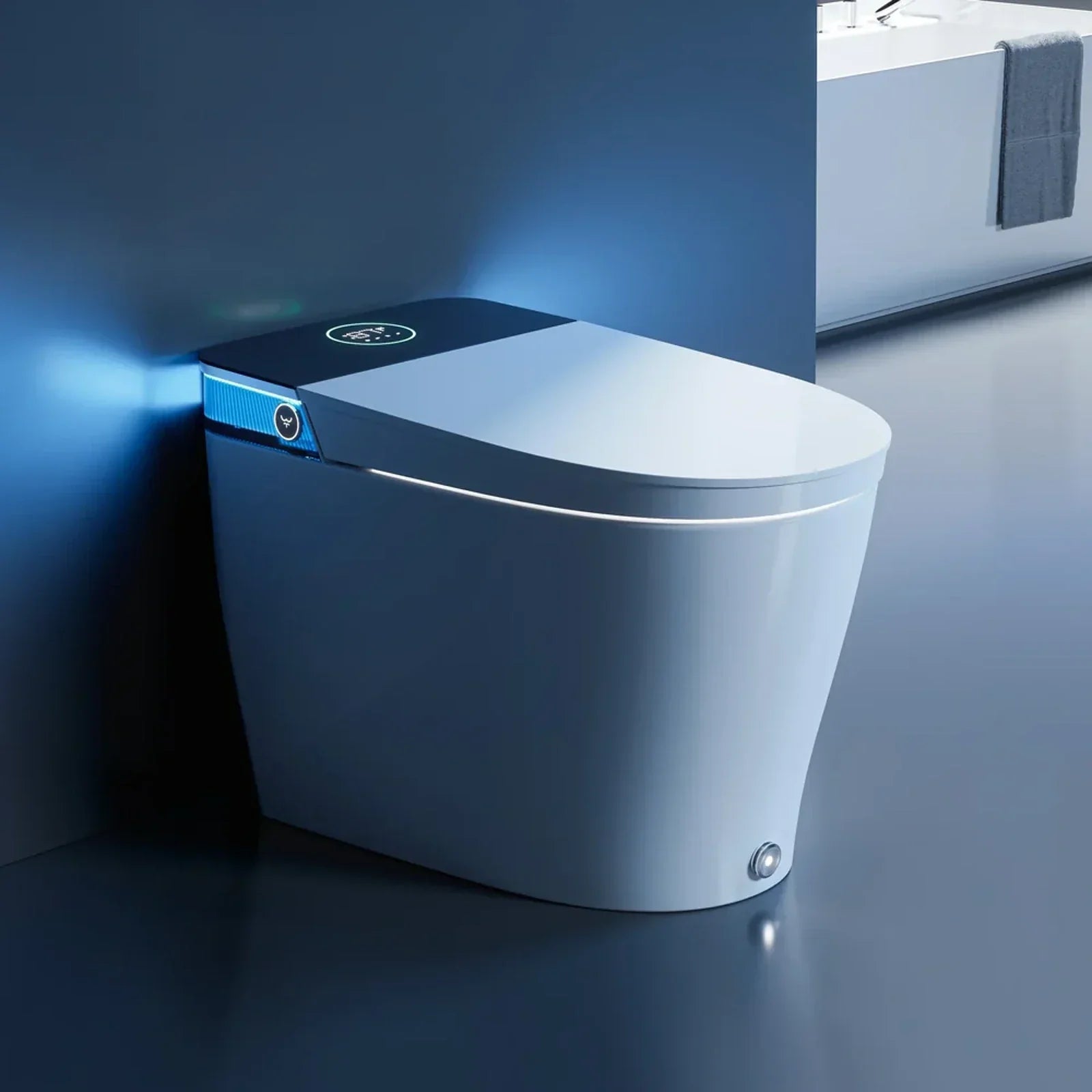
Avoid an integrated unit if you’re sensitive to repair risk or you can’t tolerate downtime. If it fails, you’re servicing the whole toilet, not swapping a seat. An integrated smart toilet (a toilet with bidet, heater, dryer, and controls built in) makes sense if:
-
This is your primary bathroom and you’ll use it daily.
-
You value hands-free features (automatic flush, auto open/close, foot sensor) and a clean, streamlined look.
-
You’re comfortable with a 1–4 minute dry cycle (more on that below).
-
You have the space and the power outlet situation to support it.
Choose a bidet seat with warm air dryer if you want 80–90% of the experience for far less money and less bulk
A bidet seat with an adjustable temp bidet dryer is usually the sweet spot if:
-
You want warm water with customizable water temperature, warm air drying, and a heated seat with adjustable seat temperature, but you don’t want to replace the whole toilet.
-
You want easier replacement later (seat fails → replace seat, not the toilet).
-
You have a normal toilet and just want it to become a paperless smart bidet toilet (or close to it).
This is often the best “first step” into a heated air bidet combo.
Choose a basic toilet (or non-electric bidet) if you want the fastest, least fussy routine for family/guests
A standard toilet or a non-electric bidet attachment is best if:
-
You need simple controls for guests, kids, or older family members.
-
You don’t want to add an outlet or deal with electronics.
-
You want a routine that’s always the same in a power outage.
You can still improve hygiene a lot with a basic bidet + small amount of paper.
Rule of thumb by bathroom: primary ensuite vs shared hall bath vs powder room
-
Primary ensuite: integrated smart toilet or premium bidet seat with warm air dryer (most people are happiest here).
-
Shared hall bath: usually a bidet seat (familiar toilet + upgrade), or keep it simple if kids/guests will struggle.
-
Powder room (half bath): often not worth it. Space is tight, and guests want speed and simplicity.
Best for / Avoid if
Integrated smart toilet with warm air dryer
-
Best for: Homeowners who want a luxurious bidet experience with hands-free convenience and a dedicated power outlet.
-
Avoid if: You have tight space, multiple users need fast drying, or you dislike complicated repairs.
Bidet toilet seat with warm air dryer
-
Best for: Households needing easy repair/replace options and moderate luxury features.
-
Avoid if: You need a completely flush look or have outlet constraints.
Attachment bidet (non-electric)
-
Best for: Budget-conscious buyers, renters, or spaces without power outlets.
-
Avoid if: You want a fully automated, hands-free experience.
Basic toilet
-
Best for: Simplicity, reliability, and no electricity dependency.
-
Avoid if: You want any kind of automated or drying features.
What trade-offs actually separate these choices in real daily use?
On paper, these options differ by features. In real life, they differ by pace, patience, and tolerance for automation. Warm air dryers, feminine-care washes, hands-free sensors, and “paperless” goals all sound great—until they collide with rushed mornings, shared bathrooms, guests, and power outages. The trade-offs below focus on what actually changes in daily routines, not just what shows up on a spec sheet.
Warm air drying comfort vs “I need to get on with my day” speed
Warm air drying feels good. It’s also slower than most people expect.
In real use, you’ll see three patterns:
-
Patient users go mostly paper-free. They run the dryer long enough (often a few minutes), maybe shift slightly on the seat, and they’re done.
-
Most people become “low-paper,” not “no-paper.” They wash, do a shorter dry cycle, then use 1–3 squares to finish or check dryness.
-
Rushed users hate the dryer. If you’re the type who wants to be in and out fast, warm air drying can feel like waiting for a hand dryer that’s not quite strong enough.
The key point is: the dryer is a comfort feature and a paper-reducer. For many homes, it’s not a total paper replacement.
Best choice:
-
Integrated smart toilet: Hands-free, comfortable drying, but slower cycle.
-
Bidet toilet seat: Moderate comfort, faster than integrated units.
-
Attachment / standard toilet: Minimal drying, immediate readiness.
Best bidet for feminine care vs simplest controls anyone can use
If “best bidet for feminine care” is part of your search, you’re usually looking for:
-
Front wash that’s gentle and aimed correctly
-
Adjustable water pressure and temperature
-
A routine that avoids irritation (especially during menstruation, postpartum, or with sensitive skin)
A good smart bidet can help a lot, but the controls matter. A shared bathroom often creates friction:
-
A wireless remote is easy once you learn it, but guests may not.
-
Too many buttons can make people nervous (they don’t want an accidental spray).
-
Some users prefer a simple side control knob over a remote.
If feminine care is a priority, put your money into:
-
Better nozzle positioning (front and rear)
-
More precise pressure steps
-
Stable warm water Not into flashy extras.
Paperless smart bidet toilet goals vs realistic hybrid habits (still keeping a little TP)
Even people who love bidets often keep a small roll of toilet paper around. Reasons include:
-
Quick “pat dry” when you don’t want to wait
-
Checking cleanliness (especially for kids learning)
-
Guests who won’t use the bidet
-
Power outage or a control issue
If your goal is an eco-friendly drying toilet setup, a realistic plan is:
-
Use bidet washing as the main clean
-
Use warm air drying as the main dry
-
Keep paper as a backup, and expect use to drop a lot (not necessarily to zero)

Hands-free features (auto flush/auto open/foot sensor) vs misfires, confusion, and loss of control
Hands-free features sound perfect, but here’s what I see trip people up:
-
Auto flush timing can feel “bossy.” If it flushes before you’re ready, it’s annoying. If it waits too long, it’s awkward.
-
Foot sensor operation is great when your hands are full, but kids may trigger it by accident.
-
Auto open/close can be helpful for hygiene, but some people find it surprising at night.
If you like full control, you may prefer:
-
Manual flush + bidet functions
-
Or a bidet seat that upgrades cleaning without changing how the toilet “behaves”
3-bullet “Non-negotiables to decide first”
-
Drying patience: Will you tolerate 1–3 min warm air cycles?
-
Outlet / GFCI availability: Is there a nearby power source?
-
Space / height limits: Will the unit fit comfortably for all users?
Cost & value: where the money goes—and when it’s wasted
The real cost difference isn’t just the price tag—it’s what you’re actually paying for and whether your household will use it. Integrated smart toilets bundle everything into one sleek package, bidet seats upgrade what you already own, and attachments chase simplicity. This section breaks down where the money truly goes, which costs show up later, and the common ways people overspend on features that don’t improve daily life.
Upfront pricing reality: integrated smart toilet vs bidet toilet seat vs bidet attachment
Prices vary widely, but budget gate help you decide what category you’re even shopping in:
-
Integrated smart toilet with warm air dryer: typically the highest cost You’re paying for the whole toilet (bowl, trapway, flush system) plus bidet, heat, dryer, sensors, and styling.
-
Bidet toilet seat with warm air dryer: mid-range You keep your existing toilet and replace the seat/lid with a smart bidet seat.
-
Bidet attachment (non-electric or basic electric): lowest cost Usually no dryer, sometimes no warm water unless you add a separate warm water line or choose an electric model.
Where people waste money is choosing the most expensive category when their bathroom or household habits don’t support it.
Ongoing costs: electricity for heat/dryer, filters/parts, and what “TP savings” really offsets
A advanced smart toilet uses electricity for:
-
Heated seat
-
Water heating (often tankless/instant warm water)
-
Warm air drying
-
Deodorizer fan (if included)
-
Night light / LED display
In most homes, this won’t be a huge power bill shock, but it’s not “free.” If you run heat and dryer a lot, you will notice some cost.
You may also have:
-
Filters (water filters or deodorizer filters)
-
Wear items (seat bumpers, remote batteries, etc.)
Toilet paper savings are real for many households, but don’t buy expecting it to “pay for itself” quickly. The value is mostly comfort, hygiene, and convenience.
Value traps: paying for app profiles, LED displays, or auto features you won’t use
Here are advanced features that sound great but often end up ignored:
-
App profiles: Many people set it once and never touch it again. In a shared bathroom, profiles can confuse more than help.
-
Big LED displays: Helpful for some users, but not required for a good wash/dry.
-
Too many auto behaviors: Auto open, auto close, auto flush, auto deodorize—great for tech lovers, annoying for others.
Spend for outcomes you feel every day:
-
Stable warm water
-
Useful pressure steps
-
Comfortable seat heating
-
A dryer with adjustable temperature (and ideally adjustable airflow)
Warranty and customer support: why repair risk is different for built-in vs add-on seats
This is a quiet but important decision point:
-
If a bidet seat fails, you can usually swap the seat and still have a working toilet that day.
-
If an integrated smart toilet fails, you may lose your toilet until it’s repaired.
For many homeowners, that alone pushes them toward a bidet toilet seat first—especially in a one-bathroom home.

Fit, space, and install realities that push buyers one way or the other
No feature matters if the toilet doesn’t physically fit the room—or the people using it. Small bathrooms, tight clearances, outlet locations, and seat height all quietly push buyers toward or away from integrated smart toilets. This section focuses on the layout and installation details that most often decide whether a warm-air-dryer smart toilet is a great upgrade or an expensive return.
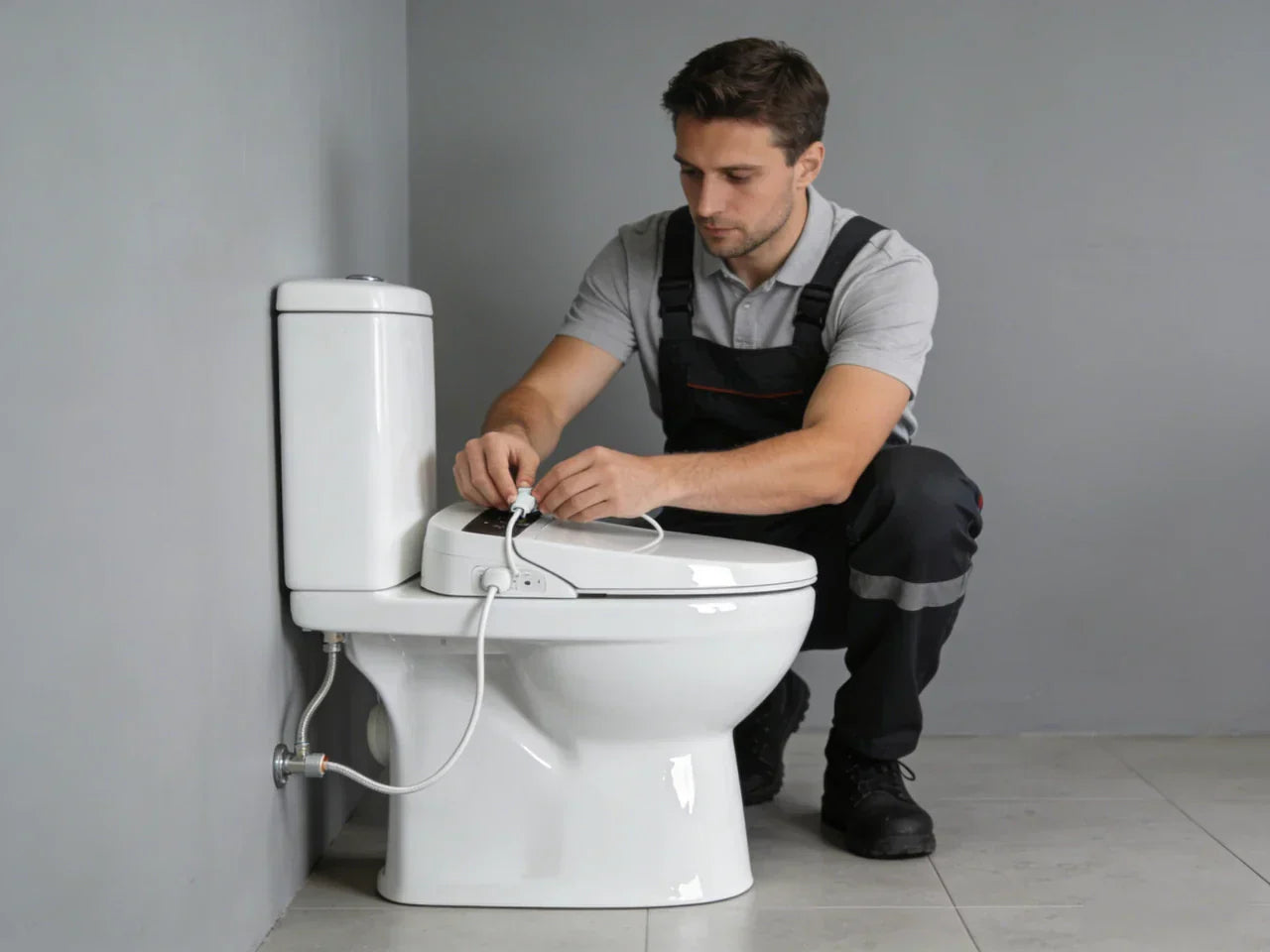
Rough-in, power outlet/GFCI, water line, and tankless requirements that can kill the plan
Before you fall in love with a model, confirm these basics:
-
Rough-in distance: Most toilets are a standard rough-in, but you must measure from the wall to the closet bolts.
-
Power: Many smart toilets and bidet seats require a nearby outlet. Bathrooms should use GFCI protection. If there’s no outlet, add electrician cost and timing.
-
Water shutoff access: You want to reach the shutoff easily, not buried behind the skirt or base.
-
Tankless / instant warm water: Many smart units heat on demand. That can mean higher draw during operation and a need for reliable power. According to the U.S. Department of Energy, heating water on demand—like many tankless toilets do—can affect household electricity usage and efficiency.
If adding an outlet is difficult, a non-electric bidet (no warm air dryer, but simple) becomes the practical choice.
Is a smart toilet with warm air dryer worth it if I have a small bathroom?
Small bathrooms punish bulky designs.
What matters most:
-
Depth projection (how far the toilet sticks out)
-
Knee clearance in front of the bowl
-
Door swing and vanity clearance
-
The “bulk” behind the seat area (some smart toilets have a larger rear housing)
If your bathroom is tight, a bidet seat often wins because it adds fewer inches and keeps a familiar bowl shape, especially compared to bulkier one-piece toilets.
Height and posture: standard height vs comfort height, and bulky backs that can pitch you forward
This is one of the most common “I didn’t think of that” issues.
-
Seat height: Standard toilets are often lower; comfort height is taller (helpful for knees, mobility, and taller adults).
-
Posture: Some integrated smart toilets have a thicker rear section. That can change how you sit and can feel like it tips you slightly forward.
If anyone in the home has knee/hip issues, measure carefully and prioritize comfort height.
Decision aid: clearance/measurement checklist (elongated vs round, door swing, knees-to-bowl)
Quick measurements that prevent returns and regrets:
-
Bowl shape: elongated vs round Elongated is more comfortable for many adults, but it takes more room.
-
Toilet depth: wall to front edge of bowl Compare to your current toilet and your clearance.
-
Side clearance: centerline of toilet to vanity/tub Tight side spaces can make wider smart seats awkward.
-
Front clearance: bowl front to door/obstacle If your knees already feel close, don’t add bulk.
-
Outlet location: can the cord reach without an extension cord? (Most manufacturers advise against extension cords in bathrooms.
Usage patterns: who thrives with warm air drying—and who gets annoyed
Warm air drying isn’t a universal upgrade—it rewards certain habits and irritates others. Patience, schedule pressure, shared-bath dynamics, and even climate all shape whether the dryer feels like a spa feature or a daily annoyance. This section looks at who actually thrives with warm air drying, who ends up half-using it, and where expectations most often break down in real households.
Does the warm air dryer really replace toilet paper, or just reduce it?
Most homeowners land in “reduce”—and that’s still a win.
Here’s what to expect with a warm air dryer:
-
It can dry you fully, but it usually takes time.
-
It works best after a good wash and a brief “drip pause.”
-
Many people use a tiny amount of paper to finish faster.
If your goal is truly paperless, be honest about your patience. If you’re okay with a 2–4 minute routine, you’re a good candidate.
How long does the drying cycle take?
Drying time depends on airflow strength, temperature, and personal preference, but a practical range is:
-
Quick dry: ~60–90 seconds (often still slightly damp)
-
Comfortable dry: ~2–3 minutes for many users
-
Very dry / no paper: sometimes ~3–5 minutes
If you’re sharing one bathroom with multiple people getting ready for work/school, that extra time can matter. If you won’t wait 2–3 minutes, choose a bidet seat or non-electric attachment.
Can you adjust the air temperature (and does it matter)?
Most smart toilets with warm air drying and many bidet seats offer adjustable temp bidet dryer settings (often low/medium/high).
Yes, it matters because:
-
Higher heat can feel nicer in winter, but may dry skin more.
-
Lower heat can feel gentler for sensitive skin.
-
Some users prefer warmer air with lower airflow to reduce noise.
If you have sensitive skin, look for separate control of air temperature and airflow (not just “dryer on/off”).
Is the dryer hygienic?
A warm air dryer in a smart toilet is not the same as a shared bathroom hand dryer in a public restroom.
In normal home use:
-
The air is typically warmed by an internal heater and directed to you through a duct.
-
Many units also run deodorizing or airflow routines.
Basic hygiene practices still apply:
-
Clean the toilet and seat area regularly.
-
Maintain any filters if your unit uses them.
-
Use the self-cleaning nozzle function, but don’t treat it as “never clean anything.”
If you’re immunocompromised or highly concerned, focus on models with:
-
Strong cleaning routines
-
Easy-to-clean surfaces
-
Clear maintenance instructions you’ll actually follow
Is the air dryer loud?
Usually it’s not “wake the house” loud, but it can be noticeable—more like a small fan than a whisper.
Noise depends on:
-
Fan speed (higher airflow is louder)
-
Bathroom acoustics (tile echoes)
-
Whether deodorizer fans also run
If noise matters, plan on using a lower airflow setting and accept a longer dry time.
Solo/couple “preset routine” vs shared bathroom friction (remote control, guests, kids, elderly)
Warm air drying works best when people can build a routine:
-
Sit → wash → short pause → dry → done
That’s easy for one or two adults. In a shared bath, you may see:
-
Remotes “walk away” from their holder
-
Kids pressing random buttons
-
Guests refusing to use it and asking where the normal flush handle is
If this is your hall bath, consider a bidet seat with:
-
Simple controls
-
A clear “stop” button
-
Optional child mode (or at least low pressure settings)
Cold-climate priority: heated seat + instant warm water vs slower warm-up/seat-dryer patience
If you live in a cold climate, you’ll probably care more about:
-
Heated seat
-
Instant warm water
-
Consistent temperature
These are the features you feel immediately. The dryer is nice, but it’s still a “time trade.”
Hands-free hygiene: auto flush and foot sensor operation vs “I didn’t mean to flush” moments
Hands-free flush is great when it’s predictable. Based on the CDC’s hygiene guidelines, hands-free features like auto-flush and touchless controls help reduce the risk of germ transfer in shared bathrooms.
But in practice, misfires happen:
-
Standing up triggers flush before you’re ready
-
A child waves a foot near a sensor
-
A pet brushes past (yes, it happens)
If you know your household is chaotic, choose:
-
A unit with manual override
-
Or skip auto flush and keep flushing simple

Maintenance and long-term ownership: what breaks, what smells, what you still clean
Smart toilets make cleaning easier in some areas, but they don’t make maintenance vanish. From mineral buildup and filters to power outages and self-cleaning limits, ownership still requires attention. This section outlines what breaks, what still needs scrubbing, and the trade-offs between a replaceable bidet seat and a fully integrated smart toilet over the long term.
Self-cleaning wands vs what you’ll still scrub (toilet bowl, nozzles, skirted edges)
Self-cleaning wands help, but they don’t eliminate cleaning.
You’ll still clean:
-
The toilet bowl (normal bathroom cleaning)
-
Under/around the seat hinges
-
The exterior surfaces and the floor around the base
Some smart toilets have skirted sides that look sleek but can make certain edges harder to reach. Others are easier because there are fewer grooves than older-style toilets.
Mineral buildup, deodorizer/filters, and when “self-cleaning” still needs human upkeep
If you have hard water, plan for mineral buildup over time.
What helps:
-
Regular cleaning schedule (light cleaning more often beats deep scrubbing later)
-
Following the manufacturer’s descaling guidance
-
Using filters if your unit requires them, and replacing on schedule
If you ignore mineral buildup, you may see weaker spray, odd aiming, or more frequent maintenance issues.
Controls and learning curves: wireless remote, night light, and what happens during a power outage
A wireless remote is convenient, but plan for:
-
Remote batteries (easy, but don’t forget)
-
Teaching guests the basics (“press stop” is the main one)
-
Night light usefulness (many people like it more than they expected)
Power outage reality:
-
Some units still allow a manual flush; others may need a backup method.
-
Warm water, heated seat, and warm air drying will not work without power.
If outages are common where you live, keep expectations realistic.
Repairability fork: replacing a bidet seat vs servicing an integrated luxury bidet toilet
This is the ownership fork:
-
Bidet seat: easier to replace, less downtime, simpler upgrade path
-
Integrated smart toilet: cleaner look, more built-in features, but more dependency on specialized parts/service
If you have only one bathroom, that downtime risk is not theoretical. It changes the decision.
If you skip the full smart toilet: which alternative fits your constraints best?
Not everyone needs—or can fit—a full smart toilet. Fortunately, there are alternatives that capture most benefits without the cost, space, or repair risk. This section explores which option—advanced bidet seat, simple non-electric attachment, or standard toilet—best matches your bathroom constraints, budget, and daily habits.
Best “close substitute”: adjustable temp bidet dryer seat (heated air bidet combo without replacing the toilet)
If you want the smart toilet experience without committing to a full replacement, an advanced bidet toilet seat is often the best match:
-
Warm water wash
-
Heated seat
-
Adjustable warm air drying
-
Remote control and presets
-
Self-cleaning nozzle routines
It also solves two common problems:
-
Tight bathroom spaces
-
Repair risk (swap the seat if needed)
For many homeowners, this is the best first upgrade.
Lowest-cost hygiene: non-electric bidet attachment + better paper (fast, renter-friendly, minimal failures)
If you want the simplest setup:
-
A non-electric bidet attachment gives you effective cleaning with fewer parts that can fail.
-
Pair it with softer, lower-lint toilet paper for a faster dry/check.
You lose:
-
Warm water (usually)
-
Heated seat
-
Warm air dryer
But you gain:
-
Simple use for guests
-
No outlet required
-
Lower cost and fewer repairs
Eco-friendly drying toilet goal on a budget: bidet + small TP “finish” vs waiting minutes to air dry
If your main driver is using less paper, the most realistic eco-friendly plan is:
-
Use bidet water cleaning
-
Use a short warm air dry if you have it
-
Use a small amount of paper only when needed
This cuts paper use sharply without forcing you into long dry cycles every time.
When a standard toilet wins: resale concerns, ultra-tight spaces, and zero tolerance for tech issues
A standard toilet is still the right answer when:
-
You’re selling soon and don’t want a niche feature question
-
The space is so tight that any added bulk hurts comfort
-
You do not want electronics in the bathroom, period
-
Your household needs zero learning curve
You can always add a bidet later.
Final decision tools: narrow your choice in 10 minutes
By this point, you’ve seen features, trade-offs, costs, space limits, and daily-use realities. Now it’s time to focus: this section gives practical tools—checklists, side-by-side tables, and installer-ready prompts—to narrow your choice in about 10 minutes and pick the toilet or bidet setup that truly fits your home and habits.
“Dealbreaker” filter: drying time tolerance, height requirements, and shared-bathroom complexity limit
-
Drying time tolerance >2 min → integrated/seat; else → attachment/standard
-
Height requirement = comfort → only compatible units
-
Shared bathroom / downtime unacceptable → choose bidet seat or standard
Choose-this-if checklist by priority
Pick the option that matches most of your “yes” answers:
Integrated smart toilet with warm air dryer
-
Yes, this is my primary bathroom and I want a clean, built-in look.
-
Yes, I want auto flush/auto open or foot sensor flush.
-
Yes, I’m fine with a longer routine to dry fully.
-
Yes, I have space and can add/confirm a proper outlet.
-
Yes, I’m okay with more complicated repairs if something fails.
Bidet seat with warm air dryer
-
Yes, I want warm water + warm air drying + heated seat.
-
Yes, I want lower cost and easier replacement later.
-
Yes, my current toilet is in good shape and comfortable height.
-
Yes, I want an easier install than replacing the whole toilet.
Non-electric bidet attachment (or basic electric without dryer)
-
Yes, I want simple and reliable.
-
Yes, I don’t want to run power to the toilet.
-
Yes, fast use matters more than heated comfort.
-
Yes, this is a shared bathroom or guest bath.
Standard toilet (no bidet)
-
Yes, simplicity is the top goal.
-
Yes, guests and kids need “normal.”
-
Yes, I don’t want any maintenance beyond basic cleaning.
Side-by-side comparison table: integrated smart toilet vs bidet seat vs attachment vs traditional toilet
| Feature / Concern | Integrated smart toilet | Bidet seat with warm air dryer | Bidet attachment (non-electric) | Traditional toilet |
| Warm water | Usually yes (often tankless) | Usually yes (electric models) | Usually no | No |
| Warm air dryer | Yes | Many models yes | No | No |
| Heated seat | Yes | Many models yes | No | No |
| Hands-free (auto flush/open/foot sensor) | Common | Sometimes | No | No |
| Drying time | 1–5 minutes typical | 1–5 minutes typical | N/A | N/A |
| Toilet paper reduction | High (often not zero) | High (often not zero) | Medium to high | None |
| Install difficulty | Highest (plumbing + power) | Medium (power + seat) | Low | Medium |
| Space risk (bulk) | Highest | Medium | Low | Low |
| Repair downtime risk | Higher | Lower | Low | Lowest |
| Best for | Primary ensuite, tech lovers | Most homes, best value | Budget, rentals, simple homes | Minimalism, resale, no tech |
Installer-ready checklist: measurements, gallons per flush/dual flush needs, outlet location, shutoff access
If you’re leaning toward an integrated unit or a bidet seat, check these before you buy:
-
Measure your rough-in (wall to closet bolts)
-
Confirm elongated vs round bowl compatibility (for seats)
-
Measure front clearance (bowl to door/vanity)
-
Check toilet height needs (standard vs comfort height)
-
Locate outlet (GFCI-protected) and confirm cord reach
-
Confirm water shutoff is accessible
-
Consider gallons per flush and whether you want dual flush

Before You Buy Smart Toilet with Warm Air Dryer (quick checklist)
-
Confirm elongated vs round fit (especially for a bidet seat).
-
Measure rough-in and bathroom clearances (door swing, knees-to-bowl).
-
Verify a GFCI-protected outlet is available without using an extension cord.
-
Decide your drying patience level (short dry + 1–3 squares vs truly paperless).
-
Check toilet height needs (standard vs comfort height).
-
Plan for hard water (cleaning/descaling routine).
-
Make sure the water shutoff will remain reachable after install.
-
If it’s a shared bath, choose simple controls + an obvious STOP button.
-
Confirm manual flush capability during power outage (Yes/No)
-
Confirm water shutoff remains accessible after installation (Pass/Fail)
FAQs
1. Does the air dryer really replace paper?
For most users, a smart toilet with warm air dryer can replace toilet paper for daily drying after washing. Once the bidet wash is done, the warm airflow removes surface moisture well enough that you don’t feel wet or uncomfortable when standing up. In practice, many households treat it as a paperless smart bidet toilet solution, keeping paper only for guests or rare quick touch-ups. Over time, this setup significantly reduces paper use, making it both convenient and more eco-conscious.
2. How long does the drying cycle take?
A typical heated air bidet combo drying cycle lasts about 90 seconds to 3 minutes, depending on airflow strength and model quality. Most people don’t wait for the full cycle—around one to two minutes is usually enough to feel dry and comfortable. Higher-end smart toilets tend to dry faster thanks to better air direction and stronger fans, while basic models may take slightly longer. After regular use, the timing feels natural rather than slow.
3. Can you adjust the air temperature?
Yes. Most modern models include an adjustable temp bidet dryer, usually offering multiple heat levels from room temperature to gently warm air. This flexibility matters more than people expect: warmer air feels soothing in colder months, while lower settings work well in warm climates. Temperature control is especially appreciated by users who want a customized, comfortable experience rather than one fixed airflow setting.
4. Is the dryer hygienic?
A well-designed dryer in a smart toilet is generally hygienic. Air is drawn in through an internal intake and often passes through basic filtration or deodorization before being warmed and directed downward. Because there’s no physical contact, an eco-friendly drying toilet can actually reduce cross-contamination compared to shared paper or towels. Regular cleaning and occasional filter maintenance (if applicable) help keep the system fresh and reliable over long-term use.
5. Is the air dryer loud?
Noise levels are usually moderate—similar to a quiet bathroom exhaust fan or a hair dryer on low. Most users find it noticeable but not disruptive, even during nighttime use. Premium smart toilets are typically quieter due to better insulation and airflow design. For users prioritizing comfort, privacy, or the best bidet for feminine care, a quieter warm air dryer can make the overall experience feel more relaxed and discreet.
References


Leave a comment
This site is protected by hCaptcha and the hCaptcha Privacy Policy and Terms of Service apply.