
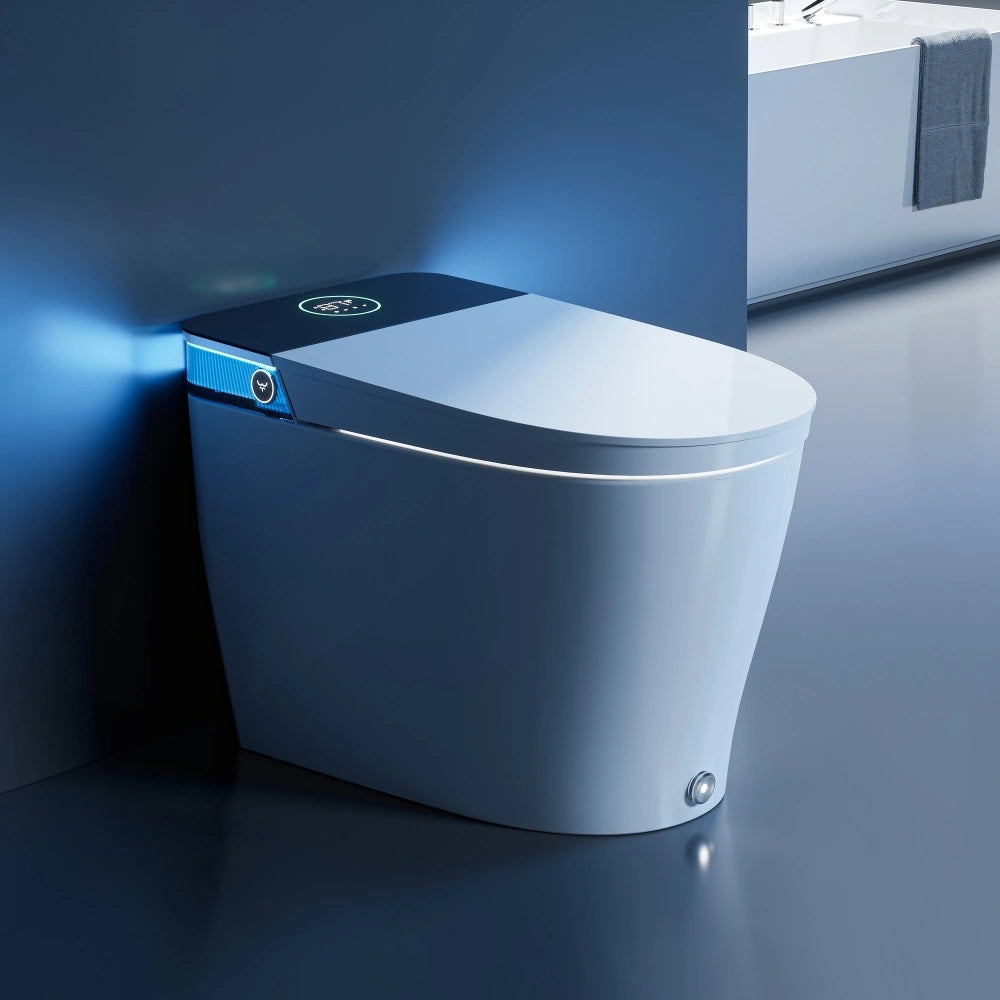
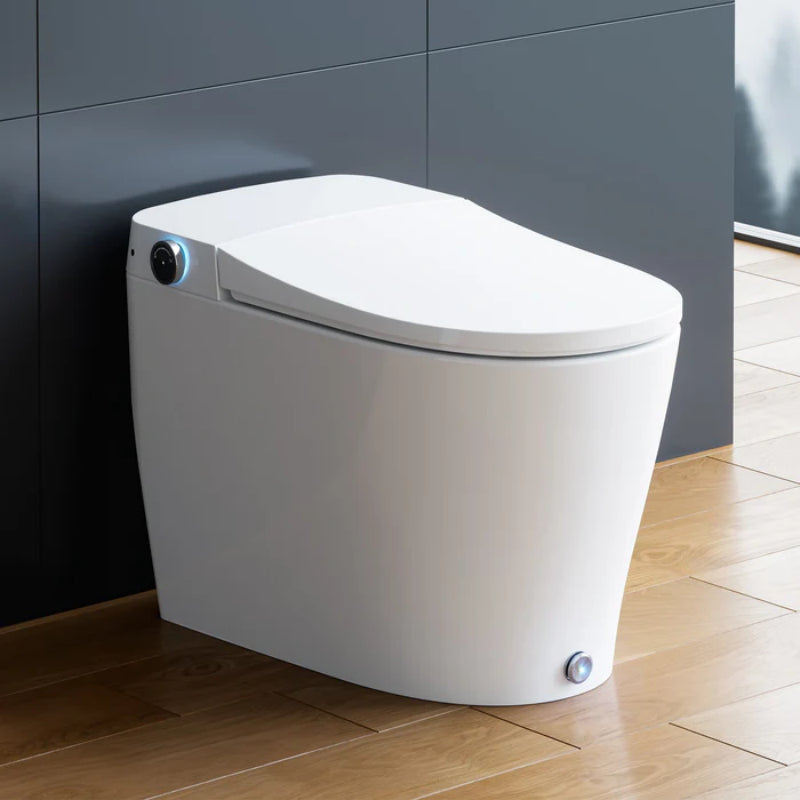
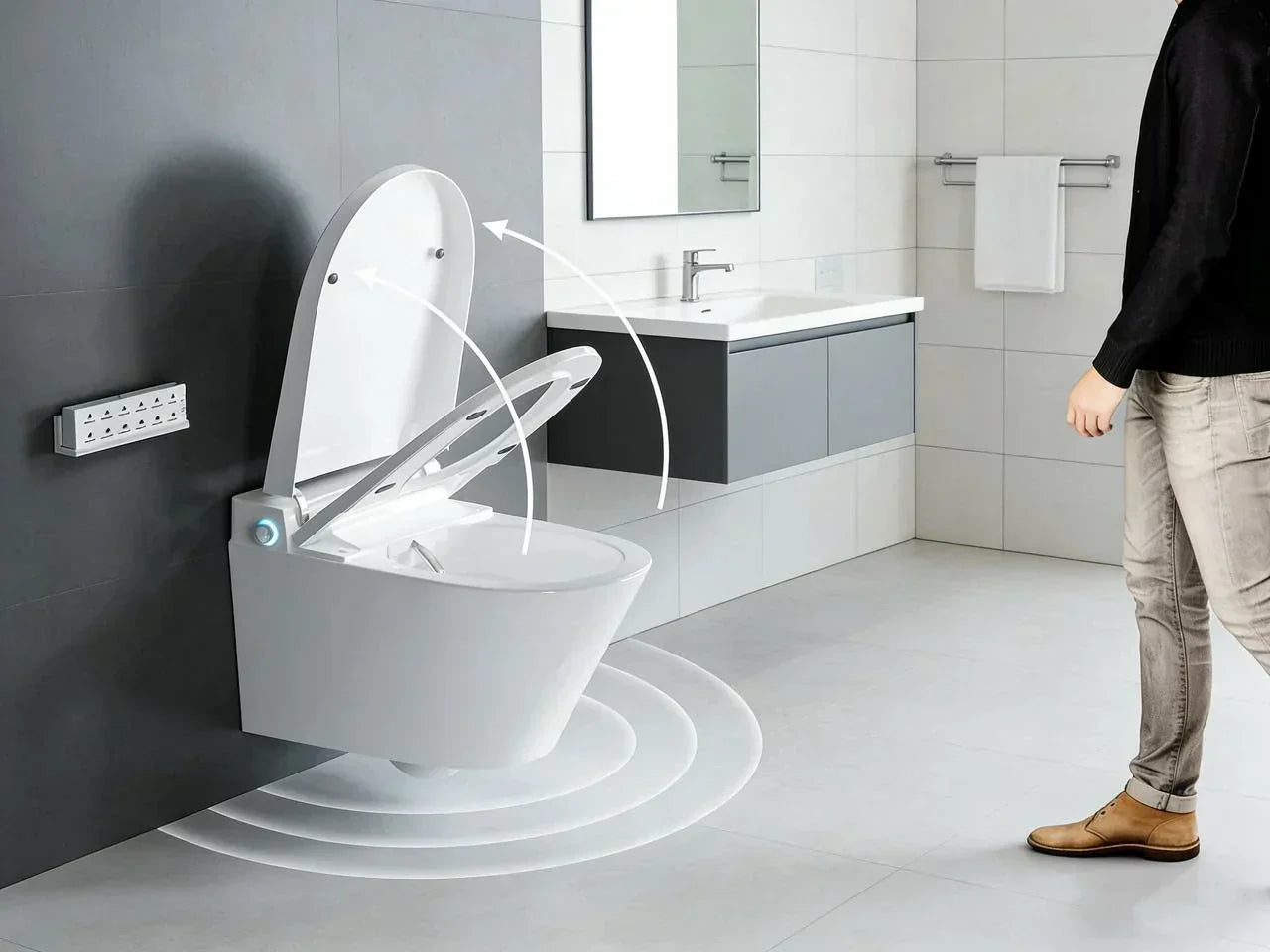
Smart Toilet With Automatic Lid: Quick Answer
-
Whether the lid opens through an approach sensor, foot control, remote control, or a combination of controls
-
Whether automatic opening and automatic flushing can be controlled separately
-
Whether the control moves only the lid or both the lid and seat
-
How the toilet can be flushed during a power outage
Decision checklist: what you will actually use each week
-
Approach sensor, foot control, or remote-operated lid movement
-
Heated seat and available temperature settings
-
Warm water and adjustable water pressure
-
Warm air dryer and adjustable drying settings
-
Remote control and clearly labeled manual controls
-
Automatic flushing and available manual backup controls
-
An approved power-outage flushing method
Do not buy an automatic-lid model before checking these conditions
-
Your toilet sits in a high-traffic zone, hallway bath, powder room, or door-swing path
-
You have not measured clearance in front of, above, and beside the toilet
-
You prefer fully manual controls and do not want automatic movement
-
You have not confirmed the outlet, GFCI, water-supply, and power-outage requirements
The trade-offs that separate hands-free convenience from added complexity
Installation reality: electrical access, plumbing fit, and bathroom clearance
-
Rough-in and overall product dimensions
-
Lid-opening, door-swing, front-clearance, and side-clearance requirements
-
Voltage, outlet location, GFCI requirements, and permitted cord routing
-
Water-supply connection and required water pressure
-
The approved flush procedure during a power outage
How automatic-lid controls differ
| Control type | How it works | Room fit | What to confirm |
| Approach sensor | Opens when the system detects an approaching user. | Bathrooms with a clear and predictable approach path. | Trigger zone, available sensitivity settings, and whether automatic opening can be disabled. |
| Foot control | Uses a deliberate foot action near the base. The exact lid, seat, or flush response varies by model. | Shared bathrooms or rooms exposed to passing traffic. | Whether it opens the lid, moves the seat, starts a flush, or performs more than one action. |
| Remote or side control | Opens or closes the lid when the user selects the corresponding control. | Users who prefer intentional control over automatic movement. | Whether the control remains available when automatic opening is turned off. |

Integrated smart toilet vs bidet seat upgrade: seamless design vs easier replacement
-
An integrated smart bidet toilet with built-in electronic functions
-
A bidet toilet seat that replaces the seat on a compatible existing toilet
-
Do you want one integrated fixture, even if servicing its electronic components may be more specialized?
-
Do you prefer a modular seat that can be replaced without changing the toilet body?
Automatic opening and closing vs manual control: convenience vs unwanted movement
-
The system reacting differently when the user moves away from the detection area
-
The lid opening while someone is cleaning or moving near the toilet
-
Guests being unsure whether to use the remote, side panel, foot control, or automatic sequence
-
A setting that disables automatic lid opening
-
A remote or side control for opening and closing
-
Controlled, quiet lid movement suitable for nighttime use
Seat height and user fit
-
A taller seat may require less lowering and rising for some users
-
A lower or standard-height seat may suit shorter users and children better
-
The shape of an integrated base can affect how the toilet feels even when two models have similar listed heights

Cost and value differences that change the decision
What changes when you move from a bidet seat to an integrated automatic-lid toilet
-
Non-electric bidet attachment: no electrical connection, heated water, dryer, or motorized lid
-
Electric bidet seat: may include a heated seat, warm water, adjustable pressure, and dryer while retaining the existing toilet body
-
Integrated smart bidet toilet: may add automatic flushing, automatic lid controls, built-in plumbing components, lighting, and additional electronic controls
-
The motorized lid mechanism and its controls
-
Automatic flushing and additional electronics
-
The integrated toilet body, bidet system, and internal water-management components
Ongoing electricity and water use
-
Water heating
-
Seat heating
-
Warm-air drying
-
Sensors, displays, pumps, and lighting
When a bidet seat may provide better value
-
You want bidet washing more than automatic lid movement
-
The bathroom is shared by children, guests, or frequent visitors
-
You want to replace the electronic seat separately if service is needed
-
The bathroom layout is tight and the automatic lid could interfere with nearby fixtures
Fit, space, and layout constraints that affect automatic-lid toilets
Is a smart toilet with an automatic lid suitable for a small bathroom?
-
An inward-swinging door that passes close to the toilet
-
A vanity, shelf, or wall that interferes with lid movement
-
Limited front clearance for seated users
Traffic-zone conflicts near doors, walk paths, and vanities
-
Walking past an open bathroom door
-
Reaching into the bathroom for a towel or other item
-
Using a nearby sink or vanity
-
A suitable detection zone for the room
-
The ability to disable automatic opening
-
An intentional foot, remote, or side-control alternative
One-piece elongated, compact, and wall-mounted layouts
-
A one-piece toilet body
-
An elongated bowl shape that may project farther into the room than a round-front toilet
Seat height and bowl position
-
The verified seat height
-
The height and leg position of shorter household members
-
Whether children will use the toilet regularly
How household habits affect the decision
Shared household bathrooms: convenience and control
-
Another person moving near the toilet while using the sink
-
Children intentionally activating available controls
-
Guests not knowing whether to use the remote, side panel, foot control, or automatic sequence
-
A clearly labeled remote or side panel
-
An obvious manual flush control
-
Verified settings for controlling automatic lid and flush behavior

Nighttime use: lighting, lid movement, and flush noise
-
The sound of the lid motor in a quiet home
-
Whether the approach path could activate the lid during nighttime movement
-
The timing and sound of automatic flushing
-
Controlled lid opening and closing behavior
-
Available settings for automatic lid operation
-
Night-light controls and brightness settings, when available
When less manual lid handling matters
-
Verified seat height and available approach space
-
Remote-control readability and button layout
-
Available wash, seat-temperature, and flush controls
-
The approved manual or backup operation for the exact model
Guests and children: controls and accidental activation
-
A clearly marked flush control
-
A remote with recognizable icons and simple primary functions
-
Available settings for automatic flushing and lid operation
-
How the model detects an approaching or seated user
-
Whether wash pressure and temperature can be reduced
-
Whether the seat sensor and automatic flush sequence work for smaller users
-
Adjustable wash settings
-
A clearly identified manual flush backup
-
Simple controls that regular users can understand

Maintenance and long-term ownership differences
Integrated automatic-lid toilet vs bidet seat
-
A bidet seat can often be replaced without changing the toilet body
-
An integrated model provides a unified appearance but may require service for its internal electronics, lid motor, pump, or controls
Cleaning around the lid, seat, and hinges
-
Clear access to surfaces that require regular wiping
-
Smooth exterior shapes with fewer difficult-to-reach creases
-
Verified bowl-rinsing or surface-preparation features when they are included on the model
Service, parts availability, and warranty review
-
Approach or seat sensors
-
Remote controls and batteries
-
Displays and side controls
-
The motorized lid assembly
-
Coverage for electronics, lid controls, seat heating, pumps, and other components
-
Parts and labor terms
-
Replacement-part availability and service procedures
What happens during a power outage?
-
Whether the toilet can flush when household power is unavailable
-
Whether the backup method is mechanical, battery-assisted, or based on another approved procedure
-
How the lid and seat should be operated when the motor is not powered
-
☐ Confirm the approved backup-flush method
-
☐ Confirm whether a separate battery pack, battery box, or accessory is required
-
☐ Confirm the reset procedure after power returns

HOROW Smart Toilets With Automatic Lids to Compare
Among current HOROW models, the T38, T38P, X70, and T05 provide automatic lid functions. The main differences are how the lid is triggered, whether foot control moves the lid and seat or starts a flush, the toilet’s installation requirements, and the approved method for flushing during a power outage.
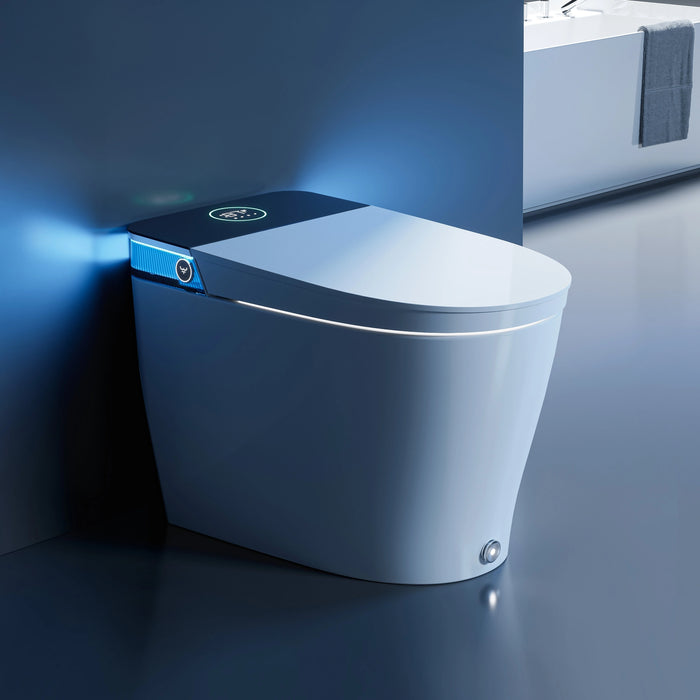
HOROW T38
Consider for buyers who want automatic lid operation plus intentional foot control for the lid and seat.
- Automatic lid opening and closing
- Foot control for the lid and seat
- Automatic, foot-control, remote-control, and button flushing
- Built-in water tank and pump for a 12-inch rough-in
Confirm before ordering: overall dimensions, outlet placement, the exact control sequence, and whether a separate accessory is required for power-outage flushing.
View HOROW T38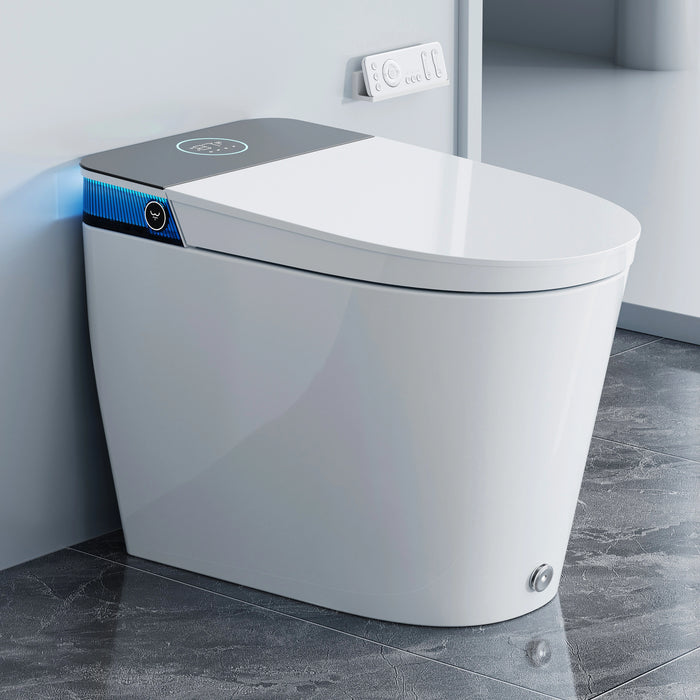
HOROW T38P
Consider for buyers comparing automatic lid controls with a taller seat-height design.
- Automatic lid opening and closing
- Approach-detection and foot-control options for the lid and seat
- Built-in water tank and dual-flush system
- Designed for a 12-inch rough-in
Confirm before ordering: overall dimensions, verified seat height, outlet placement, control settings, and the approved power-outage flush method.
View HOROW T38P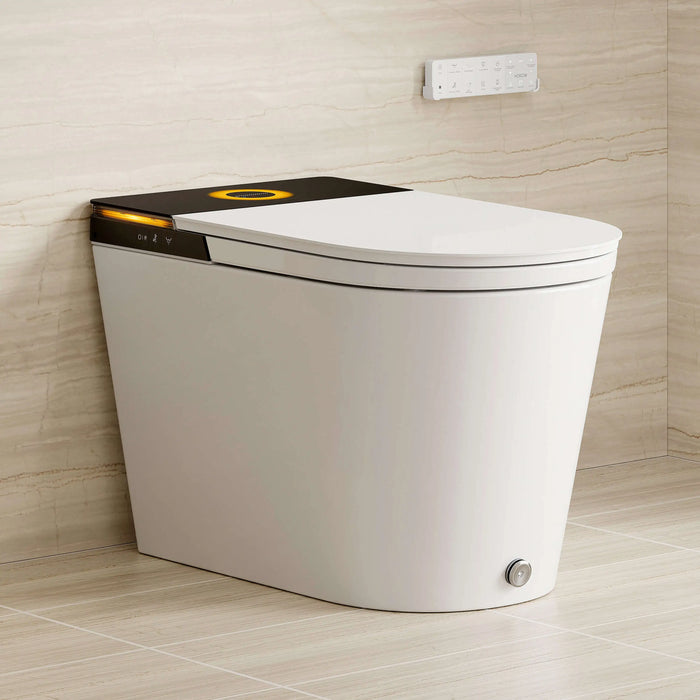
HOROW X70
Consider for households comparing automatic lid operation with a built-in tank, pump, and additional wash controls.
- Automatic lid opening and closing
- Hands-free foot-control flushing
- Built-in water tank and pump with dual flush
- Designed for a 12-inch rough-in
Confirm before ordering: the approach-sensor path, overall dimensions, outlet placement, and that the foot control operates the flush rather than the lid.
View HOROW X70
HOROW T05
Consider for buyers who want more than one way to operate both the lid and the flush.
- Automatic or foot-control lid opening and closing
- Automatic, foot-control, remote-control, and manual flushing
- Built-in water tank and booster pump
- Elongated heated seat and adjustable bidet settings
Confirm before ordering: rough-in, overall dimensions, outlet placement, available lid settings, and the approved power-outage flush method.
View HOROW T05These models illustrate why “automatic lid” is not one standardized feature. Some models combine approach detection with foot control for the lid and seat, while others use foot control only for flushing. Compare the exact controls, bathroom fit, and backup-flush requirements before choosing a model.
Need to review additional designs, heights, and flushing systems? Compare current HOROW smart toilets.
Side-by-side decision table: which setup fits your home?
| Option | Best for | Watch-outs | Common mismatch |
| Integrated smart toilet with automatic lid | Low-traffic bathrooms, users who value automation, and full toilet replacements | Requires verified electrical, plumbing, clearance, and backup-flush conditions | Installed in a busy room where the approach path causes unwanted activation |
| Smart toilet with bidet and manual lid | Users who want integrated bidet functions without automatic lid movement | Still requires model-specific electrical and installation checks | Buyer expected automatic lid operation without confirming the feature list |
| Bidet toilet seat upgrade | Shared bathrooms, compatible existing toilets, and modular replacement | Seat compatibility, electrical access, and water connections must be confirmed | Seat does not fit the bowl or does not include the expected heating and wash settings |
| Standard toilet with non-electric bidet attachment | Simple installations without electrical bidet functions | No heated seat, electric water heating, warm-air dryer, or automatic lid | Buyer expected electronic comfort features from a non-electric attachment |
-
The model’s outlet and GFCI requirements
-
Overall dimensions, lid clearance, and door swing
-
Available controls for automatic opening, closing, and flushing
-
The approved power-outage flush procedure
Key sensor questions
How far away does the sensor detect movement?
Can I disable the automatic lid?
-
Turn off automatic opening while keeping bidet and seat-heating functions
-
Control automatic flushing separately
-
Use a remote, side control, or foot control as an alternative
How should I evaluate automatic-lid durability?
-
Review the warranty terms for the lid motor, sensors, and electronics
-
Confirm whether replacement parts and service instructions are available
-
Choose a trigger method that suits the bathroom’s traffic pattern
Is a motion-sensor toilet worth it?
-
Less manual lid handling is useful to regular users
-
The bathroom has a clear and predictable approach path
-
The household will use the integrated bidet and comfort features regularly
-
The installation requirements have been confirmed before ordering
-
The bathroom is tight, shared, or exposed to frequent passing traffic
-
Users prefer fully intentional manual controls
-
The household wants a simpler replacement and maintenance path
Choose the toilet type before comparing comfort features
-
Choose between an integrated smart toilet, bidet seat, or non-electric attachment
-
Confirm bathroom fit, rough-in, electrical access, water supply, and installation conditions
-
Choose the preferred lid and flush controls: approach sensor, foot control, remote, side control, or manual operation
-
Compare heated-seat, warm-water, dryer, lighting, and other comfort functions
Before You Buy Checklist
-
Measure the door swing, front clearance, side clearance, and distance to nearby fixtures.
-
Confirm the approved power-outage flush procedure and whether a separate accessory is required.
-
Confirm the model’s electrical and GFCI requirements and budget for qualified electrical work when needed.
-
Check the rough-in, product dimensions, water-supply requirements, and floor condition before ordering.
-
Decide whether you prefer approach detection, foot control, remote control, or manual operation.
-
For the exact model, confirm whether foot control operates the lid, the seat, or only the flush. Also confirm whether automatic opening can be disabled and how the toilet is flushed during a power outage.
-
Consider regular users, guests, children, pets, nighttime traffic, and the bathroom approach path.
-
Compare the verified seat height with the needs of all regular users.
FAQs
What opens an automatic smart toilet lid?
Can I turn off automatic lid opening?
Will pets or hallway traffic trigger the lid?
How far away does the automatic-lid sensor work?
Is a smart toilet with an automatic lid worth it?
Reference




Leave a comment
This site is protected by hCaptcha and the hCaptcha Privacy Policy and Terms of Service apply.