
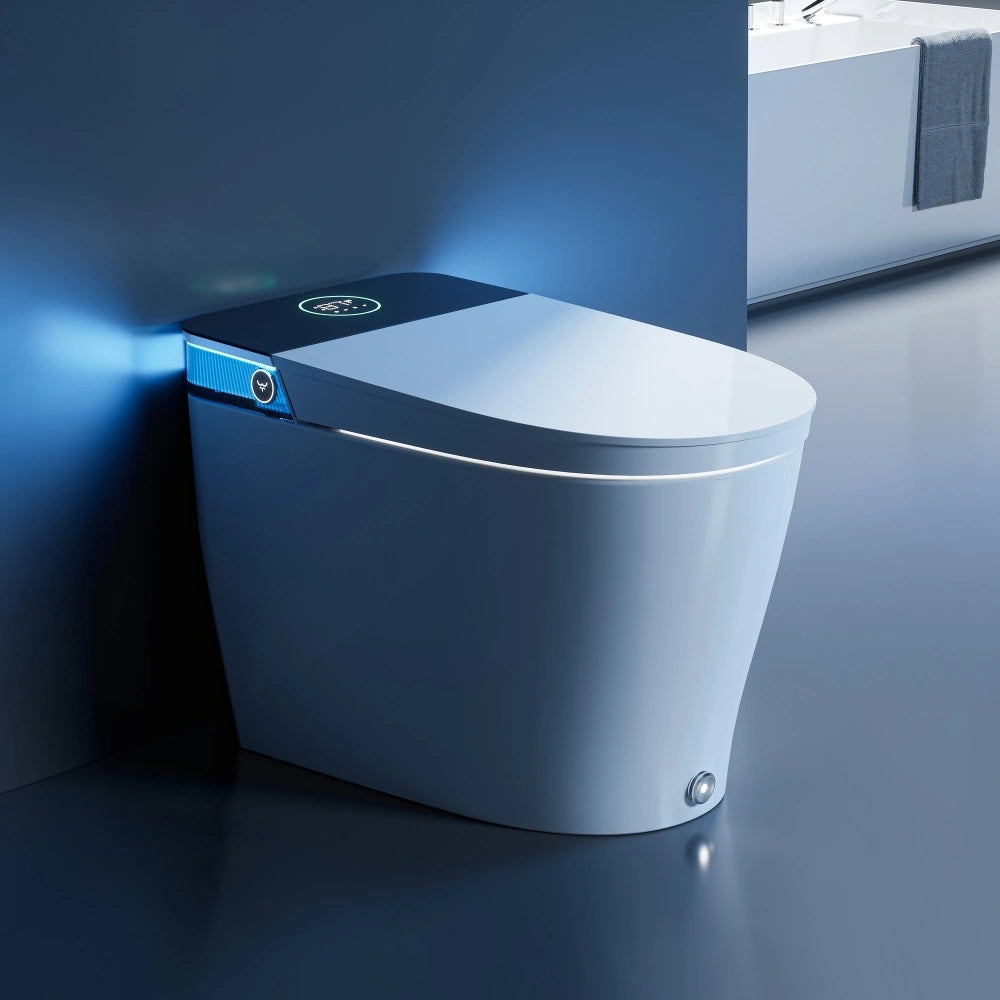
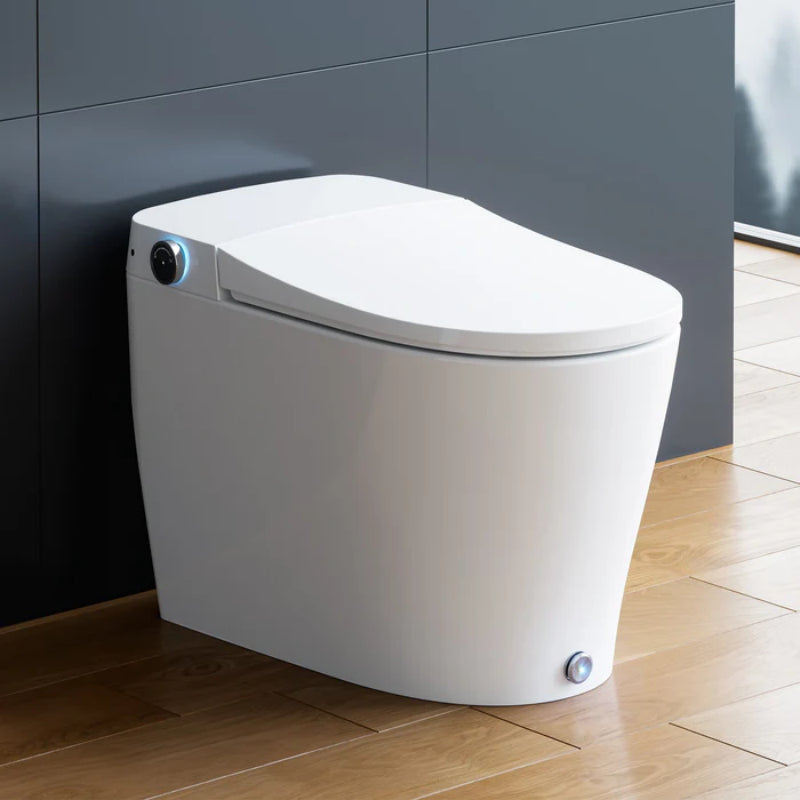
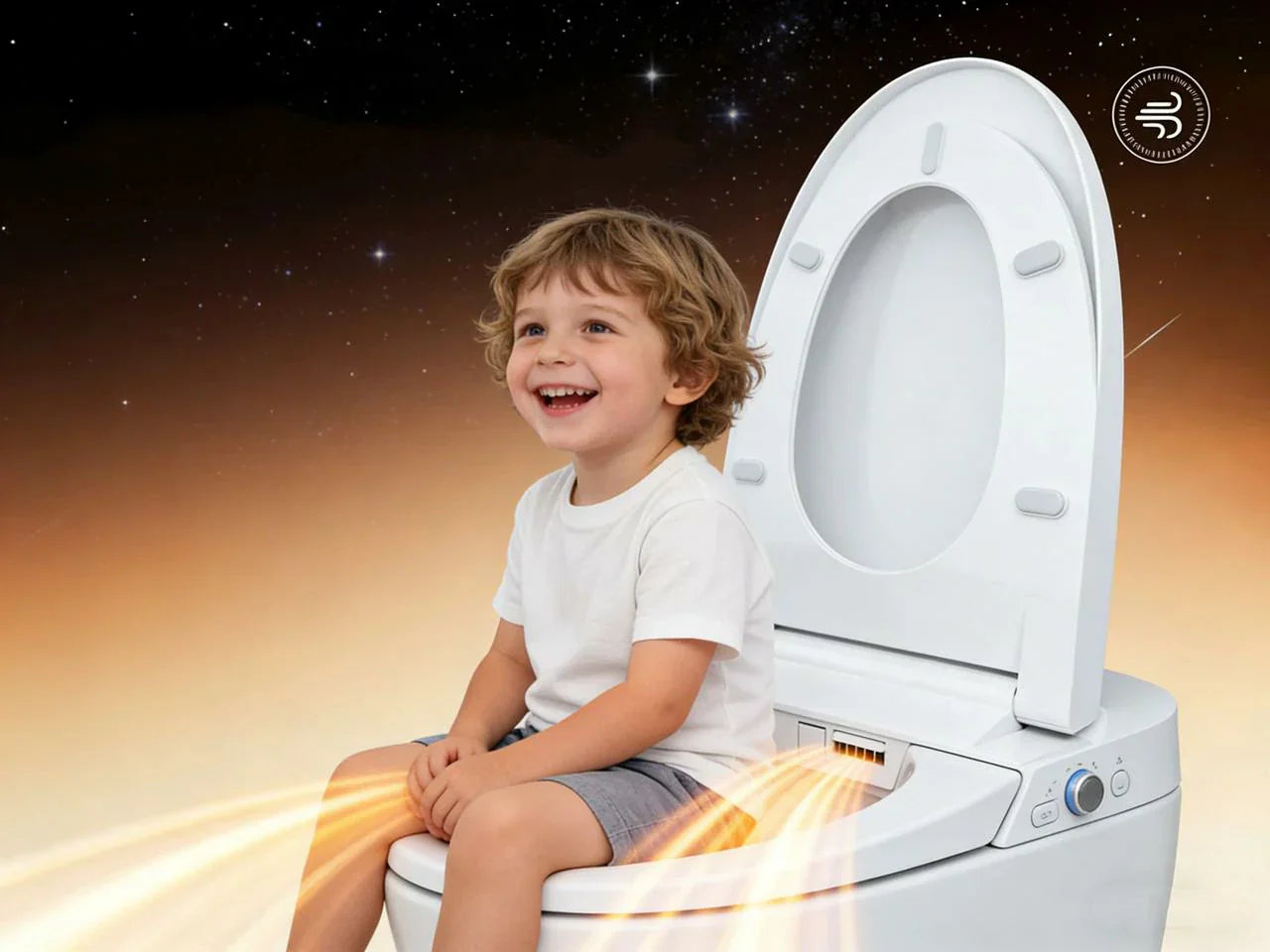
A smart toilet with air dryer can feel like a big quality-of-life upgrade: warm wash, warm seat, warm air, and less toilet paper. It can also turn into a daily annoyance if your bathroom layout, plumbing, or household routines don’t match what these toilets need.
Here’s where it works well in real homes — and where it often doesn’t.
Is a smart toilet with air dryer a fit for your household?
Some households love a wash-and-dry toilet because it changes the routine: less wiping, more comfort, and a cleaner feeling day to day. Others find the added time, noise, or learning curve hard to justify. The “fit” usually comes down to patience, bathroom layout, and how much the family values comfort over speed.
This article focuses specifically on the air dryer feature of smart toilets. Wash performance and overall cleaning still depend on the bidet system itself, not the dryer, so the review separates comfort from core wash effectiveness.
Decision Snapshot (Rule of Thumb): who should buy a luxury washlet vs skip
Usually a good fit if you:
-
Want a cleaner “wash then dry” routine and you’ll actually use it daily
-
Have a bathroom with a nearby GFCI outlet and decent water pressure
-
Don’t mind a longer bathroom routine (drying takes time)
-
Are fine doing small, regular upkeep (wiping sensors/nozzles, refilling a reservoir if your model uses one)
-
Warm air dryer mainly reduces toilet paper usage but rarely eliminates it entirely.
Usually a skip if you:
-
Expect truly “paperless toilet” results every time (most people still dab)
-
Have light sleepers and a shared-wall bathroom (these can be noisy at night)
-
Have low/inconsistent water pressure or a toilet that already clogs easily
-
Don’t want electrical/plumbing fit surprises (short cords, tight clearances, odd water line placement)
-
Impatience with the drying cycle or a desire for instant “dry and go” is the most common dealbreaker.
Is a smart toilet with air dryer worth it if you want a cleaner, “Japan-style” bidet feel?
For many homeowners, the value is simple: warm water cleans better than dry paper alone, and the dryer reduces how much paper you use. People who tried bidet toilets while traveling often buy one at home for that same “fresh” feeling.
Where the air dryer helps most is comfort and confidence. After a wash, you’re not reaching for a cold wad of paper right away. The dryer can also reduce irritation for people who already feel sensitive with heavy wiping.
But it’s not magic. The wash-and-dry routine is a different rhythm than a standard toilet. If your household wants “same speed, same quiet, same simplicity,” this can feel like a fussy appliance instead of a fixture.
Who tends to regret it: low patience for setup, shared bathrooms, or sensitive sleepers
Regret often has less to do with cleaning performance and more to do with friction:
-
Someone expects it to “just work,” but setup takes longer than expected (tight mounting, odd hose angles, outlet location).
-
The bathroom is near bedrooms, and the toilet’s wash/dry/flush noises stand out at night.
-
It’s a shared bathroom where different people want different spray pressure, drying time, and automation settings.
If the people using it aren’t willing to learn the controls and tolerate a few extra sounds, the feature can end up unused — which makes the cost feel hard to justify.
Will the “paperless toilet” experience match real-world drying?
The “paperless toilet” idea is one of the most hyped promises around smart bidet dryers. In reality, the dryer behaves more like a comfort upgrade than a full replacement for toilet paper. Understanding that gap helps set expectations for how people actually dry in daily use.
Is smart toilet with air dryer worth it if you still need toilet paper to finish drying?
This is the biggest expectation gap: most warm air dryer bidet setups don’t fully replace toilet paper for most users.
The dryer is usually gentle. That’s nice for comfort, but it also means you may still want:
-
a small dab to finish,
-
or a quick check for dryness.
Typical drying takes 1–3 minutes depending on airflow and temperature. Most users still need a quick finishing dab, so “paperless” is often more accurately “paper-light.”

Warm air dryer bidet trade-off: comfort vs time-to-dry and “not like a hand dryer”
A common misunderstanding is expecting the dryer to feel like a hand dryer in a public restroom. It doesn’t.
In practice:
-
Drying can take long enough that some people lose patience and reach for paper anyway.
-
The warm air feels pleasant, but it’s not always strong enough to finish quickly.
-
If you’re someone who wants to be in and out fast, the dryer can feel like waiting for a slow appliance cycle.
Drying adds an extra 1–3 minutes per use, which frustrates those seeking a fast bathroom routine. The feature benefits comfort-focused users but tests patience for speed-driven households. The key point is that the dryer is a comfort feature more than a speed feature.
The hidden learning curve: dialing in spray angle, pressure, and remote habits
Even simple remotes have a learning curve. Most households go through a short “calibration period”:
-
finding a spray pressure that cleans well without feeling harsh,
-
adjusting spray position,
-
figuring out the right wash time and dry time.
This sounds minor, but it matters in a shared bathroom. If one person cranks settings up and the next person gets surprised, the experience can feel inconsistent or annoying.
Can your bathroom actually support the install (power, plumbing, space)?
Smart bidet toilets work best when the bathroom can support them—power, plumbing, space, and especially water pressure. These factors don’t show up in glossy product photos, but they determine whether the wash feature feels strong and consistent or just weak and slow. Small mismatches here create most of the install regrets.
What happens if your water pressure is low or inconsistent—will the bidet still work?
Bidet performance depends on water flow and pressure. If your home has low pressure, or pressure that dips when someone runs a sink or shower, you may see:
-
weaker spray than expected,
-
longer wash times to feel clean,
-
inconsistent performance that makes the feature less satisfying.
Some users end up frustrated because the “smart” parts work fine, but the bidet function feels underpowered. In the worst cases, people regret the purchase because the core wash feature can’t do its job in their plumbing conditions.
To self-check, run the shower or a sink while testing the bidet spray. If flow noticeably weakens or spray pulses, pressure is inconsistent. Low pressure directly reduces cleaning effectiveness and drying satisfaction, making the air-dry feature less enjoyable.
Power cord reality: outlet distance, short cords, and when electrical work becomes likely
A smart toilet with air dryer needs power, and many homes don’t have an outlet close enough behind the toilet. According to ICC codes, GFCI-protected outlets are required for bathroom installations to reduce risk of electrical shock. Two common surprises:
-
The cord can be shorter than people expect.
-
An outlet may be present but not in a usable spot (wrong side, blocked by the toilet, not a GFCI type, or too far).
If the outlet isn’t close, you might be looking at adding a proper bathroom outlet. That’s not a “maybe later” issue — it’s a before-install issue. Never use extension cords in bathrooms; water exposure makes this a serious electrocution risk for smart toilet features.
Here’s a simple way to think about it:
| What you have | What it can mean |
|---|---|
| Outlet already near the toilet and GFCI-protected | Easier install, fewer surprises |
| Outlet across the room | Cord may not reach; avoid extension cords in bathrooms |
| No outlet near the toilet | Electrical work becomes likely |
Visual: simple clearance + hookup alignment checklist (space behind tankless bowl, water line position)
Use this quick fit check before you commit:
Clearance + hookup alignment (quick sketch in words)
-
Back wall → toilet: Is there enough room for a tankless design plus connections without crimping hoses?
-
Left/right side space: Will your knees and elbows have room if the bowl sits differently than your current one?
-
Water shutoff location: Can the hose route cleanly without sharp bends?
-
Outlet location: Can the plug reach without crossing a walkway or getting pinched?
-
Seat/lid movement: If it auto-opens, will it hit a wall, vanity, or grab bar?
If any of these are “not sure,” measure first. Many install headaches come from “it should fit” assumptions.
Hard stop conditions:
-
No nearby GFCI outlet and cannot add one.
-
Bathroom water pressure is unreliable or dips frequently.
-
Clearance conflicts prevent proper hose or bowl placement.
-
Limited side/rear space blocks lid or seat movement.

Will noise and automation be a daily annoyance (especially at night)?
Smart toilets change the sensory experience of a bathroom — not just how you clean and dry, but how much noise and automation enters the routine. In quiet homes or shared-wall layouts, those extra sounds and actions can matter more than people expect. The question is whether that added “activity” feels helpful or distracting day to day.
Is it too loud at night? foaming, washing, flushing, and drying sounds in quiet homes
Smart toilets can create a surprising number of sounds:
-
a dryer fan sound,
-
a pump or valve sound during washing,
-
louder or different flush sounds,
-
and sometimes other features (like foaming) that add noise.
In a quiet home, especially with bedrooms nearby, this can matter. People who are sensitive sleepers often notice these sounds more than they expected — because a standard toilet is mostly a single flush sound, not a multi-step sequence.
“Seamless” vs “automated”: what to expect from lids, sensors, and multi-step cycles
Automation can be helpful or irritating, depending on your layout and habits.
In real use, sensors may:
-
open the lid when someone walks by (or when you don’t want it to),
-
trigger actions at awkward times,
-
make the toilet feel “busy” instead of simple.
If you like quiet, predictable fixtures, too much automation can feel like living with a motion-activated appliance.
Privacy and interruption risk: sounds, timing, and shared-wall bathrooms
The dryer and wash cycle can broadcast “someone is using the toilet” more clearly than a normal toilet does. In a shared-wall bathroom, that can feel awkward. Also, if the dryer runs long, it can extend the time the bathroom is occupied, which matters in a one-bathroom home.
The air dryer adds fan noise and intake cleaning requirements. More features mean more potential failure points, so routine maintenance is essential to keep comfort levels consistent.
How much upkeep and reliability risk are you signing up for?
A smart bidet toilet adds comfort features, but it also adds moving parts, consumables, and a bit of appliance-like complexity. The experience can be great when everything works smoothly; when it doesn’t, upkeep and reliability become part of the equation. The real question is how much maintenance your household will tolerate over time.
Reservoir hassles: foaming agent refills that fill slowly and overfill easily
Some smart toilets include a reservoir-based feature (often described as foaming). In real life, this can add a maintenance chore you didn’t plan for:
-
refills can take longer than expected,
-
the fill process may be fiddly,
-
overfilling can be easy if the reservoir doesn’t guide the pour well.
If you love “set it and forget it,” anything with refills can become the feature you stop using first.
Clogs and sensitivity: why some units clog more readily than standard toilets
Some owners report more clogs than expected, even in newer homes. This can happen because some smart designs are more sensitive to:
-
how the bowl and trapway are shaped,
-
how much water is used per flush cycle,
-
how well your plumbing handles waste and paper.
If your current toilet clogs even occasionally, treat that as a warning sign. A toilet that’s less forgiving can turn a small annoyance into a repeated problem.
Will this still work during a power outage (and what basic functions you may lose)?
A smart toilet with air dryer is partly an appliance. In a power outage, you may lose:
-
the heated seat,
-
bidet washing,
-
warm air drying,
-
sensor-based features,
-
and sometimes even normal flushing if the flush is powered.
Some models have manual backup options and some don’t. The practical question is: if the power is out, can everyone in the home still use the toilet without stress? If your area has outages, this matters more than people think.
Verify manual-flush capability before purchase. Most smart toilets lose wash, dry, and sometimes flush power during an outage. If the model lacks backup, the toilet may not flush—so confirm before committing.

Smart Bidet Fit Check — What to Confirm Before You Buy
Not every bathroom or household is a natural match for a smart bidet toilet with warm wash and air-dry features. The performance and satisfaction curve depends less on glossy specs and more on day-to-day reality: pressure, power, layout, routine, and tolerance for maintenance. A five-minute pre-check can prevent most of the “it works but I kind of regret it” scenarios that show up later.
Key questions that matter:
Drying expectation — Am I okay if I still need a small amount of toilet paper to finish? Warm air drying usually reduces wiping rather than eliminating it entirely. If your goal is truly “paperless,” assume you’ll still keep some paper nearby.
Outlet reality — Do I have a nearby GFCI bathroom outlet without using an extension cord? Most models have short power cords and require a proper GFCI outlet. If the outlet is across the room, behind a vanity, or on the wrong side, electrical work is likely.
Noise tolerance — Will wash/dry/flush noises bother sleepers or neighbors through the wall? Smart toilets add a sequence of sounds instead of a single flush. In quiet homes, sensitive sleepers notice more than expected, especially at 2 a.m.
Water pressure — Is my bathroom’s water pressure steady enough for a strong, consistent wash? If pressure dips when someone showers or runs a sink, the bidet spray may feel weak, underpowered, or slow to clean.
Maintenance mood — Am I willing to clean around sensors/nozzles and refill anything the unit requires? Smart toilets are partly appliances, not just ceramic fixtures. Small upkeep tasks keep performance consistent, but not every household has the patience for them.
FAQs
1. Does the air dryer completely replace toilet paper?
On most smart toilets with air dryer systems, the warm air drying gets you close, but not 100% paperless. Many users treat it like a “mostly paperless toilet” where toilet paper becomes optional rather than required. The warm air dryer bidet takes care of the bulk of the job, especially after the wash cycle, but people still often do a quick final dab if they’re in a hurry or want that extra-dry finish. For daily comfort, the hands-free drying feels upgraded and “luxury washlet” level compared to a normal bidet or manual wiping.
2. How long does the drying cycle take?
Usually about 1–3 minutes depending on the airflow and temperature settings. Higher-end smart toilet with air dryer models dry noticeably faster, while basic bidet seats run gentler and take a little longer. If you expect a “dry and go” experience like toilet paper, the timing feels slower at first. But many users simply let the warm air cycle run while scrolling on their phone or just relaxing—it’s part of the paperless toilet lifestyle shift.
3. Is the air temperature adjustable?
Most premium luxury washlet and bidet seat models offer multiple temperature levels—typically 3 to 5 settings—ranging from cool to pleasantly warm. Adjustability makes a big difference in different seasons: warm in winter, cooler in summer. Some advanced warm air dryer bidet systems also let you fine-tune airflow speed for a more customized dry, while entry-level bidets are usually just “on” or “off.” If comfort and personalization matter, the adjustable warm-air feature is a must-have.
4. Is the dryer loud during operation?
There’s definitely some sound, but think bathroom fan, not hair dryer. On medium settings, the smart toilet with air dryer is more of a steady whoosh than a disruptive mechanical noise. If the bathroom is near bedrooms, it’s generally not loud enough to wake someone, especially compared to flush noise or deodorizing fans. Higher airflow = slightly louder, but still within normal bathroom appliance territory for a high-end luxury washlet.
5. Is warm air drying more hygienic?
Warm air drying can feel more hygienic because it removes the hands-on wiping step and reduces irritation from friction and paper fibers. The main hygiene upgrade actually comes from the water wash—the dryer is the hands-free finishing step. For users with sensitive skin, seniors, children, and post-surgery cases, a warm air dryer bidet can be notably gentler and cleaner than regular toilet paper. It doesn’t guarantee a sterile result, but it aligns with cleaner bathroom routines and the broader paperless toilet trend.
References



Leave a comment
This site is protected by hCaptcha and the hCaptcha Privacy Policy and Terms of Service apply.