



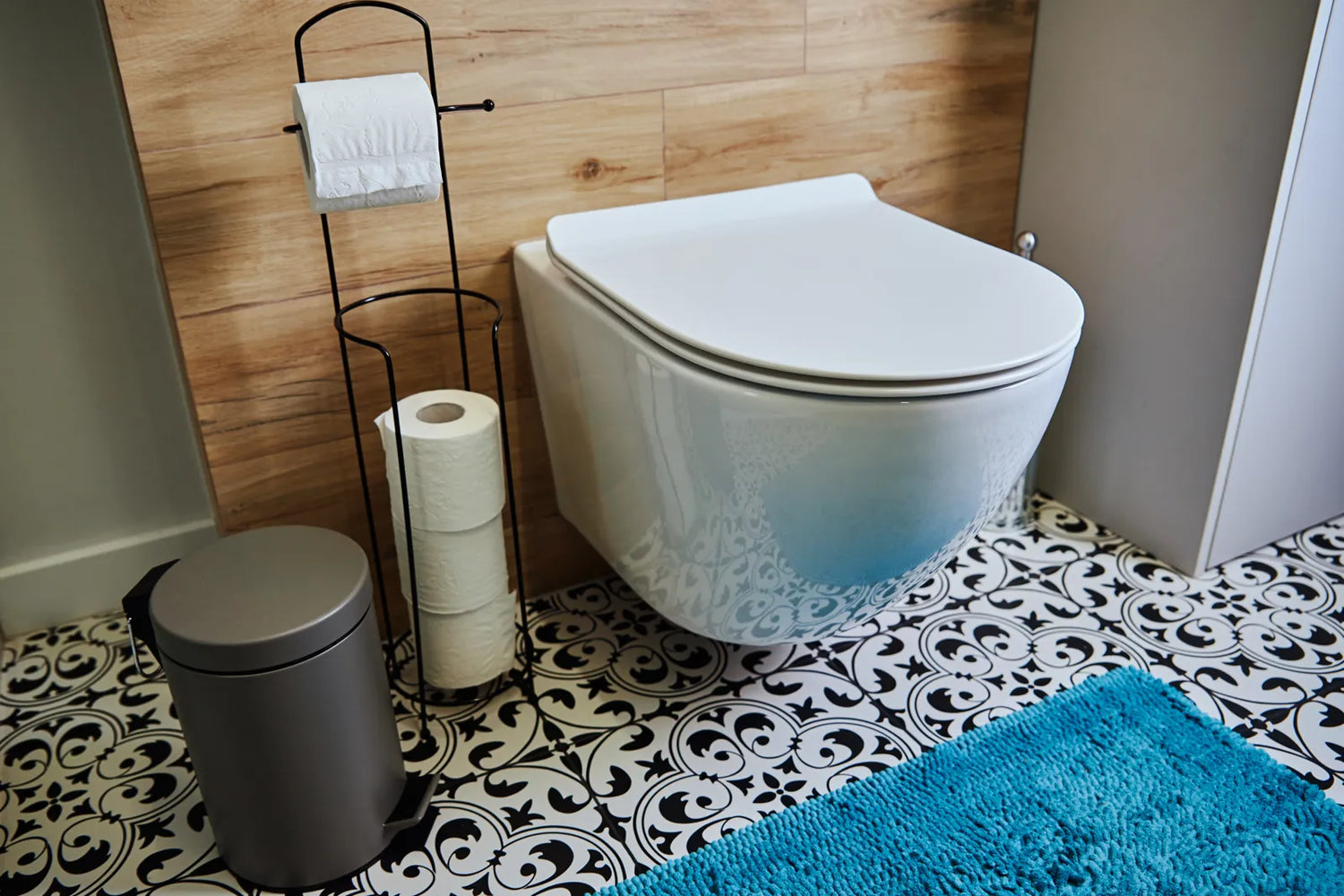
A smart toilet can look fine on paper, but the toilet’s real-world performance and the model’s design may still make it the wrong fit for the room, the floor, or the person using it every day.
That is the main issue with smart toilet weight limit questions. Most homeowners focus on one number in a product listing. In practice, the real question is bigger: Will the toilet, seat, mounting, floor, clearances, and user movement all work together without wobble, leaks, awkward transfers, or constant maintenance?
A lot of regret starts when people treat weight capacity as a single pass/fail spec. It is not. A smart toilet may have a bowl that can handle a high vertical load, but the seat may flex more than expected, the hinges may loosen under off-center loading, the floor may not be level, or the bathroom may be too tight for safe transfers. Tankless models can also add electrical and water-supply demands that have nothing to do with weight but still decide whether the installation works.
If you are trying to figure out what is the weight limit for a smart toilet seat, whether a heavier adult can use one daily, or whether a comfort height model will actually feel safer, here is the rule: capacity matters, but fit and support matter more.
Baseline capacity ranges by product type
-
Integrated smart toilets (all-in-one units): Most fall in the 300–400 lb range, depending on ceramic thickness, mounting design, and internal support structure.
-
Bidet seats (installed on standard toilets): Capacity depends on the existing toilet bowl, but most combinations support 300–500 lbs when paired with a solid base toilet.
-
Heavy-duty / bariatric-oriented setups: Reinforced toilets or commercial-grade units can handle 500–1000 lbs+, typically using thicker materials and upgraded mounting systems.
These ranges are not interchangeable. A slim tankless model and a reinforced floor-mounted unit may look similar but perform very differently under load.
Decision Snapshot: Fit Before Capacity
Before you compare features, decide whether your bathroom can support the full setup in real use.
Works with floor-mounted, reinforced installs
This usually works best when you have a floor-mounted toilet on a solid floor, enough room around the bowl, a proper electrical outlet nearby, and users who mainly load the toilet straight down rather than pushing hard sideways during transfers.
If the home has a newer flange, sound subfloor, level finish floor, and decent water pressure, a smart toilet with a stated higher capacity is much less likely to become a callback problem.

Avoid near-limit users on weak structures
Here’s where people usually run into trouble: the user is close to the listed limit, the floor has some give, the flange area is old, and the toilet gets loaded off-center. That is when a product that looked acceptable starts rocking, creaking, or feeling unstable.
A listed limit is not a comfort rating. It is not a promise that the toilet will feel solid at that weight in an older bathroom.
Reconsider in tight baths or old plumbing
Small bathrooms create their own problems. A larger base can reduce knee room and side access. If this is an older home with questionable shutoffs, narrow supply lines, low pressure, or no nearby GFCI outlet, the install cost can climb fast.
In those homes, the tankless smart toilet weight limit explained question is only part of the picture, especially during a bathroom upgrade where layout and utilities must also align.
The unit may support the user, but the room and utilities may not support the unit.
Choose simpler seats when full units overreach
Sometimes the safer move is not a full integrated smart toilet at all. If the toilet location is tight, the rough-in is unusual, or the floor feels less than solid, a separate bidet seat on a sturdy conventional bowl can be the better fit.
This matters in the smart toilet vs bidet seat weight capacity decision. A simpler setup often gives you fewer installation problems, easier replacement, and less risk if a seat or electronic part fails later.
Who Needs This Weight Capacity?
Not every buyer needs a high-capacity smart toilet. Many people pay extra for capacity they never use, while missing the support features they actually need.
Good fit for higher daily loads
If the toilet will be used daily by a heavier adult, then weight capacity deserves real attention. Not because the toilet will collapse under normal use, but because daily load cycles expose weak points faster. Hinges loosen sooner. Seat flex becomes more noticeable. A little floor unevenness becomes a repeat annoyance.
For smart toilet weight capacity for heavy users, the best fit is someone who needs reliable daily support, can sit and stand mostly under their own control, and has a bathroom with enough front and side space for stable use.
Poor fit for occasional edge cases
Some shoppers fixate on a high capacity because they occasionally host a larger guest. That alone usually does not justify a heavier, bulkier, more expensive smart toilet.
If the normal users are average weight and the concern is rare, a standard-quality bowl with a stronger seat may solve the problem without creating added electrical and plumbing work. This is one of those cases where extra capacity may solve a problem you do not really have.
Not enough for assisted side transfers
A stated high weight rating does not mean the toilet is suitable for users who make forceful side transfers from a wheelchair or need another person assisting. That kind of use creates side loads, twisting, and uneven pressure. Those stresses can matter more than the user’s body weight alone.
This is where smart toilet safety for seniors with limited mobility needs a reality check. If the user braces hard on one side, lowers onto the seat unevenly, or pushes off the bowl during standing, the installation needs more than a high listed capacity. It needs enough transfer space, proper grab bars, and a setup designed around mobility support.
Better match for separate support frames
For true bariatric needs or assisted transfers, a separate support frame or clinical-style support arrangement is often the better answer. A premium smart toilet may still not be the right platform if the user needs external arm support, wider spacing, or a more serviceable setup.
That is often the answer to best smart toilets for bariatric users: many integrated units are not the best choice at all. The wrong unit can be expensive, awkward, and still less safe than a simpler toilet paired with proper support hardware.
What Trade-Offs Come With Higher Capacity?
Higher capacity sounds like pure upside, but it usually comes with practical compromises.
Heavier units complicate retrofits
Many higher-capacity or larger integrated toilets are heavier and harder to maneuver into place. In older homes, that matters. Tight hallways, narrow bathroom doors, and uneven finished floors can turn a simple swap into a two-person wrestling match.
If future service is needed, the same weight becomes a problem again. The harder a unit is to move, the more labor you pay for diagnosis, removal, or reseating.
Bulkier bases reduce usable space
A larger base may help support the unit, but it can steal usable room around the toilet. In a bathroom that already feels tight, that changes how the user approaches the bowl, stands up, or transfers sideways.
This is a common issue in how to choose a sturdy smart toilet for larger users. People focus on sturdiness but forget that body size also needs clearance. A stable unit that leaves no elbow room is still a bad fit.
Higher limits can raise seat height
Some higher-capacity models end up taller, either by bowl design or by added seat structure. That can help some users, especially taller adults, but it can also make transfers harder for shorter users whose feet no longer plant well.
This is where ada height smart toilet weight limit considerations come in. Comfort height is not automatically safer. According to the U.S. Access Board, toilet seat height and surrounding clearance must be designed together to support safe transfers, especially for users with mobility limitations, rather than relying on height alone.
If the seat is too high for the person using it, they may slide forward, shift more, or load one side harder when getting off.
Extra capacity may solve nothing else
A high rating does not fix poor water pressure, cramped layout, missing electrical service, weak floor framing, or a bad rough-in. It also does not tell you much about long-term hinge durability or seal movement.
So if you are shopping by one capacity number, slow down. The key point is that higher capacity may cost more while doing nothing for the real weak point in your bathroom.
What Raises Installation Cost Fast?
A smart toilet install can go from routine to expensive very quickly, especially in older bathrooms.
GFCI power can require new wiring
Most smart toilets need nearby protected power. If there is no suitable GFCI receptacle close enough, you may need new wiring. In some homes that is simple. In others it means opening walls, fishing wire, patching drywall, or bringing an older bathroom circuit up to current expectations.
That added electrical work often surprises buyers more than the toilet price.
Low pressure can block tankless models
Many tankless smart toilets depend on water flow and pressure staying within a certain range. If the house has weak pressure, undersized lines, or pressure drop when another fixture runs, performance can suffer.
This is part of tankless smart toilet weight limit explained that gets missed: even if the toilet can physically support a heavier user, the flushing and wash functions may disappoint if the house cannot feed the unit properly.
Water pressure requirements for tankless models
-
Absolute minimum: 20–30 PSI
-
Recommended: 35–60 PSI
-
Must support continuous flow
Low pressure = weak flushing + unstable bidet performance
Flow stability matters as much as pressure
-
Older pipes or shared lines reduce performance
-
Tankless systems are sensitive to fluctuations
Simultaneous fixture use check (real-world test)
Ask:
-
What happens when:
-
Shower is on
-
Washer is running
-
Faucet is in use
-
Quick test:
-
Run 2 fixtures → observe pressure drop
-
If pressure drops → expect inconsistent performance
Old shutoffs and valves add labor
Once the old toilet comes out, plumbers often find stiff shutoffs, corroded supply connections, worn angle stops, or a flange that should have been replaced years ago. None of that is glamorous, but it affects whether the new toilet goes in cleanly.
What tends to happen in practice is that homeowners budget for the toilet and basic labor, then get hit with a list of small fixes that are each reasonable but expensive in total.
Uneven floors can cause persistent wobble
This is one of the biggest sources of regret. A smart toilet that sits on an uneven tile floor may rock slightly even when installed correctly. That small movement gets worse under heavier users, especially during sitting and standing.
If the wobble starts on day one and is not corrected properly, seals can shift, bolts loosen, and the toilet never quite feels right. For how to prevent wobble in a smart toilet for heavier users, floor flatness matters more than many buyers expect.
Other hidden cost drivers
-
Electrical relocation
-
Floor reinforcement
-
Non-standard rough-in fixes
-
Tight installation space
Will smart toilet weight limit hold here?
This is the part that decides whether the toilet will feel solid over time.
Check whole-system load, not seat only
Do not assume the seat rating and toilet rating are the same. Some listings mention a bowl capacity but stay vague about the seat or lid. Others give a seat load figure without making clear what the floor mount or carrier can actually handle.
When checking what to check in a smart toilet spec sheet for weight capacity, look for:
-
Toilet body or bowl load
-
Seat load
-
Mounting type
-
Floor or wall support details
-
User notes about side loading or transfer use
-
Any exclusions for standing on the seat or lid
If a listing only gives one number with no detail, treat that as incomplete information.
Floor mounts handle side loads better
In most homes, floor-mounted toilets are the safer bet for larger users because they transfer the load more directly into the floor. They still need a sound flange area and stable floor, but they are generally less sensitive to movement than a wall-hung setup.
For smart toilet durability for daily use by heavier adults, floor-mounted units usually age better under real household use, especially when users do not sit perfectly centered every time.

Wall carriers fail if underrated
Wall-hung systems can be very strong when the carrier, wall structure, and installation are all correctly matched. The problem is that homeowners often do not know what is in the wall, or whether the carrier rating matches the real use.
If the carrier is underrated, poorly installed, or attached to a weak wall assembly, the toilet may feel springy or unsafe long before any official limit is reached. This is one case where guessing is a bad idea.
Old porcelain can be the weak link
Sometimes the issue is not the smart hardware at all. In an older bathroom, the flange support, finished floor, or even the way the porcelain contacts the floor can become the weak point. If the old toilet already rocked a little, do not assume the new one will magically solve that.
It often gets worse with a larger, heavier unit and a heavier user.
Why system strength matters more than a single rating
A smart toilet system depends on:
-
The ceramic bowl structure
-
The seat mounting system
-
Floor anchoring and installation quality
If any one of these is weaker, the real capacity drops.
What to do when specs are incomplete
-
If the manufacturer lists only bowl capacity but not seat rating → stop and verify
-
If the product lists system weight but not mounting specs → treat as incomplete
-
If there’s no clear testing standard → proceed cautiously
Rule of thumb: If you cannot confirm both seat + bowl/system capacity, treat it as an unknown—not a safe assumption.
Will It Fit My Bathroom Layout?
Weight capacity means less if the bathroom is too cramped to use the toilet safely.
Front clearance shrinks in short rooms
Many integrated smart toilets project farther into the room than people expect. In a short bathroom, that reduces knee room and can make standing up awkward. Larger users feel this first.
This is the real answer behind Will this work in a small bathroom? Sometimes yes, but only if you measure the projection from the finished wall and compare it with actual free space in front of the bowl, not just code minimums.
\
Front clearance rules (usable space)
-
Minimum: 21 inches
-
Comfortable: 24–30 inches
-
Below 21” → expect tight movement
Side transfer space may be inadequate
If a user approaches from the side or needs space to shift weight before sitting, side clearance becomes critical. A toilet can technically fit while still being hard to use.
This matters for smart toilet side clearance and transfer space for large users. A wider body plus nearby vanity, tub, or wall can leave too little room for hips, elbows, or mobility aids.
Side clearance and comfort
-
Minimum: 15 inches from centerline
-
Less than that → sitting/standing feels cramped
Transfer space (important for larger users)
-
Ideal: 30 inches clear on one side
-
Less space → reduced usability
Door swing can block larger footprints
A smart toilet with a larger tankless body or angled rear housing may interfere with a door swing, especially in powder rooms. Even if the door closes, the path into the room may be awkward for larger adults.
That kind of conflict does not show up in product listings, but it matters every day.
Door swing conflict check
-
If door hits or nearly hits toilet → layout problem
-
Consider:
-
Smaller unit
-
Door stop
-
Layout adjustment
-
Will this work in a small bathroom?
It works in a small bathroom only if the rough-in matches, the projection leaves usable knee room, the side clearances are still practical, and the power cord and water connection do not create awkward routing behind the unit.
A small room can also amplify noise, cleaning difficulty, and service access problems. If removing the unit later would require pulling the vanity or taking the door off, the setup is already telling you it is a compromise.
Which Measurements Matter Before Ordering?
This is where many bad purchases could have been avoided.
Rough-in errors stop installation cold
The rough-in is not close enough. It must match the unit’s requirement. If it does not, the toilet may not sit back correctly, may interfere with the wall, or may need an adapter that changes how it projects into the room.
Measure from the finished wall, not the baseboard, and verify the exact required rough-in before ordering.
Rough-in types and why mismatch is a hard stop
The rough-in is the distance from wall to drain center.
Common types:
-
12-inch (standard)
-
10-inch (older homes)
-
14-inch (more space behind toilet)
Decision rules:
-
Mismatch = cannot install properly
-
Do not assume flexibility
Bowl projection affects knee room
Bowl projection is the front-to-back length into the room. This single dimension often matters more than shoppers expect, especially for heavier users who need space to position their feet well before standing.
A toilet can be within the room code and still feel cramped in daily use because the projection steals the one bit of room the user actually needed.
ADA height changes transfer difficulty
Comfort-height or ADA-height bowls can help reduce the effort of standing up, but only when they fit the user. For some seniors and larger adults, a modestly taller seat helps. For others, especially shorter users, it creates instability because the feet do not rest firmly.
That is why best comfort height smart toilet for heavy adults depends on the person, not just the label.
Spec sheets hide critical support limits
Spec sheets often bury the information that matters most. Look beyond the feature list and find the installation drawing, required clearances, supply location, cord path, seat height, and any footnotes about support.
For smart toilet installation requirements for higher weight capacity, the missing details are usually:
-
exact floor contact area
-
allowable floor variation
-
wall offset behind the unit
-
supply line location limits
-
power outlet position
-
separate seat load limits
When adapters help—and when they cause problems
-
Can solve mismatch in some cases
-
But may:
-
Push toilet forward
-
Reduce front clearance
-
Affect appearance
-
Treat adapters as a compromise, not a default.
Electrical placement compatibility (often overlooked)
-
Outlet behind toilet → may conflict with full-skirted designs
-
Outlet too high → cord may not reach cleanly
-
Side-wall outlet → usually safer
Always confirm cord reach and routing path
-
Check installation diagram
-
Verify:
-
Cord length
-
Plug direction
-
Whether cord is blocked
-
If routing is tight or forced, expect install issues.
What Fails First Over Time?
If the setup is borderline, the failure usually starts small.
Hinges loosen under off-center loading
Seats and lids take more abuse than the bowl itself. Heavier users who sit slightly sideways, brace on one side, or shift during transfers tend to work the hinges loose faster. Once there is play in the seat, the whole toilet starts to feel less stable, even if the base is still solid.
This is the answer to heavy duty smart toilet seat weight limit concerns in many cases: the seat assembly is often the first thing to feel inadequate.
Seats flex before bases do
Porcelain bases are usually stronger than the seat hardware above them. So a user may say the toilet feels flimsy when the real problem is seat flex, not structural failure of the bowl.
The difference matters because seat discomfort and movement can lead to more side loading, more cautious shifting, and more strain on the mounting points.
Seal movement starts after minor rocking
A tiny amount of rocking may not seem urgent, but repeated movement can disturb the wax ring or other sealing system. Once that happens, odors, moisture, or subfloor damage can follow.
Heavier use speeds this up. That is why a “small wobble” should not be ignored just because the toilet still flushes fine.
What happens if wobble starts early?
If wobble starts early, stop using it as if it will settle in. It usually will not. The unit needs to be checked for floor flatness, bolt tension, flange condition, and proper shimming or resetting.
If you keep using a rocking toilet, the repair often gets bigger and more expensive because the leak or floor damage comes later.
When Is a Smart Toilet the Wrong Choice?
Sometimes the honest answer is that a smart toilet is not the right tool for the job.
Low-mobility users may need grab bars
If the main concern is safe sitting and standing, then grab bars and layout may matter more than the toilet model. A high-tech unit does not replace stable hand support.
For smart toilet safety for seniors with limited mobility, the wrong mistake is spending heavily on wash features while ignoring the supports needed to get on and off the toilet safely.

Bariatric needs may exceed integrated designs
When the user has true bariatric needs, many integrated residential smart toilets are simply outside their ideal use case. Even where the listed capacity seems acceptable, the shape, seat width, transfer space, and serviceability may not be.
This is when a smart toilet is not suitable for heavy users: when support needs go beyond what a compact integrated design can safely handle.
Bidet seats can outfit full units
A conventional toilet with a compatible bidet seat can be the better solution. It gives you more flexibility to choose a bowl known for stability and fit, while keeping the wash function separate. It can also be easier to repair because the toilet and seat are not one expensive package.
So in the smart toilet vs bidet seat weight capacity debate, the simpler setup often wins for larger users and older bathrooms.
What is safer for seniors here?
Safer usually means:
-
stable floor-mounted bowl
-
enough room to approach and stand
-
grab bars where needed
-
proper seat height for the user
-
minimal wobble
-
easy service access
If a full smart toilet interferes with any of those, it is the wrong choice, no matter how attractive the features look.
Before You Buy
Use this checklist before ordering:
-
Confirm the user’s real daily weight, not just an optimistic estimate, and leave margin below the stated limit. (Example: 300 lb user → choose at least 350–375 lb capacity)
-
Verify whether the published capacity applies to the whole toilet, the seat only, or both.
-
Check that the floor is level and solid near the flange; if the old toilet rocks, fix that first.
-
Measure rough-in, bowl projection, front clearance, and side space before comparing models.
-
Make sure a nearby GFCI outlet and suitable water supply are available for the exact unit.
-
If the user makes side transfers or needs assistance, do not rely on capacity alone; assess grab bars and transfer space.
-
In older homes, budget for shutoff replacement, flange work, and floor correction instead of assuming a simple swap.
-
If the room is tight or the user needs higher support, compare a conventional toilet plus bidet seat before choosing a full integrated unit.
FAQs
1. What is the weight limit for a smart toilet?
Most models fall within a typical smart toilet weight limit of around 300–350 lbs, which aligns with standard residential toilet ratings. Some designs—especially those with reinforced bases or upgraded internal structures—can support more, but the real-world strength also depends on how well the unit is installed. Floor-mounted options generally feel more solid under daily use, while wall-hung systems rely heavily on proper frame support.
2. Can a 400 lb person use a bidet?
Yes, but only if the toilet is built to handle that load. A 400 lb user should look closely at bariatric bidet toilet specs, since not every model is designed for higher weight ranges. The bidet function itself isn’t the issue—it’s the structural integrity of the bowl and mounting system. Choosing a model rated for higher capacity ensures both comfort and safety over time.
3. Are smart toilets sturdy enough for heavy people?
Many are, but not all. The best sturdy toilets for large users feature thicker ceramic construction, stable base design, and secure anchoring. Floor-mounted units tend to provide more confidence for heavier users, while lower-end or poorly installed models may feel less stable. Build quality matters more than just the feature list here.
4. Does HOROW have a high weight capacity?
HOROW focuses on durability and everyday reliability, and internal HOROW weight capacity test standards are designed to meet typical household demands. Their floor-mounted smart toilets emphasize reinforced ceramic bodies and balanced support, making them a dependable choice for users who want both comfort features and structural stability without stepping into ultra-premium pricing.
5. What happens if you exceed toilet weight limit?
Exceeding the rated capacity can lead to stress on the structure, including cracks in the bowl, loosening of bolts, or instability during use. Over time, repeated strain can weaken the material and increase the risk of sudden failure. Even if damage isn’t immediate, it can shorten the lifespan and create safety concerns.
6. Which smart toilet is best for bariatric use?
For higher weight needs, look for a floor-mounted model with a reinforced base, wide seating area, and a clearly stated weight limit for tankless toilets that meets or exceeds your requirement. Pairing that with a heavy duty smart toilet seat improves overall support and comfort. The right choice balances durability, usability, and proper installation to ensure long-term performance without compromise.
Reference


Leave a comment
This site is protected by hCaptcha and the hCaptcha Privacy Policy and Terms of Service apply.