
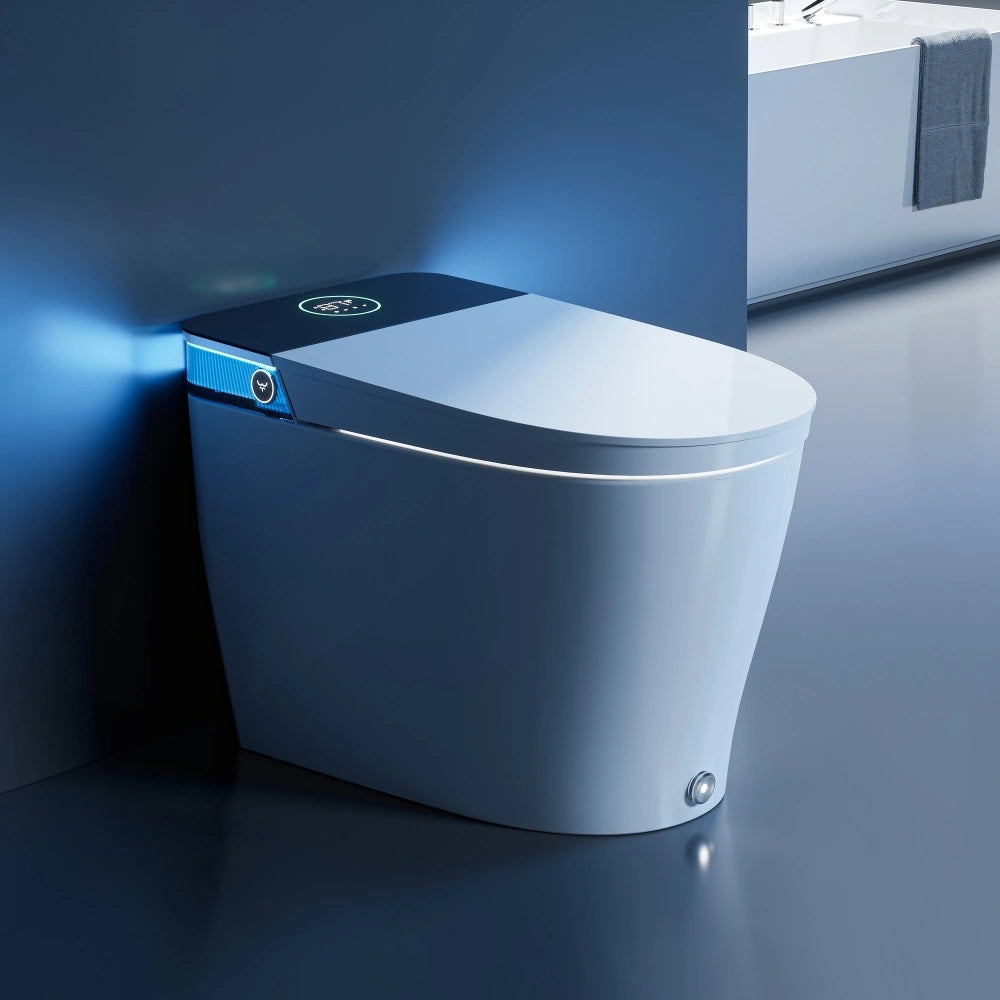
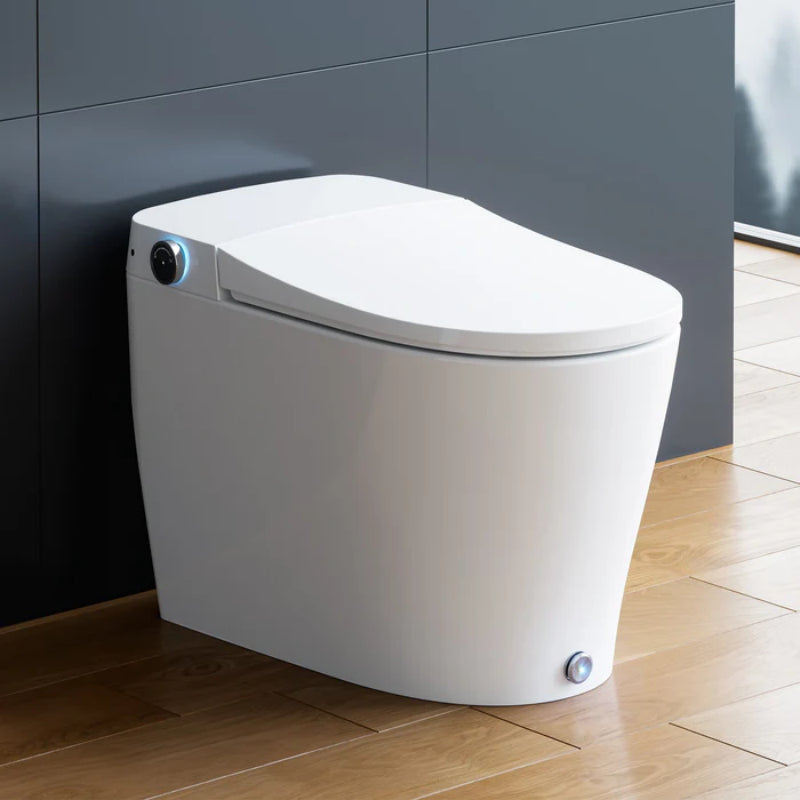

Smart toilets require electricity to operate, though a smart toilet does not use an extreme amount of electricity by household standards. But that does not mean the power cost and setup hassle feel minor in every home.
The real question is not just “how much electricity does a smart toilet use per month” and whether toilets do use electricity in a way that raises monthly expenses. It is whether the comfort you get is worth the added power use, outlet installation, and settings adjustments related to energy consumption.
Here’s where this works well in real homes — and where it often doesn’t.
Is the Power Use & Effort Worth the Comfort?
This section breaks down whether the energy use, setup work, and ongoing electricity costs justify the comfort of a smart toilet, with a straightforward snapshot to help you decide quickly.
Decision Snapshot
A smart toilet is usually a good fit if you:
-
live in a cold climate,
-
will use the heated seat and warm water often,
-
already have a power outlet nearby for smart toilet features,
-
and do not mind paying a bit more each month for comfort.
You should probably skip it if you:
-
are very sensitive to electric bills,
-
want to avoid energy-related setting adjustments,
-
have no power outlet nearby to support smart models,
-
or want to avoid ongoing electrical power-related maintenance.
That is the core decision. If comfort matters daily, the power use may feel reasonable. If you mainly want a simple toilet that never asks for attention, the extra features can start to feel like baggage.
Good Fit for Cold-Weather Comfort
This is where a smart toilet balances comfort and energy use, so smart toilet power consumption tends to make the most sense. In winter, a heated seat and warm wash water can move from “nice extra” to something people use every day.
That matters because value is tied to frequency. If you live somewhere with long cold seasons and actually use the comfort features often, a modest rise in electricity cost may feel fair. Many owners are not paying for the idea of luxury. They are paying to avoid a cold seat and cold water every morning.
In homes where comfort and hygiene are both high priorities, the added power use often feels justified.
Skip It for Bill Sensitivity
If your first reaction to any new electric fixture is “what will this add to my monthly bill,” you may end up resenting it.
Smart toilets have become a popular high-tech toilet choice, and while a smart toilet may not crush a power bill, many homeowners wonder does a bidet increase electricity bills in daily use. But it can quietly add enough to be noticeable, especially when:
-
electricity rates are high,
-
heated seat settings stay on all day,
-
warm water and drying are used often,
-
or more than one person uses it heavily.
In those homes, the regret is rarely “this uses too much power like an oven.” It is more like, “I did not expect this small bathroom upgrade to keep costing me every month.”
What Power Use Surprises People?
Many homeowners overlook how unevenly smart toilets work and consume power throughout the day. While idle use stays minimal, active heating and drying can create unexpected energy spikes that change monthly costs.
Standby Is Low, Use Is Not
One of the biggest misunderstandings is how power is used across the day.
In standby mode, many smart toilets use only a few watts. The rough range is around 1 to 5 watts, though actual numbers vary. That sounds tiny, and it is. A toilet isn’t constantly drawing power, so if the unit mostly sat idle with every heated feature off, energy use would stay low.
But active use is a different story.
Heated wash functions typically draw 300–800 watts during use, while warm air dryers often run at 400–1,000 watts per use. That is why people get surprised. They hear “low standby power” of just 1–5 watts and assume the whole unit is cheap to run. In practice, short high-wattage bursts add up over time, especially in busy households.
So the answer to “do smart toilets use a lot of electricity” is: not constantly, but sometimes in sharp bursts.

Heated Features Use Most Power
Key features of smart toilets that use the most power are usually:
-
features like heated seats,
-
warm water heating,
-
warm air dryer.
Basic smart functions like automatic lids, night lights, and sensors use far less electricity by comparison. They still consume some electricity, but high power from heating elements is why some smart models use more electricity.
The biggest issue is heating. If your unit keeps the seat warm for long stretches, or keeps water ready on demand, that background comfort costs real energy. Tankless water heating changes the pattern, but not the fact that heating is the main load.
Here is the simple rule: if a feature creates heat, it is probably one of the features driving your cost.
Does It Raise Bills Noticeably?
For many homes, daily use lands are around 0.5 to 1.5 kWh per day. At average electric rates, that can mean roughly:
-
about $3 to $7 per month on the low end,
-
and more like $8 to $15 or higher in heavier-use homes or high-rate areas.
The annual cost to run a smart toilet with heated seat and warm water can be modest or annoying depending on your habits. That is why broad averages only help so much.
A homeowner using warm wash and drying just once or twice daily with seat heat only during use will fall near the 0.5 kWh per day low end. A family of four leaving seat heat on all day, using warm water and drying multiple times per person daily, and keeping heating features active year-round will easily reach 1.5 kWh per day or higher.
So yes, a smart toilet can increase electricity bills, and electricity consumption depends heavily on daily usage patterns. The rise is often not dramatic, but it is real.
How Does Daily Use Change Costs?
How often and how you use your smart toilet directly shapes its real-world power consumption and monthly electricity cost, with residential energy usage data and analysis supporting these patterns available at the National Renewable Energy Laboratory. Usage habits, climate, and heating design all play key roles in determining how much energy your unit actually consumes.
Cold Climates Push Usage Higher
In warmer regions, many owners lower or turn off seat heat for part of the year. In cold climates, they often leave it much longer.
That changes math fast.
If winter lasts several months and the bathroom itself runs cool, the heated seat gets used more and higher. Warm water may also be used more often because cold incoming water makes the feature feel more necessary.
This is why smart toilet power consumption is not just a product issue, as energy-efficient smart toilets perform differently in cold vs. warm regions. It is also a climate issue. The same unit can feel cheap to run in one home and wasteful in another.

Tankless Heating Draws More at Use
Smart toilet electricity consumption with tankless water heating can confuse people.
Tankless systems typically have much lower idle power draw since they do not keep a reservoir of warm water heated all day, improving standby efficiency. However, they draw significant peak power when warm water is actively used. Overall energy use remains highly usage-dependent, and total daily electricity consumption is not inherently lower than tank-type models—it simply shifts from steady background draw to short, high-power bursts.
This means tankless models are more efficient at idle but still result in similar or higher total energy costs with frequent use. For the homeowner, total monthly cost depends entirely on how often those high-power heating events occur.
Is It Still Worth It Daily?
That depends on whether the comfort becomes part of your normal routine or stays a novelty.
If you use the wash, heat, and dryer every day, then the running cost may feel predictable, and a smart toilet without frequent heated use costs far less. If you stop using those toilet functions after the first few weeks, the power draw starts to feel harder to defend.
This is where some regret comes from. People do not always regret the amount of electricity. They regret paying for a powered feature set they no longer care about.
What Setup Issues Get Missed?
Many homeowners only think about ongoing electricity use, but smart toilets come with real-world setup challenges that can affect cost, convenience, and reliability.
Outlet Access Matters More Than Expected
A lot of homeowners focus on monthly electricity cost and forget the bigger practical issue: where will this plug in?
Smart toilets need electricity to function and rely on a power outlet nearby. In many bathrooms, the nearest outlet is not close enough, or there is no practical outlet near the toilet at all. Adding a new outlet requires professional electrical work, which adds direct installation cost beyond the toilet itself.
So when asking “do smart toilets require a dedicated power outlet,” the answer is usually no in the sense of a dedicated circuit. But they do require a proper nearby GFCI outlet for safety, and this requirement often leads to unplanned expenses.
Without nearby power access, the cost of electrical work can be a larger financial burden than the toilet’s ongoing energy use.

Dedicated Circuit Usually Isn’t Needed
Most units do not need their own dedicated circuit. Their total demand is usually within the range of a standard bathroom receptacle circuit, assuming the circuit is correctly installed and not already overloaded.
Still, this is not something to guess at if your bathroom wiring is older or already busy with other high-draw devices. The issue is less about normal standby use and more about safe, code-correct setup.
For many people, this is one of those “I wish I checked first” details.
What Happens During Outages?
Smart toilet power consumption during a power outage matters more than people think because the question is really about lost function.
When the power is out:
-
heated seat stops operating completely and all powered features will stop working without the need for manual override,
-
warm water wash is unavailable,
-
warm air dryer will not function,
-
sensor controls and automatic lid operations shut down,
-
manual flushing usually remains available, while electric-powered flushing systems will stop working entirely depending on the model design.
That is not a reason to avoid one by itself. But if you live where outages are common, it changes the value. You may be paying for features that disappear exactly when the house is already less comfortable.
When Does It Become Annoying?
Even with reasonable power consumption, smart toilets can become frustrating in daily use for reasons that go beyond electricity use.
Default Settings Waste Power
A common complaint is not that the unit is badly made. It is that the default settings are too active.
Seat heat may stay on higher than needed. Night lights may stay enabled. Warm water and dryer settings may be stronger than most users really need. If no one takes time to adjust these, the unit can use more energy than necessary for months.
Energy saving mode on smart toilets can help, but only if you actually turn it on and understand what it changes. In many homes, a few setting changes make a noticeable difference:
-
lower the seat temperature,
-
turn off heat in warm months,
-
disable night light if unused,
-
use timers or eco modes to cut standby electricity usage,
-
skip the dryer if it is rarely worth the wait.
That is one of the easiest ways to reduce smart toilet energy consumption.

Small Bathrooms Add Friction
This is not strictly about wattage, but it affects satisfaction enough that it belongs to the decision.
In tight bathrooms, automatic lids and sensor-driven features can become irritating. The lid may open when someone walks by. In a cramped layout, that gets old fast. What sounds convenient can feel fussy.
That kind of annoyance matters because electrical features only feel worth powering when they improve daily use. If they create friction instead, the power cost becomes harder to forgive.
Repairs Can Outlast Savings
A traditional toilet has very few electrical failure points because it has no electrical system at all. A smart toilet adds advanced features including heaters, sensors, control boards, motors, and electronic components.
So even if the electricity cost seems acceptable, long-term ownership can still frustrate people when repairs are needed. Some issues are minor. Others need specialty service or replacement parts, and that can wipe out years of careful energy savings.
This is one of the bigger expectation gaps. People spend time worrying about how many watts a smart toilet uses in standby mode, but later wish they had thought more about serviceability and downtime.
Before You Choose
-
Check for a nearby bathroom outlet before thinking about monthly cost.
-
Estimate use honestly: daily comfort feature or occasional novelty?
-
If bills already bother you, assume the extra power will annoy you too.
-
Plan to adjust default settings right away so the unit may use less power and avoid wasted energy.
-
Think about outage reliability and repair tolerance, not just comfort.
FAQs
1. How much electricity does a smart toilet use per month?
Monthly smart toilet power consumption typically ranges from $3 to $15 for most households, with daily energy use falling between 0.5 and 1.5 kWh. This cost varies based on heated seat usage, dryer frequency, local electric rates, and climate conditions that affect overall power draw. Comparing bidet power to other appliances shows it uses far less energy than large household devices while still contributing a small but consistent amount to monthly bills. Understanding these figures helps clarify whether a bidet increases electricity bills in a noticeable way, especially when compared to other appliances in your home.
2. Is a heated toilet seat expensive to run in?
The annual cost to run a heated bidet seat is generally low, as watts used by bidet seat heaters are minimal in standby and only rise slightly during active heating. Smart toilet power consumption stays modest unless the seat is set to high heat and left on continuously throughout the year. Many users find the expense negligible, especially when balanced against the comfort provided in colder climates. This makes heated seats one of the more cost-effective comfort features in a modern bathroom.
3. How can I reduce my bidet's power usage?
Using energy saving mode on smart toilets is one of the most effective ways to lower smart toilet power consumption and cut unnecessary electricity use. Adjusting seat temperature, disabling heating in warm weather, and turning off unused features also reduce energy waste. Skipping the heated dryer when unnecessary further limits high-wattage bursts during use. Small setting changes can noticeably lower both daily draw and the annual cost to run a heated bidet.
4. What is the yearly cost of a smart toilet?
The annual cost to run a smart toilet with heated functions ranges from roughly $36 to $180, depending on usage habits and local electricity prices. Smart toilet power consumption rises with frequent use of warm water, seat heating, and drying functions, especially in cold climates. Comparing bidet power to other appliances shows it remains a low-cost comfort item compared to major home appliances. Heavy use will push expenses higher, but most users see only a moderate annual increase.
5. Will a bidet trip my circuit breaker?
A standard bidet or smart toilet will not normally trip a circuit breaker, as its peak power draw is low when comparing bidet power to other appliances. Even during high-use heating cycles, smart toilet power consumption stays within the limits of typical bathroom circuits. Problems only occur if the circuit is overloaded or has outdated wiring. Most units do not require a dedicated circuit and operate safely on standard home electrical setups.
References


Leave a comment
This site is protected by hCaptcha and the hCaptcha Privacy Policy and Terms of Service apply.