
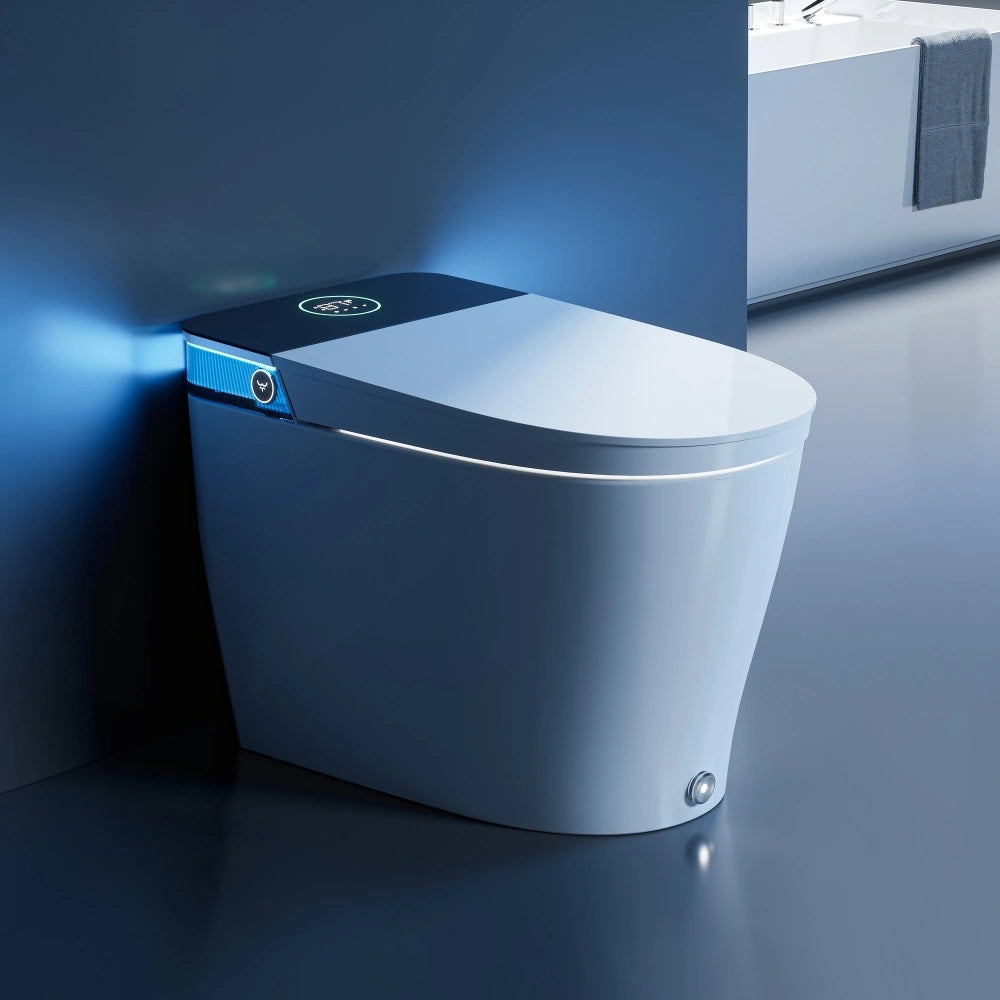
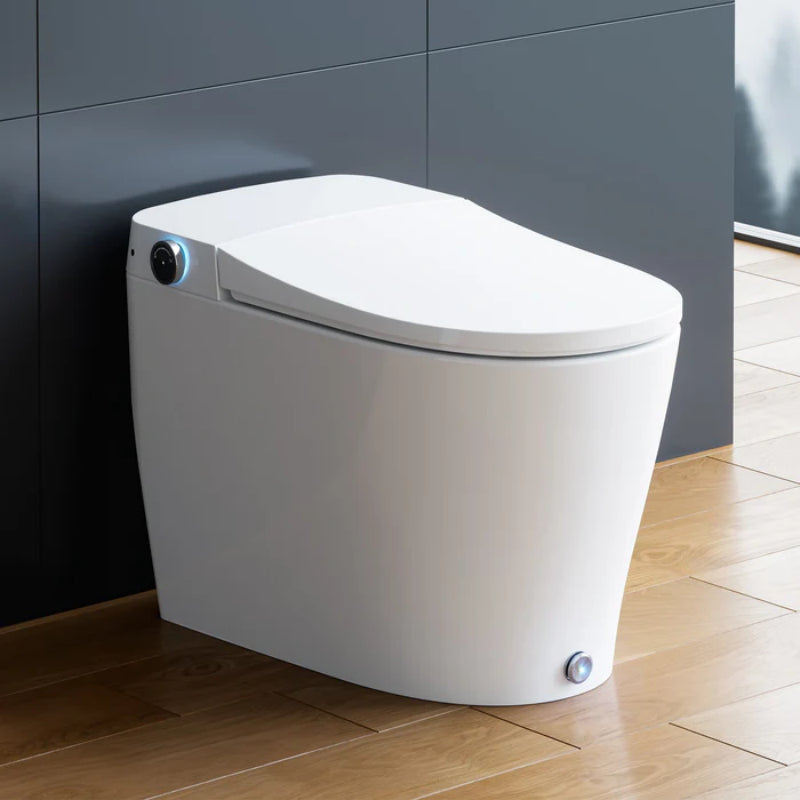
A smart toilet can feel like a simple comfort upgrade when you first shop for one because smart toilets offer features like heated seats, warm water, and automatic flushing that traditional toilets simply don’t. Warm seat, warm water, automatic flushing, deodorizer, dryer, night light. On paper, it sounds easy: buy it once, enjoy it for years.
But lifespan is where the decision gets real.
A regular toilet is mostly porcelain, a fill valve, a flapper, and a handle. A smart toilet adds heaters, sensors, control boards, wiring, and often more custom parts. That does not mean smart toilets are unreliable. It means you are no longer buying only plumbing. You are buying a mix of plumbing and electronics, and that changes how long the unit lasts, what tends to fail first, and how repairable it will be after year five, year eight, or year ten.
If you are asking about smart toilet lifespan and reliability, you are probably trying to answer one thing: is this upgrade worth the risk in a real home?
Here’s the short answer. For many households, yes, a smart toilet is reliable enough to be worth buying. But only if your bathroom conditions are decent, your water is not punishingly hard, and you are fine with the fact that the electronic side will almost never last as long as the porcelain side. In practice, the average lifespan of a smart toilet is often around 10 to 15 years for the full unit, while some electronic parts may need service earlier, often in the 5 to 10 year range.
That gap is the whole story. The toilet body may still be fine long after the “smart” features begin aging out.
Decision Snapshot: Buy, Avoid, or Wait
Expect a lifespan of roughly 5–7 years for budget models, 8–10 years for mid-range units, and 12+ years for premium smart toilets, assuming proper installation and basic care. If you read only one section, read this one.

Best for low-maintenance-minded upgraders
A smart toilet is a good fit if you want daily comfort, use your bathroom regularly, and are okay doing a little basic care. In most homes, that means simple cleaning, keeping spray areas free of buildup, and not ignoring small warning signs.
This is also a good choice if your bathroom already has:
-
a nearby outlet
-
stable power
-
decent ventilation
-
enough space around the toilet
-
water that is not extremely hard
If that sounds like your setup, smart toilets are usually reliable long term enough to justify the added cost.
Avoid if repairs will frustrate you
Do not buy a smart toilet if the idea of replacing an electronic part in year six or eight will make you angry every time you think about it.
That may sound blunt, but it matters. Some owners are happy if they get many years of comfort and then pay for one repair. Others expect “toilet-level simplicity” forever. A high-quality smart toilet with durable electronic components and well-designed advanced features usually balances comfort with reliability. It is closer to owning an appliance that happens to be connected to plumbing.
If you want the fewest possible failure points, a regular toilet or a simpler bidet seat setup is often the safer move.
Wait if your bathroom setup is borderline
Wait if any of these are still unresolved:
-
no nearby GFCI outlet
-
very small bathroom with tight clearances
-
poor ventilation and constant moisture
-
known hard water scale issues
-
unstable power or frequent outages
-
uncertain rough-in or fit problems
A lot of reliability complaints start as setup problems, not product problems. If your bathroom is borderline now, fix the room first.
Buyers with very hard water should delay purchase until a solid scale management plan is in place—through softening, filtration, or other measures—because neglecting this directly increases failure risk for sensitive electronics and water-handling components.
Is a smart toilet lifespan and reliability good enough?
For most people, this is the first real buying question.
How long most units really last
How long does a smart toilet last? In normal home use, many fall into this rough pattern:
-
Porcelain body: often 15 years or more
-
Core smart functions as a system: often 10 to 15 years
-
Electronic parts: often 5 to 10 years before some repair risk rises
-
Wear items and small components: sometimes earlier, depending on water and use
That means the average lifespan of a smart toilet is usually shorter than the full physical life of the toilet body itself. The body may be fine, but heaters, sensors, control panels, valves, or boards can become the limiting factor.
This is why two owners can describe the same toilet very differently. One says, “It lasted 12 years.” Another says, “The heater failed in year seven.” Both can be true.
Smart vs regular toilet lifespan
Smart toilet lifespan vs traditional toilet lifespan is not a close contest if you mean total simplicity.
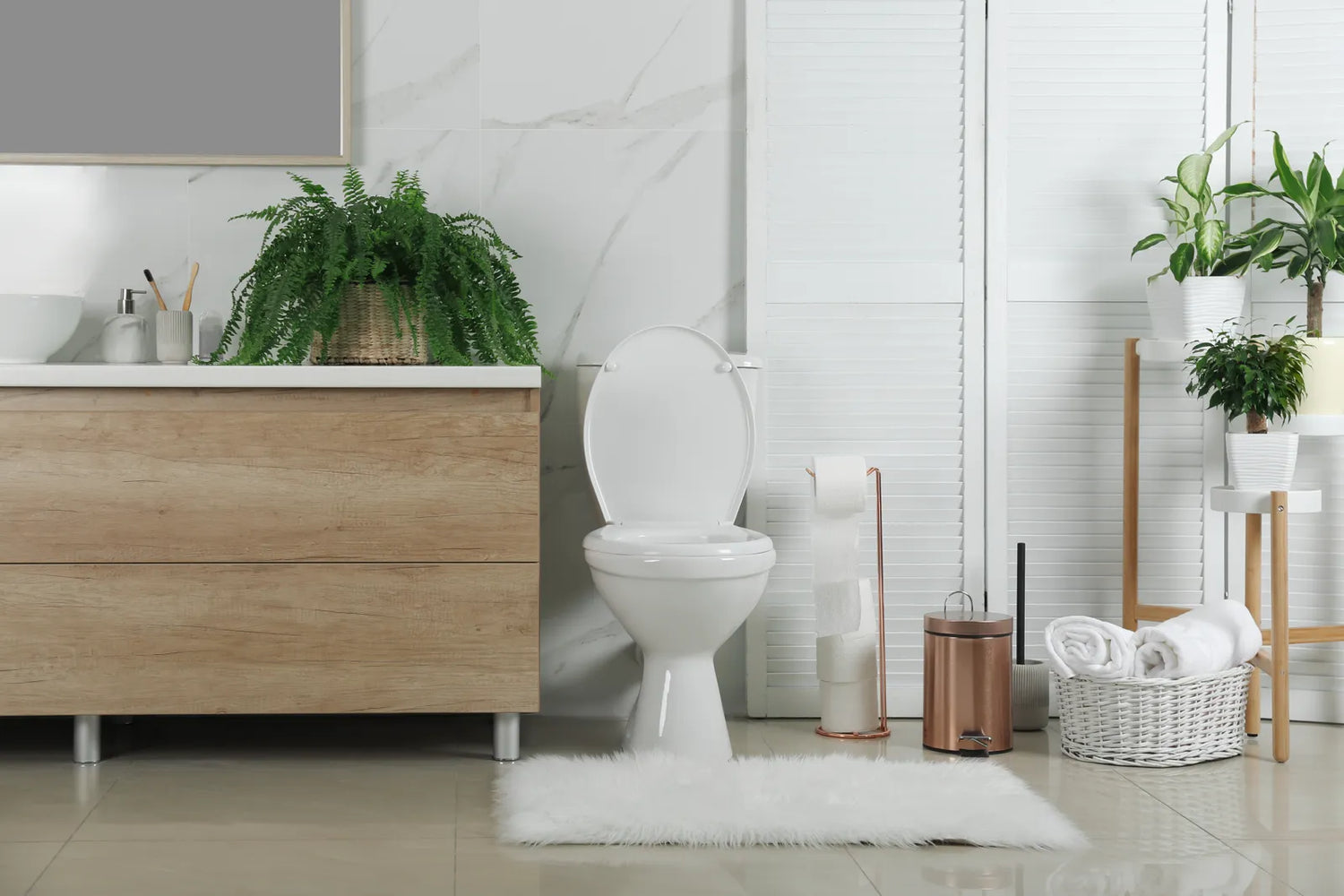
A regular toilet often lasts decades because most of it is passive. Even when something fails, parts are cheap and easy to replace. Fill valves and flappers are common, universal, and easy to service.
A smart toilet is different. It can still last a long time, but the risk profile changes:
-
more parts
-
more custom components
-
more sensitivity to water quality
-
more dependence on power
-
more expensive repairs when electronics fail
So are smart toilets reliable long term? Yes, many are. But they are not as fault-tolerant as a plain toilet. You are trading some simplicity for comfort and features.
When premium models justify the bet
A more expensive unit can make sense if you plan to use it daily for many years, especially in a primary bathroom. Better sealing, better quality internal parts, and stronger support can improve the odds of a longer trouble-free life.
But premium only makes sense if the bathroom itself supports it. A high-end smart toilet in a humid room with hard water and poor electrical protection may age worse than a midrange unit in a clean, stable environment.
Here’s what usually matters in real homes: build quality helps, but conditions and maintenance often decide lifespan just as much.
Which trade-offs matter most long term?
The easiest way to buy well is to stop thinking about features as “extras” and start thinking about them as added systems that can fail.
Comfort features vs failure points
The most popular features are also the parts that create more long-term complexity:
-
heated seat
-
warm water wash
-
warm air dryer
-
automatic flushing
-
lid open/close motors
-
deodorizer fans
-
user memory settings
-
remote controls and side panels
None of these features are bad. In fact, the daily comfort can be excellent. But every added feature increases the number of parts that may wear out or need service.
If you want the best balance of comfort and reliability, simpler is often better. A unit with heated seat, wash functions, and straightforward controls usually ages more gracefully than one packed with every automation feature available.
Which parts fail first
Which smart toilet features fail most often over time? In many homes, the first trouble spots are usually not the porcelain or main plumbing path. They are smaller, more delicate systems:
-
seat heating elements
-
water heating systems
-
sensors
-
control panels or remotes
-
auto-flush sensors or motors
-
deodorizer fans
-
internal solenoid valves
-
power supply components
Many homeowners wonder how long do bidet heating elements last. Typically, they last around 5 to 10 years, but frequent use at high water temperature or unstable power can shorten their life. Constant high-temperature use can shorten that.
How long do smart toilet sensors and electronic parts last? Often in the same general range, around 5 to 10 years, though good conditions can push beyond that.

Are full-feature models riskier?
Usually, yes. Not always dramatically, but enough to matter.
How durable are smart toilets with automatic flushing and heated seats? They can be durable, but a model with both features has more points of failure than a model with neither. A heated seat alone is one added system. Automatic flushing adds sensors, sometimes motors, and more control logic.
That does not mean you should avoid full-feature models. It means you should buy them because you truly value those features, not because they sound nice in a showroom.
A good rule: if you will not care deeply about a feature after the first month, do not pay for its future repair risk now.
Is reliability worth it for daily luxury?
For a primary bathroom, often yes. For a rarely used guest bath, often no.
That is because the comfort payoff is tied to frequency of use. If you use the toilet several times every day, the value of warm water, heated seat, and easy cleaning adds up. If the toilet sits unused much of the week, the long-term reliability trade-off looks less attractive.
In short, smart toilets tend to make the most sense where they will be used and appreciated often.
What will ownership really cost?
The purchase price is only the first number that matters.
Upfront price vs usable lifespan
When people ask “how long does a smart toilet last,” they are usually also asking whether the cost spreads out well enough over time.
If a unit lasts 10 to 15 years and the features improve daily comfort for a busy household, the cost can make sense. If the unit is lightly used, or if one expensive repair arrives in year six, the math can feel very different.
A better way to think about it is usable lifespan, not maximum lifespan. If the unit still flushes in year twelve but the heating, washing, and seat features are failing, many owners will not count that as full-value life.
Repair costs that surprise owners
The repairs that catch people off guard are usually electronic, not basic plumbing.
The most expensive example is often the control board. Smart toilet circuit board replacement cost and lifespan matter because the board is the brain of the unit. If it goes bad, symptoms can look random: dead controls, sensor errors, no heating, flushing issues, or complete failure.
How long does a control board last? Often around 7 to 10 years, sometimes less in bad humidity or unstable power, sometimes more in ideal conditions.
Replacement cost varies a lot, but the key point is simple: board replacement can be expensive enough that owners start comparing repair cost to full replacement cost, especially on older units.
Other repairs that can sting:
-
heater replacement
-
motorized lid parts
-
sensor assemblies
-
specialty valves
-
service calls for hard-to-access integrated units
Warranty length vs real service life
Smart toilet warranty vs expected lifespan is where buyers often get confused.
A warranty tells you how long the maker promises to cover certain defects. It does not tell you how long the product will actually last. A one- to three-year warranty does not mean the toilet will only last that long. It also does not guarantee cheap repairs after warranty ends.
When comparing warranties, look for:
-
what parts are covered
-
labor vs parts
-
electronics exclusions
-
who pays shipping or service travel
-
whether wear items are excluded
-
whether water quality damage is excluded
A short warranty on electronics should not automatically scare you away, but it should make you more realistic about long-term costs.
When repair stops making financial sense
Is it worth repairing an old smart toilet? Usually yes if:
-
the unit is under 7 years old
-
the failed part is isolated
-
repair cost is modest
-
the rest of the toilet is working well
Usually no if:
-
the unit is 10+ years old
-
multiple systems are failing
-
parts are hard to source
-
the repair approaches a large share of replacement cost
-
the model has poor service support
A simple rule: if one expensive electronic failure appears after years of heavy use, treat it like an aging appliance, not a forever fixture.
Once your smart toilet is aging and electronics start failing, compare the repair cost directly to a replacement: if repairs approach or exceed 50–60% of a new unit’s price, replacement is usually the smarter financial choice.
Will your bathroom help or hurt lifespan?
This part gets ignored too often. Bathroom conditions can add years to a smart toilet’s life or take them away.
Before buying, check your bathroom’s water hardness, electrical reliability, and ventilation—these are purchase-critical constraints, not optional maintenance tips. Neglecting them can sharply shorten the lifespan of your smart toilet, regardless of brand or model.

Hard water shortens component life
Hard water effects on smart toilet reliability are real. Mineral buildup can clog spray nozzles, reduce valve performance, coat heating surfaces, and stress internal water pathways.
If your home already fights scale on faucets, shower glass, and kettle elements, your smart toilet will feel that too.
Hard water often affects:
-
spray wand performance
-
water heating efficiency
-
internal valves
-
flow sensors
-
cleaning cycles
If your water is very hard, factor that into the decision before you buy. This is one of the biggest answers to what affects smart toilet lifespan and reliability.
Humidity can damage electronics
Bathrooms are damp by nature, but there is a big difference between normal humidity and a room that stays wet for hours.
Poor ventilation increases the risk of long-term corrosion, moisture intrusion, and sensor problems. Steam-heavy bathrooms without good exhaust fans are harder on electronics. Over time, that can shorten the life of the control board, wiring connections, and sensor systems.
If your bathroom mirror stays fogged for a long time after every shower, that room is not ideal for sensitive electronics.
Power quality affects long-term reliability
Smart toilets are not just plumbing devices. They are powered appliances. That means surges, brownouts, and unstable voltage can matter. Based on Energy.gov, maintaining stable and clean electrical supply in bathrooms is crucial for the long-term performance of electric appliances, including smart toilets.
If your home has frequent electrical issues, that can reduce reliability over time. The heater, controls, and board all prefer clean, stable power.
This is one reason two similar toilets can have very different long-term outcomes in different homes.
Will this work in a small bathroom?
A small bathroom can hurt lifespan in indirect ways. Tight spaces can make cleaning harder, increase bumping and abuse, and make service access more difficult. Some units also need enough clearance for lids, side controls, or seat access.
Before buying, confirm:
-
side wall clearance
-
front clearance
-
lid opening room
-
outlet location
-
shutoff valve access
A cramped install often leads to workarounds, and workarounds are rarely good for reliability.
Is your household a good fit?
The toilet does not live in a showroom. It lives with your habits.
Heavy use wears parts faster
A busy household will use wash features, seat heating, sensors, and flush systems far more often than a one- or two-person home. That is obvious, but it matters.
Heavy use does not mean “don’t buy one.” In fact, heavy use often makes the comfort value stronger. It simply means the average lifespan of a smart toilet may land closer to the lower end of the range unless you maintain it well.
Vacation homes create different risks
Vacation homes sound easy because the toilet gets less use. But long idle periods create a different set of issues:
-
mineral deposits drying in place
-
seals sitting unused
-
stale water in internal pathways
-
power interruptions after storms
-
winter humidity or temperature swings
If the home sits empty for long stretches, a simpler toilet setup is often the safer choice unless you have a clear plan for seasonal care.
Are smart toilets harder to maintain?
Are high-tech smart toilets harder to maintain than regular toilets? Yes, a little. But not in a dramatic day-to-day way.
Basic care is still simple. The difference is that with a regular toilet, neglect often leads to ugliness or a cheap repair. With a smart toilet, neglect can shorten the life of parts that cost much more.
So the maintenance is not difficult. It is just more important.
What happens if guests misuse features?
Guest misuse is a real issue in family homes and homes with frequent visitors. People press the wrong buttons, force lids, clean with harsh chemicals, or assume the toilet works like a public automatic fixture.
If that sounds likely in your home, choose a model with simpler controls and fewer motorized parts. The more intuitive the toilet, the less chance of accidental abuse.
How much maintenance will you actually do?
This is where honesty matters. Not perfect intentions. Real habits.
Simple habits that extend lifespan
Extending a smart toilet’s lifespan mostly depends on cleaning habits and maintenance that require proper hygiene. Preventing buildup and reducing stress on electronic components ensures the toilet lasts longer.
The best habits are simple:
-
clean gently and regularly
-
keep spray parts free of scale
-
use the self-clean function if included
-
keep the bathroom ventilated
-
watch for small changes in performance
-
protect the unit from electrical issues if your home has surge problems
If you do that, many smart toilets can deliver a solid service life.
Cleaning mistakes that cause failures
Smart toilet maintenance tips for longer lifespan often come down to what not to do.
The biggest mistakes:
-
harsh chemical cleaners in sensitive areas
-
abrasive pads on coated surfaces
-
soaking electronic seams and controls
-
forcing the seat or lid by hand
-
ignoring nozzle buildup
-
using cleaners that damage seals or plastic trim
A lot of owners shorten lifespan by cleaning too aggressively. Smart toilets need cleaning, but they do not like brute-force methods.
Maintenance tasks most owners skip
Most skipped tasks are not complicated. They are just easy to forget:
-
checking for scale around nozzles
-
cleaning filters or inlet screens if applicable
-
noticing weak spray pressure early
-
paying attention to delayed heating
-
keeping vents and fan areas clear
-
watching for intermittent sensor behavior
These are the early signs that tell you whether a unit is aging normally or drifting toward a larger repair.
Is upkeep worth it if you want simplicity?
If your dream is “install it and never think about it again,” a smart toilet may not be your best fit.
If your goal is “minimal upkeep, but I’m fine doing a few simple things a few times a year,” then yes, the upkeep is usually worth it.
The smart buy for simplicity-minded owners is often a unit with fewer automatic features and fewer moving parts.
When should you repair or replace?
At some point, every owner reaches this question.
Signs trouble is starting early
Signs a smart toilet needs repair or replacement often begin subtly:
-
seat stops warming evenly
-
water takes longer to heat
-
wash pressure drops
-
nozzle movement seems slow
-
auto flush misses or double flushes
-
sensor response becomes inconsistent
-
random beeps or error codes appear
-
controls work only part of the time
These are worth checking early. Waiting too long can turn a smaller part issue into a larger system problem.
Heating and seat parts lifespan
How long do smart toilet heating elements last? A practical range is often 5 to 10 years, though usage habits matter a lot. If the seat heater runs daily at high setting, expect more wear than in a home that uses lower settings or eco modes.
Water heaters are also affected by scale. In hard water areas, heating efficiency can drop sooner.
If one heating-related feature fails but the rest of the toilet works well, repair can still make good sense.
Sensors and control boards lifespan
How long do smart toilet sensors and electronic parts last? Many last around 5 to 10 years, sometimes longer in ideal conditions.
Control boards often last into the later half of that range, but once they begin failing, diagnosis can be messy because one board can affect many functions at once.
That is why smart toilet circuit board replacement cost and lifespan matter so much in the replace-or-repair decision. A failed sensor may be manageable. A failed board on an older unit often forces a harder conversation.
Replace the part or the whole unit
Replace the part if:
-
the toilet is still fairly young
-
parts are available
-
the repair fixes one clear issue
-
the porcelain and core functions are still excellent
Replace the whole unit if:
-
you are seeing repeated electronics failures
-
the board is bad on an older unit
-
heater, sensors, and flush functions are all aging at once
-
service access is poor and labor is high
-
your bathroom needs have changed anyway
In many homes, the best long-term move is not “repair everything forever.” It is “repair once if the unit is still in its prime, replace when the failures start stacking up.”

So, are smart toilets reliable enough?
Yes, in the right home.
If you want the simplest fixture possible, a high-quality smart toilet is worth considering—especially if your goal is a fully functional smart bathroom with reliable comfort features.
A traditional toilet still wins on raw lifespan, cheap repairs, and low drama.
But if you want daily comfort and choose carefully, smart toilets are reliable long term enough for many homeowners. The best results usually come when:
-
the bathroom is dry and well ventilated
-
the water is not extremely hard, or you manage scale well
-
the electrical supply is stable
-
the toilet is used regularly
-
the owner is realistic about maintenance and future repairs
-
the feature list is not overloaded with things you do not need
The key point is this: buy the level of smart toilet you are actually willing to own for 10 years. Not the one that looks exciting on day one.
For many people, the sweet spot is not the most basic unit and not the most feature-heavy one. It is the middle: core comfort features, fewer moving parts, reasonable repair odds, and a bathroom setup that supports the product.
That is usually the best answer to smart toilet lifespan and reliability.
Before You Buy
-
Check that you have a nearby GFCI outlet.
-
Confirm rough-in size and bathroom clearances.
-
Be honest about your water hardness.
-
Make sure the bathroom has good ventilation.
-
Decide which features you will use every week.
-
Read the warranty for electronics, not just porcelain.
-
Ask yourself if one repair in 7 to 10 years feels acceptable.
-
If simplicity matters most, choose fewer automated features.
FAQs
1. How many years does a smart toilet last?
The smart toilet lifespan and reliability usually ranges from 10 to 15 years with proper care. Factors like water quality, frequency of use, and humidity can impact longevity. Regular cleaning, checking connections, and preventing mineral buildup can make a big difference in how long your unit stays in top shape.
2. What parts fail first on a smart bidet?
Often, the first components to fail are the electronic controls, heated seats, and water nozzle mechanisms. For older units, replacing smart toilet circuit boards can solve many common issues without needing a full replacement, which saves both money and hassle.
3. Is it worth repairing an old smart toilet?
If your unit is under 10 years old, fixing a single failing component is generally worth it. Considering the smart toilet warranty vs lifespan can help you decide—sometimes, repairs are covered, or they make more sense financially than a full replacement. But if multiple parts are failing on an older model, investing in a new unit might be the smarter choice.
4. How can I make my bidet last 10 years?
Maintenance to extend bidet life is key. Wipe down the seat regularly, clean the nozzle, inspect hoses for leaks, and use filters if your water is hard. Keeping the bathroom ventilated reduces humidity stress on electronics, helping the bidet reach 10 years or more.
5. Are HOROW toilets reliable over time?
The durability of HOROW intelligent toilets is well-regarded. Users report smooth operation for 8–12 years with routine care. Their modular design also allows easy part replacement, which boosts long-term reliability and reduces the need for full-unit replacement.
6. What is the average lifespan of a bidet heater?
A bidet heater typically lasts 5 to 8 years, depending on usage and water quality. Watching for signs your smart toilet needs repair, like inconsistent heating or slow response, can prevent bigger problems. Regular cleaning and descaling helps the heater reach the upper end of its expected lifespan.
References


Leave a comment
This site is protected by hCaptcha and the hCaptcha Privacy Policy and Terms of Service apply.