
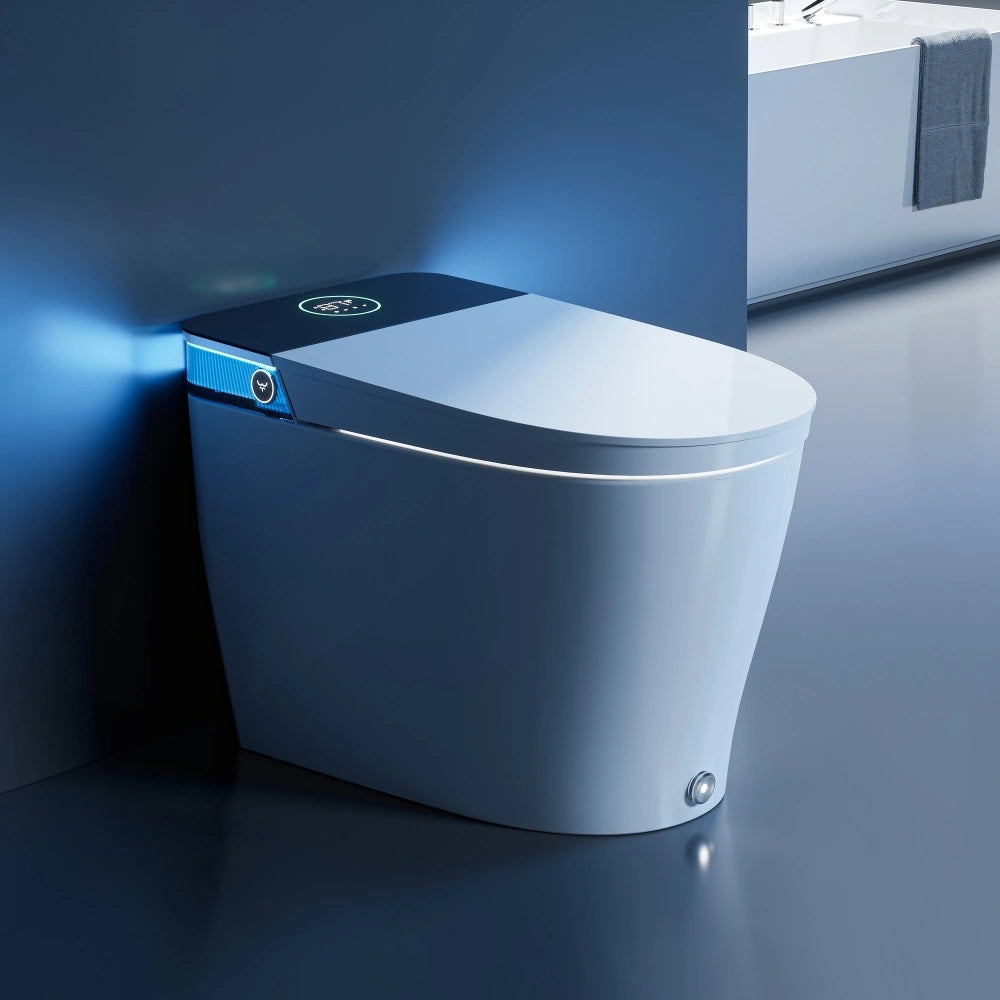
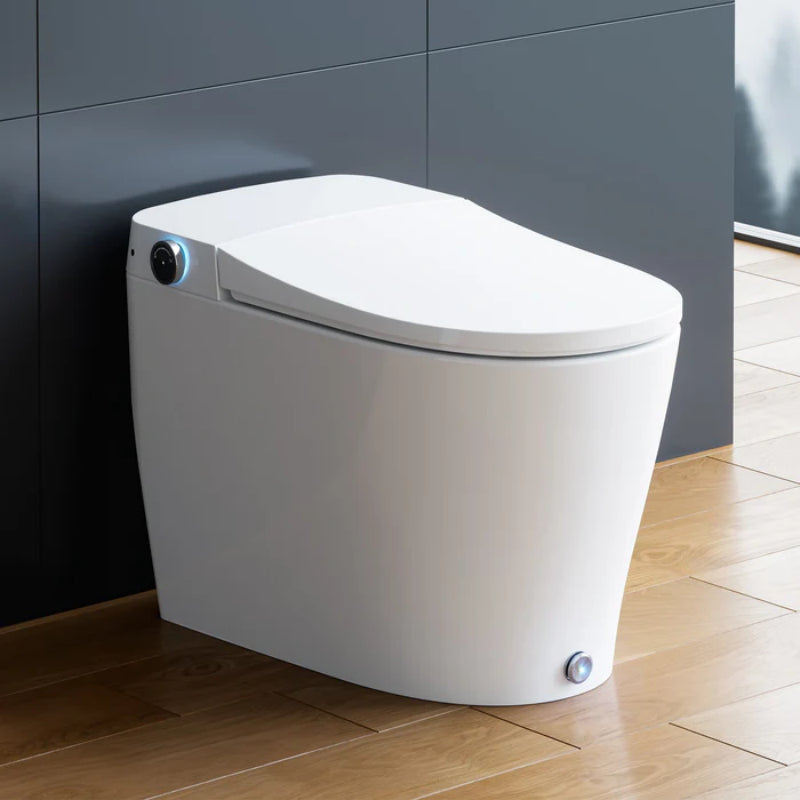
A humid bathroom changes the toilet buying decision more than most people expect, especially when modern toilet technology is involved in a modern home.
In a dry home, a smart toilet is mostly about comfort and convenience. In a hot, damp bathroom with high humidity, it also becomes a hygiene and comfort as well as maintenance question. According to the CDC, proper hygiene practices are essential in damp environments where bacteria and germs can spread more easily. Moisture in the air can make mildew grow faster around the base, leave surfaces damp longer, and push weak materials to fail sooner. If you live in Florida or other humid coastal regions like the Gulf Coast, Hawaii, the Caribbean, or any tropical or coastal area, that matters.
So the real question is not “Are smart toilets good?” It’s this: Will an intelligent toilet make your bathroom cleaner and easier to use, or will it add more upkeep than a regular toilet?
Here’s how to make that first decision with less guesswork.
Decision Snapshot: Smart Toilet for Humid Climates or Simpler Setup?
Before comparing key features of different smart bidet toilet options, apply these hard “gating” checks. If any of the following conditions apply, delay buying a smart toilet or switch to a simpler setup:
-
Chronically damp bathroom (stays wet for hours): If your floor, grout, or toilet base remains damp long after showers, or you regularly notice condensation buildup that lingers, a fully integrated smart toilet is not the right starting point. Moisture-sensitive components in many toilets will require more upkeep than most households expect in high humidity environments.
-
Frequent power outages without acceptable backup: If outages are common and you’re not comfortable relying on limited or manual flush backup modes, a smart toilet may create more frustration than convenience.
-
Very hard water + low willingness to descale: If your area has visible limescale buildup (on taps, glass, or kettle) and you’re unlikely to descale regularly, internal components like spray nozzles and valves will degrade faster.
Decision shortcut: If any one of these applies → choose a simpler setup (bidet seat or traditional toilet) first, and revisit smart upgrades after conditions improve.
Choose smart if hygiene automation matters
A smart toilet for humid climates makes the most sense if you care about hands-off hygiene and your bathroom already struggles with odor, splash, or shared use. The key features that matter most in humidity are not flashy ones but practical hygiene-focused upgrades. They are self-cleaning features like nozzle rinsing, antimicrobial seat materials, and hands-free operation that help keep the toilet bowl cleaner.
This is often the right choice for:
-
shared family bathrooms
-
primary bathrooms used every day
-
homes where odor control matters
-
homeowners who want less direct contact with toilet surfaces
Skip this option if: your bathroom has poor ventilation, persistent humidity, or you prefer a low-maintenance routine with minimal cleaning/descaling.
Choose simpler if upkeep tolerance is low
A bidet seat on a standard toilet or even an existing toilet is often the better middle ground. You still get much of the hygiene upgrade, including using a bidet with a gentle stream of water that is great for people with sensitive skin, but there are fewer built-in parts, lower replacement cost, and easier service if something fails.
This is a smart choice if:
-
your bathroom is humid but small
-
you want a lower-cost hygiene upgrade
-
you do not want a full toilet replacement
-
you are okay doing basic cleaning and nozzle checks
Skip this option if: you strongly value integrated aesthetics, want a one-piece design, or prefer fewer exposed parts and add-ons.
Pick traditional if outages and repairs worry you
A traditional toilet or non-electric bidet setup uses less water, requires no electricity consumption, and keeps ownership simple. In humid climates, simple fixtures are often easier to own long term and need to clean less complex parts every use.
This is usually best if:
-
power reliability is a concern
-
repair access in your area is poor
-
you dislike electronic products in wet rooms
-
you want the least complicated ownership experience
The rule of thumb is simple: if you want the cleanest daily experience, go smart; if you want the least maintenance risk, go simpler.
Skip this option if: you specifically want hygiene upgrades like warm water washing or reduced paper use, and are willing to handle basic maintenance. Reduced paper use means your toilet relies less on the amount of toilet paper and helps you say goodbye to toilet paper over time. This also lowers the impact on the environment, since toilet paper production and toilet paper also contribute to water and energy consumption.

Who should choose which option?
A lot of buyers compare a full smart toilet to a regular toilet as if those are the only two choices. In real homes, there are four practical paths.
Smart toilet for shared humid bathrooms
If two or more people use the same bathroom every day, a smart toilet starts to make more sense. The value is not just the wash function. It is the way the toilet helps control mess, odor, and touch points in a space that stays damp.
In humid bathrooms, germs and odor can seem to linger. A smart toilet can help because it may include automatic bowl rinse cycles, deodorizing fans or filters, self-cleaning nozzles, and seat materials that resist microbial growth better than basic plastic. That does not mean the toilet cleans itself completely. It means there is less residue left behind between manual cleanings.
This is where a smart toilet with antimicrobial bidet seat for humid climates can be worth the higher price. In a family bathroom, that can lower the “gross factor” enough to matter.
Bidet seat for lower-cost hygiene upgrades
If you already have a good toilet and mostly want better cleaning, a bidet seat is often the strongest value choice. You avoid the cost of replacing the bowl and can still get warm water wash, nozzle cleaning, heated seat, and sometimes warm air drying.
For many homeowners asking for the best smart toilet for high humidity bathrooms, the honest answer is that they may not need a full smart toilet at all. A well-made bidet seat on a skirted, easy-clean toilet often gets you most of the practical benefit for less money and less installation trouble.
Traditional toilet for simplest ownership
If your bathroom is humid but you do not have strong hygiene complaints, a standard toilet is still the easiest thing to own. Fewer seals, fewer electronics, fewer specialty parts. In a damp space, simplicity has value.
This option makes sense when:
-
you clean regularly already
-
mold is more of a room ventilation issue than a toilet issue
-
the toilet is in a guest bath with light use
-
long-term repair cost matters more than convenience
Non-electric bidet for storm-prone homes
In storm-prone coastal areas, power outages are not a small detail. If you still want washing ability but do not want to depend on electricity, a non-electric bidet attachment or seat is often the better answer.
This is especially true if you are worried about how Florida humidity affects bidet electronics. Humidity alone usually is not the main threat if the unit is properly rated and installed. The bigger issues are condensation, poor ventilation, corrosion over time, and unstable power conditions during storms.
Which trade-offs matter most?
People often get distracted by luxury features. In humid climates, the right buying decision usually comes down to a few plain trade-offs.
Automation vs easier manual cleaning
Smart toilets reduce some daily cleaning tasks, but they do not remove cleaning. In fact, some owners are surprised to learn that a unit with more seams, vents, filters, and nozzle housings may need more careful wiping in a damp room.
So ask yourself: do you want less direct toilet mess, or the simplest object to clean by hand?
A full smart toilet usually wins on hygiene convenience. A standard toilet usually wins on cleaning simplicity.
Warm drying vs added moisture concerns
Many people ask, do heated seats and warm air dryers work well in humid climates? Yes, but with limits.
Heated seats are usually fine in humid bathrooms. They do not add meaningful room moisture. Warm air dryers can still work, but in very humid air they may feel slower and less effective than they do in dry climates. The body is already in a damp environment, and evaporation is less efficient. That means the dryer may be more of a comfort feature than a must-have.
If you are trying to keep your bathroom as dry as possible, the dryer is not usually the problem. Long showers, weak vent fans, and poor airflow are much bigger causes of mildew.
Priority Decision: When to Skip Warm Air Drying
In humid climates, warm air drying is not always a net benefit. While it reduces toilet paper use, it also introduces additional warm airflow into an already moisture-heavy environment, which can contribute to lingering dampness around the seat and bowl area.
Priority call:
-
If your bathroom already struggles with humidity, slow drying surfaces, or limited airflow → deprioritize or skip warm air drying features.
-
If ventilation is strong and surfaces dry quickly → the feature can be used without significant downside.
Exception: When Drying Still Matters More
If reducing wiping is a functional necessity (e.g., mobility limitations, post-surgery care, or accessibility needs), warm drying remains worth keeping—even in humid environments—because hygiene and usability outweigh the moisture trade-off.
Odor control vs more parts to service
One clear benefit in humid bathrooms is deodorizing. Many homeowners ask, can a smart toilet reduce odor and germs in humid bathrooms? It can help with odor, yes. It can support hygiene, yes. But it does not replace cleaning and ventilation.
A built-in deodorizer or air filter is useful in a bathroom that holds smells after showers. Still, those parts need service. Filters may need replacement. Air intakes need cleaning. If you know you will ignore those tasks, that feature may not deliver much value.
Antimicrobial surfaces vs higher upfront cost
An antimicrobial seat or nozzle housing can help slow bacterial growth on the material surface. It does not sterilize the toilet. It does not stop mildew on dust, soap film, or grime. But in humid rooms, it can be a useful extra layer.
If you are comparing models, smart toilet features that improve hygiene in humid environments should rank higher than mood lighting, remote memory, or voice controls.
Cost and value: when is it worth it?
A humid-climate buyer should think in terms of ownership value, not just sticker price.
Full smart toilet vs bidet seat budget
A full smart toilet usually costs much more up front. You may also need:
-
a nearby electrical outlet
-
possible plumbing changes
-
professional installation
-
future service access
A bidet seat costs less and often installs more easily. If your existing toilet is modern, comfortable, and easy to clean, the seat upgrade is often the better value.
The key point is this: a full smart toilet is worth it when you want both toilet replacement and hygiene automation. If you only want washing, start with the seat.

Luxury models vs practical mid-range picks
Is a luxury smart toilet worth it for homes in humid climates? Sometimes, but only if the extra money buys features that matter in your room.
Useful upgrades in humid areas include:
-
better bowl coating or smoother glazing
-
stronger self-rinse systems
-
easier-to-clean skirted exterior
-
more durable seat materials
-
backup flush ability
-
serviceable deodorizer filters
Less useful upgrades include:
-
advanced remote personalization
-
fancy lighting
-
app features you will rarely use
In other words, a self-cleaning smart toilet for tropical or coastal homes should be chosen for materials and maintainability, not status.
Is a luxury smart toilet worth it?
For most people, no. Not unless:
-
the bathroom is used heavily every day
-
odor control is a major issue
-
you want the cleanest possible user experience
-
you plan to stay in the home for years
A practical mid-range model or a strong bidet seat setup often gives better value.
Paying more for backup flush and filters
In humid and storm-prone areas, paying more for manual or backup flush ability can be smart. If the unit depends on power for every function, think through what happens during outages.
The same goes for deodorizing systems. A replaceable filter can be worthwhile if your bathroom has weak airflow. But if your vent fan is poor, fixing that may help more than paying extra for a toilet deodorizer.
Smart toilet for humid climates in real bathrooms
Bathrooms are not all built the same. The room itself often decides which setup works best.

Smart toilet or bidet seat in small bathrooms?
In a tight bathroom, every inch matters. Full smart toilets can be bulky, and some need more clearance for service or lid opening. A bidet seat on a compact toilet may fit better.
In small humid bathrooms, airflow is often already poor. This can make mildew worse around the base, behind the toilet, and under the seat hinges. If the room is cramped, choose the option with the fewest hard-to-reach areas.
Wall-hung vs floor units for airflow
Wall-hung toilets can help with cleaning because the floor underneath stays open. In a humid bathroom, that can make mopping and air circulation easier. Less contact with the floor also means fewer places for trapped moisture and mildew.
But wall-hung units may be more expensive to install and harder to repair if in-wall parts fail.
Floor-mounted units are more common and often easier to service. If you choose one, look for a shape that leaves less clutter around the base.
Skirted bowls vs exposed trapways
This is one of the easiest smart choices. A skirted bowl hides the side curves and channels found on many standard toilets. That means fewer dust-catching grooves and fewer damp spots for grime.
For humid bathrooms, skirted bowls are often the better pick because they are faster to wipe down and give mildew fewer hiding places.
Shared-family presets vs simpler controls
If many people use the bathroom, saved user settings can be nice. But the more complex the controls, the more likely some users will avoid the features or misuse them.
For a family bathroom, simple controls often win. You want a setup people will actually use and clean, not one they find confusing.
Which features help most in humidity?
This is where many buyers make mistakes. In a humid climate, not all smart features pull their weight.
Self-cleaning nozzles vs manual nozzle care
If you want to know what to look for in a smart toilet for humid areas, start here.
A self-cleaning nozzle is one of the most useful features in a damp bathroom. It helps rinse the nozzle before or after use, reducing residue and lowering the chance that moisture and waste film sit on the surface too long.
That said, how self-cleaning nozzles help in humid bathroom conditions is often misunderstood. They help keep the nozzle cleaner. They do not remove the need for manual inspection. In hot humid weather, you still want to check the nozzle area regularly for buildup, especially if you have hard water.
Antimicrobial seats vs standard plastics
What is an antimicrobial bidet seat? It is a seat made with materials or coatings intended to slow the growth of certain microbes on the seat surface.
In humid climates, this can help because the seat surface is often exposed to damp air for long periods. But material quality matters more than marketing words. The best bidet seat materials for humid climates tend to be dense, non-porous plastics that resist staining, wipe clean easily, and do not feel flimsy at the hinges.
Good materials matter because low-quality plastic can discolor, crack, or trap grime faster in damp conditions.
Deodorizers vs better ventilation upgrades
A built-in deodorizer is helpful. A good vent fan is more important.
If your bathroom stays muggy for hours after a shower, fix the room before expecting the toilet to solve it. Deodorizers address smell near the bowl. They do not lower room humidity, and they do not stop mildew on walls, caulk, or flooring.
For many homes, the best answer is both: a toilet deodorizer for daily comfort and stronger ventilation for actual moisture control.
Heated seats and dryers: useful or skip?
Heated seats are mostly about comfort, and they work fine in humid areas. Warm air dryers are useful for some people, especially those with mobility issues who want less wiping. But if you are trying to trim cost, this is not the first feature to pay extra for in a tropical bathroom.
The first features to prioritize are:
-
easy-clean exterior
-
self-cleaning nozzle
-
smooth bowl surface
-
good deodorizing
-
durable seat material
Which is easier to maintain long term?
This is where buyers get honest with themselves.
Smart toilet vs traditional in mold control
A common question is smart toilet vs traditional toilet in high humidity bathrooms. Which handles mold better?
A smart toilet can help reduce residue, odor, and some splash-related mess. That can support a cleaner bathroom. But it also adds more surfaces and components.
A traditional toilet has fewer places for moisture to hide, but it does less to keep itself clean between uses.
So in mold control, the winner depends on your habits:
-
If you want help keeping the bowl and user-contact areas cleaner, smart can be better.
-
If you want the fewest nooks and maintenance tasks, traditional is easier.
Hard water scaling vs basic toilet upkeep
Many humid regions also have hard water. That matters because scale can build up on nozzles, spray paths, heating elements, and bowl surfaces. In hot humid weather, mineral residue and moisture together can create ugly buildup fast.
This is one of the most common smart toilet problems in humid climates and how to avoid them:
-
wipe exterior surfaces weekly to keep the unit clean and hygienic in high humidity conditions
-
inspect nozzle area often, especially if you use a lot of bidet functions daily
-
descale as directed by the maker
-
use proper cleaners only
-
keep the bathroom vented after showers
If your water is very hard, a simpler bidet seat or a basic toilet may age more gracefully.
Threshold Rule: When Hard Water Changes Your Choice
Hard water doesn’t just affect appearance—it directly impacts maintenance frequency and internal component lifespan.
Simple decision rule:
-
If you notice visible scale buildup within 1–2 weeks (on faucets, shower glass, or kettle) and prefer low maintenance → choose a simpler option (bidet seat or non-electric setup).
-
If scaling is mild or you’re comfortable with periodic descaling → a smart toilet remains a viable choice.
Why Simpler Setups Win in High-Scale Conditions
Integrated smart toilets have more internal pathways (nozzles, valves, heaters) where scale can accumulate. Simpler systems are easier to clean, cheaper to maintain, and more forgiving over time.
How do you prevent mildew buildup?
If you are wondering how to prevent mildew around a smart toilet in a humid bathroom, focus on the room and the routine.
What works in practice:
-
run the exhaust fan during showers and for at least 20 minutes after
-
keep the floor dry around the toilet base
-
wipe condensation or splash from the seat and lid
-
clean around hinges, seams, and the back of the unit weekly
-
leave enough space for airflow if the toilet is close to a wall
-
use a dehumidifier if the room stays damp for hours
This is also the answer to how smart toilets prevent mold in humid climates: they help by reducing residue and improving hygiene, but they only work well if the bathroom itself dries out.
Which is easier to maintain?
For most homes:
-
easiest overall: traditional toilet
-
easiest hygiene upgrade: bidet seat
-
easiest daily user experience: full smart toilet
The best choice depends on which kind of “easy” matters more to you.
When does the alternative make more sense?
Sometimes the best buying decision is deciding not to buy the more advanced option.
Choose basic bidet if power is unreliable
If outages happen several times each year, a non-electric bidet setup is often the safer buy. It keeps the core cleaning benefit without adding storm-related stress.
Choose traditional if repairs feel risky
If local service is weak, replacement parts are hard to get, or you plan to sell soon, a standard toilet may be the better fit. The more advanced the unit, the more important support becomes.
Choose smart if odor and germs bother you
If your main frustration is bathroom smell, toilet cleanliness, or shared-family hygiene, this is where a smart toilet can earn its keep. A model with deodorizing, self-rinsing, and antimicrobial contact surfaces can make the room feel cleaner day to day.
What happens if you choose wrong?
If you buy too simple, you may keep wishing for better hygiene and odor control.
If you buy too advanced, you may end up using only half the features while still paying for cleaning, filters, and possible repairs.
That is why the best first decision is not about features. It is about your tolerance for upkeep.
Safety and moisture concerns
People often ask, are smart toilets safe for humid bathrooms? In normal use, yes, if they are installed correctly, connected to proper electrical protection, and used in a bathroom with reasonable ventilation.
The bigger issue is not that humidity makes them unsafe by itself. The issue is that constant dampness speeds wear if the room is poorly managed.
If your bathroom regularly has:
-
condensation staying on surfaces for hours
-
peeling paint or mildew on grout
-
weak or no exhaust fan
-
frequent leaks around the toilet base
fix those issues first. A smart toilet should go into a bathroom that can dry out. It should not be asked to overcome a moisture problem the room already has.
Do Not Buy Yet: Moisture Risk Warning Signs
Do not install a smart toilet yet if your bathroom shows any of the following signs:
-
Condensation that remains on surfaces for hours
-
Mildew or dark spotting on grout, sealant, or walls
-
Weak, noisy, or non-functional exhaust fan
-
Any signs of leakage around the toilet base or supply line
These are not minor issues—they indicate that moisture is not being properly controlled, which increases the risk of mold, electrical stress, and long-term maintenance problems.
Fix First, Upgrade Later
Fix ventilation, eliminate leaks, and ensure the space dries efficiently before considering a smart toilet. Once the environment is stable, upgrading becomes far more reliable and cost-effective.
A simple cleaning routine that works
The best cleaning routine for humid bathrooms is not complicated. It just has to be consistent.
In hot humid weather, a smart toilet usually does best with:
-
a quick wipe of seat, lid, and exterior every few days
-
weekly cleaning around the hinges, rear housing, and bowl exterior
-
regular nozzle inspection and cleaning as directed
-
monthly check for scale, mildew, and trapped dust
-
vent fan use after every shower
-
periodic deodorizer filter care if included
This is the heart of good bidet maintenance tips for smart toilets in hot humid weather. Most problems start when damp dust, splash, soap film, and mineral scale are left alone too long.

Before You Buy
Use this checklist before you choose:
-
Is your bathroom well ventilated, or does it stay damp for hours?
-
Do you want better hygiene, or just a new toilet?
-
Would a bidet seat give you enough benefit for less money?
-
Is there reliable power and proper electrical protection nearby?
-
Can you easily clean around the base, hinges, and rear of the unit?
-
Do you have hard water that may increase scaling and maintenance?
-
Are you comfortable replacing filters or servicing extra parts?
-
If power goes out, will the toilet still work in a way you can live with?
FAQs
1. How do I prevent mold on my smart toilet?
Preventing mold on your smart toilet comes down to keeping moisture under control and staying consistent with simple habits. In humid spaces, water tends to sit longer on surfaces, so it helps to quickly wipe the seat and lid after use, especially around edges and seams. Running a fan or using a small dehumidifier can make a big difference in preventing mold in smart bathroom setups, because airflow reduces the damp conditions mold loves. A weekly clean with a gentle cleaner—focusing on the nozzle and underside—also keeps buildup away, while built-in self-cleaning functions can take care of the harder-to-reach areas.
2. Are smart toilets safe for humid bathrooms?
Smart toilets are absolutely safe in humid bathrooms when they’re designed with proper sealing and water-resistant components. Most modern models are built to handle daily exposure to moisture, so regular humidity isn’t an issue. However, if your bathroom tends to stay damp for long periods, improving ventilation is key to protecting internal parts. Choosing a smart toilet for humid climates ensures better durability and performance, especially when paired with good airflow, making it a reliable upgrade over traditional setups.
3. What is an antimicrobial bidet seat?
An antimicrobial bidet seat is made with special materials or coatings that help stop bacteria, mold, and mildew from growing on its surface. This is especially useful in damp environments where hygiene can be harder to maintain. These seats often use built-in agents like silver ions to slow down microbial growth between cleanings. In everyday use, antimicrobial bidet seat benefits include a cleaner surface, less odor, and reduced maintenance effort, which makes them ideal for high-moisture bathrooms.
4. How does Florida humidity affect bidet electronics?
High humidity combined with heat—like what you typically get in Florida—can slowly impact bidet electronics if the space isn’t properly ventilated. Moisture in the air may lead to condensation forming around sensitive components, which can affect long-term reliability. That’s why regular bidet maintenance in Florida heat is important, along with choosing models that have sealed wiring and moisture-resistant designs. Keeping the bathroom dry and well-ventilated helps your system stay efficient and last longer.
5. Best cleaning routine for humid bathrooms?
A good cleaning routine in a humid bathroom is all about consistency and moisture control. Daily, it helps to wipe down key areas like the seat, lid, and control panel to remove lingering water. Weekly, go deeper by cleaning the nozzle, toilet bowl, and hidden corners where buildup can form. Leaving the lid open occasionally and improving airflow supports dehumidifying luxury bathrooms, which reduces the chance of mold growth. This routine keeps everything fresh while also protecting your fixtures over time.
6. What are the essential features of a smart toilet designed to resist mold and mildew in high-humidity regions like Florida?
When choosing a smart toilet for damp environments, certain features make a big difference in long-term performance. Look for antimicrobial materials, self-cleaning nozzles, and warm-air drying functions that reduce leftover moisture after use. Sealed electronics are also critical to prevent internal damage from humidity exposure. Some models even include advanced systems like HOROW self-cleaning tech for humidity, which adds another layer of hygiene protection. Altogether, these features help define the best toilet for high humidity areas, offering both convenience and durability in challenging conditions.
Reference


Leave a comment
This site is protected by hCaptcha and the hCaptcha Privacy Policy and Terms of Service apply.