
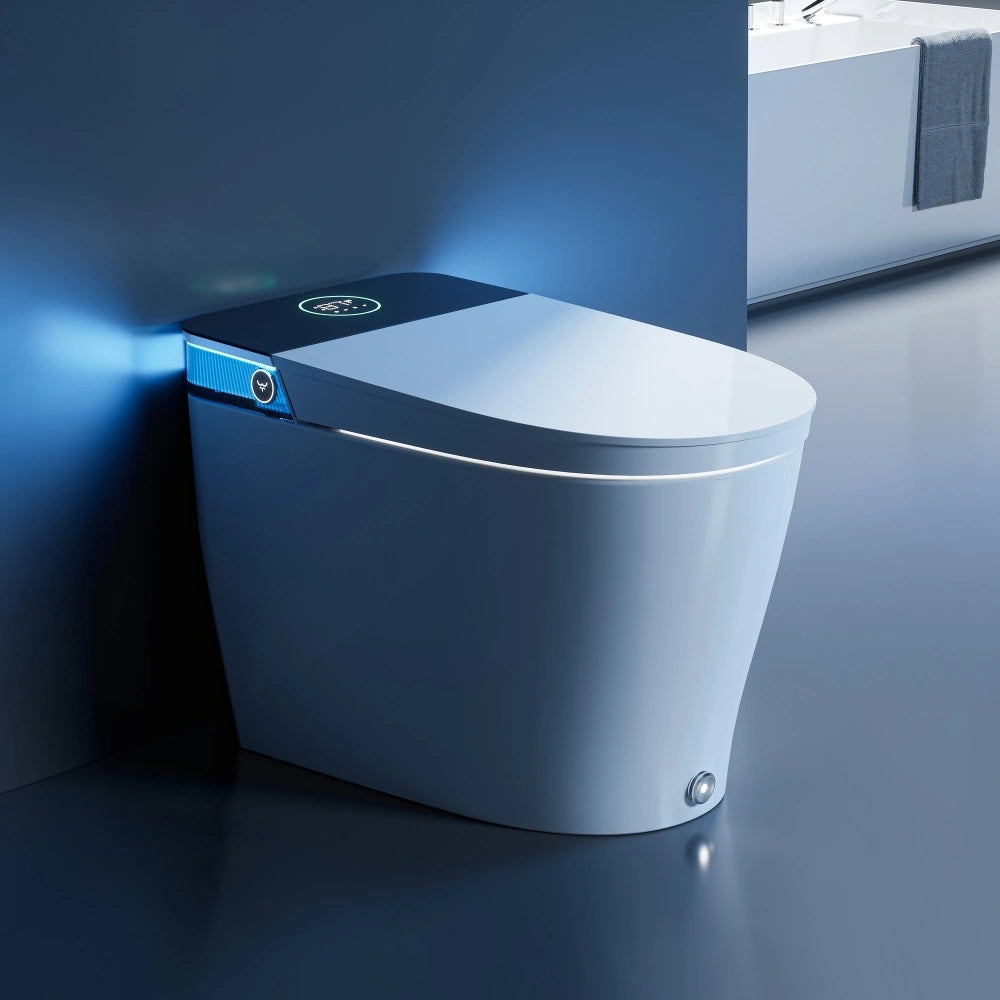
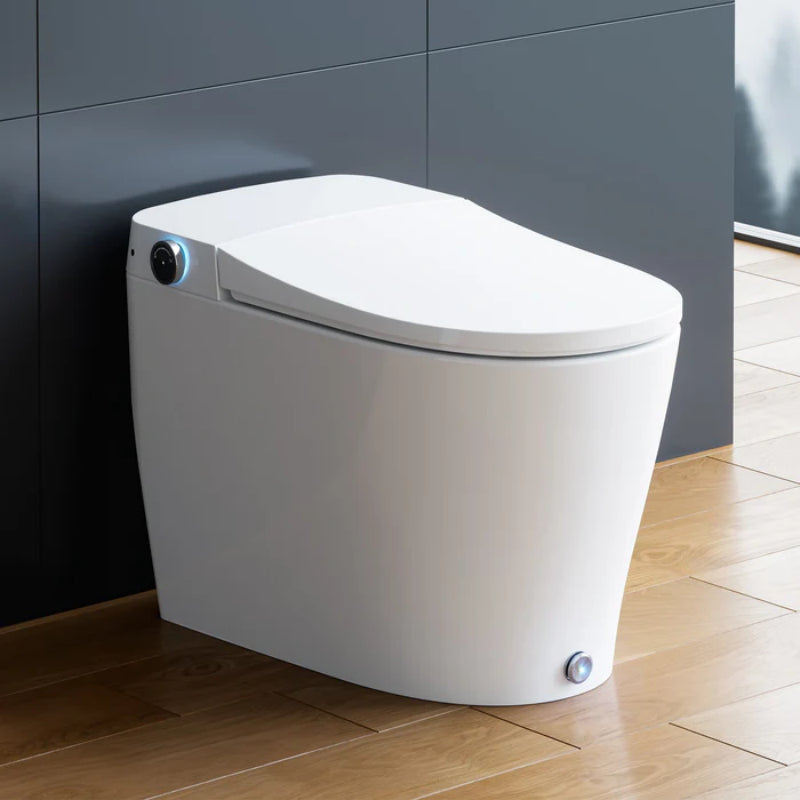
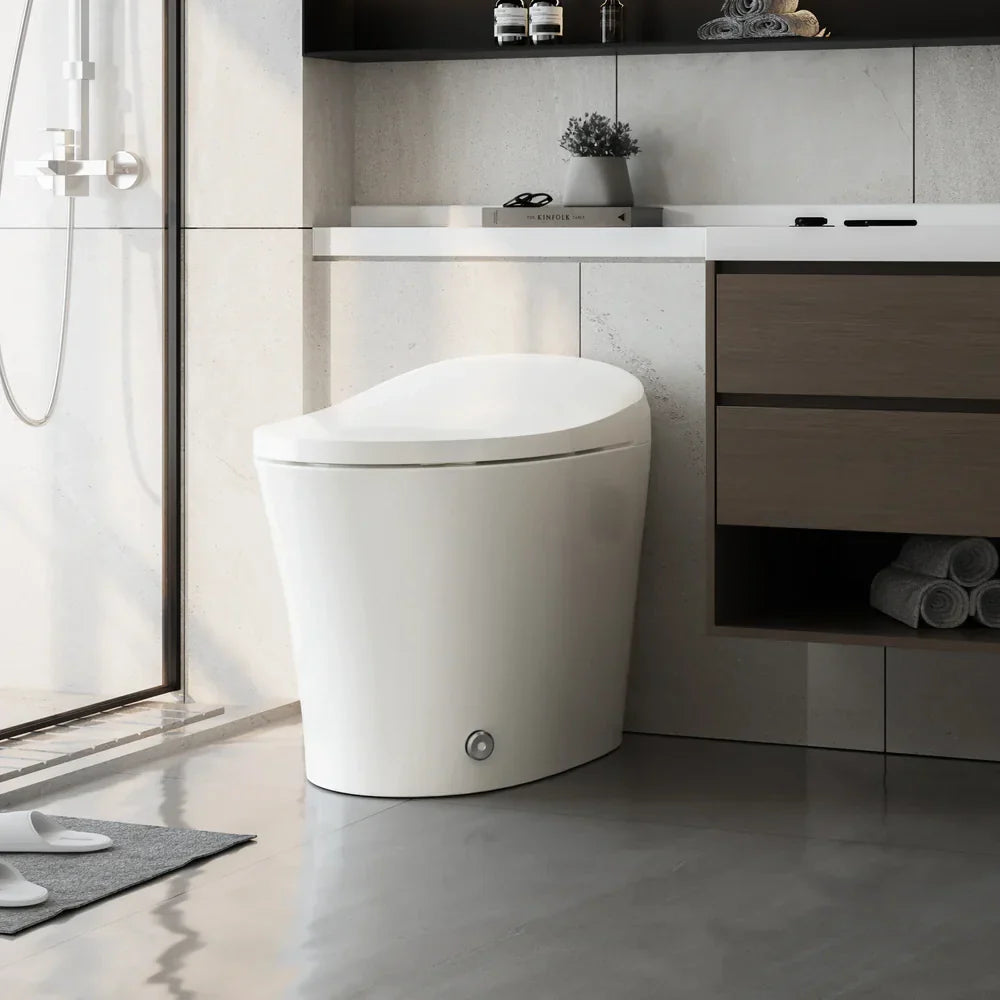
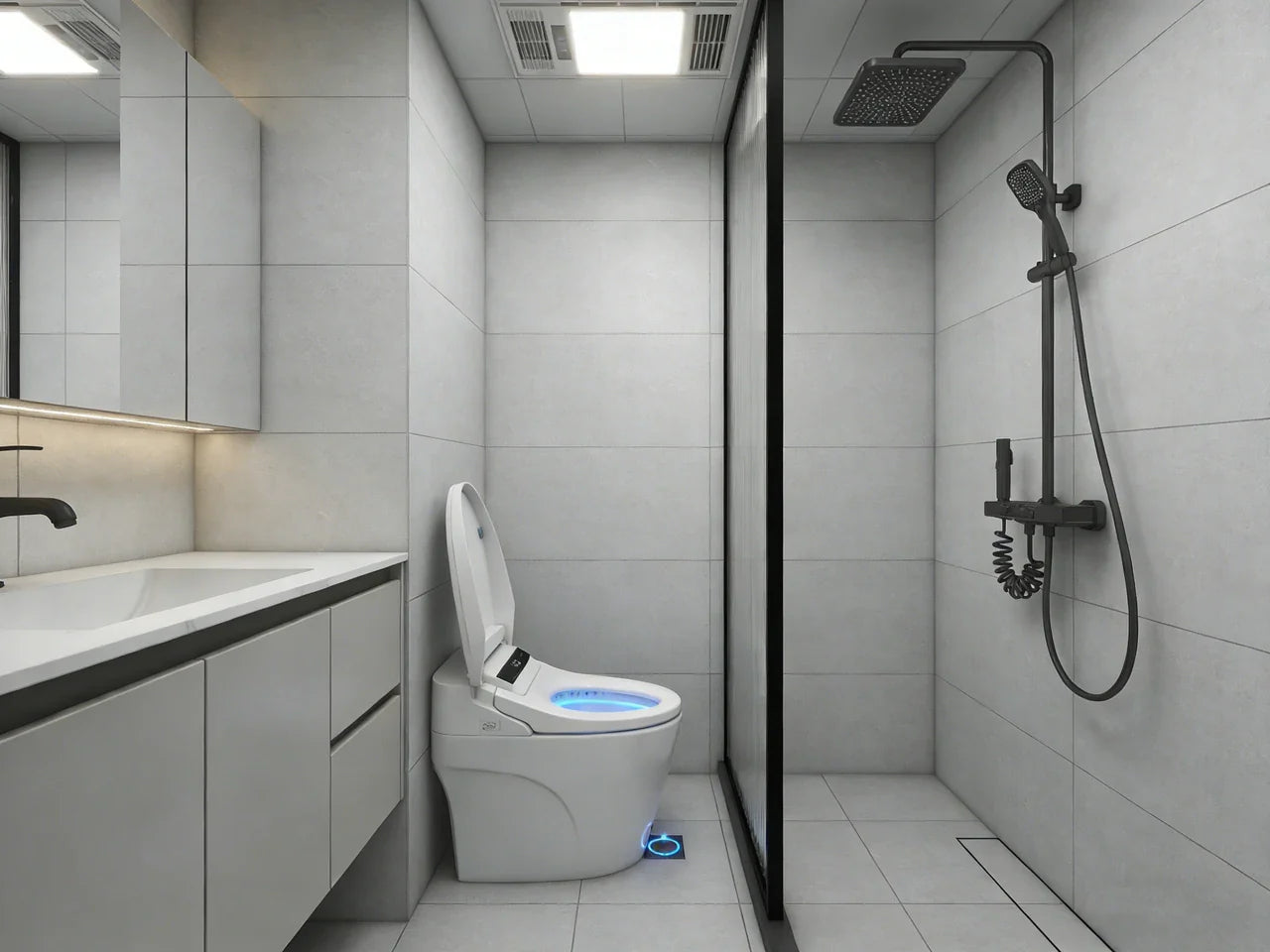
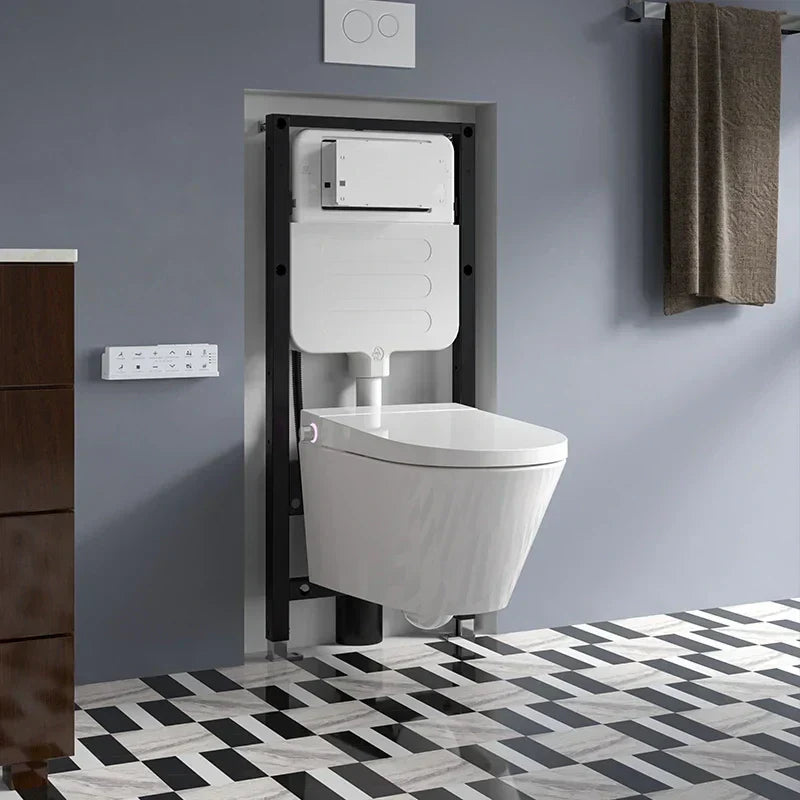
A smart toilet foot sensor enables hands-free flushing with a simple foot motion near the base, elevating cleanliness and convenience in daily use. This intuitive feature pairs seamlessly with a smart toilet bidet, wall hung toilet with bidet, or dual flush elongated design, though performance can vary in compact bathrooms or for households with specific mobility needs.
Decision Snapshot: Who Benefits from a Smart Toilet with Foot Sensor and Auto Flush in Compact, Family, or Aging-in-Place Bathrooms
What a foot sensor does or does not do: The foot sensor only controls flushing,no spray, drying, or deodorizing. It enables hands-free operation, but won’t improve splash control, water temperature, or air drying. Focus on ease of flush when deciding if it fits your bathroom habit
Good fit if you:
-
Want a hands-free flush in a busy shared bathroom (kids, guests, caregiving).
-
Often have “full hands” (cleaning, diapers, laundry) and hate touching the flush area.
-
Are okay with a short learning curve and occasional tweaking of settings.
-
Prefer a modern toilet with customizable smart functions
Watch-outs / Misfire risks:
-
Tight space may trigger accidental flushes
-
Children or pets may misfire sensor
-
Standing too close or awkward angles increase misfire likelihood
Skip it if you:
-
Need predictable, no-misfire behavior (noise-sensitive homes, light sleepers, anxious pets).
-
Need easy transfers or stable footing (some mobility limits, balance issues).
-
Have a small bathroom where the toilet base is hard to access.
-
Prioritize comfort height, ADA comfort height, or ADA chair height seating and your chosen model only offers standard height
The key point is this: a foot sensor is most satisfying when you have room to use it naturally and a household that benefits from touch-free habits. It’s most annoying when you have to “perform” the flush just right.

Does “hands-free” feel easier day to day?
A smart toilet with foot sensor promises no-touch, germ-free flushing, but it alters daily routines more than many anticipate. Unlike standard toilets, it requires intentional foot placement near the sensor zone.
This is straightforward for most users, but challenging at night, with socks, or when aiming to avoid disturbing others. Nighttime use may also bring unwanted noise or accidental triggers, disrupting sleepers or pets.
Will it misfire in a compact space?
Accidental triggering is one of the biggest real-world complaints with sensor-driven flushing in general. A foot sensor is often better than fully automatic “presence” flushing, but it can still misfire if:
-
Your leg passes close to the sensor zone while turning to reach toilet paper.
-
Someone cleans around the base and triggers it repeatedly.
-
A small bathroom forces you to stand close to the toilet base while closing the door or moving past it.
If your toilet sits close to a vanity or tub, ask yourself: Can you step back and approach the sensor on purpose? If you’re always squeezed next to the base, you may flush when you don’t mean to—or you may hesitate because you’re trying not to flush.
Clearance reality check:
-
Minimum step-back space: 12–18 inches
-
Clear approach angle to sensor
-
Door swing doesn’t block sensor path
-
No tight walls on sides
-
Easy reach for cleaning around base
-
Enough room to adjust stance naturally
Foot sensor vs remote and auto flush
Most smart toilet with bidet models integrate foot sensor operation with additional smart features: wireless remote control, automatic lid, lid opening, digital display, and advanced flushing systems. This multi-functional control system boosts convenience but adds a learning curve.
If your toilet already includes auto flush or remote operation, a foot sensor may be redundant. Select this feature only if you want a dedicated hands-free motion that other functions cannot replace, avoiding unnecessary feature overload.

“Male-friendly” expectations during standing use
Some people want a male-friendly foot flush toilet so they can flush while standing and avoid touching anything. That can work well, but pay attention to timing and splash.
A few common expectation gaps:
-
If the sensor triggers too early, you can get a “mid-use” flush. That’s unpleasant and noisy.
-
If the bowl design creates splash, a hands-free flush doesn’t fix that problem.
-
Features like a foam shield or cleaning foam dispenser may reduce mess, but they also add one more thing to refill and wipe.
Foot sensors prevent no-touch flushing but do not control splash or aim. Mid-use triggering is possible. Stand near the sensor deliberately and step back after use to avoid premature flushes.
If standing use is the main reason you want this, think through your routine: Will you naturally step near the sensor at the right time, every time? If not, it may feel like a gimmick.
Will a Modern Smart Toilet with Foot Sensor Fit and Install Cleanly?
A foot sensor requires clear space around the toilet base, even for wall hung toilet with bidet or tankless designs. Always confirm your toilet supports manual flushing during power outages, ensuring functionality when the sensor is inactive.
Tankless Bidet Combo Setup Friction
Most smart toilet bidet systems are tankless, combining warm water wash, heated seat, air dryer, and self-cleaning wand. Installation considerations include power access, water line routing, and filter placement—critical for compact bathrooms.
Clearance around the base matters
You don’t need a huge bathroom, but you do need clean access to the sensor area. These quick checks prevent a lot of regret:
| Fit check | Why it matters |
| Can you stand beside the bowl without twisting? | Twisting can trigger or miss the sensor. |
| Is there a vanity or wall tight to one side? | You may not reach the sensor zone naturally. |
| Does the door swing close to the toilet? | You may end up standing in the trigger area. |
| Is the base easy to wipe around? | Grime near sensors can become a constant annoyance. |
If your bathroom is narrow, the sensor may force a new stance that feels awkward—especially for kids, shorter users, or anyone with stiff hips or knees.

Tankless bidet combo setup friction
Many smart toilet setups are an automatic tankless bidet combo: warm water wash, heated seat, warm air drying, deodorization, and a self-cleaning wand. Those features are great when installed cleanly, but installation can be more cramped than people expect.
Common friction points:
-
Power: You need a safe outlet location. If an outlet isn’t nearby, you may be looking at electrical work.
-
Water line routing: The hose and shutoff valve placement can get tight behind a one-piece body.
-
Filter placement: Some installs end up with filters squeezed into odd positions because there’s no clearance. That can make filter changes harder and raise leak risk if fittings get bumped.
If you’re already tight on space, the foot sensor may be the least of your worries—but it’s part of the same “everything is packed in” reality.
If your plumbing dislikes direct flush
Some smart toilets use a direct flush smart toilet design (often louder and faster than people expect). That can stress borderline plumbing situations.
Things that can show up later:
-
Repeated partial flushes because users “test” the foot sensor.
-
More frequent flushing from misfires or kids playing with it.
-
Sensitivity to drain and vent issues that a slower, familiar flush didn’t expose.
This doesn’t mean it will clog all the time. It means a more forceful, more frequent flush pattern can reveal weak points in older plumbing.
Maintenance and Reliability Annoyances for Modern Smart Toilets with Foot Sensor Operation
The most common issues are false triggers, inconsistent detection, and grime buildup near the base. Smart bidet toilet designs have extra contours and seams that require thorough cleaning, even with touchless flushing.
Ongoing upkeep includes deodorizer filters, cleaning refills, digital display settings, and service reminders—small tasks that add to ownership overhead compared to basic toilets.
Cleaning is not as simple as people expect
Smart bidet toilet designs add contours, seams, and underside areas. Over time, the underside near the bidet seat areas can collect splash or spray that you don’t notice right away. That can create odor or grime in places that are harder to reach than a simple bowl.
If you’re choosing a foot sensor mainly for hygiene, be honest about this trade-off: a touchless flush doesn’t guarantee a low-cleaning toilet. You may touch the toilet less, but clean it more carefully.
Sensor behavior can feel “quirky”
Even if installers call it simple, sensor behavior can still annoy people in daily life, especially when combined with off-seat flushing.
Real-life issues homeowners mention:
-
“Why did it flush when no one used it?”
-
“It keeps cycling,” especially right after setup or after a power blip.
-
“It doesn’t flush when I want,” because your foot didn’t pass the sensor at the right angle.
Some quirks can be adjusted, like approach angle or stance. Others, such as tight space misfires, are inherent and unavoidable. Decide if minor adjustments are acceptable before purchase.
These aren’t constant for everyone, but they’re common enough that you should decide if you’re the type of person who can shrug and adjust—or if it will bother you every time.
Ongoing upkeep adds “small chores”
With a modern sensor flush commode, you may have extra features that are nice but add maintenance:
-
Deodorization cartridges or filters
-
Cleaning foam dispenser refills
-
Night light and LED display settings
-
Service reminders and periodic cleaning cycles
None of this is hard. It’s just more “ownership overhead” than a basic toilet and flush handle.
Will you feel comfortable after washing—or still frustrated?
A foot sensor is usually part of a hands-free tankless bidet system. Many regrets come from comfort and finishing, not from flushing.
Seat height and seating comfort
For long-term comfort, prioritize ADA compliant seating, comfort height, or ADA chair height over just smart features. Heated seats, automatic lid operation, and lid opening speed also impact daily satisfaction, especially for aging-in-place needs.
Also consider:
-
Heated seat comfort is real, but seat shape and ring thickness vary.
-
Auto open and close seat behavior can surprise guests and kids.
-
Lid and seat opening can feel slow if you’re in a hurry.
If you’re buying for aging-in-place, focus on easy sitting and standing first, then decide if a foot sensor helps or complicates.
Warm air drying may not fully dry you
Warm air drying is convenient, but many users still feel damp. The dryer can take longer than expected, and some people end up using a small amount of paper anyway.
If your goal is “no paper, fully dry,” it’s safer to expect:
-
Better cleanliness from water wash
-
Partial drying from warm air drying
-
A little patience—or a backup plan
If that feels like a failure for you, you may be disappointed even if the foot sensor works perfectly.
How much tweaking will you tolerate?
Smart toilets often have adjustable water pressure, adjustable temperature, seat heating levels, and wand positioning. Some people love dialing it in. Others find it tiring.
If you want a foot sensor because you like simple routines, make sure you won’t resent:
-
adjusting water pressure
-
changing seat temperature
-
managing user presets
-
explaining the remote control to guests
Before You Choose checklist
-
Do you have clear space beside the base to use the foot sensor naturally?
-
Will accidental flushes cause disruption (sleepers, pets, small bathrooms)?
-
Are you comfortable with partial drying from the warm air dryer?
-
Can you maintain extra cleaning around seams and under-seat areas?
-
Is the seat height suitable for your household (knee/hip comfort)?

FAQs
1. How does the foot sensor work on tankless toilets?
A foot sensor on a tankless toilet is designed to make flushing completely hands-free. When you step near the sensor, it sends a signal to the tank system or flushing mechanism to trigger a full-flush, so you don’t have to touch anything. Modern smart toilets with auto use this in combination with sensors that can detect the right timing and foot position, preventing accidental flushes. Some models even integrate a gram map flushing score, letting you know how efficiently the toilet clears waste each time. Tankless toilets often respond faster because they don’t rely on a tank refill, so the flush feels more immediate. Overall, the foot sensor is intuitive once you get used to stepping in the correct zone, and it’s a great addition if you want a hygienic, high-tech smart toilet experience without complicated controls.
2. Can the sensor be used to open the seat?
Many high-tech smart toilets with foot sensors go beyond just flushing. Some models allow the sensor to open or close the seat automatically. This works by detecting your approach or a quick foot movement near the base, triggering the smart toilet with auto seat-lift feature. However, this doesn’t always replace manual lifting if you want precise control or are in a tight bathroom. It’s most convenient when paired with a toilet with auto lid and flush combo, so the sensor performs multiple actions in one motion. Keep in mind that the activation zone can be sensitive to you. You want enough room to step naturally. The feature is designed to provide convenience and hygiene, reducing hand contact while maintaining normal tank system functionality and ensuring every full-flush completes cleanly.
3. Is tankless better for foot-sensor flushing?
Tankless toilets generally offer a smoother experience with foot sensor flushing. Because there’s no tank to refill, the sensor can trigger an immediate full-flush, making it feel more responsive. Many smart toilets with auto use sensors that are calibrated to detect foot motion precisely, which works well with tankless designs. Some advanced models even display a gram map flushing score, showing how effectively each flush clears the bowl, which is harder to manage in traditional tank systems. Tankless setups also allow more compact designs without sacrificing flushing power, which helps in smaller bathrooms. That said, tankless isn’t strictly necessary; a high-tech smart toilet with a tank can still provide reliable sensor-triggered flushing. The key is making sure the sensor and flushing mechanism are matched, so every full-flush feels clean and consistent.
4. Does the foot sensor require batteries?
Foot sensors vary in power requirements depending on the model. Many smart toilets with auto use either batteries or plug-in power to operate the sensor and flush system. Battery-powered sensors are convenient for avoiding cords, but they need occasional replacement, especially in a high-tech smart toilet with multiple features like seat heating or deodorizing. Some units combine battery backup with a tank system, so even during a power outage, a full-flush is possible. Modern designs often include energy-saving modes to extend battery life while maintaining reliable activation for flushing. To provide the best experience, check if the sensor comes with low-battery alerts or automatic shutoff features. This ensures your toilet with auto flush keeps functioning without interruptions while minimizing maintenance hassles.
5. Is it sensitive to floor cleaning/mops?
Yes, foot sensors can be affected by cleaning routines, but well-designed high-tech smart toilets minimize this issue. When you mop or scrub near the base, some sensors might misinterpret the movement as a step and trigger an accidental flush. Many smart toilets with auto include adjustable sensitivity or detection zones to prevent this. If your goal is to provide the best hands-free hygiene, consider models with calibration settings or temporary “lock” modes while cleaning. The type of flooring and reflective surfaces can also influence detection accuracy. A properly installed toilet with auto and tankless system usually balances sensitivity and reliability, allowing you to clean without constant accidental flushes, while ensuring each full-flush still performs efficiently and maintains the gram map flushing score or overall flushing performance.
Confirm before buying:
-
Power dependency: Can sensor work if unplugged?
-
Manual override: Is a flush lever or button available?
-
Reset behavior: Does sensor auto-reset after outage?
-
Outage response: Can households continue normal use? Knowing these prevents surprises during outages and keeps your bathroom functional.
References


Leave a comment
This site is protected by hCaptcha and the hCaptcha Privacy Policy and Terms of Service apply.