
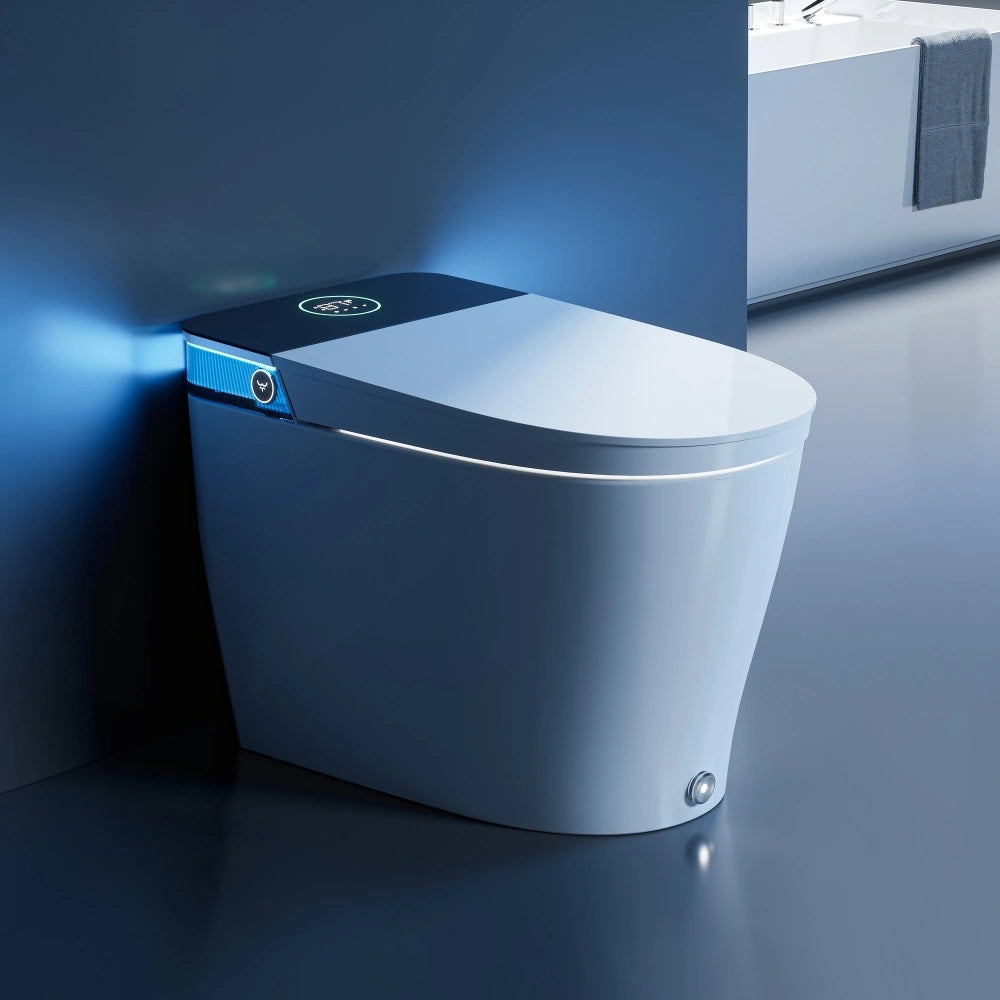
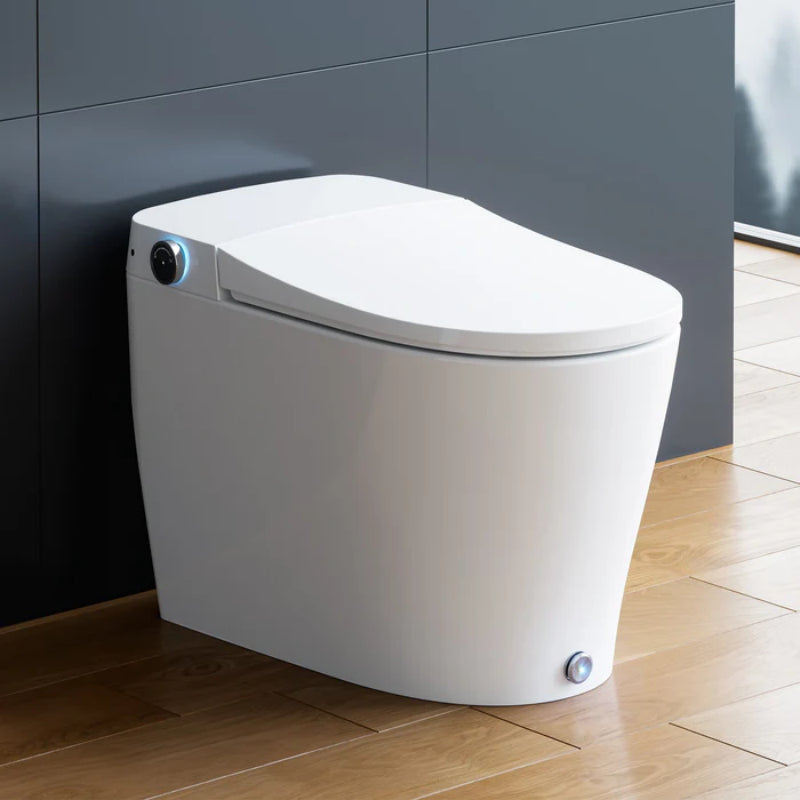
Automatic lid opening is a popular feature in modern smart toilets that reduces direct contact and provides hands-free hygiene convenience. However, this feature has both advantages and disadvantages depending on your bathroom layout, household habits, and expectations. Understanding the smart toilet auto open lid pros and cons helps you determine whether this is a practical upgrade or an unnecessary gadget.
Decision snapshot: is auto lid opening worth it?
When people start comparing the smart toilet auto open lid pros and cons and evaluating the ease of use of these systems, one of the first questions they ask is whether the automatic lid feature will genuinely enhance their modern bathroom experience in a real household.
Modern smart toilets offer auto lid opening as a standard feature, worth it compared to traditional toilets if you care about hands-free toilet technology for hygiene, you have someone with limited mobility in the home, or you already want a smart toilet experience with features like a bidet, heated seat, and night light that you'll use daily
You should probably skip it if your bathroom has tight clearances and you're not ready for quality smart home upgrades, your toilet sits near a door, your toilet sits near a door or main traffic path, you have pets/kids that will trigger motion sensors, or you know you’ll resent a “smart” feature that sometimes opens at the wrong time. If you’re not willing to learn how to turn off auto open features (at least temporarily), it can become a daily annoyance.
The key point is this: auto-open is a “nice-to-have” feature that can feel great when it’s predictable, and feel silly when it isn’t.
When evaluating the smart toilet auto open lid pros and cons, it’s important to understand that “auto-open” works differently depending on the product. Some models open only the lid, while others lift both the lid and the seat. Trigger methods can also vary—most use motion sensors, but some use foot sensors or proximity detection near the base.
Finally, “hands-free” doesn’t mean the toilet understands your intent. Sensors react to movement patterns, not purpose, so walking nearby or entering the bathroom for another reason can still activate the lid.
Key benefits of smart toilet auto open lids in daily use: what bidet seats offer
When discussing the smart toilet auto open lid pros and cons, many homeowners discover that the real value of auto-open features comes from the small frictions they remove in everyday routines. But from the small frictions they remove in everyday routines. The following examples reflect the kinds of moments where people most often notice a real, practical difference over time.

Less touching the lid feels cleaner
The most real benefit is simple: you don't have to touch the lid or seat as often, especially when paired with self-cleaning nozzles for better hygiene. According to the CDC, reducing contact points can help prevent the spread of bacteria that may contribute to urinary tract infections and other bathroom-related health concerns. This has real health and hygiene benefits, especially in busy households. In a busy household, that can mean fewer "who touched what" moments and fewer reminders to wash hands after handling the lid.
This matters more if:
-
Guests use the bathroom often
-
Someone is immunocompromised, or you’re extra strict about surfaces
-
The toilet is used right after cooking, cleaning, or caring for a baby (times when you really don’t want extra contact points)
It matters less if you already have a strong routine and don’t mind using a small piece of toilet paper to lift/lower the lid.
Important boundary: auto-open reduces one contact point, but it does not replace proper handwashing or routine bathroom cleaning. By itself, it doesn’t guarantee better hygiene outcomes—it simply removes one step where contact might happen.
It can help people with limited mobility
Automatic lid opening and automatic flushing can reduce bending and twisting. Based on ADA accessibility standards, this kind of toilet is usually the most-used fixture in any home, making accessibility features essential. For older adults and people with mobility challenges, automatic functions help maintain independence and safety, especially when paired with self-cleaning nozzles. For some people, that's not about comfort—it's about safety and independence, especially when paired with self-cleaning nozzles that maintain cleanliness automatically. If someone uses a cane, has knee/hip pain, is recovering from surgery, or is pregnant, fewer awkward movements can help.
Where it works well:
-
A primary bathroom used by an older adult
-
A bathroom where the approach is straight-on (you walk toward the toilet)
-
A setup where the sensor detects a person reliably, without needing a “perfect” angle
Where it disappoints:
-
Bathrooms where you enter sideways, or the toilet is tucked behind a door swing
-
Users who move slowly or pause near the vanity (which can confuse the motion sensor)
It pairs well with other “comfort” features
Unlike traditional toilets, modern smart toilets excel when auto-open is paired with other premium features. Auto-open by itself is rarely the reason people stay happy long-term. People tend to like it most when it's part of a set of: sit down, warm seat, bidet cleansing with adjustable water pressure, warm air dry, night light, hands-free flush. Then the lid opening feels like the first step of a smoother routine.
If you don't want to choose a bidet function (or you expect to still rely on toilet paper most of the time rather than reduce toilet paper usage), auto-open may feel like an expensive way to avoid a two-second action.
Night trips can be easier (if it behaves)
For households comparing the smart toilet auto open lid pros and cons, nighttime convenience is often mentioned as a practical benefit, since a lid that opens automatically can be one less thing to fumble with. Add a night light and warm water cleaning advanced features, and it can reduce bright overhead lighting while improving the modern bathroom experience.
However, expectations around quietness matter. The motor that lifts and lowers the lid is usually soft but still noticeable in a quiet house, especially late at night. In smaller bathrooms, repeated open/close cycles can make the bathroom feel more active than expected.
This becomes more noticeable if the sensor triggers frequently—such as when someone walks past the doorway or shifts around the sink—because each activation may produce another motor cycle.
But this only feels like a benefit if the motion sensor doesn’t “wake up” the bathroom every time someone passes the doorway.
When auto-open lids become annoying in real bathrooms: real-world cons of a smart toilet
In theory, automatic lids are a game-changer. In practice, they create a host of problems that nobody anticipates until it's too late. The gap between promise and reality is substantial—and it starts the moment you move into a real bathroom with real daily routines.
False triggers are the top complaint

One of the most common issues people notice when discussing the smart toilet auto open lid pros and cons is an overly sensitive motion sensor. The lid opens when you:
-
Walk past the bathroom door
-
Shift at the sink or vanity
-
Turn to grab a towel
-
Let the dog wander in and out
-
Get up at night and pass nearby
This is where the “motion sensor toilet lid benefits” story can flip. Instead of hands-free convenience, it becomes a lid that seems to have a mind of its own—opening when you don’t want it, and sometimes not opening when you do.
A quick way to predict this: if the toilet is visible from the doorway, or the bathroom is narrow, expect more accidental triggers unless you can adjust sensitivity or detection range.
Small bathrooms can make the feature feel busy
In tight layouts, the sensor’s “approach zone” overlaps with normal movement. That can lead to repeated open/close cycles that feel distracting, especially for light sleepers.
It’s not just noise. It’s the feeling of a feature activating when you didn’t ask for it. Some homeowners describe this as the toilet “performing” every time you enter the room.
Pets and kids can turn it into a gimmick
If you have curious kids, an auto-opening lid can become a button to push—except the “button” is just movement. With pets, the issue is different: they can trigger the lid and leave it open, or trigger it repeatedly while exploring.
That may sound minor, but it affects:
-
Battery/power use (if the unit cycles often)
-
How clean the bowl stays (open lid can invite dust and aerosol settling)
-
How “calm” the bathroom feels
The shape and seating position can surprise people
Auto-open is often part of an integrated smart toilet or a smart bidet toilet seat with built-in seat heating features. These can be bulkier than a standard toilet seat. Real-world annoyances include:
-
A seat height that feels higher than an older toilet you're used to
-
A seat angle that pitches you slightly forward
-
Less room “up front” than you’re used to
-
A lid that doesn’t stay open the way your old one did (because it wants to auto-close)
If you’re sensitive to seat height, have back issues, or you’re tall, this is not a small detail. Comfort issues show up fast because you use the toilet every day.
Common setup and installation issues to consider
When reviewing the smart toilet auto open lid pros and cons, many frustrations actually come from installation realities rather than the lid mechanism itself. They usually appear when real bathroom layouts, daily movement, and household habits interact with the sensor in unexpected ways. Here comes situations below are where people most often find the feature less convenient than expected.
Power and outlet placement matter more than people expect
Auto open/close needs power. Many smart toilets require a nearby electrical outlet and, unlike standard fixtures, smart toilets offer convenience that depends entirely on reliable power sources, and cords can be shorter than homeowners expect. If the outlet is on the wrong wall, blocked by the toilet, or too far, “easy install” can turn into:
-
Adding an outlet
-
Moving an outlet
-
Seeing an extension cord you don’t want in a bathroom
If you hate visible cords, plan for electrical work before you commit to the feature.
Here’s a quick fit check:
| Fit question | “Good sign” | “Risk sign” |
| Outlet distance | Outlet is close and reachable | You’d need an extension cord |
| Approach path | You walk straight toward toilet | You pass it sideways in a tight lane |
| Door swing | Door doesn’t point at toilet | Door opens toward toilet area |
| Vanity location | Vanity is far enough away | Sink area is within sensor zone |
| Pets/kids | Low traffic, pets stay out | Pets roam, kids like triggers |
Beyond outlet distance, there are a few installation realities people often underestimate:
-
Cord reach: power cords on smart seats can be surprisingly short, limiting where the outlet can be placed.
-
Access after installation: once mounted, reaching the power plug, water connector, or side controls can be awkward if the toilet sits close to a wall or vanity.
-
Plumbing compatibility: some installations need T-valves, water supply adapters, or adjustments to the shutoff valve depending on whether your toilet has a built-in bidet or requires a separate bidet seat attachment.
These small frictions don’t stop installation, but they can turn a “simple upgrade” into a slightly bigger project than expected.

Can you turn off auto open features?
This is a big deal. In practice, homeowners want three types of “off”:
-
Temporary off (during cleaning, guests, bedtime)
-
Schedule-based off (quiet hours)
-
Permanent off (use it like a normal lid)
Some units let you disable the auto feature from a remote or side panel. Others bury it in settings, or make it awkward enough that you stop bothering. Before you choose, make sure you’re comfortable using whatever control method it uses (buttons, remote, app). If the only way to stop false triggers is a remote you’ll misplace, you may end up frustrated.
Power outages change the whole experience
In a power outage, an auto-open lid will usually stop working completely, along with heated seats, warm water, warm air drying, night lights, and other sensor-driven features.
Some toilets may still flush mechanically or in limited manual modes, but the full hands-free experience is typically unavailable until power returns.
Before buying, confirm there is an easy manual way to lift and close the lid so the toilet remains usable even when the automatic system is inactive.
Reliability and maintenance of auto-open toilet lids
Another important part of understanding the smart toilet auto open lid pros and cons is considering long-term reliability and maintenance. More often, they appear gradually as sensors, electronics, moisture, and everyday cleaning routines interact over time.
Sensors are not mind readers
Reliability of auto lid sensors is rarely perfect. Motion sensors look for movement patterns, not intention. That means:
-
A person walking by can look like “approach”
-
A slow approach might not trigger until late
-
Some bathroom lighting or reflections can create weird edge cases
-
Cleaning products and moisture can affect sensors over time
The annoyance isn’t just that it triggers. It’s that it triggers unpredictably, which makes the bathroom feel less restful.
Adjustments can be harder than they sound
Many homeowners assume they’ll “just adjust the sensor.” In reality:
-
The adjustment may be limited (only on/off, not sensitivity)
-
The controls may be hard to access once installed
-
You may need to crouch and reach behind the unit to change settings
If you expect to fine-tune it often (because of pets or a tight layout), that friction matters.
The lid can be fine, but other issues ruin the value
A common regret pattern is: “I like the auto-open lid, but the rest of the smart toilet is annoying.” Auto-open is tied to a bigger system. If you also deal with:
-
Bidet pressure that isn’t comfortable
-
Nozzle position that doesn’t fit your body well
-
More frequent clogs (sometimes related to flush behavior and plumbing fit)
-
Parts that are harder to service than a basic fixture
…then the auto-open feature won’t feel like a win. It can start to feel like one more thing to troubleshoot.
Cleaning is different, not always easier
Hands-free sounds cleaner and supports better cleanliness standards, but the lid and sensor area still need wiping. If the lid opens when you’re trying to clean around it, you may find yourself fighting the motion detection.
Look for a practical cleaning workflow:
-
Is there a cleaning mode?
-
Can you disable the sensor quickly?
-
Are there seams and hinges that trap grime?
When auto-open is a strong fit
Auto-open tends to work well when these are true:
-
The toilet is in a primary bathroom, not a busy hallway bath
-
The bathroom is medium/large, with a clear approach
-
The household values hygiene routines (especially with bidet cleansing)
-
Someone benefits from accessibility help (limited mobility)
-
You’re comfortable learning a few controls and occasionally troubleshooting

When it’s unnecessary or risky
It’s often not worth it when:
-
The toilet is near the door and gets “drive-by” motion
-
Pets or small kids will trigger it all day
-
You dislike smart home features and want simple, predictable fixtures
-
Your outlet situation is inconvenient
-
You want fewer things that can fail, especially in a guest bath
Before you choose: is this the perfect smart toilet upgrade for you? ready to upgrade checklist
-
Is there a nearby outlet without using an extension cord?
-
Can you turn off auto open features easily (not just in theory)?
-
Will normal bathroom traffic pass through the sensor zone?
-
Are pets or kids likely to trigger it repeatedly?
-
Are you okay with “manual mode” during power outages?
FAQs
1. Is an auto-open toilet lid worth it?
If you’re weighing the smart toilet auto open lid pros and cons, the feature can be worth it for people who want a hands-free bathroom experience. Not touching the lid feels cleaner, and it pairs well with features like a bidet, heated seat, or night light. It’s also helpful for people with limited mobility. However, in small bathrooms or busy layouts, the lid may open when you walk by, which can become annoying.
2. How does a motion sensor toilet work?
A motion sensor toilet uses movement or proximity sensors near the base of the toilet. When someone approaches, the sensor detects motion and automatically opens the lid, sometimes the seat too. The goal is hands-free use. However, sensors react to movement patterns, not intention, so walking nearby or entering the bathroom can still trigger the lid.
3. Can I disable the auto-open lid on a smart toilet?
Yes, most smart toilets allow you to turn off the auto-open feature. This is usually done through a remote control, side panel, or sometimes a mobile app. Some models also allow temporary shutoff during cleaning or nighttime. Ease of control varies, so it’s important to choose a model with simple, easy-to-access settings.
4. Does the auto lid open when a dog walks by?
Sometimes, yes. Motion sensors detect movement rather than people, so a dog passing close to the toilet can trigger the lid. This is more common in small bathrooms or when pets roam freely in and out. Frequent triggers may cause the lid to open often, which some homeowners find distracting or unnecessary.
5. Are auto-open lids prone to breaking?
Auto-open lids are generally reliable, but they include extra electronic parts, such as sensors and a small motor. Over time, these components may wear out or need adjustment. Most systems still allow manual use if the feature fails. While not fragile, they are more complex than standard toilet lids and may require occasional maintenance.
References


Leave a comment
This site is protected by hCaptcha and the hCaptcha Privacy Policy and Terms of Service apply.