

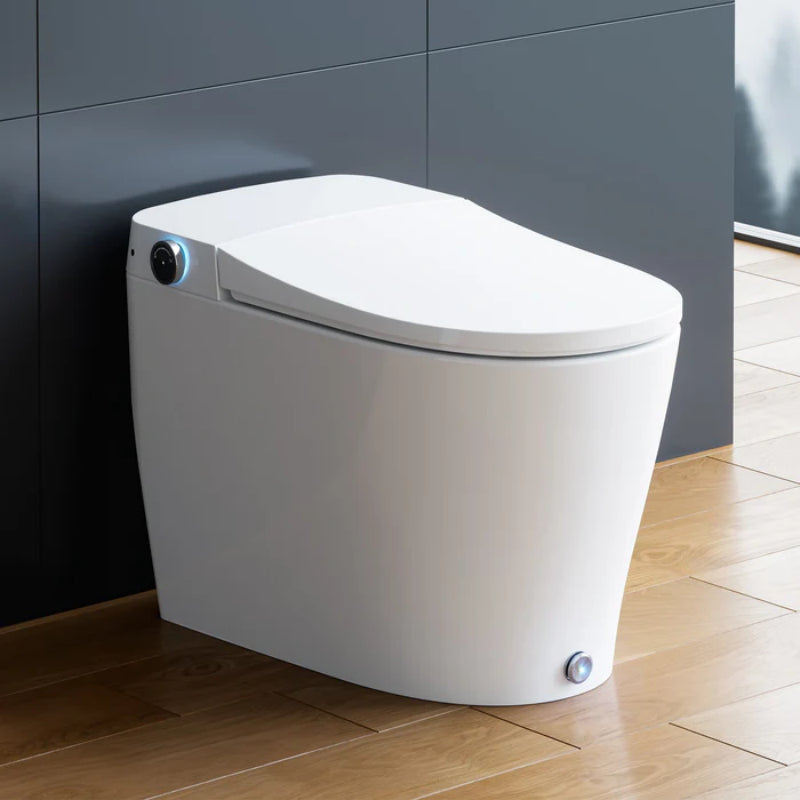
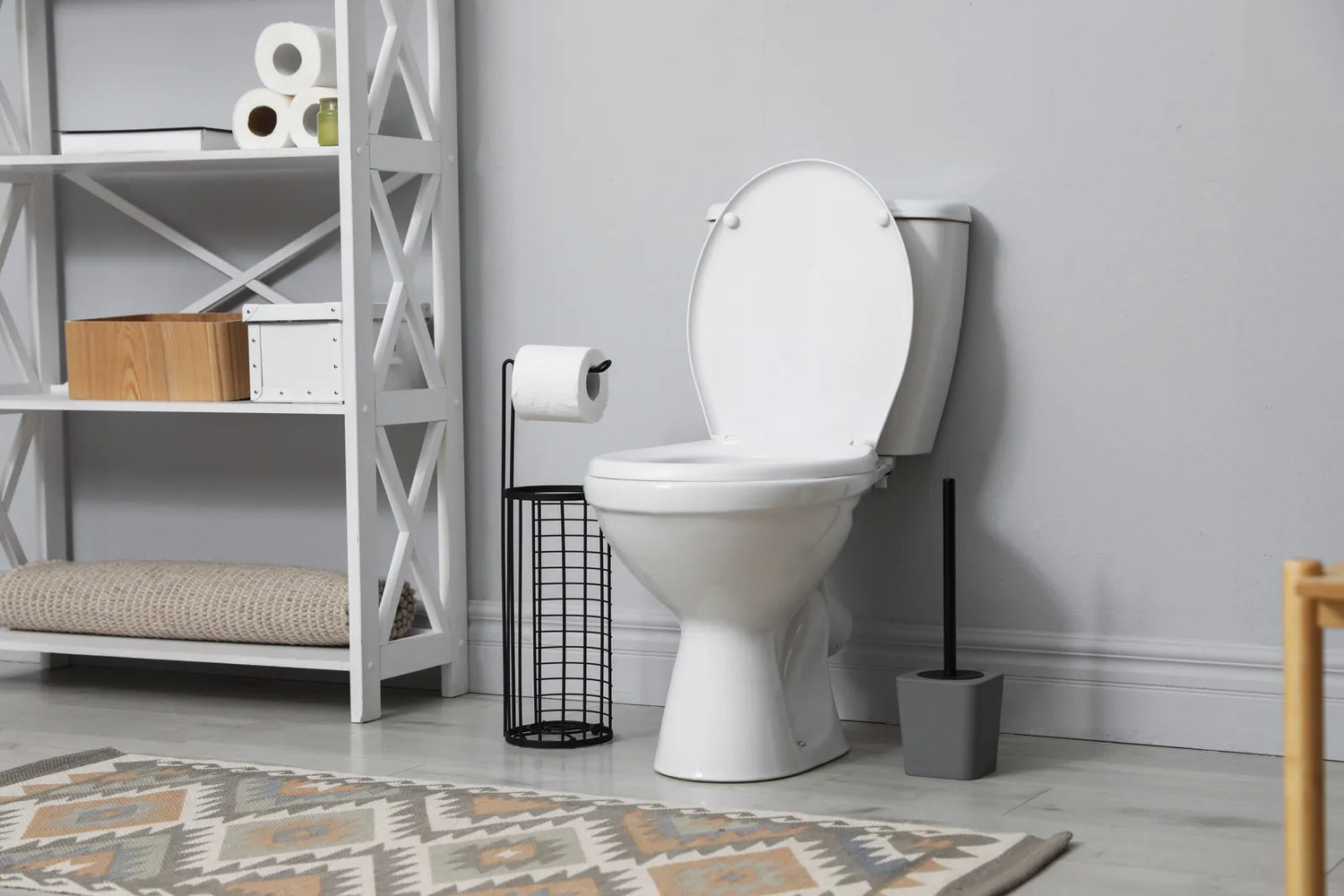
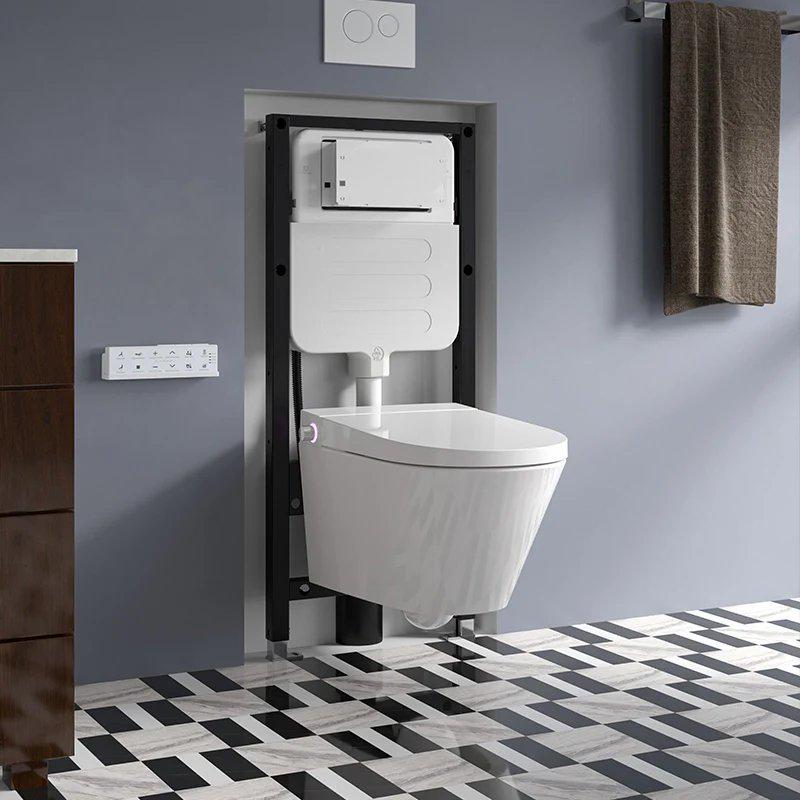
Skirted toilets look great. No exposed trapway, just smooth porcelain. But that sleek base makes installation trickier than a regular toilet. Many DIY homeowners run into fitting conflicts, hidden leaks and mounting troubles simply due to overlooked on-site conditions.
This guide covers fit checks, step-by-step installation, common pitfalls, and daily maintenance tips, helping you finish replacement safely and keep the toilet stable and long-lasting.
Quick Answer
A skirted toilet installation usually works if you have a true 12-inch rough-in, enough side and valve clearance, a sound level floor, and the water supply is not blocked by the toilet’s wider base. It does not work well when the shut-off valve sits low or too close to the bowl, the flange height is wrong, the floor is uneven or damaged, or the rough-in is short enough that alignment gets tight. Most failures are not from the toilet itself—they come from fit, bolt access, and hidden leaks after a rushed retrofit.
Decision Snapshot
Before you buy, run through this quick checklist. No guesswork.
Best fit for clear 12-inch rough-ins
It is critical to note that skirted toilet mounting structures, installation templates, proprietary fixing brackets and concealed hold-down designs vary greatly by brand and specific model. Different mounting systems can affect fit and make DIY installation easier or harder, so check the official installation guide for your exact toilet model.
This works best in bathrooms with a normal 12-inch rough-in measured from the finished wall to the center of the flange bolts, not from the baseboard. It is also a better candidate when the old toilet already sat square, the floor is flat, and the shut-off valve is off to the side enough that the skirt won’t cover it.
If your bathroom is fairly standard and open around the toilet, a skirted replacement can go in without much drama.
Avoid if valves crowd the base
This is where a lot of replacements go wrong. A skirted bowl is wider and fuller at the bottom than an exposed-trapway toilet. That wider base can hit a wall valve, crowd a supply line, or block your hand from making the water connection.
If the valve comes out of the wall directly behind the toilet or low beside the bowl, this can turn a “simple swap” into moving plumbing.
Reconsider uneven floors or hidden damage
A skirted toilet hides more of the base. That sounds harmless until the floor is not flat. With a standard toilet, you can often see where rocking starts and shim it cleanly. With a skirted one, contact points are less obvious, and the side-mount or concealed hold-down system makes adjustment slower.
If the old toilet rocked, if there was staining around the base, or if the floor feels soft, do not assume this is a same-day replacement.
Decision line: If your setup is older, tiled over, tight to a vanity, or has a low shut-off valve, this is not a “buy first, figure it out later” toilet.
Who should skip a skirted replacement
Some bathroom layouts and plumbing setups make a skirted toilet a poor fit.
Tight side clearance blocks skirt access
Many skirted toilets use concealed trapway sides and hidden bolt access. That means you often need room near the lower sides of the bowl to reach hardware or engage a bracket system. If the toilet sits too close to a tub, vanity, half wall, or cabinet, your hands and tools may not fit.
This matters more than people expect. The toilet may physically fit in the room, but not leave enough access to tighten or service it properly.
-
Pass: At least 4 inches of clearance on one side of the bowl.
-
Better: Both sides give you 4 inches or more.
-
Fail: One side is tight because of a vanity or wall cabinet.
Low shut-off valves can hit the skirt
This is one of the most common problems when installing a skirted toilet. The valve may have worked fine with the old toilet because the old bowl necked inward above the floor. A skirted base often fills that exact space.
Problems show up in a few ways:
-
the skirt touches the valve body
-
the supply nut cannot be tightened after the toilet is set
-
the line kinks because the connection point moved inward or backward
-
the valve becomes hard to shut off later
Measure two things: how high the shut-off valve sits off the floor, and how far it is from the centerline of the toilet.
-
High risk: Valve is lower than 6 inches off the floor and less than 3 inches from center. The skirt will likely hit it.
-
Safe: Valve is higher than 8 inches off the floor and more than 5 inches from center. No interference.
-
Moderate: Measurements fall between high risk and safe. Do a dry fit first to make sure nothing touches.
Short supply lines may not reach
When replacing an old toilet with a skirted one-piece toilet, the water inlet may sit in a slightly different spot than your old bowl or tank connection. A supply line that was “just enough” before may now be too short or pull sideways.
-
Red flag: The supply line yanks sideways on the fill valve. That constant pull will loosen the connection. Give it a few months, and you’ll have a puddle.
-
Stop: You cannot get a tool on the supply nut after the toilet is set.
-
Go: The line has enough slack, runs without kinking or pulling, and leaves you room to tighten the connection.
A poor fit can put constant strain on the fill valve connection and increase leak risk. This is especially common when the old toilet had an exposed tank connection with easy line routing, and the new one tucks the connection deeper into the bowl profile.
Small bathrooms limit one-piece handling
How to install a one-piece skirted toilet in a small bathroom is not just a question of steps. It is a handling problem. One-piece units are heavy, bulky, and harder to lower accurately because you are managing bowl weight, wax compression, bolt alignment, and side clearance at the same time.
If your bathroom has a narrow door, a tight turn, or limited floor space in front of the flange, the install may be possible but awkward enough that one mistake ruins the wax seal and forces a reset.
Decision line: If you cannot comfortably dry-fit the bowl and still reach the valve side, do not expect an easy install.

What extra work can retrofit create
Here’s what else can go wrong when you’re retrofitting into an older bathroom.
Old flange height can break the seal
Do skirted toilets need a special wax ring? Usually not. Most use the same sealing principles as standard floor-mounted toilets. But they do need the right seal for the flange height.
This is where retrofit jobs go wrong. If the flange sits too low below the finished floor, a standard wax ring may not compress enough. If the flange is too high, the toilet may not sit properly on the floor before the wax over-compresses or shifts.
A skirted base makes this harder to read because you cannot always see the contact and bolt behavior as clearly during set-down.
A bad seal here leads to the classic complaint: “It seemed fine for a few days, then the skirted toilet started leaking at the base.”
Tile build-up changes base contact
New tile over old flooring changes more than toilet height. It changes where the base touches. Some skirted bowls have a broad footprint. If the floor has tile lippage, grout ridges, or an uneven transition around the flange, the base may rock even when the flange seal is correct.
People often blame the hidden bolt system, but the real cause is that the bowl is riding on a high spot.
Rotten subfloor turns simple swaps complex
If the old toilet leaked slowly, the damage may be under the old footprint. Once removed, you may find:
-
dark or soft subfloor
-
flange screws no longer holding
-
a flange sitting loose in damaged wood
-
old repair rings or stacked parts
At that point, the issue is no longer how to mount a skirted toilet. The issue is rebuilding the flange support so any toilet can mount safely.
Hidden bolt systems add install time
Skirted toilet installation vs non-skirted toilet installation is mostly a story of access. A standard toilet gives you direct view and tool access to the closet bolts. A skirted one often uses side holes, internal brackets, caps, or a concealed hold-down system.
That does not make it impossible. It does mean more dry-fitting, more time aligning floor bolts, and more frustration when the bowl is slightly off center.
In real jobs, this is often the extra hour most homeowners fail to plan for.
Will it fit your rough-in
Beyond overall fit, flange position is one of the biggest installation checks.
Standard 12-inch rough-ins usually work
How to install a skirted toilet on a standard 12-inch rough-in is usually straightforward if the manufacturer’s listed rough-in truly matches your bathroom and your flange is centered correctly.
Check your rough-in against these standards:
-
Pass: 11.75 to 12.25 inches. Plenty of room to work.
-
Caution: 11.5 to 11.75 inches. It will fit, but adjustment space is tight. Easy to end up off center.
-
Fail: Under 11.5 inches. A standard 12-inch toilet will not fit without moving the drain.
A true 12-inch rough-in means the center of the flange is about 12 inches from the finished wall. Finished wall means painted drywall or tile surface, not the baseboard edge.
If your old toilet fit with lots of rear tank clearance, that is helpful but not proof. Different bowls and tanks use that space differently.
Off-center flanges reduce alignment margin
A flange can be 12 inches out from the wall and still be a problem if it is not centered between side clearances or if the old install was slightly twisted to hide the issue.
With a skirted toilet, you get less visual forgiveness. Off-center flanges can make one side too tight for skirt access, or leave the bowl visibly crooked relative to the wall and tile lines.
This becomes a problem when concealed side capture points depend on the bowl landing exactly where the hardware expects.
What happens at 11.5 inches?
11.5 inches is the point where most installation guides stop talking. That's the ragged edge. Some 12-inch toilets will squeeze in, but you've got almost no wiggle room. The tank might touch the wall. The bowl might not sit flat. Or the whole thing tilts forward just a bit.
With some skirted models, that small difference matters more because the hidden mounting geometry is less forgiving than a standard exposed-bolt toilet.
If you measure under 12 inches, do not assume “close enough.”
Decision line: If your rough-in is under about 11.75 inches, it falls into the caution range. Verify fit before buying, especially if the flange is visibly off center.
Offset flanges can solve some misses
An offset flange can sometimes correct a rough-in that is too short or too misaligned. But that is a plumbing alteration, not a casual accessory. It can also affect drain flow and floor repair scope.
It is a fix for a bad rough-in problem, not a shortcut to make any toilet fit.
What must be checked before buying
Before buying, record these measurements and take photos for comparison.
-
Rough-in: Measure from the finished wall to the center of the flange. Take a front-view photo and write the measurement on it. Ignore the baseboard.
-
Shut-off valve: Measure how high it sits off the floor and how far it is from the toilet centerline. Take a close-up photo and mark both measurements.
-
Side clearance: Measure the gap on the left and right sides of the flange. Note any nearby vanity or tub. Take wide photos of both sides.
-
Forward space: Measure from the finished wall to the farthest point the toilet will reach. Check the door swing. Take photos of the door and floor area.
-
Floor condition: Check if the floor is flat. Look for soft spots, stains, or bulges. Take close photos around the flange. Note any recent tile work or renovation history.
-
Drainage: Look at how the flange connects and whether there is an offset fitting. Note any past toilet replacements or drain repairs. Take photos inside the exposed pipe if you can.
-
Water supply line: Measure its length, note how it bends, and check the connection height. Compare to where the new toilet's inlet sits. Keep a photo of the whole setup.

Where skirted installations usually go wrong
Skirted toilets create different installation challenges than standard toilets because the base hides key access points. These issues often lead to loose mounting, poor alignment, or leaks that are harder to spot.
Floor bolts miss side capture points
How to align floor bolts for a skirted toilet installation is one of the biggest trouble spots. On a standard toilet, you can see both bolts as the bowl goes down. On a skirted one, the bowl body may hide that view, and some designs require the bolts or anchors to land in a tighter zone.
If the bolts lean, spin, sit too low, or are spaced poorly in a worn flange slot, the bowl may set but not secure properly.
This is usually where installation fails.
Limited bolt access causes loose bases
The installer gets the toilet down, feels resistant, assumes it seated, then struggles to reach the hidden fasteners cleanly. The result is a base that feels “mostly tight” but is not fully drawn down evenly.
A loose base is not just annoying. It breaks wax seals, causes rocking, and lets leaks start slowly.
Do skirted toilets need special seals?
Usually not. They need the correct seal for the flange height and toilet design. Standard wax rings work in many cases. Wax-free seals or reinforced seals can also work when compatible.
What matters is:
-
flange height relative to finished floor
-
bowl horn design
-
ability to lower the toilet straight down without smearing the seal
Skirted toilets do not automatically need a special wax ring. They do need better attention during placement because resets are more common if alignment is off.
Uneven floors cause rocking after tightening
Rocking after tightening is often blamed on bad bolts, but the floor is the usual cause. Tightening harder will not flatten tile or fix an unsupported edge of the base.
Use shims only where needed, confirm level, and tighten alternately and gradually. If the toilet still rocks, stop and find the high or low point before cracking the bowl or crushing the seal.
How installation differs from standard toilets
While regular toilet setups offer straightforward adjustment room, skirted designs bring distinct practical hurdles during fitting.
Concealed bolts slow final alignment
With exposed-bolt toilets, you can make small corrections while watching both bolts and the bowl edge. With concealed hardware, you often have to commit earlier, then work through side openings or internal brackets.
Skirted toilets are usually harder to install than standard toilets, especially in replacement projects. Not because the plumbing is different, but because access and alignment are worse.
One-piece weight complicates solo installs
A one-piece skirted toilet is awkward to carry and harder to place straight down without twisting. Twisting is bad because it can distort wax and throw off bolt alignment.
This is one reason experienced installers often dry-fit first, mark the floor lightly, remove the bowl, prep the seal, then lower with a clear path and a helper if needed.
Waterline access is harder later
How to connect the water line on a skirted toilet depends on where the fill valve connection sits and how much room the skirt leaves. In some bathrooms, the connection is reachable only before the bowl is fully shifted into final position. In others, you have to work through a side gap with limited wrench movement.
Later maintenance is also harder. Replacing a supply line or tightening a fill valve connection is less pleasant when the skirt blocks your hand.
Are skirted models harder to install?
In a clean new build with open space and a proper rough-in, only a little harder. In a retrofit with old flooring, odd valve placement, and a one-piece bowl, noticeably harder.
The gap between “easy enough” and “why is this taking all day?” is almost always the existing bathroom, not the printed instructions.
A practical install sequence
Follow this step-by-step routine to finish installation properly.
Dry-fit before sealing
Before any ring or seal goes down, set the toilet in place dry.
Check:
-
rear wall clearance
-
side clearance
-
valve clearance
-
supply line path
-
side access to hidden hardware
-
contact points on the floor
If the setup looks wrong now, it will not improve with wax.
Prep the flange and floor
Remove old wax fully. Inspect the flange for cracks, rusted repair rings, stripped slots, and loose screws. Confirm flange height relative to the finished floor. Clean the base contact area, so debris does not fake a high spot.
If there is any doubt about subfloor strength, fix that first.
Set bolts and hardware
Install the closet bolts or the model’s hold-down hardware according to the toilet design. Make sure the bolts are upright and stable. This matters more on skirted units because you have less correction room during lowering.
Place the seal and bowl
Set the wax or approved seal. Then lower the toilet straight down with as little twisting as possible. This is one of the most important steps in the installation.
Once the bowl is down, apply body weight gently to compress the seal, then verify that the base is contacting the floor correctly.
Level, shim, and tighten
Check for rocking. Shim only as needed. Tighten hold-down points evenly and slowly. Do not force one side down harder to solve a floor issue. Trim exposed shim material if visible.
Connect water and test
Attach the supply line without side-loading the connection. Turn water on slowly. Watch the valve, supply nut, fill valve connection, and base perimeter while the tank fills and during multiple flushes.
Do not caulk first and test later.

What fails after installation
Here’s what tends to fail after the install – and why it’s harder to catch on a skirted toilet.
Hidden leaks stay unnoticed longer
How to fix a leaking skirted toilet after installation starts with finding the leak source. The skirt can hide whether water is from:
-
the supply line
-
the tank-to-bowl area on two-piece designs
-
condensation
-
the wax seal at the base
-
a hairline crack
Because the sides hide more of the plumbing, leaks can spread before they are seen.
Loose hold-down points cause movement
A toilet that shifts slightly after a week usually was not fully secured or was installed over an uneven floor. The first signs are creaking, tiny movement, or a caulk line that cracks.
That movement breaks seals over time.
Poor caulking traps water under the base
Caulk helps finish the base and can limit mop water intrusion. But if you seal the entire perimeter without first proving the toilet is dry, you can trap leakage underneath and delay discovery.
A neat finish is not proof of a sound install.
Removal for repair takes more effort
How to remove a skirted toilet for maintenance or repair is usually more work than with a standard toilet because the hold-down system is less exposed. You may need to pull side covers, reach hidden fasteners, and work around a heavy one-piece bowl.
That matters if you expect frequent maintenance, old shut-off valves, or future floor work.

Costs that surprise homeowners
The toilet swap itself may be routine. The extra cost usually comes from the bathroom not matching the toilet.
Common add-on costs include:
-
new supply line
-
shut-off valve relocation
-
flange repair or height correction
-
floor leveling or shimming
-
subfloor repair
-
second person for handling heavy one-piece units
-
extra labor for concealed mounting systems
How much do plumbers usually charge to install a toilet? For a simple standard replacement, labor is often moderate. For a skirted retrofit with access or flange issues, expect the price to rise because the install takes longer and callbacks are more likely if corners are cut.
If your old toilet comes out cleanly and the valve and flange are well placed, the premium may be small. If not, the “nice cleaner look” can become a half-day plumbing job.
Cleaning and daily use realities
Are skirted toilets easier to clean? Usually yes on the outside, because there are fewer bends and exposed trapway surfaces collecting dust. But that does not offset a bad fit.
How to clean behind a skirted toilet is still limited by the space between tank and wall and by side clearance. The skirt helps the visible sides, not the impossible gap behind a tightly placed toilet.
Do skirted toilets clog more? Not because they are skirted. Clog behavior depends more on flush design, trapway size, drain condition, and what goes down the toilet. The concealed trapway means the outside shape is cleaner-looking; it does not automatically mean better or worse drain performance, according to efficiency standards set by EPA WaterSense.
What does concealed trapway mean on a toilet? It means the winding waste passage is hidden within a smooth-sided base instead of being visible on the outside of the bowl. For installation, that mostly means less access and less visibility.
Before You Buy
-
Measure rough-in from the finished wall to flange center.
-
Check whether the flange is centered and firmly attached.
-
Inspect the floor for rocking, stains, soft spots, or tile high points.
-
Measure shut-off valve height and distance from toilet centerline.
-
Confirm the supply line will reach without stretching or kinking.
-
Check side access near the lower bowl for hands and tools.
-
Confirm bowl length will not crowd the door or walkway.
-
Dry-fit the toilet before using wax or final seals.
-
Do not assume a standard 12-inch label means every bathroom will work.
-
If the old toilet leaked, inspect for flange or subfloor damage before buying.
FAQs
Why is my skirted toilet leaking at the base?
A skirted toilet usually leaks at the base because the seal failed, the toilet moved, or the flange height is wrong. The main causes are a bad wax seal, a loose base, incorrect flange height, or an uneven floor. The skirt can hide the leak, so check the flange and re-tighten evenly.
How do you mount a skirted toilet?
Dry-fit the toilet first to check clearances. Prep the flange and floor, then set the bolts or mounting hardware. Lower the toilet straight down onto the new wax ring. Level it, shim if needed, tighten evenly, then connect the water and test.
What are common toilet installation mistakes?
Common mistakes include skipping a dry fit, ignoring flange height, not checking if the floor is level, poor bolt alignment, and failing to leave enough side or valve clearance.
Why can skirted toilet installation cost more than a standard replacement?
Costs vary by location and job complexity. A simple replacement costs less than a retrofit that needs valve relocation, flange repair, or floor work.
What does concealed trapway mean on a toilet?
A concealed trapway means the toilet's waste passage is hidden inside a smooth-sided base. For installation, it mostly means less access and less visibility when you're working on the bolts or seal.
References


Leave a comment
This site is protected by hCaptcha and the hCaptcha Privacy Policy and Terms of Service apply.